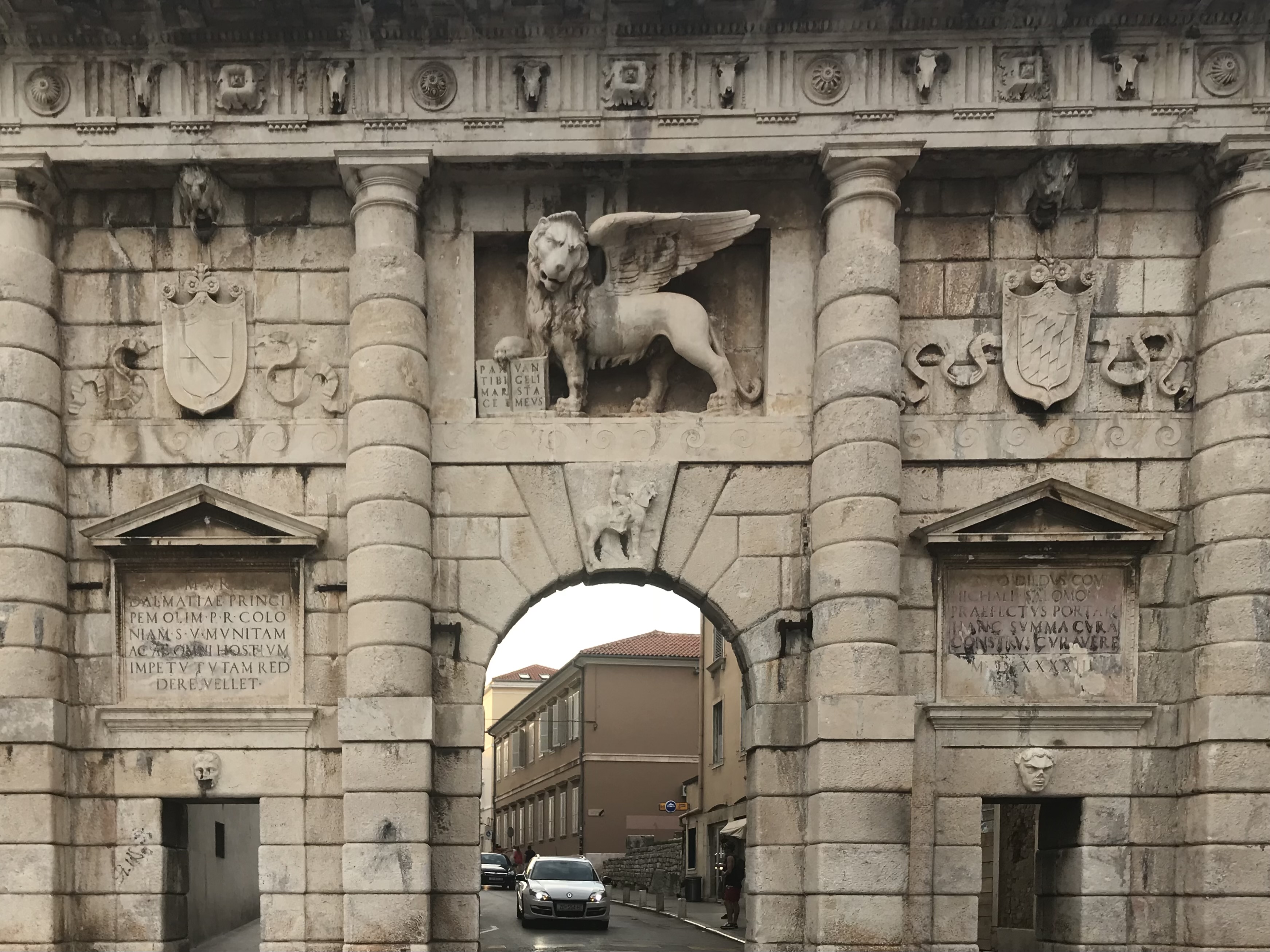
May, 2018
The small town of Zadar is one of Croatia's oldest continuously inhabited cities and it's not surprising. It's a veritable gem nowadays and must have been since its earliest days with all the big name empires jostling to wrest control from the earliest 9th century BC settlers (the Liburnians) to the Romans (we can still see vestiges of those times), to the Venetians (note Venice's flex of ownership, the Lion of St Mark, in the main photo above of the entrance to the old town), to the Hungarians, to the Austrians, to the French with a few back and forths along the way. It finally settled into Croatia at independence in 1991. I guess the town can relax now after all that heavy history and make the place its own.
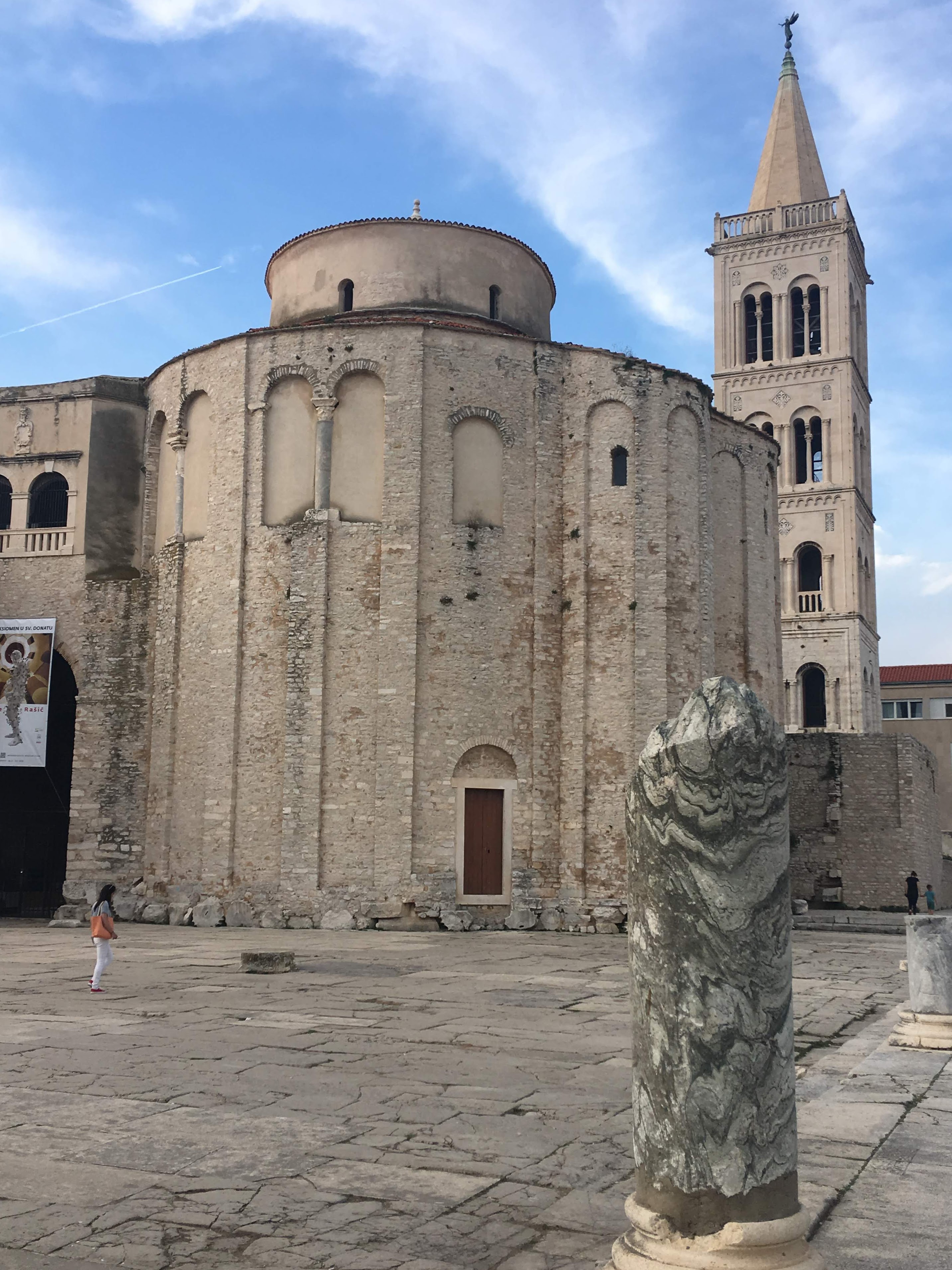
The Church of St Donatus is named for Bishop Donatus (a local), who built it around 810AD using stones scavenged from the old forum that the Romans built when they took over around 100BC. Look at the stones at the very bottom of the rotunda; those are some of what the bishop scavenged. The marble column is also a vestige of those times.
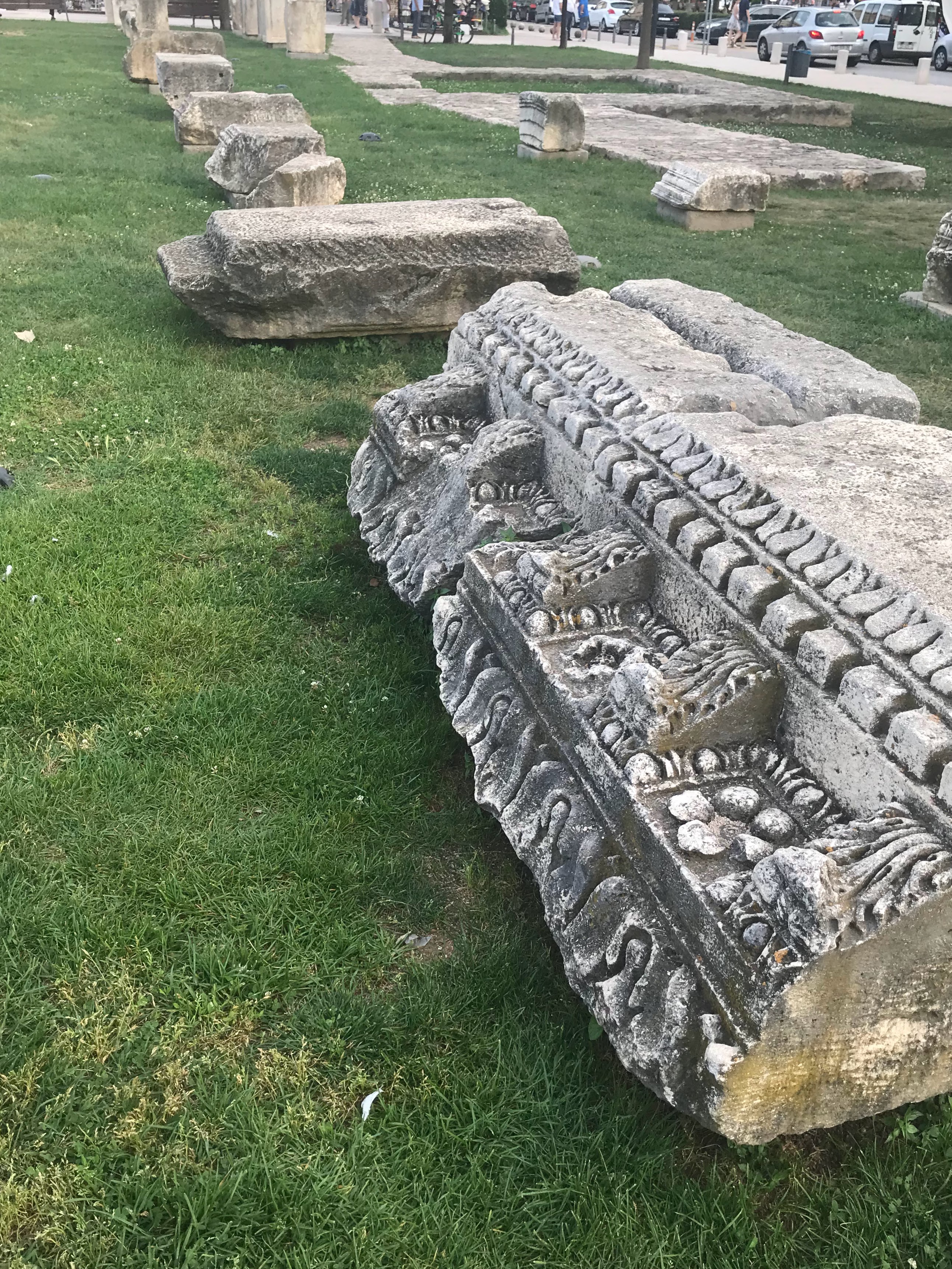
The remaining Roman ruins were uncovered when the rubble was cleared after relentless days of bombing during WWII.
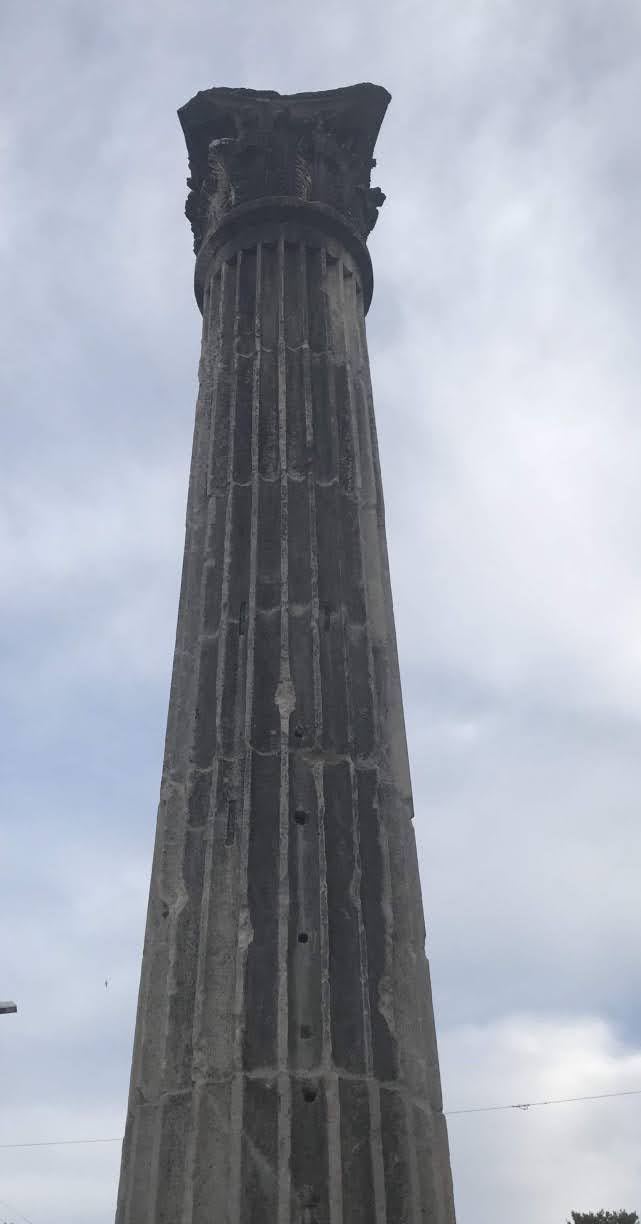
This is known as the Pillar of Shame. It's the one surviving piece of the forum still standing. This names comes from its repurpose in the Middle Ages when it was used as a pillory to chain up and display petty thieves, cheats and fraudsters. No physical punishment, just the shame of being chained up in the main square in front of fellow citizens. I wonder what the recidivism rate was...
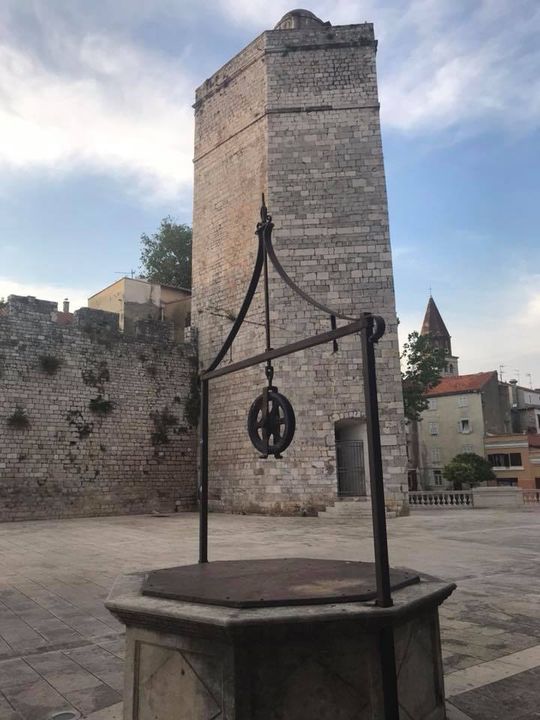
This is one of five wells in the town square that kept the people of Zadar hydrated for about 300 years, from when the Venetians built them in 1574 into the late 19th century when a modern water system was finally put in place. What prompted the wells? When the town was at risk of an Ottoman invasion, the clever Venetians filled in the existing defensive moat and put an aqueduct-fed water cistern with five wells in the town square so that it could survive a siege without running dry.
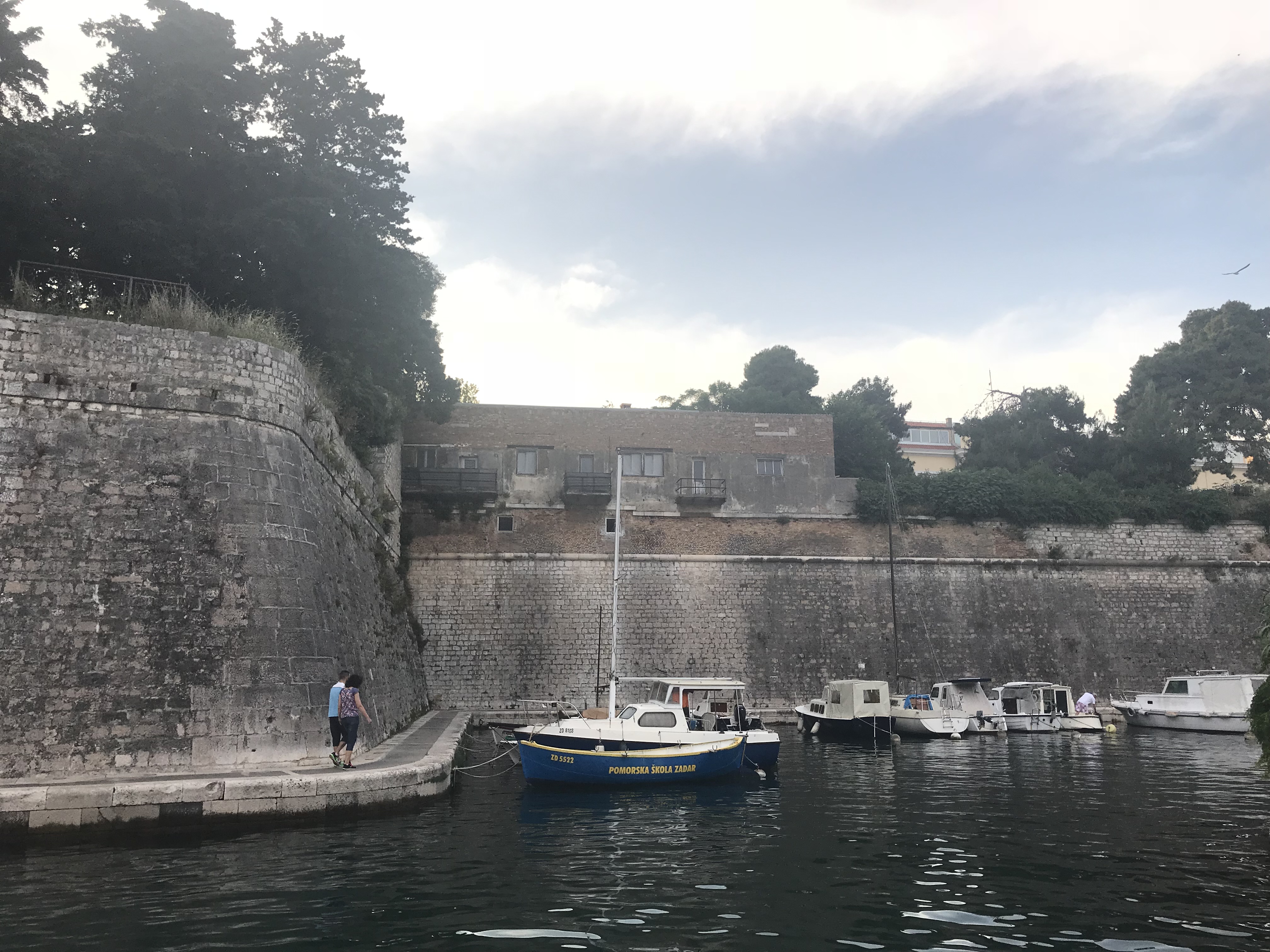
On our way to dinner, we strolled past these 12th century walls that were massively reinforced against the Ottomans by the Venetians in the 1500s. I suppose if you knew anything about 16th century engineering, you'd know these had latest and greatest in cannon-proof engineering.
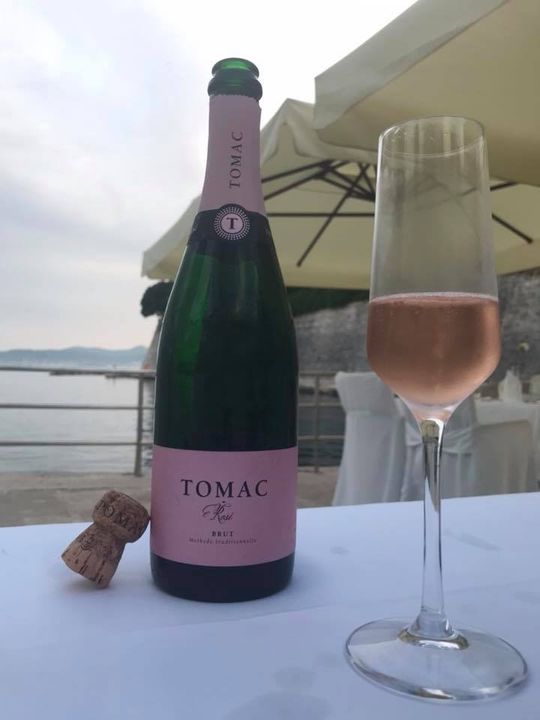
Fabulous dinner this evening. The Croatian wine industry is pretty exceptional.
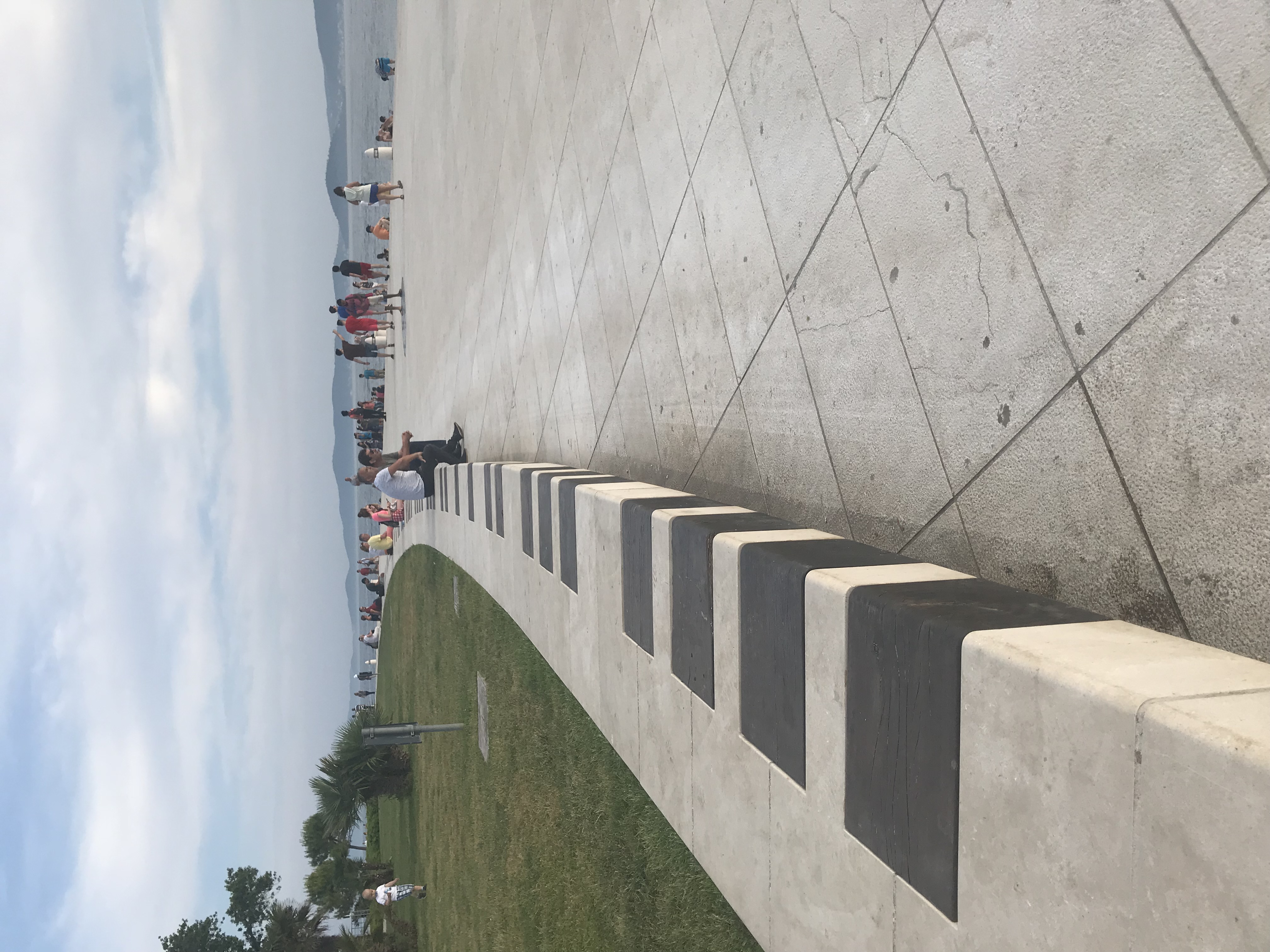
Redeveloped in 2005, Zadar's modern waterfront displays a wonderful sense of playfulness
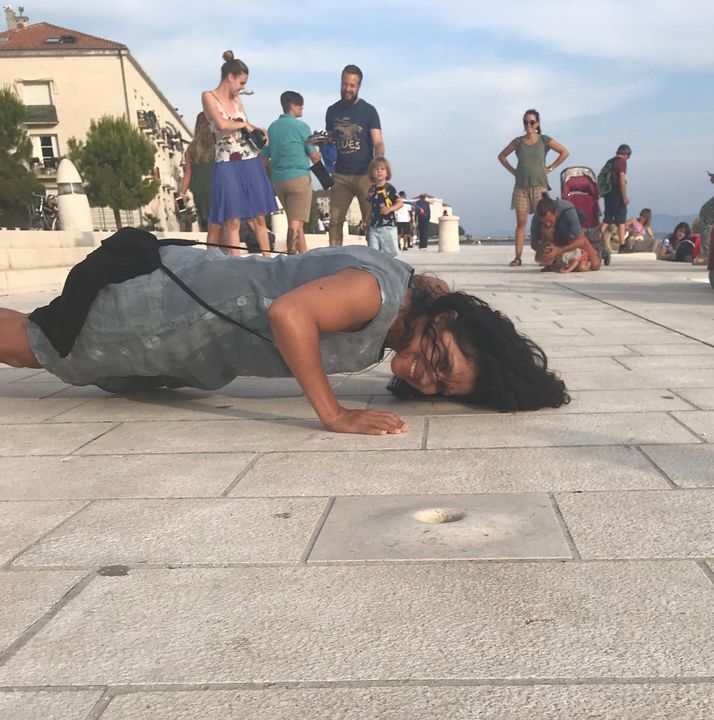
Meena listening to the amazing sea symphony provided by architect Nikola Bašić's Sea Organ. Thirty-five organ pipes hidden underneath the stone steps at the water's edge allow the sea to play its music for all of us to enjoy as its waves push air through the pipes.
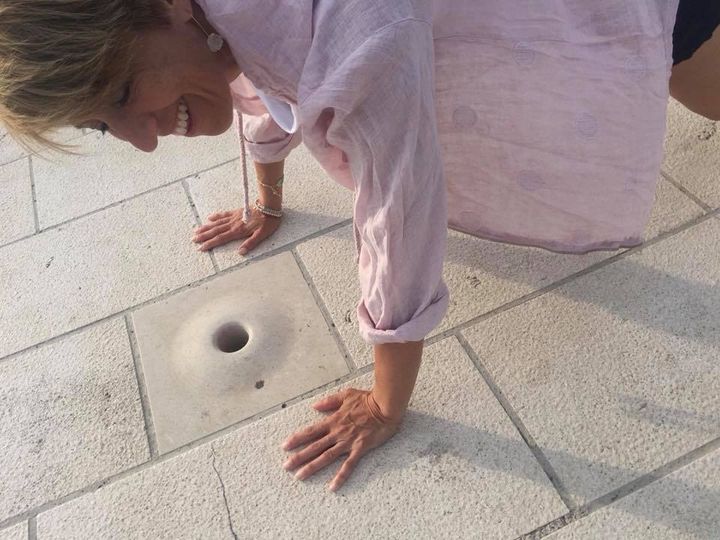
Plank over the symphony holes.
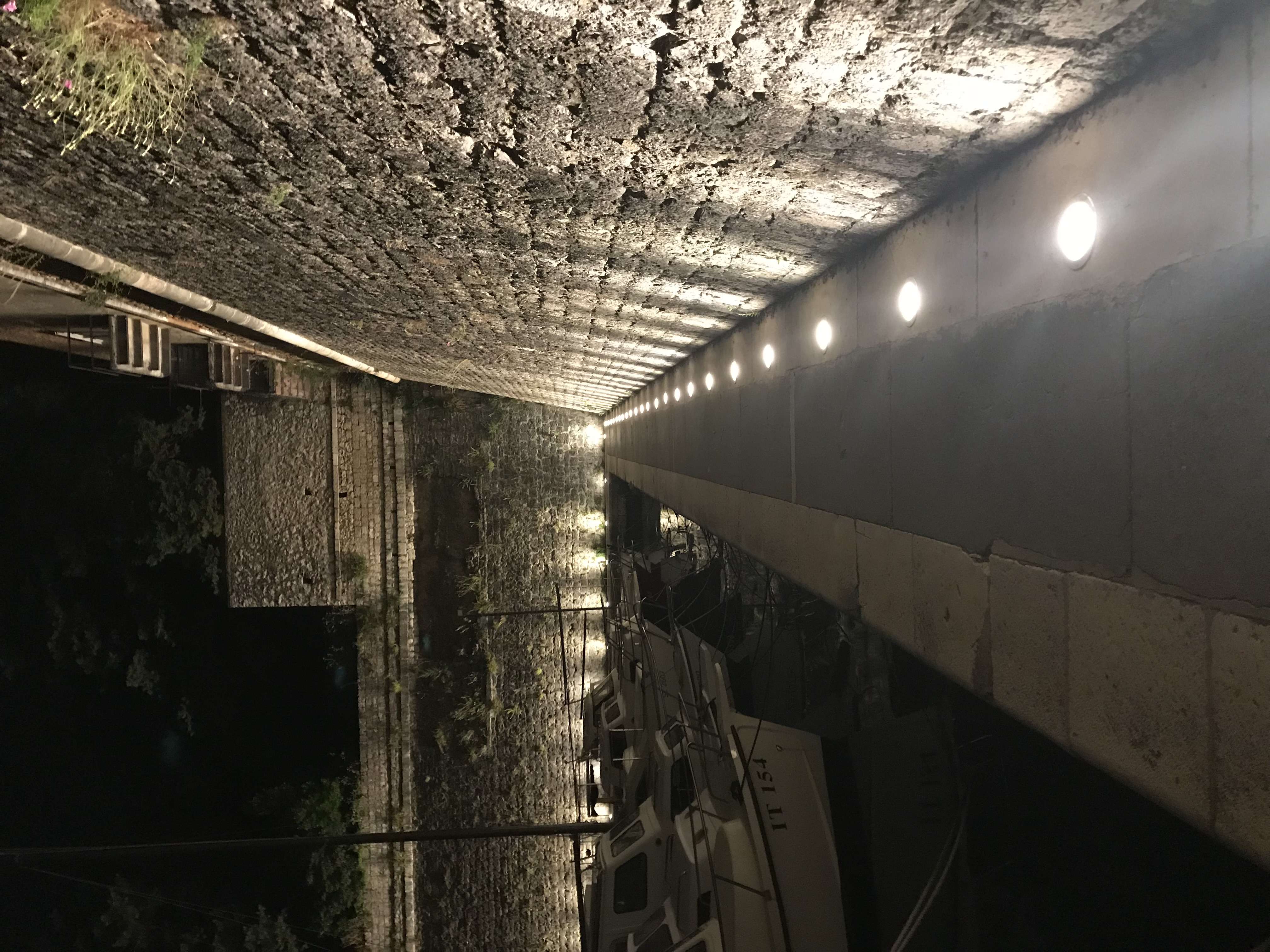
Post-dinner walk past the beautifully-lit Venetian-engineeered walls.
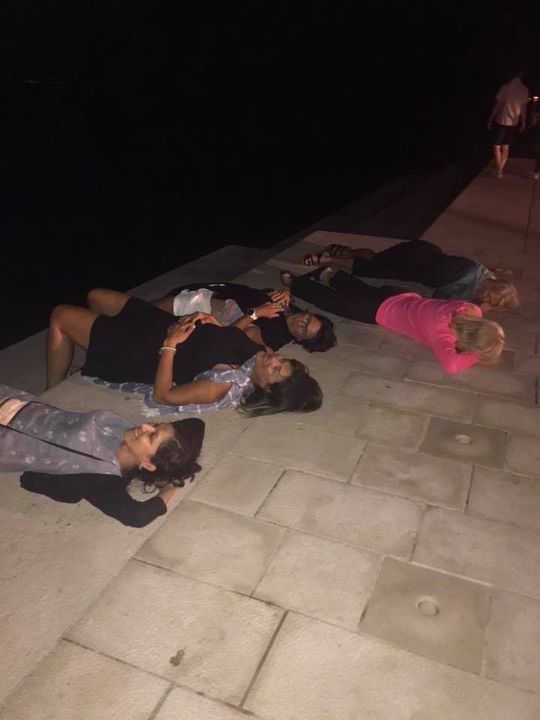
Enjoying the post-dinner symphony.
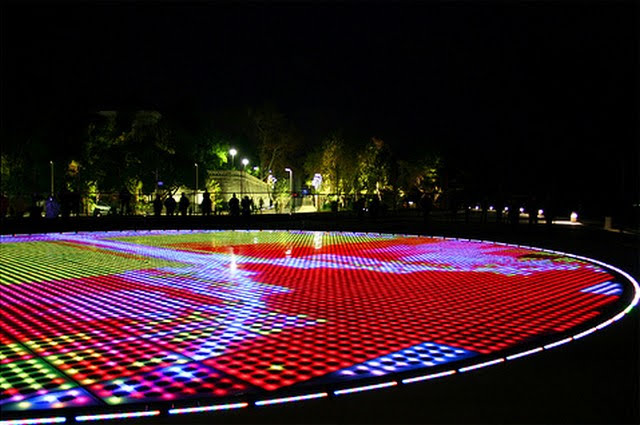
Just beside the Sea Organ is Zadar's Monument to the Sun, also designed by Nikola Bašić as a companion piece. It's a 22m glass disc embedded with solar cells that light up the waterfront at night. Enough solar energy is banked during the day to not only put on the nightly light show, but also provide about half the waterfront's electricity needs.
The Monument to the Sun in action!