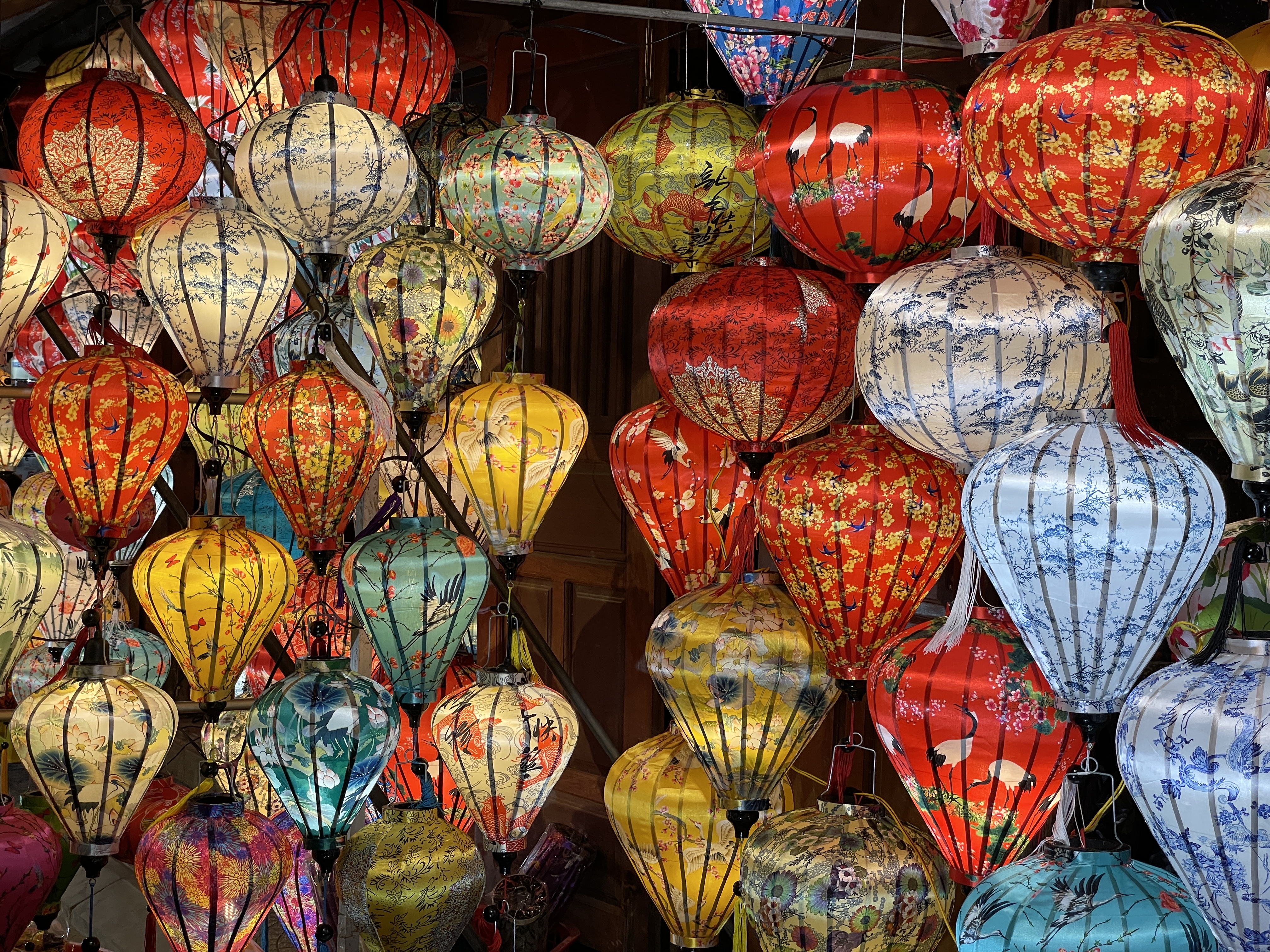
Hypnotic Hôi An
Loved the ancient town of Hoi An! Beautiful architecture and a step back in time. Touristy? Yes. But its charm far exceeds the tourist vibe. And then there’s there’s the countryside, which is not to be missed.
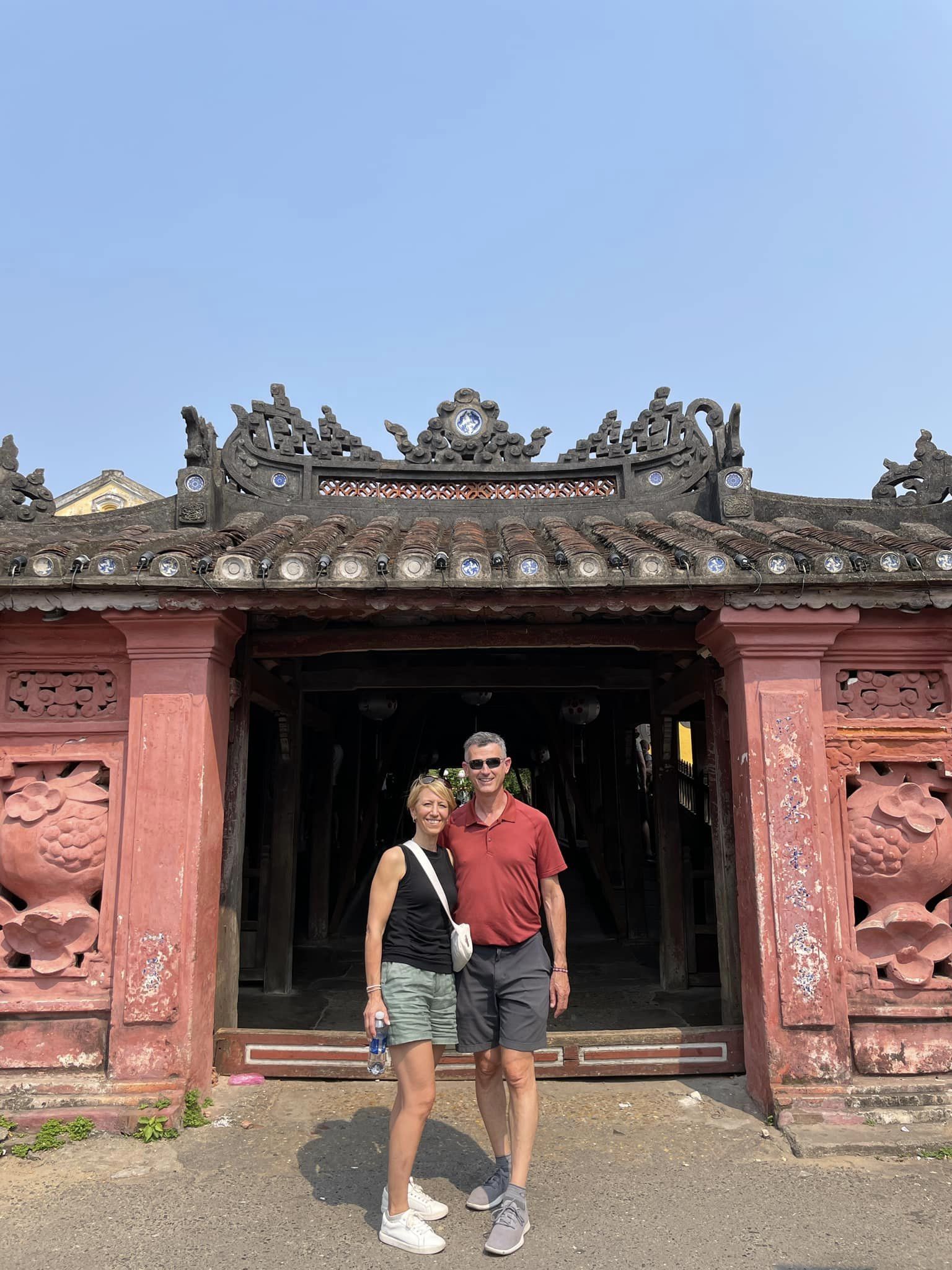
The Japanese covered bridge is the symbol of Hoi An. It was built by Japanese merchants to facilitate trade with the local people living in the residential part of town. Before the level of silt rose to a degree that prevented ships coming down the river from the ocean, Hoi An was a major trading post.
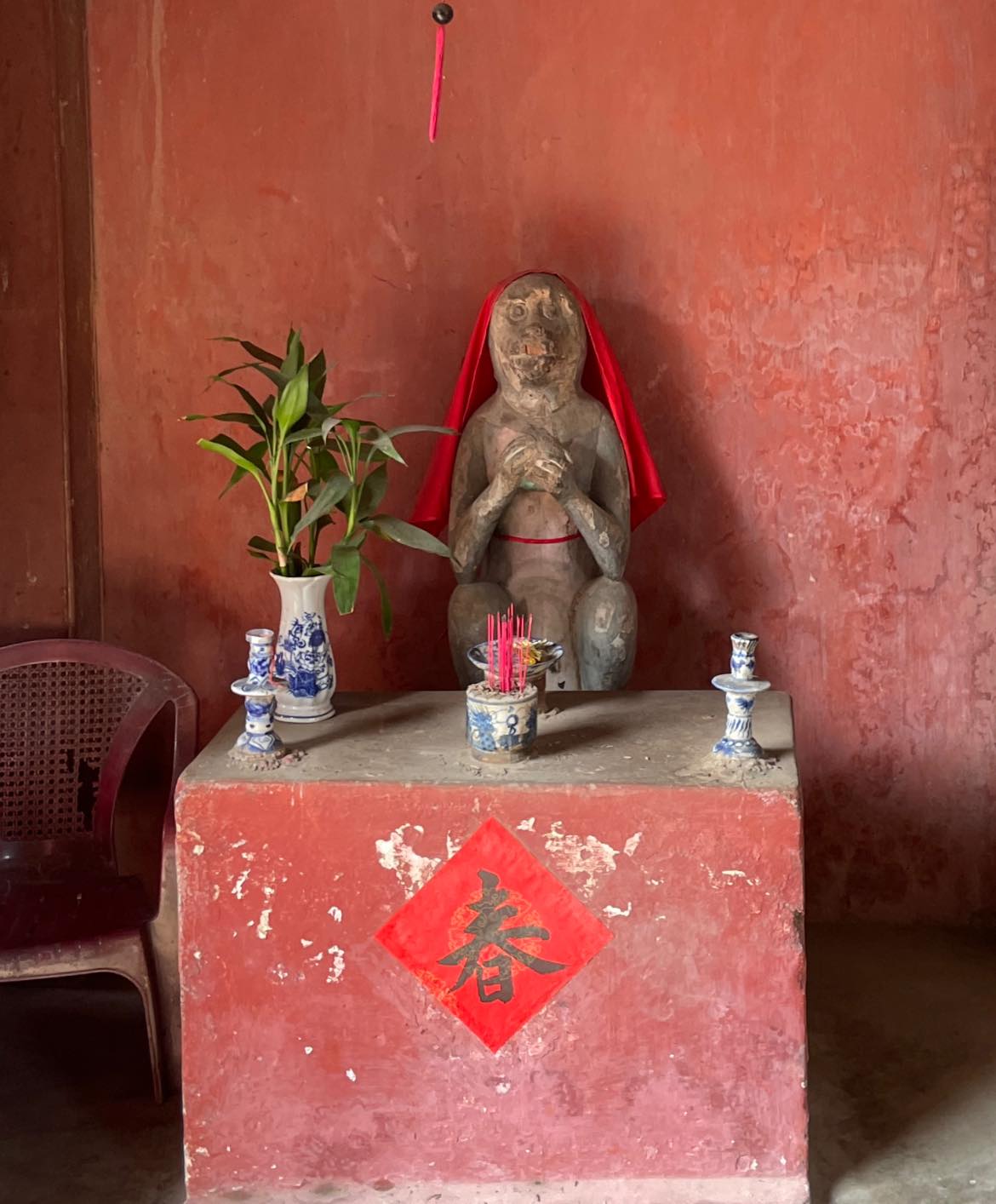
The construction of the bridge began in the year of the monkey (1593) so two monkey gods guard the entrance...
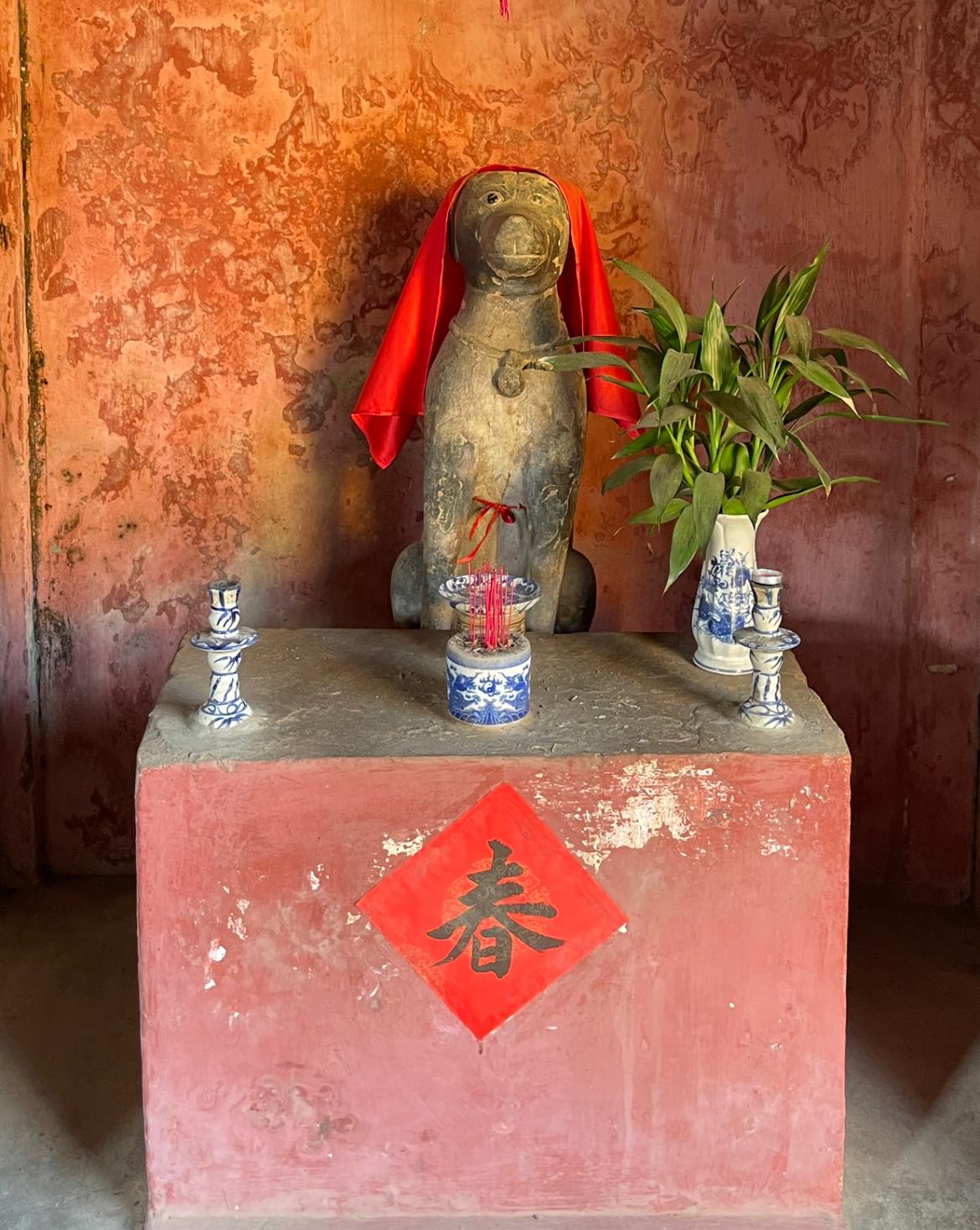
…and the bridge was completed in the year of the dog (1595). A pair of dog gods guard the exit.
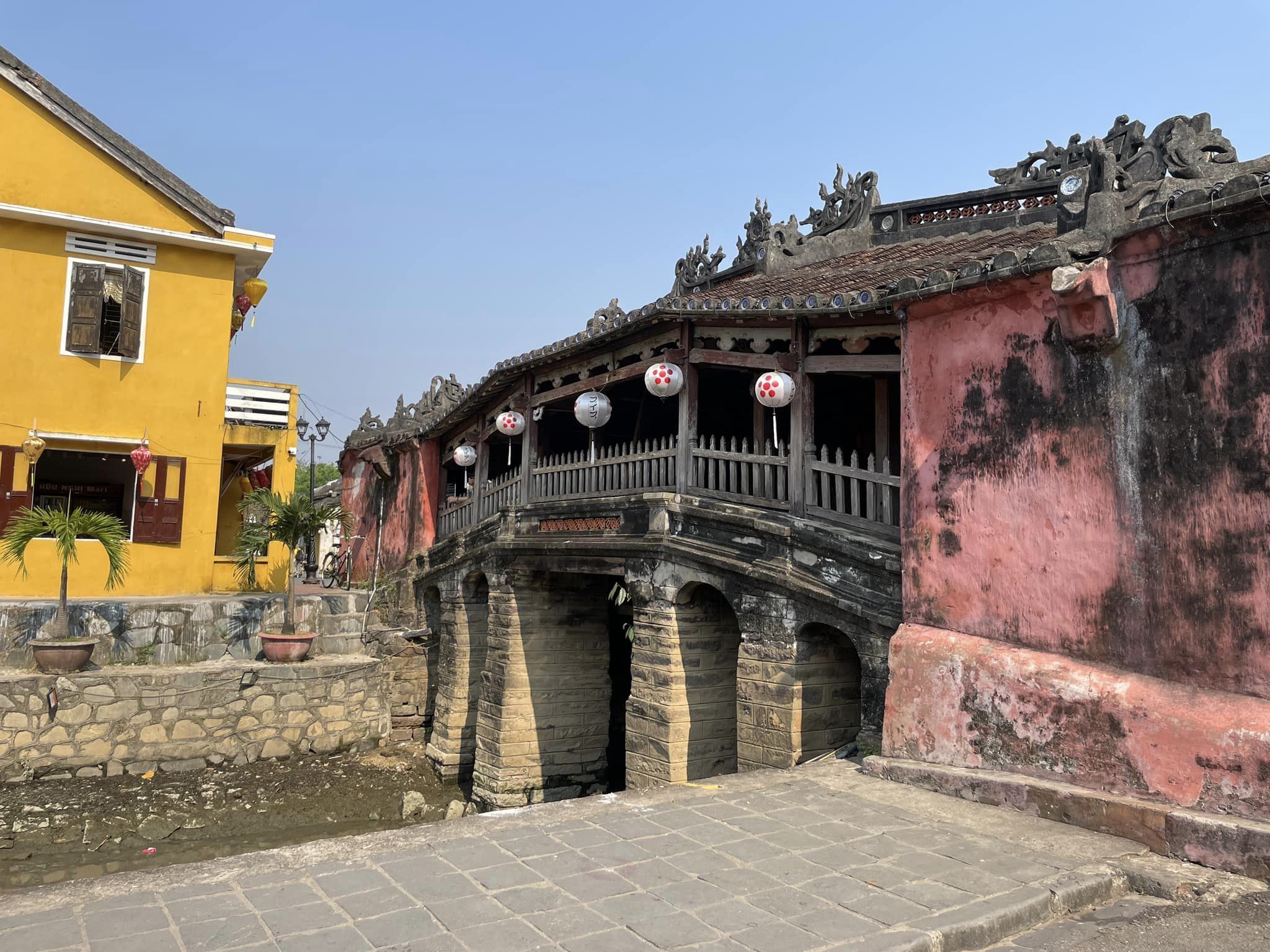
The bridge has a lookout over one side and in later centuries, the Vietnamese and Chinese built a temple on the other side. The bridge remains as a symbol of cultural exchange between the Vietnamese, Japanese and Chinese people in the town.
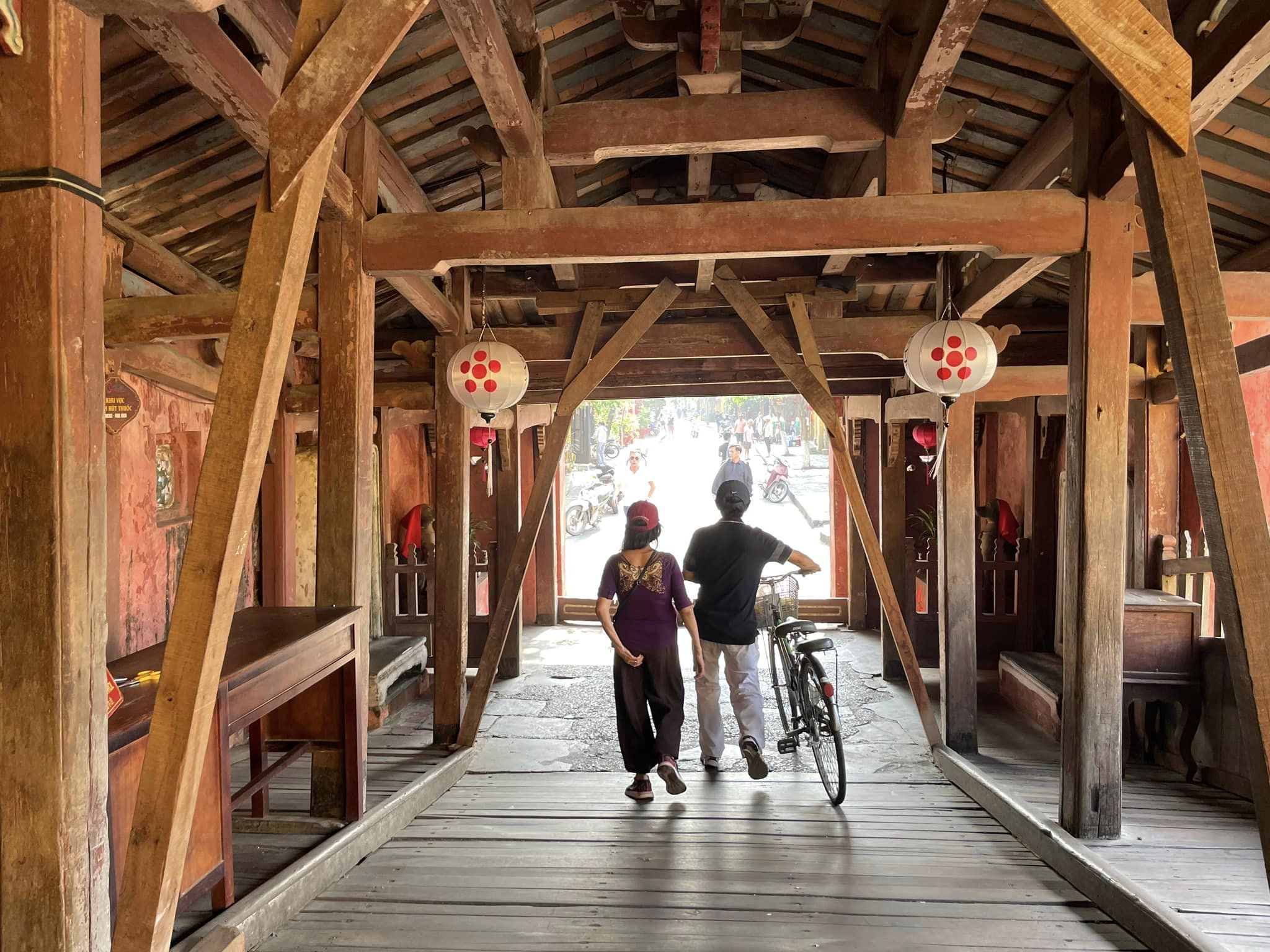
The bridge allows only foot traffic. No mopeds. No cars. If you have a bike, you need to dismount and walk across.
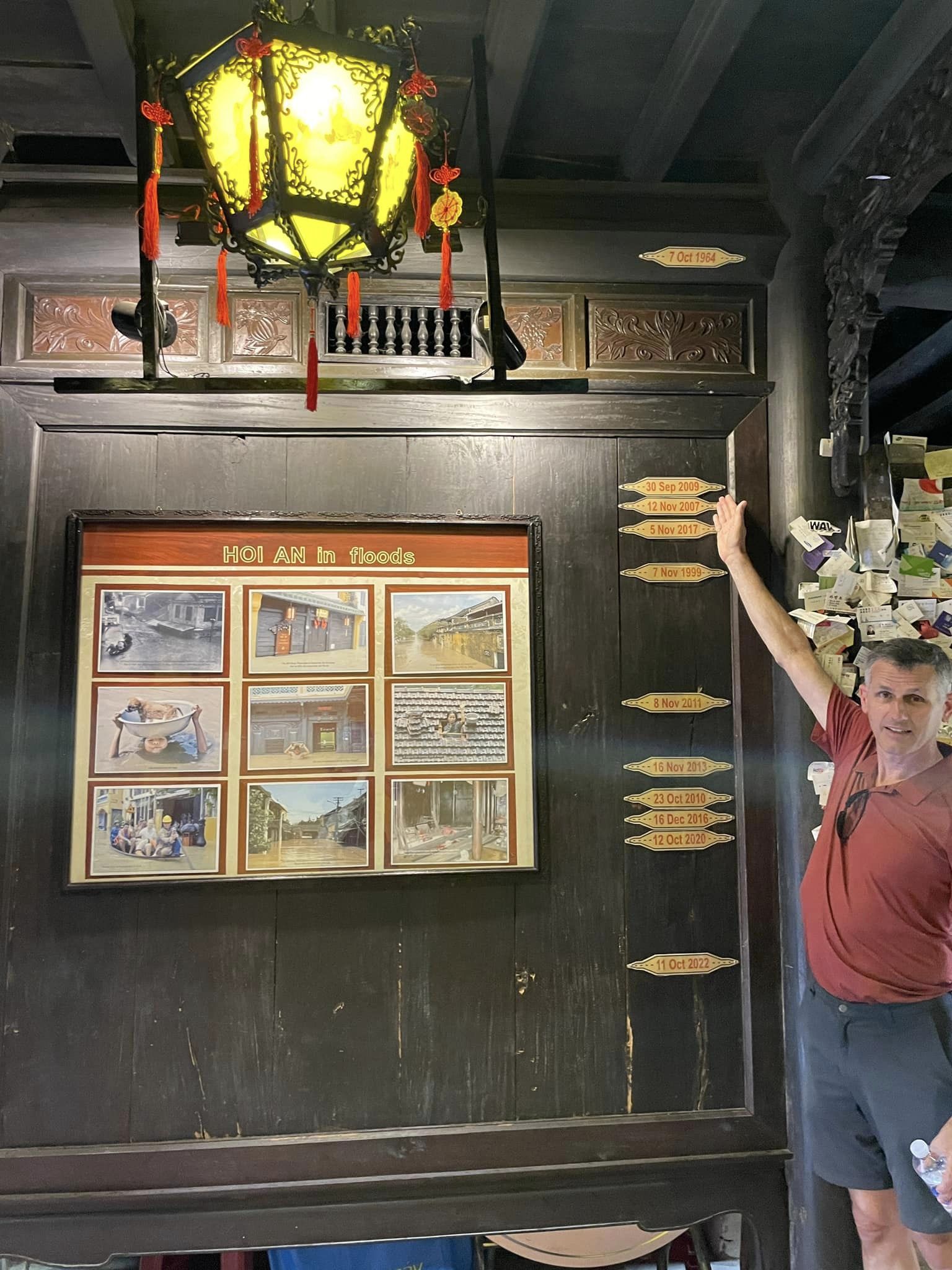
Hoi An is subject to intense flooding. We are standing inside the historic Tan Ky house which is still in the family, seven generations later. These are water level marks showing the most notable floods. The marking out of Adam’s reach was from the biggest flood on October 7, 1964.
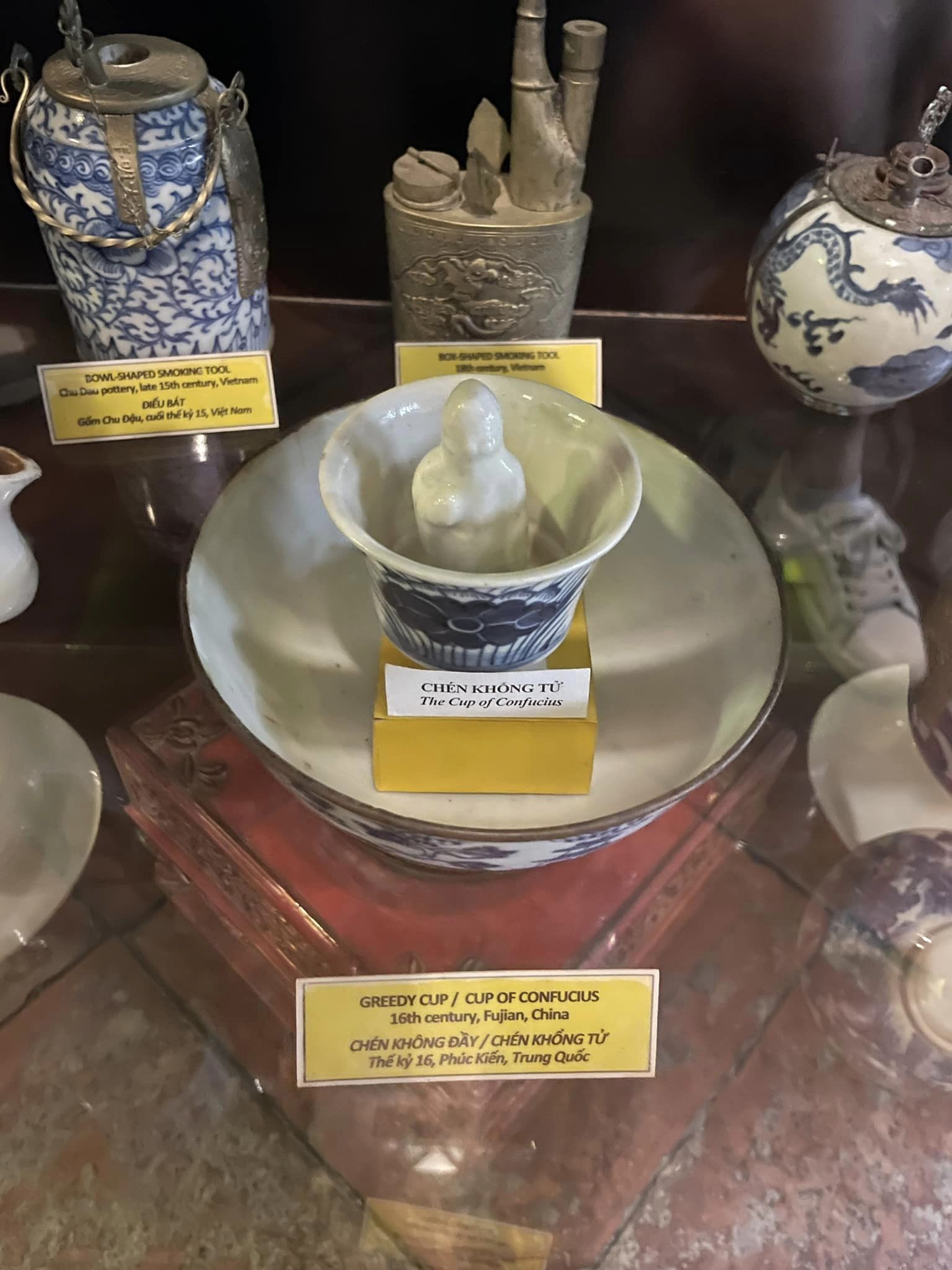
This is a cool cup and is the only one of its kind remaining in Vietnam. If you overfill this Greedy Cup, it will magically leak. How does it work? The figure in the centre of the cup blocks the hole that makes the cup leak. If you fill the cup more than 80%, the figure floats and exposes the hole allowing the drink to leak out.
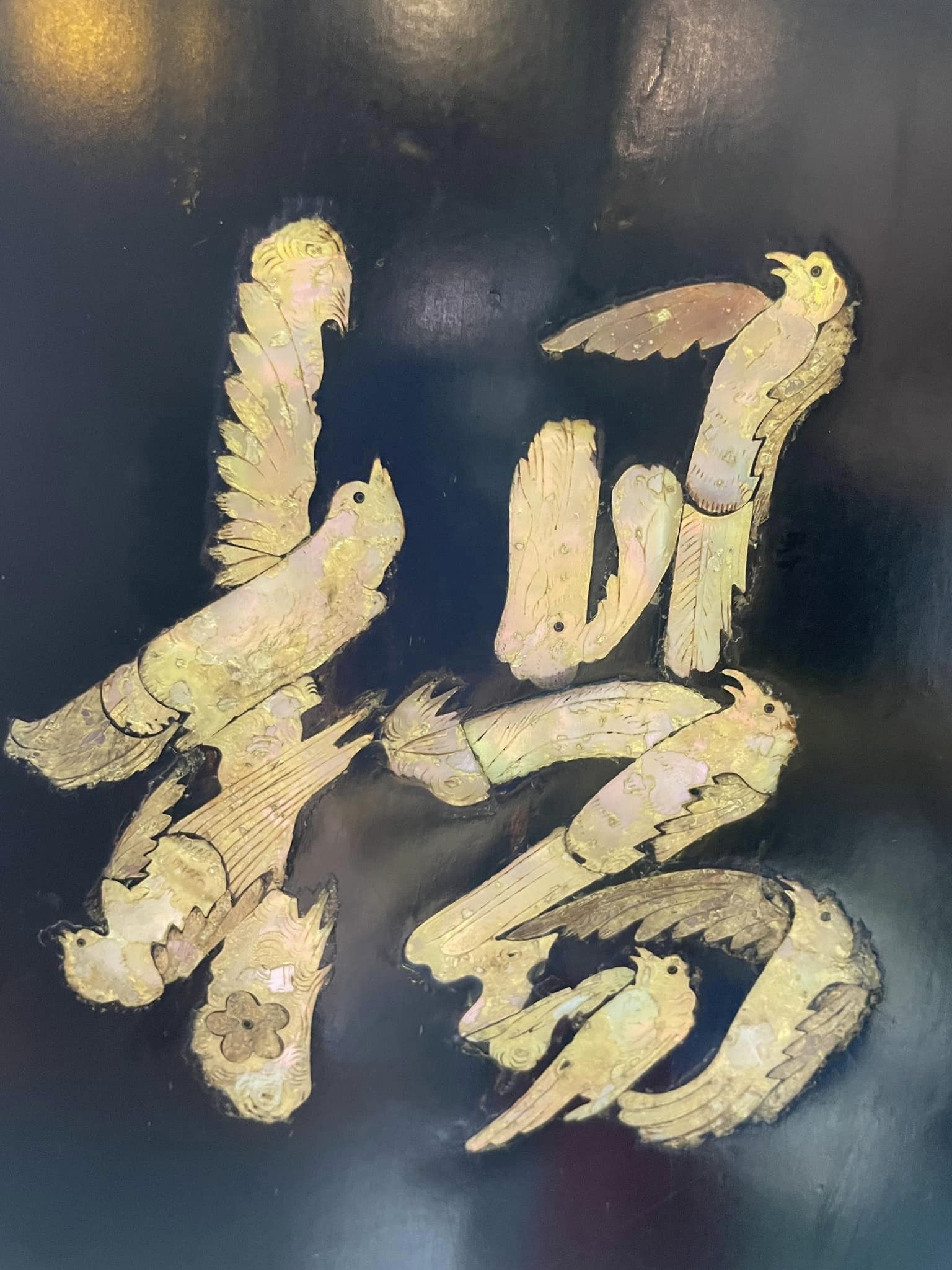
Detail of one of the 100 bird panels. These panels of mother-of-pearl inlaid characters poetically describe the cold or the rain and the warmth of the moonlight. They were a gift to Le Kan Ty, the owner of the house, at his longevity wishing ceremony.
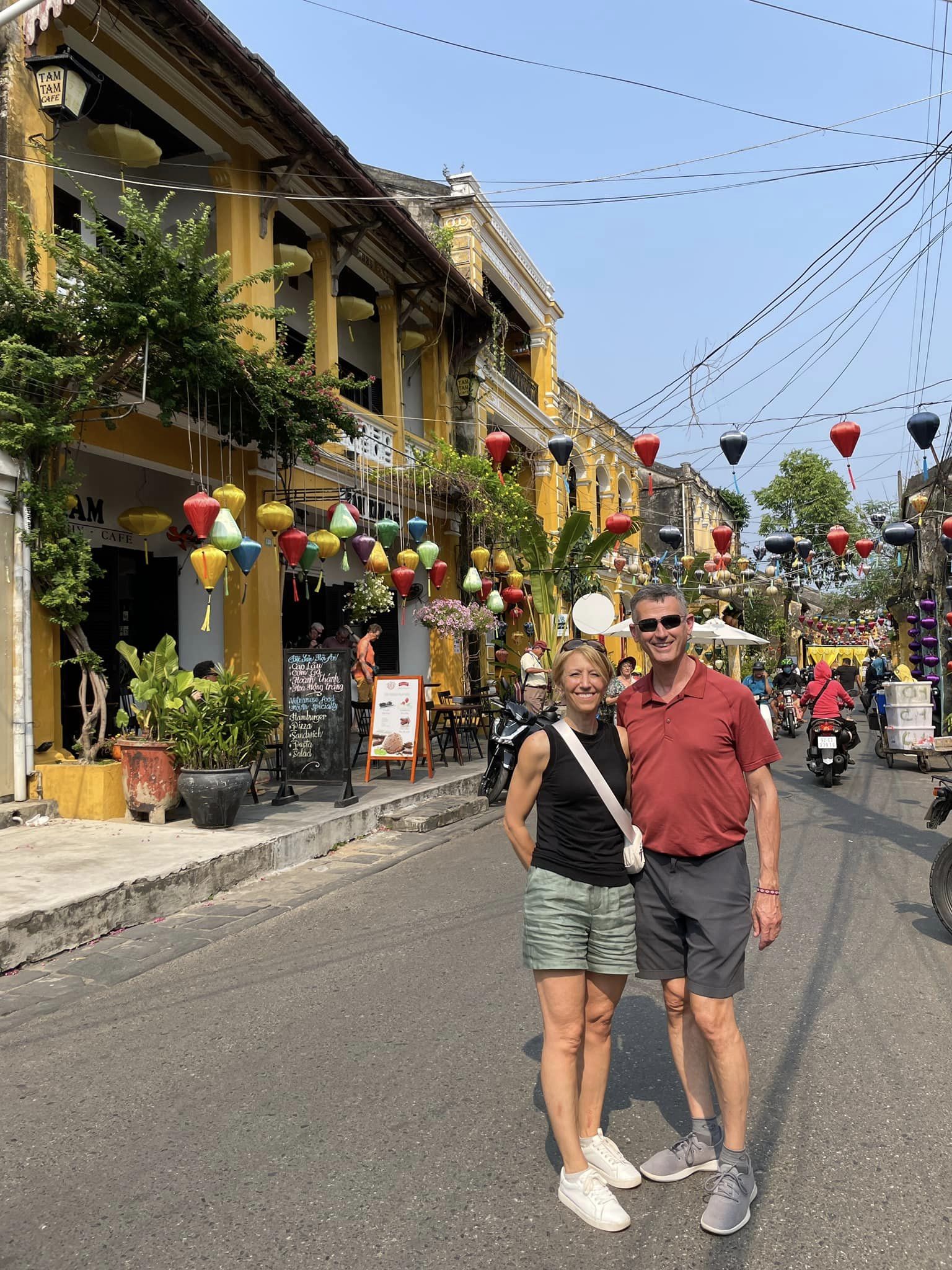
Charming lantern-covered streets of Hoi An’s old town.
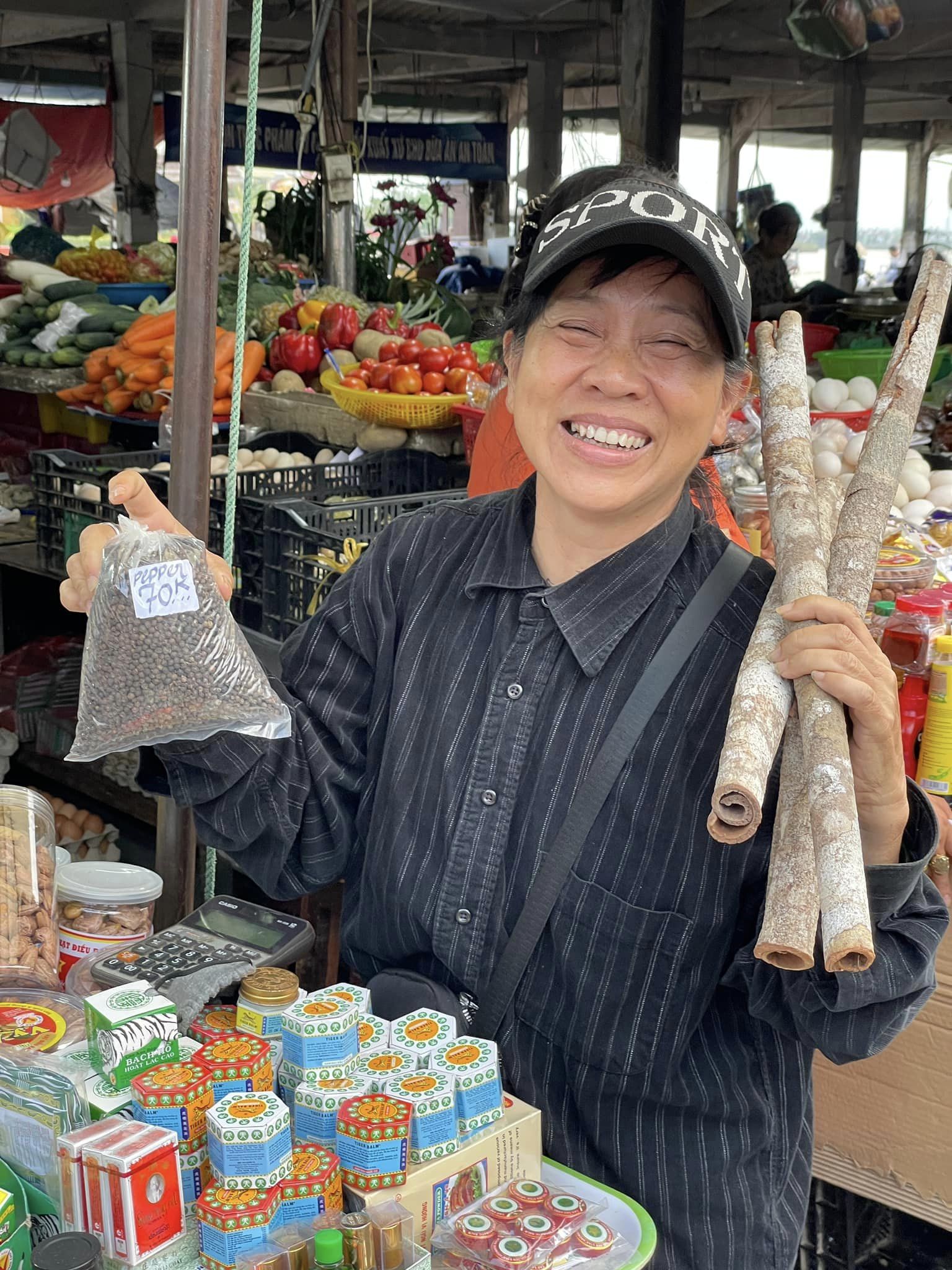
I fell in love with cinnamon tea in Sa Pa and have thought about bringing back some fresh cinnamon sticks. This lady in the market was trying to sell me some (along with a bag of peppercorns). Sadly, we can’t bring spices across the Canadian border. Those sticks would have made some killer cinnamon tea, not to mention serving as a weapon!
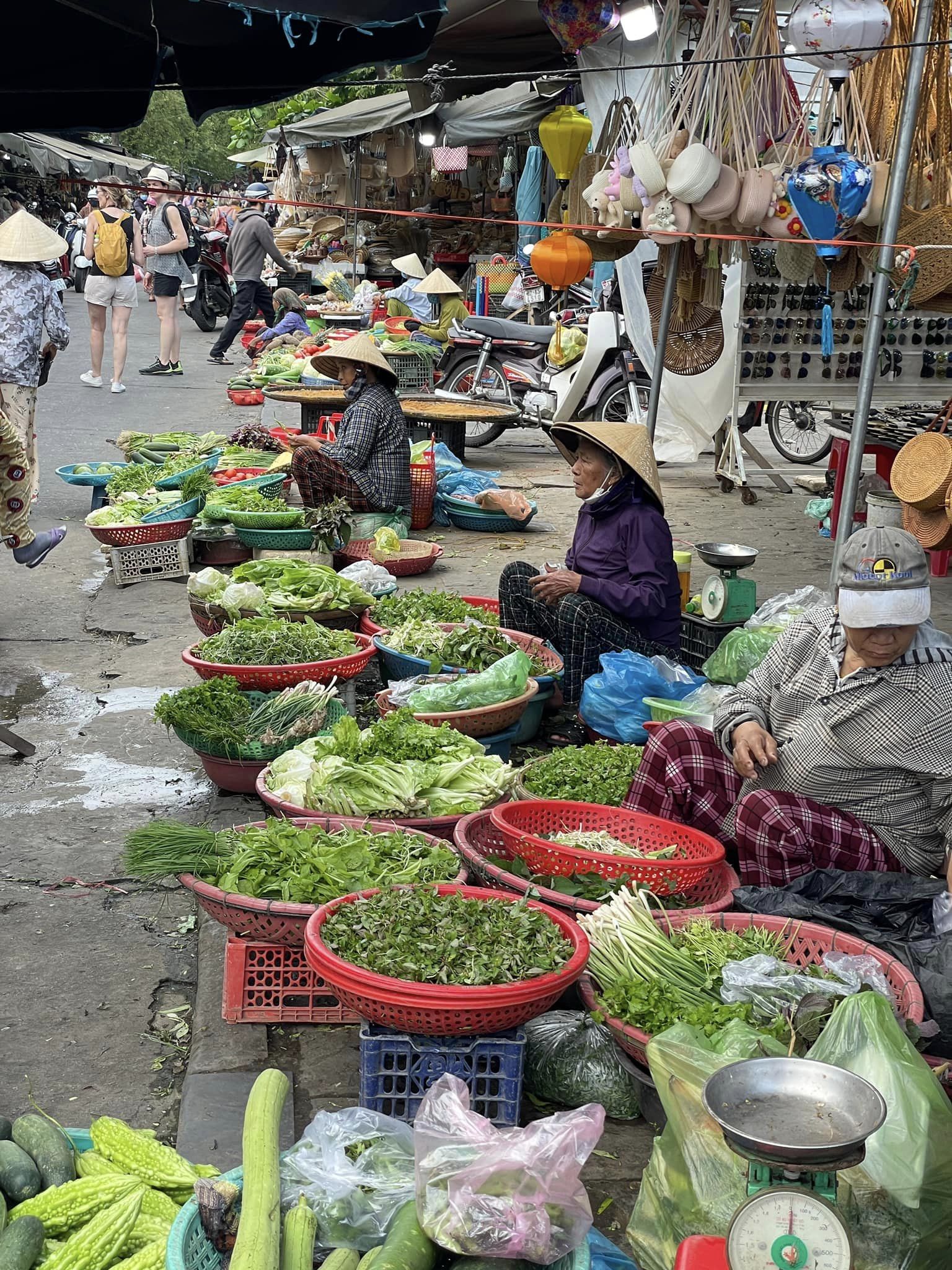
Greens of all kinds figure very prominently in Vietnamese cooking.
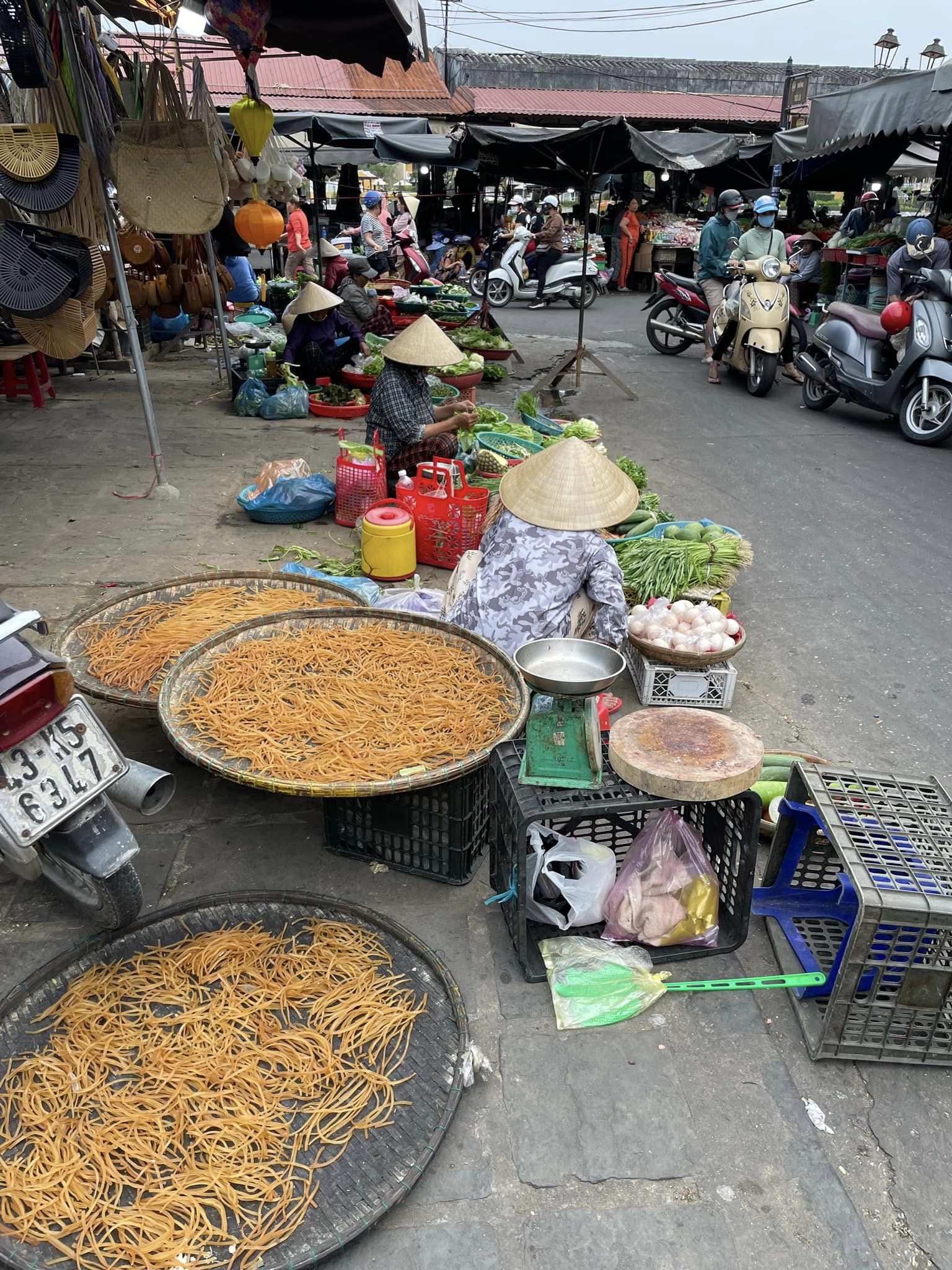
The very special Cao Lau noodles. These are a Hoi An speciality, made with water from a particular well. The rice is fermented overnight in this well water, along with the ashes of the cajuput leaf. The result is a delicious, slightly smoky noodle.
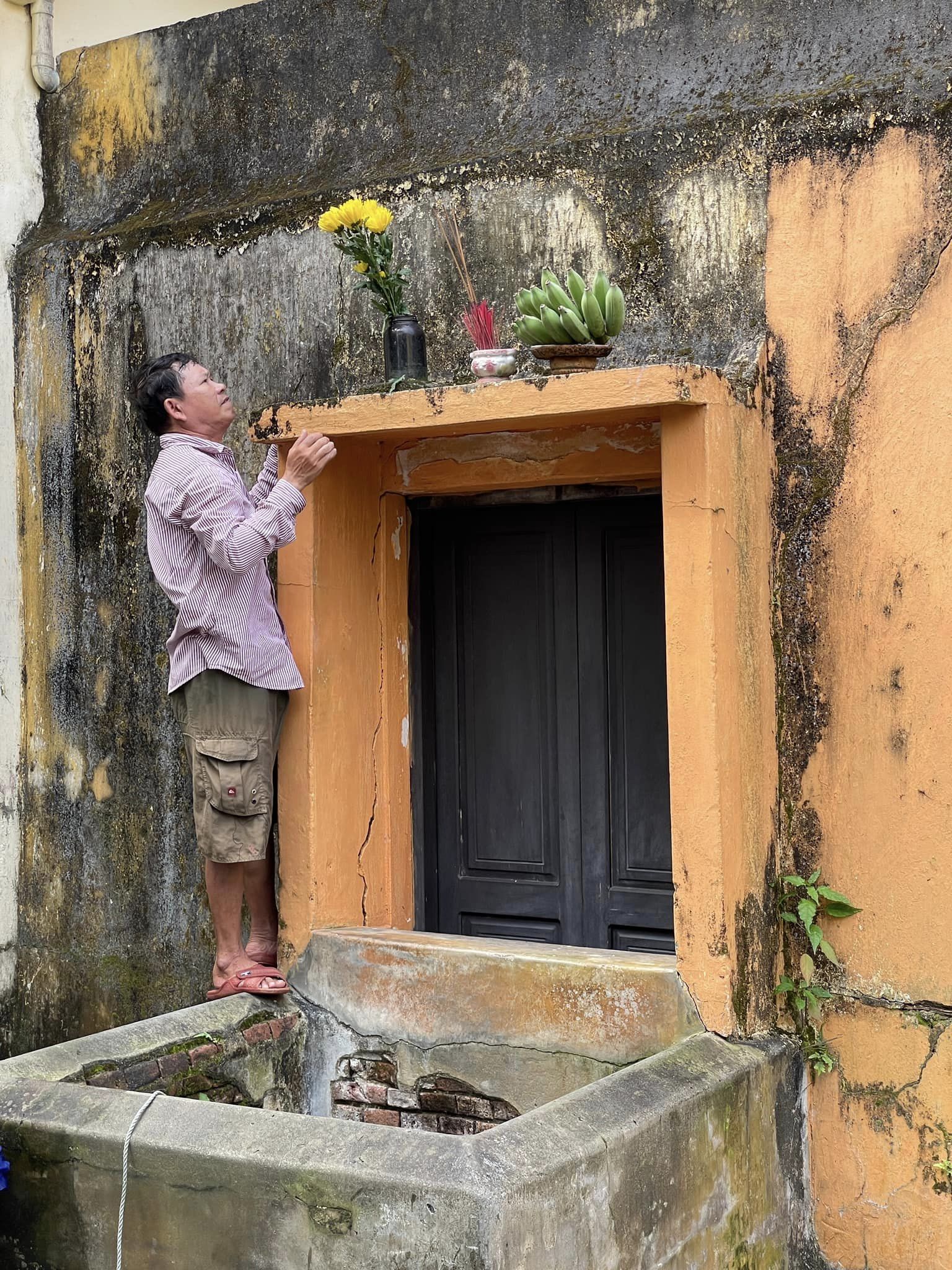
The Ba Le well, built in the 10th century, is yet to run dry. This is where the special water used to make the Cao Lau noodles comes from. This man is lighting incense as an offering of thanks and appreciation before he collects water from the well. He placed incense in a number of places around the courtyard
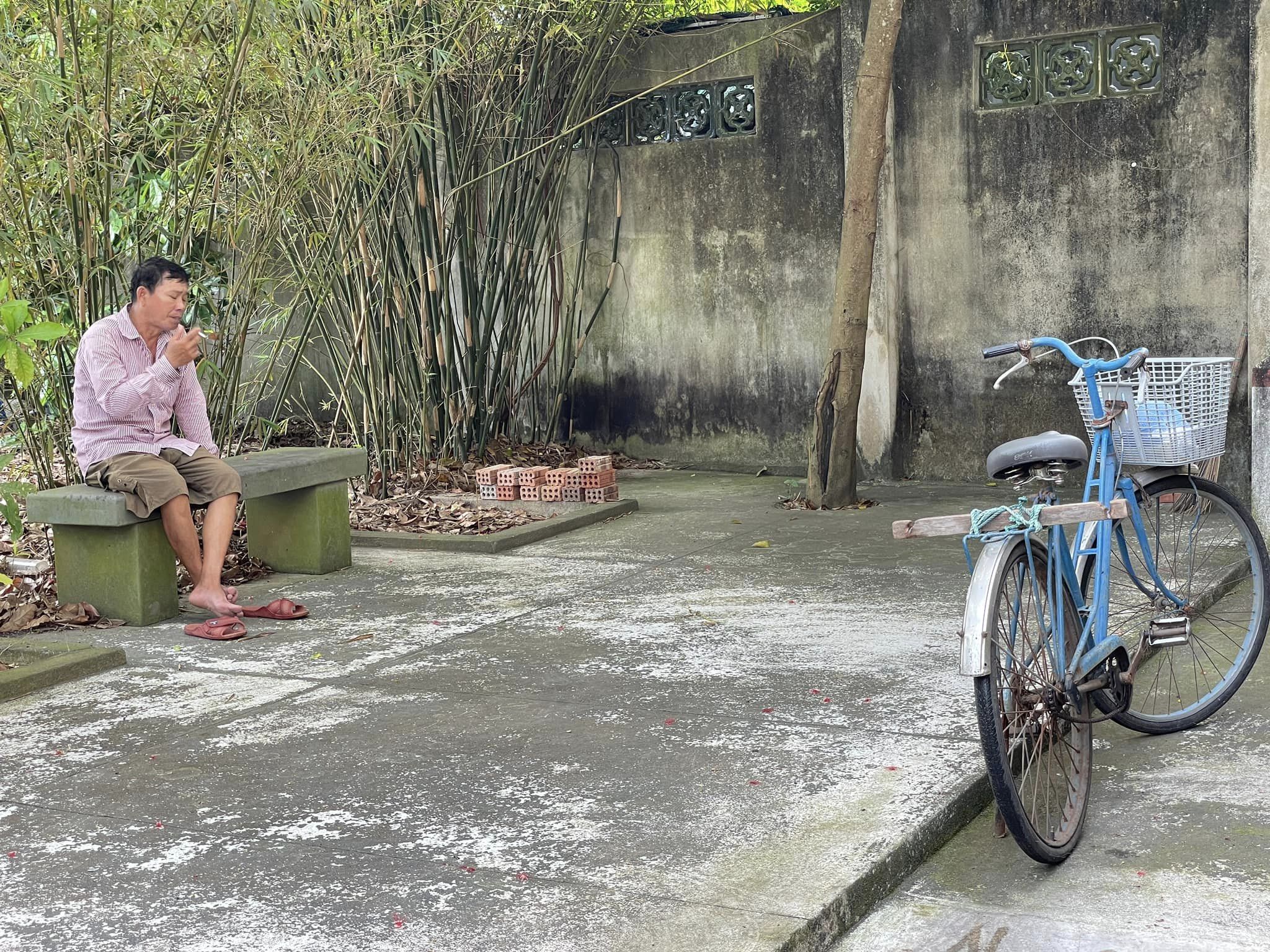
…and now he waits before collecting the water and delivering it.
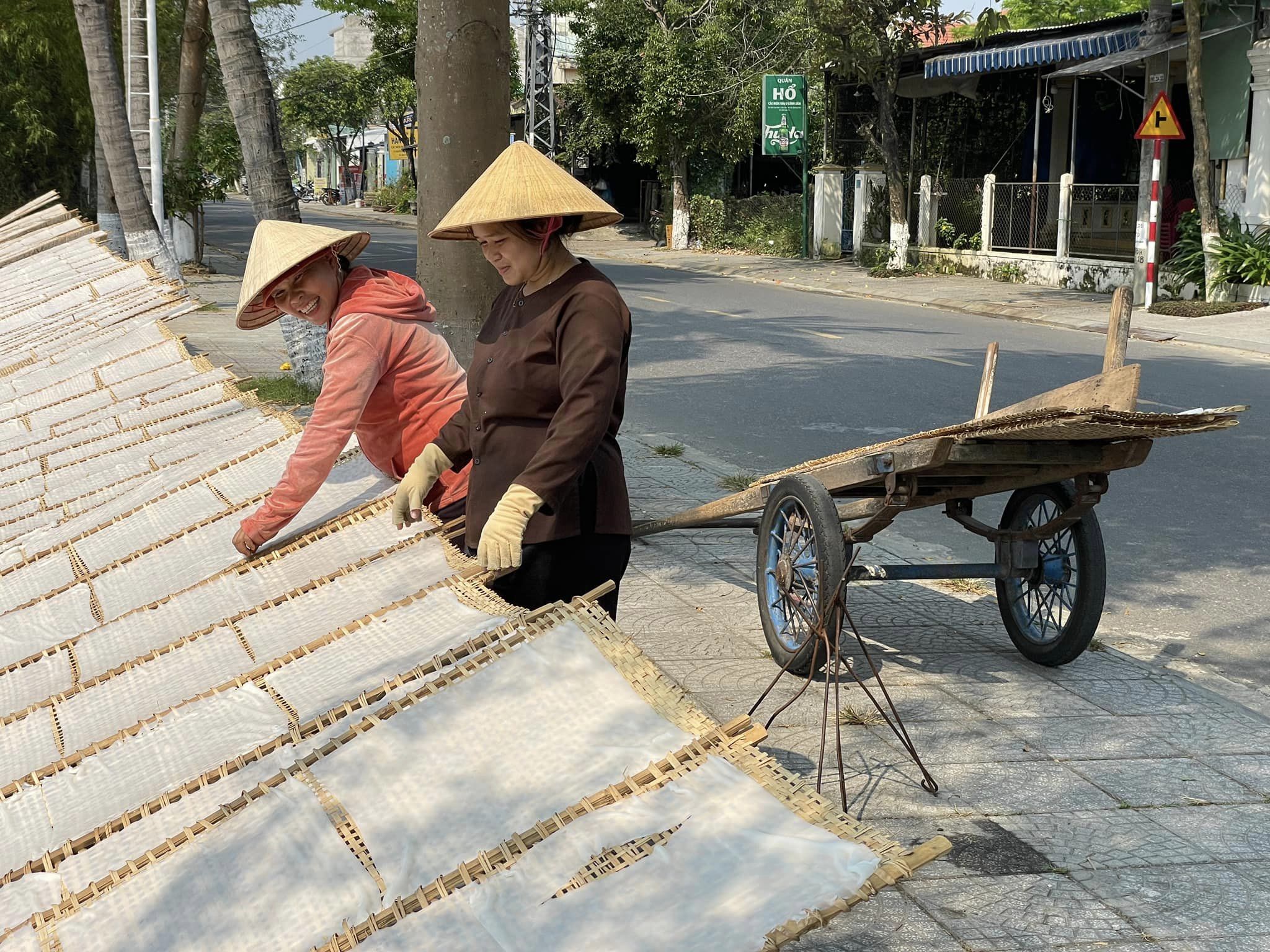
We rode by these ladies who have a hotel just up the road from here. They set up frames roadside to dry their rice paper. This was less than half of today’s inventory; the rest was in the courtyard of the hotel. Have a look at the rice paper you may have in your cupboard at home. You’ll notice a little cross hatch pattern…it is inspired by this traditional way of drying the rice paper.
Passing through the fish market. Who knew shrimp were so feisty! They’re constantly jumping out of the basket and the seller is constantly chasing them and putting them back in.
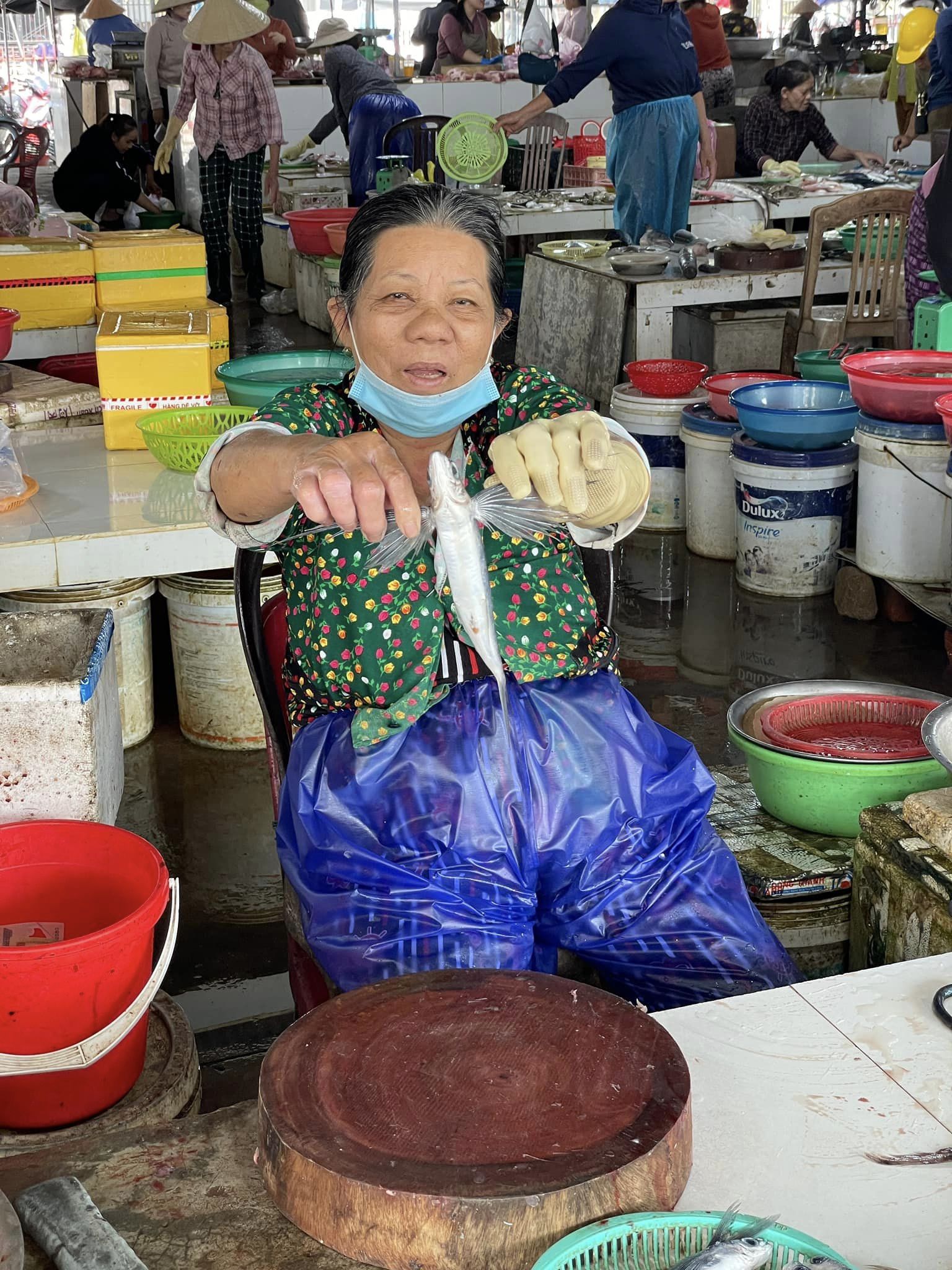
She’s quite proud of her flying fish!
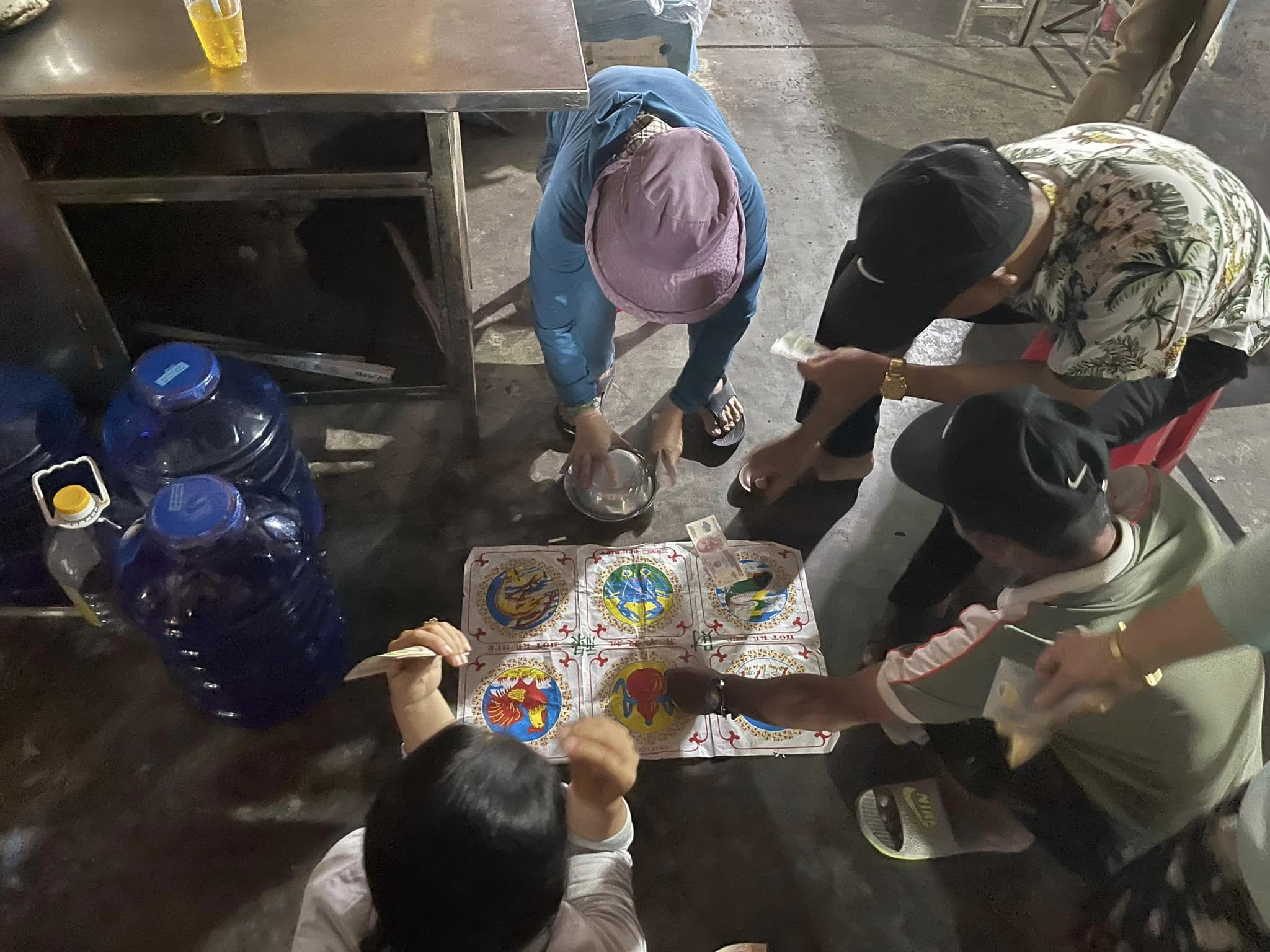
A little gambling action on the market floor. This is a super complicated betting game called Bau Cua. There are six items printed on the paper: squash, crab, fish, rooster, prawn and deer. The game involves every player putting money down on a square. The winner is the one whose money is on the image shown on a six-sided die. What’s so complicated about that? Well, once the bets are placed and before the die is thrown, players can “steal” each other’s money and put it on another image. Someone has to keep track of all the movements and whose money was where before and during the shuffling because even if your money was moved by me, if the die lands on the image of where your money was before I moved it, you still win. It’s illegal to play in the market so our guide whisked me away when he saw I was taking a picture!
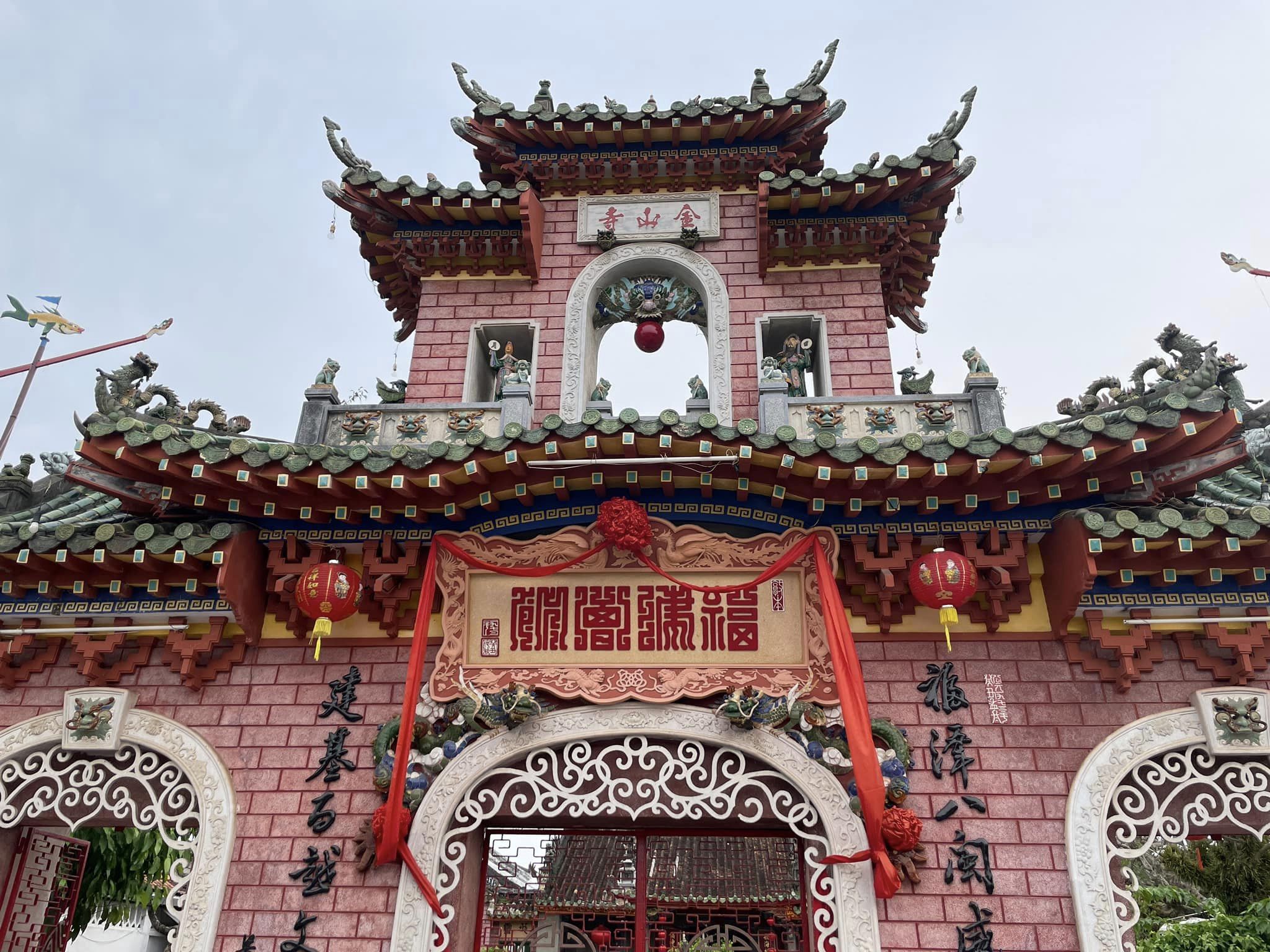
The Phuc Kien Assembly Hall is a classic Chinese temple built in 1653 to honour a famous general. This is a community gathering place for those who fled China’s warring dynasties at the time. Their descendants remain members to this day.
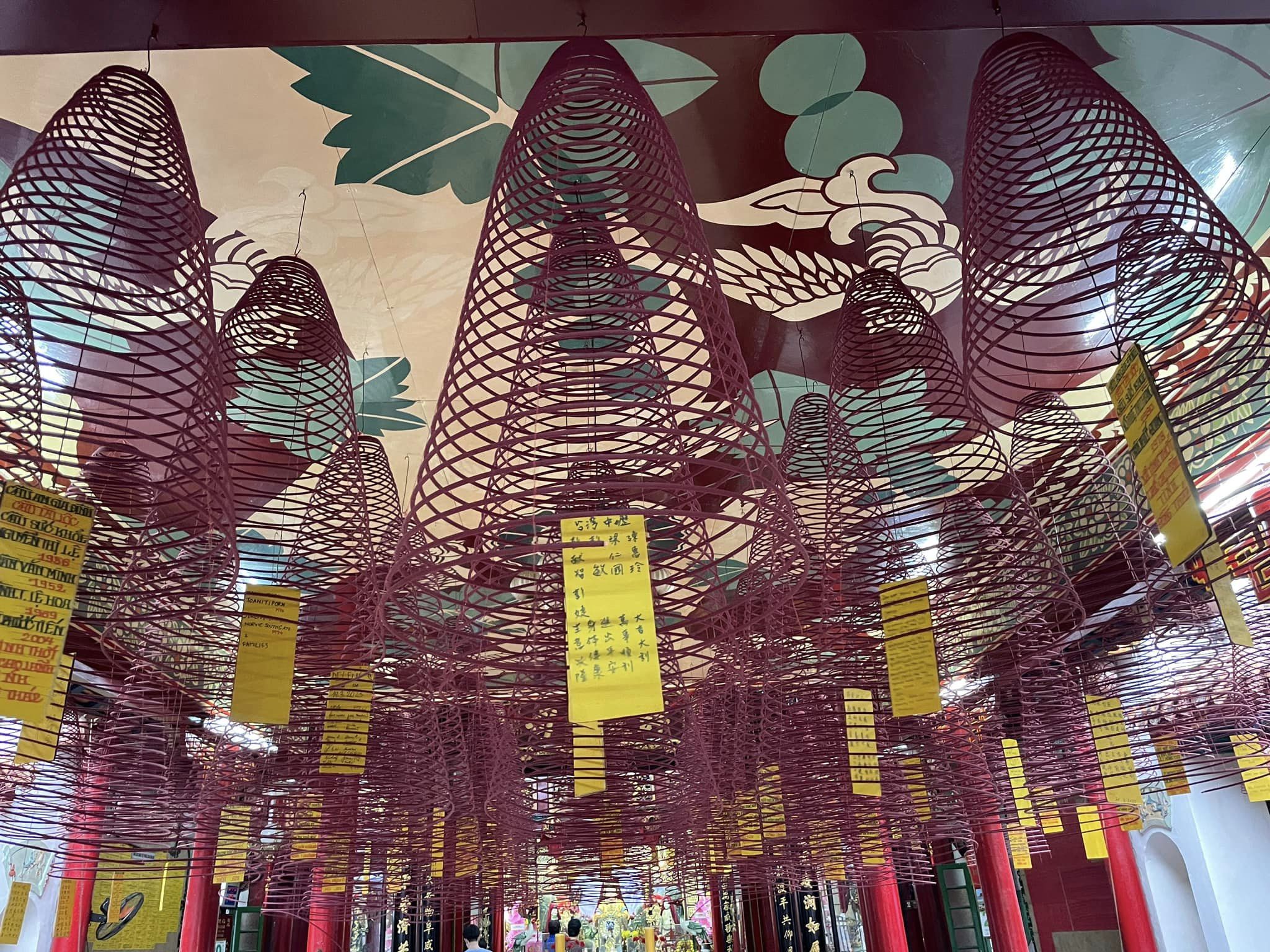
These are incense spirals. People buy them, hang them in the temple with a wish written on a yellow card. They then light them in hopes of the wish being granted. These will burn for a month. We were sprinkled with bits of fine ash as we walked around. Like bird droppings landing on you, the ash droppings are lucky. Personally, I’d go with the ash!
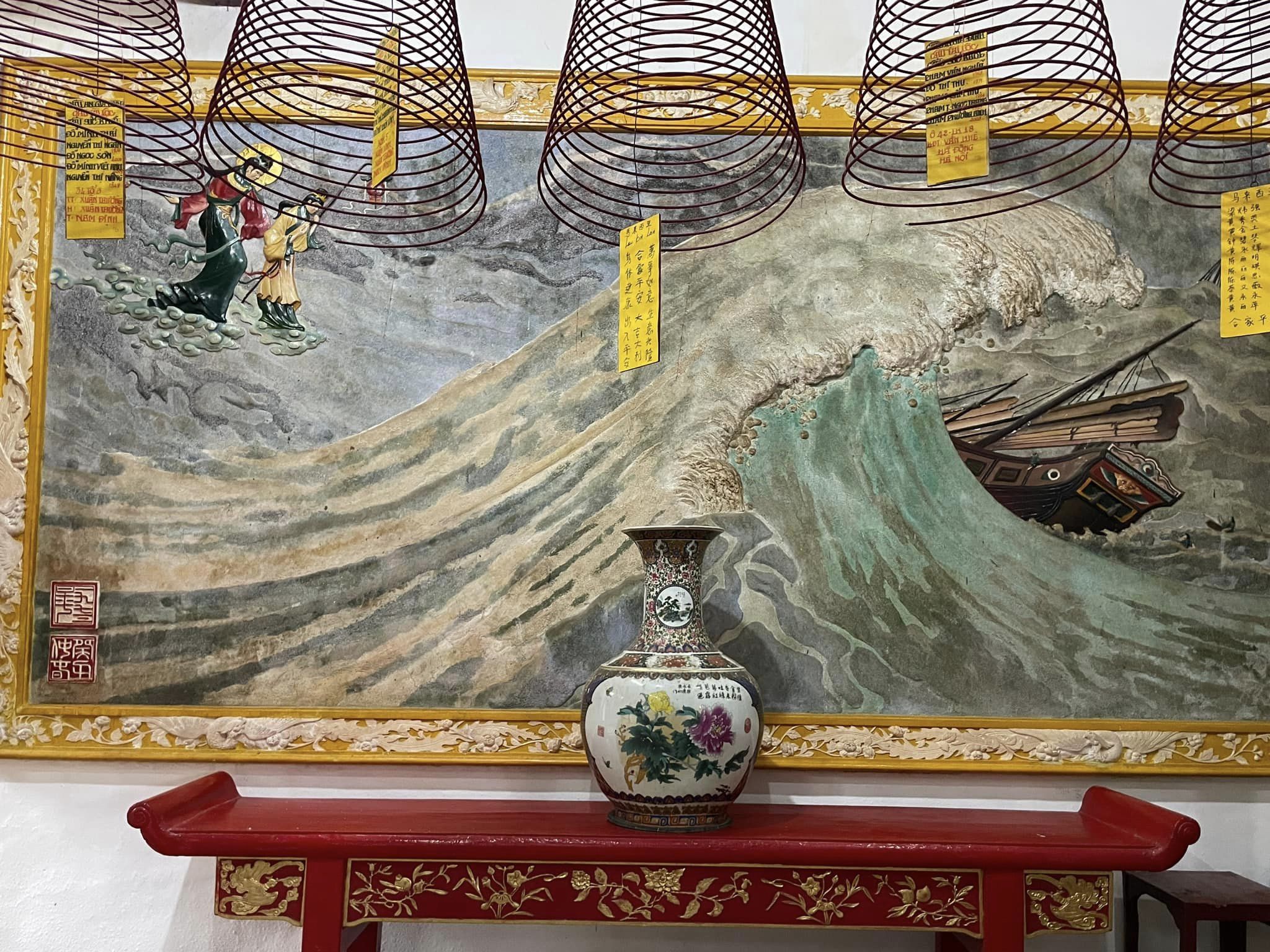
The Sea Goddess protected those of Ming Dynasty fleeing China by sea when the Tang Dynasty took over. In this painting, we can see the Goddess coming over to help the ship about to be consumed by waves.
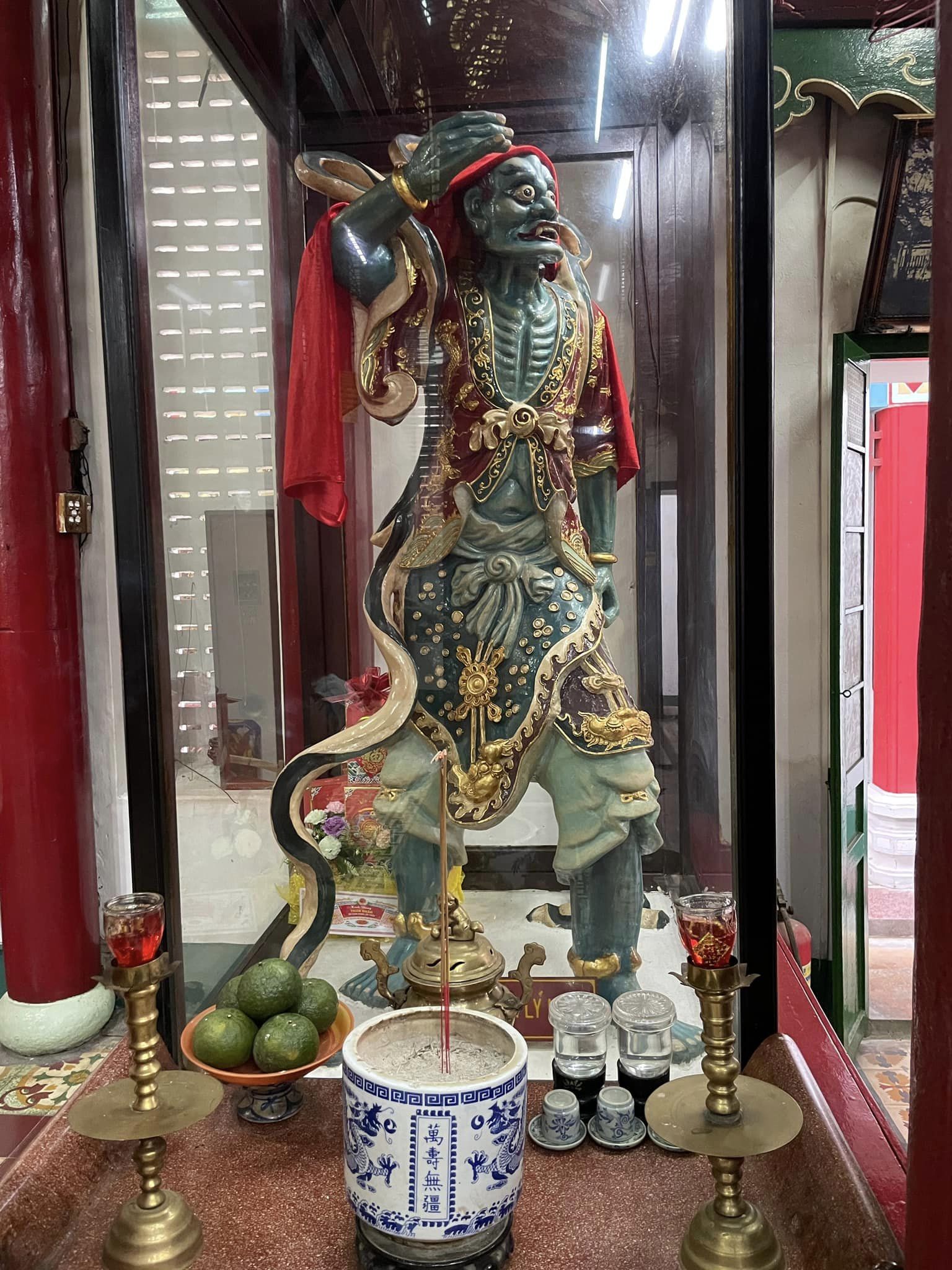
These demons with special powers used to be the Emperor’s lackies. When the General told them they were being used by the Emperor to do his evil bidding, they realized the error of their ways and helped the General overthrow Emperor. They then switched allegiance to work with the sea goddess. Their special powers in long distance vision and hearing came in very handy, enabling them to let the sea goddess know if someone was in trouble.
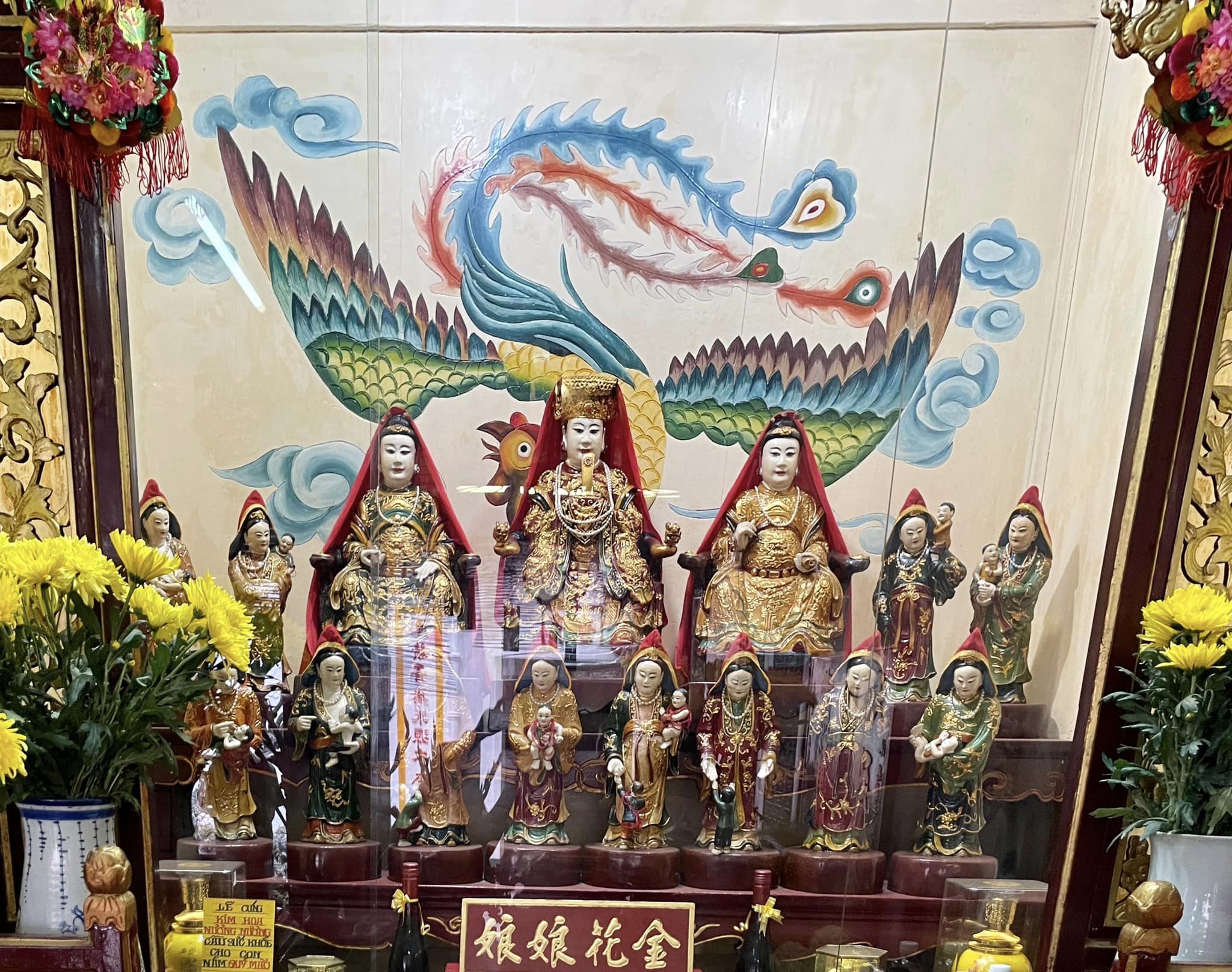
Here is the Goddess of Birth with her 12 sacred ladies representing the months of a baby’s first year. They each protect the baby from various baby dangers that may befall them during that year. After that, I guess they’re on their own… A first birthday tradition that still holds today, the newly minted one-year-old is presented a tray from which they can choose an object. Their choice foretells the baby’s future. If the baby chooses a pencil, they may become a writer, if they choose a cooking object, perhaps being a chef is in their future, a paintbrush might indicate a future artist…
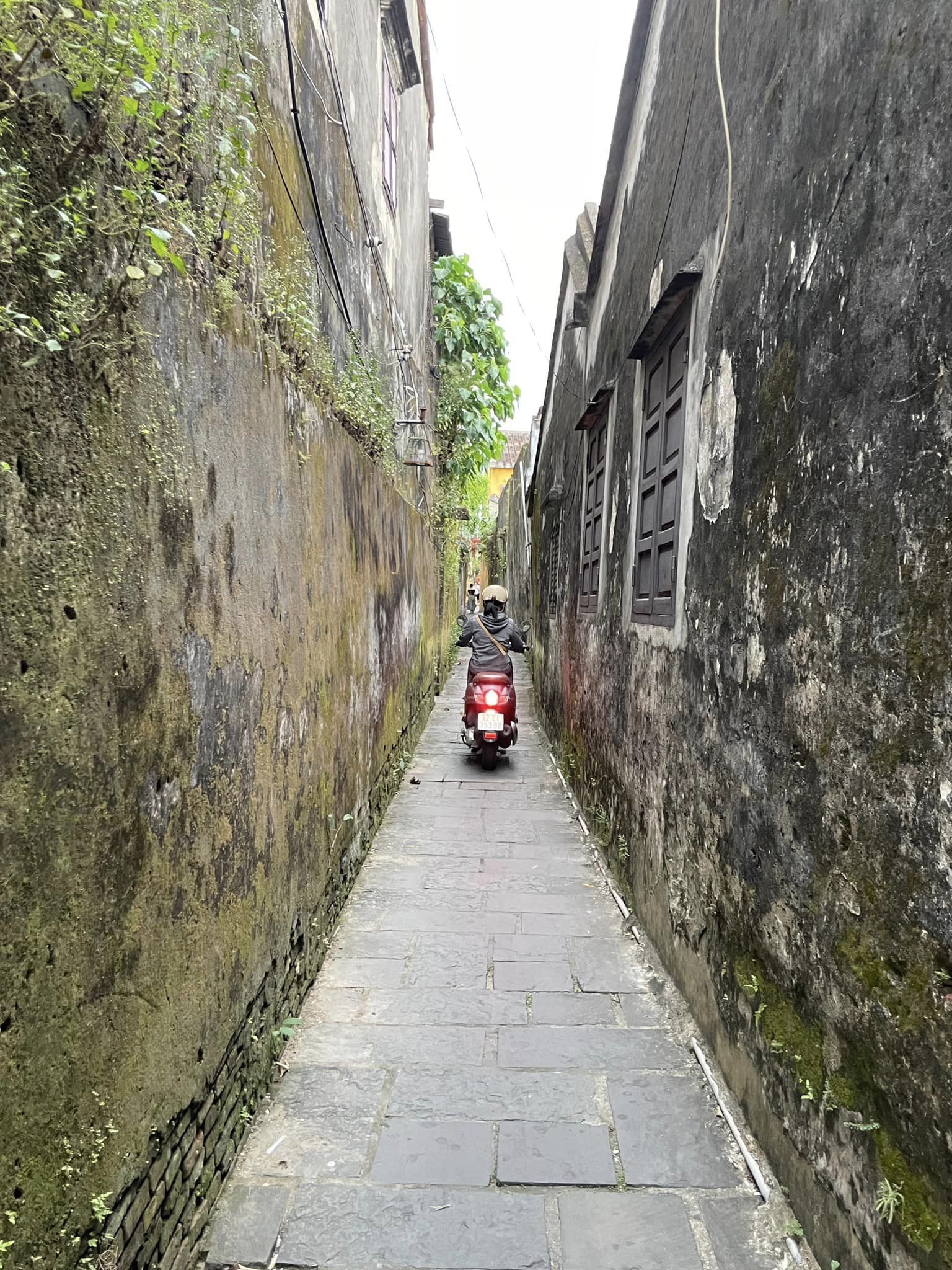
Narrow lanes throughout the old town serve a purpose beyond being charming. The help channel breezes through town.
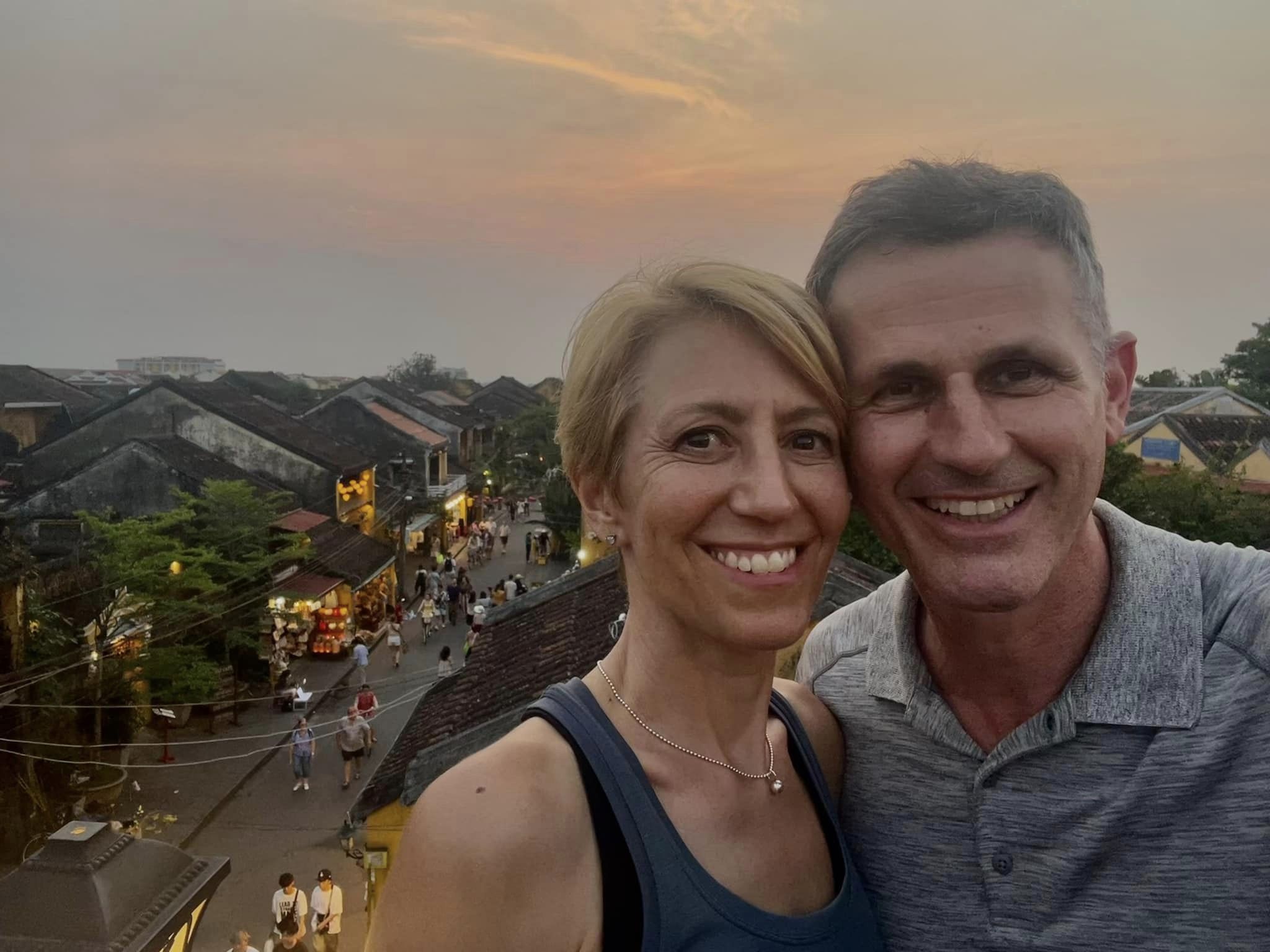
Sun starting to set over the old town of Hoi An.
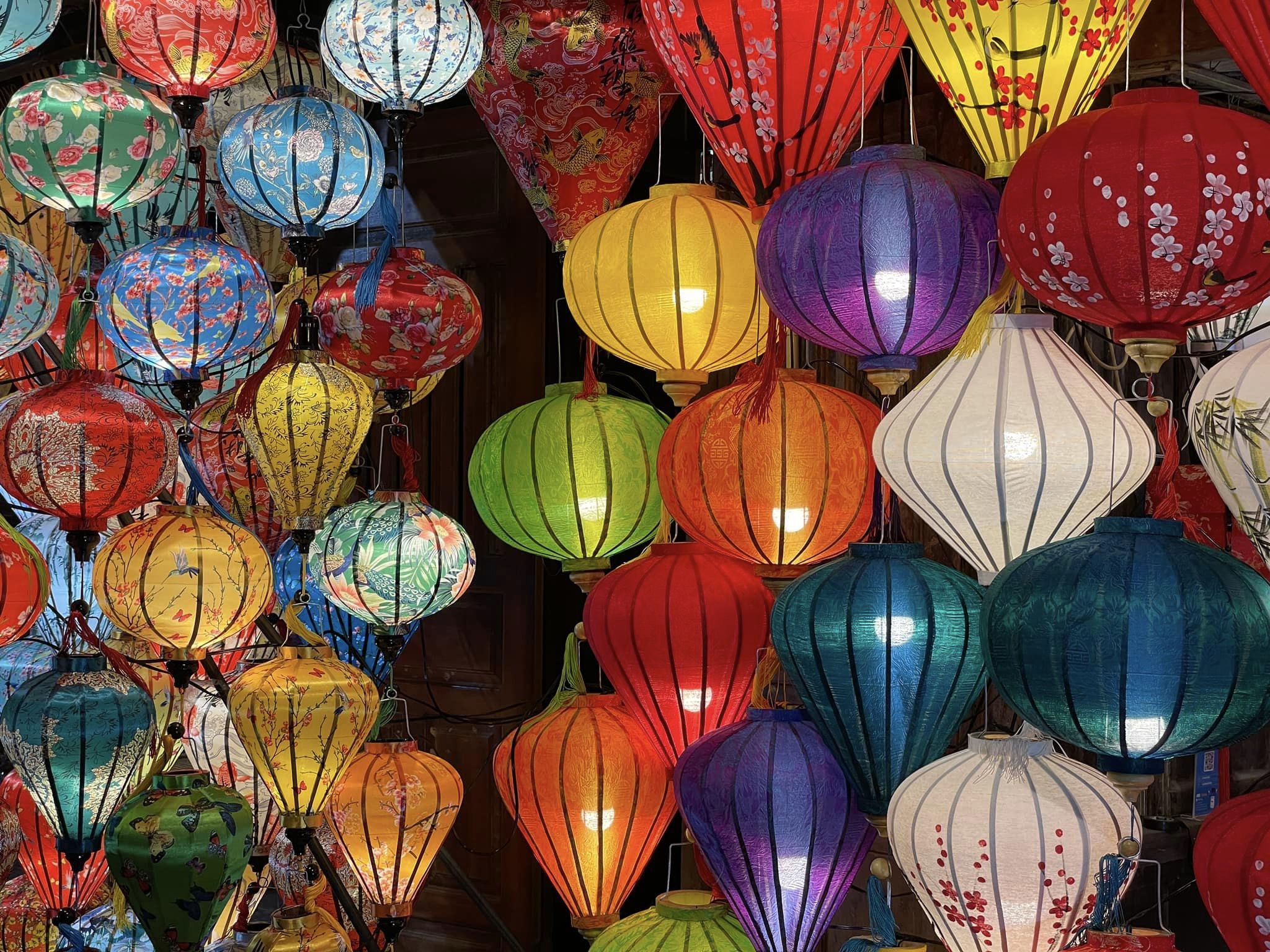
The lanterns are just stunning!
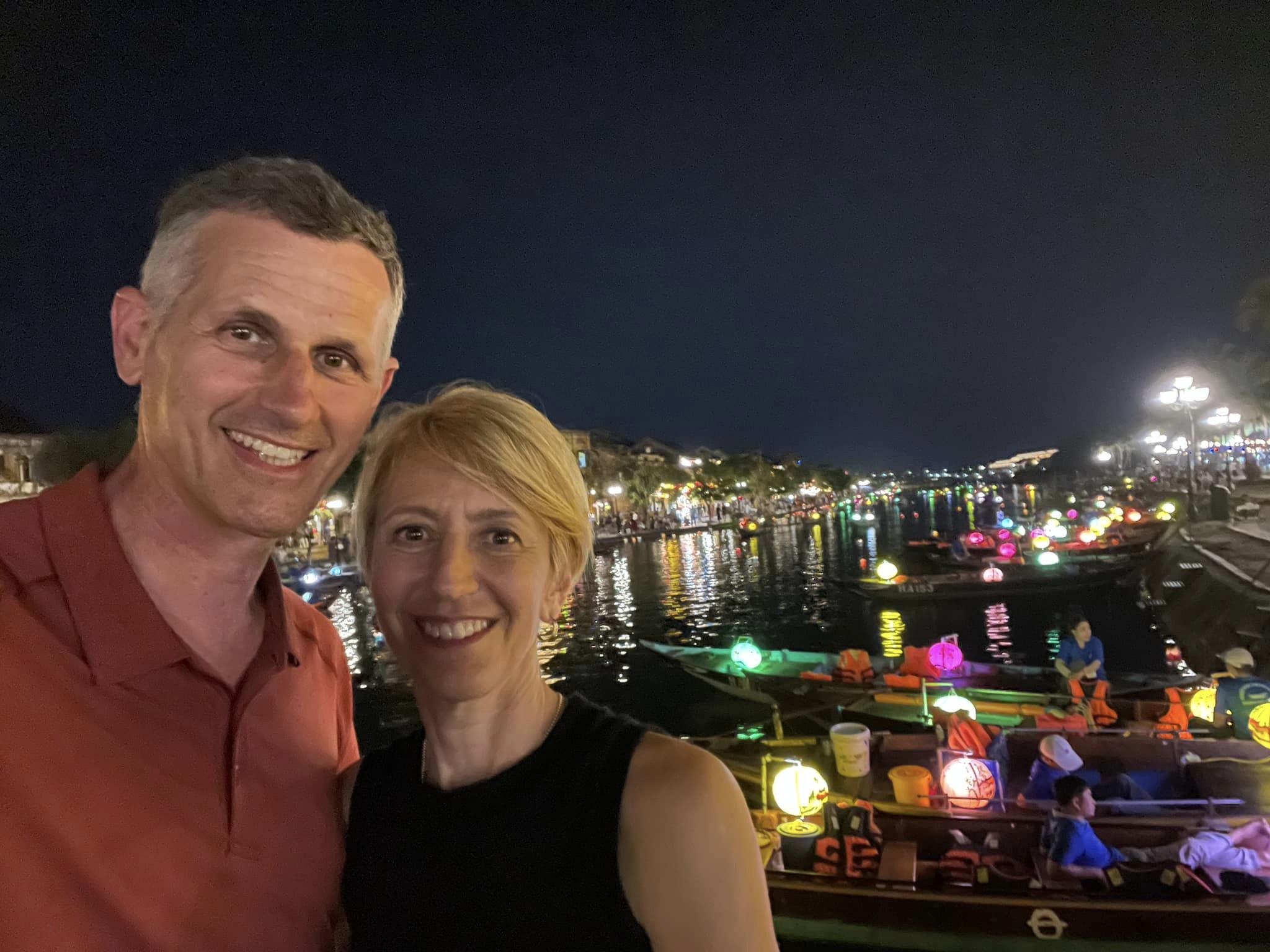
Good night from us and the lantern boats along the river.
Living off the Land
We had a couple of days experiencing Hôi An life, living off the land. First, an up close and personal visit to an organic herb farm. Then we went fishing!
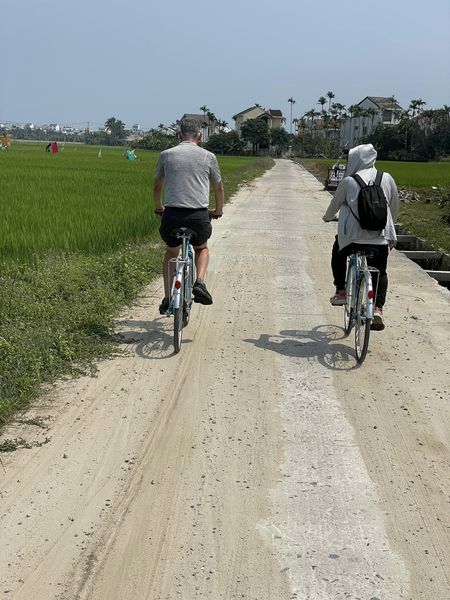
We rode bikes to the farm. It was pretty serene pedalling through the rice paddies. But that was AFTER riding through the city streets navigating the cars and scooters. Hoi An is a relatively small town but the motorized vehicles race around just like in Hanoi. What a relief to get off the street!
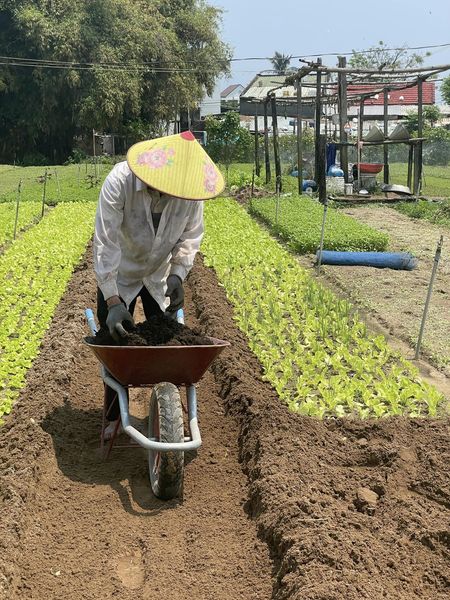
At the community farm where 200 families share 15 hectares. Just lettuces and herbs here which are fast growers so there’s always something to harvest and take to market. What’s in the wheelbarrow? They call it Farmer’s Chocolate…
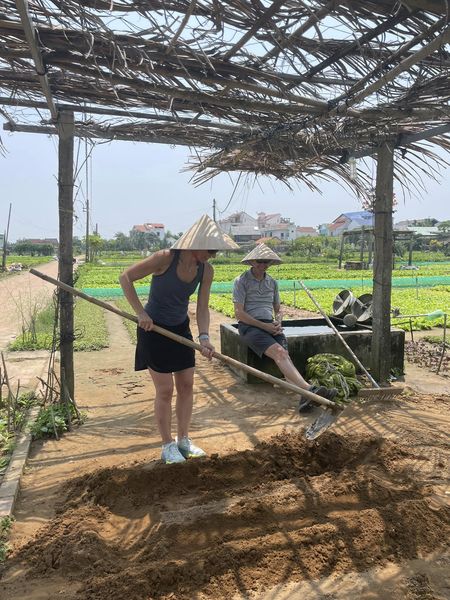
Planting time. We started by prepping the bed using a tool much heavier that what we have for our little garden at home. Adam is sitting on the edge of a “fish tank”. They keep fish in there and then use that nutritious water for hand watering.
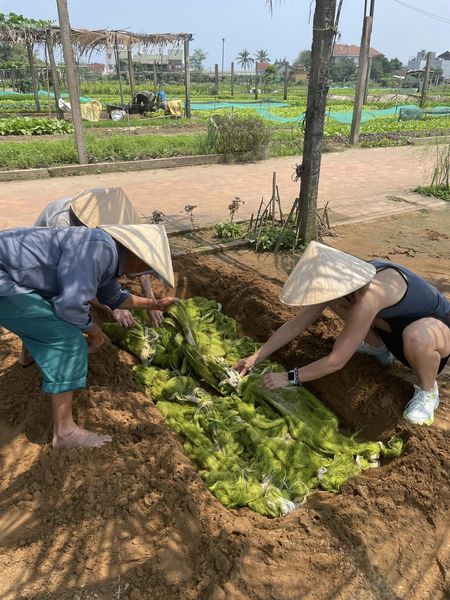
This is river weed that gets spread around the bed we so carefully prepared. Working on my squatting skills at the same time!
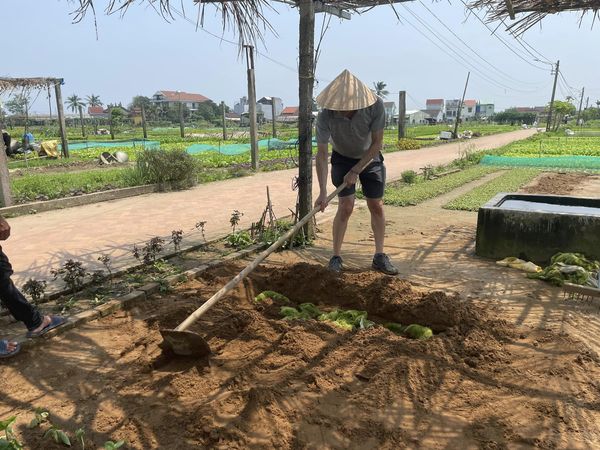
Now we cover up the river weed with soil.
And it’s spinach planting time!
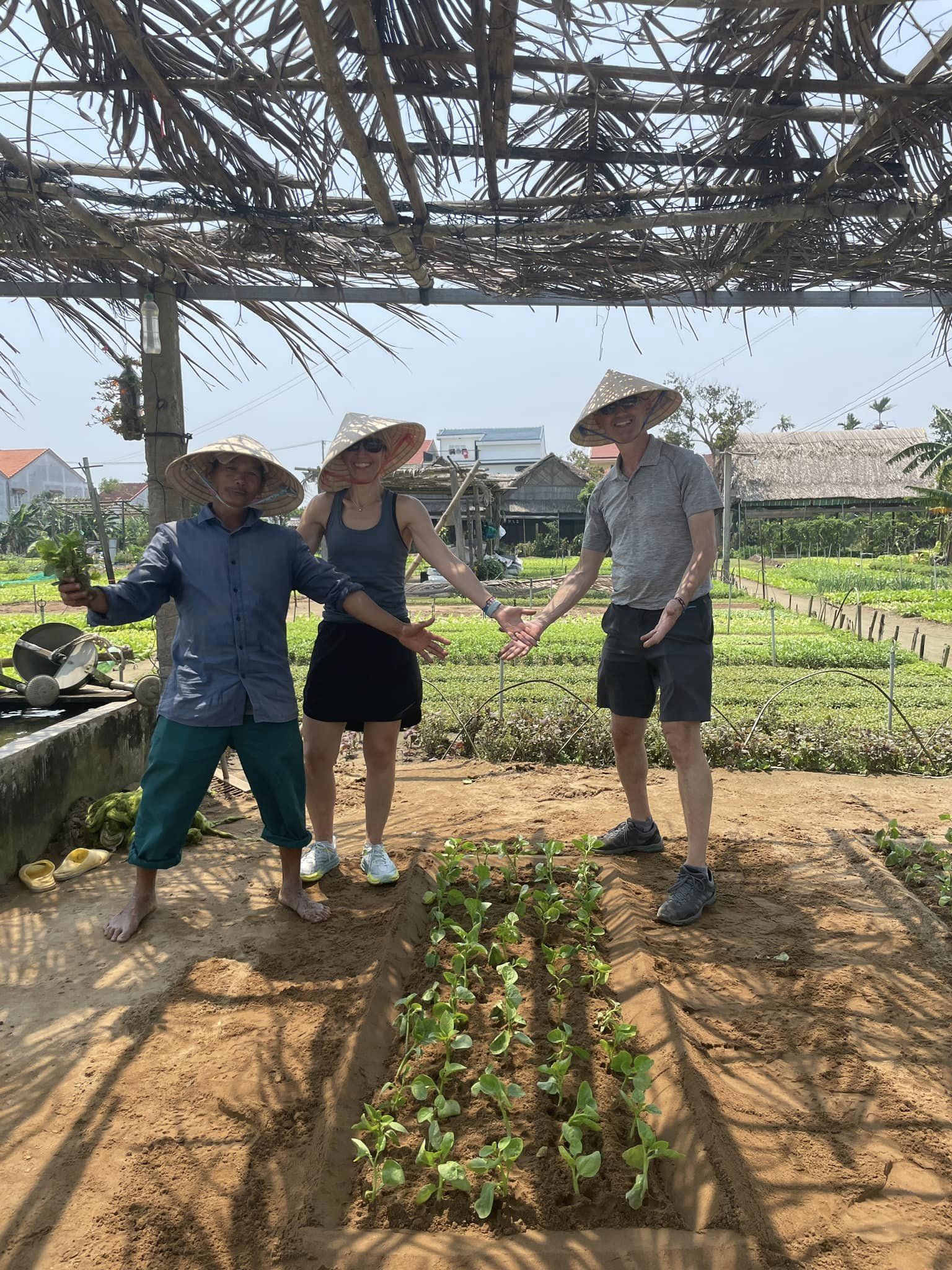
A job well done!
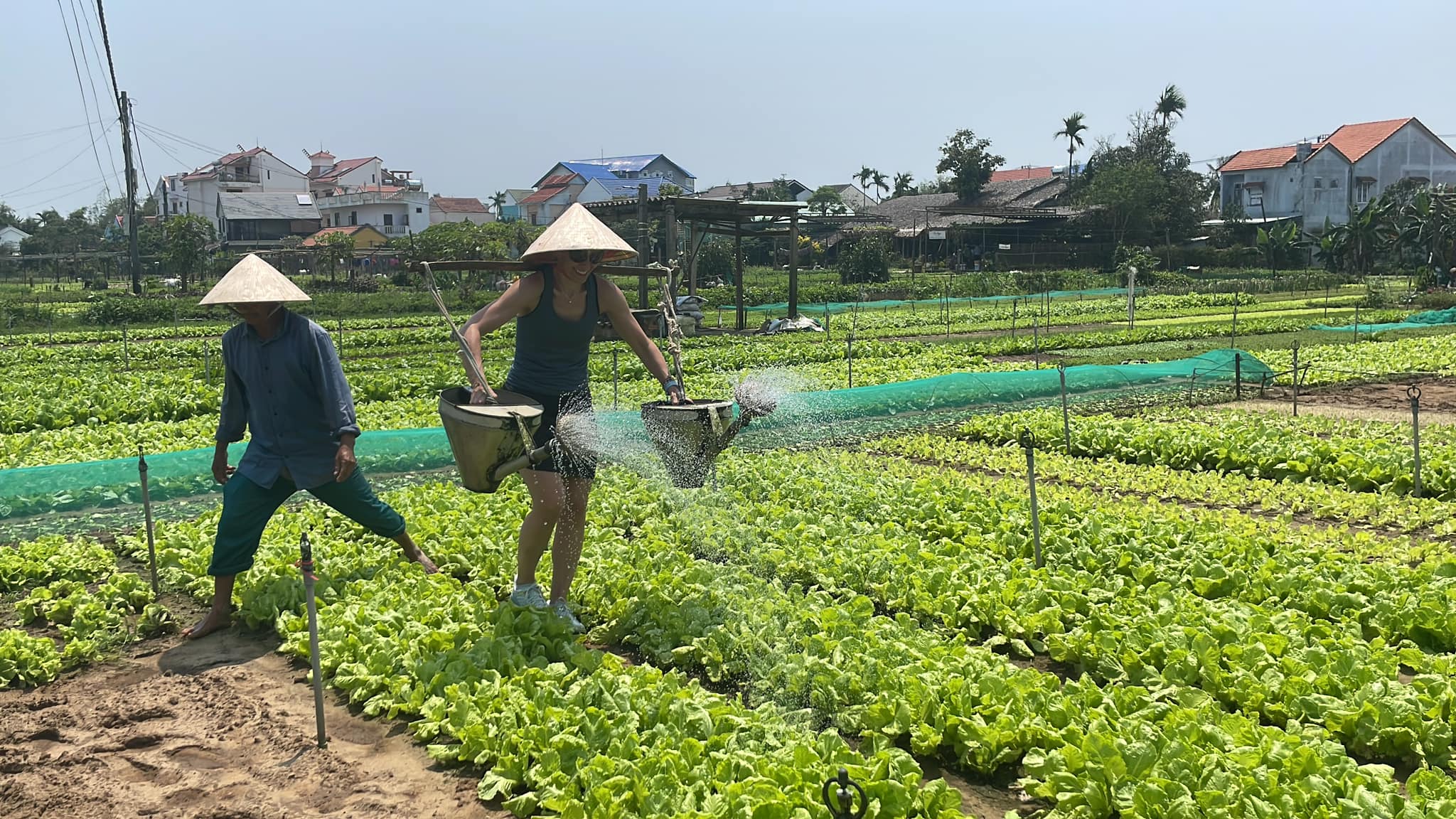
Watering time.
It’s harder than it looks…
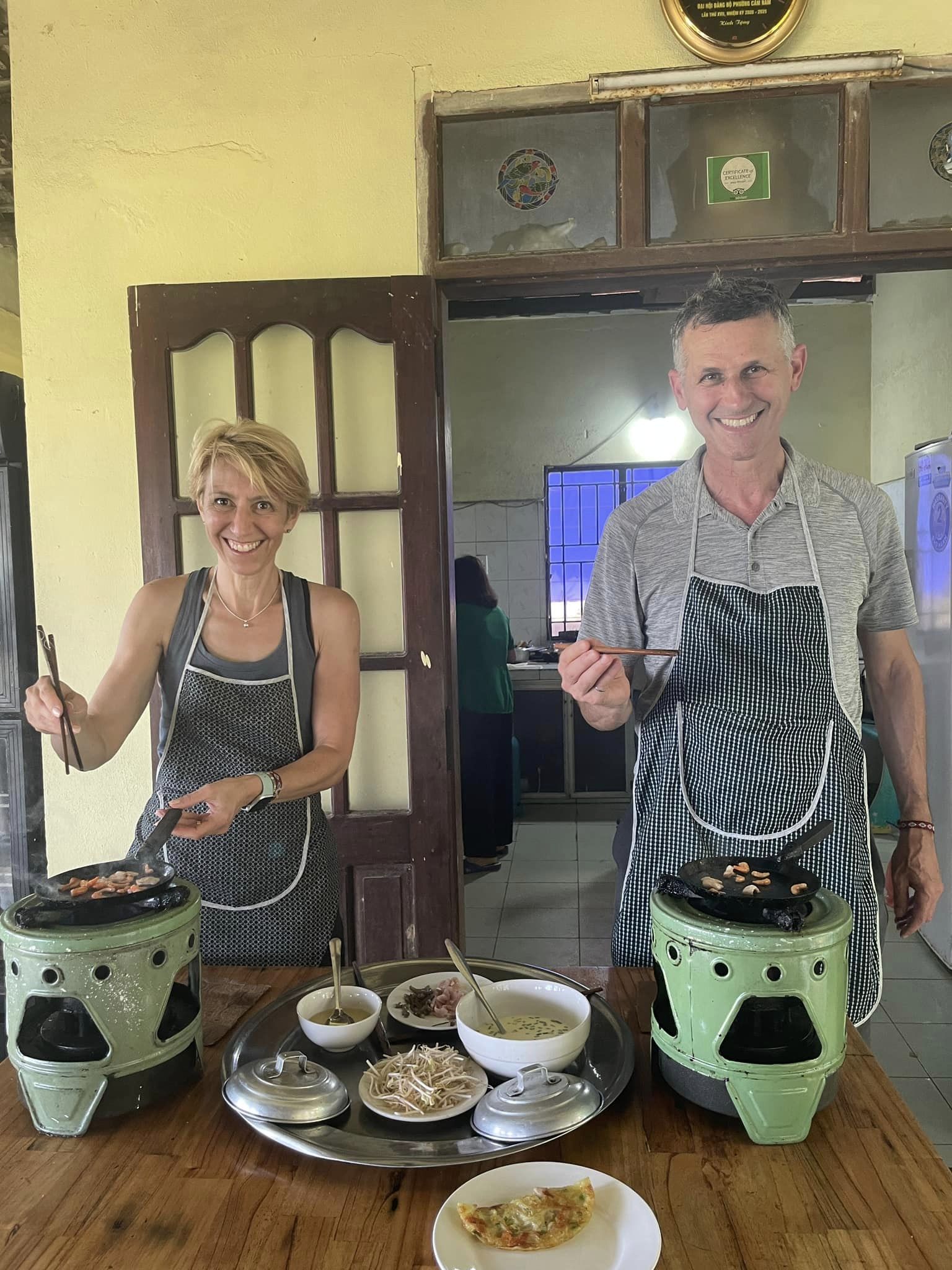
Not only did we have to work in the field but we were put on kitchen duty.
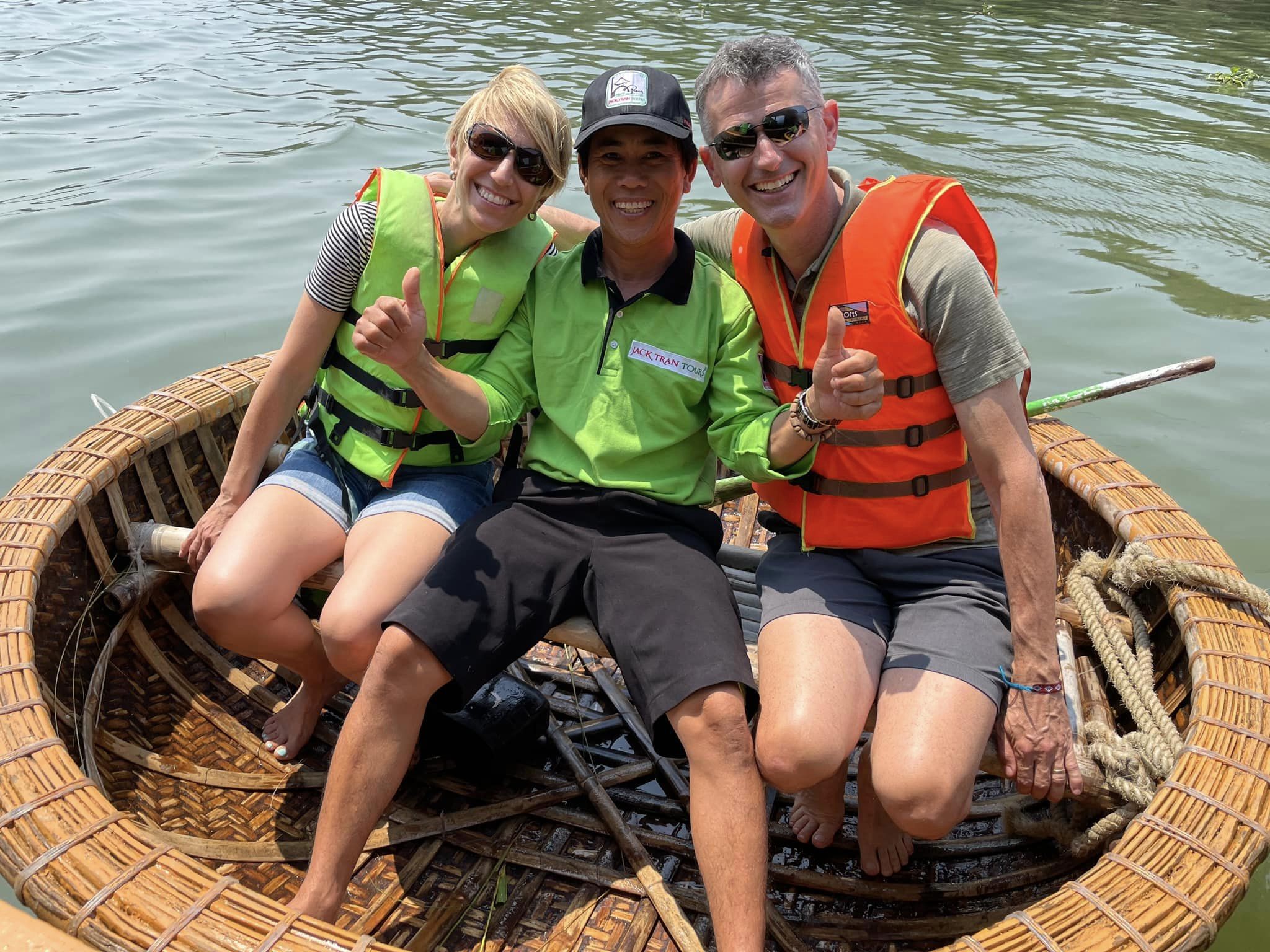
The next day, we went fishing. We started with a little excursion in a basket boat. The boat geometry is quite odd; we figured it might be helpful when it came to navigating tight spaces in the water coconut grove. Nope. Purely financial. The French imposed taxes on boats. To avoid this tax, the Vietnamese ingeniously created a big, floating basket which did not classify as a boat and, to this day, this not-a-boat is not taxed.
Chung took us for a little spin… Needless to say, I was very ready to get off this “ride” well before Adam was ready!
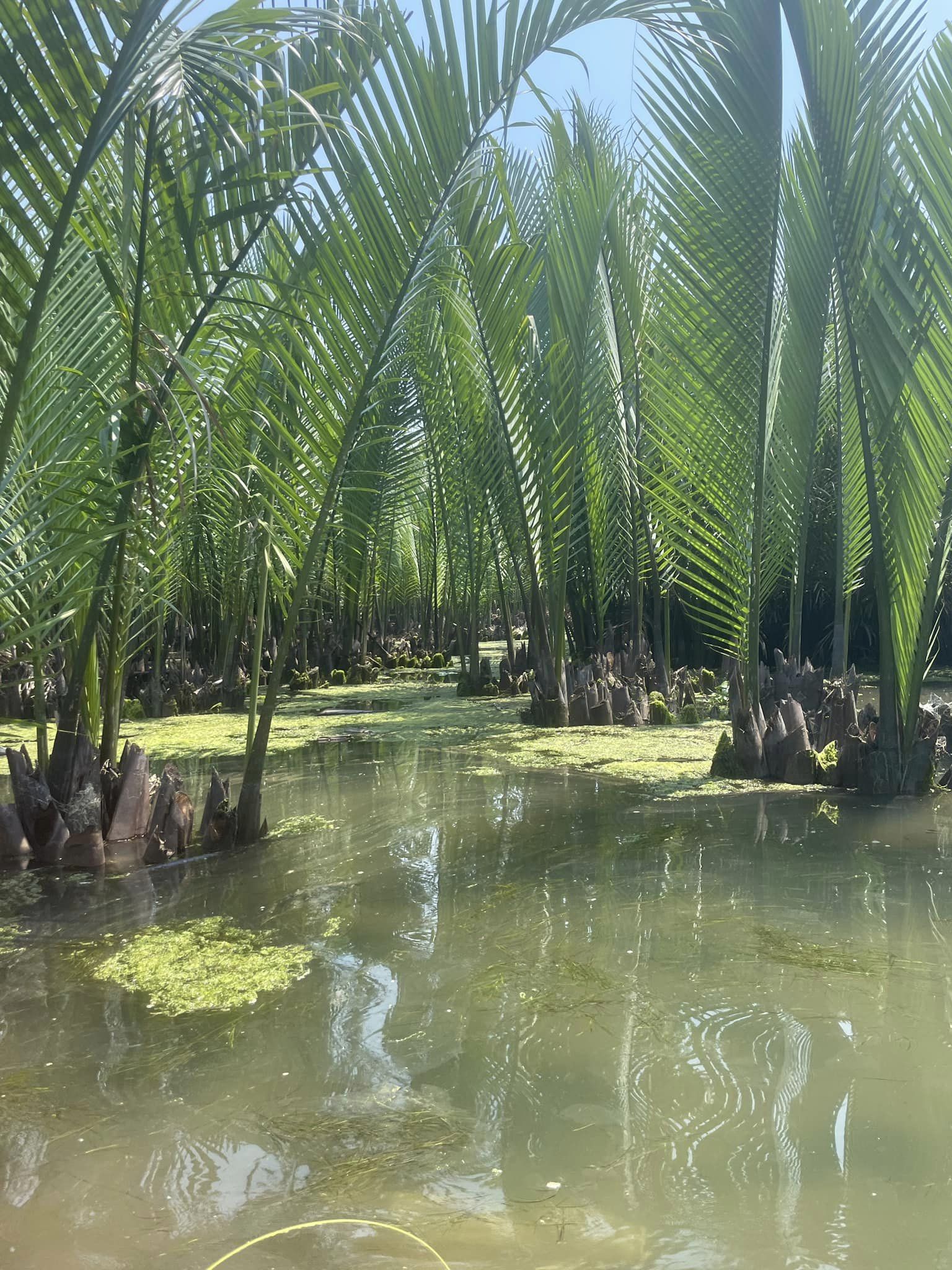
Inside the water coconut grove. This is less about the coconuts, and more about the leaves which are harvested and used for rooftops and kindling. During the war, the Viet Cong hid in the maze of channels. If the enemy came close, they would slip under water and breath through skinny bamboo “straws”.
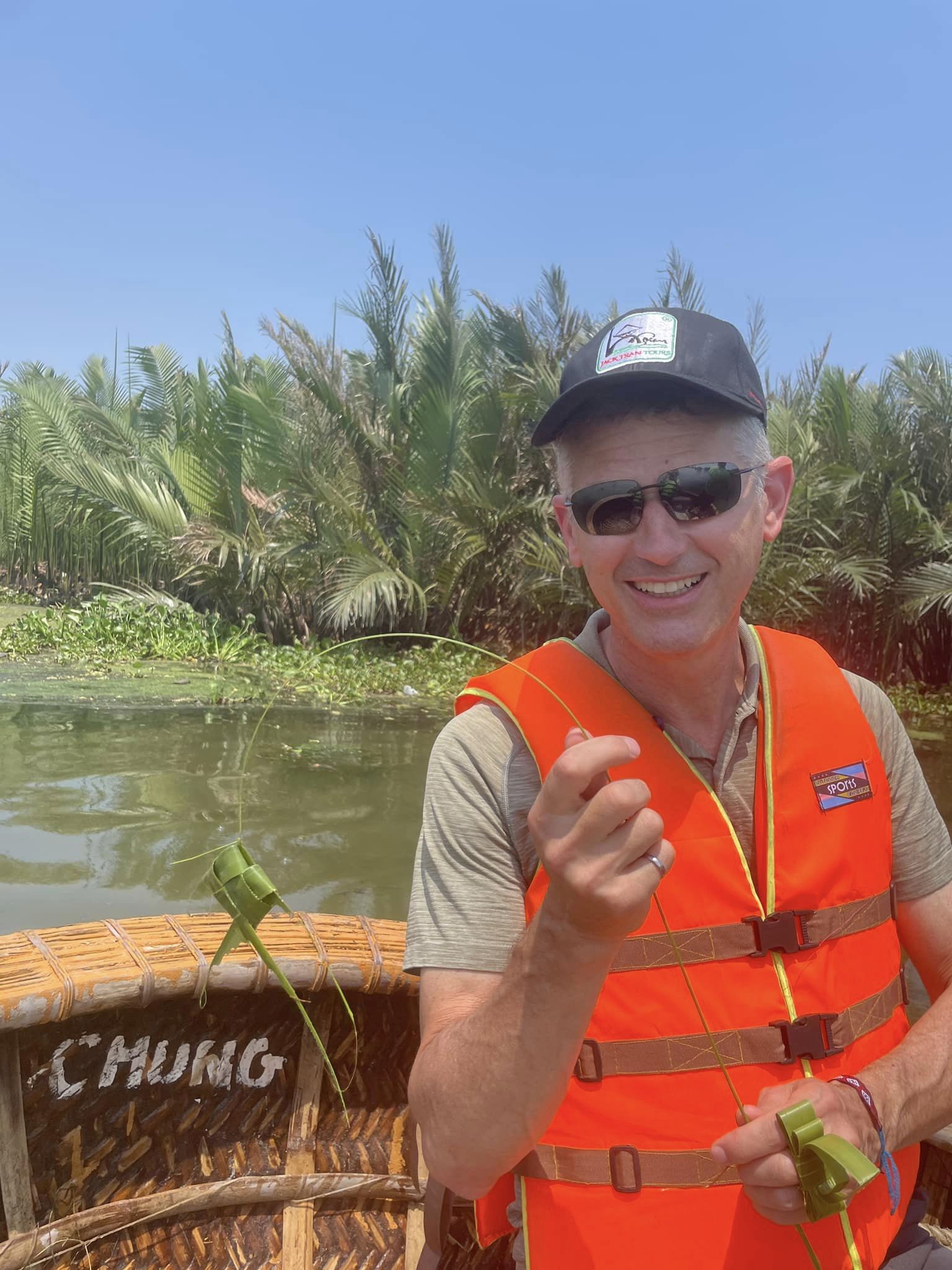
Adam got an early start to his fishing. Chung made him his first fish on the line out of a coconut palm leaf.
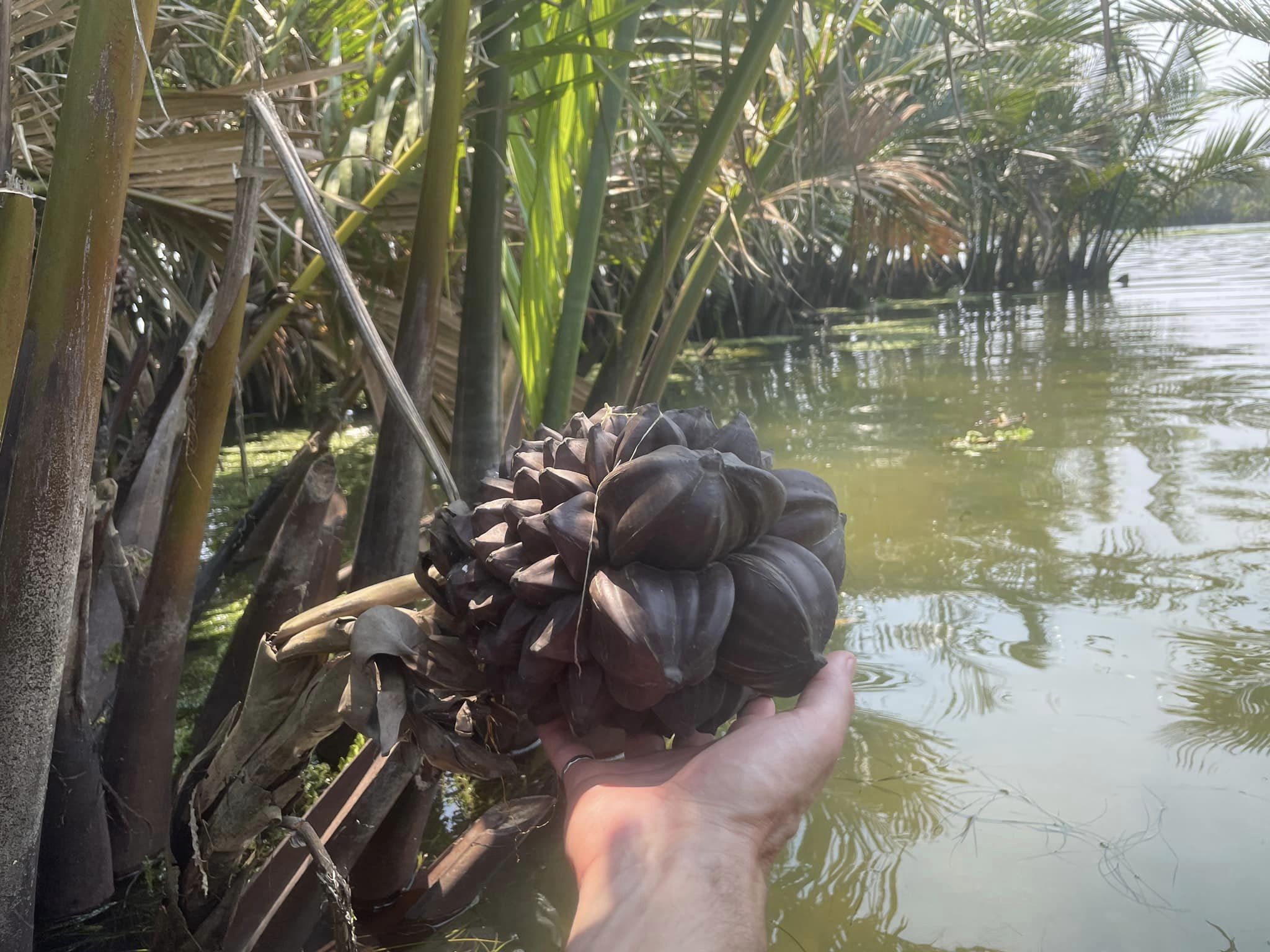
A young water coconut.
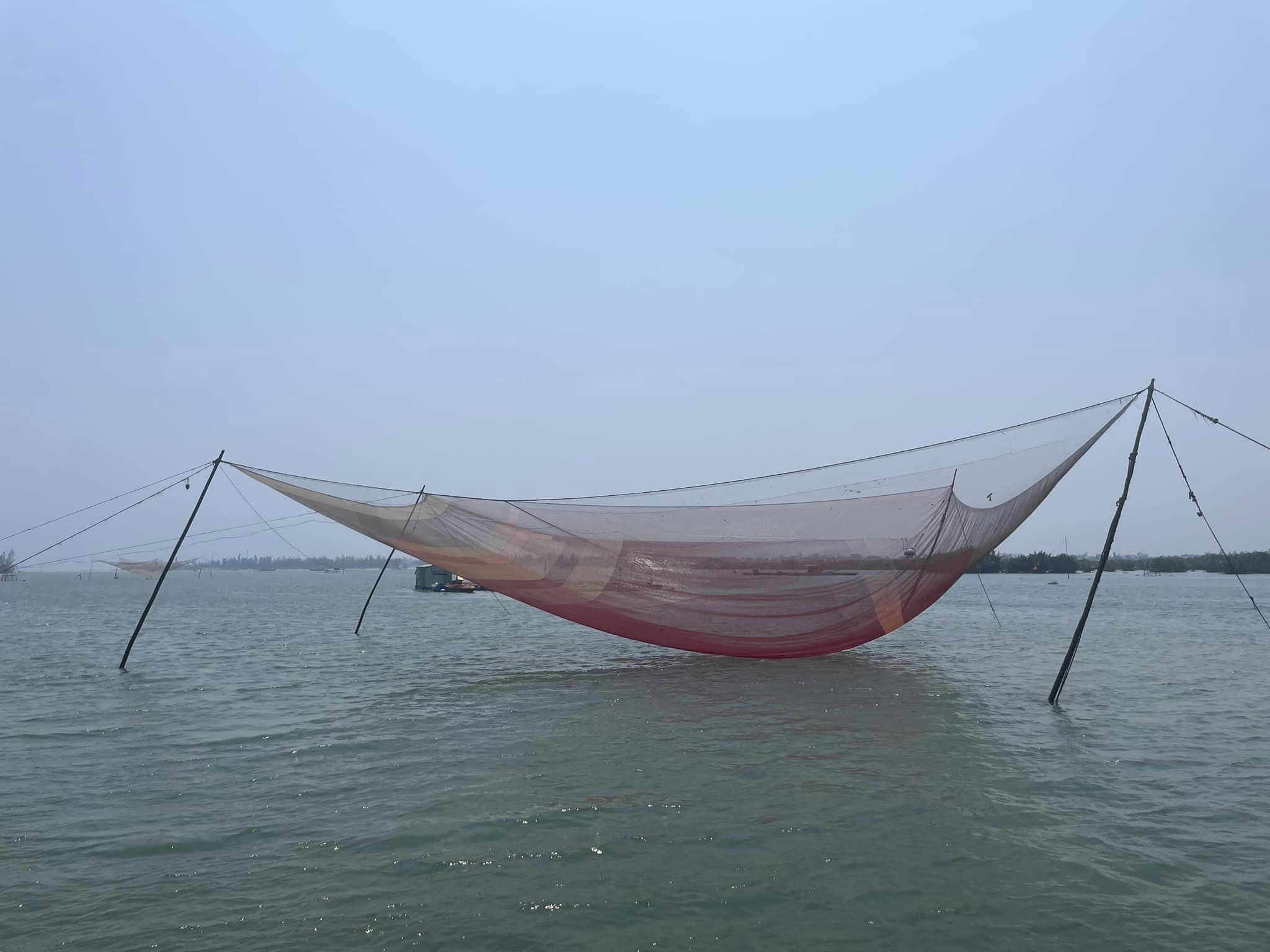
One of the fishing methods out here. This giant net is abruptly dropped into the water (the four bamboo poles on each corner drop to the right). The sudden drop surprises the fish who get confused and swim into the net. The net is then raised, trapping the fish. This can happen as much as 40 times a day of the conditions are right.
Here’s how we raise the net. It got progressively harder because the net got heavier as it rose out of the water…there were no fish in the net this time!
Here’s another fishing method which involves gracefully throwing a weighted net just so into the water and then pulling it back in, ideally full of fish.
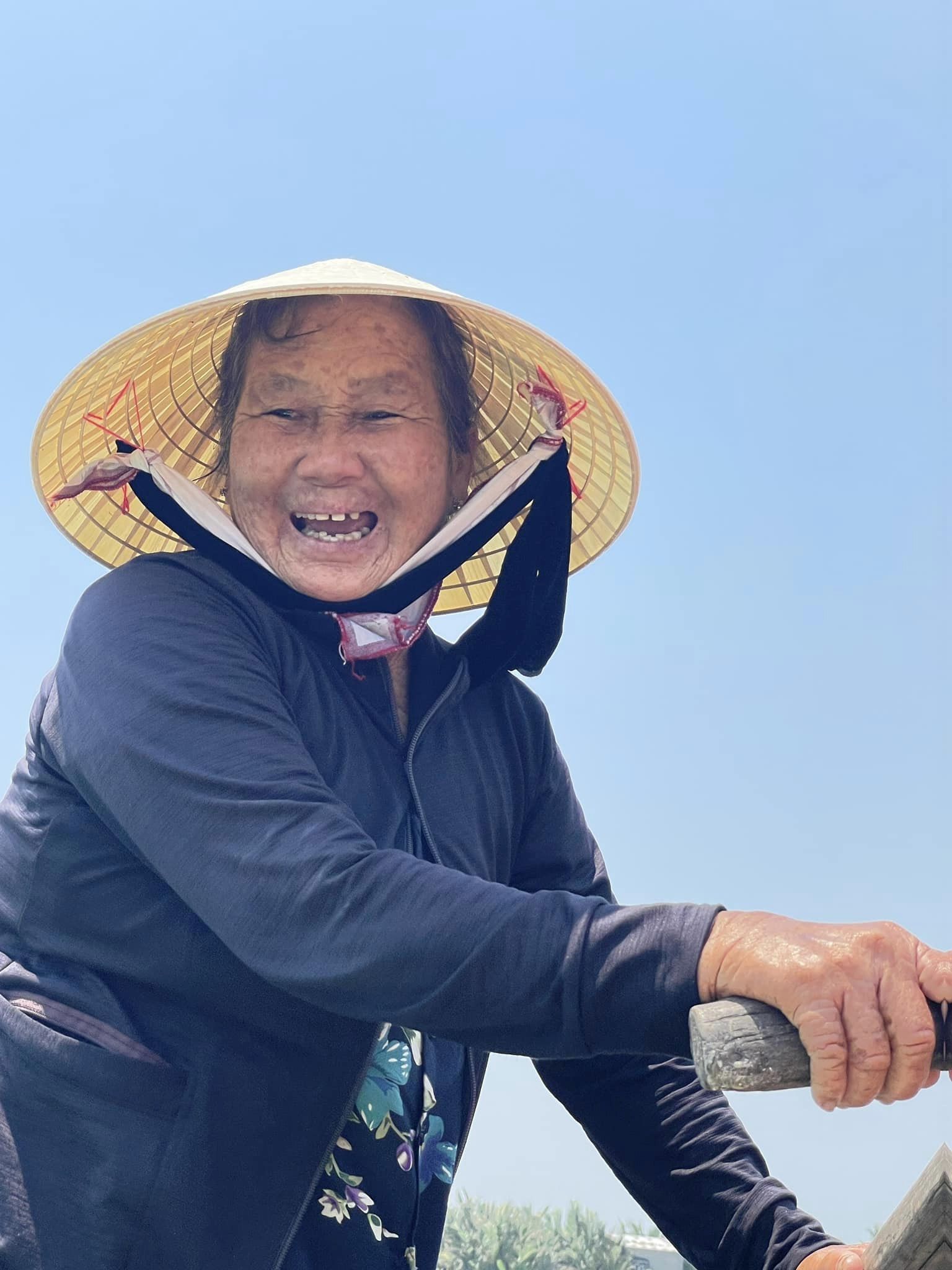
The wife of the couple who took us fishing is the driver.
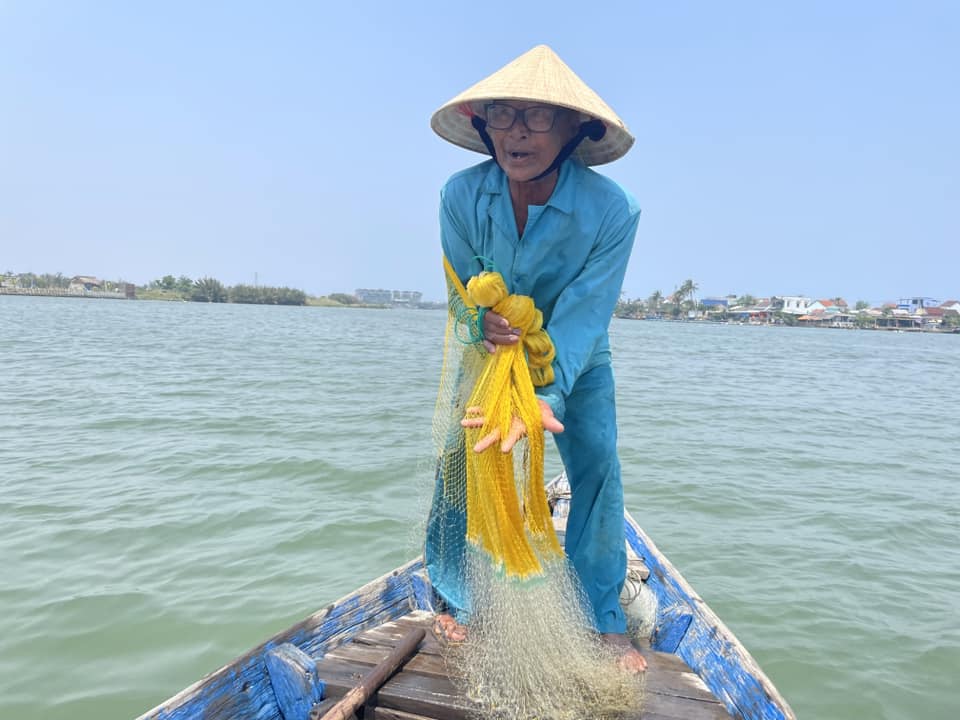
Here’s the husband demonstrating how to hold the net to get the right throw.
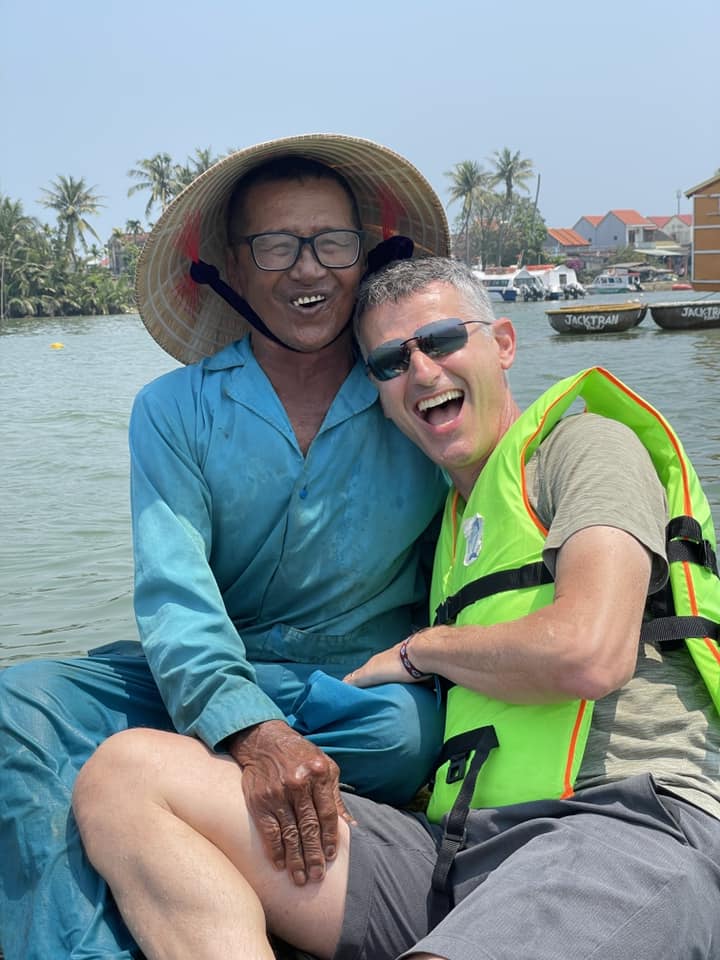
Our teacher was very happy with his performance and called him “Number 1”!
And, we learned a third method of Vietnamese rowing!
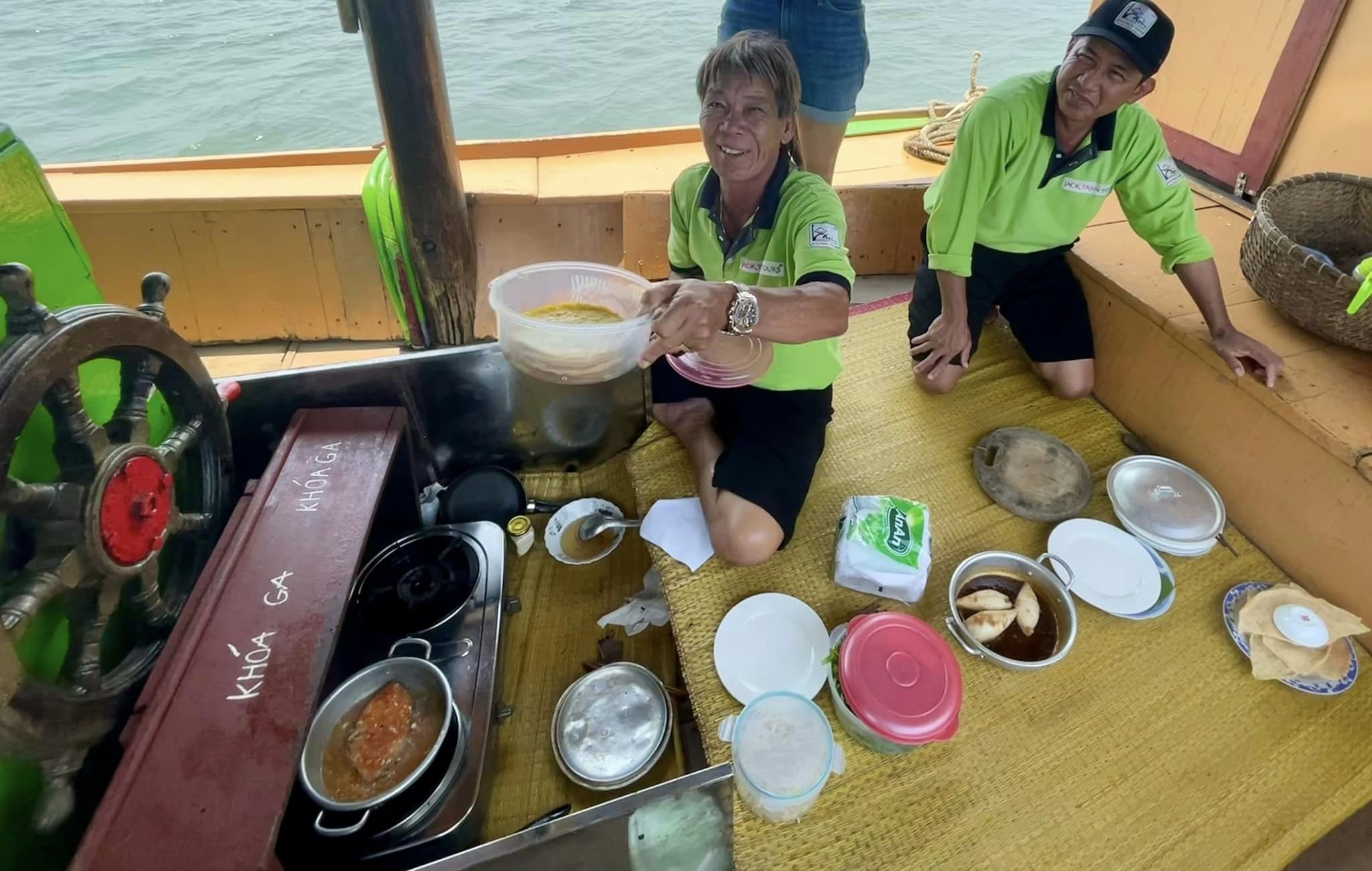
We got back on the boat after all that fishing work and discovered our captain transformed the space behind his wheel into a kitchen!
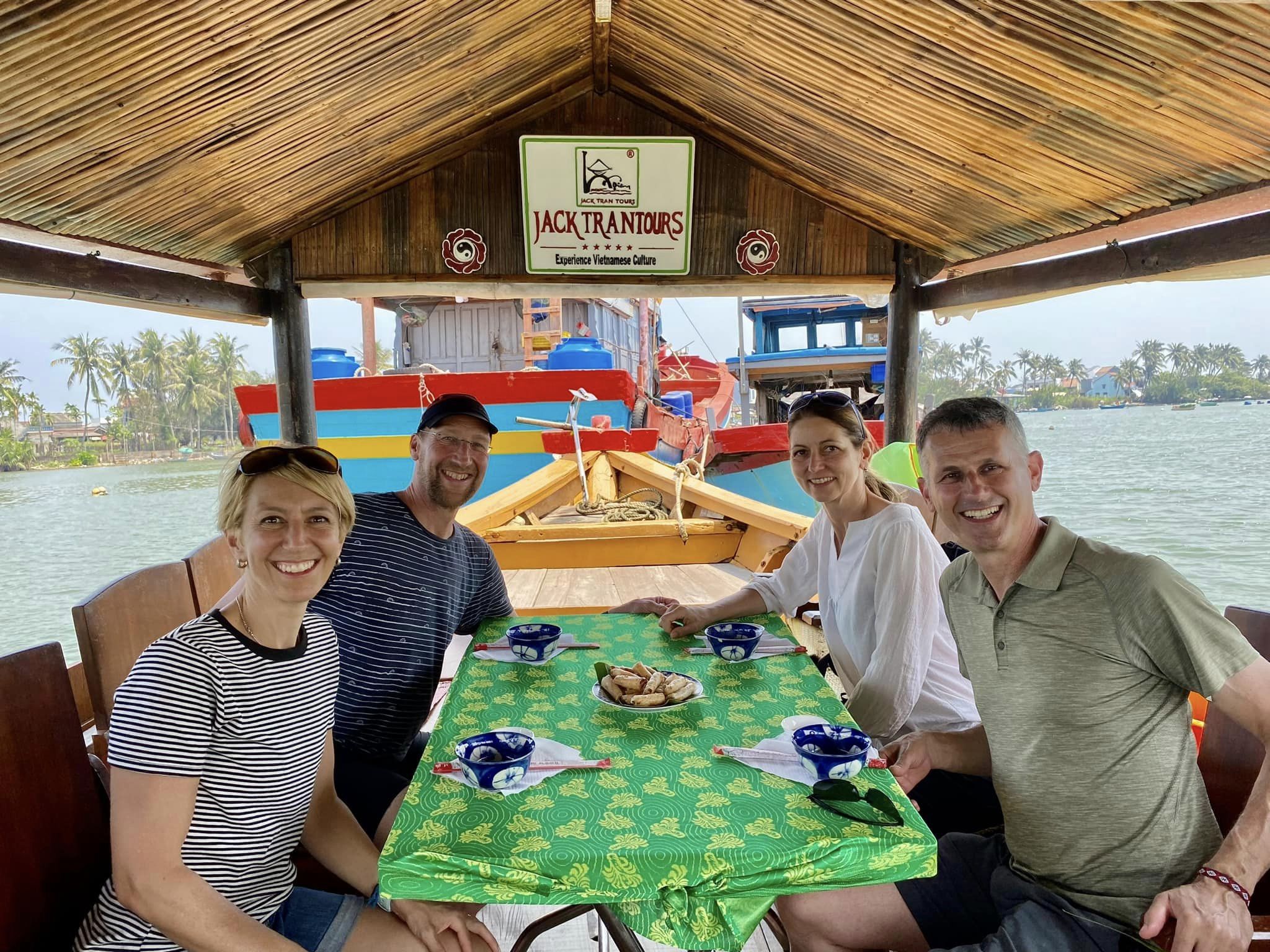
Lunch was awesome…it’s amazing what you can pull off with a camp stove!
Silky Splendour
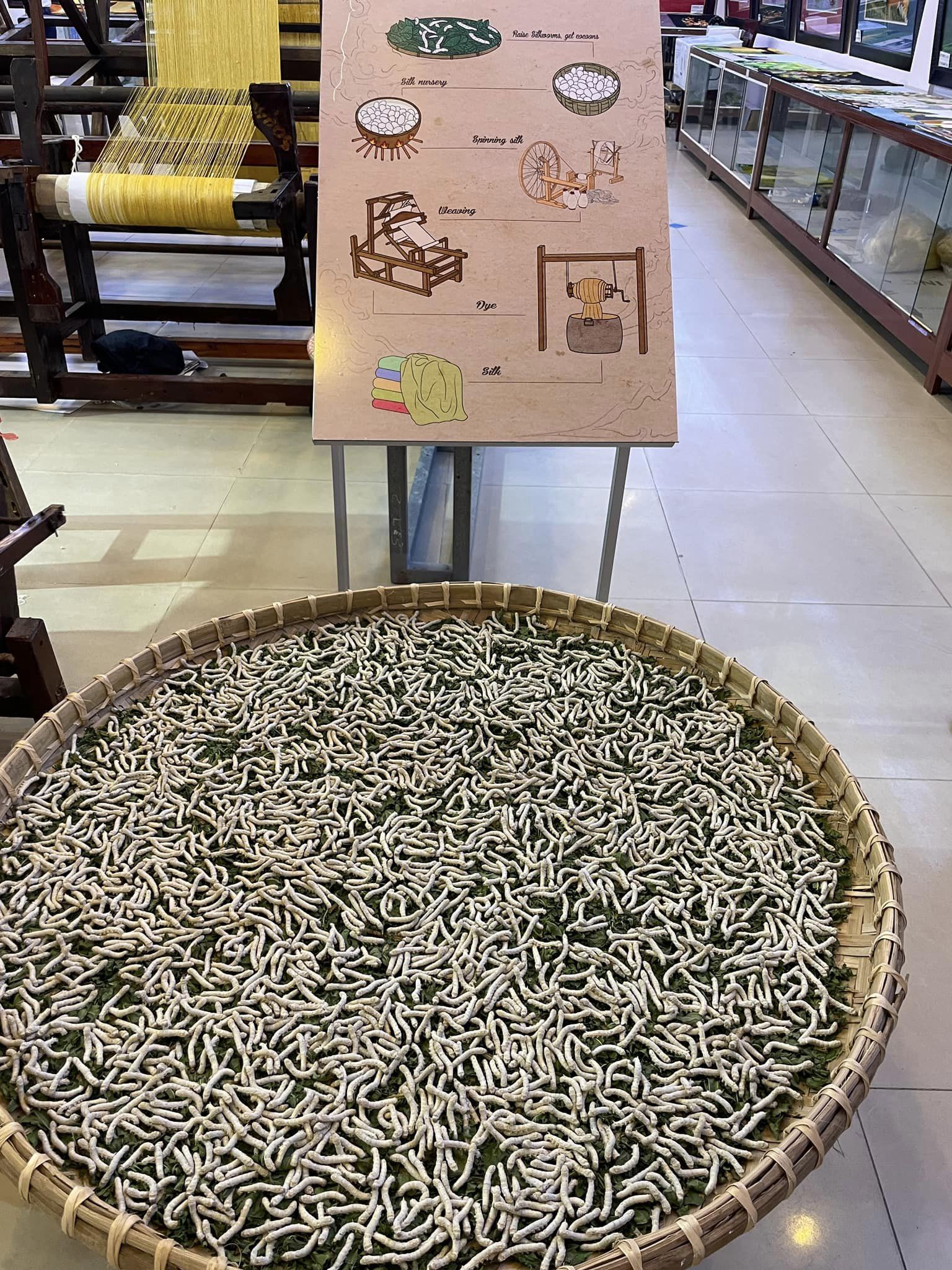
Silk worms’ favourite food is the mulberry leaf…personally I’d go for pretty much anything else in Vietnam (mind you we’ve yet to try dog and rat…). Like many of us, the silk worms eat and eat and eat until their bodies get big and round and too tight for comfort. They go to sleep and create their cocoons by secreting protein fibres that wrap around their bodies. Nice and comfy…kind of like stretchy clothes. The lifecycle is about 38 days from the moth laying the eggs to hatching to several stages of moulting to spinning the cocoon (need a rest after all that moulting work) and finally emerging from the cocoon as a moth and leaving their precious bedding for us to turn into glorious silk!
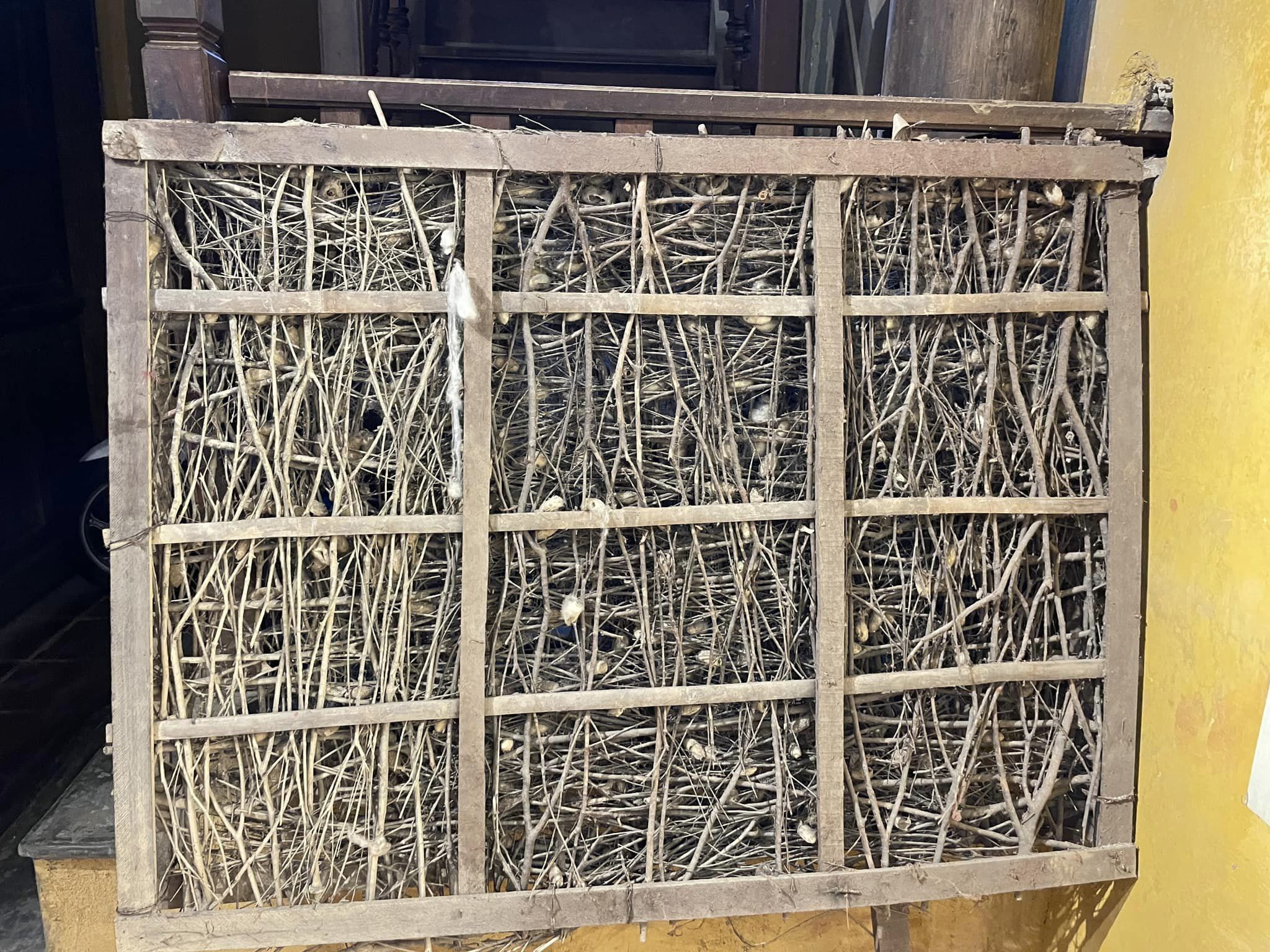
The cocoons in their natural habitat, attached to mulberry branches.
When they hatch into moths (I’m sure the same ones that come back to eat our silk and cashmere as revenge), the leftover cocoons are soaked in hot water to remove the sticky residue that holds the fibres together. The fibres are then spun into long silk threads for weaving. Here they are making the skeins of silk. Typically ten threads from ten cocoons will be twisted together to make a single, stronger thread. One kilo of raw silk fibre will need about 5,000 cocoons.
The skeins of silk are then loaded onto the equivalent of a bobbin on a sewing machine which serves as the shuttle that whips back and forth in the weaving process. The silk thread is so fine that it’s impossible to see in her hands.
Weaving the raw silk. Here you can see the shuttle the previous woman was loading getting pushed back and forth. I slowed down the video so we could see the detail of how it works. In reality it was crazy fast!
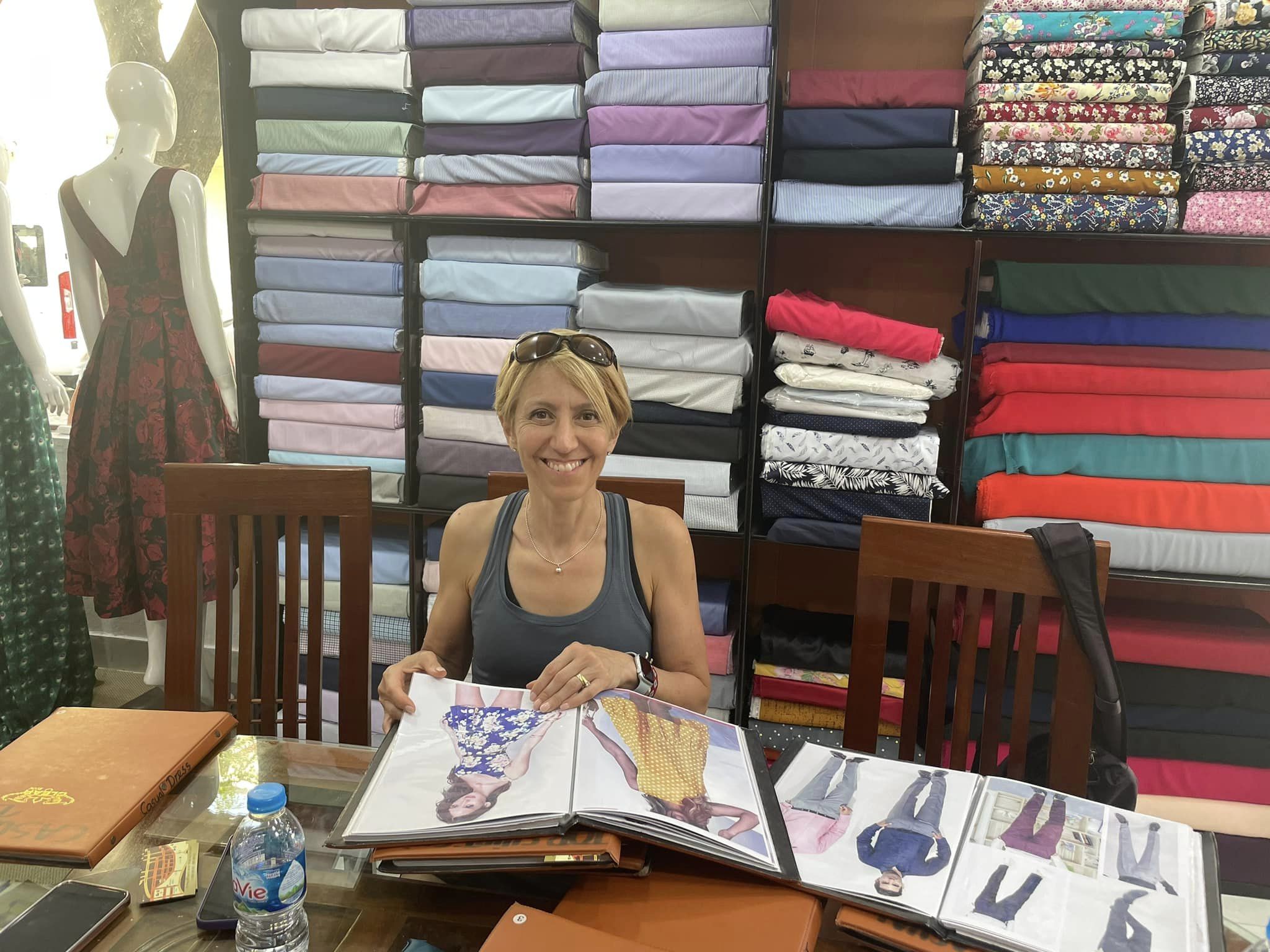
Finished silk behind me in Nicola’s studio. What to choose, what to choose…
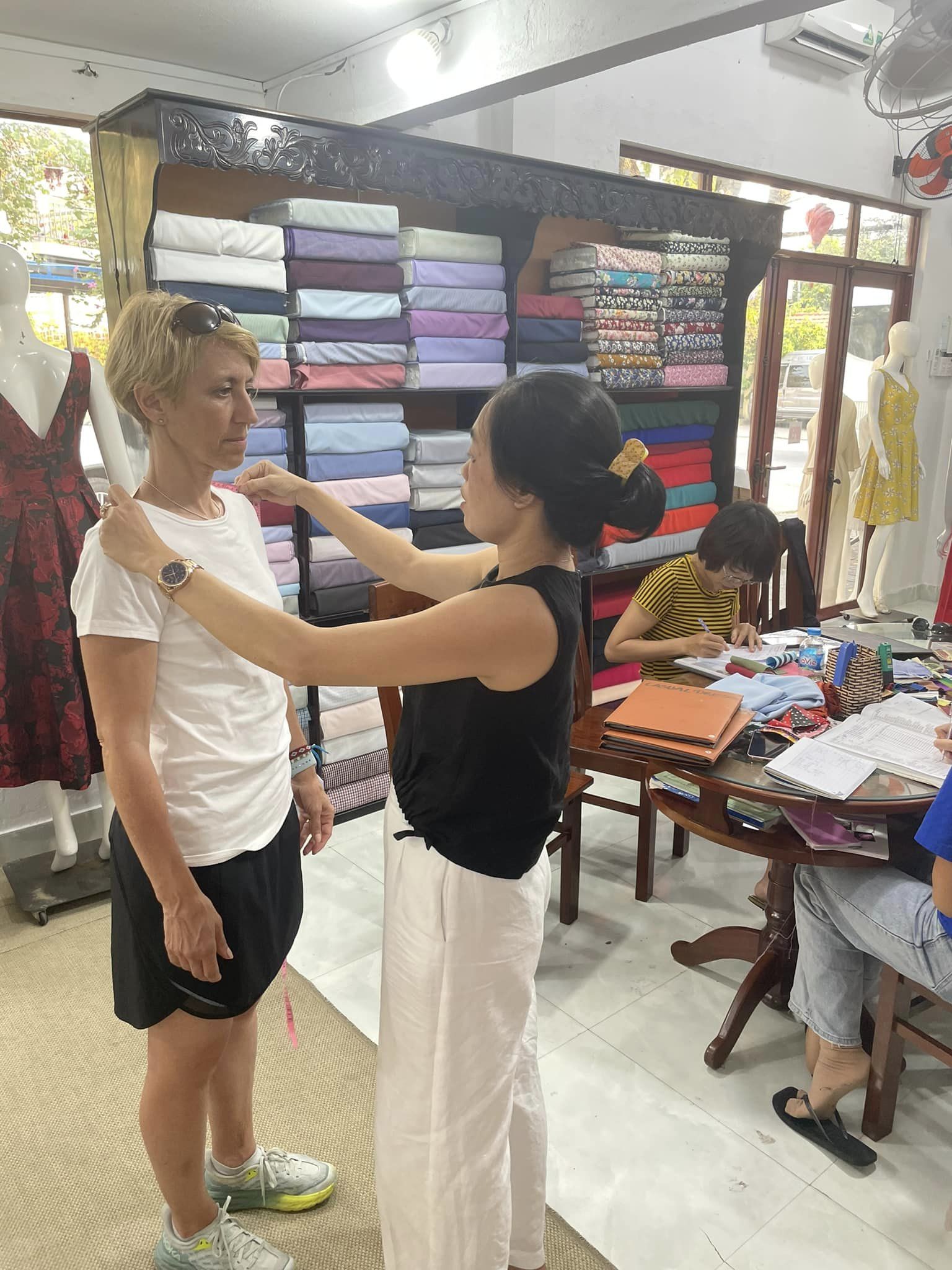
Nicola doing the necessary measurements, calling out the numbers to her assistant in the background.
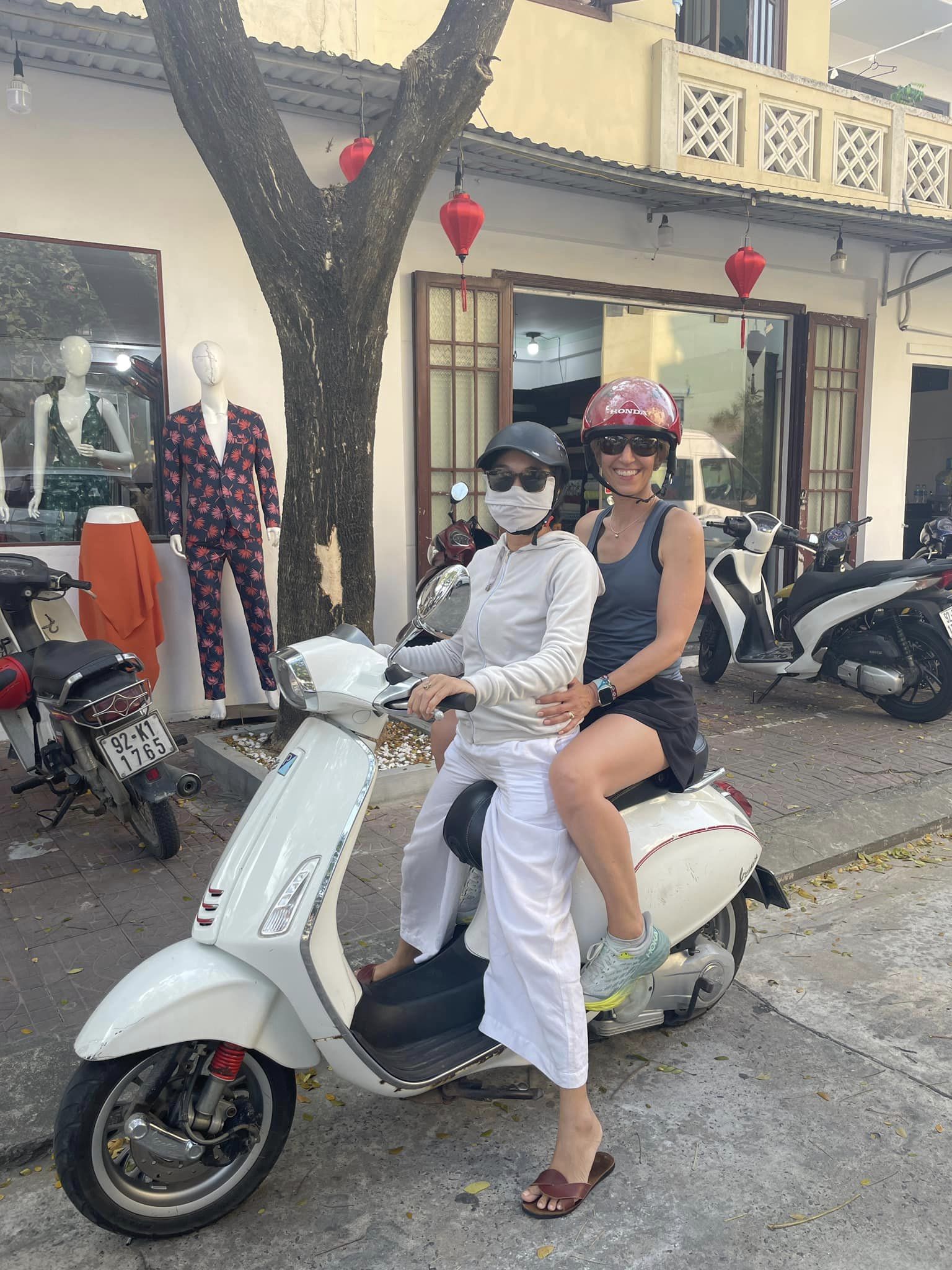
Nicola taking me back to the hotel to pick up a pair of my favourite linen pants that she wants to have a “look” at to inspire my second favourite pair of linen pants.
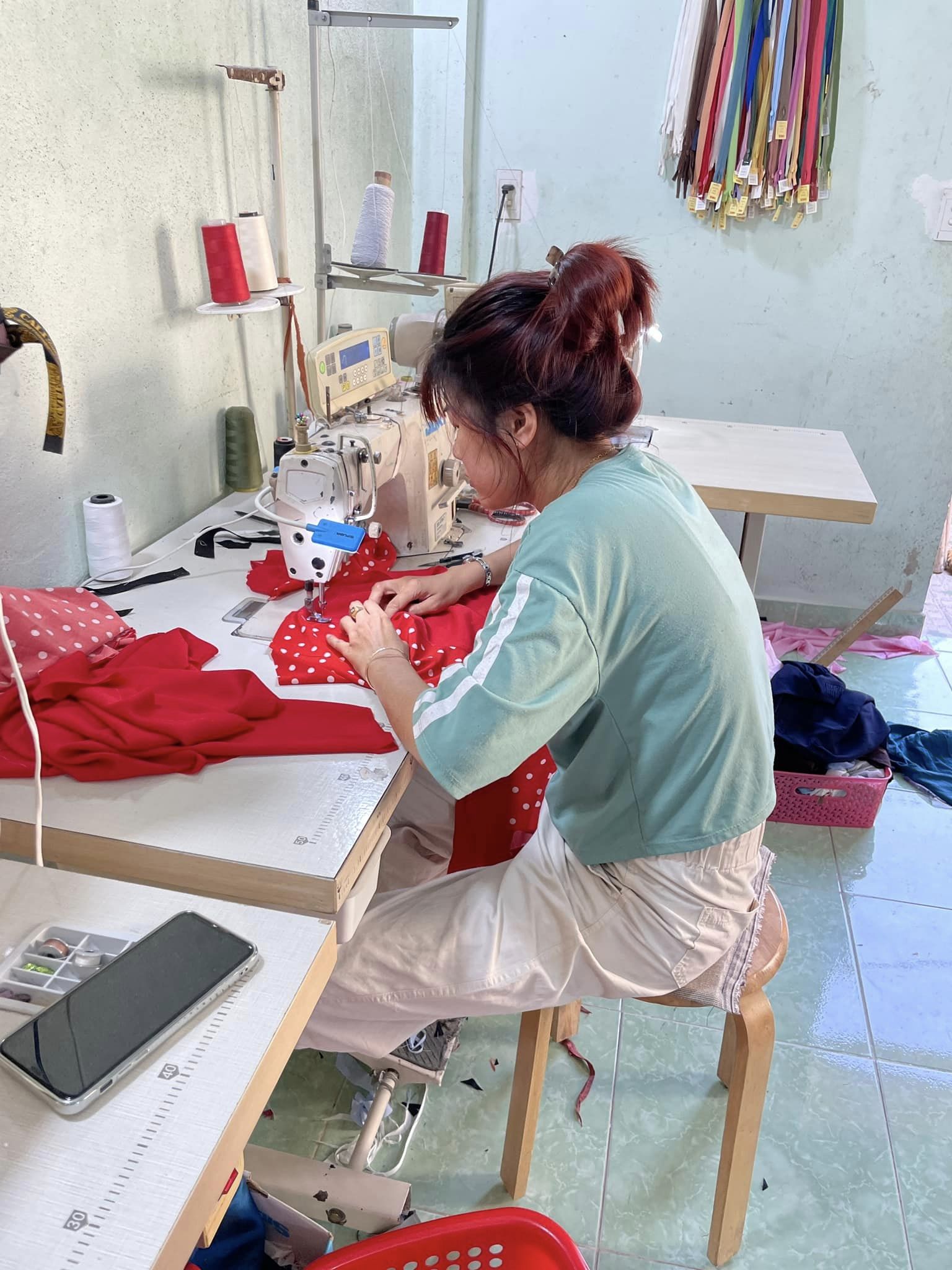
Nicola has seamstresses around the city that specialize in creating different items. She sends the pieces around town to the appropriate people. Some of the creating takes place above her shop.
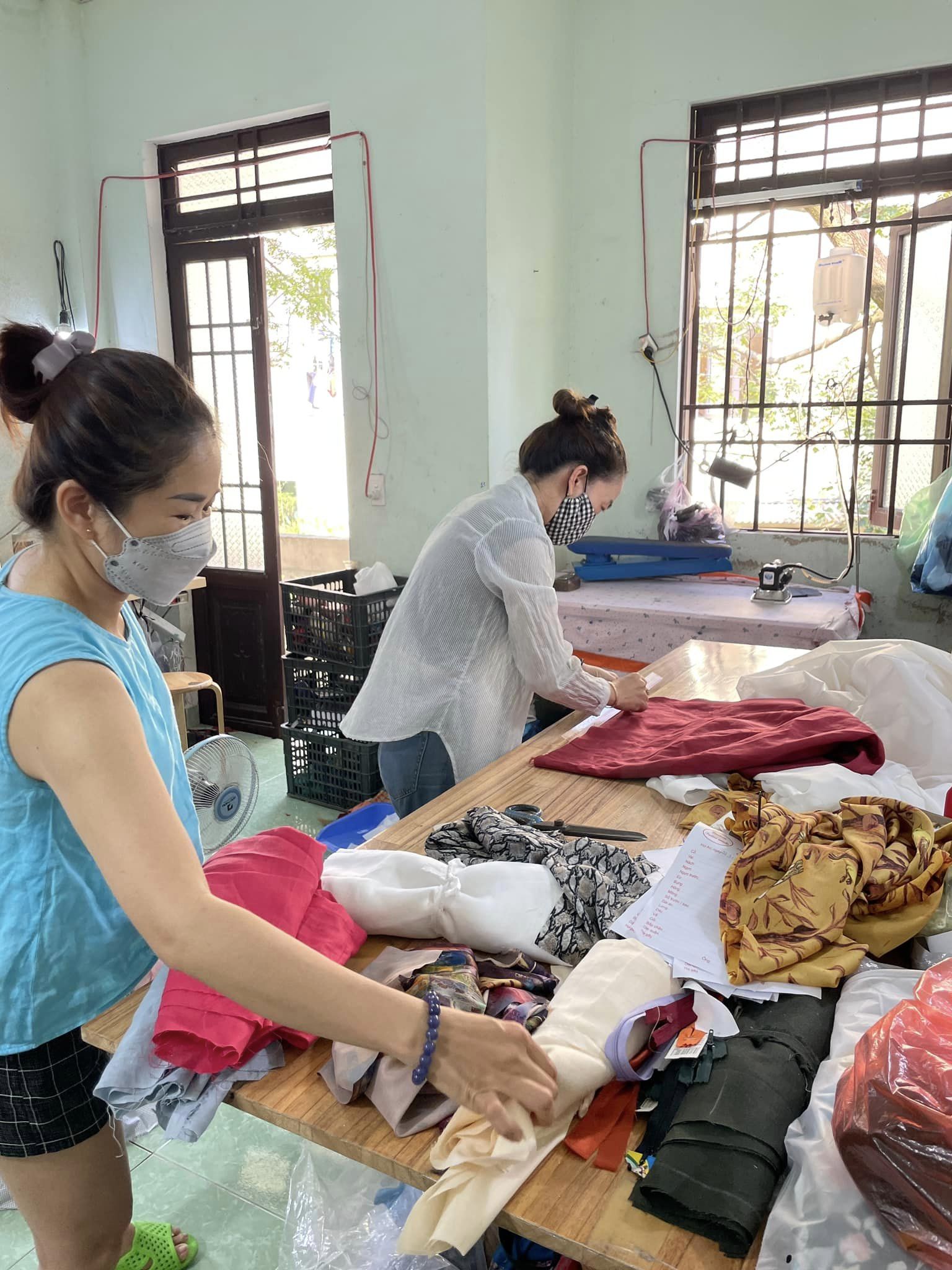
Three women were working above the shop when we were there.
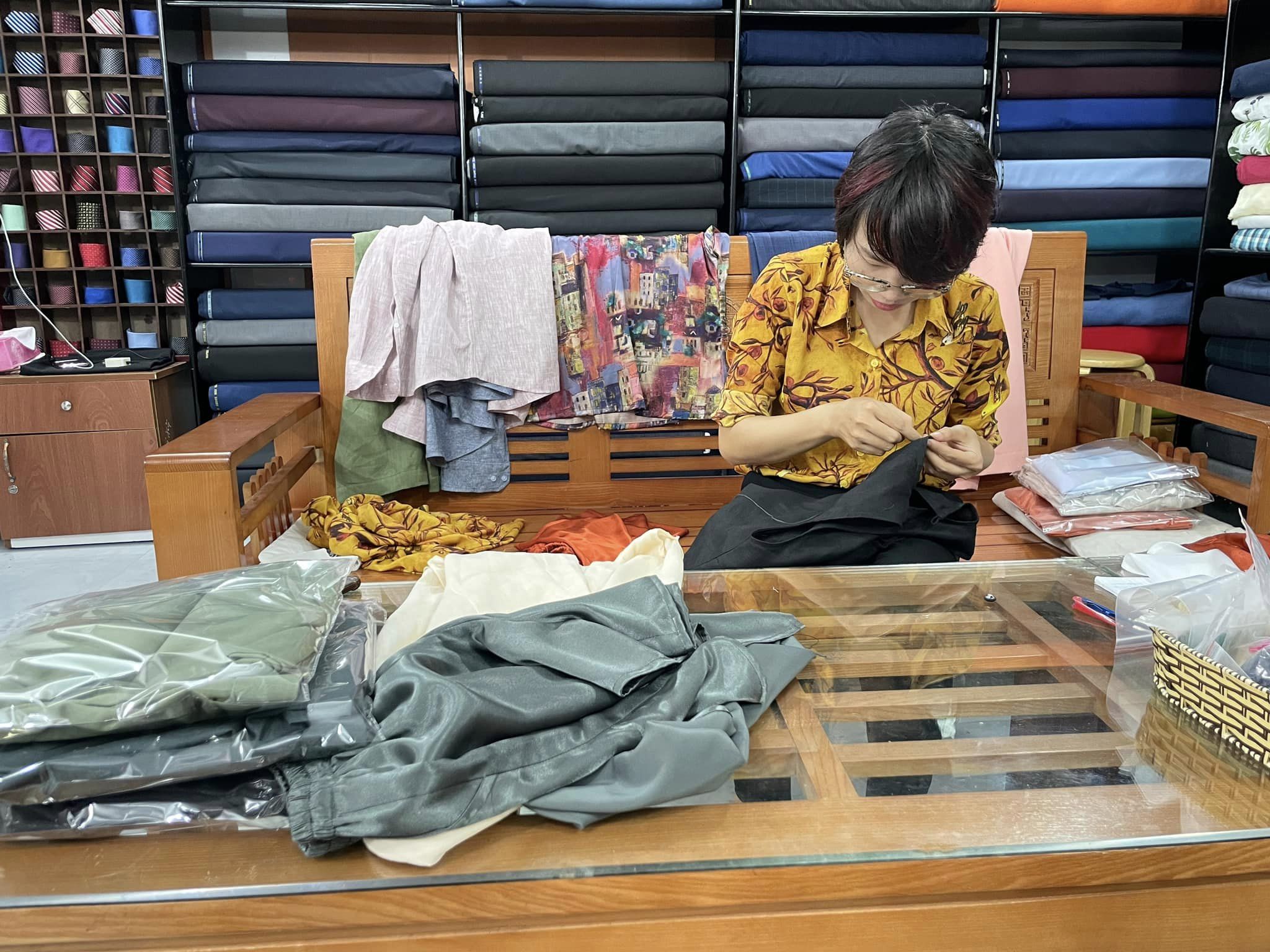
Jasmine is Nicola’s primary assistant. She’s doing some hand finishing while we wait.
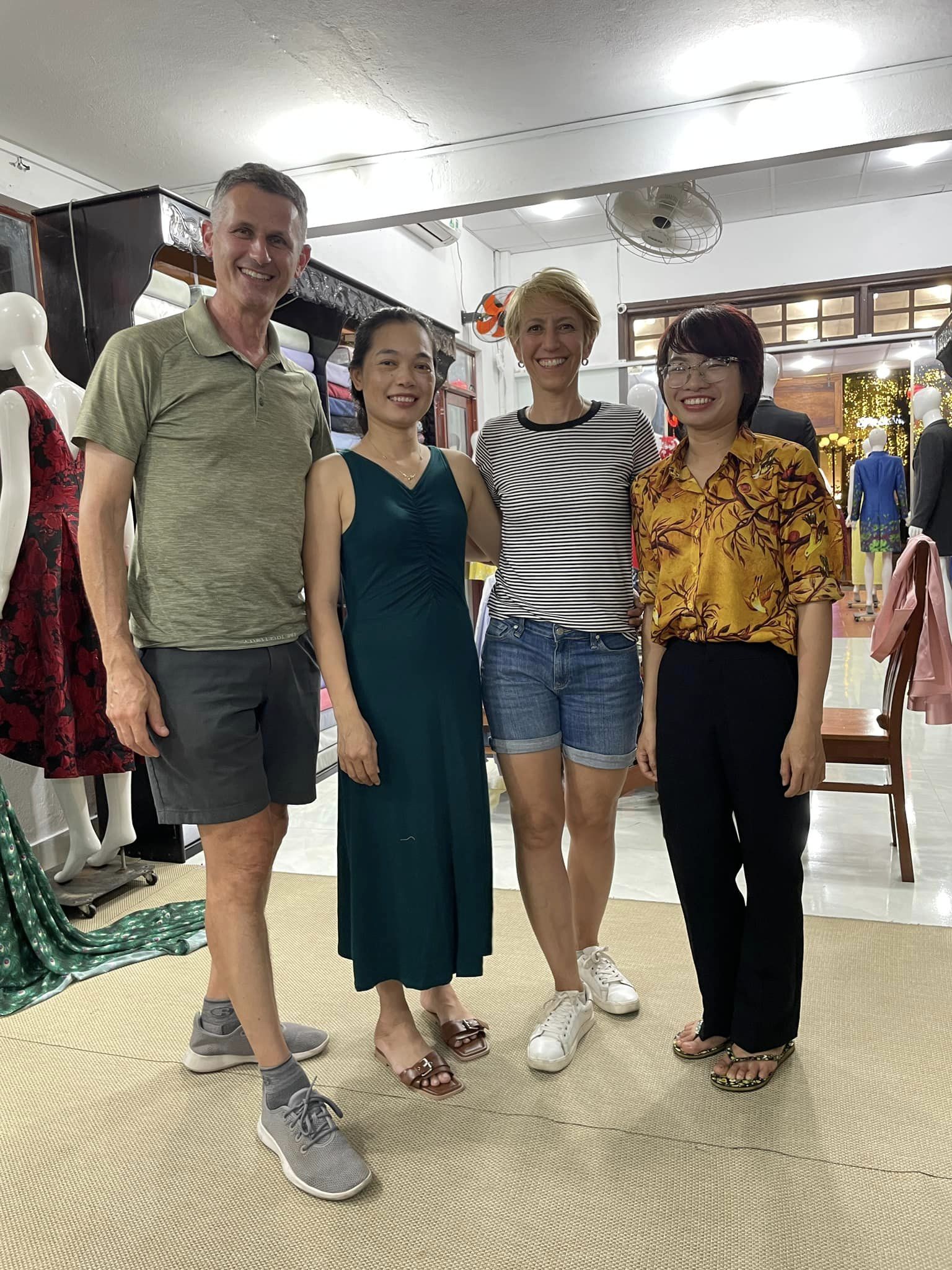
The dream team. I do feel tall in Vietnam! And, by the way, Adam did get in on the action too!