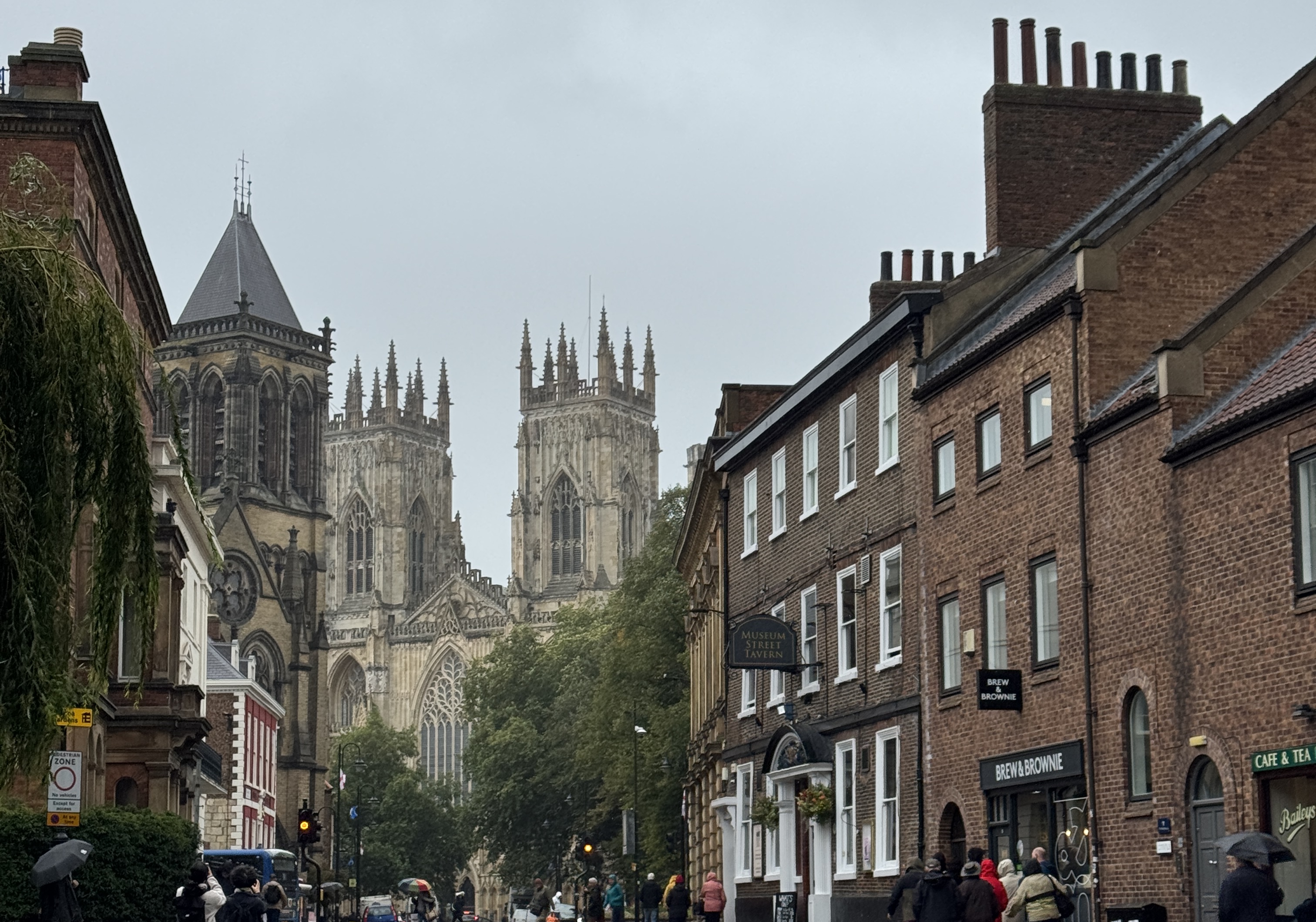
Yearning for York
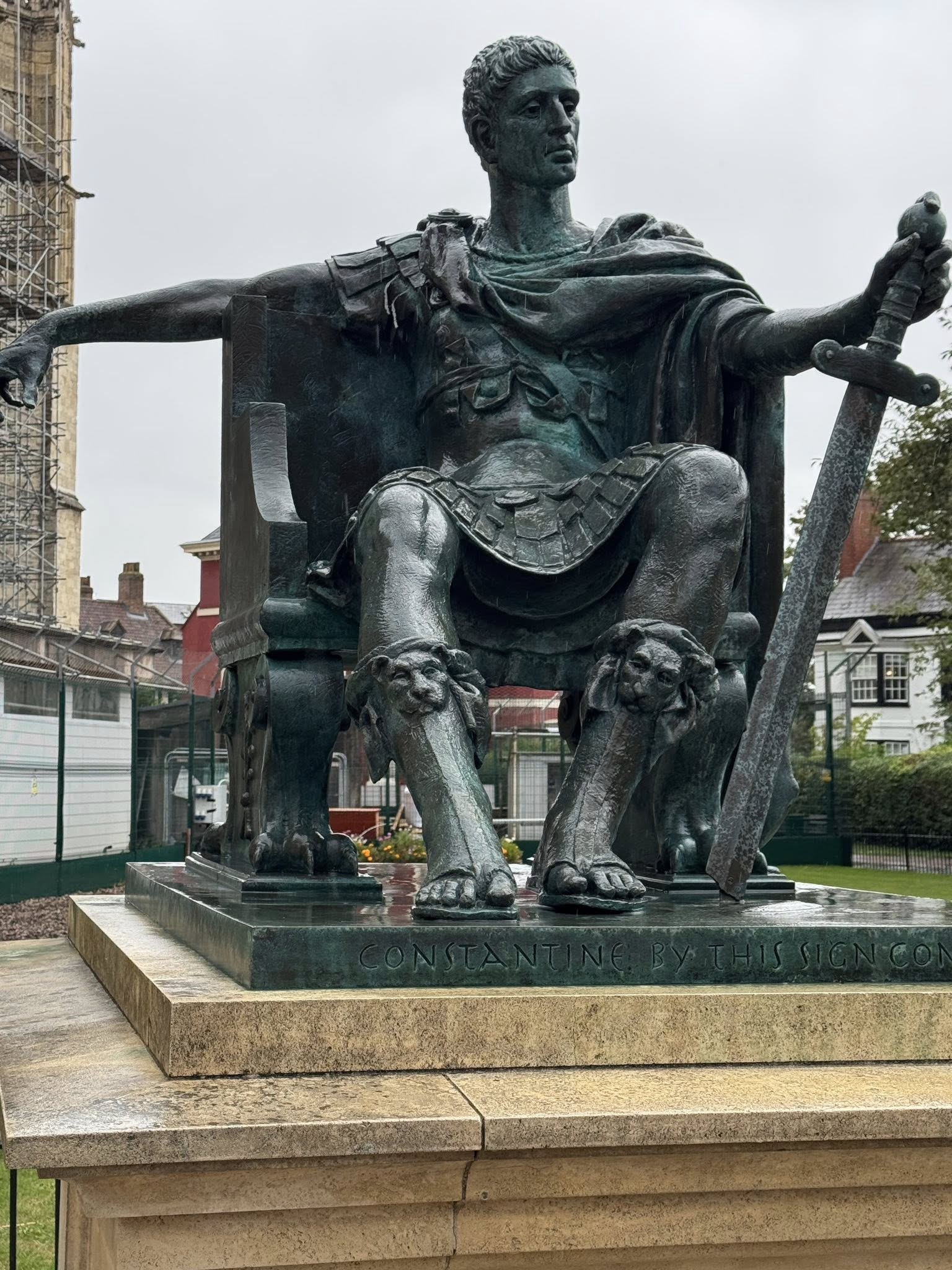
Beside York Minster sits Constantine the Great. He was declared Roman Emperor in 306AD and was instrumental in establishing the Christian faith in the western world. After having a religious vision and winning his following battle, he decided there was something to this religion. It was also politically advantageous to ditch paganism and side with what was proving to be the winning team among both the rich and the poor. To symbolize this, he cut off the pointy end of his sword which turned the weapon into a cross (as depicted in this statue). Not unlike many others, he was baptized on his deathbed…this way he could be cleansed of his sins when there was no chance of sinning any more.
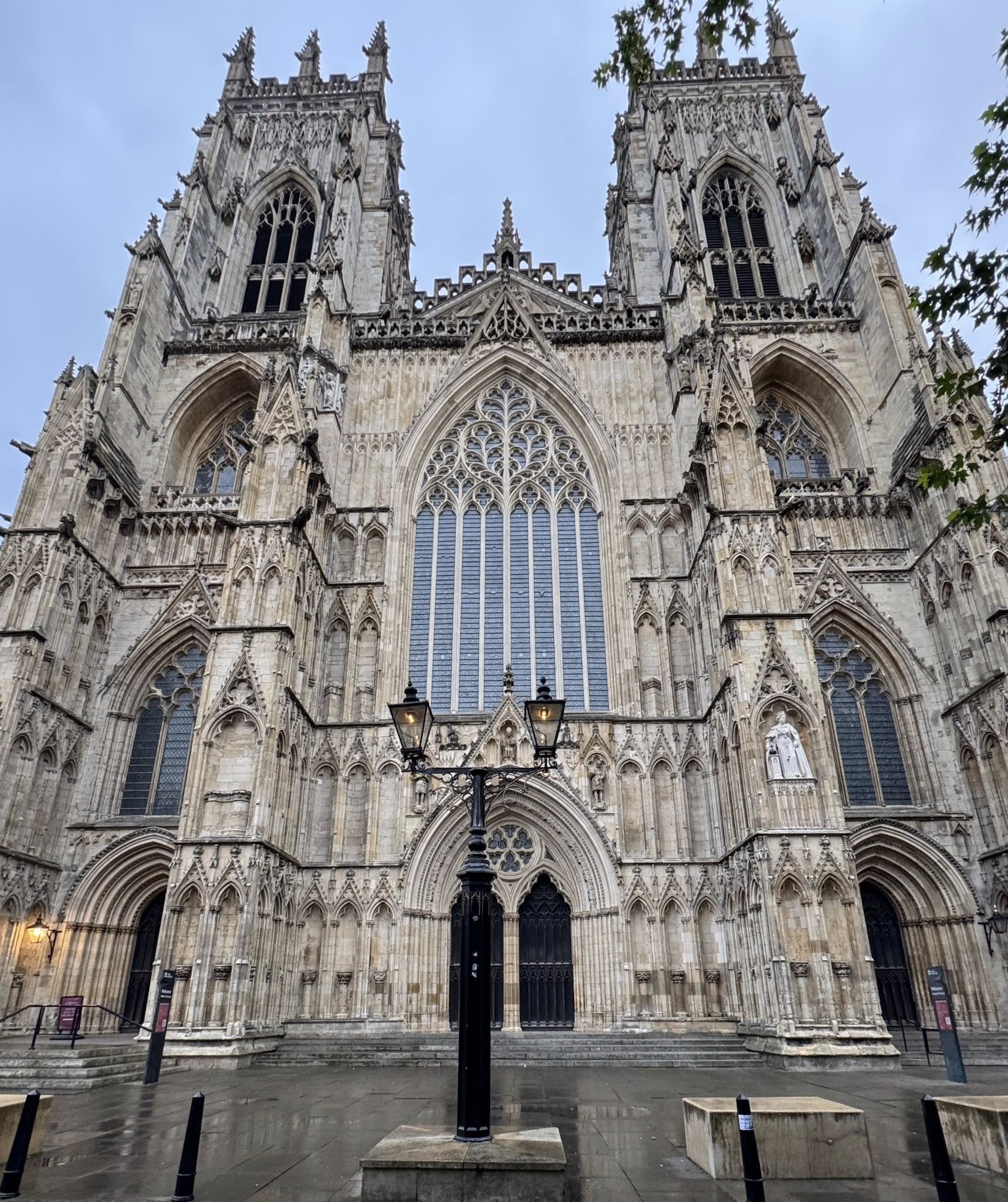
York Minster is one of the most iconic spots in York. It all started here on this spot when the Pagan King Edwin of Northumbria wanted to marry Ethelburgh, Christian princess of Kent. Part of the deal was that he consider converting to Christianity. He tabled it for a while and when he was heading off to battle some rival kingdoms, he asked her to pray for his success. If he won, he would convert. Well, he came home alive and two kingdoms richer so he kept to his word, converted in 627AD and commissioned a wooden church to be built on this site where York Minster now stands. After his death in 633, his little church fell into disrepair but the location was set. Stone churches replaced the wooden one and in 1220 they started building what we know today as York Minster. It took 250 years to build and was finally completed in 1472. When you look at the front of the church, you notice a very clean and white statue to the right of the main door. It’s Queen Elizabeth II, installed in August 2022 marking her platinum Jubilee. The other thing you notice is all the other niches are empty. They likely never had statues in them as the plinths are bare with no evidence of rods to hold anything in place. It turns out cost overruns shifted the construction priorities, not to mention the Plague hitting York in 1349 and killing much of the population including stonemasons and carvers. By the 19th century, there was more money to invest in major renovations and they could have added statues but decided to leave the niches empty to keep the facade cleaner and not distract from the soaring architecture.
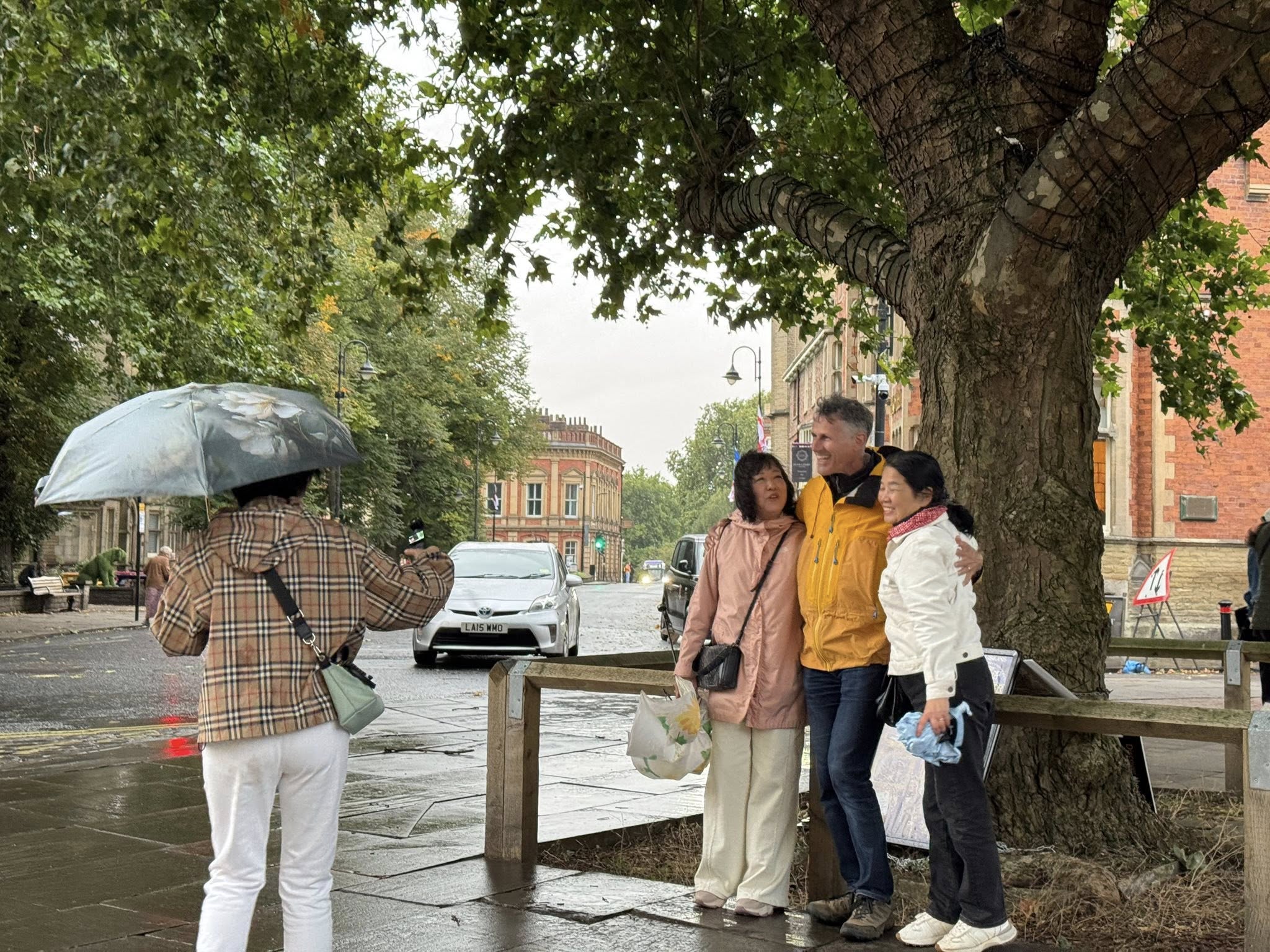
While I was busy admiring the front of the minster and wondering about all these questions, Adam was busy making a few new friends who insisted on taking a photo with him.
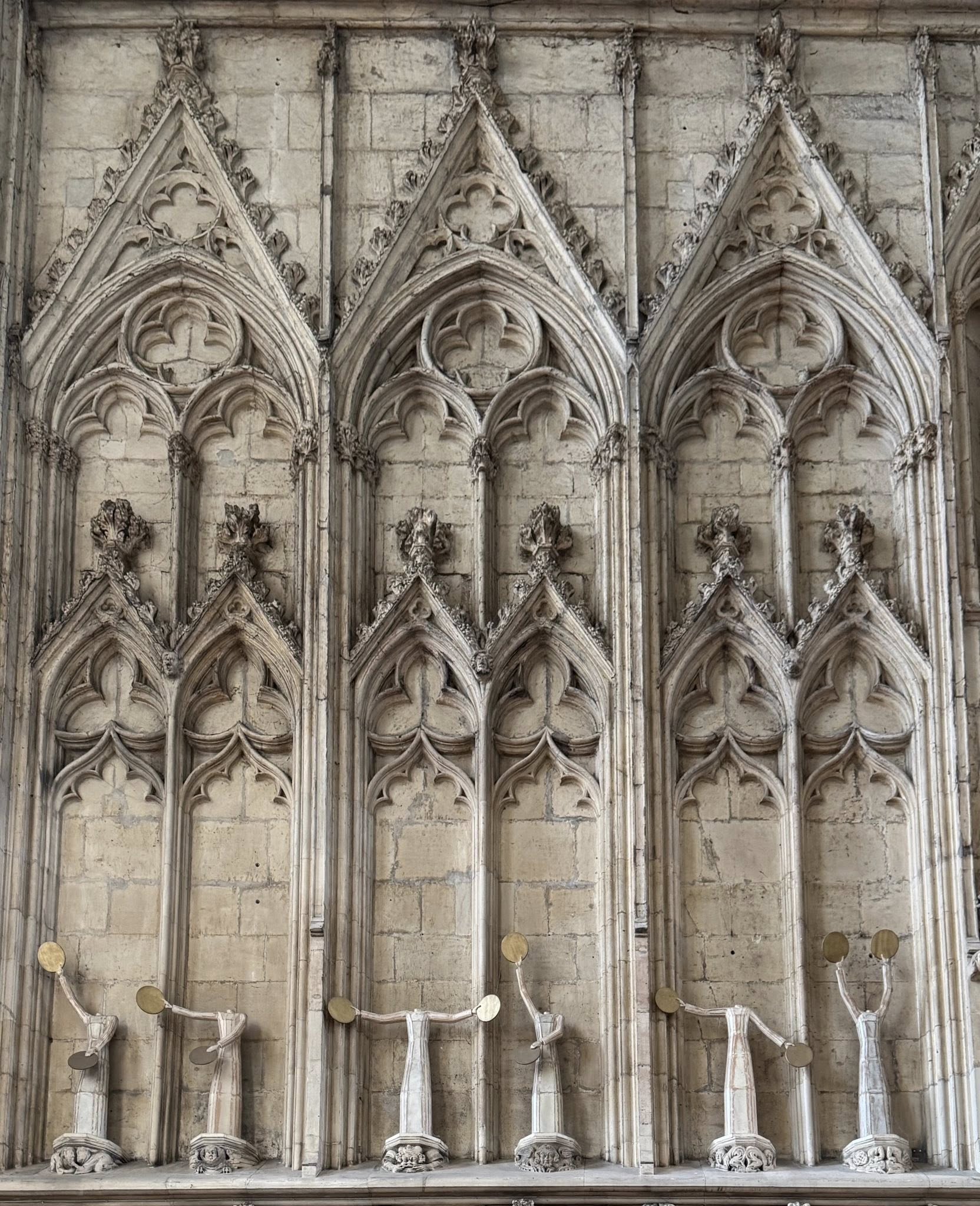
Moving onto inside the Minster, most niches are also empty. Some were never filled and others’ statues were destroyed or damaged during the Reformation. This is part of the 2003 installation of Semaphore Saints by artist Terry Hammill. The semaphore system of communication uses hand-held flags in different arm positions as letters of the alphabet. This sculpture spells out “Christ is Here”. Using semaphores was a symbolic nod to the Minster’s medieval stonemasons’ carvings to convey stories and morals for the illiterate. No sooner did our guide explain that if you were a Scout or Guide as a child you may have learned this set of hand signals, I noticed an older couple beside me working out the message letter by letter. They are headless because we are meant to focus on the message.
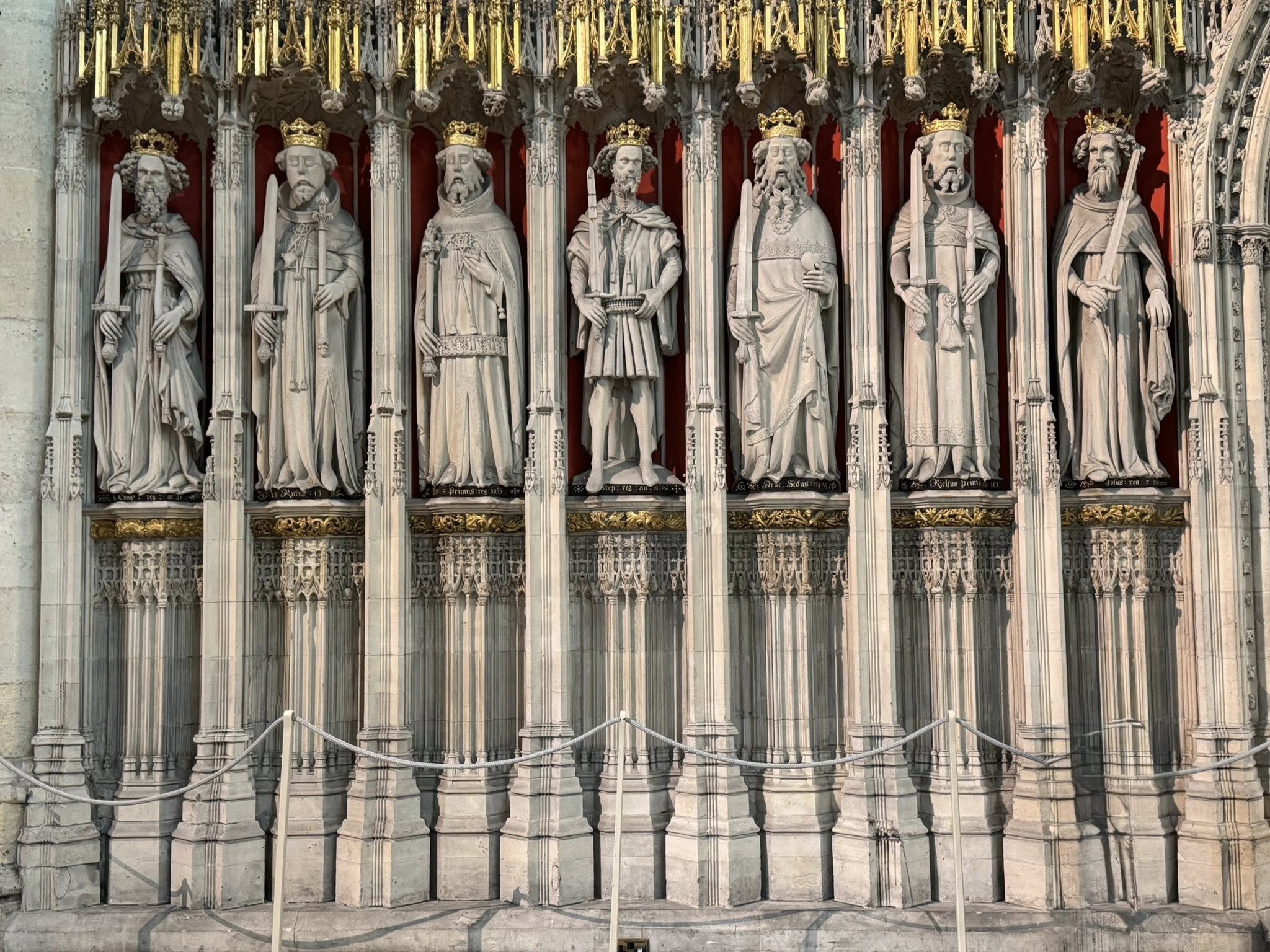
In the back, on the quire screen, are some statues! These are all the kings from William the Conqueror on the top left to Henry IV on the bottom right (top row is left side of the door, bottom row is the right side of the door). These fierce looking kings are guarding the clergy, using their royal power to defend the church. Of course when these were carved, the kings were long gone and the stonemasons didn’t really know what they looked like. If you look closely, you’ll notice a bunch of them look quite similar. Begs the question: Who was the model?Perhaps the stonemason’s dad or grandad?
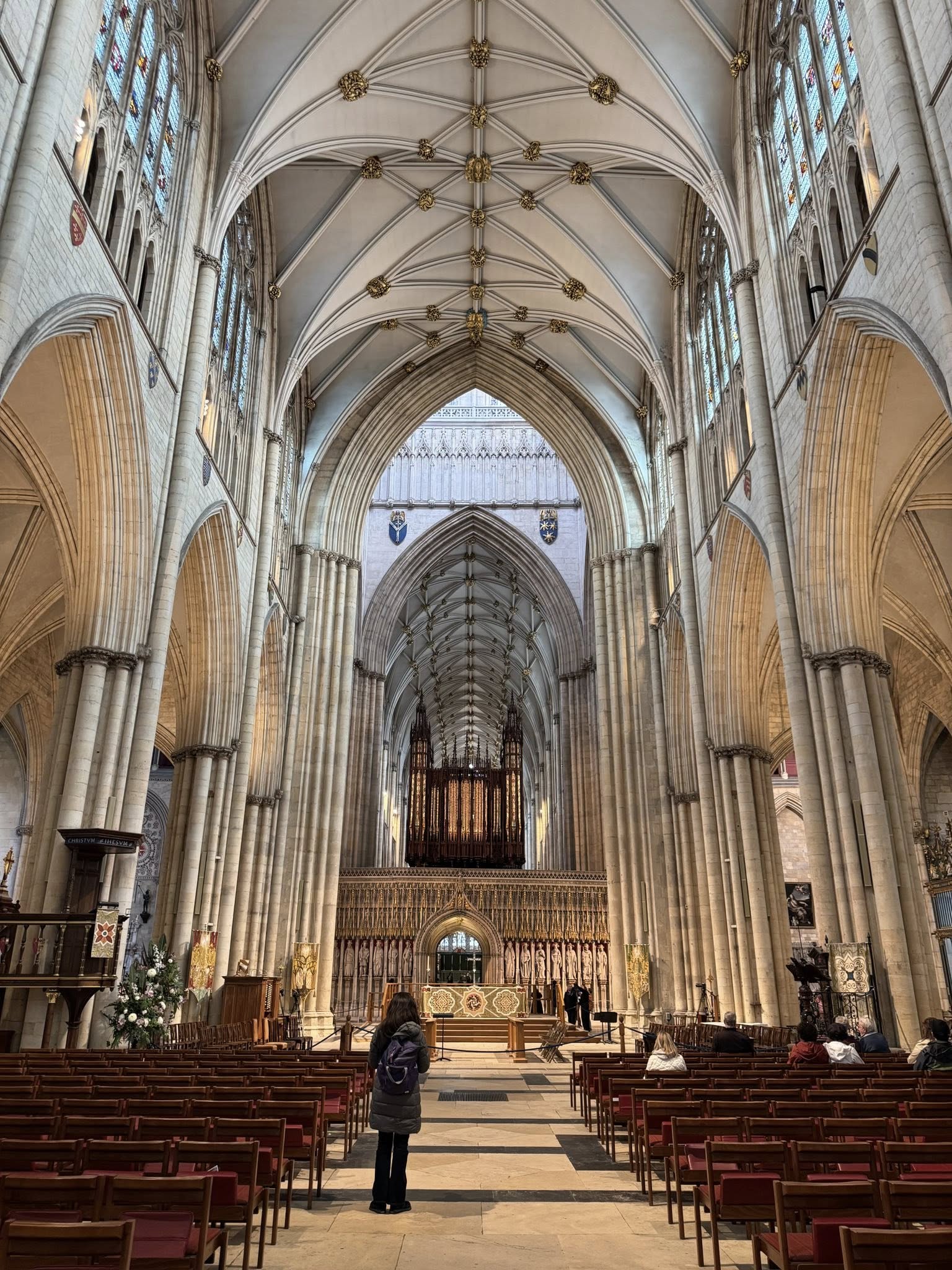
When the earlier Norman stone church of 1080 was rebuilt in the 13th century Gothic style, they doubled the width. In order to do so, the gothic columns had to be designed with much more tensile strength (hence the clusters of pillars) and they decided to build a lighter-weight ceiling out of wood because they figured a heavy stone ceiling would collapse. Well, all these years later it never collapsed but it did burn a few times…a clockmaker accidentally started a fire, lightning stuck, a bit of arson occurred…
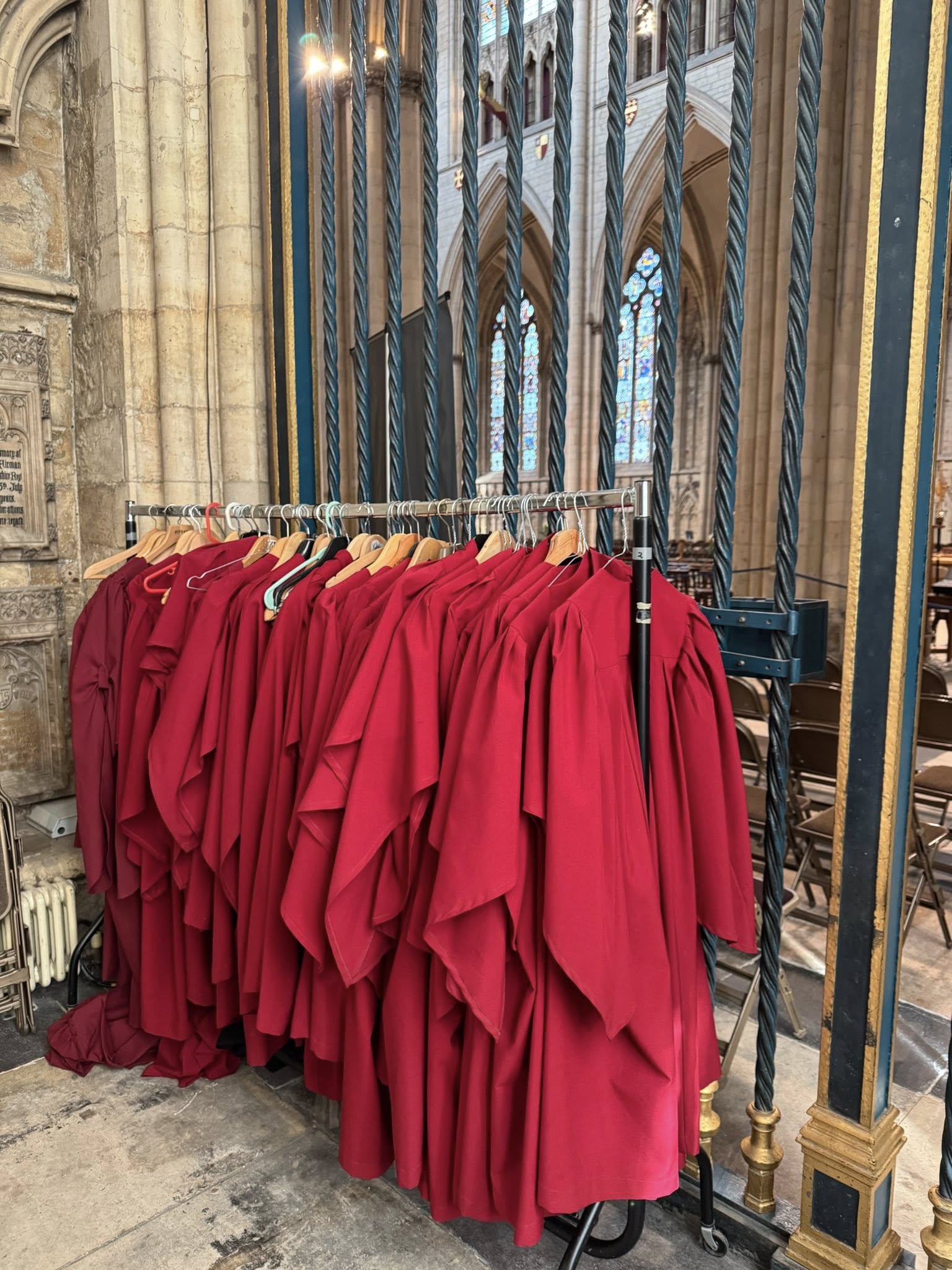
Freshly back from the cleaners.
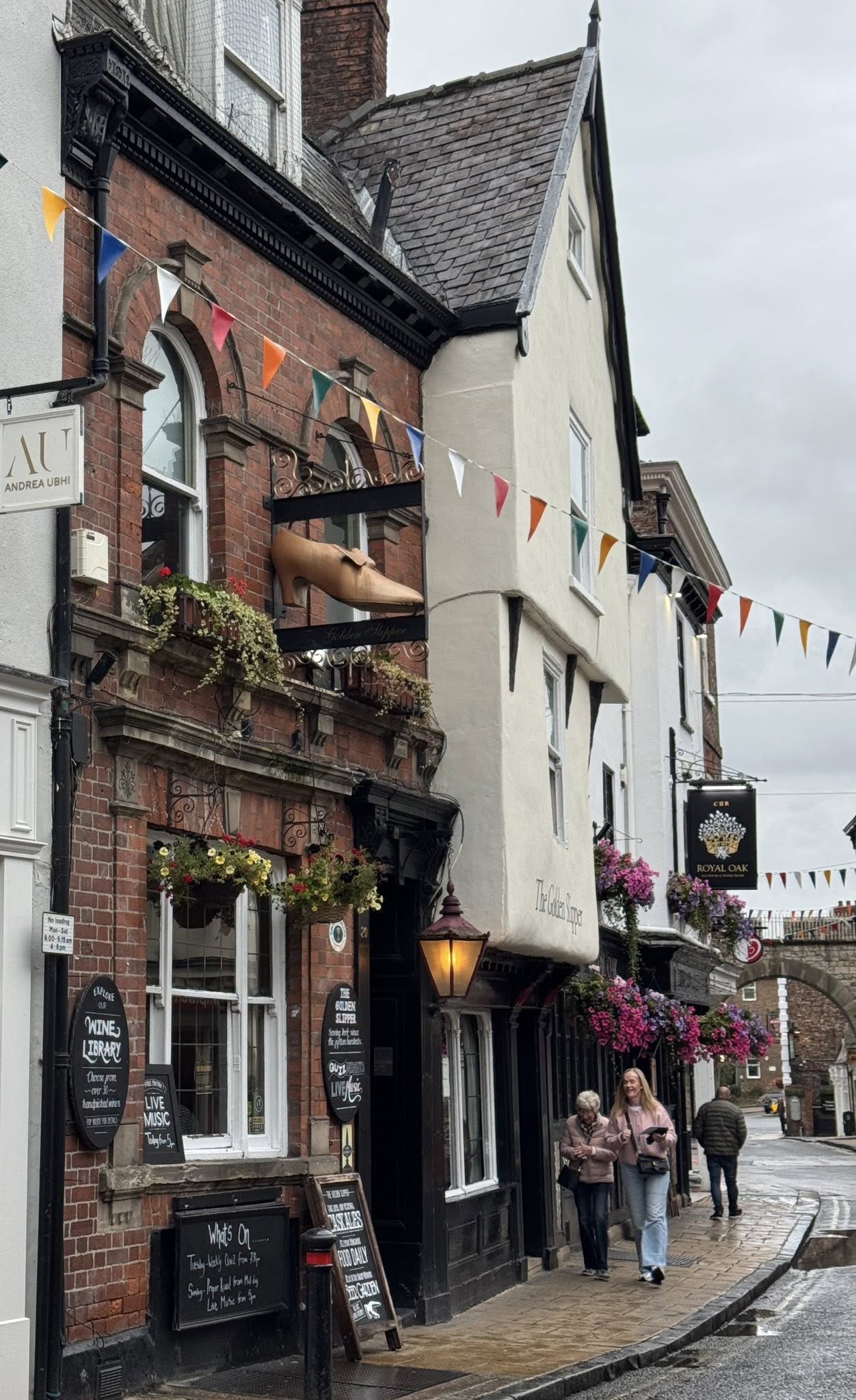
This is the Golden Slipper pub, housed in a building from the 16th century and became a pub in the 18th century. It has a few interesting bits of lore...
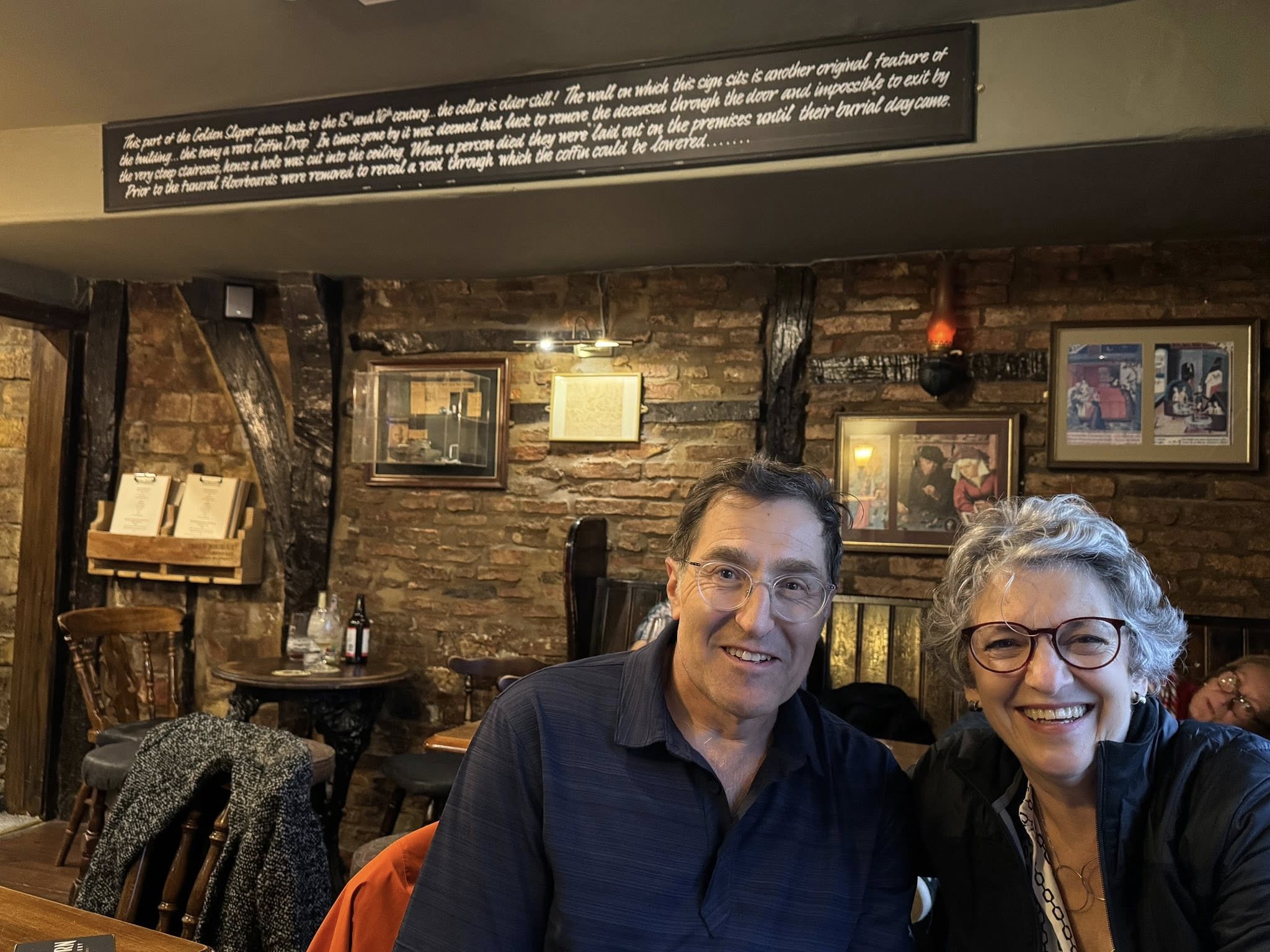
Inside the pub, there is a bit of a dropped ceiling near the side wall. Turns out this was a coffin drop. It was thought to be bad luck to remove dead bodies through the main door (before the pub, this was a house and people would have lived on the upper floors and after it became a pub, there would have been rooms to rent). The coffin drop was a place beneath the floorboards to put the body until the funeral, at which point the coffin would have exited this space through the side of the building. Once there were adjacent buildings, this exit would have been impossible and the coffin drop would have been sealed up or used for general storage. This is the only coffin drop left in York!
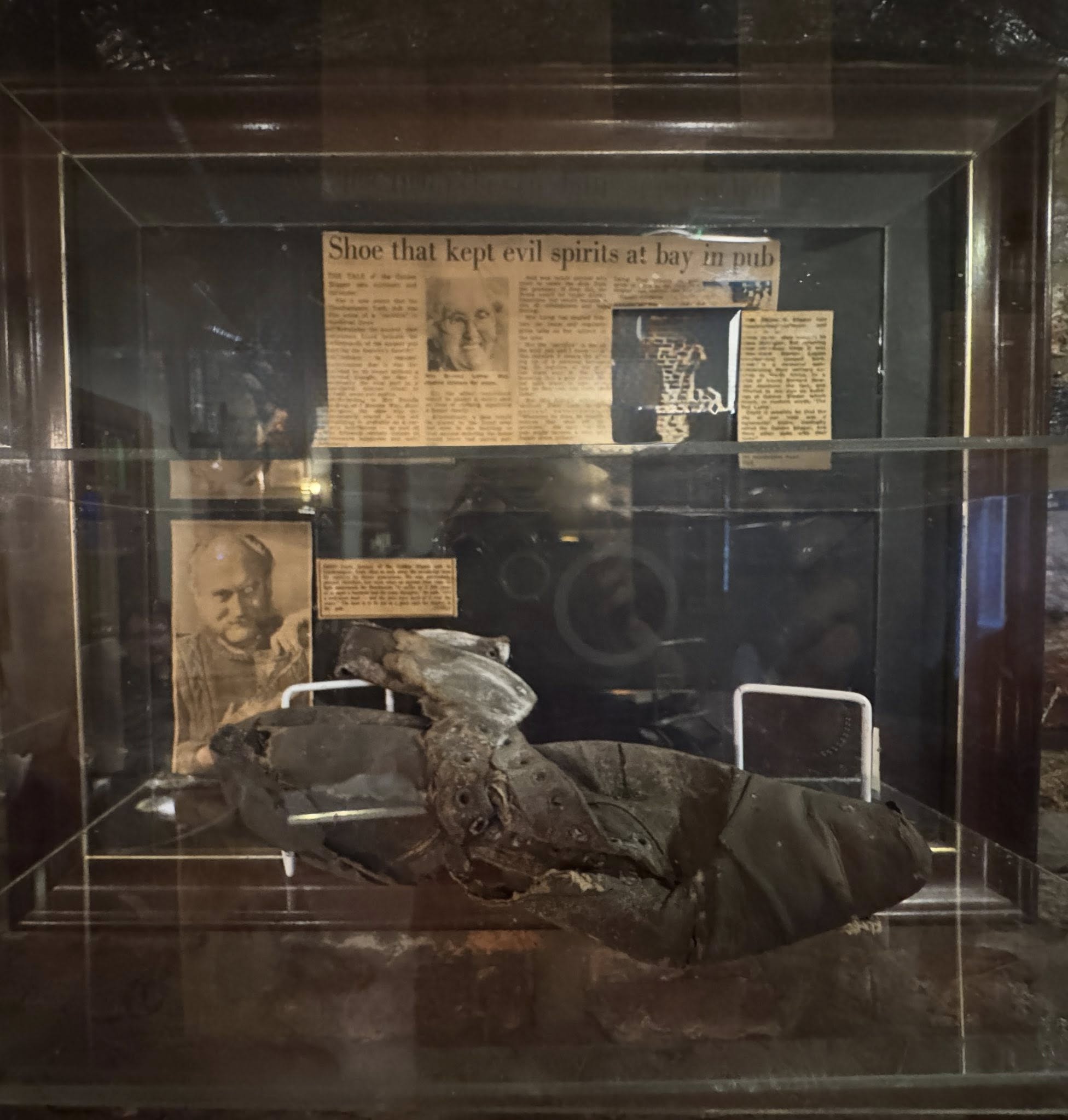
Another interesting item was found in this pub. A medieval slipper was discovered in the walls during a 1984 renovation. In this superstitious city full of ghost stories, there were tales of the place being haunted. A folklore historian, Mrs Brenda Laing, has debunked this myth. In the 15th century, it was common to leave a shoe, often on the hearthstone, to promote happiness and wellbeing. If the shoe were ever to be removed, the happiness protection would disappear and the house would become a den of unhappiness and bad feeling. Mrs Laing told the owner that whatever he did, he mustn’t remove the shoe! The shoe is in a glass case, on the wall below the coffin drop.
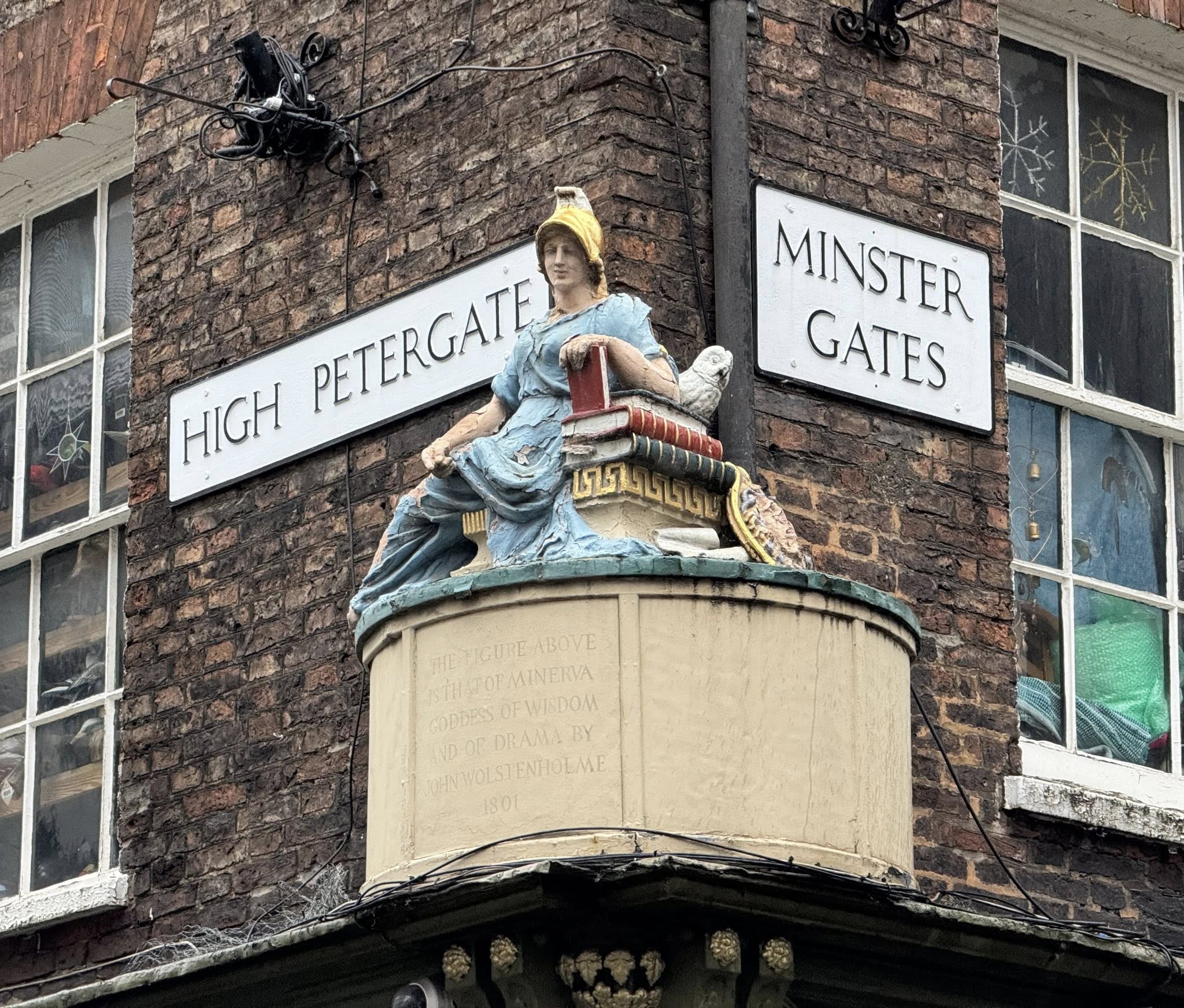
This statue is Minerva reclining on a pile of books is one of Britain’s first shopfront sculptures. It was sculpted by John Wolstenholme in 1801 and installed on the second floor to advertise his bookshop below. I guess in those days people looked up as they walked around town, not having mobile phones to distract them.
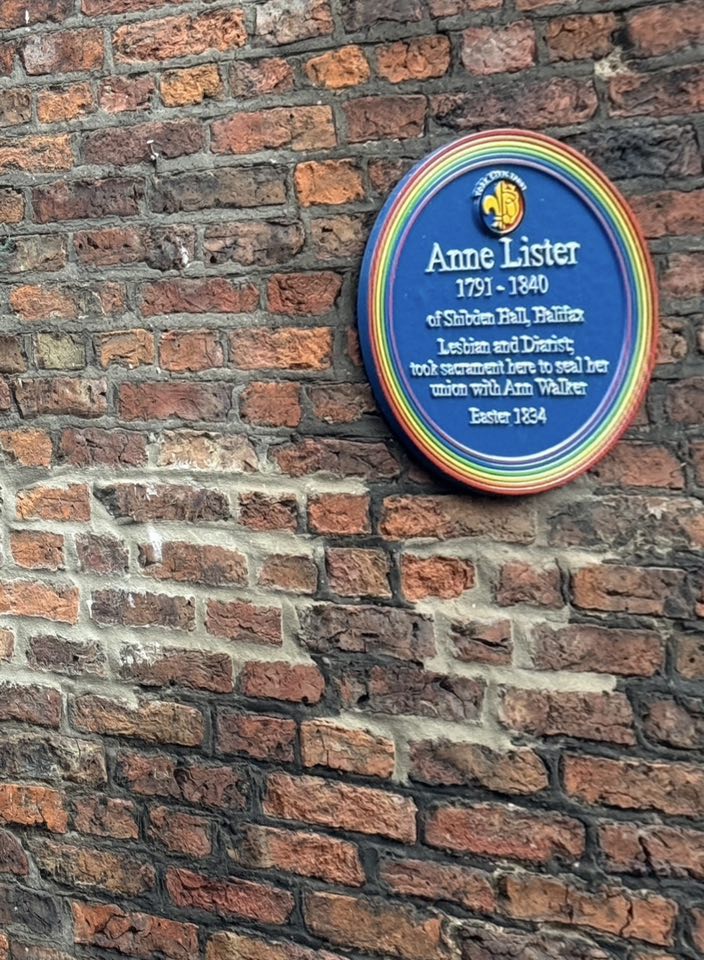
Anne Lister was from West Yorkshire, near Halifax, but often travelled to York where she had a degree of anonymity that enabled her to pursue her lesbian social life. She typically dressed as a man and successfully ran her family’s finances, property, and tenants. She became known as Gentleman Jack. This plaque honours what may have been the first same sex marriage. Anne Lister married Anne Walker in 1834.
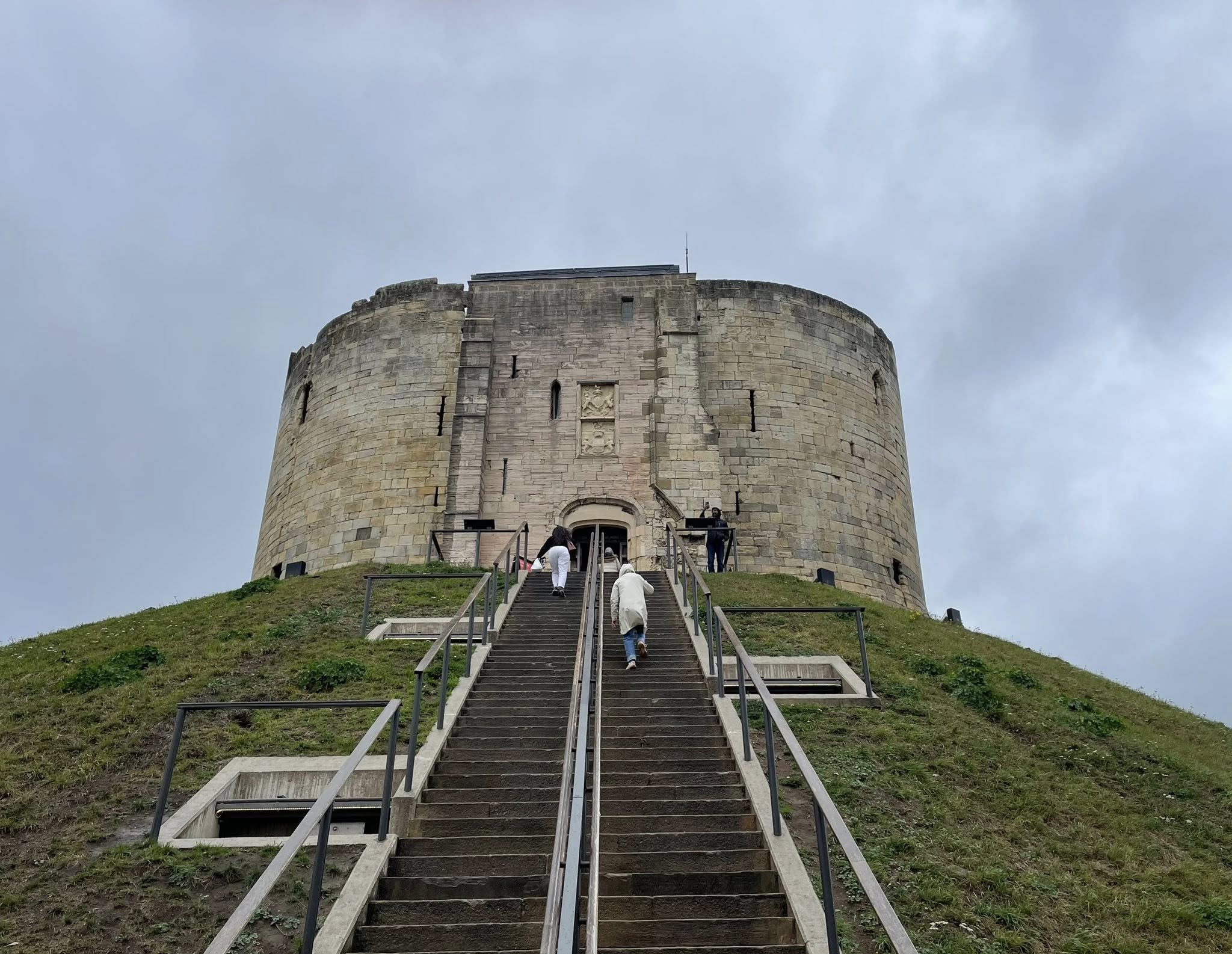
On March 1190, the Jews of York were facing violent anti-Semitic mobs. A group of 150-500 had escaped to Clifford’s Tower, a wooden castle built by the Normans on a mound overlooking the city. After about three days without food and water, the only way out alive was to denounce their faith. Unwilling, they died at each other’s hands or by suicide. Those still alive were murdered by the mob when they stormed the tower.
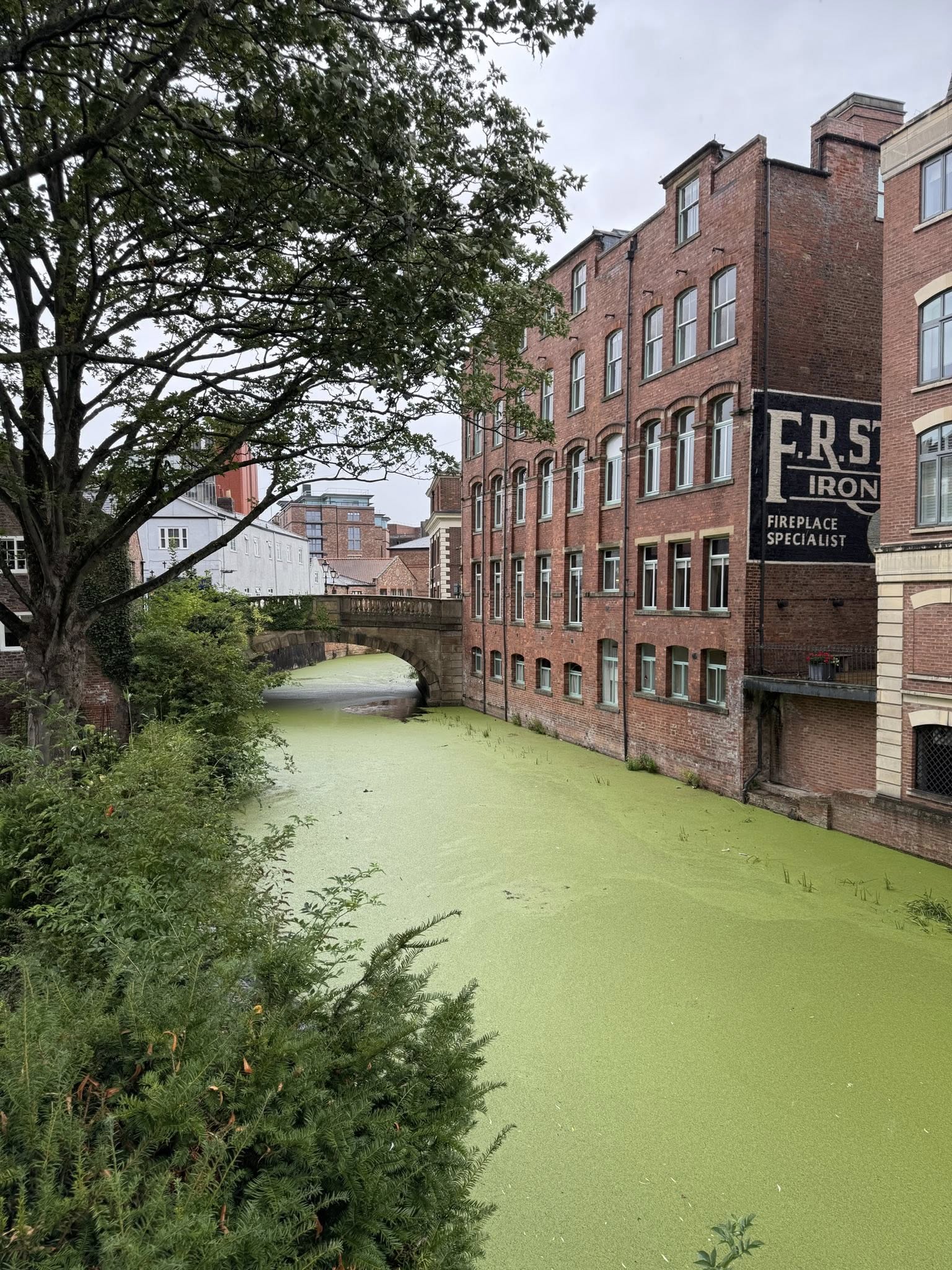
That’s a lot of algae on the Foss River!
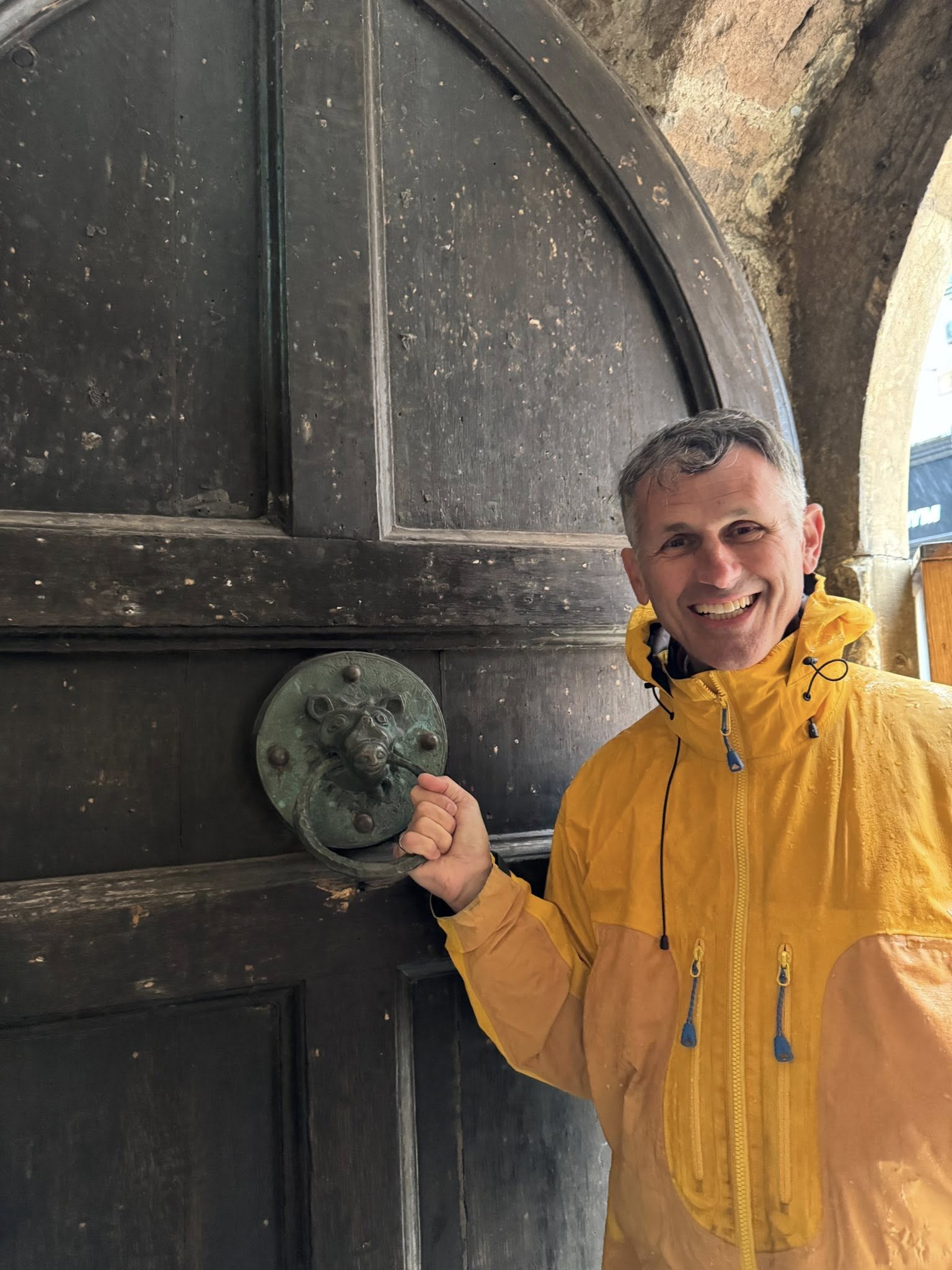
Adam is grasping the replica of the 12th century Mouth of Hell door knocker at the All Saints Pavement church. The original is a far too rare example of medieval metalwork to be left in the open on the church door. It’s also known as the Sanctuary Knocker. During medieval times, the church was a place of sanctuary. If a person was accused of a crime and could make it to the church and grasp the knocker, they would be granted protection for 40 days to seek a fair trial. Another sanctuary rule was that if the accused carried a cross and walked from the church straight to the water without leaving the Main Street, and could negotiate passage out of here (and agree never to return), they would be free! So the question today is: Why is Adam holding on so tightly…
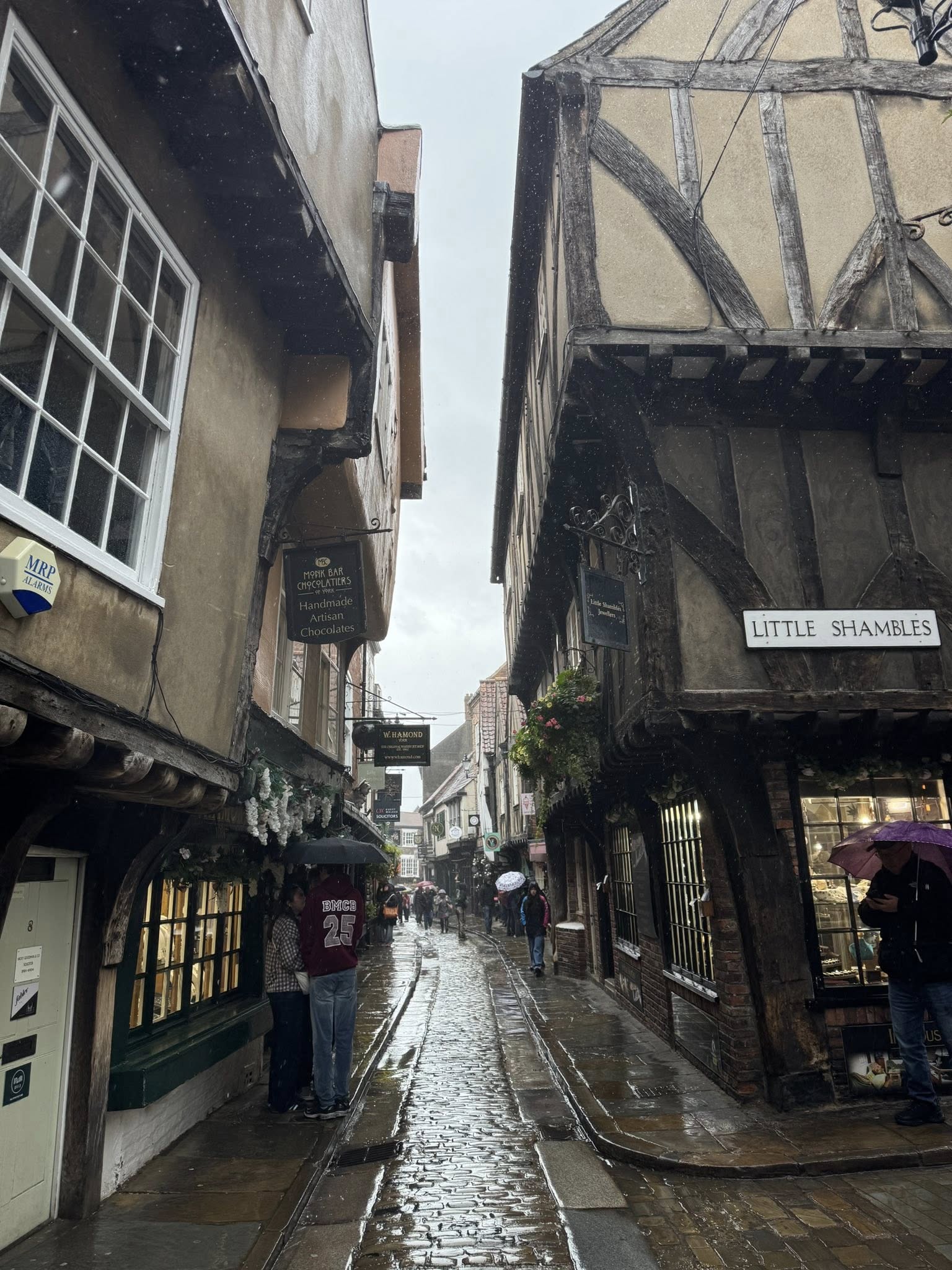
Another iconic site in York is The Shambles. Mentioned in the Doomsday Book, this was the ancient Butchers’ street. Of course it was included in William the Conqueror’s Doomsday Book as there would have been taxes to collect here! The name Shambles comes from the word shamel meaning a medieval bench where the butchers laid out their meat for sale. The overhanging upper floors gave the butchers more storage space on the second floor without crowding the narrow street and it protected the meat from the sun and rain. This place was always such a mess that the name of the street entered popular vernacular. Something that is in a mess and disorganized is “in a shambles”.
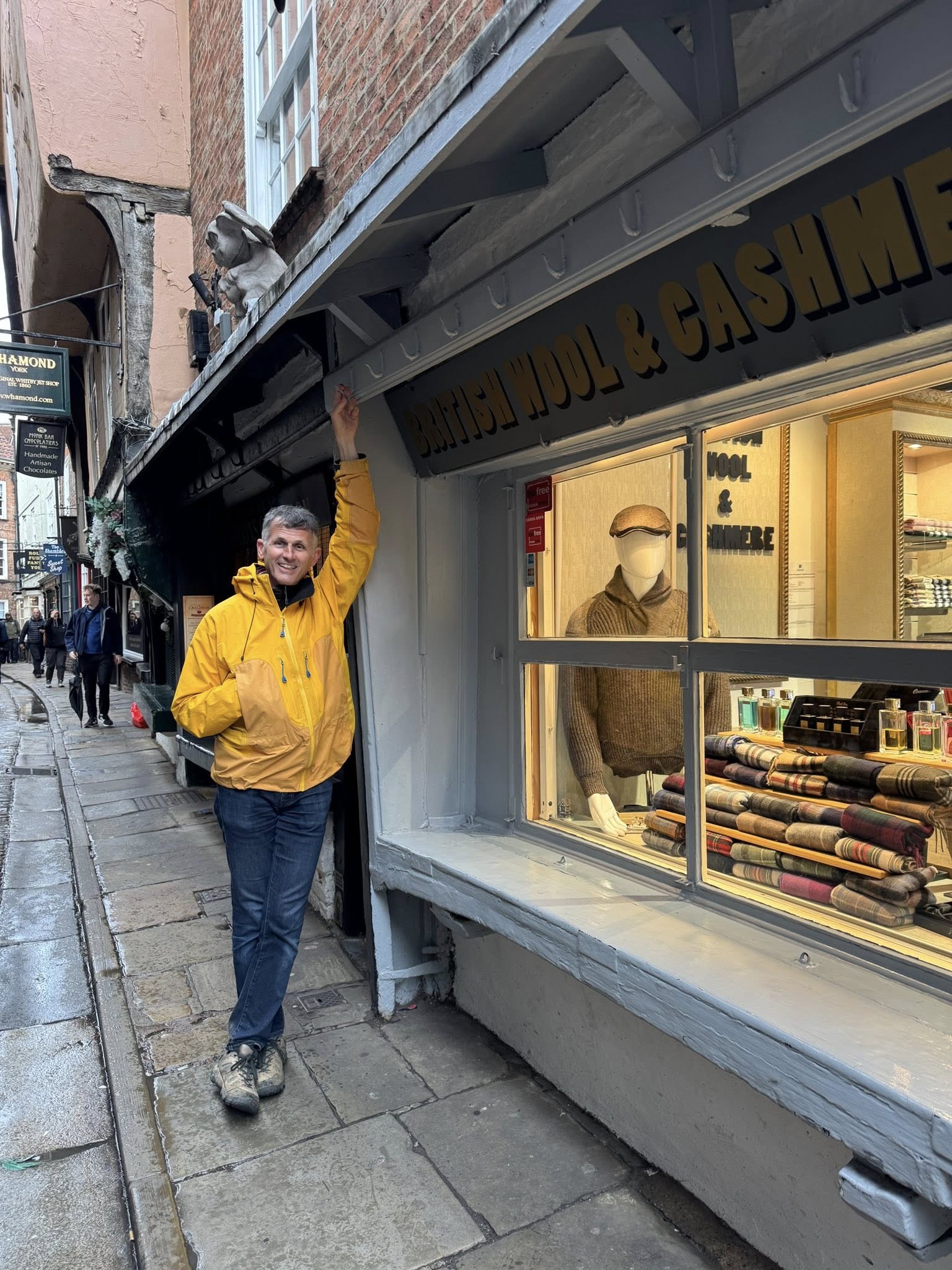
The butchered meat would have been displayed on these benches and other bits would have hung from the hooks above the windows. The sidewalk was higher than usual as the street was where the butchers threw the unsaleable bits of the meat to be washed away.
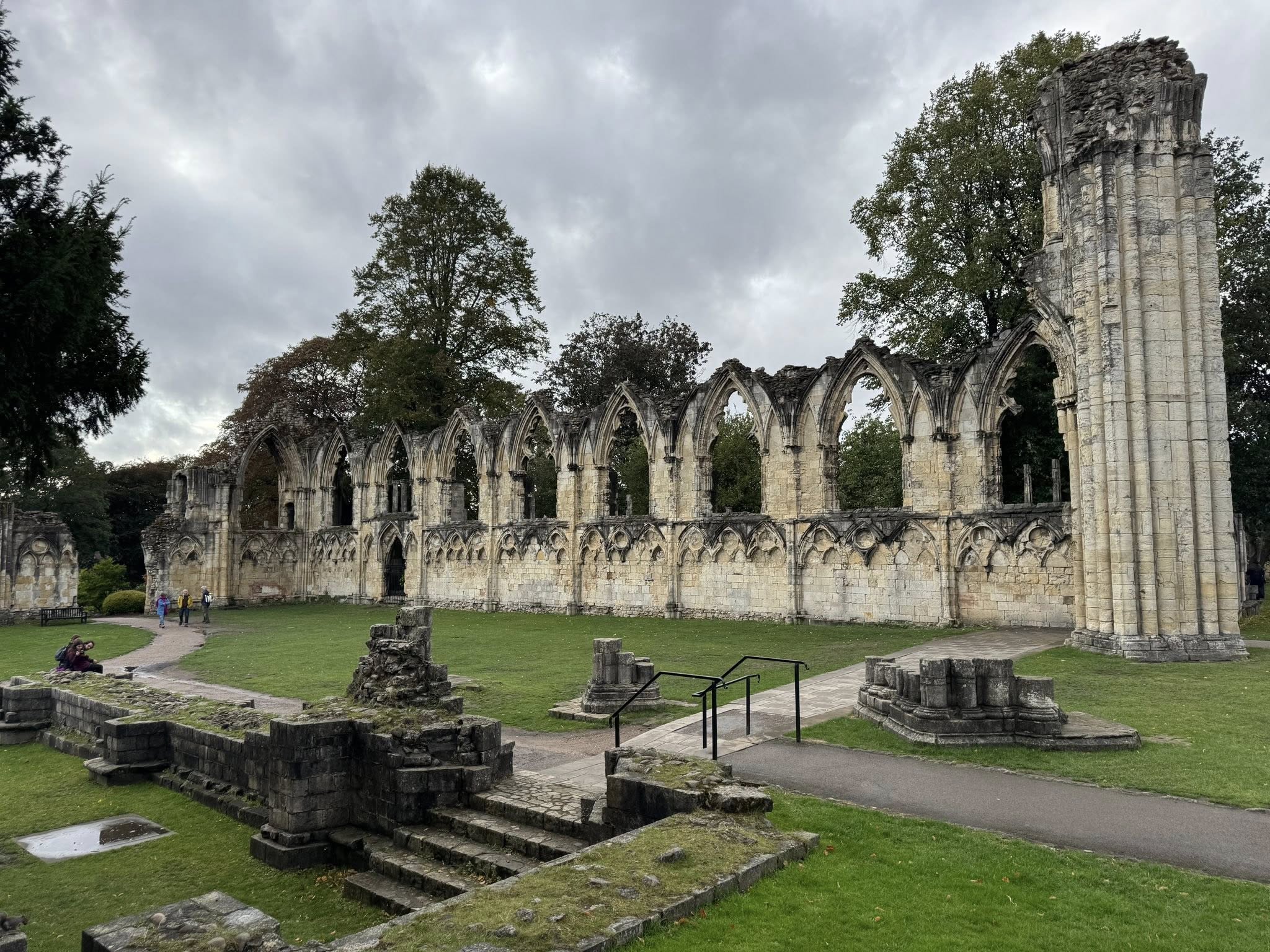
Preserved in the museum gardens, this ruin is the wall of St Mary’s Abbey, a 12th century Benedictine monastery. In 1951, York Mystery Plays, religious plays traditionally performed on pageant wagons, moved their venue here, using the abbey ruins as a backdrop. In that first year, a 16-year-old actress had her first stage performance as a forgetful angel. She did well and was invited back to play the lead, Virgin Mary, in 1957. That 1951 first-timer was Judi Dench.
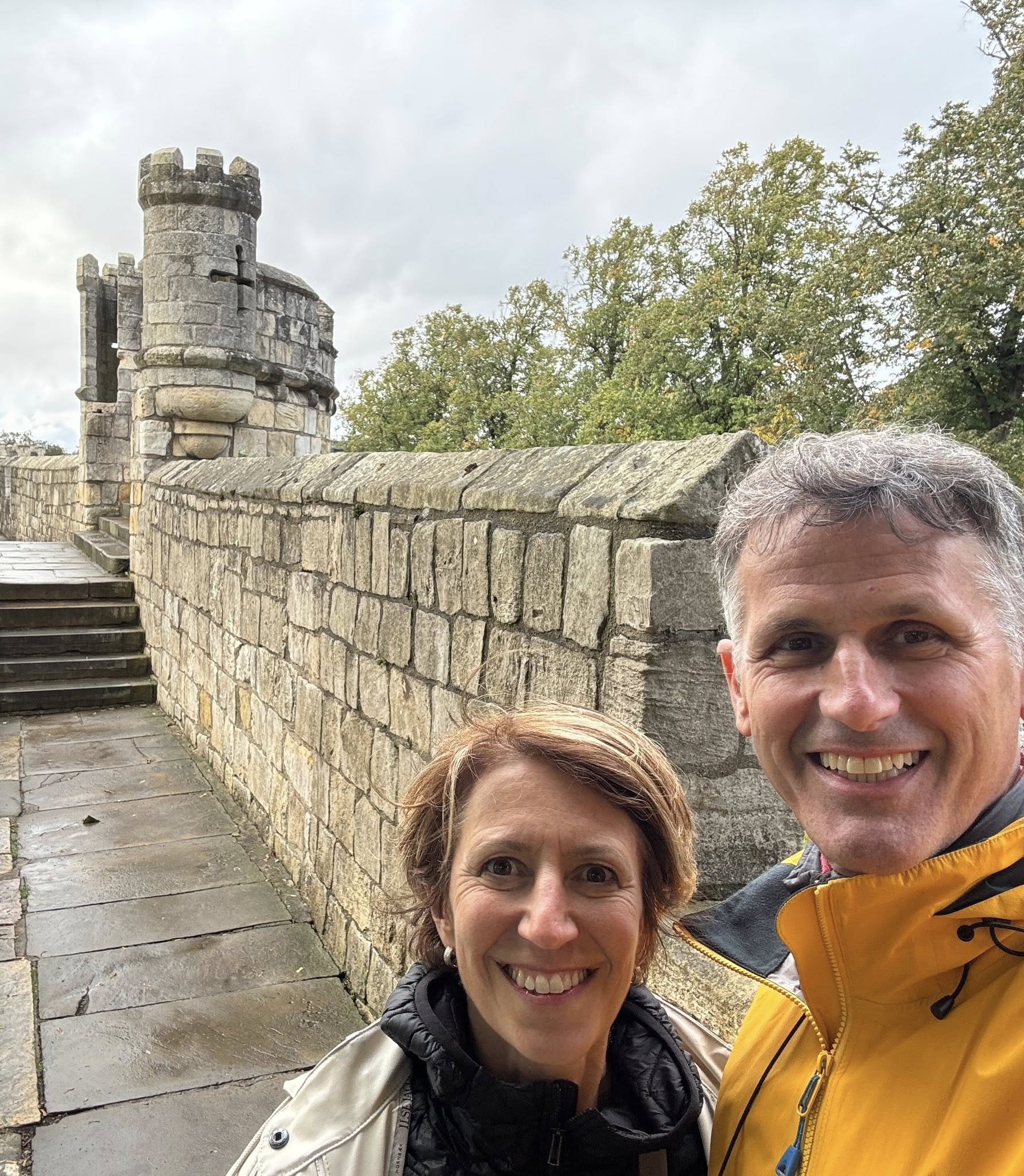
The York city walls are among the most complete and impressive medieval city walls in England. It is now a 3.4km walking path around the old Roman city. The Romans built the first walls in wood and stone 2,000 years ago, in 71AD, and some parts of the original walls remain. It has since been repaired, rebuilt and expanded over the centuries with towers added for defence. There were four main gates (called bars) to enter the city, each having their own important historical context.
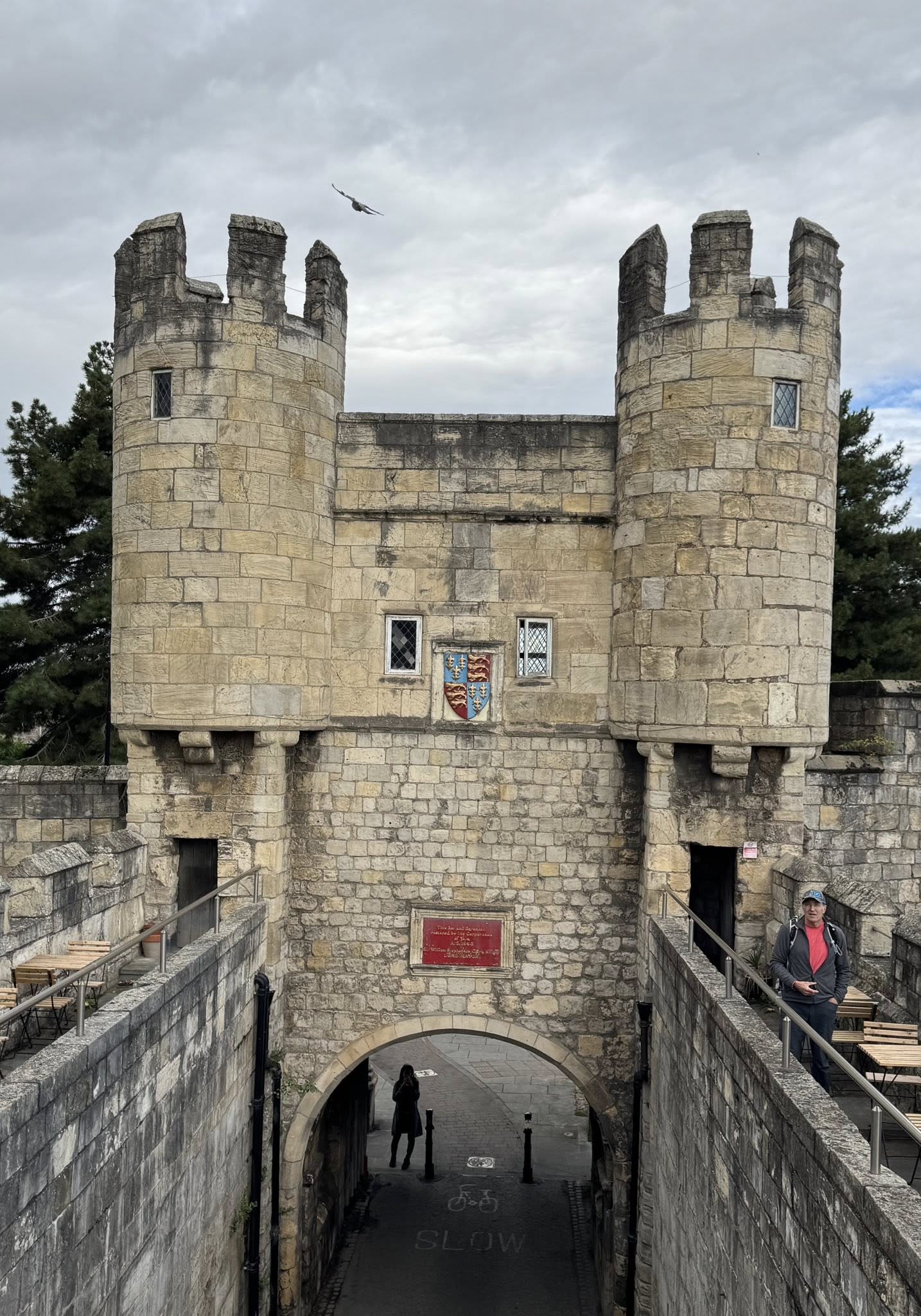
Bootham Bar is the North entrance heading towards Scotland. Rebuilt in the 12 century, it is home of the Gatehouse Cafe. I can’t imagine what it took to get the lease for this location!
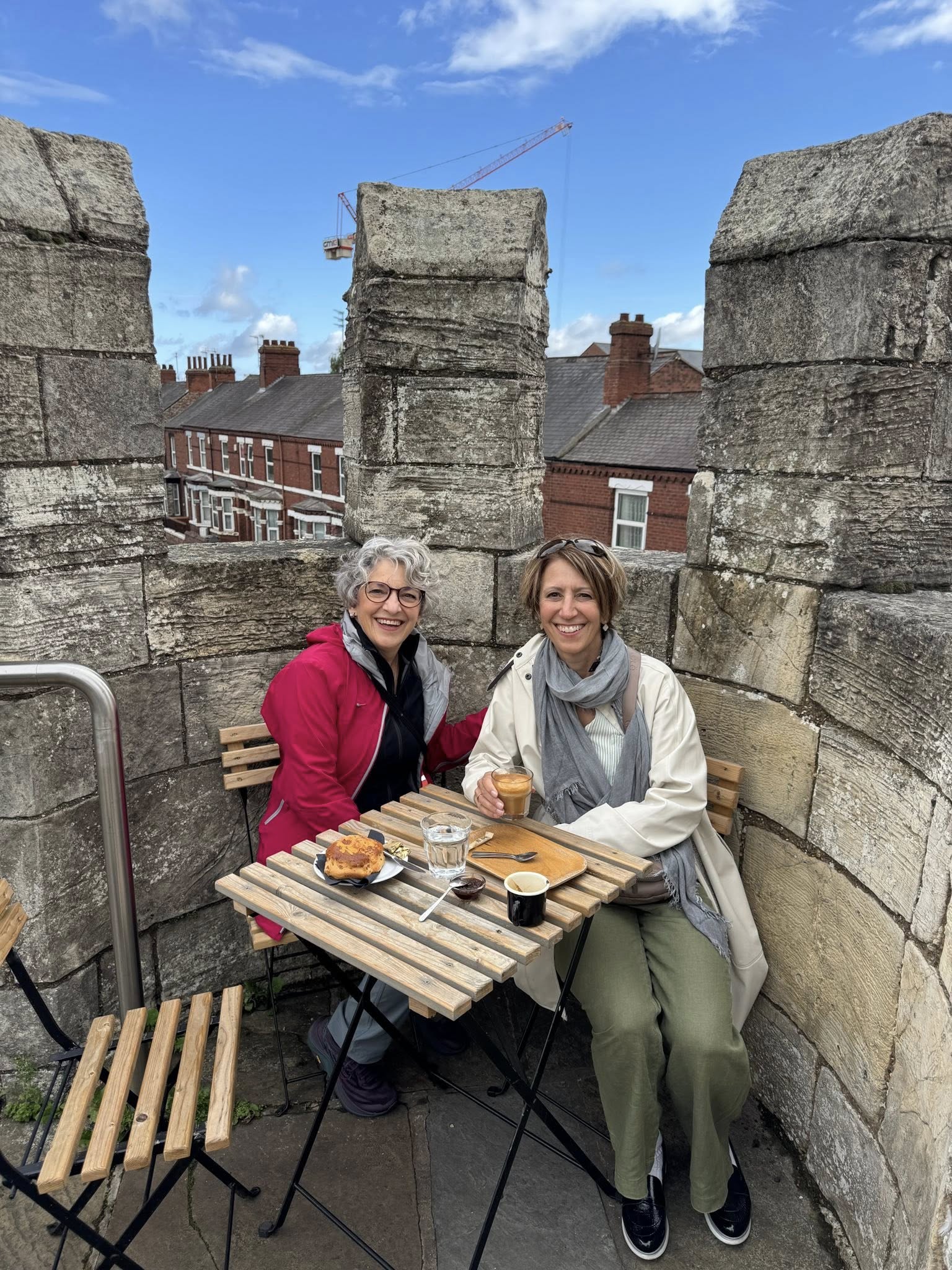
Perfect coffee spot and well-protected here from invaders.
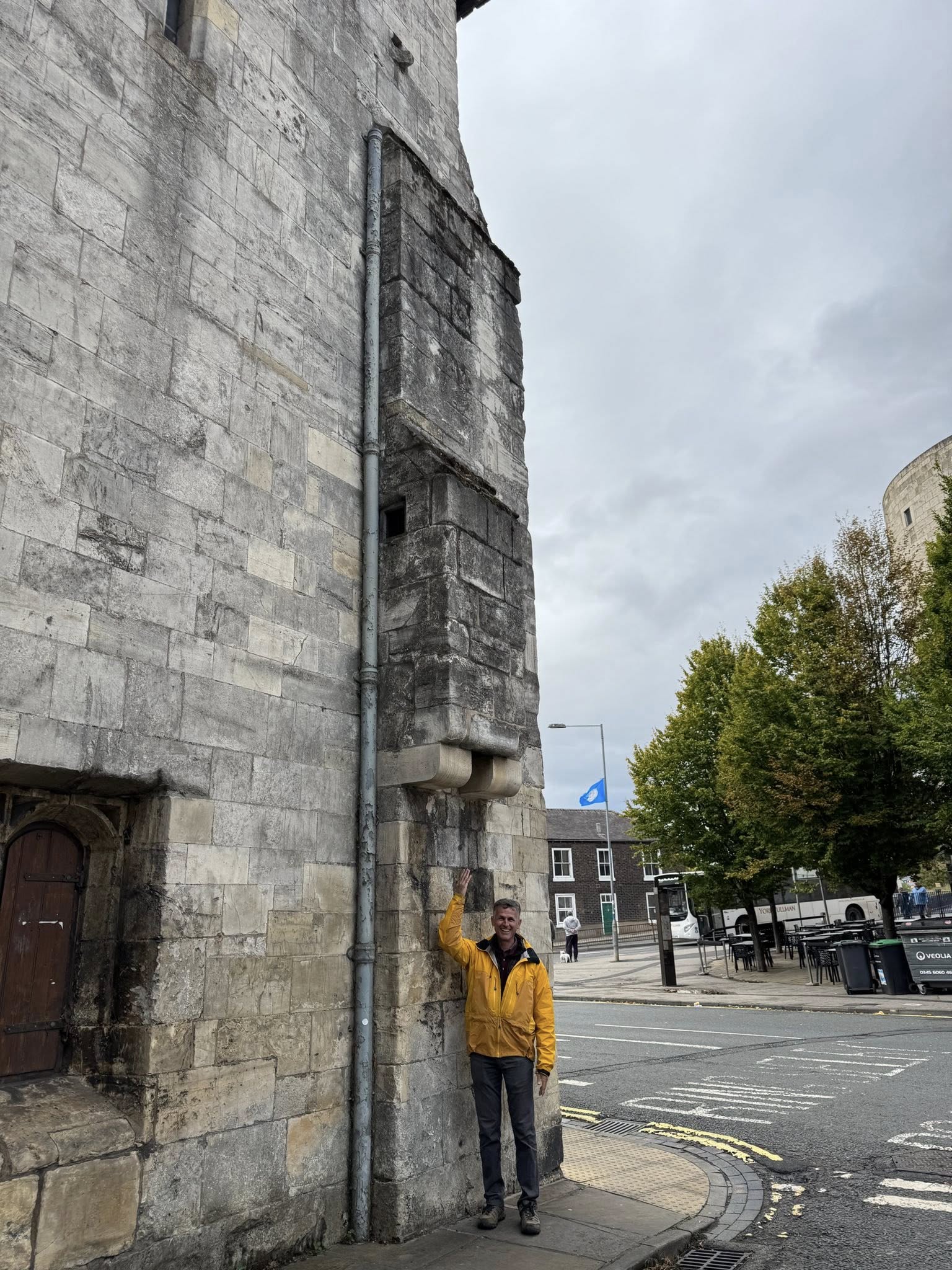
This is Fishergate Tower and Adam is standing under the medieval toilet (called a garderobe) with a chute to the outside. Definitely not a good place to wait for your medieval date!
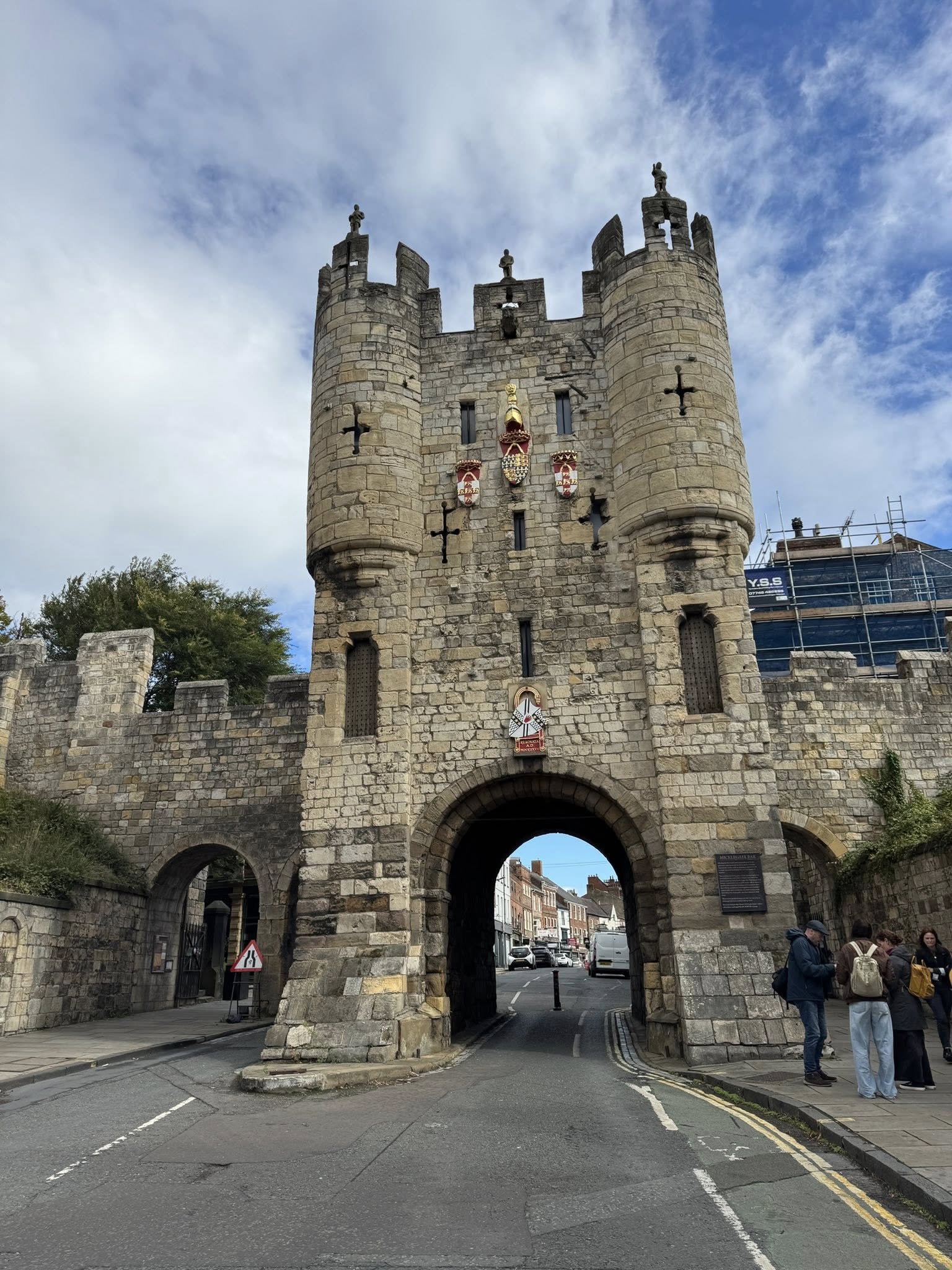
Micklegate Bar was the principal bar. It guarded the main road south towards London and was the place monarchs were greeted. In its heyday, there were spikes on this gate where the heads of traitors were shown off. All monarchs came through here, except Henry VIII. By his time, this gate had a bad reputation due to the display of traitor’s heads. He probably saw it as a bad omen, especially as someone focused on image, divine favour, and legitimacy.
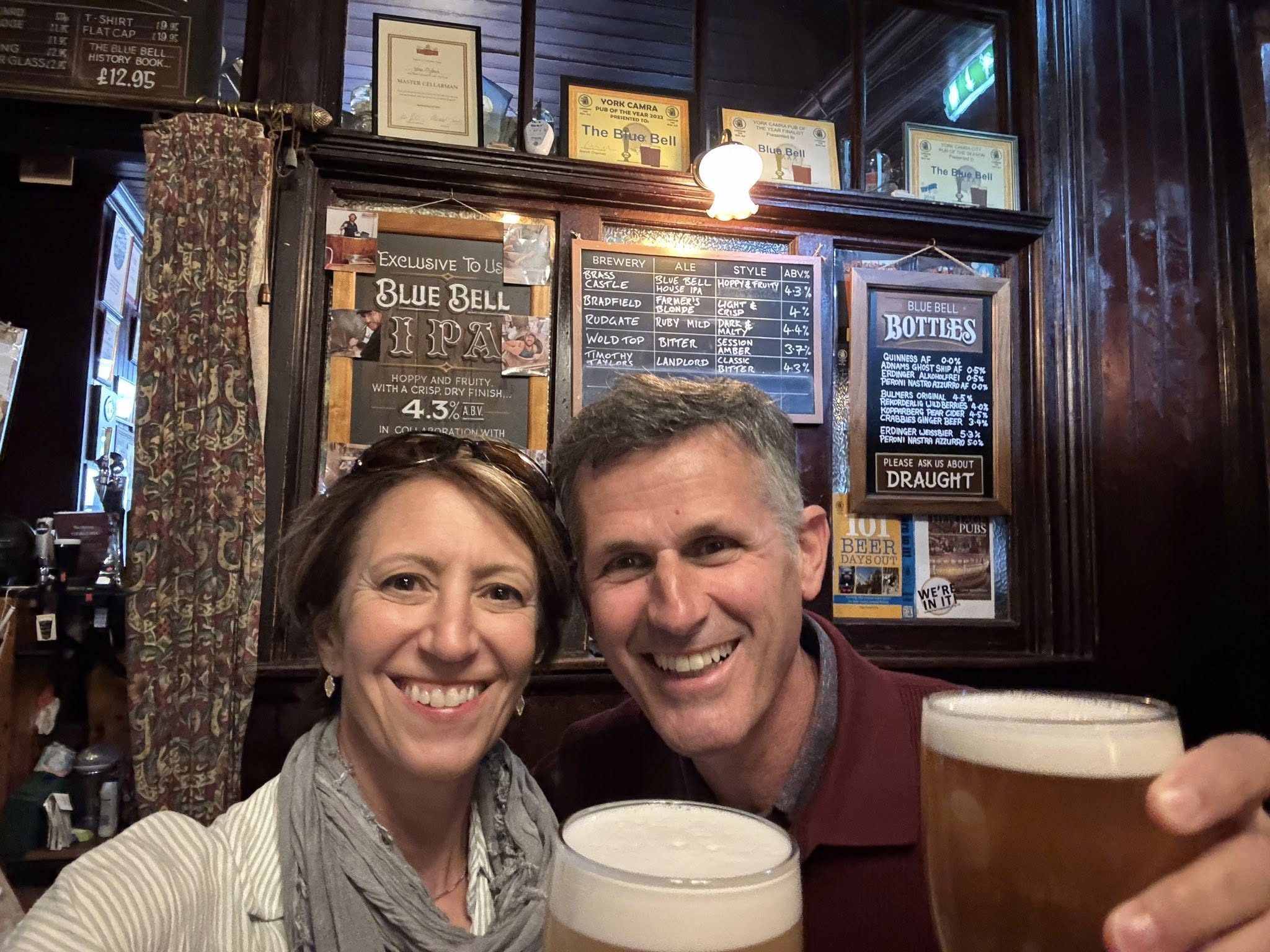
The Blue Bell is York’s smallest pub. It’ll fit 65 people with a squeeze. It’s been a pub since 1798 and the last renovation was in 1903. They pride themselves on their cask ales and have untypical house rules: no swearing or loud conversations, no large groups, no under 18s and no mobile phones. They consider themselves a proper pub for proper pub people.
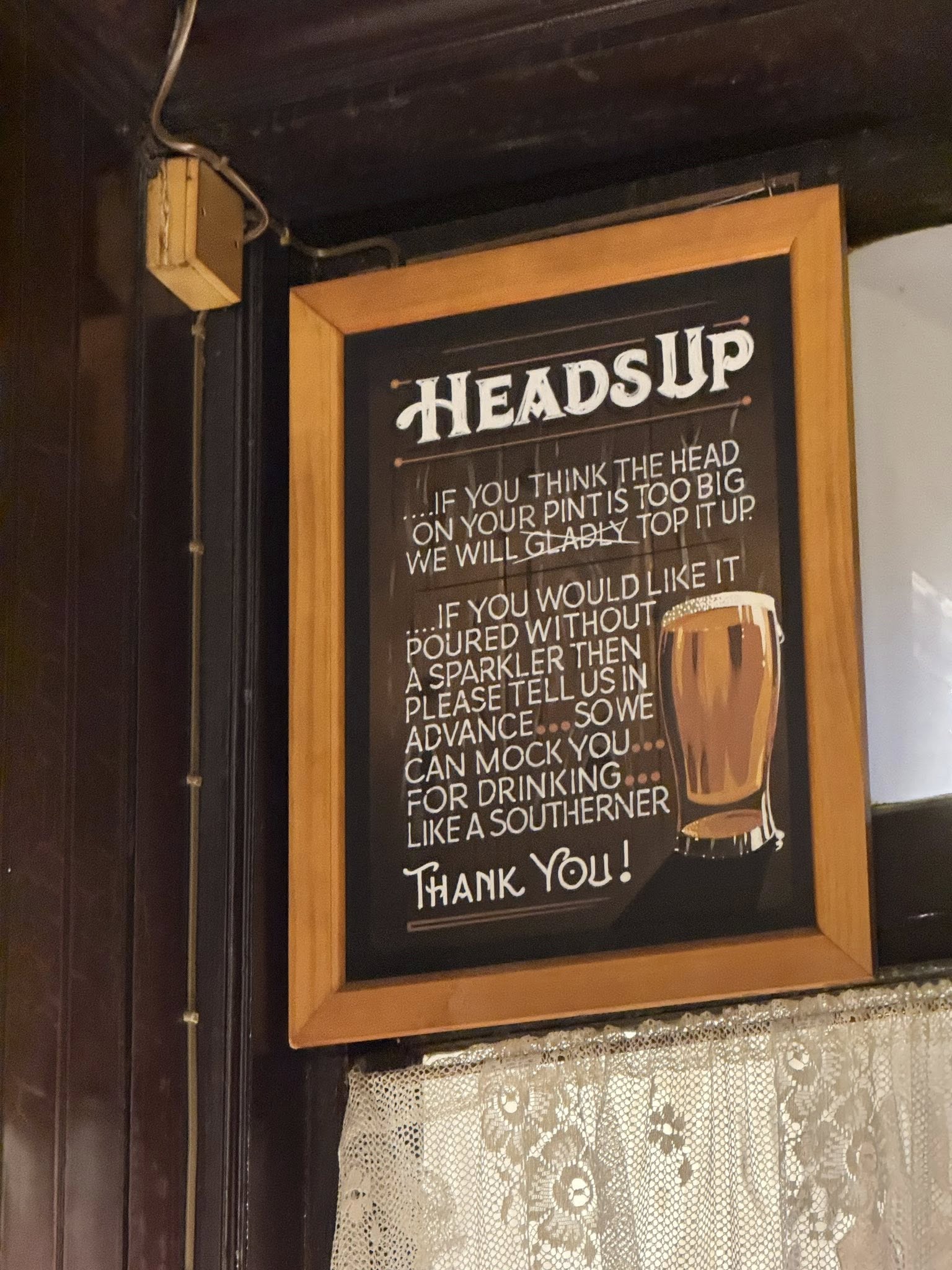
Here’s another bit of their opinion on ales.
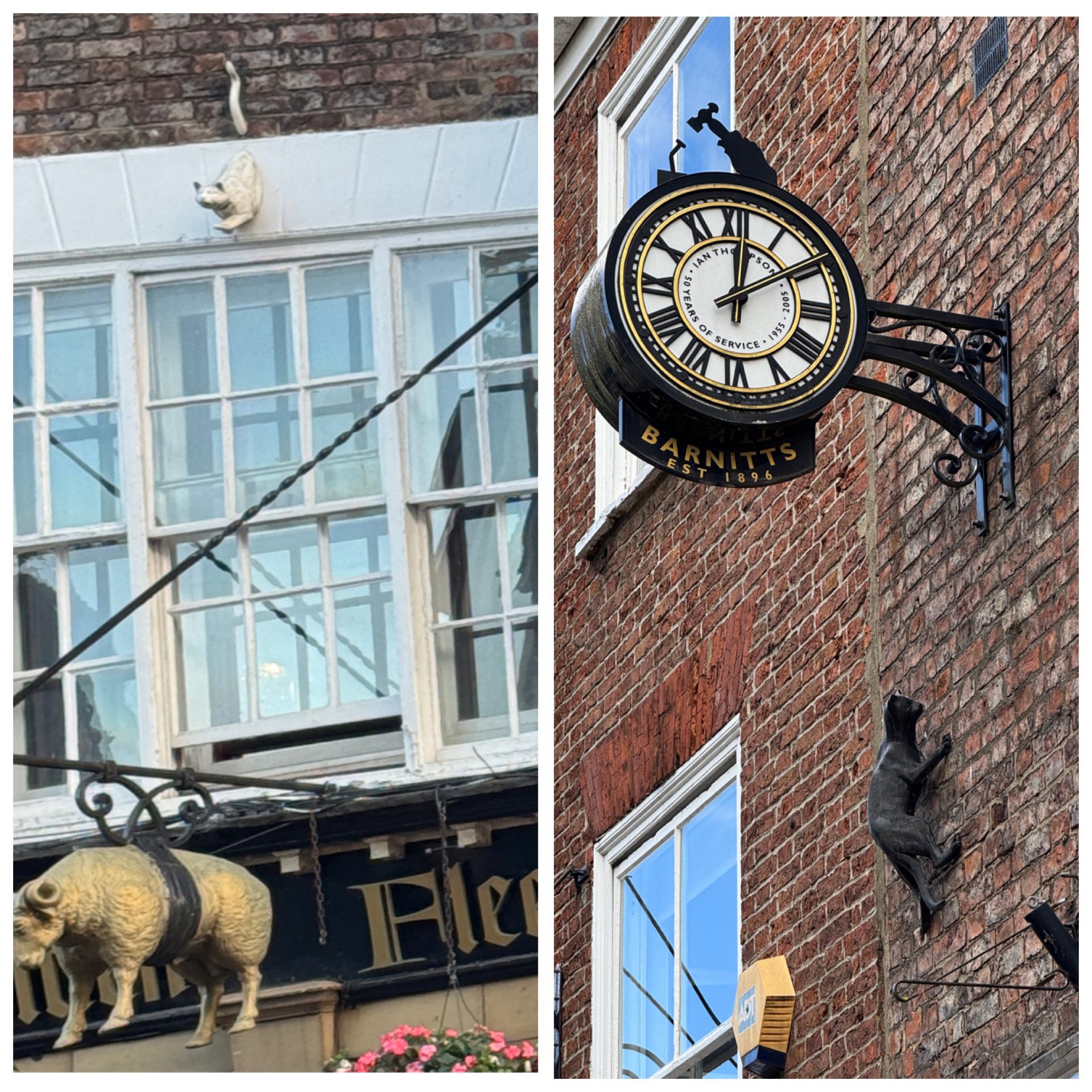
There are lots of little sculptor cats on historic buildings in York. There are a few reasons why cats were part of the culture here, beyond what you’d expect in the realm of rat and mouse control. The locals believed that cats were symbols of protection and would ward off bad spirits. And sometimes, they were a way for illiterate people to identify a business.
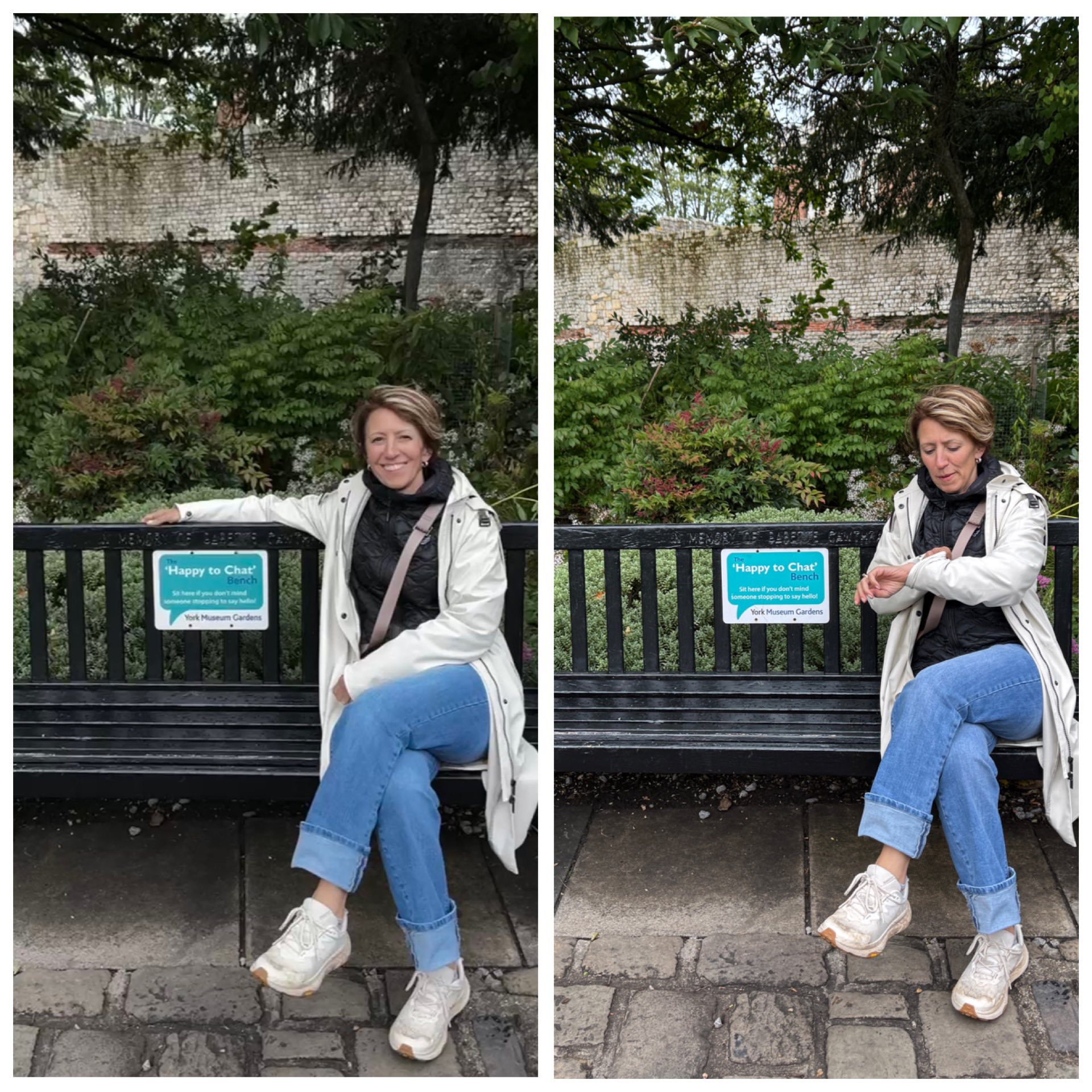
I found my perfect bench!…but where is everybody?!