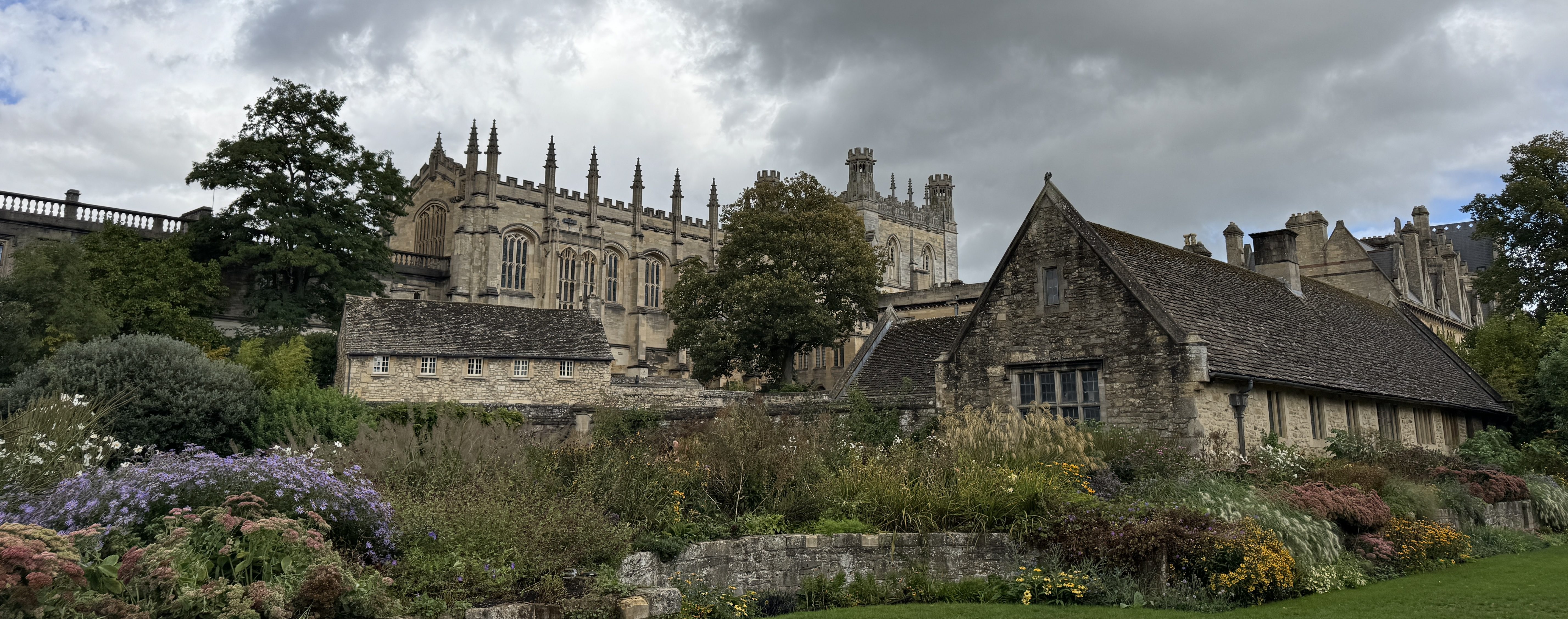
Opulent Oxford
We stopped in Oxford mostly to see the Bodleian Library (only a library gets to put three vowels in a row in its name). Sadly It didn’t occur to us that tickets would be in such high demand on a rainy Thursday…Maybe because it was a convocation day and people were sneaking out of the ceremony, or maybe because it’s one of the most famous libraries in the world. Next time…
But we still found some things to do in Oxford in the rain!
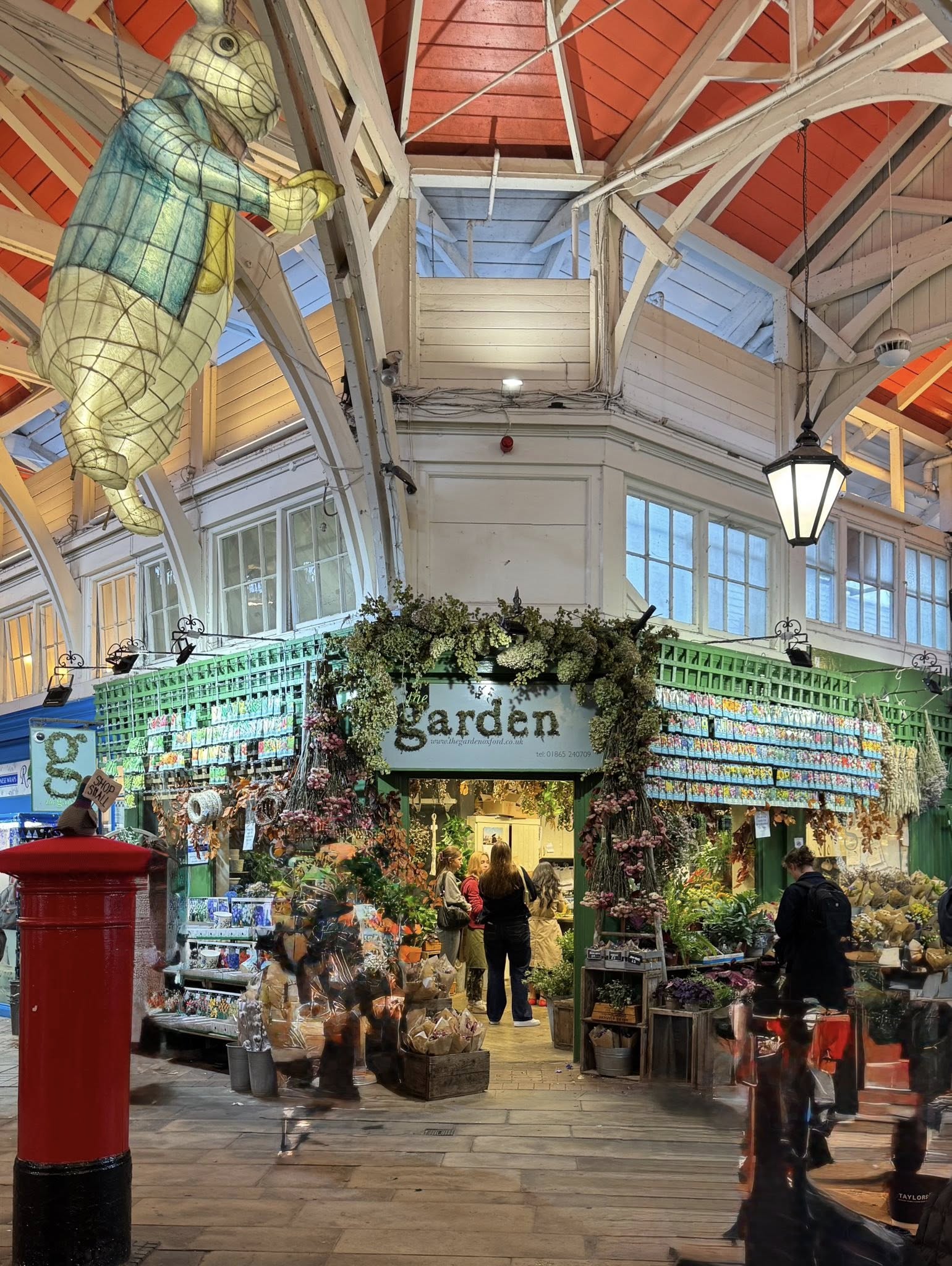
Day trip to Oxford started with lunch at the Covered Market. I’d like to put “Covered” in quotes as when the rain bucketed down outside, we got misted through the roof slats.
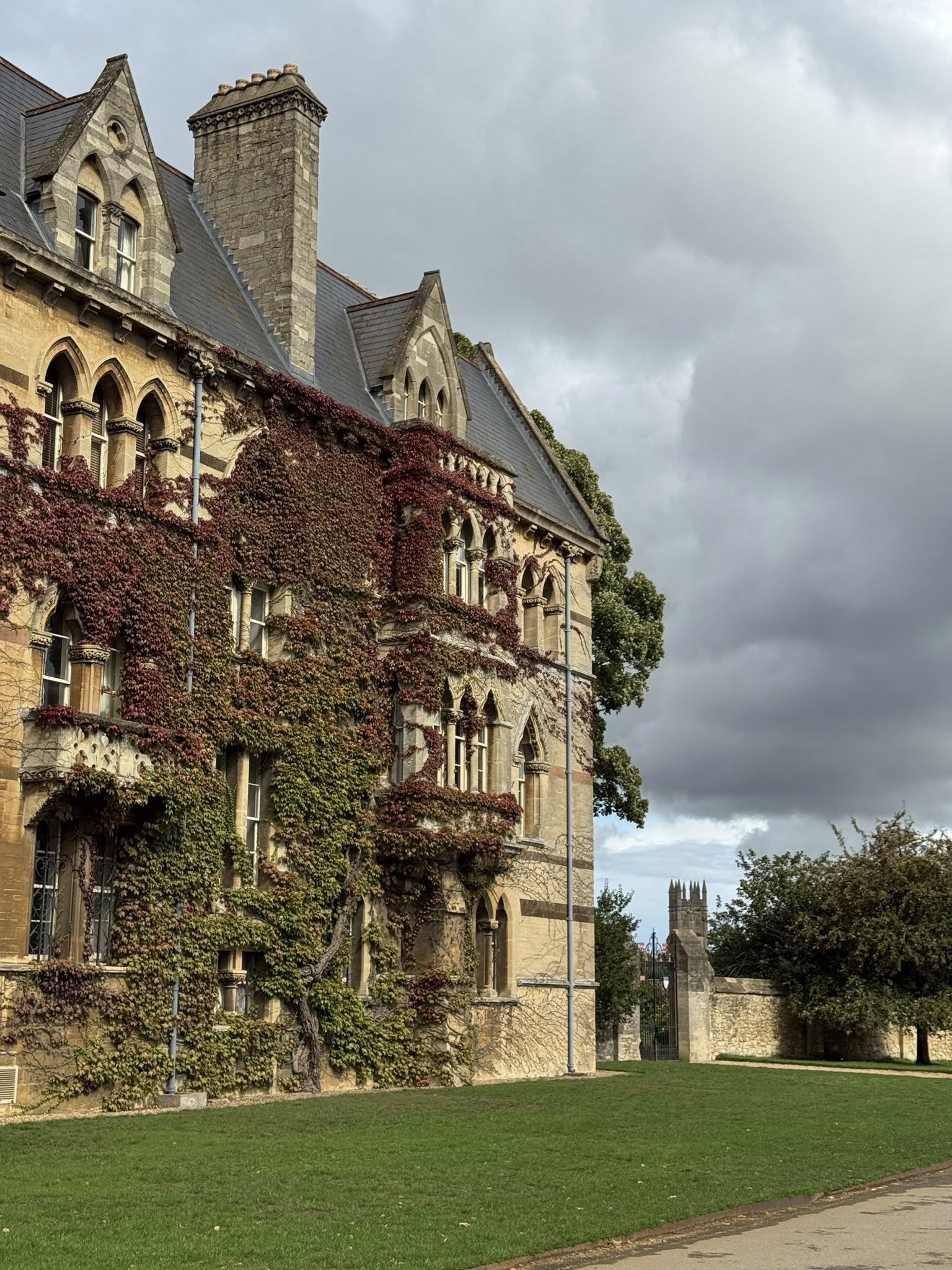
Classic ivy covered Oxfords. With all that ivy chipping away at the stone it is climbing up, it’s astonishing these buildings haven’t crumbled.
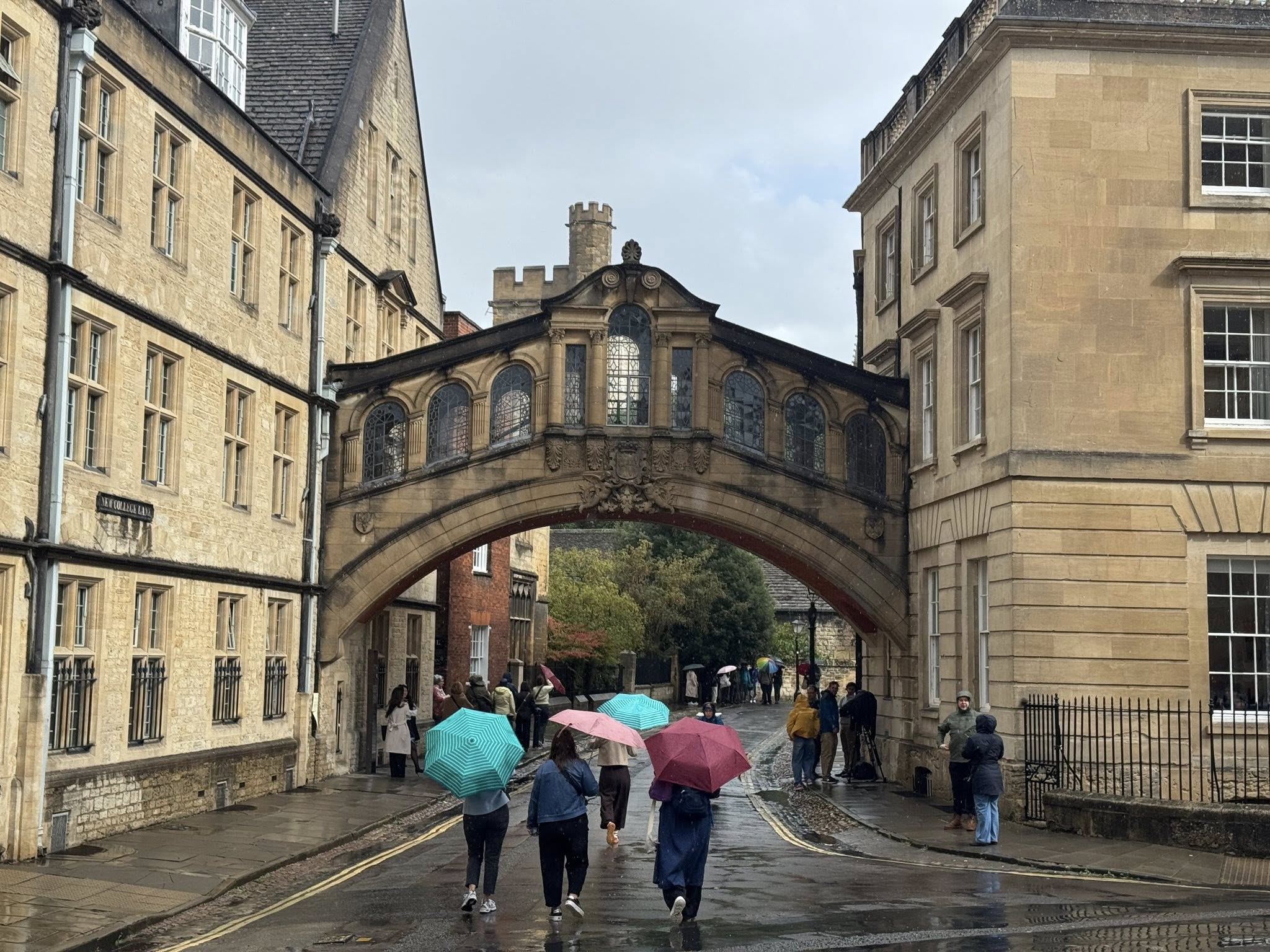
Italy follows me everywhere! Oxford’s “Bridge of Sighs” this is actually the Hertford Bridge but got its nickname from is resemblance to the bridge in Venice that linked the courts to the prison cells where those convicted sighed as they crossed the bridge and had their last glimpse of freedom. No courts and prisons are attached to this bridge but perhaps the students have some degree of anxiety as they cross under this bridge on their way to write their exams.
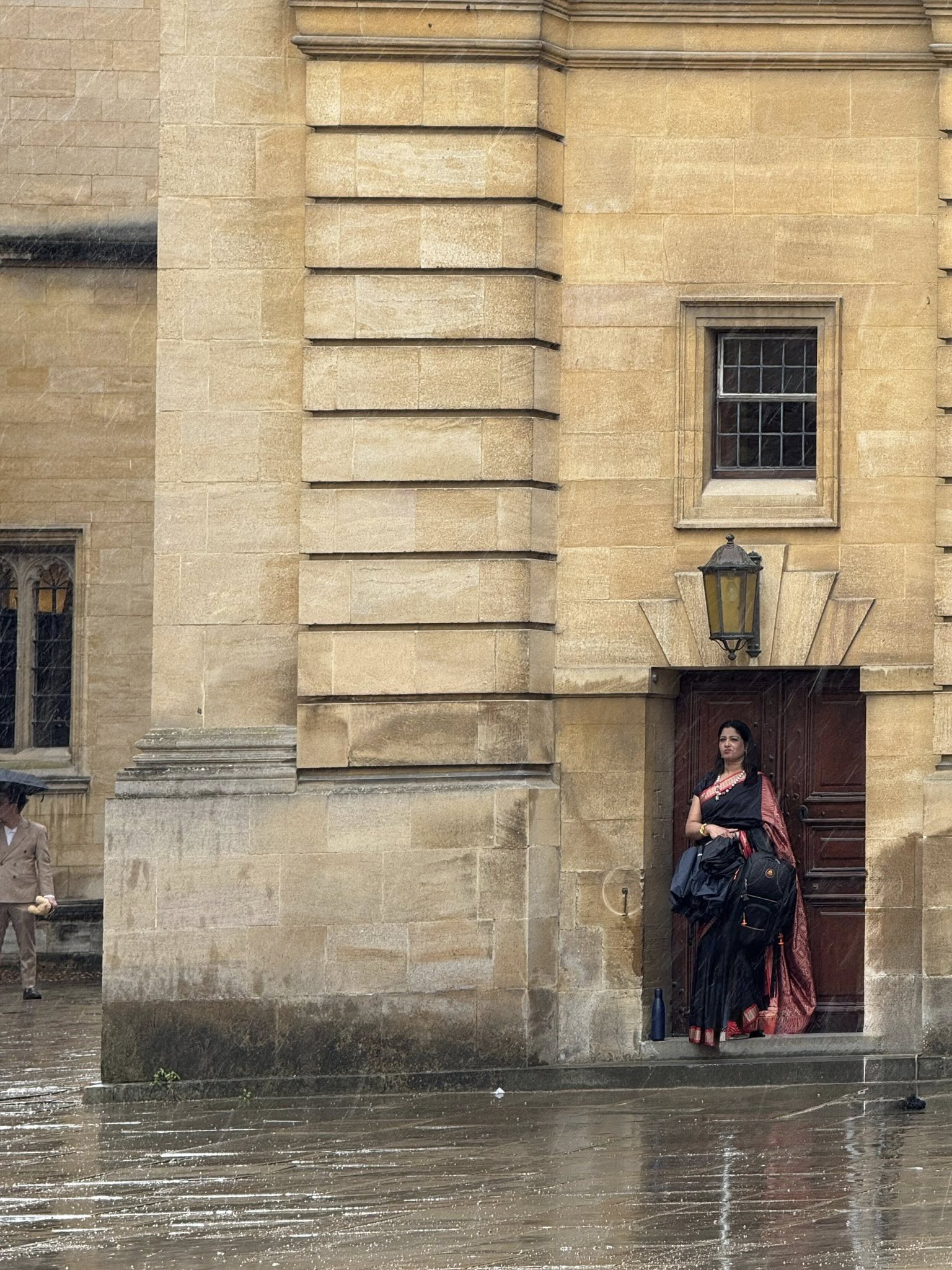
Rainy graduation day in Oxford. This dressed up mom, clutching her grad’s backpack, does not look impressed.
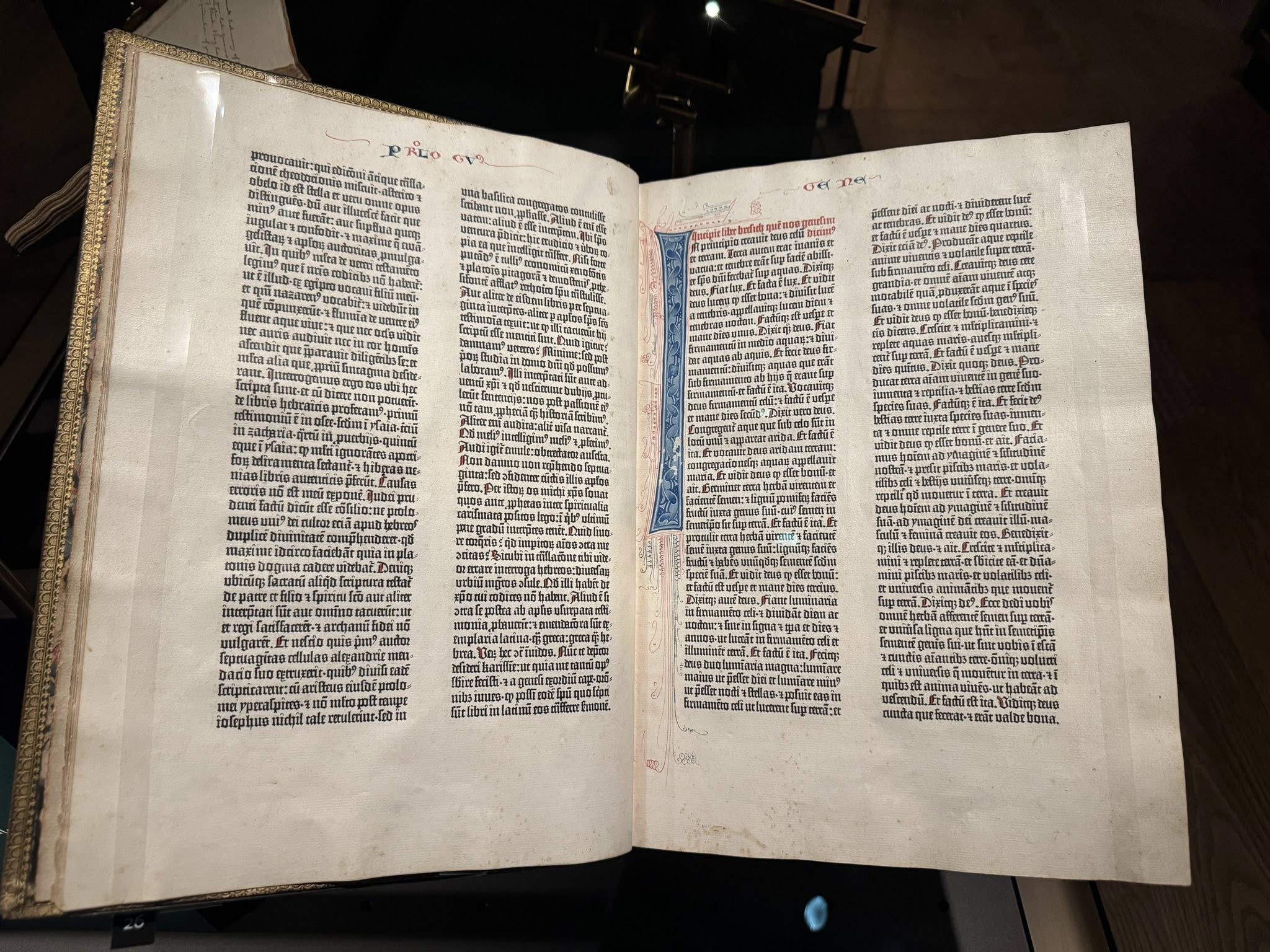
With the Bodleian library sold out on this rainy Thursday, we ended up seeing an amazing exhibit on Treasures in the Weston Library. The concept was what makes something a treasure. The first of something, the oldest of something, the last of something, something that triggers memories; pleasant or sad. Treasures are what we are made of; they form our past and hopefully guide our present and future. Here are just a few of many items that resonated with me…for a variety of reasons. Famous: This is the Gutenberg Bible. Printed sometime around 1455, it wasn’t the first printed object but it was the first in Europe printed with movable type…and the first best seller! Even though each copy was hand-decorated by artists, printing allowed so many more copies of a book to be made.
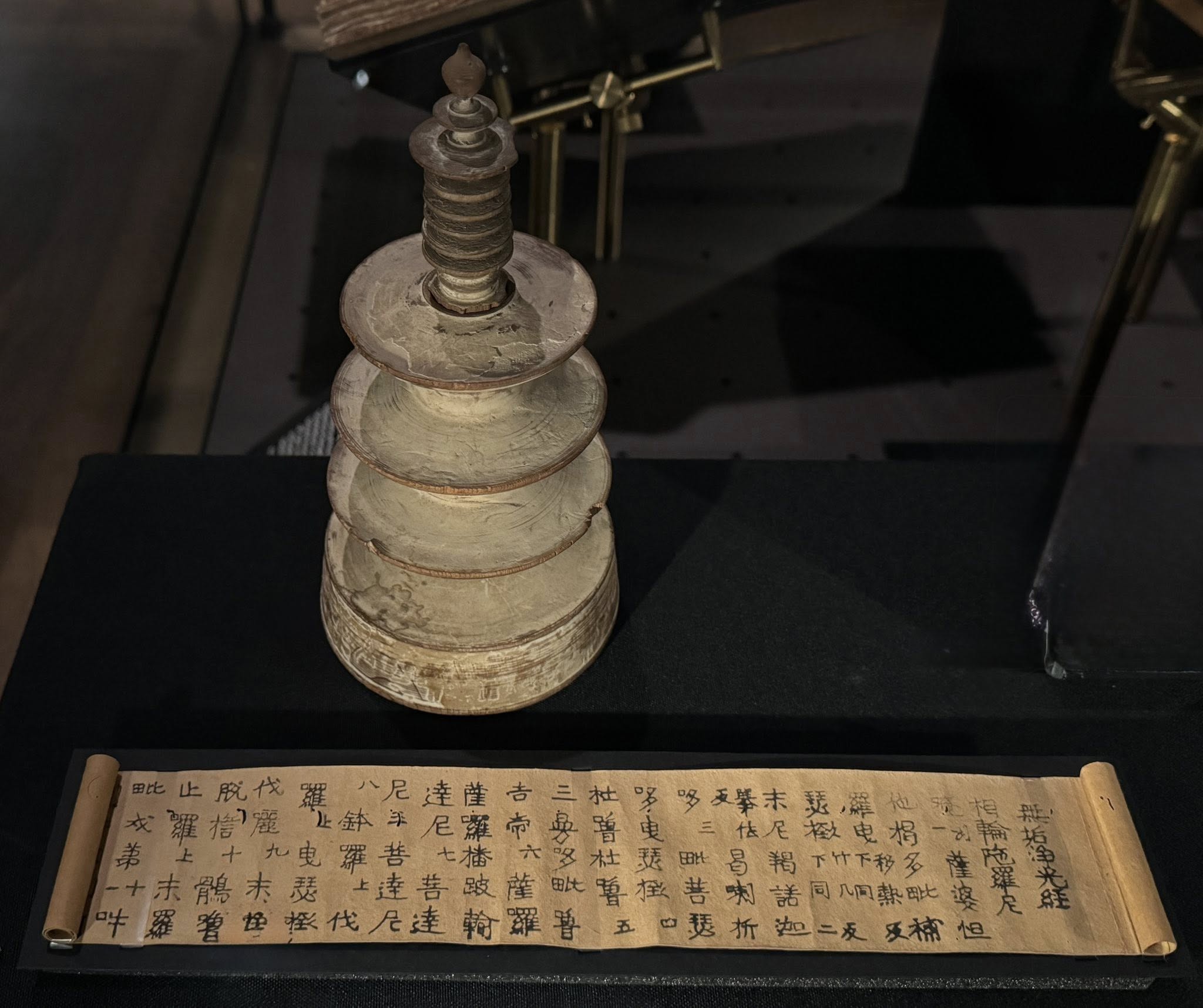
Oldest: This little pagoda holds one of the world’s oldest printed texts. In the 760s, Empress Shötoku of Japan ordered one million of these wooden pagodas, each with a printed dharani - a sacred Buddhist spell. Craftspeople printed the scrolls, rolled them by hand and placed one inside each pagoda to spread belief and shape identity. I’m not sure if they followed the Empress’s instructions and actually made a million little pagoda scroll holders, but if they did, it would have satisfied the demand of about 20% of the Japanese population of the time.
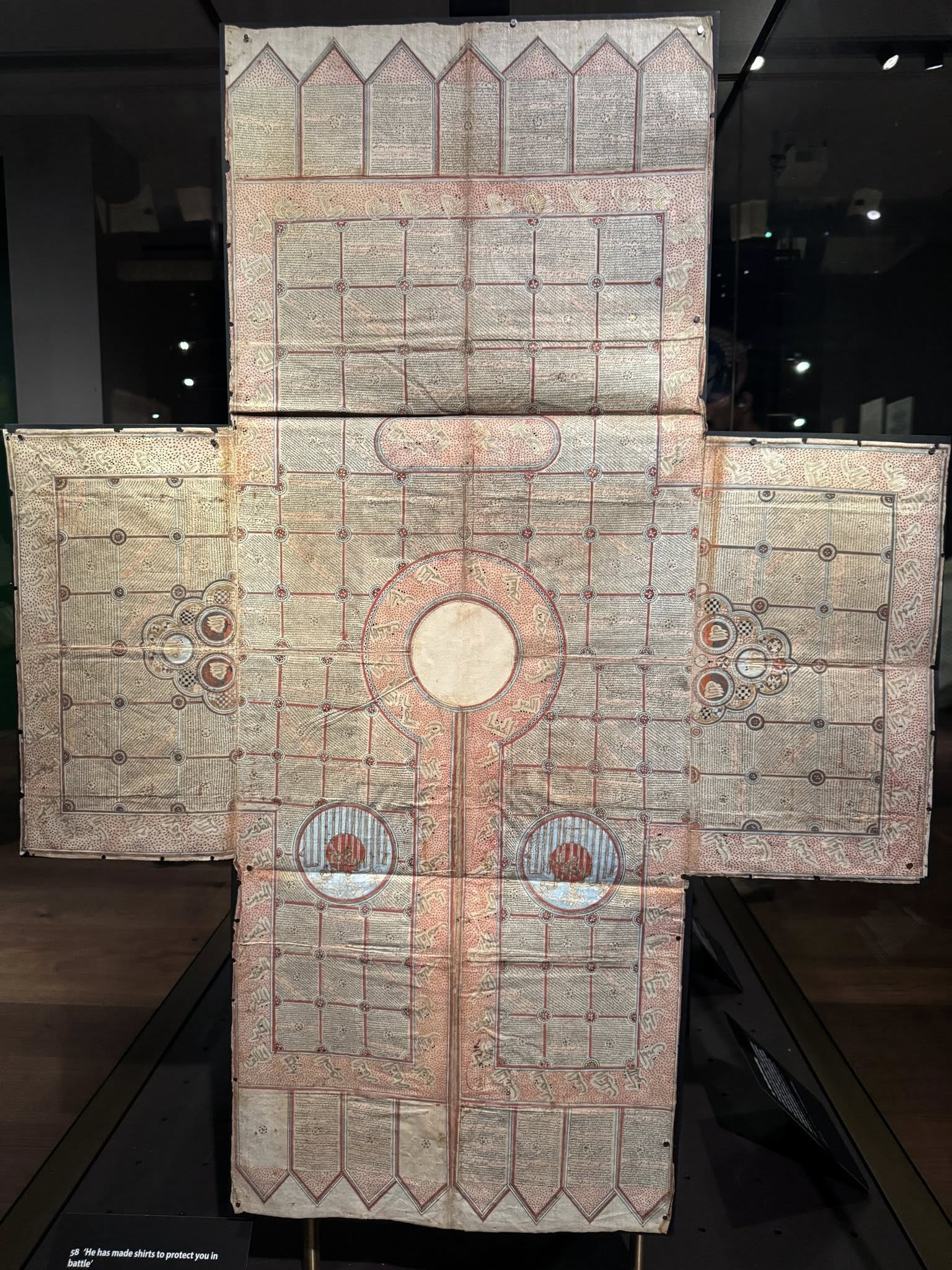
Faith: Soldiers heading into battle often took Qur'ânic verses with them as talismans. This 16th century shirt took that tradition to a whole new level. The entire Qur'ân is printed on it. I see no bloodstains so I would guess this soldier lived to tell his tale.
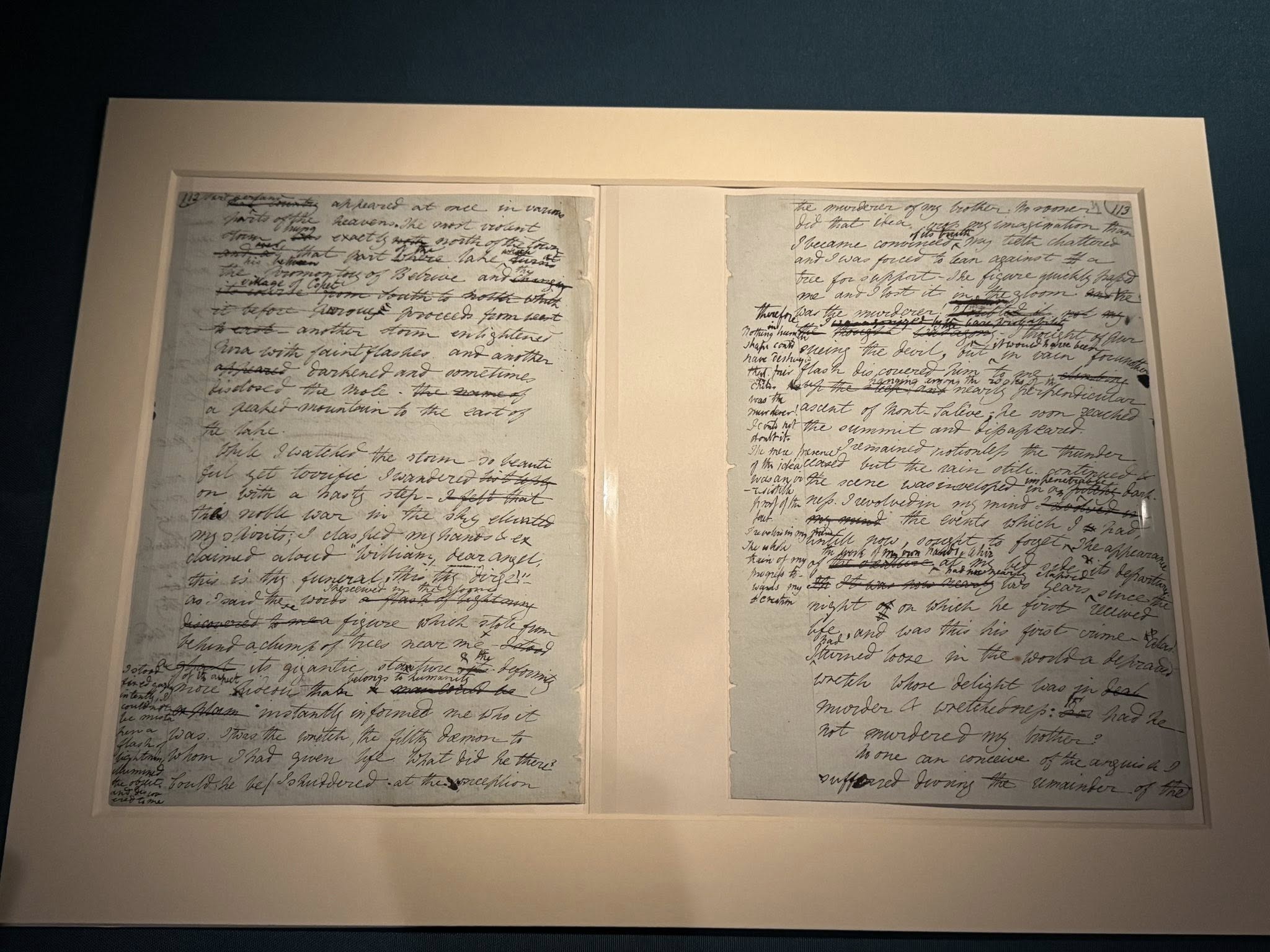
Prototype: This is the original manuscript of Mary Shelly’s Frankenstein. She came up with the idea in 1816 while visiting Lord Byron’s villa on Lake Geneva and wrote it all down in this notebook.
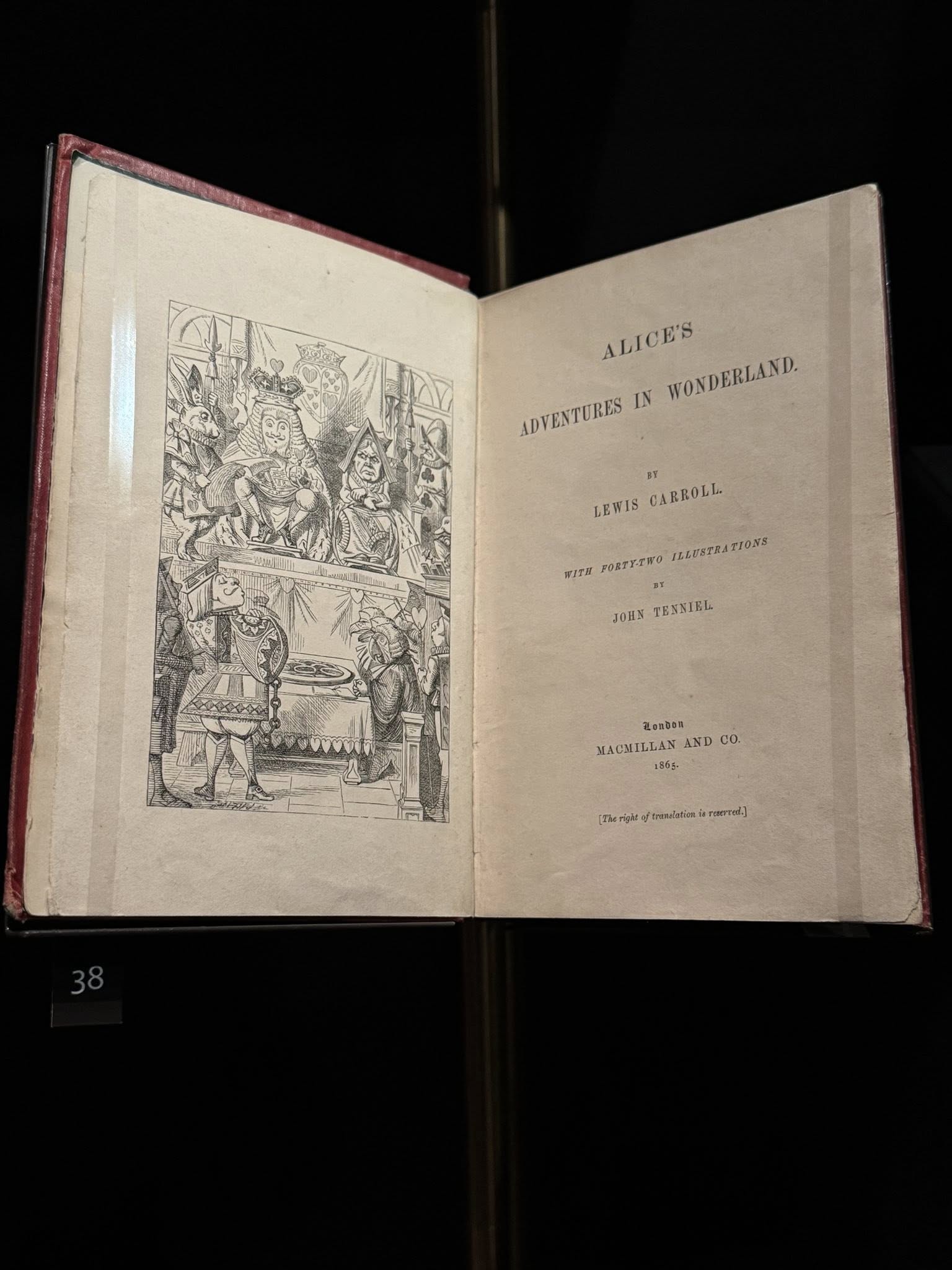
Questionable? Here is the first published edition of Alice’s Adventures in Wonderland. This classic has a debated backstory that in modern times is considered a bit dodgy. But times change and to what extent do we have the right to criticize what was acceptable in the past. Lewis Carroll is actually the pen name of Charles Dodson, a mathematician who taught at Christ Church, Oxford. He was friendly with Henry Liddell, the Dean, and his family. He would take Henry’s kids on outings and tell them stories. When he was 30, in 1862, he came up with the story of Henry’s daughter, Alice, falling down a rabbit hole. The rest is a history that is debated in literary circles. Carroll’s relationship with the family abruptly ended in 1863 and there is no record as to why; the pages in the family diary describing this period were torn out. Of course, this is where speculation begins! Carroll, like many of his time, enjoyed the hobby of photographing children in costume or naked. Alice was one of his subjects. Were Carroll’s motivations innocent? He went on to publish Alice’s Adventures in Wonderland a year after the rift.
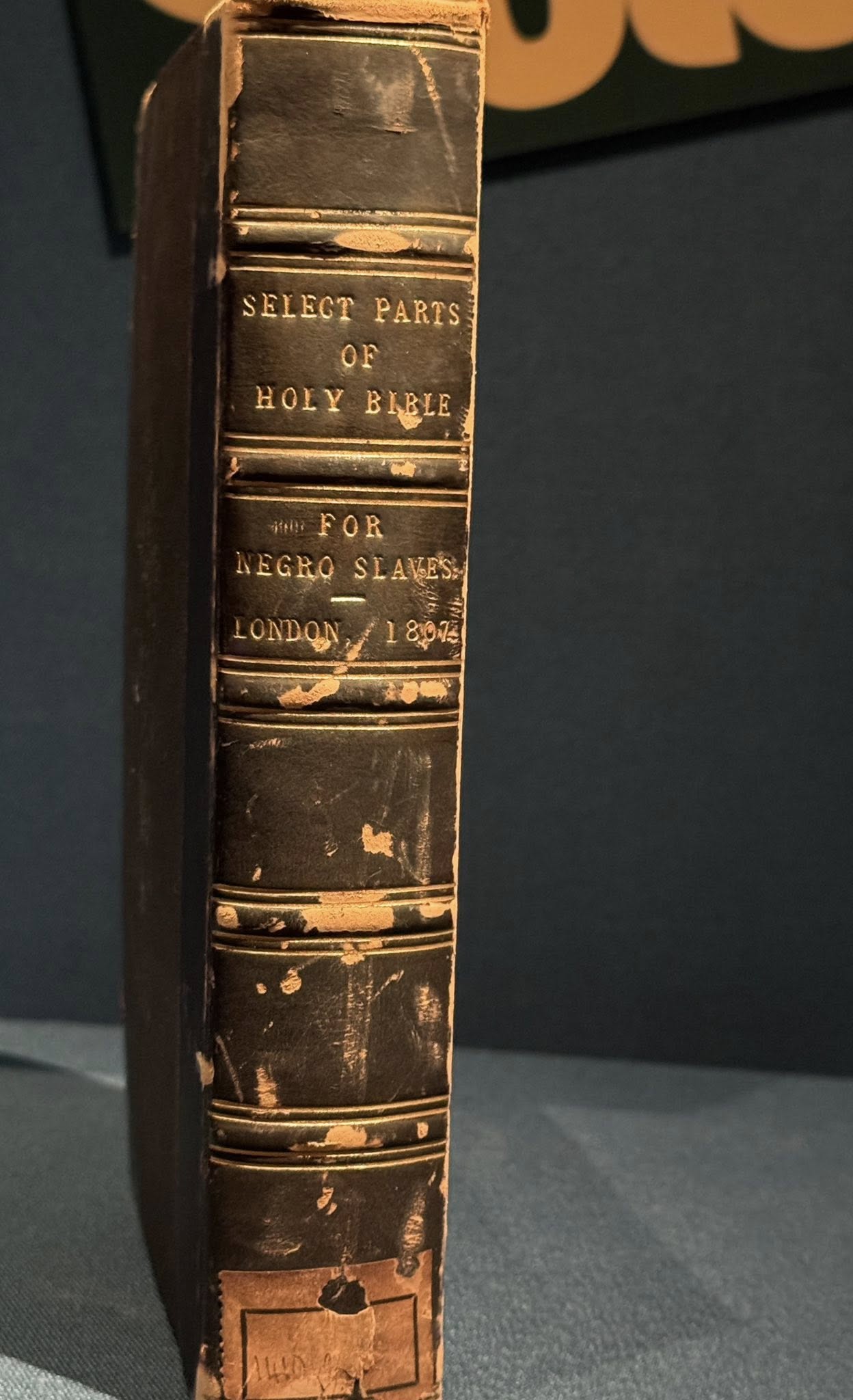
Reflection: Some items remind us of painful truths and uncomfortable histories but we need to treasure and preserve them so that we can stay grounded in reality. The bible on the left “Select Parts of the Holy Bible for Negro Slaves” was printed in 1807. What was selectively removed was all the references to struggles for freedom, for example the Israelites’ escape from slavery in Egypt. Don’t want to give anyone any foolish ideas…
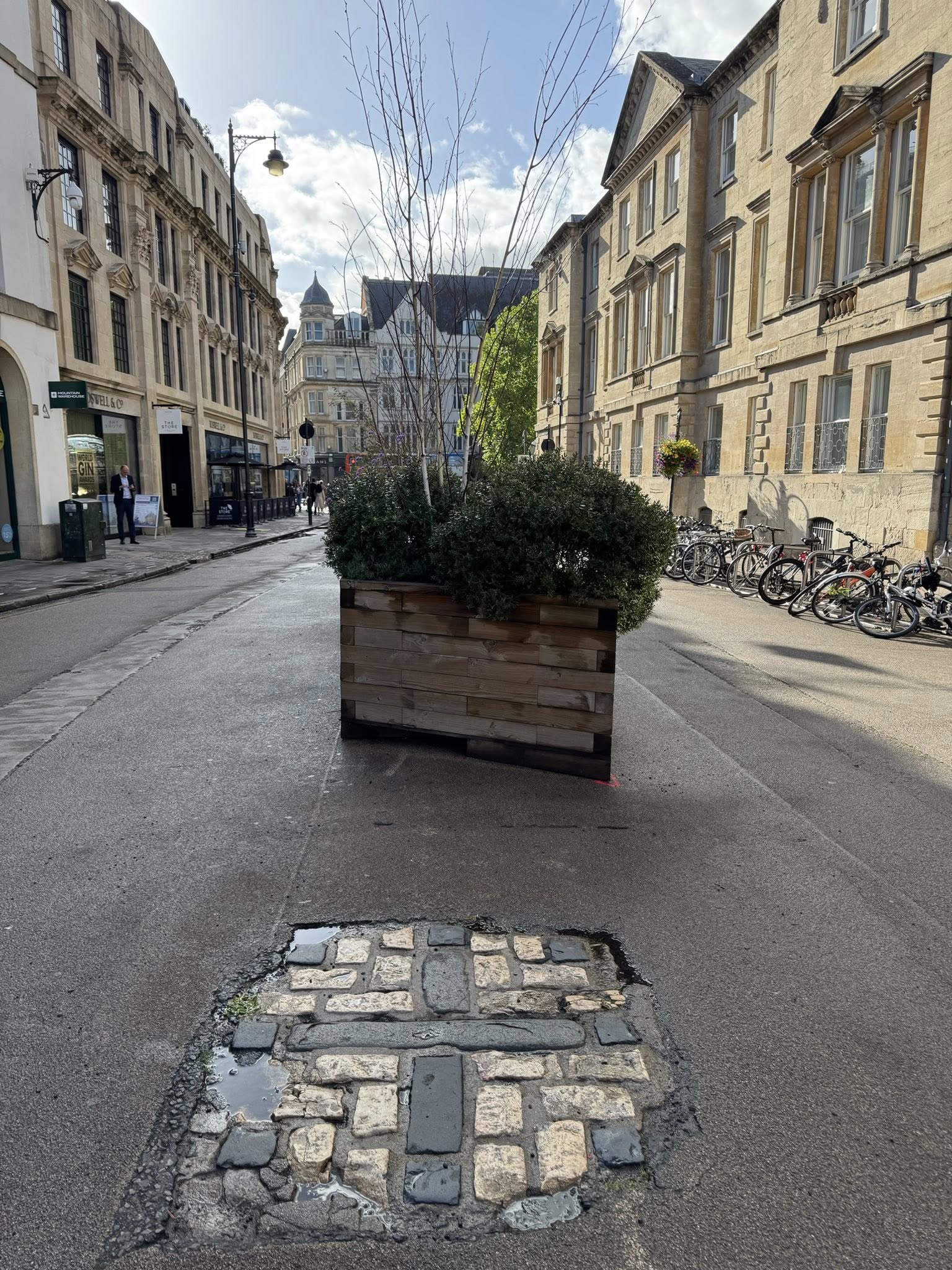
This is the Martyr’s Memorial Cross in the middle of Oxford’s Broad Street marks the spot where, in 1555 and 1556, Hugh Latimer, Bishop of Worcester, Nicholas Ridley, Bishop of London, and Thomas Cranmer, Archbishop of Canterbury were burnt at the stake for their faith. Queen Mary I was struggling to bring back Catholicism. These three, the Oxford Martyrs, were prominent Protestant reformers and Mary would have none of it. She condemned them for heresy and had them executed.