September, 2025
Wild Fort William
We left the big city of Edinburgh for some hiking in the Scottish countryside. First destination, Fort William, which some call the Outdoor Capital of the UK. Hiking, biking and even downhill skiing! It’s magic in so many ways! Some important stops on the way in and out broke up the driving.
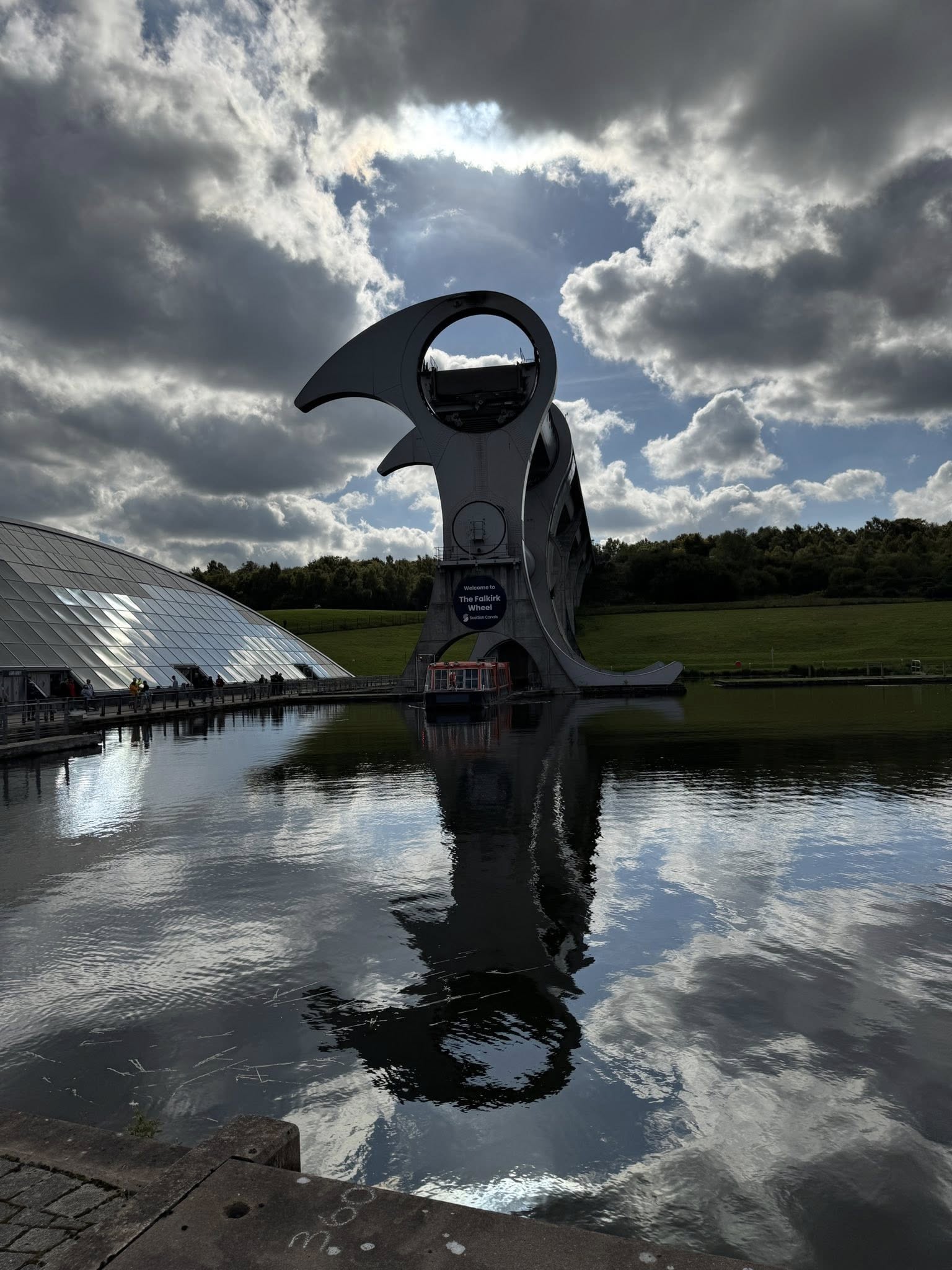
The Falkirk Wheel is an engineer-at-heart husband’s paradise. Nestled about 45 minutes from Edinburgh sits this remarkable marvel. Here’s the backstory. Scotland has two major canals: the Union Canal which links Edinburgh and Falkirk; and the Forth & Clyde Canal which crosses central Scotland from the Firth of Forth (east) to the Firth of Clyde (west). In the 19th century, they were linked by a series of 11 locks opening up water transport between Edinburgh and Glasgow. Modern transportation like the railway and road network improved and left the canal transportation network in the dust. In 1933, the locks were dismantled and the two canals were cut off from each other. In the 1990s, the Millennium Link Project undertook the huge task of restoring and reconnecting Scotland’s canals for leisure and tourism. The challenge to reconnect the Union Canal with the Forth & Clyde Canal without rebuilding the old staircase of locks to manage the 35m difference in height was solved by the Falkirk Wheel, which opened in 2002.
The Falkirk Wheel was the brainchild of architect Tony Kettle. £78 million later, Falkirk became home to the world’s one and only rotating boat lift. Each of the two huge gondolas (also called caissons) are 25m x 8m and can carry up to four boats each, depending on their size, of course. Part of the magic of these 500 litre gondolas is rooted in Archimedes’ principle which shows that an object placed in a fluid displaces its own weight of that fluid. So the two gondolas’ weight of 500 tonnes never changes, regardless of how many boats may be in them. The gondolas are always in perfect balance even if one has no boats and the other is full. And because of this perfect balance, the wheel only requires the energy equivalent to boil 8 kettles (of course that is the analogy, we are in the UK after all) to overcome the friction and get things moving.
What once took a full day to navigate through the flight of 11 locks now takes less than 15 minutes from sailing in from one canal to sailing out into the other!
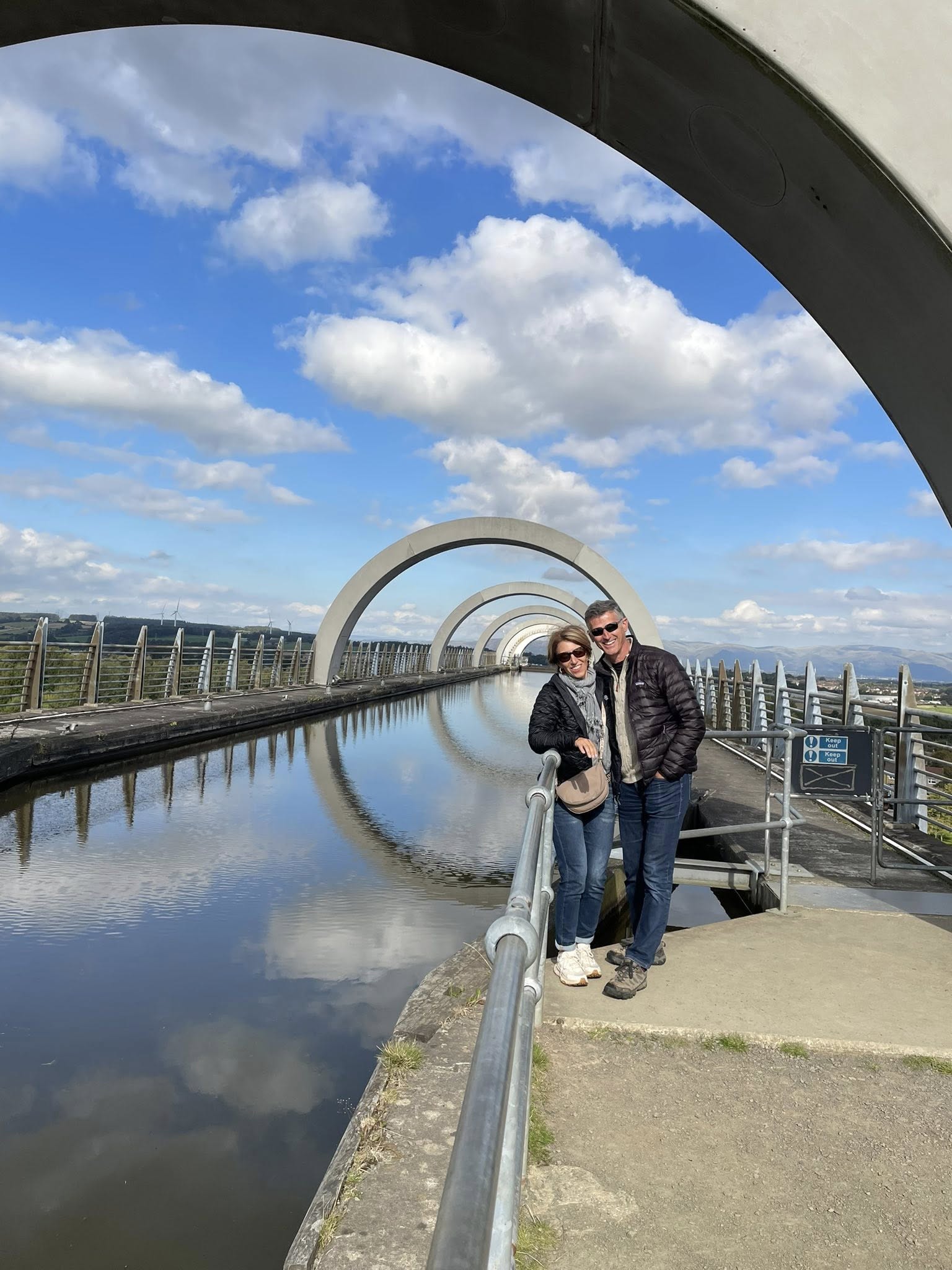
This is the Union Canal at the top of the Falkirk Wheel. It’s a pretty stunning sculptural view even without considering the engineering marvel that it is!
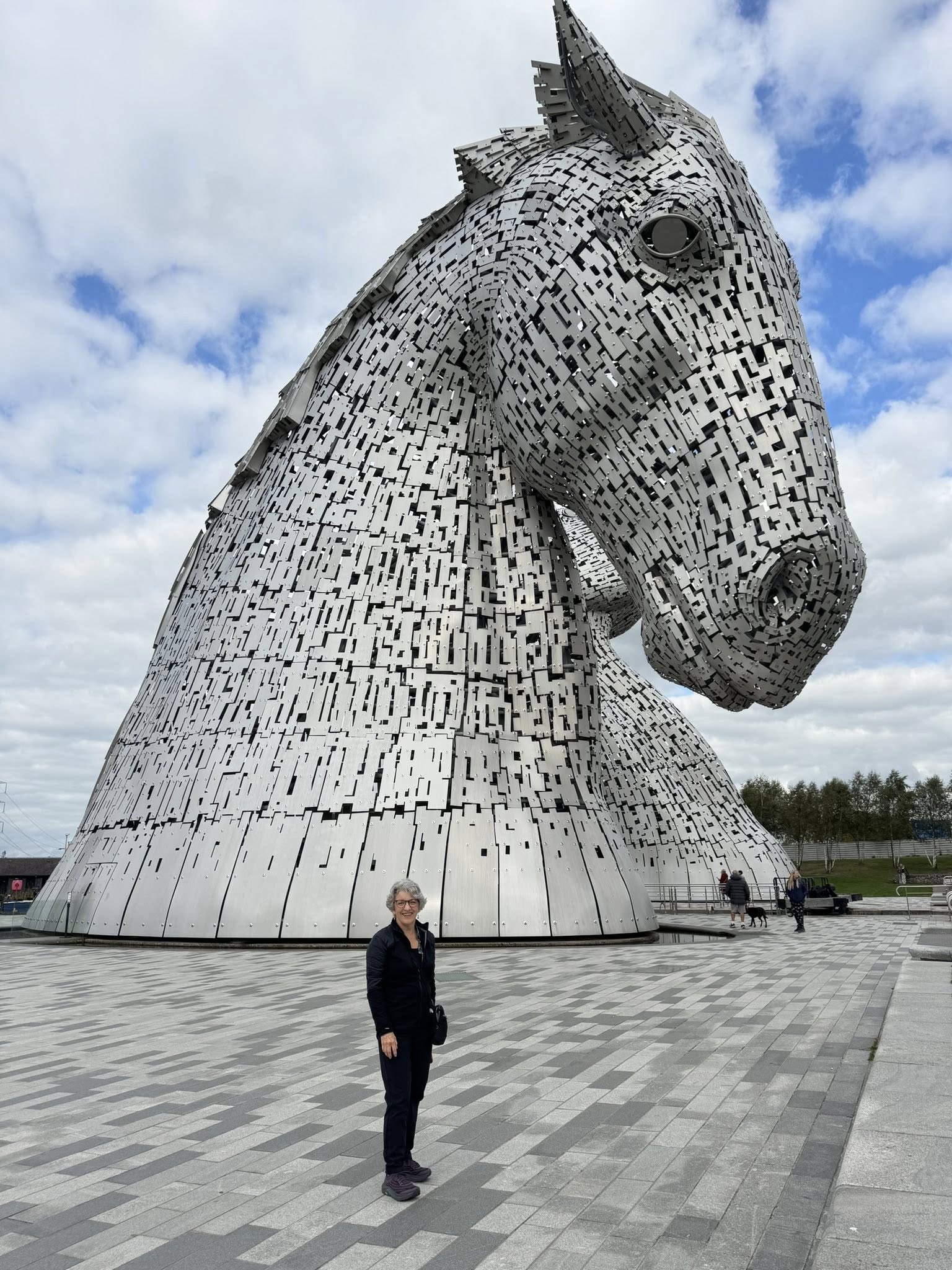
A ten-minute drive up the road from the Falkirk Wheel, sitting alongside the Forth & Clyde Canal is another marvel; the Kelpies. Created by Scottish sculptor Andy Scott, these two 30m tall steel horse-head sculptures are an engineering feat themselves. In Scottish folklore, a kelpie is a shape-shifting water spirit that often appears as a horse, luring people to their watery demise. It’s a great story to keep kids away from the dangers of water! But the symbolism of these kelpies is not only rooted in folklore. They are also a nod to the work horses essential to life in Scotland’s past, not only important in agriculture but workhorses also pulled barges along the canals.
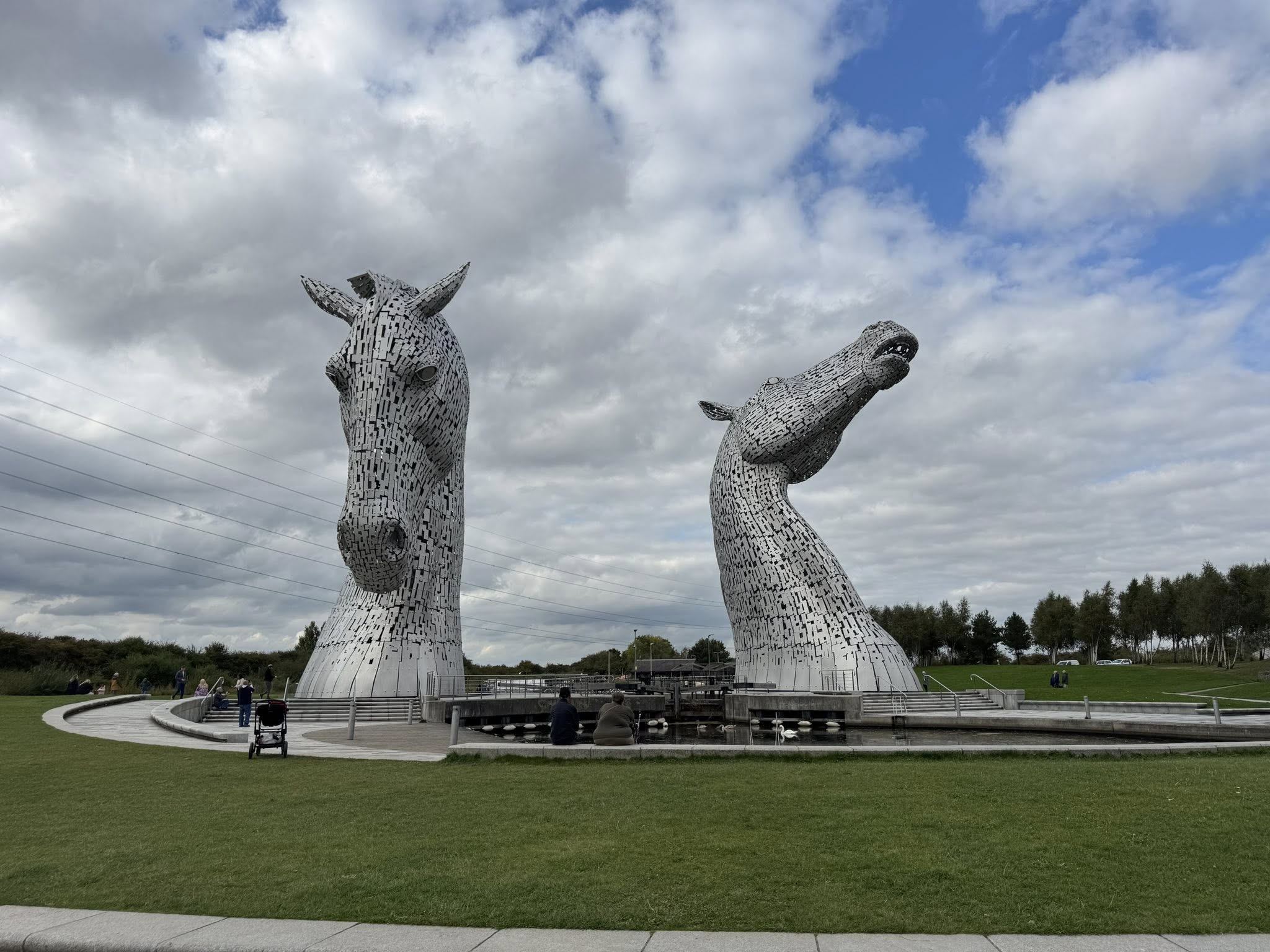
The Kelpies each weigh about 300 tonnes with nearly 1,000 steel plates wrapped around a structural steel inner framework. The stainless steel plates are shaped and angled to suggest muscle, tension and flowing manes, capturing the energy of the horse. Creating these magnificent creatures was not quick. From start to finish, the project took about seven years. The design phase lasted two years, the fabrication of the steel structure and plates another five years and then several months of on-site assembly. The Kelpies were officially opened to the public in 2014.
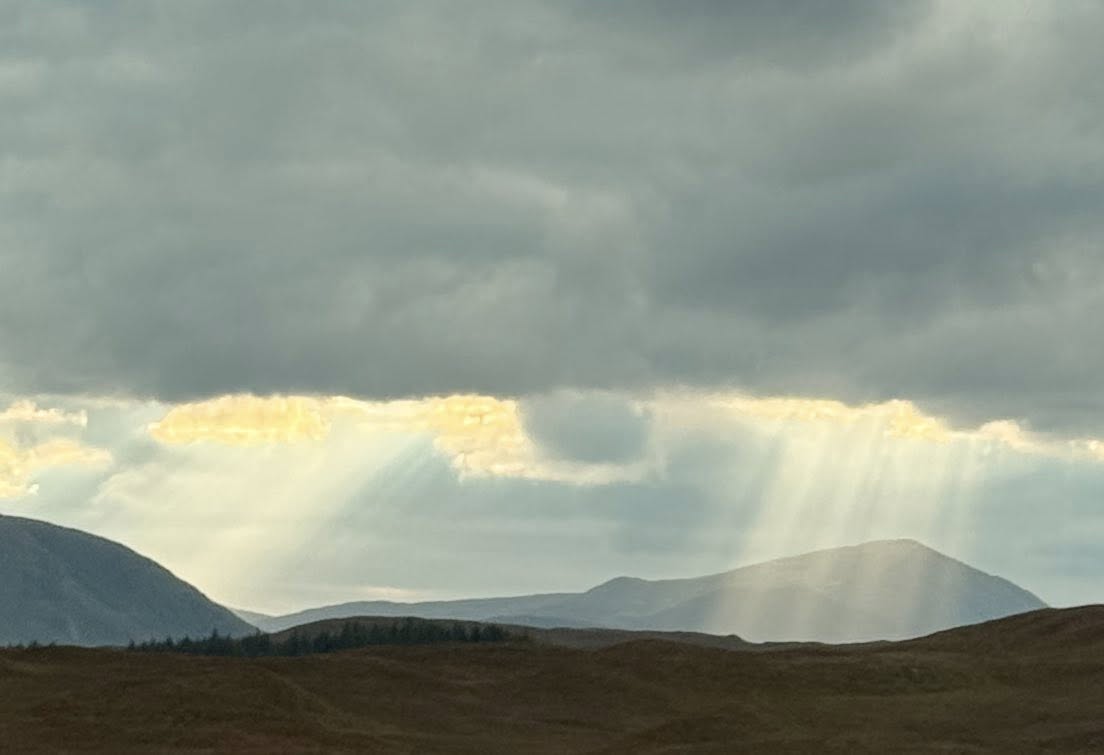
Moving on from the magic of engineering to the magic of the sky. The sun is seeking its rest at the end of the day.
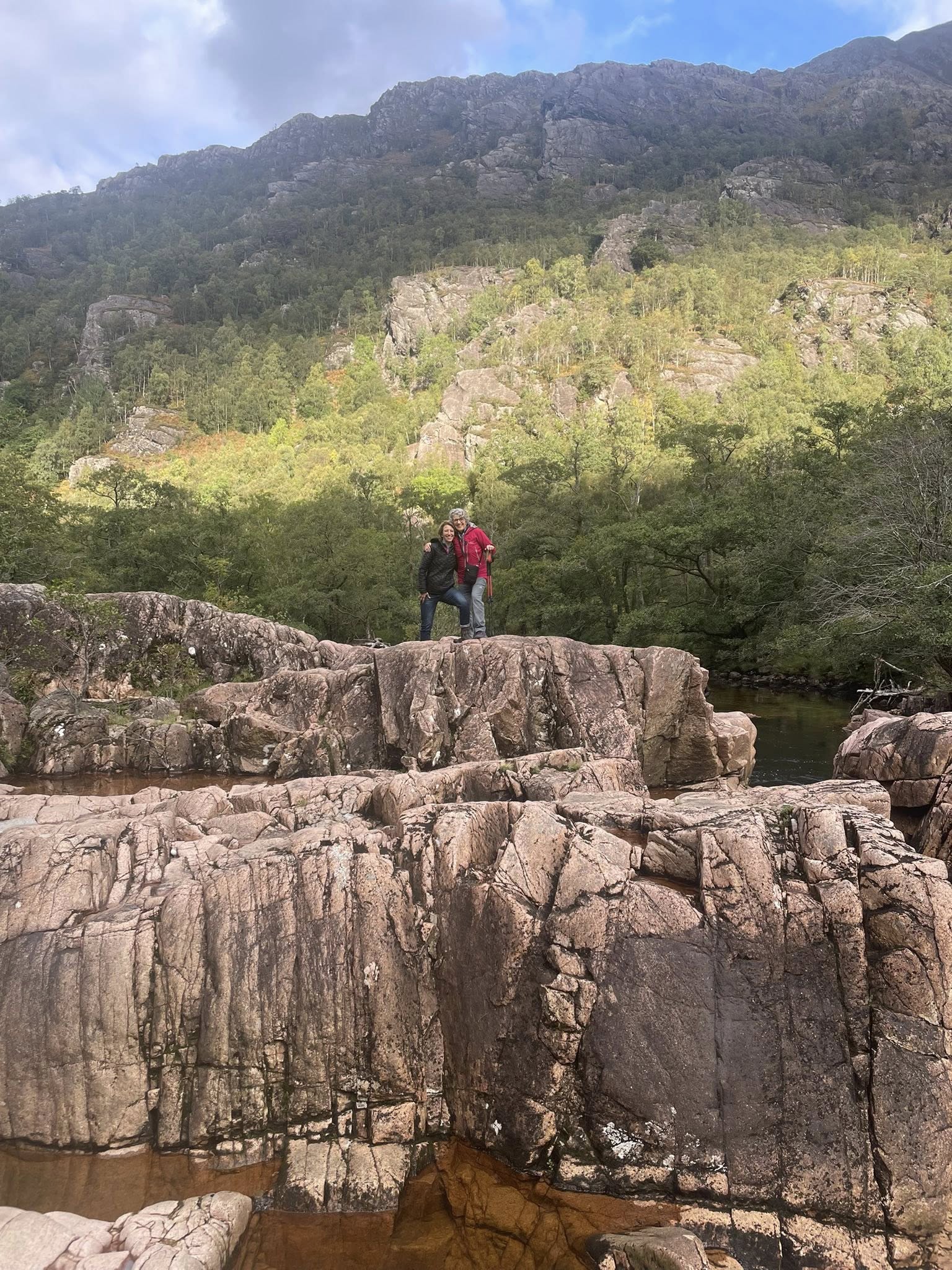
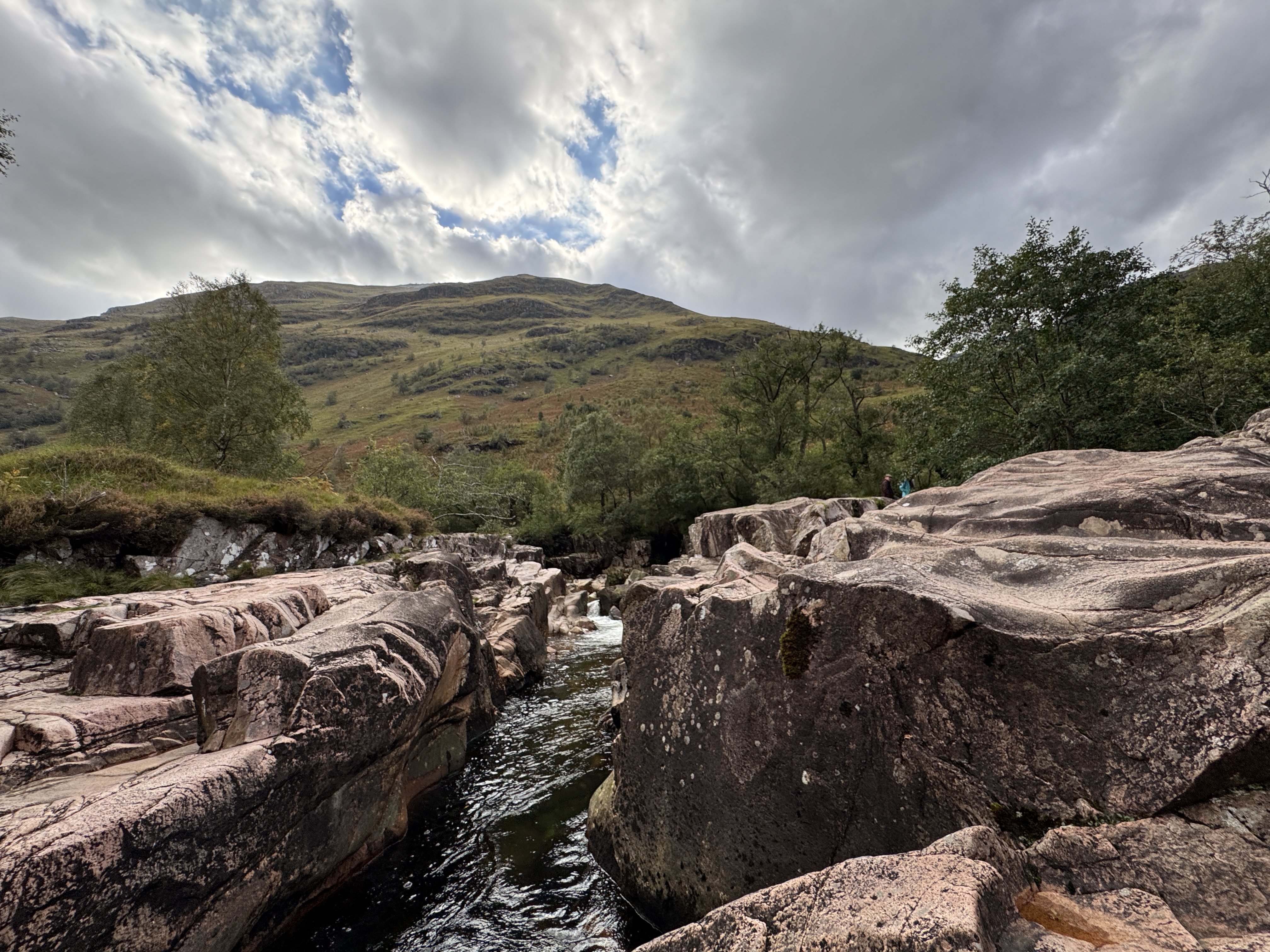
Hiking time: A spectacular trail in Glen Nevis to Steall Falls.
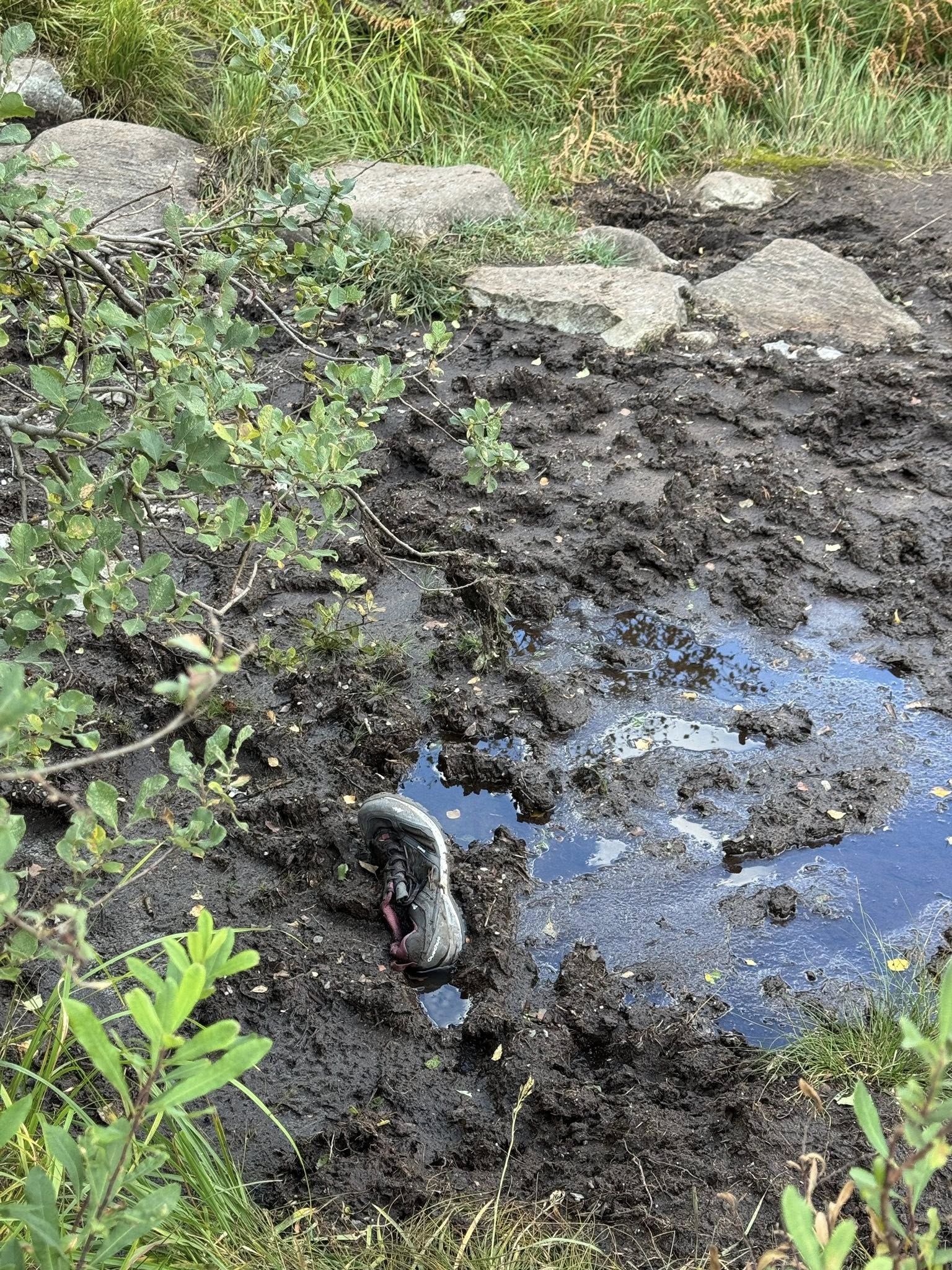
Parts of this trail have what is affectionately called bog snorkelling. Looks like someone came unprepared to wade through the wet and muddy sections… it does make me wonder how this hiker got out!
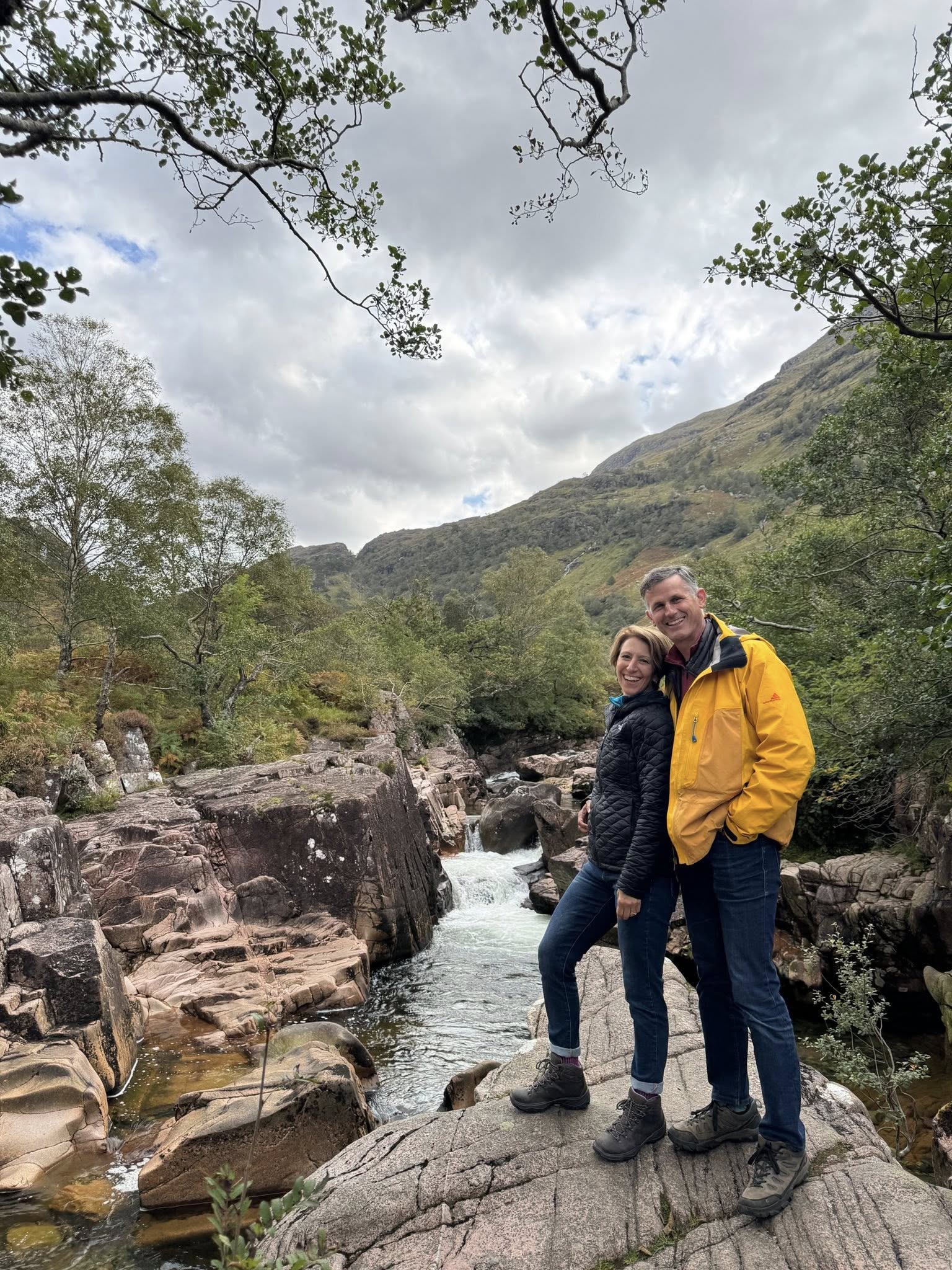
Note the proper footwear! I’ll fess up and admit that mine are new as I came unprepared. No, that was not my shoe left behind in the mud, I got my new boots in the Lake District after getting soaked in the Cotswolds.
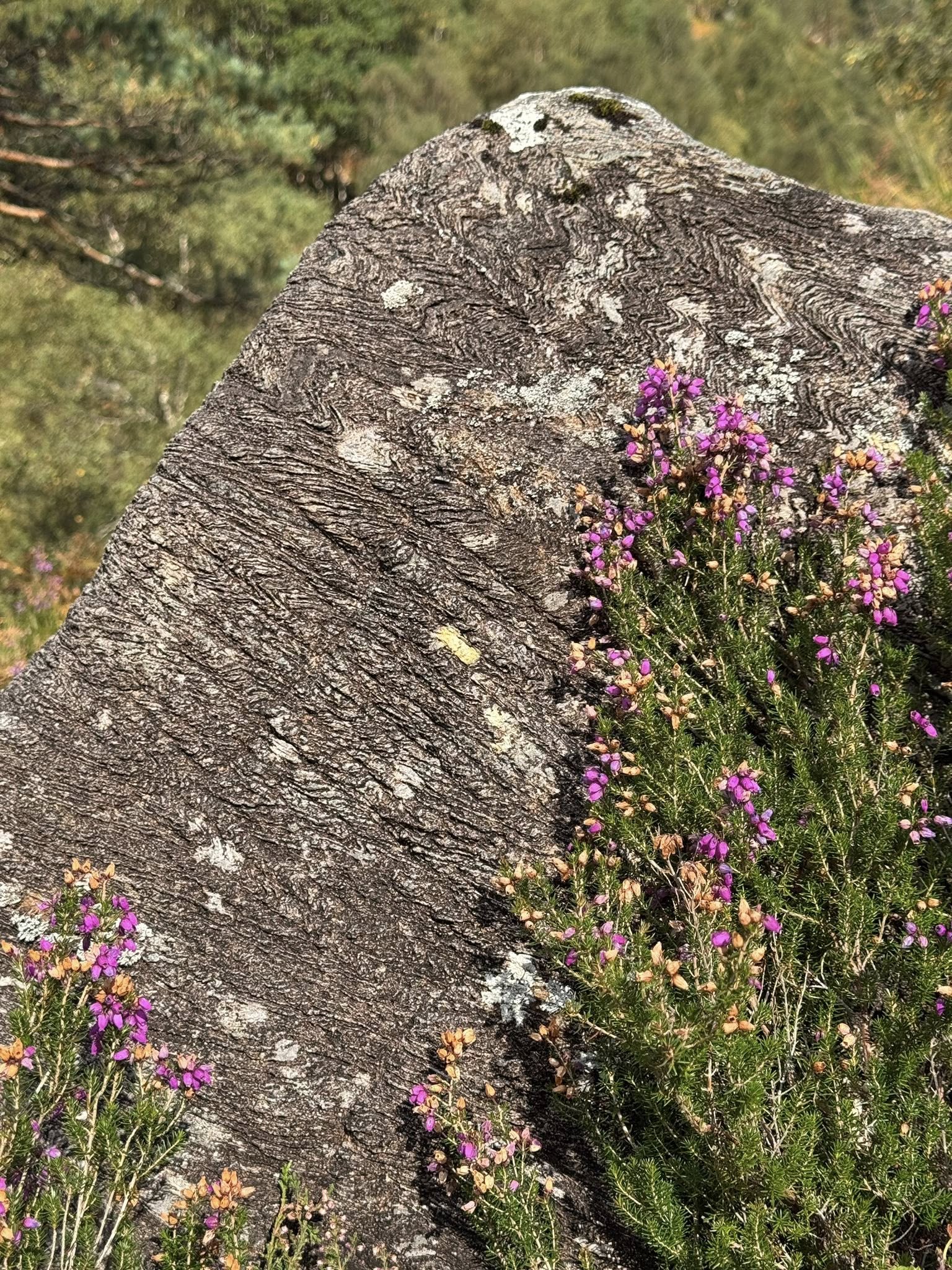
Late season heather growing along what looks like a cable-knitted rock.
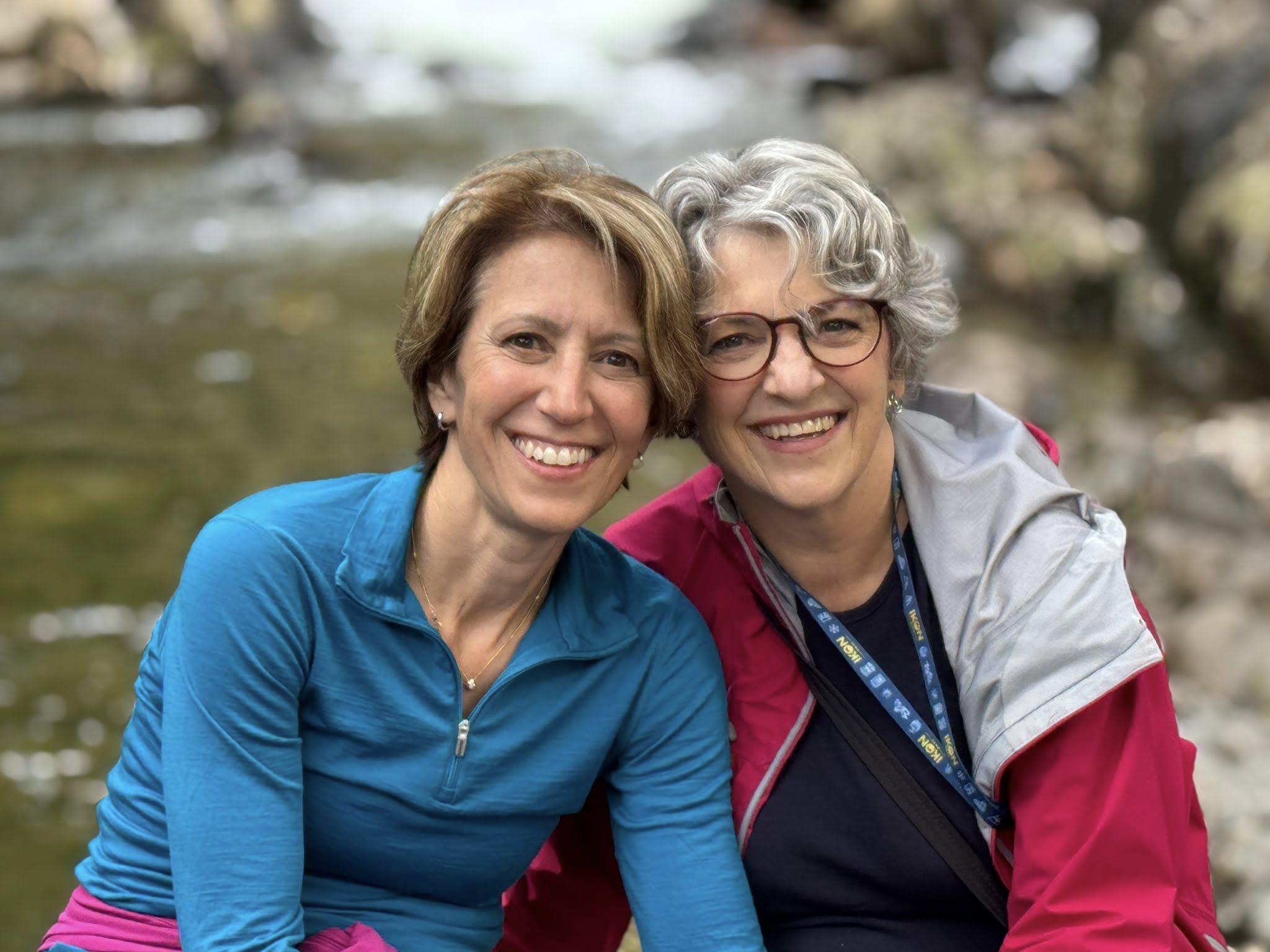
Sisters in arms ❤️
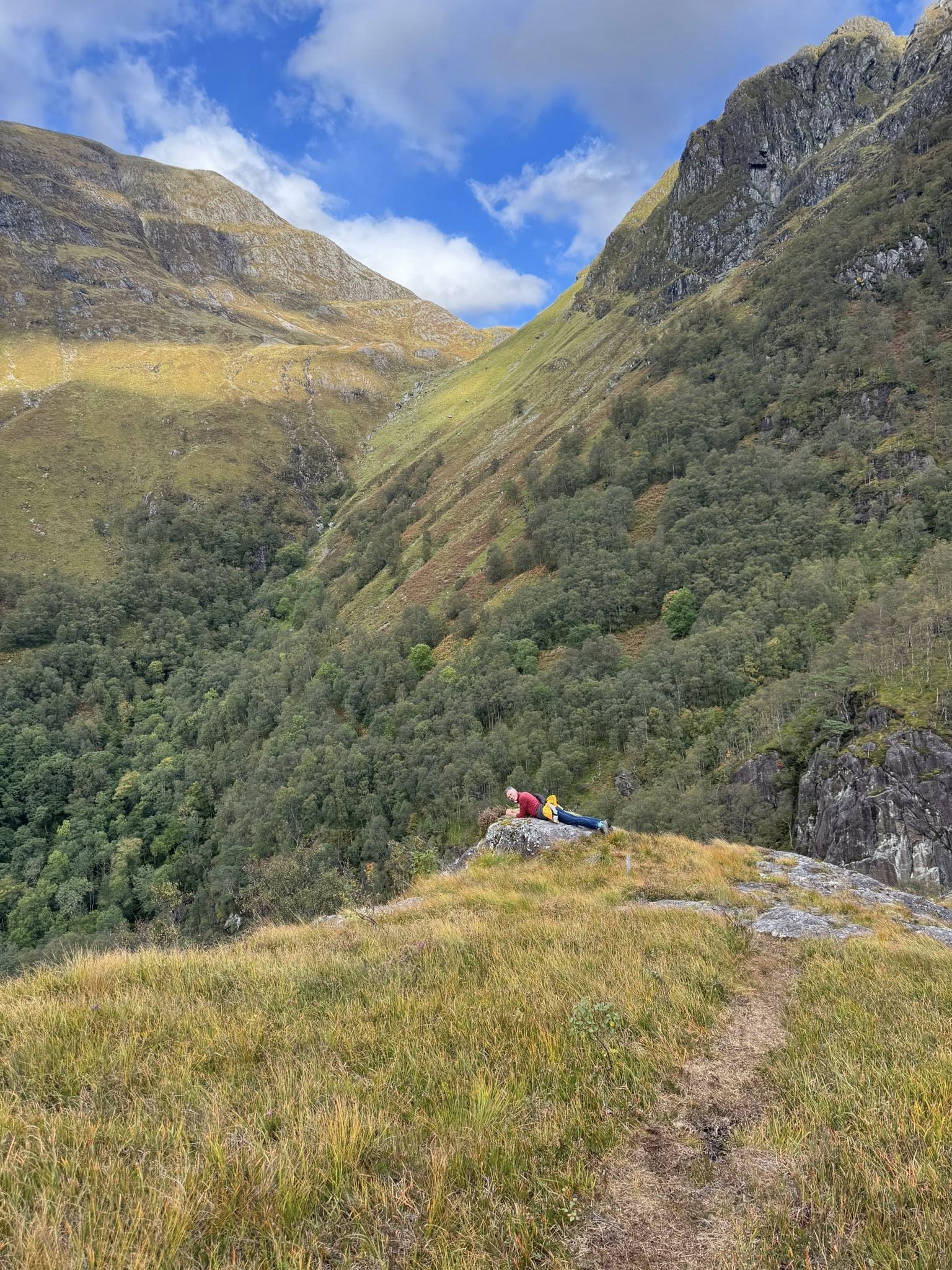
Lounging? No, he wanted to look over the edge but didn’t want to risk taking the fast way down.
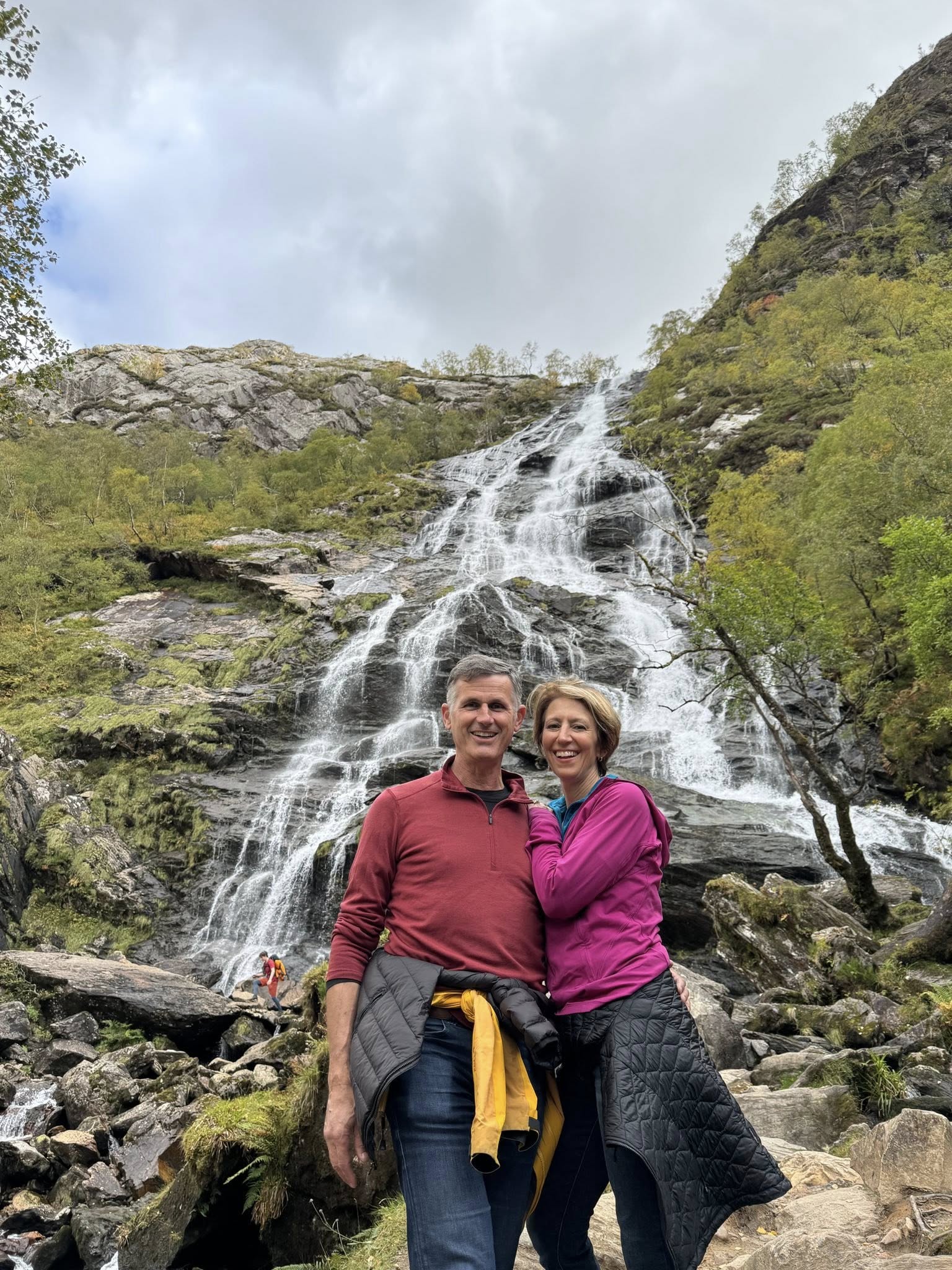
While Steall Falls was the most spectacular of the day, we passed three other waterfalls along the way, each more magnificent than the previous. At 120m, Steall Falls is the second-highest in Scotland.
A safety-defying cable bridge across the Allt Coire a’ Mhàil River which carries the water from Steall Falls to the gorge and Steall Meadows to the River Nevis.
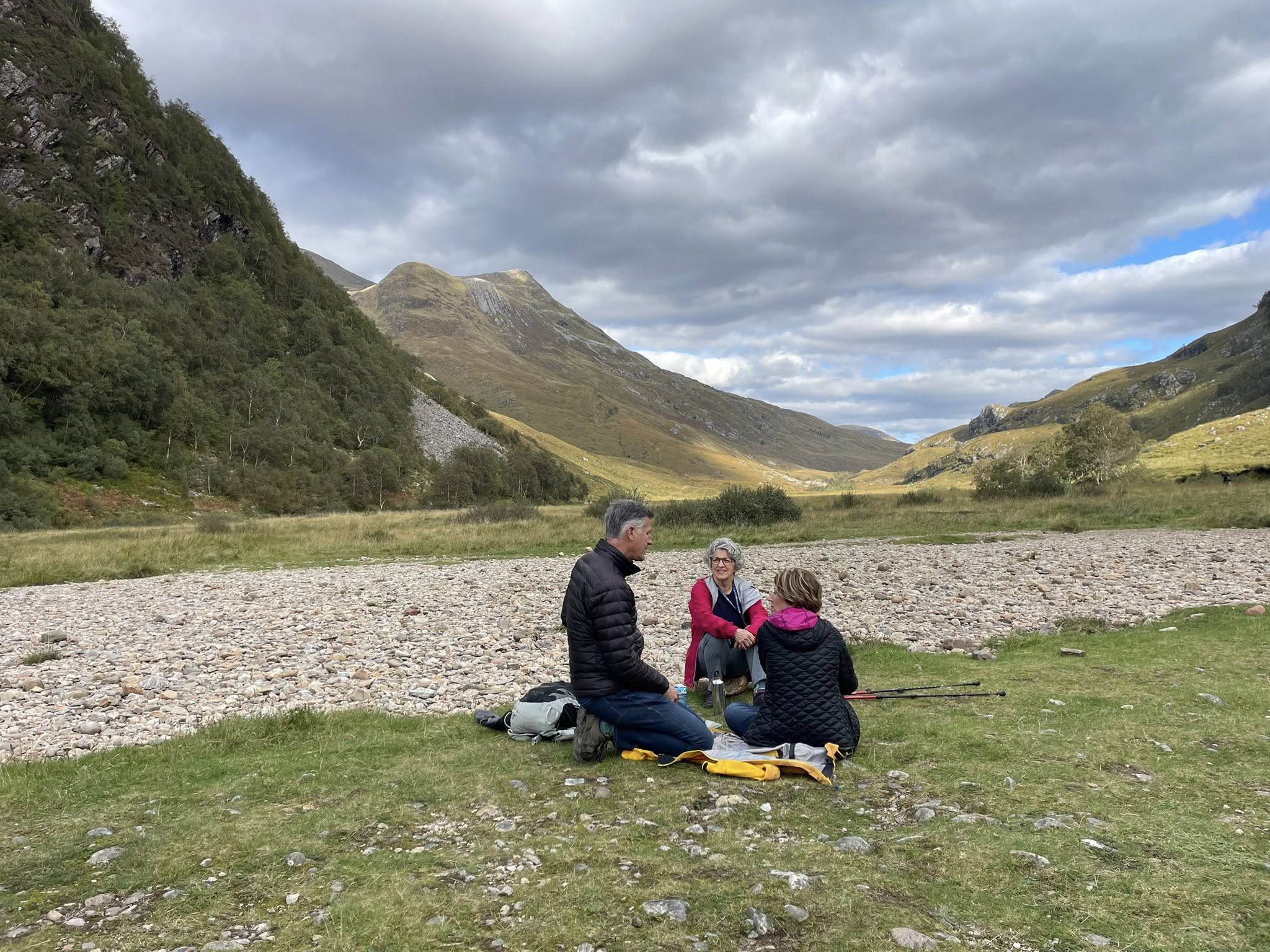
A nice little picnic spot after crossing the river. Should I divulge that the picnic was made up exclusively of cookies and chocolate?
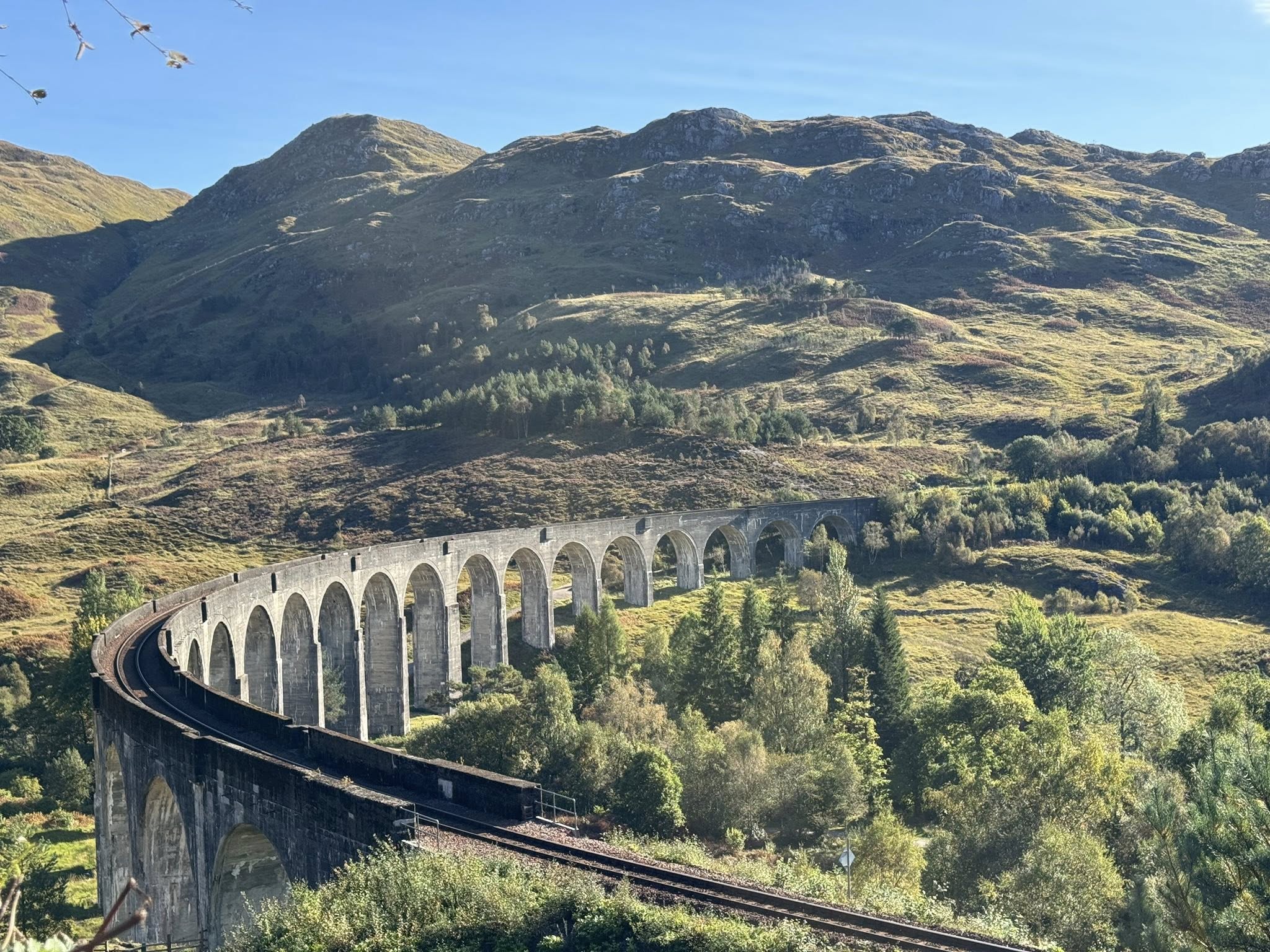
With 21 arches spanning 380m, the Glenfinnan Viaduct is one of Scotland’s most famous viaducts. And it’s not just because of its beautiful sweeping curves…
…this place is famous because it appears in the Harry Potter films as part of the Hogwarts Express route. Trains like this run four times a day to the delight of Harry Potter fans, which we are not. But once here, we had to stay and see what all the fuss was about…