October, 2024
Saintly Şanlıurfa
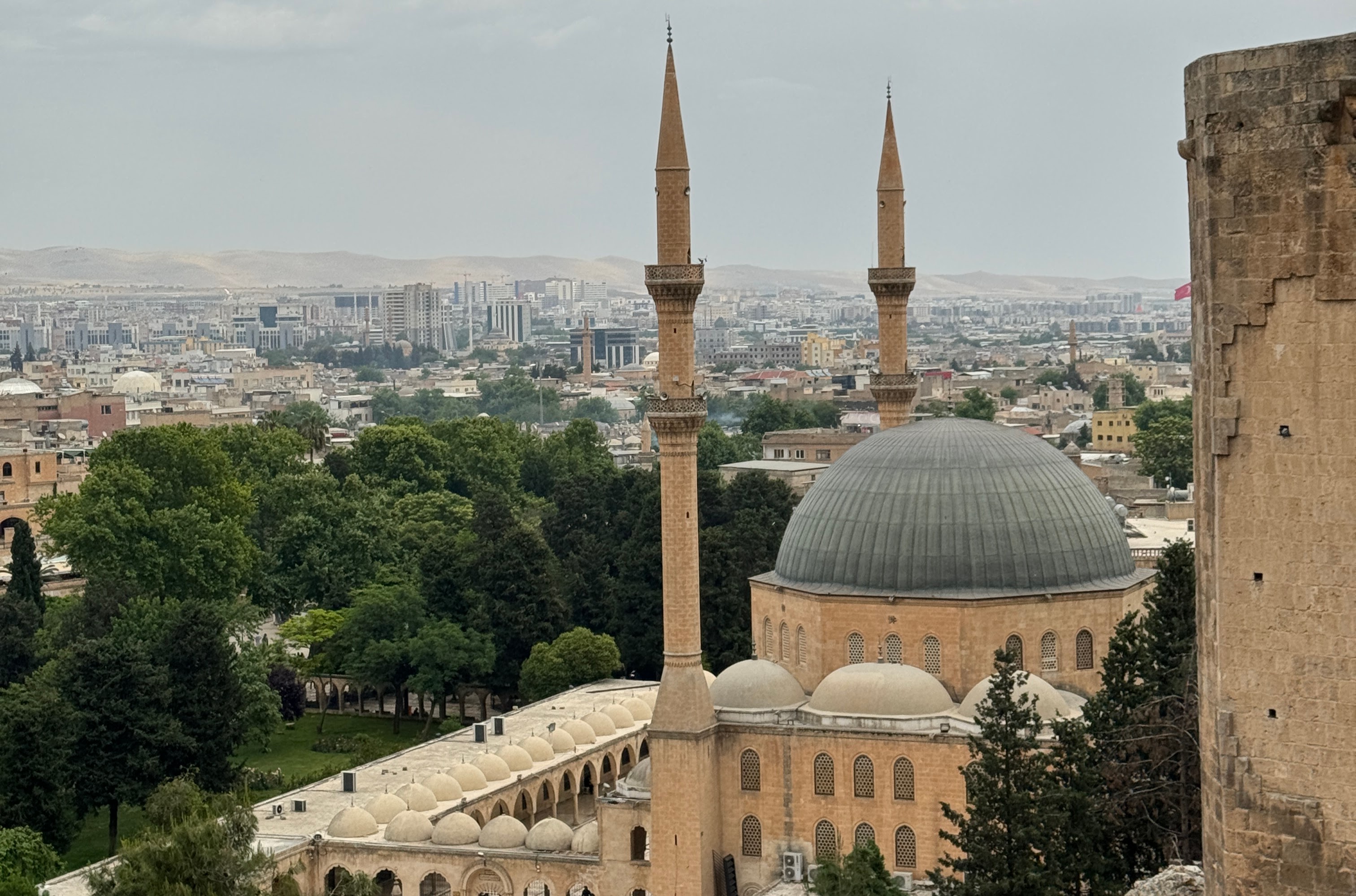
So far, Şanlıurfa feels like the most authentic place we’ve been, untainted by the power of western tourists. Hardly any English is spoken in this Southeastern Turkish town, considered to be among the most devout cities in Turkey. Prophets, bazaars, music and beautiful architecture make this town a real draw for Turks of all stripes from far and wide.
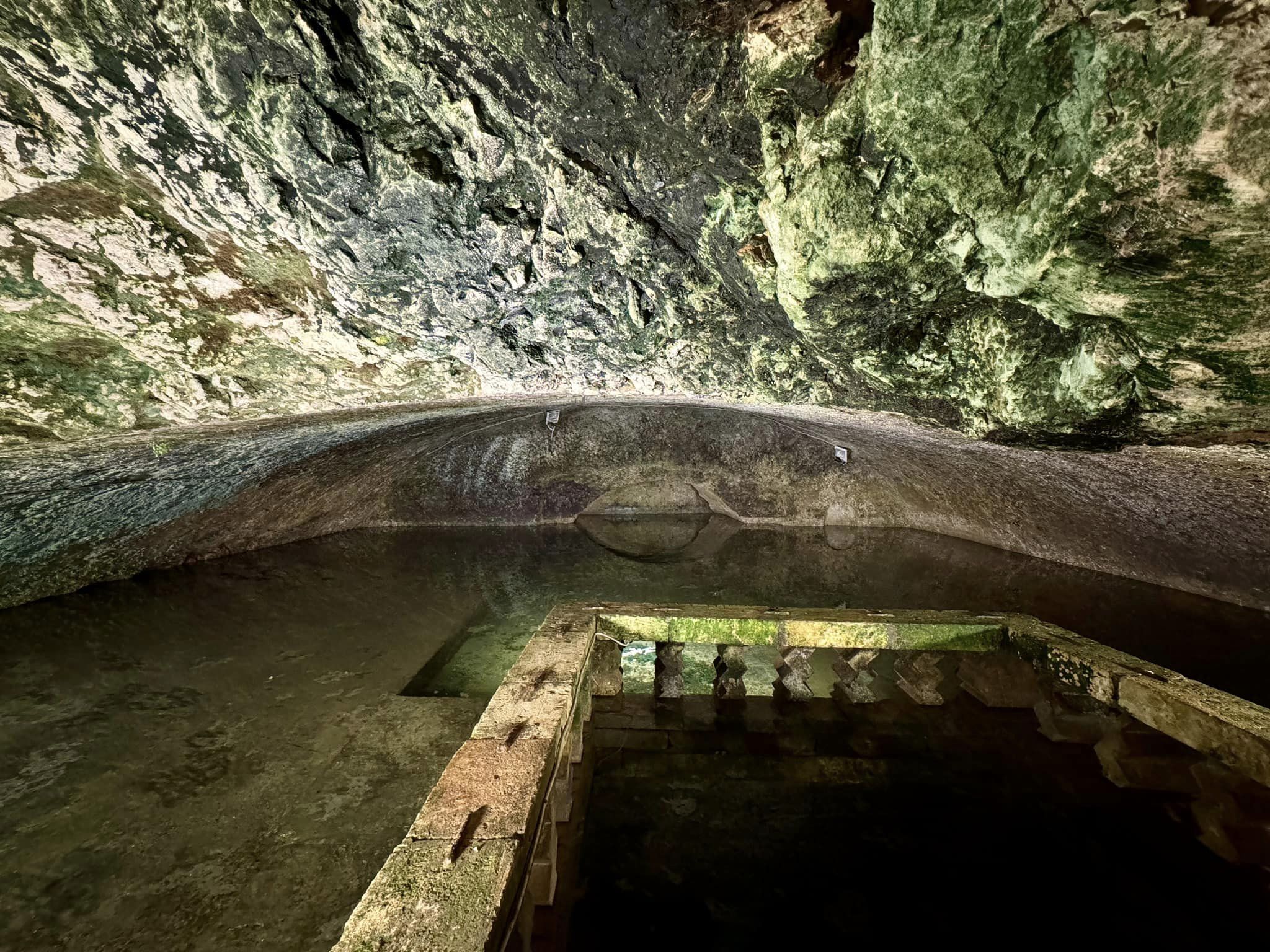
A multi-century debate among scholars, historians, archaeologists and whoever else thinks they know surrounds the birthplace of Abraham. For Turks, it was right here in Mevlid-i Halil cave (Birth of a Prophet Cave). The story goes that in 2000 BC, the Assyrian King Nimrod’s fortune teller warned him of a child who would destroy his religion and demolish his kingdom. With fortunes lacking a certain degree of accuracy, the king didn’t know who the pesky child would be so he ordered all children to be killed. The fortune teller, with solid accuracy, should have told him that killing all children would destroy his kingdom all the same. Anyway, a young woman called Nuna didn’t want her baby to suffer this fate and hid her pregnancy from those around her and then camped out in a cave until she had her baby Abraham. She surreptitiously snuck back every day to feed him. Abraham didn’t emerge into the outside world until he was 15 years old. Just to circle back to the birther controversy, the location dispute has been largely around the ancient city of Ur. Where exactly was Ur? Some say Ur is now Şanlıurfa in upper Mesopotamia (note the UR in the name) and others say it was in southeastern Iraq. There’s a lot of interesting chatter about this, which I won’t dive into here, but I’m going to side with the Şanlıurfa team.
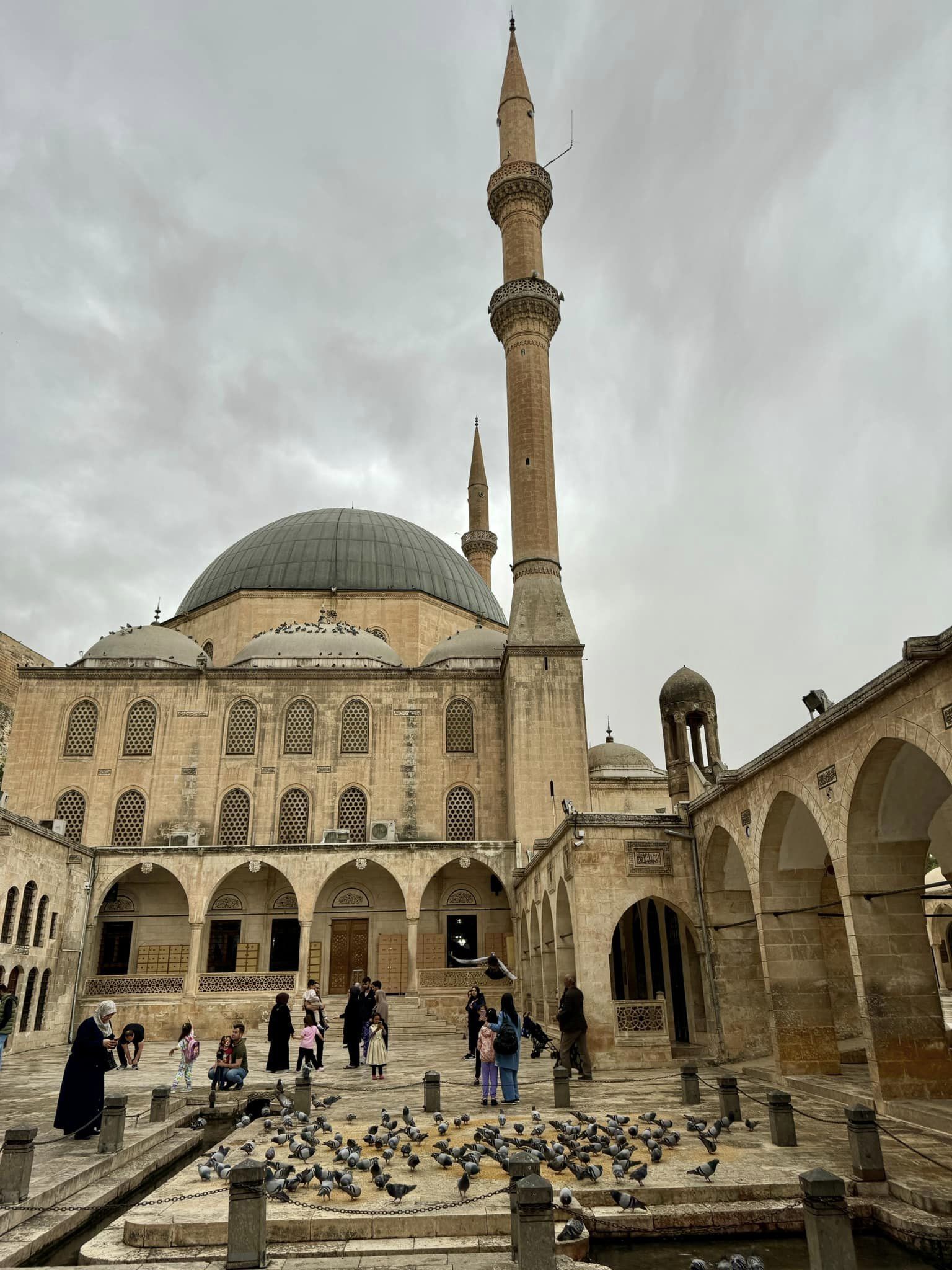
The adjacent Mevlid-i Halil mosque carries the same name for obvious reasons. What started as a pagan temple, became a Jewish synagogue, then a Christian church and finally, under the Ottomans, a mosque. Abraham is pretty important to the story of modern religion. He is credited with the start of monotheism (remember the prophecy that a child would be born who would destroy Nimrod’s religion? I call that fulfilled) as he set out on God’s journey into the promised land and is revered as a prophet in Judaism, Christianity and Islam. This cave and mosque are huge pilgrimage destinations.
We happened to be peeking through the window of the closed mosque when the guy with the key showed up. Beautiful inside and no cats in this one.
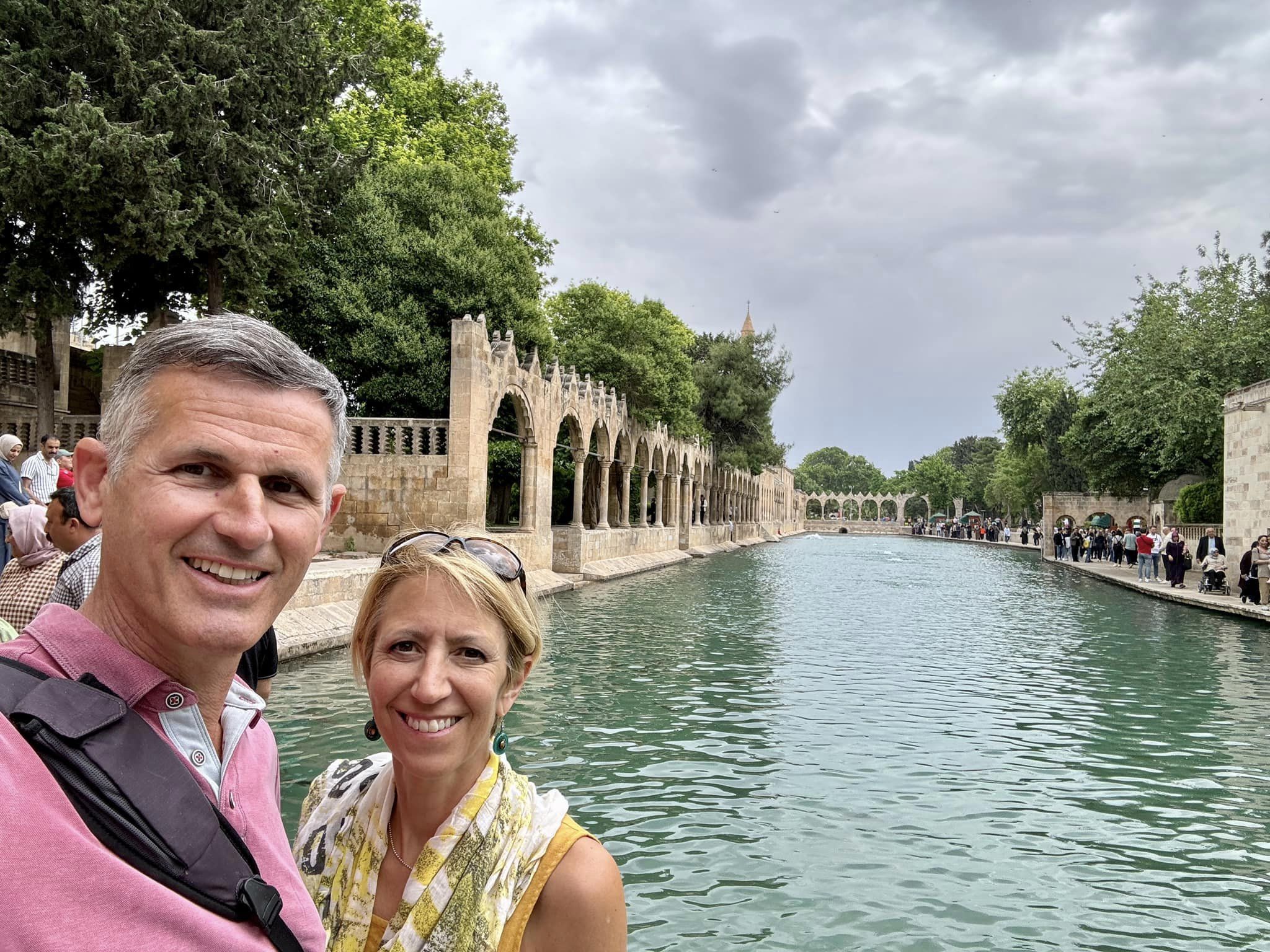
King Nimrod was a power-hungry guy and when a grown up Abraham rejected his king’s claims of being god and ran around destroying worshipped idols all over town, the incensed king ordered him burned to death. A fire was built and Abraham was thrown in. As if divine (it was) the flames turned to water and the embers into sacred fish and Abraham had a safe, but wet, landing in what became a lake surrounded by beautiful gardens.
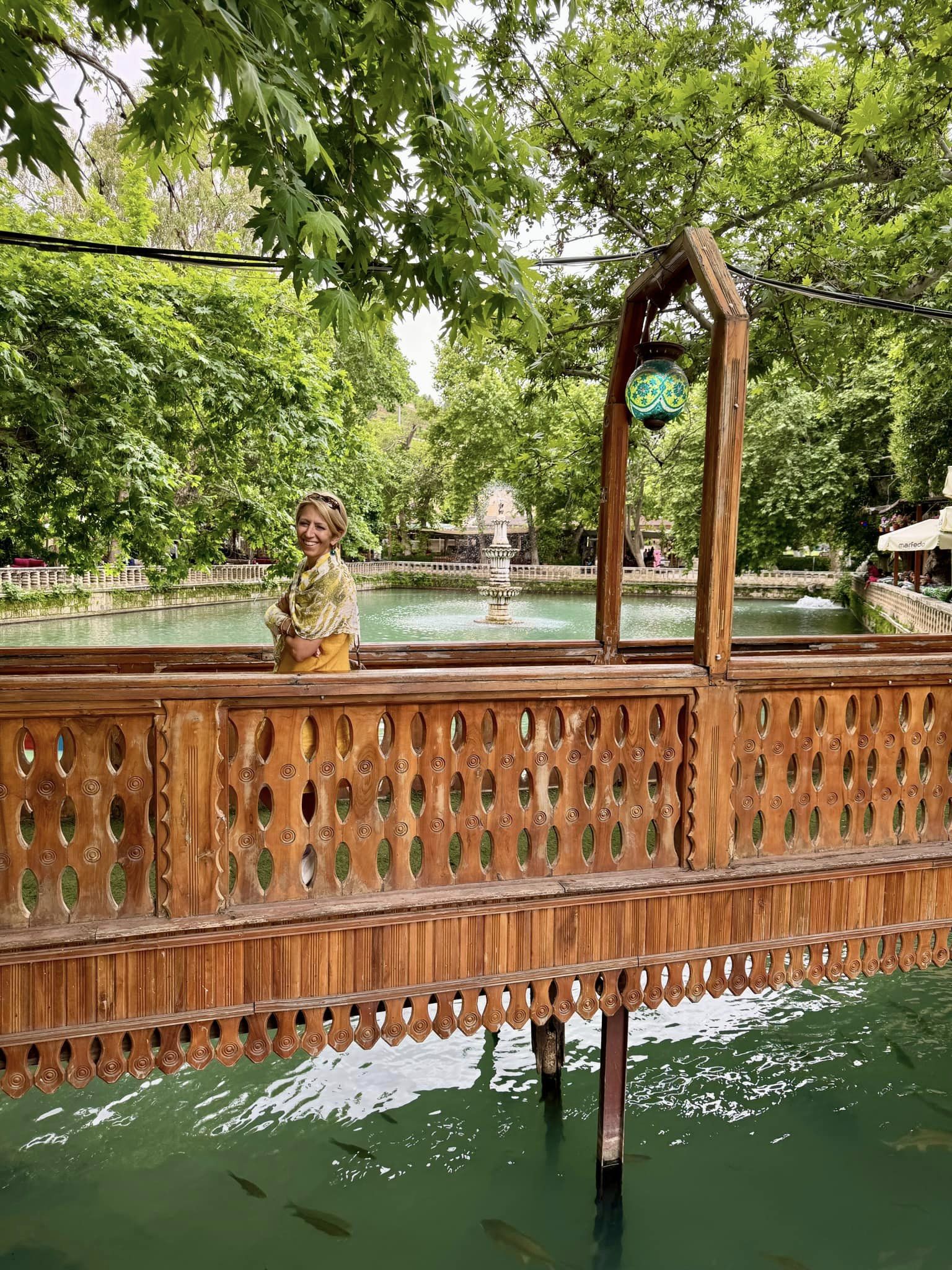
This miracle convinced the King’s daughter Zeliha to accept Islam and renounce her father as god. Enraged again, he threw his daughter into a fire but this time, the one and only god did not intervene and Nimrod, apparently with indifference, watched his daughter burn. Ayn-Zeliha Lake formed in the very spot and more sacred fish appeared.
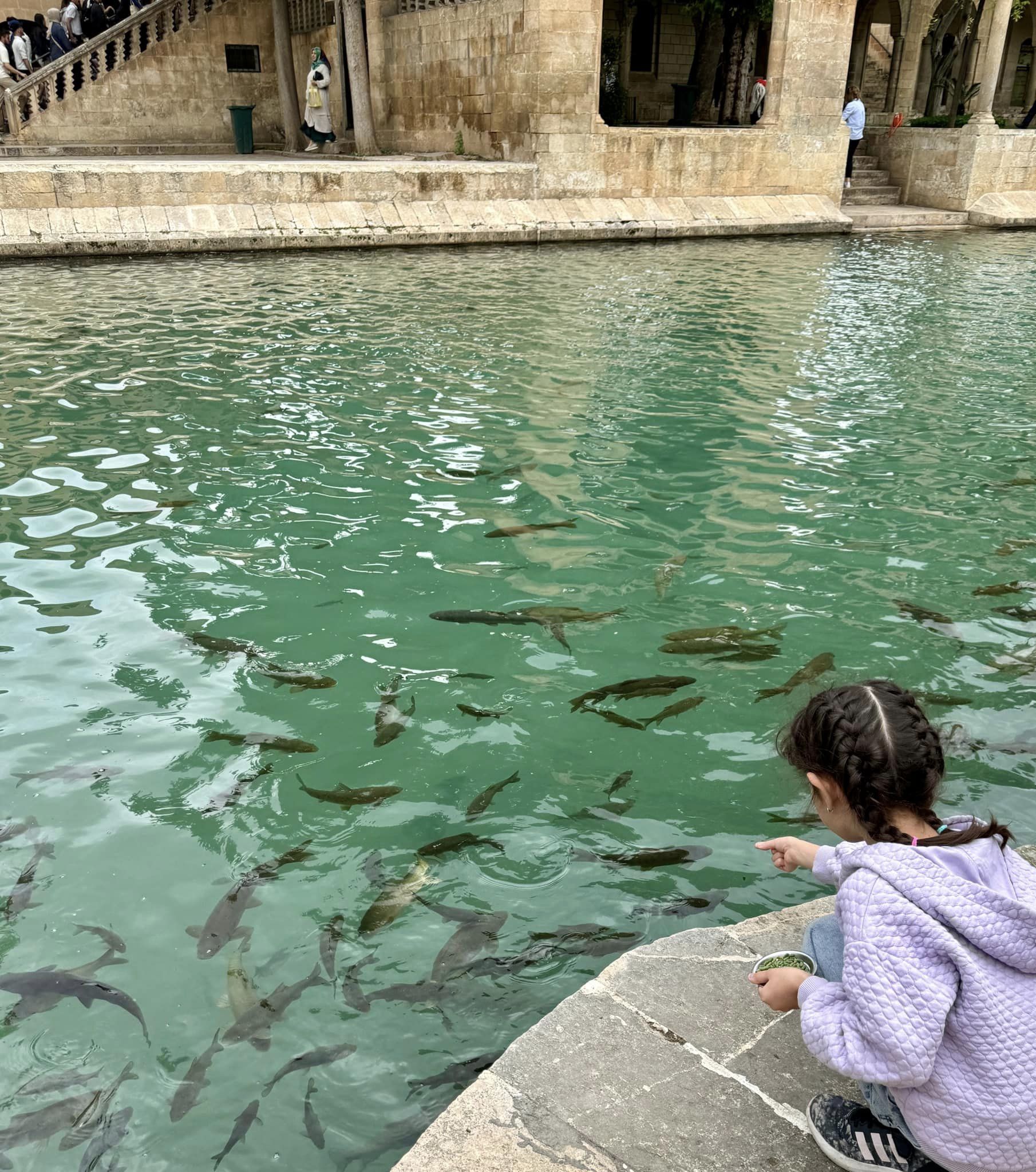
Pilgrims and everyone else now take on the duty of buying little jar lids of fish food to keep these sizeable sacred fish happy.
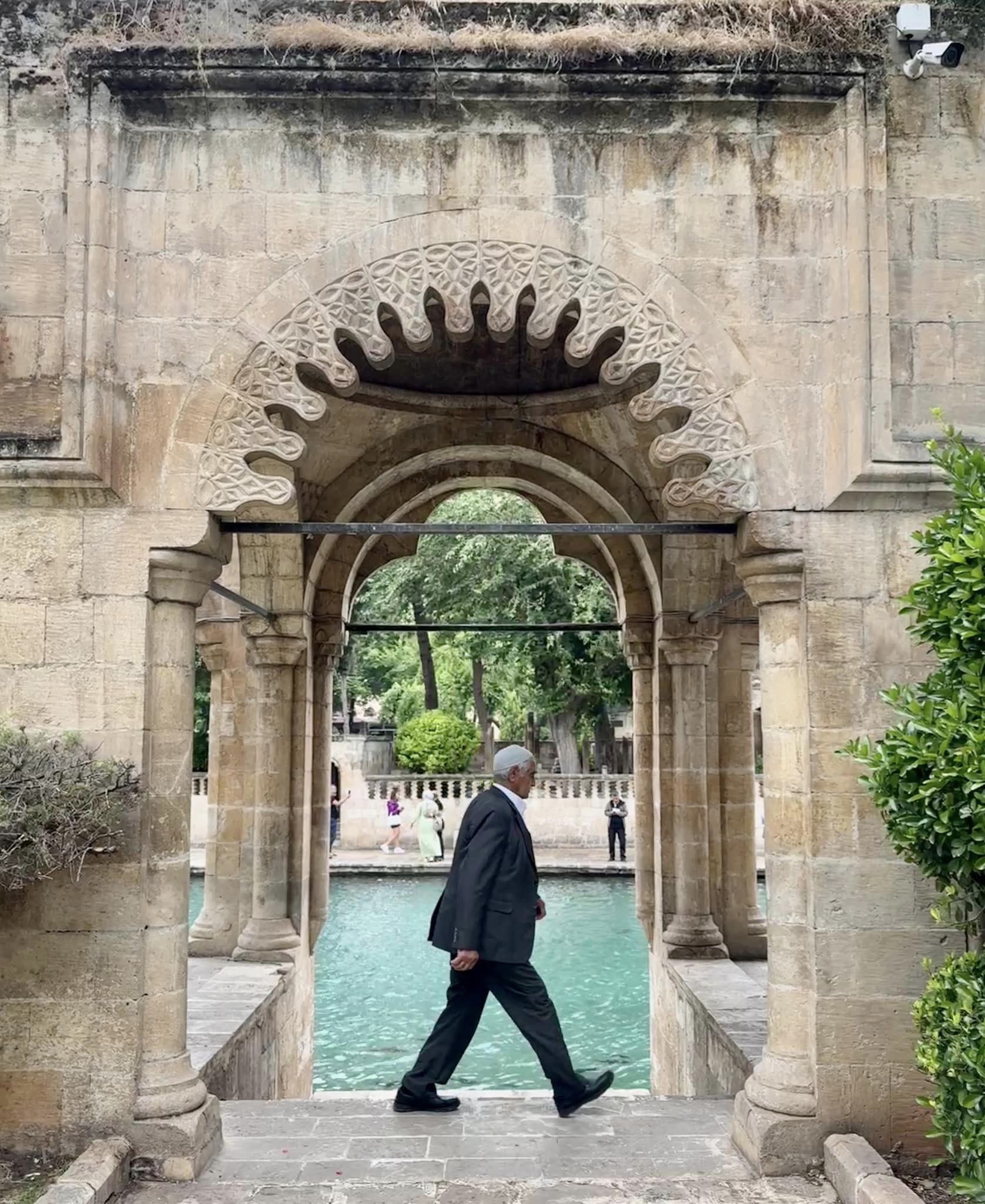
A man with purpose. He’s not stopping to feed the fish.
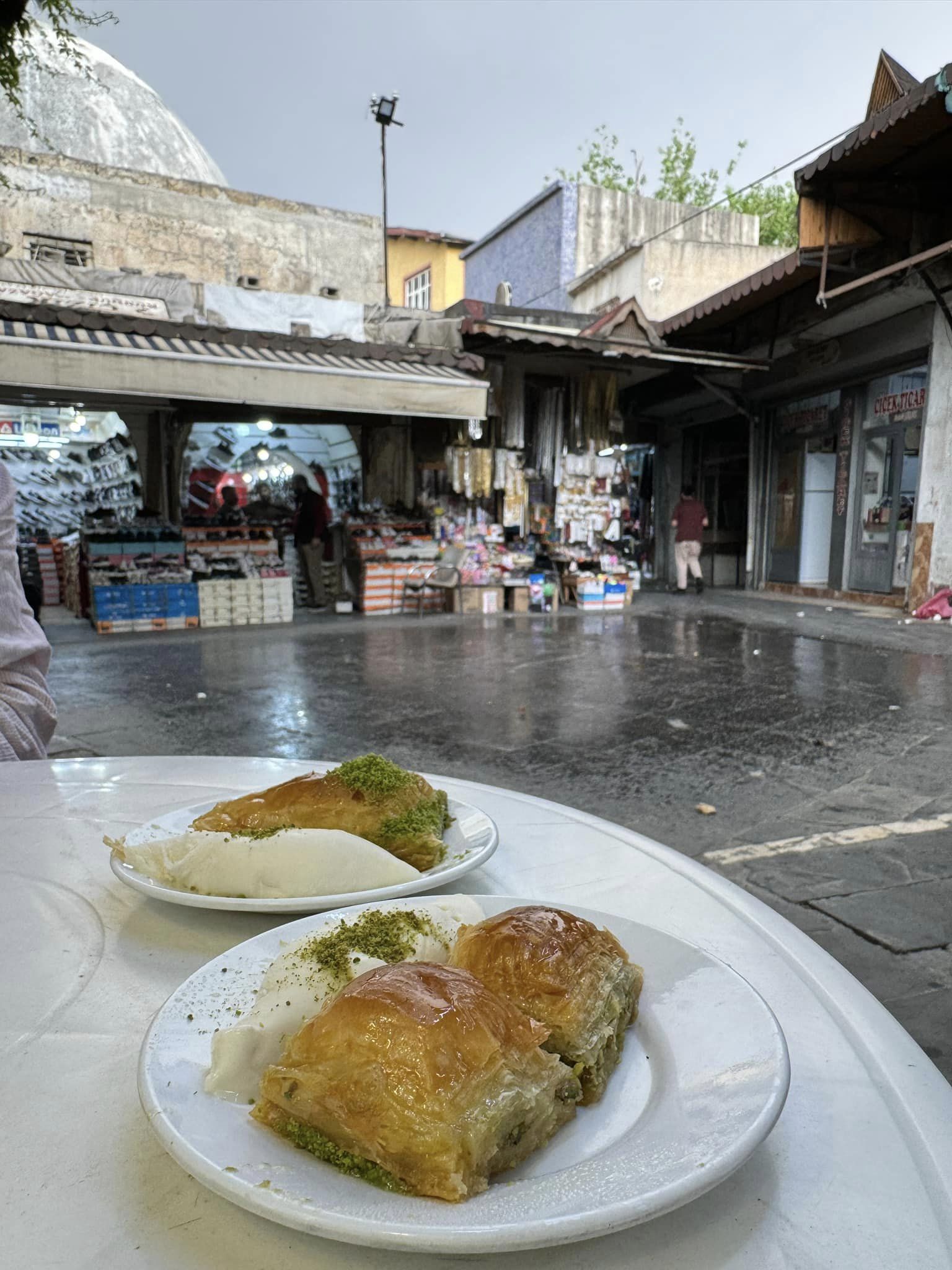
We took refuge from a brief downpour at a baklava and ice cream shop in the bazaar. The spectacular flavour and texture, baklava is usually served with ice cream here, as if it’s not sweet and rich enough.
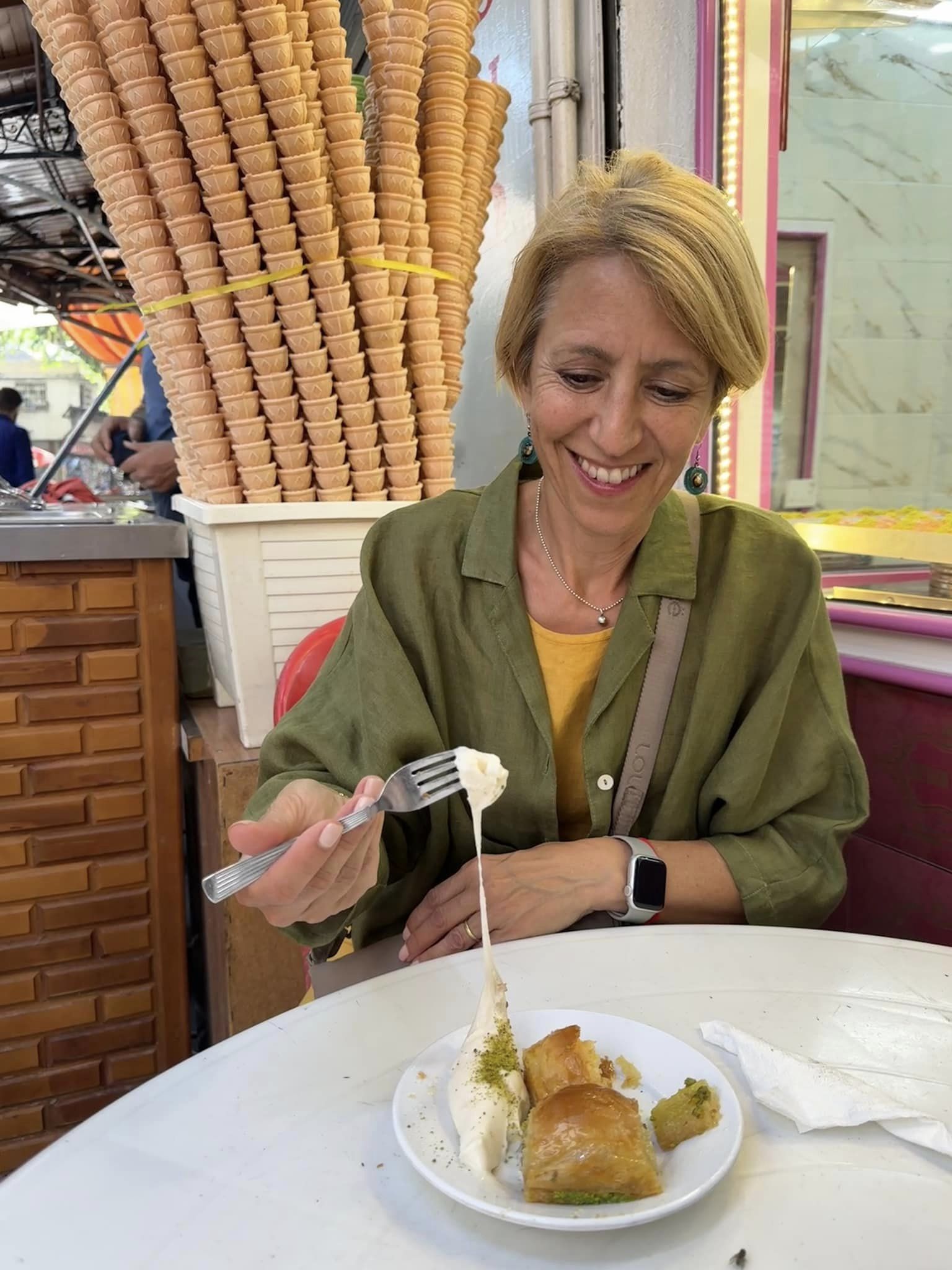
Not sure what’s in the ice cream but it’s dense and stretchy like marshmallow fluff. I think they must beat the $&#% out of it.
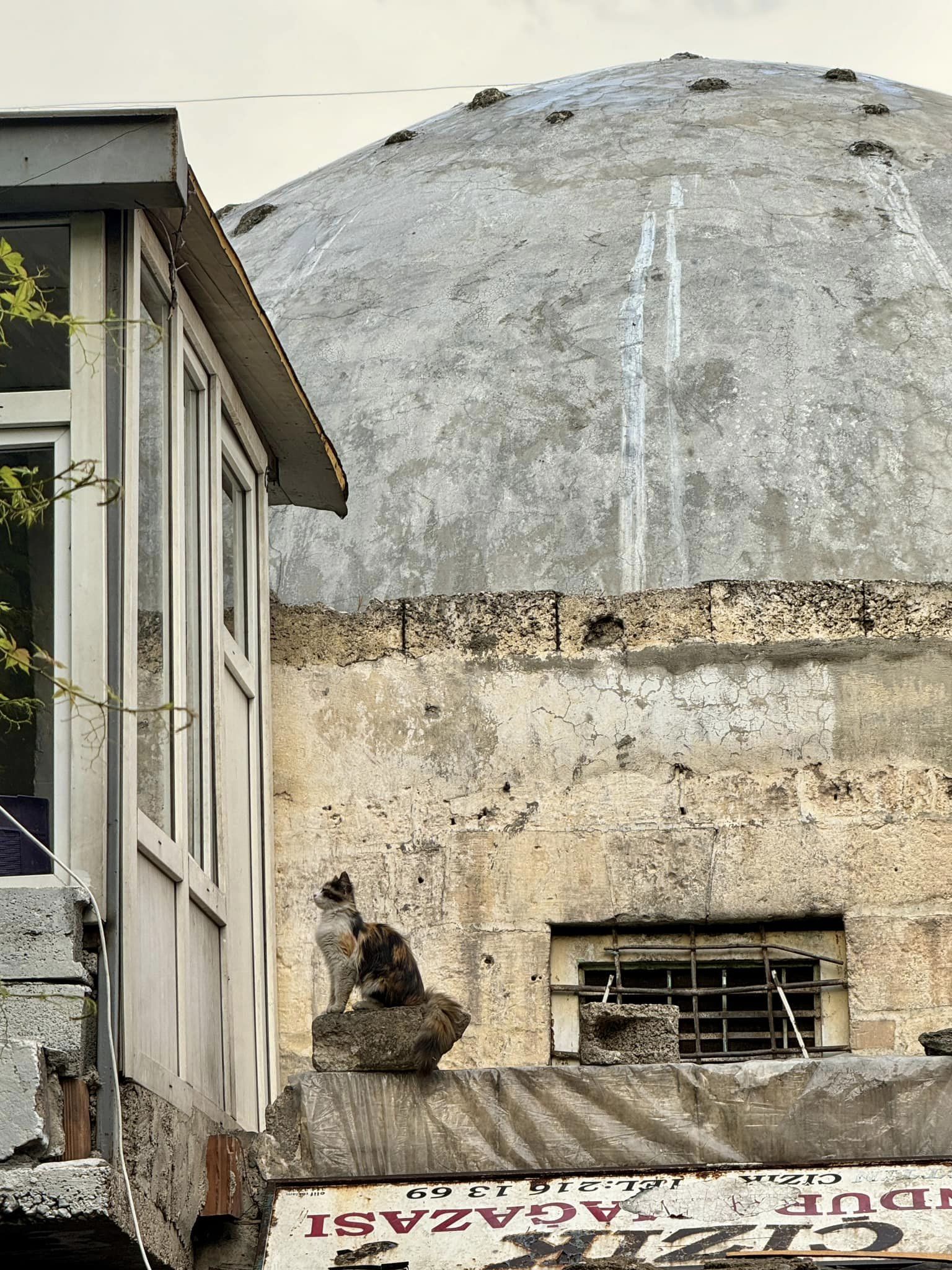
Cat on a wet, tin roof.
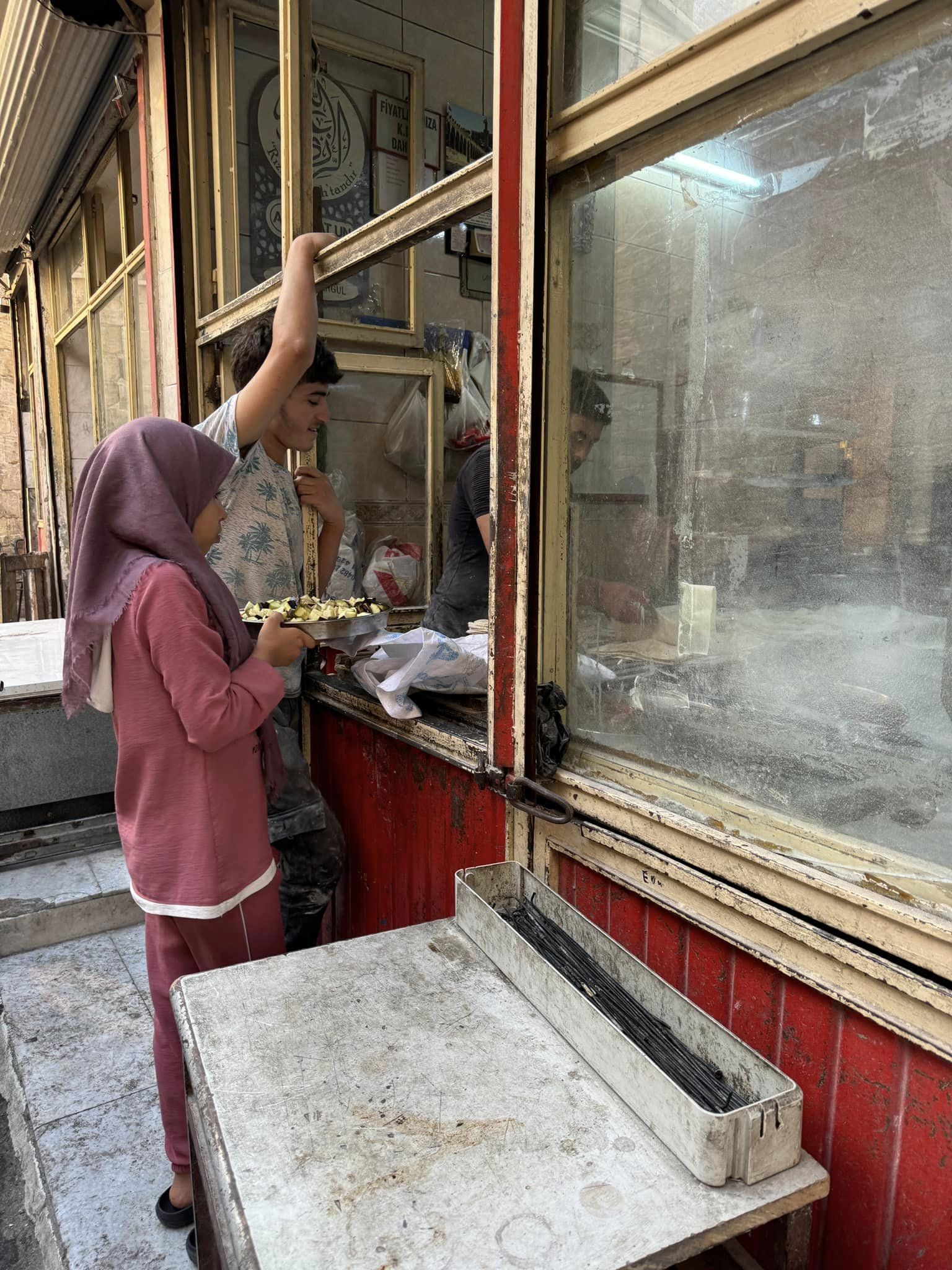
A trail of customers (often kids) are dropping off vegetables and meat in round pans at the bakery which doubles as a communal oven (carsi firin), to be char-roasted and handed back with the chewy flatbread that is the bakery’s primary business.
The youngest family member spends his time helping to roll the dough and clean the counters until he’s called upon for delivery.
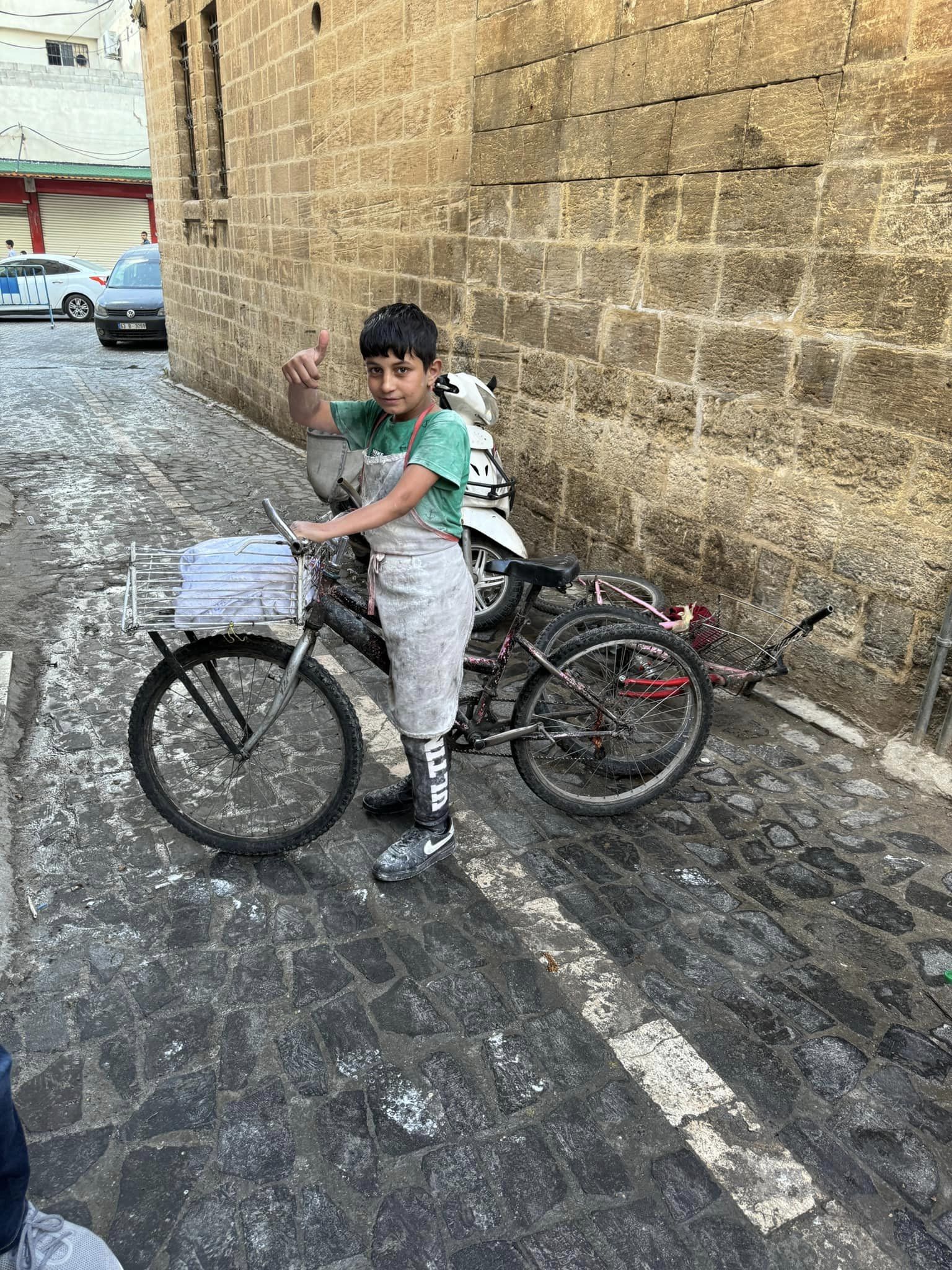
Dusted with flour, he hops on his bike with a couple of bags of fresh bread to deliver around town, presumably to restaurants.
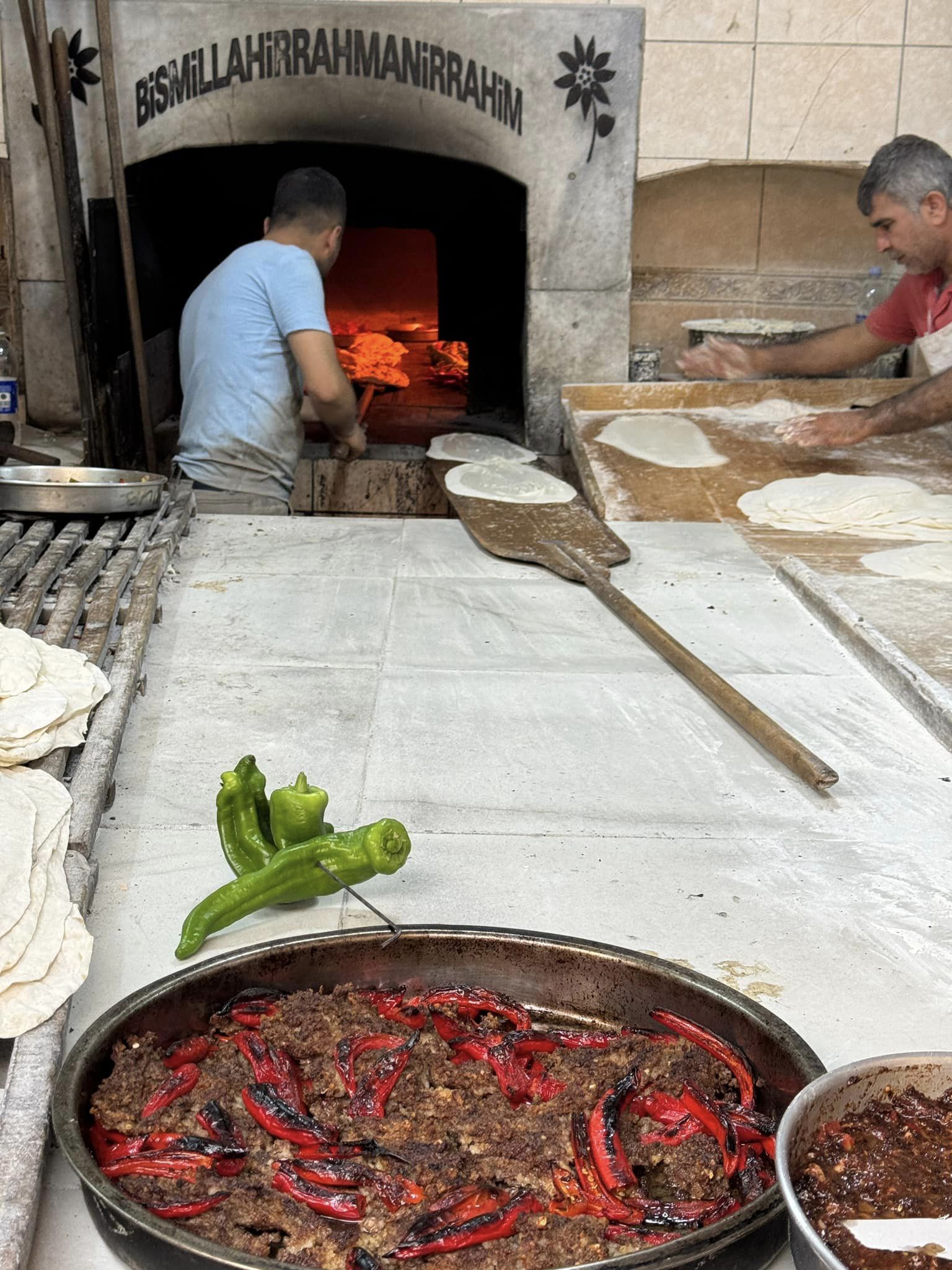
The guy managing the oven doesn’t stop (except to light a cigarette). He deftly places the three stretched out pieces of dough in the wood-burning oven for about 30 seconds, if that…just enough time to slip in a neighbour’s dinner pan before pulling out the perfectly cooked flatbread.
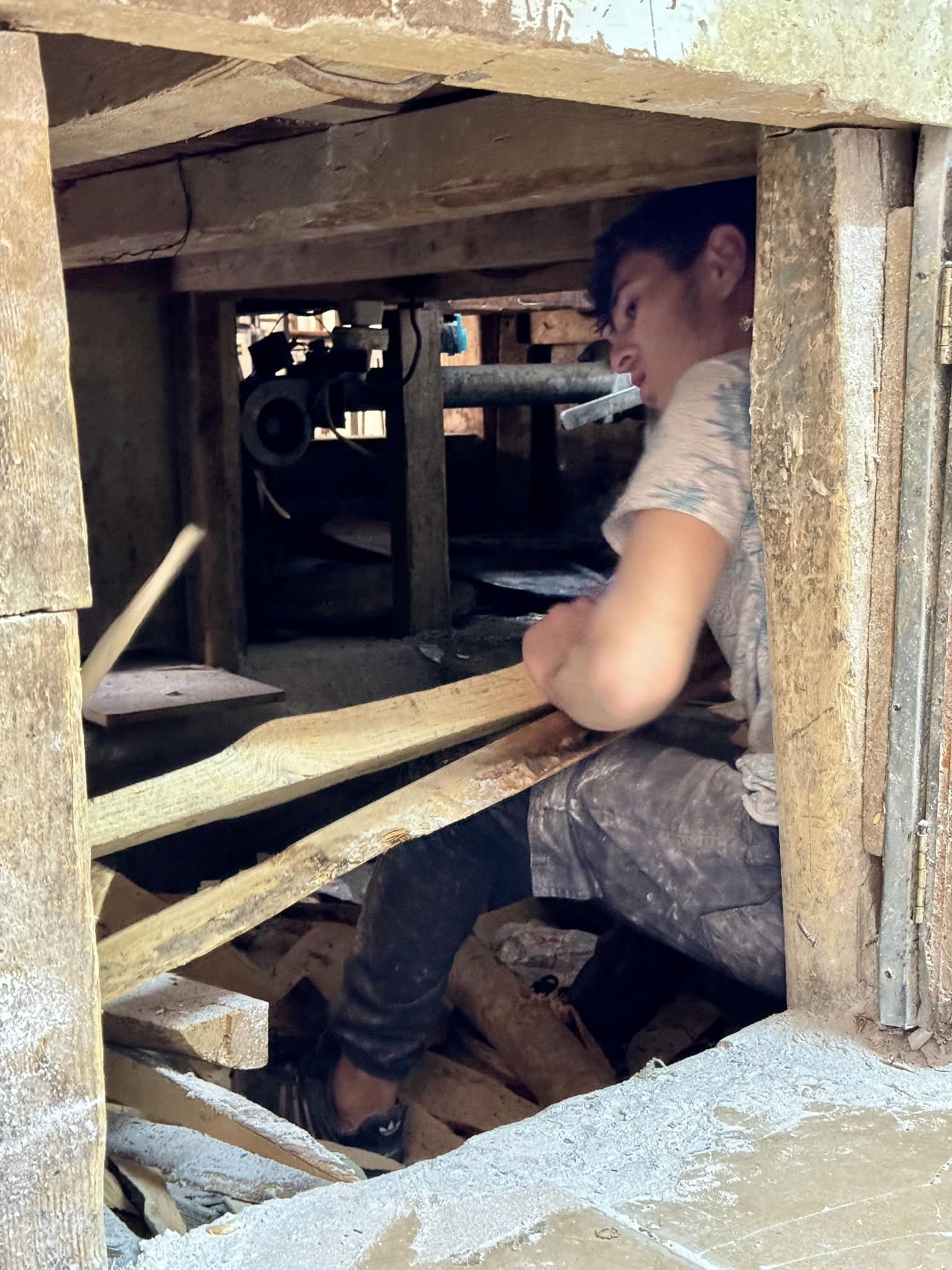
Surprise! There’s even a job beneath the workbench.
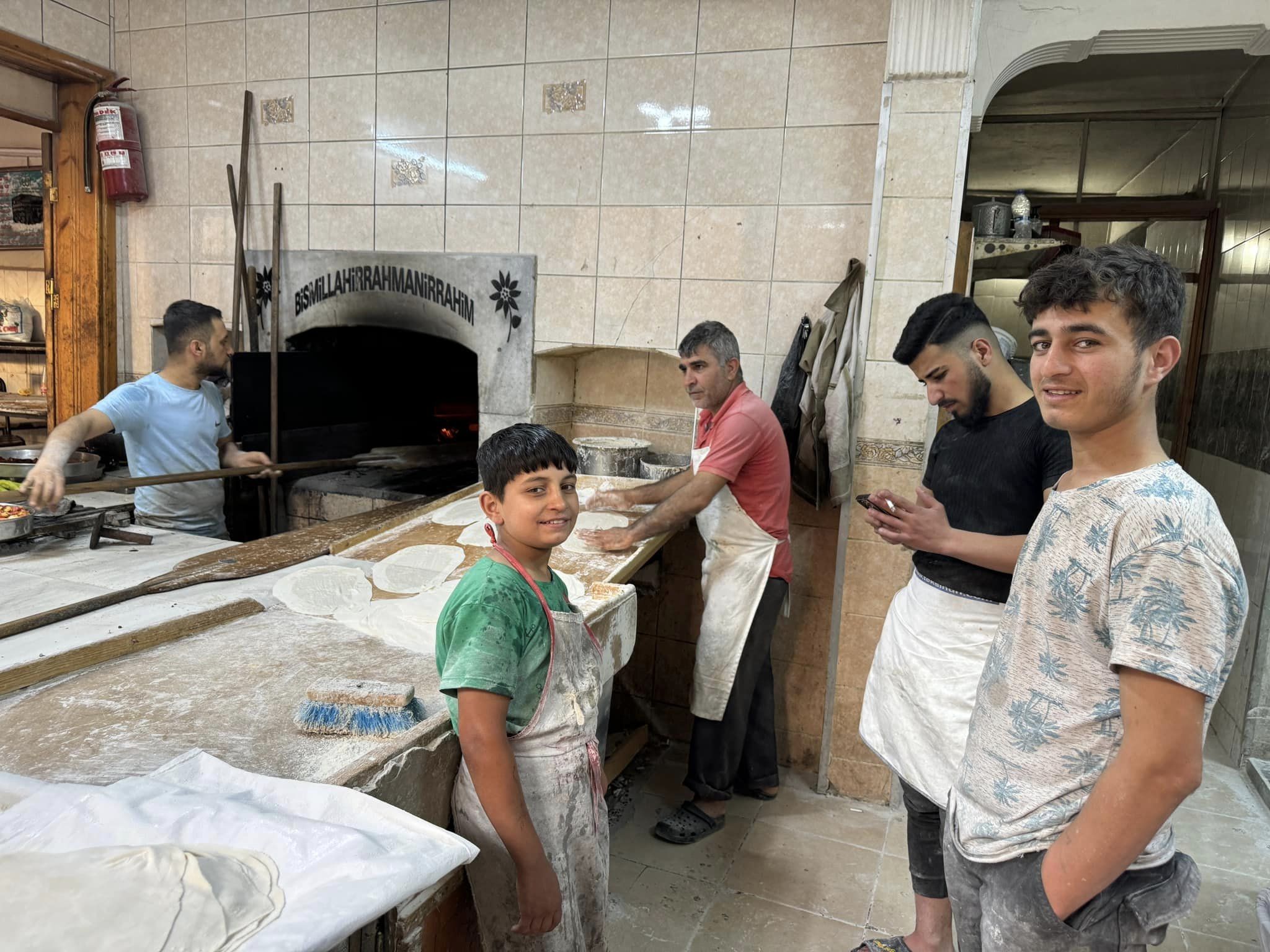
The throughput of this little family business is astonishing. Standing in the foreground is our underappreciated wood manager from below the workbench who came out for the team picture.
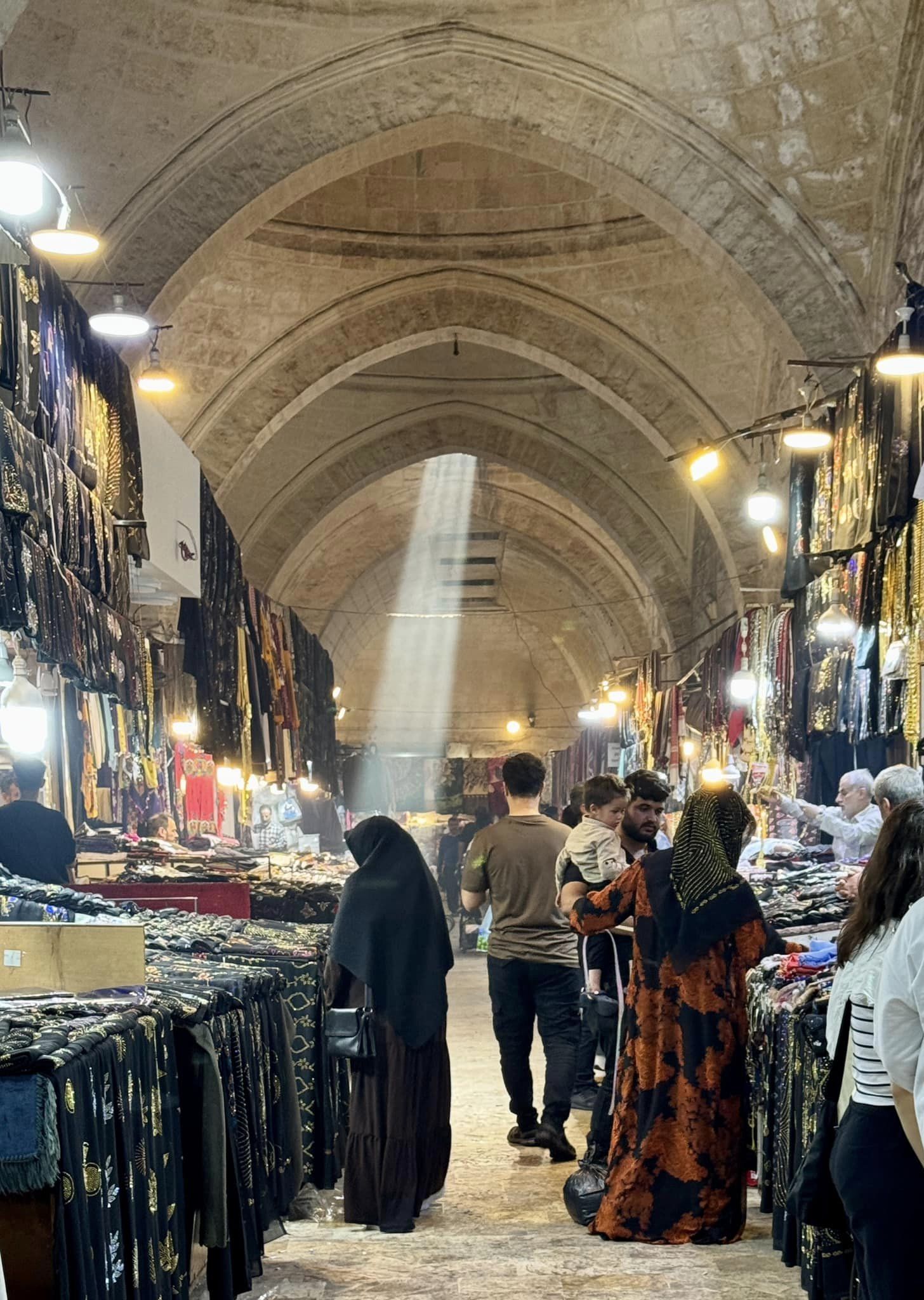
The bazaar in Şanlıurfa is the real deal. You won’t find anyone who speaks English in here but they are pretty adept at Google Translate. This big, twisting marketplace sells absolutely everything. Some rows are product specific, like this one selling all manner of ladies fabrics, mostly intricate ones for headscarves. For a magical few seconds, the sun shone through an opening in the ceiling and cast the most amazing beam of light.
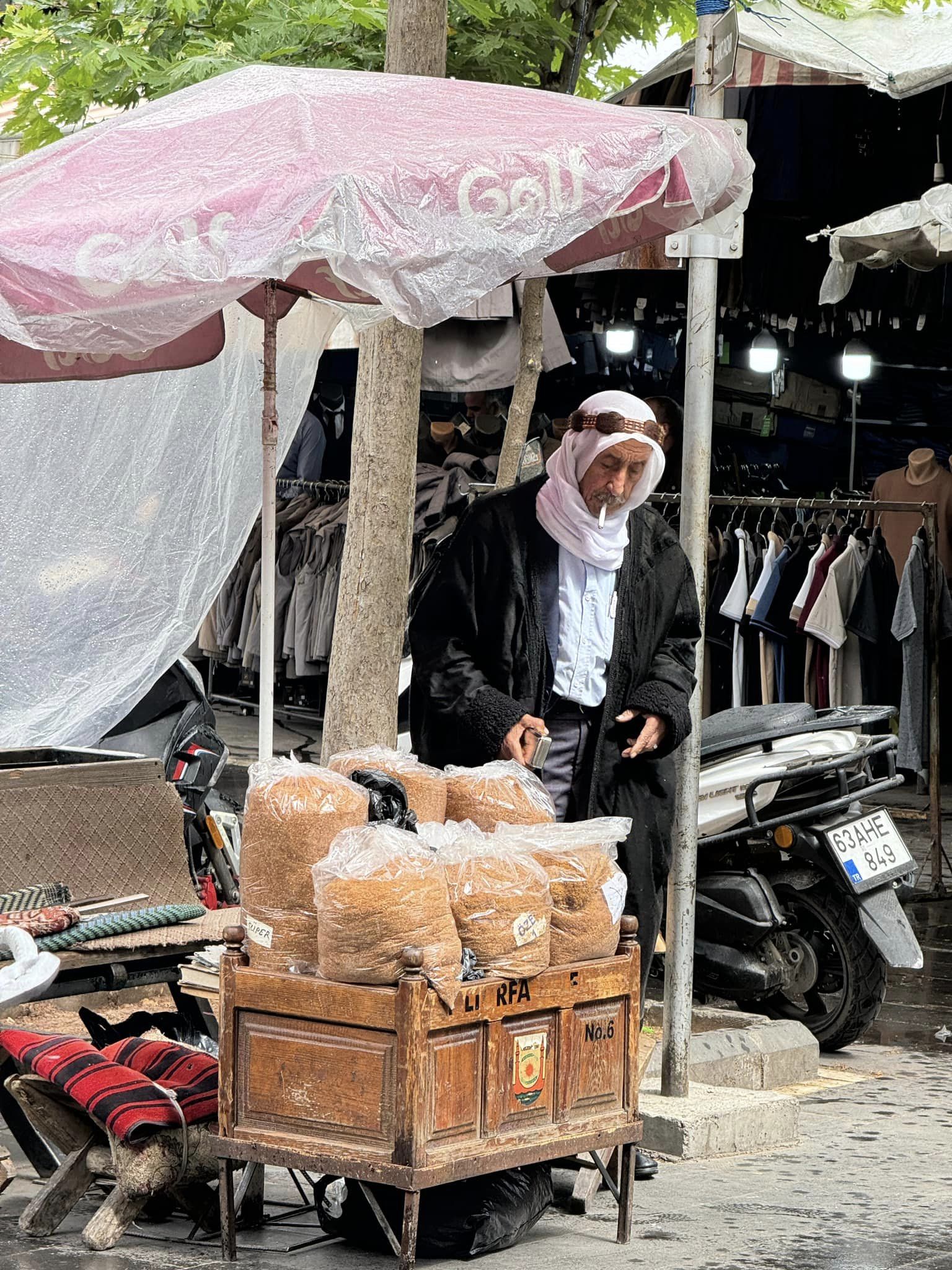
My mind cannot comprehend the amount of smoking here. It seems like every single person over the age of 15 has a cigarette in hand. Big bags of tobacco are sold all over the market. I didn’t price compare but I’m sure it’s all the same. Vendors here are all part of the community and probably have passed these stalls down the generations. Dentist friends, you’d have a never ending supply of patients here. Real life examples of the nasty teeth picture we see on cigarette packages.
Speaking of generational business, here is a blacksmith dad working with his son. I love how the son catches his dad’s rhythm and then joins in.
We could hear the tok tok tok of the coppersmith from around the corner. This pair handmake beautiful trays. I really wish I needed one…Adam made sure I was aware that we didn’t need a tray.
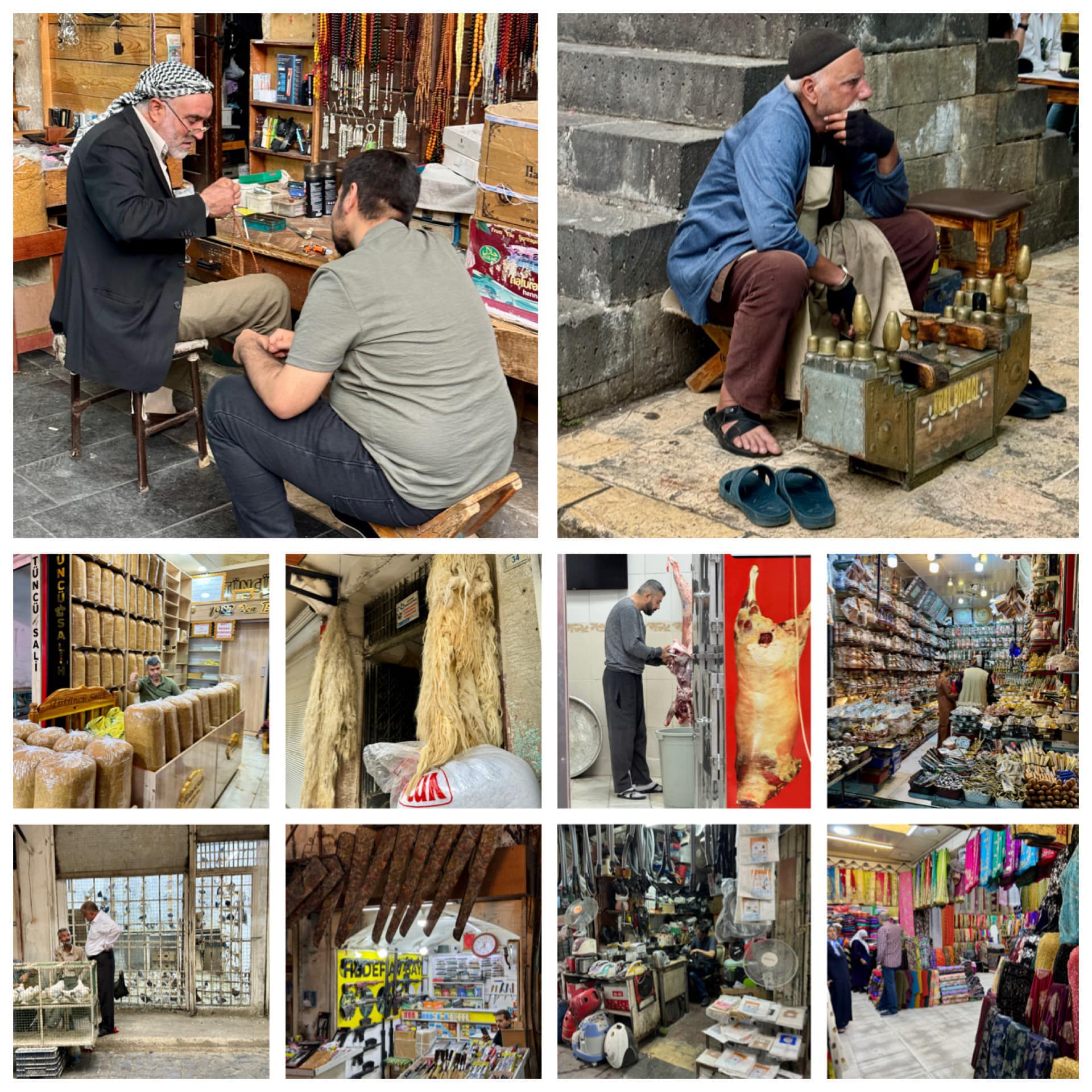
I could have filled a book with market photos. Left to right, starting at the top: prayer bead seller making a string for his customer; shoe shine guy with a couple of sets of slippers for customers to wear while they wait. Middle row: tobacco, tobacco and more tobacco, super fresh. Customers will roll a cigarette to try before they buy; the “wool shop” was beside the lamb butcher. The animals come to the butcher (having already met their demise) and then the rest of the work begins; this guy is butchering a pig. This was not a row of similar themed business (next door is a gold shop); anything and everything metal (mostly copper). Bottom row: pigeons and related birds, sold for hobby, apparently; guns (apparently real and not toys); the fixit shop; bolts and bolts and bolts of fancy, sparkly fabric.
Our last night in Şanlıurfa, we went to a Sira Night! This is an old tradition that originated here whereby men would gather weekly, alternating houses, primarily for conversation and connection, but music and food would find their way into the mix as well. It was also an opportunity for younger men to learn from their elders. Now, it’s all about the food, music and dancing! These guys went for three hours with maybe two ten minute breaks. They sure worked for their tips!
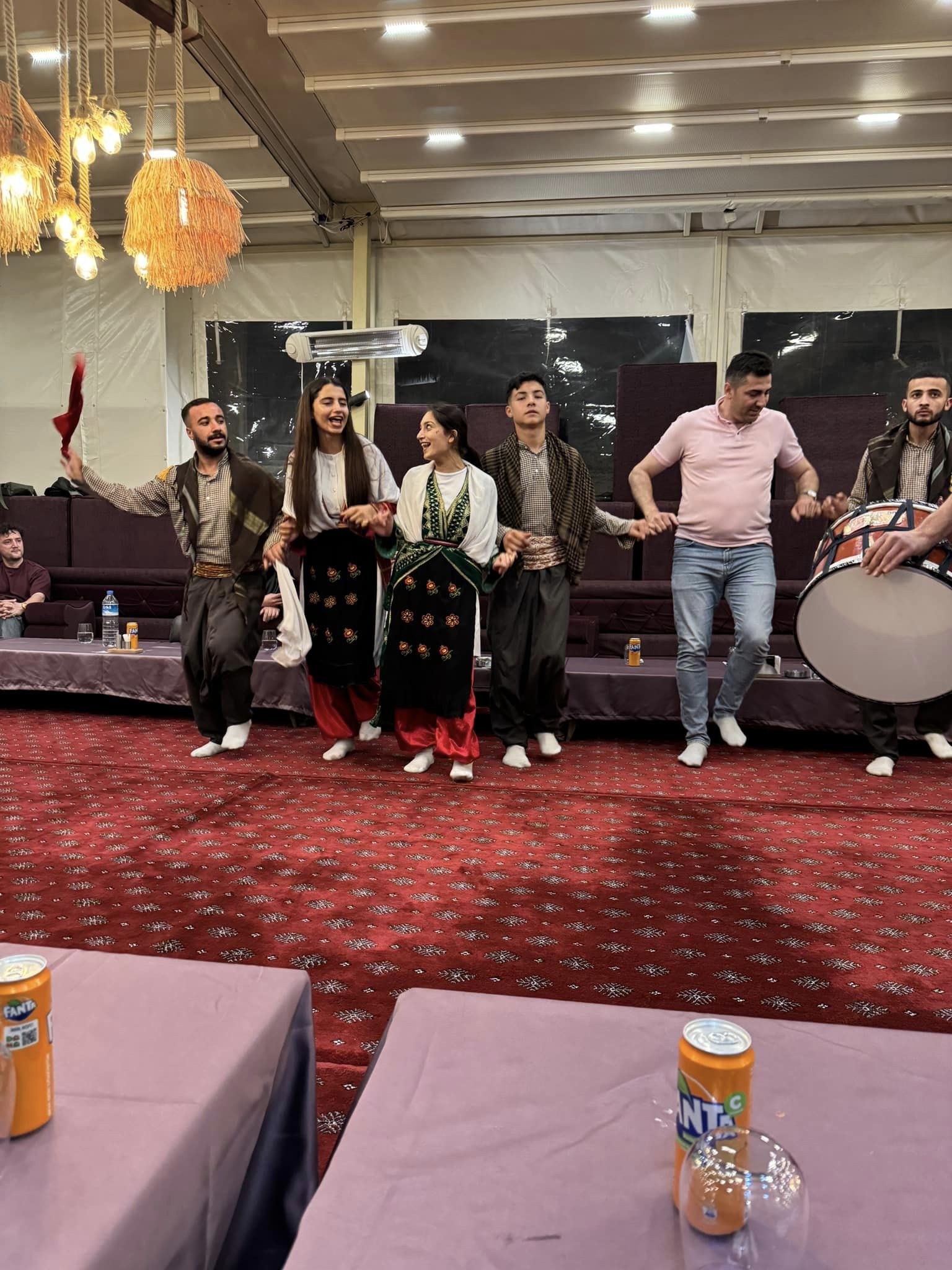
Professional dancers arrived (in the day, there would only have been men) and gave some of the musicians a break, but not the drummer. He didn’t stop all night. Notice the tips stuck in his drum. After the dancers did their first set, customers joined in. Everyone knew the moves and the words to the songs and participated with gusto! We were the only non-Turks in the place.
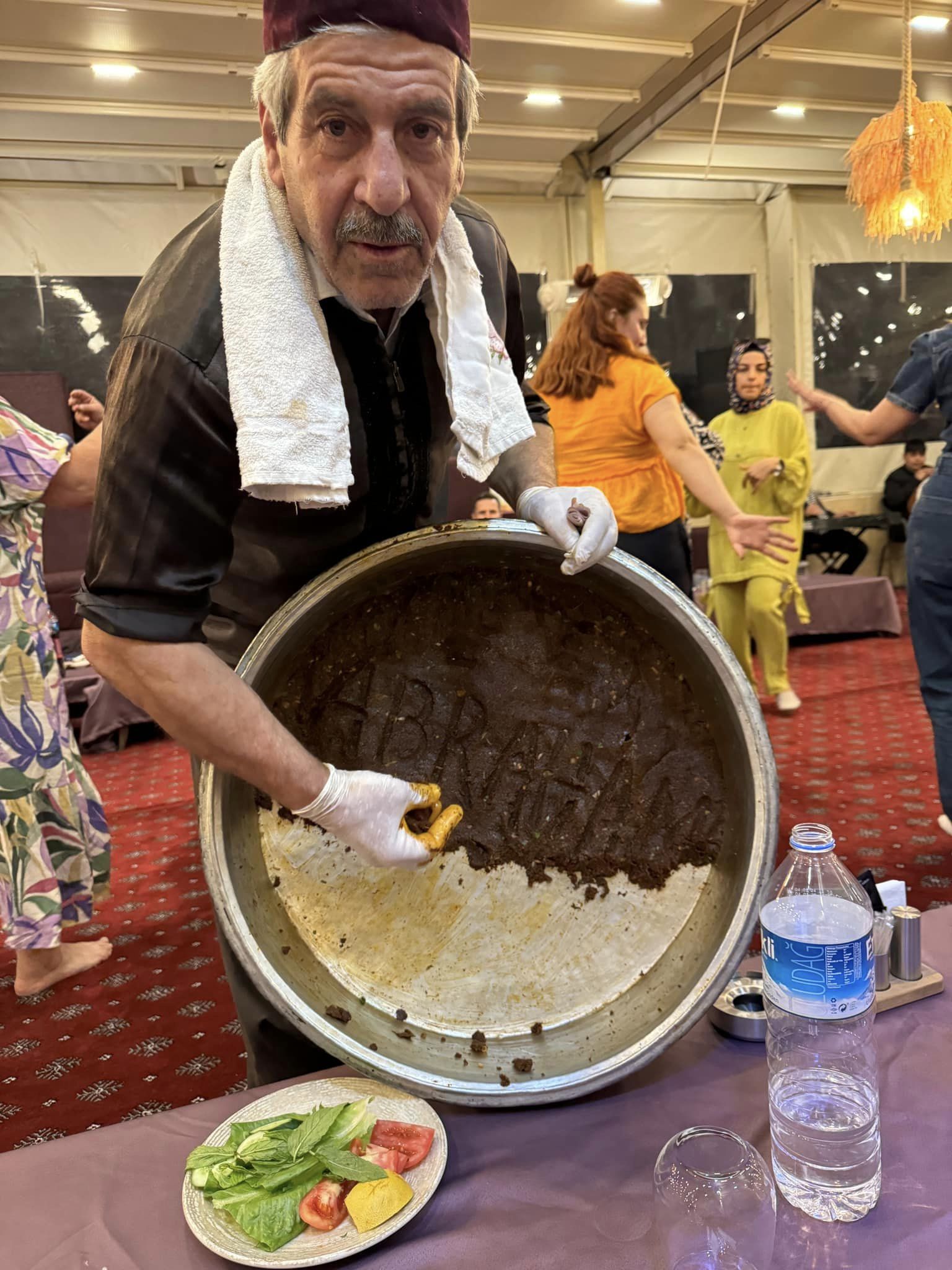
In the middle of all the dancing, this guy came out and spread a picnic blanket on the floor, put down this pot, a bunch of ingredients and got to work. Amazingly, nobody stepped in it. He mixed and kneaded and then put palmfuls of the mixture on these plates. But first he handed me a piece directly. Foolishly, I thought it was chocolate…and took a big bite. I’ve been feeling chocolate-deprived here. It was çiğköfte, the star of the Sira meal, and a Şanlıurfa speciality. Basically raw meat mixed with fine bulgur and spices. Apparently spices negate the need for cooking. So you can imagine my surprise when my mouth was expecting chocolate and it got spicy raw meat instead!
I made a new friend!
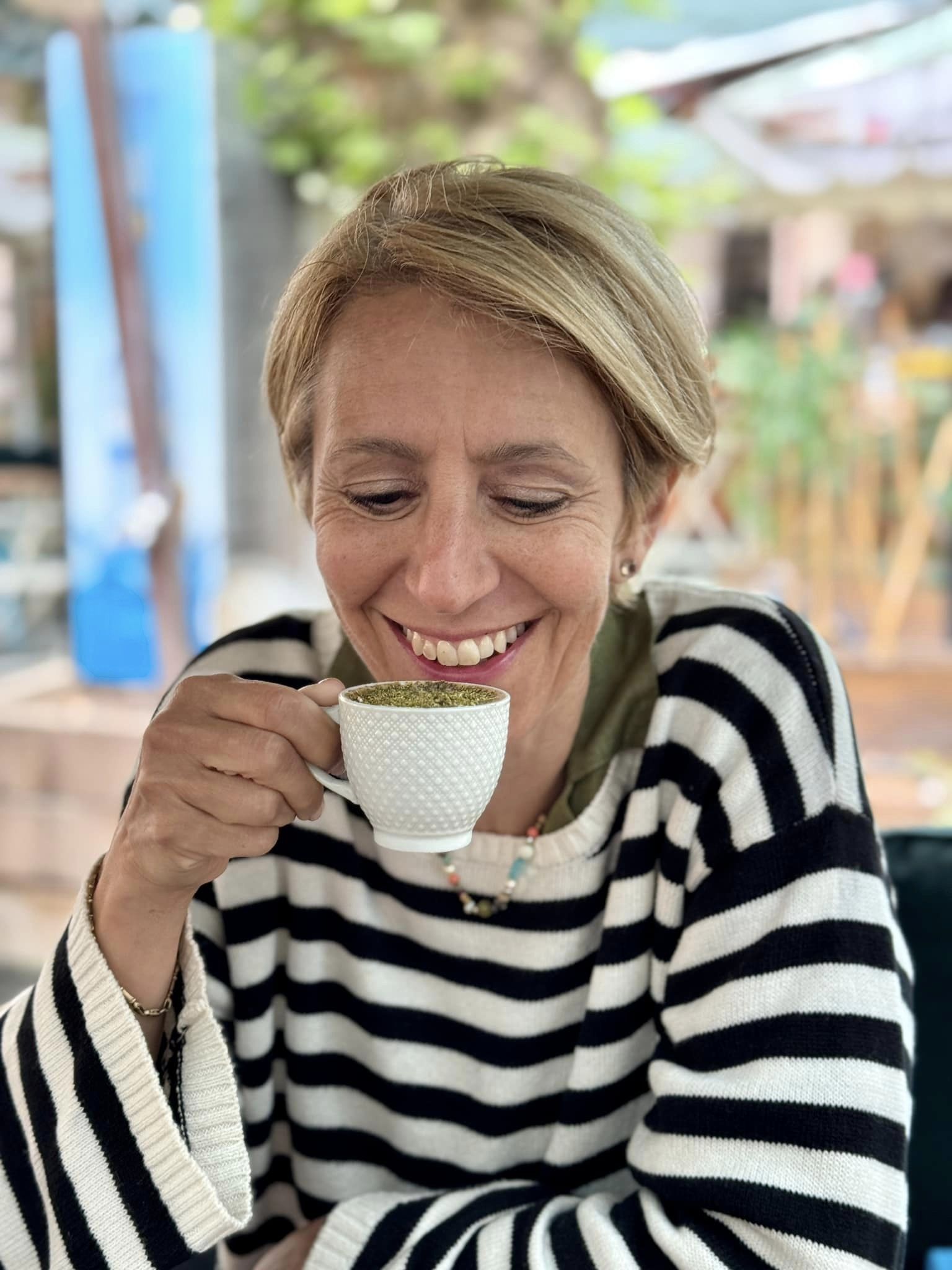
This region is known for pistachios and they make a fabulous Kurdish pistachio coffee! Roasted pistachios are ground and replace coffee in this mini latte. This sure made up for the çiğköfte surprise.