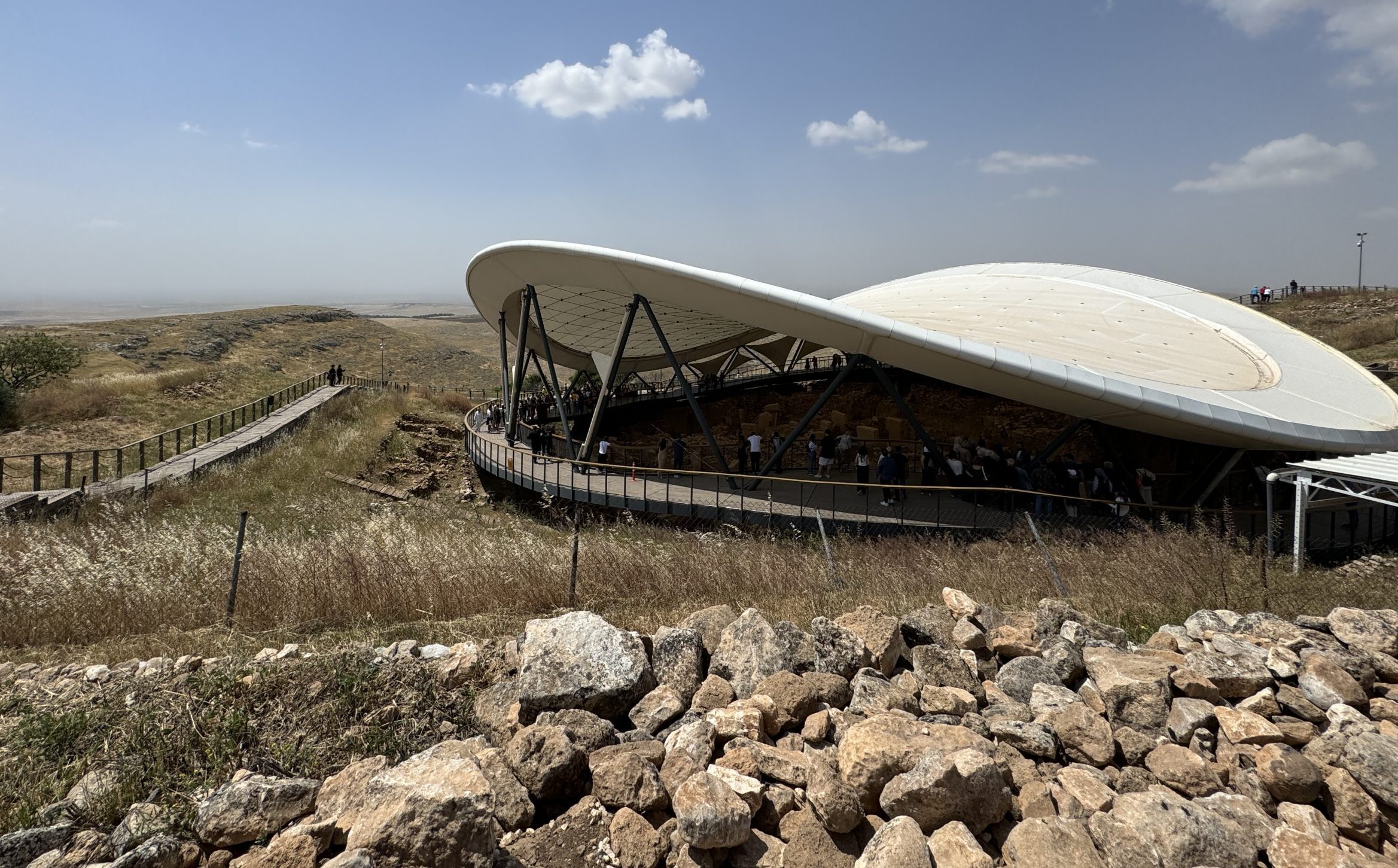
Göbeklitepe: Ground Zero
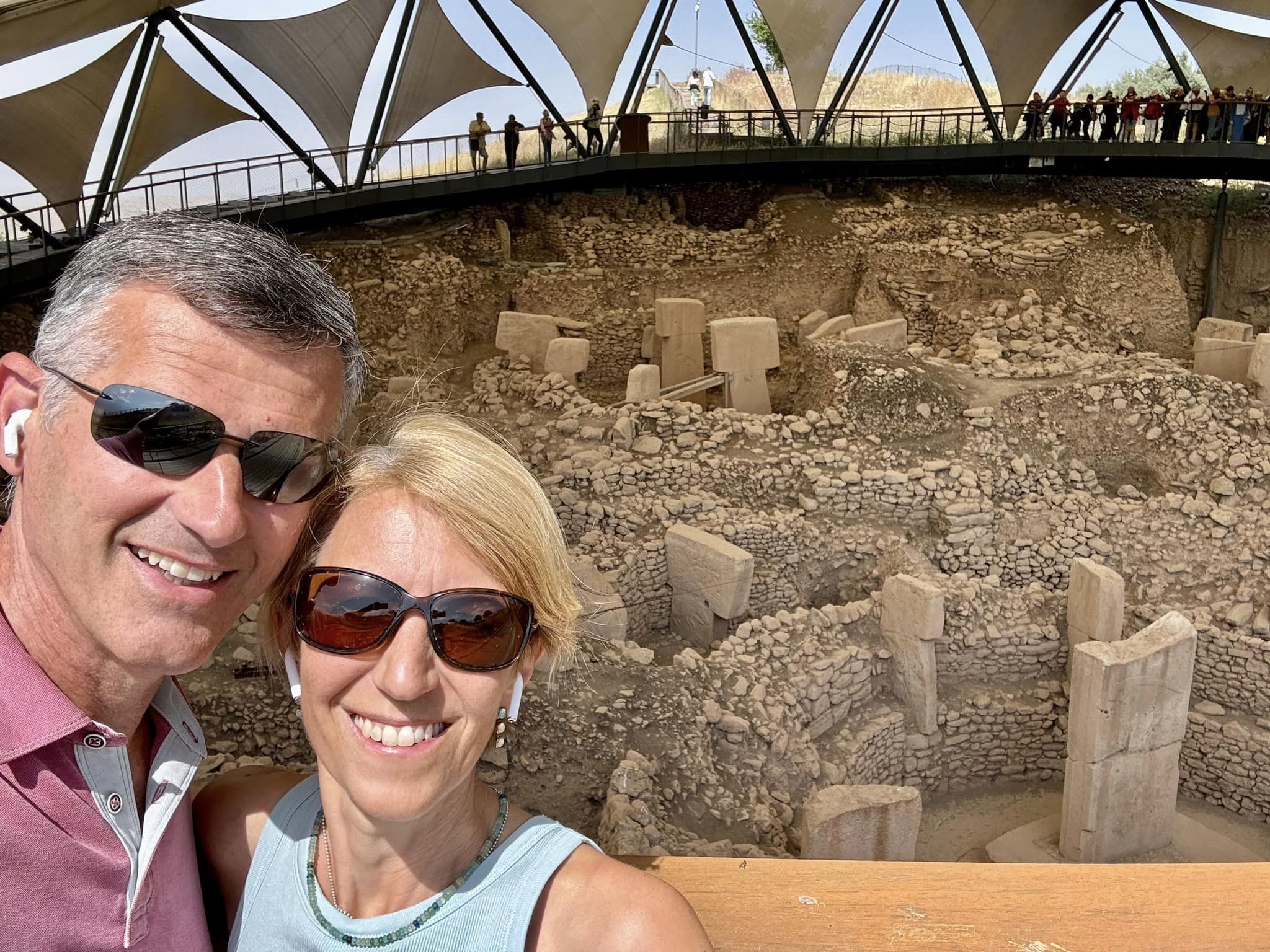
Sonar surveys have exposed at least 25 sites in this area so Göblekitepe is the tip of the dawn of civilization’s iceberg. The start of civilization is defined as when society moved beyond hunter gatherers to groups of people working together to shape and control their environments and create long term settlements. To do this required organization of labour, administration, communication of shared goals, leading to complex architecture, art and social structures. We used to believe this all started around 4000 BC when our ancestors figured out agriculture and trade that allowed them to stay in one place. Nope. It was 12,000 years ago in the pre-pottery Neolithic period (or Stone Age). How do we know it was the pre-pottery era? No fragments of pottery are found anywhere around here. Good deductive reasoning. Göbekli Tepe has all these features of civilization but was pre-agricultural, turning on its head the notion that agriculture was the root of civilization. The groundbreaking (literally) notion: faith drives civilization.
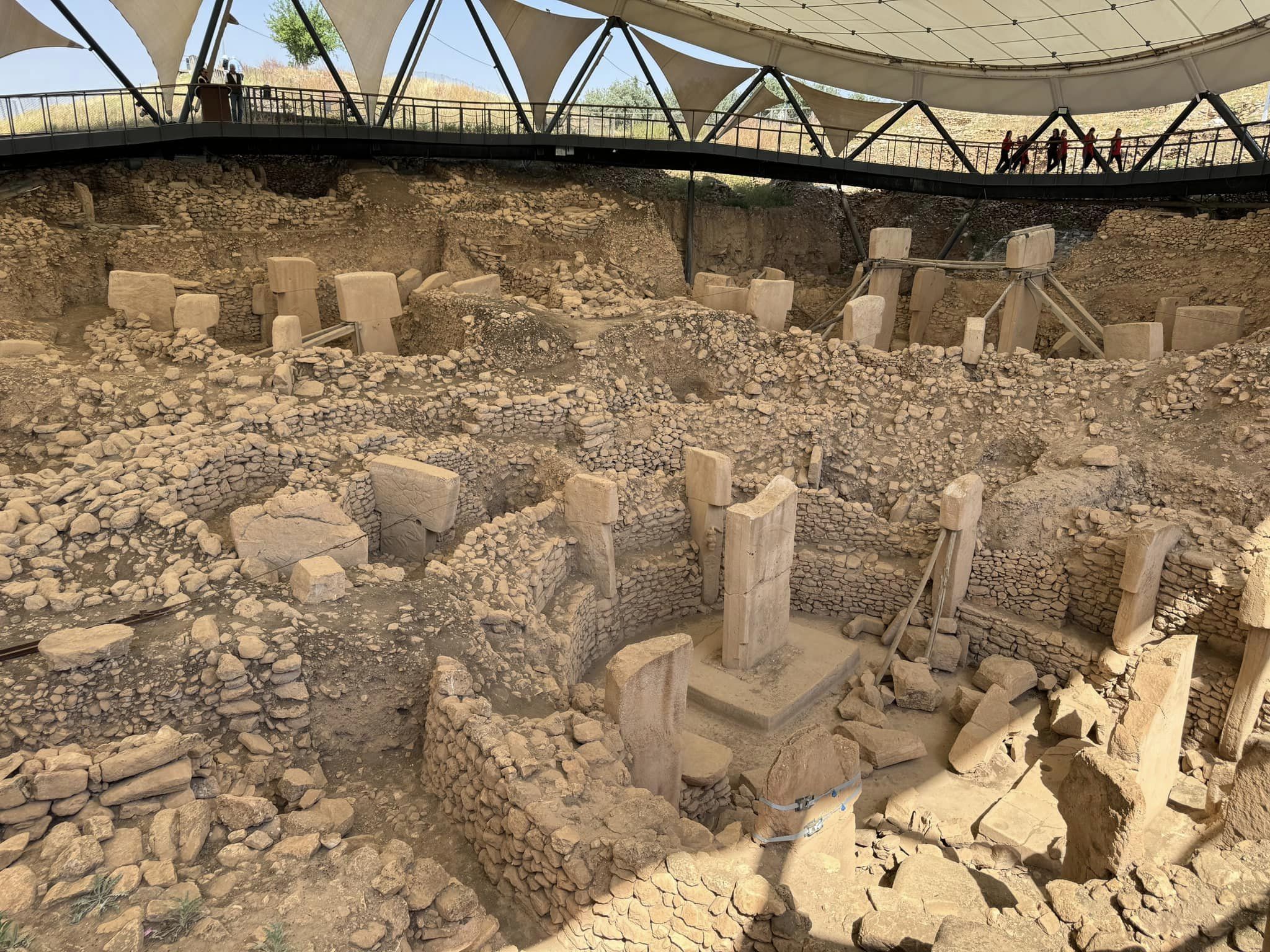
Hunter gatherer communities in the area built these temples at different times over 1500 years, renovating and modifying over time to suit their needs. We can see four of them here and another two behind this site are busy being excavated and are not open to the public yet. Organized workforce was required to create and erect these monoliths. The largest weighs 40 tonnes (most others weigh in at a paltry 15 tonnes). To pull this kind of project off, they needed a disciplined communal effort and a system to organize that effort. This is another huge contribution to our knowledge of the history of humanity. Before this discovery, we thought that the Neolithic people had a hard life and a simple primitive one as it pertained to art, social life and beliefs. This discovery has proven that art, social organization and beliefs were basic elements of life, as important as food and shelter. Clearly, it was important enough to be worth this massive effort! There’s no evidence that anyone actually lived here. Rather, Göbekli Tepe was a spiritual place that people came to for worship. We have to wonder how it is so well preserved for 12,000 years. The people of that time can take credit. It appears the buildings were fully cleaned after they served their purpose and then backfilled with stones, earth and debris. As a result, earthquakes, looters and others who would destroy sites like this were thwarted.
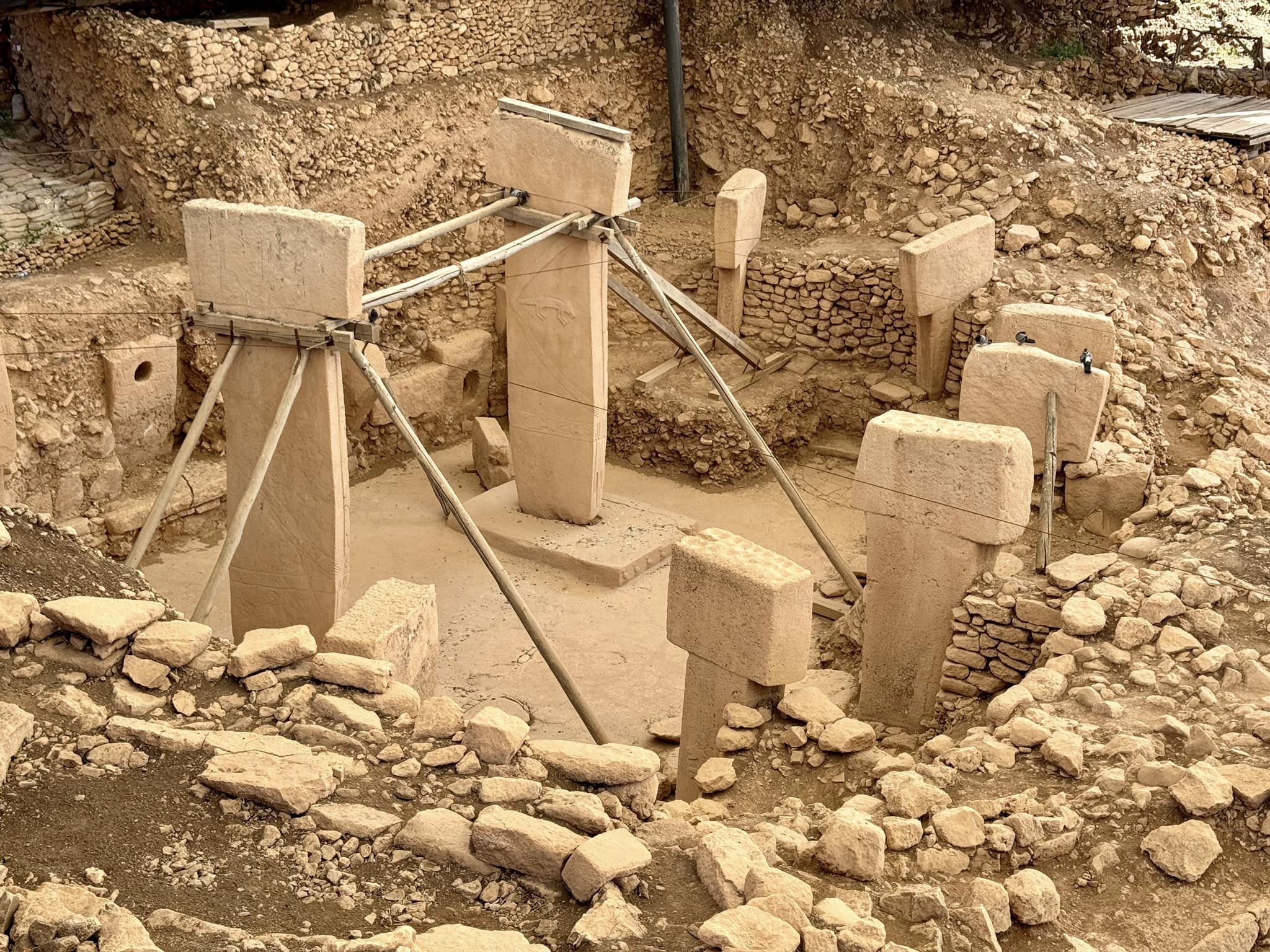
This is Building D at the back of the group of four and is the best preserved. These are the largest monoliths uncovered so far. If you zoom in, you can see that the tall pillars represent people; images of arms wrap around the sides and meet in the front and they are wearing belts around their waists. Animals carvings are sprinkled throughout (not so much in this photo). In the realm of early spirituality, the pillars were likely gods and the animals were totems or protectors. People came from far and wide to worship here. They needed to be fed so maybe that precipitated agriculture?
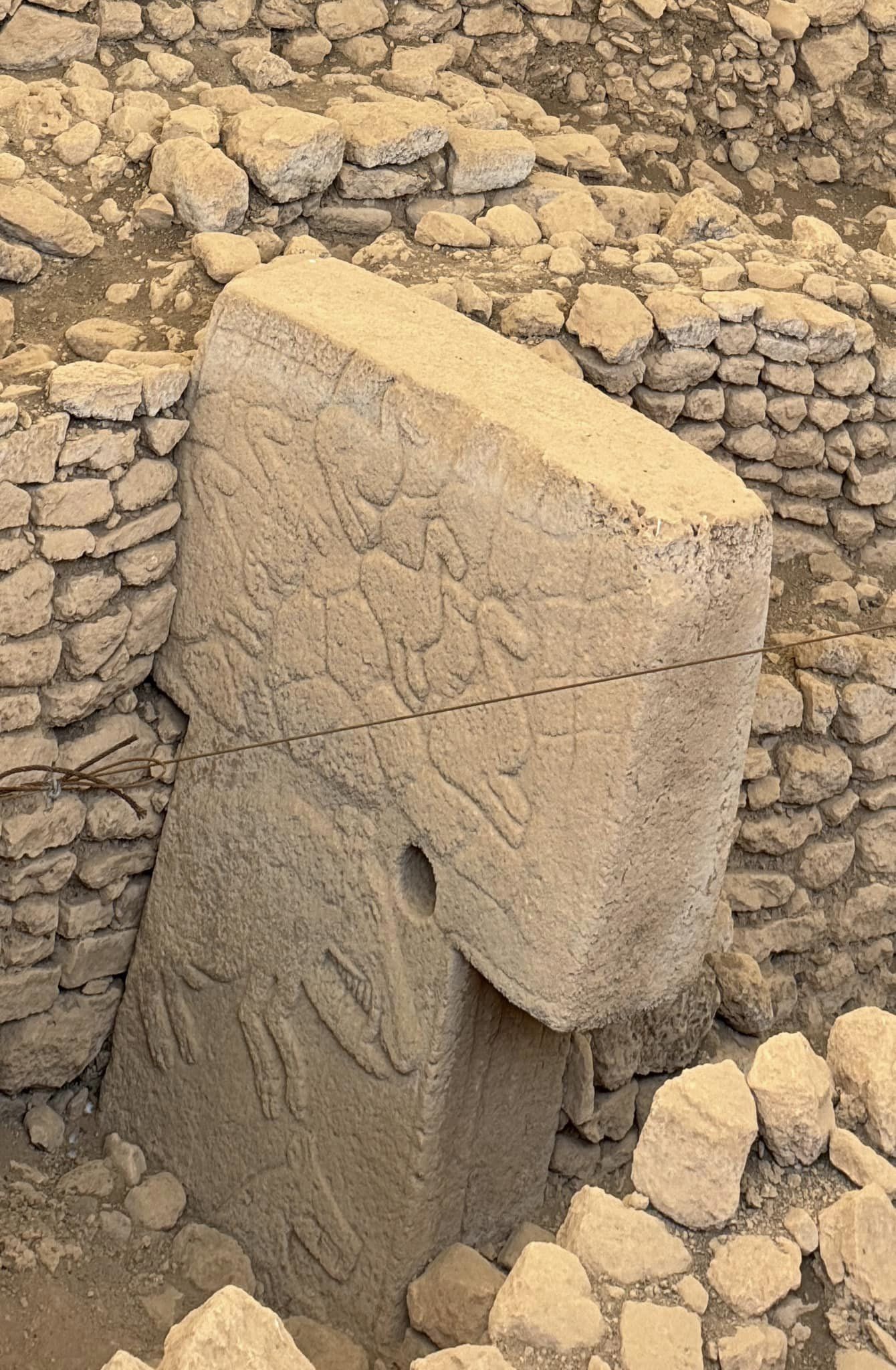
Animal reliefs are usually depicted in action with geometric patterns between them. These are complicated bits of iconography and not random bits of art. These enclosures, pillars, reliefs and statues are expressions of the beliefs and myths of the people of this period in time.
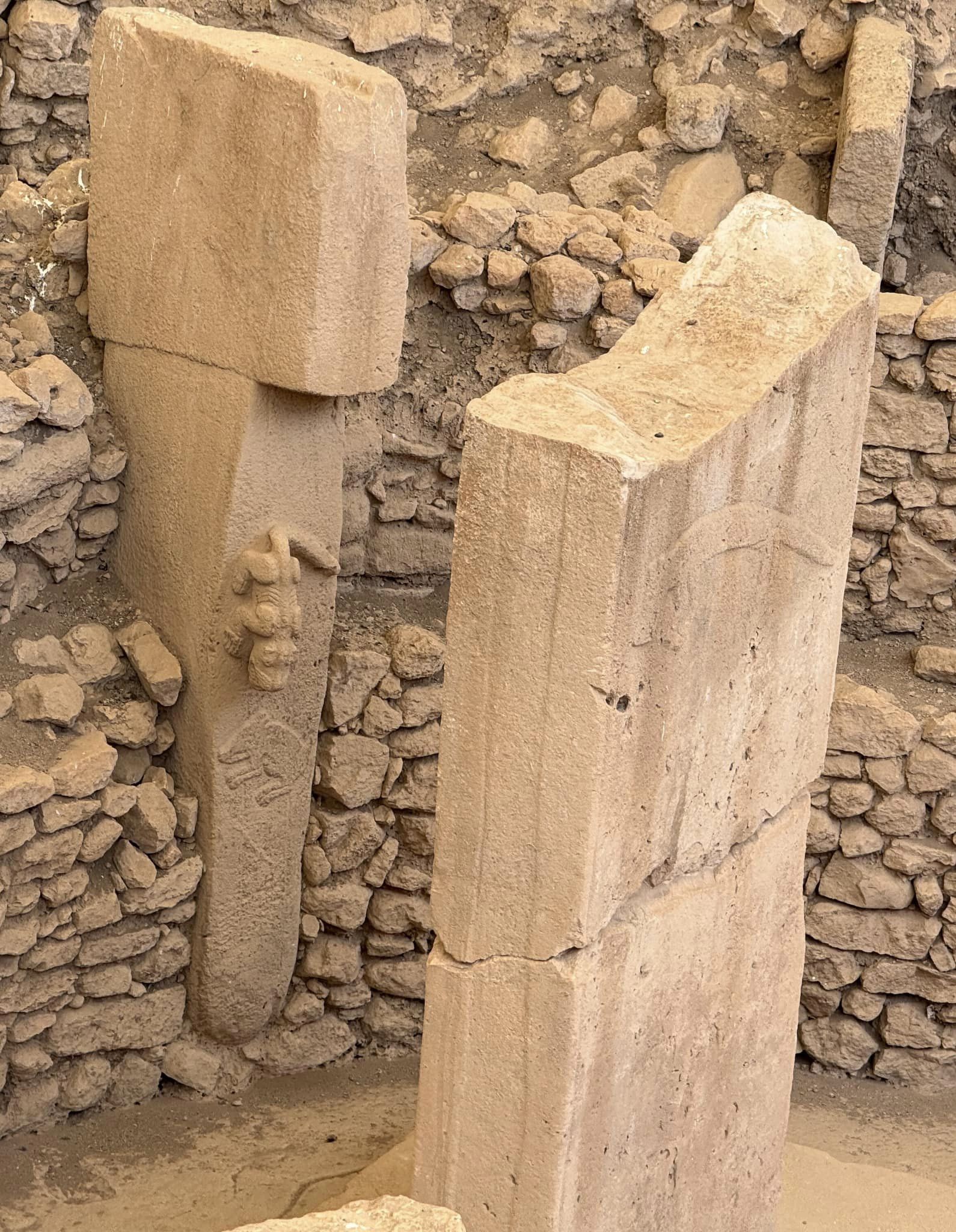
This is a pretty special relief as not many are so pronounced, almost like a sculpture stuck on the face of the pillar. Another bit of animal action here with a lion or a panther ready to pounce…perhaps attacking the boar below.
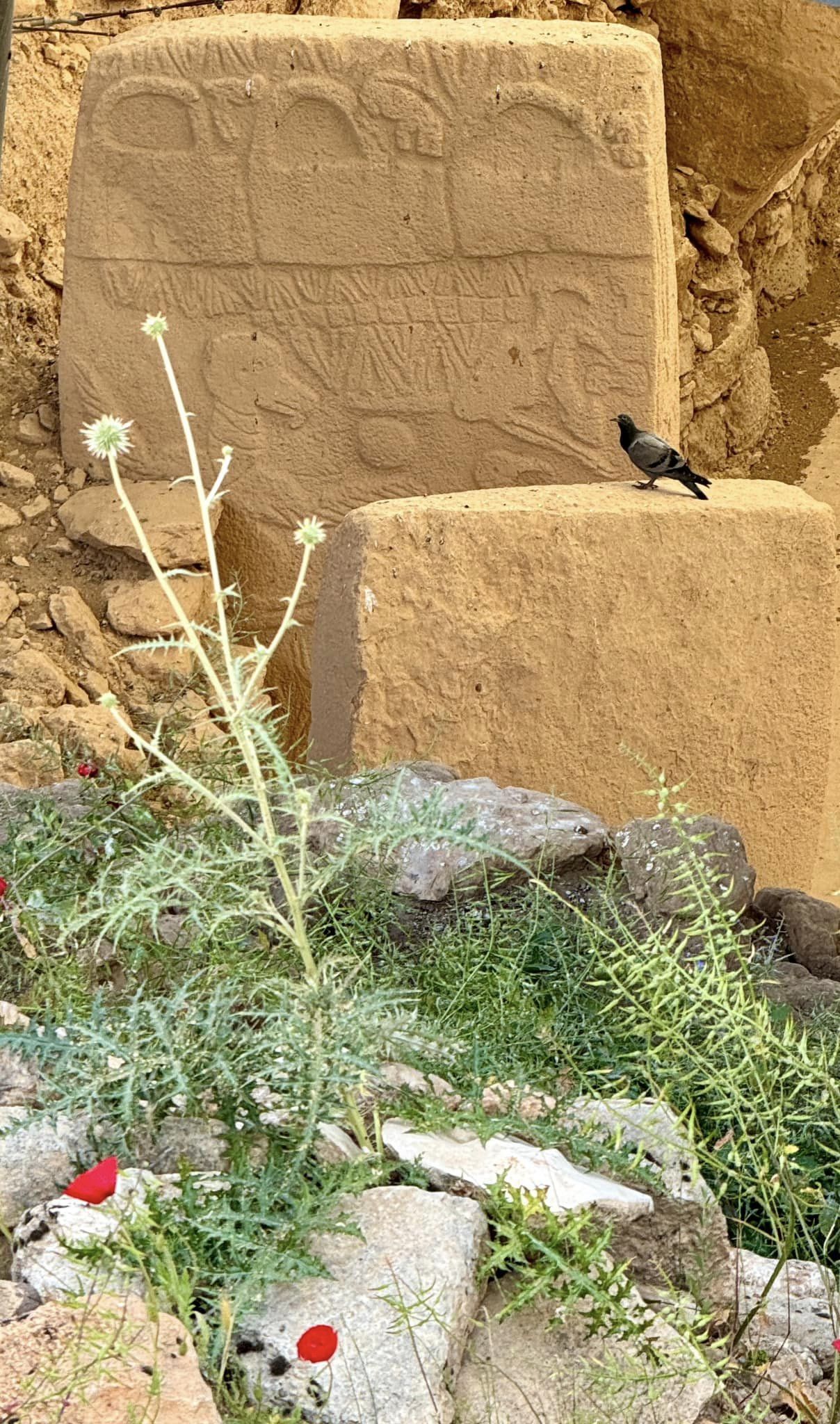
Here’s an interesting one. This is thought to show the idea of a sky burial, which is when a dead body is placed high up a mountain to feed animals and vultures. Here is a vulture lifting human head to the sky. And a pigeon taking in the scene to which it may aspire...human heads, watch out!
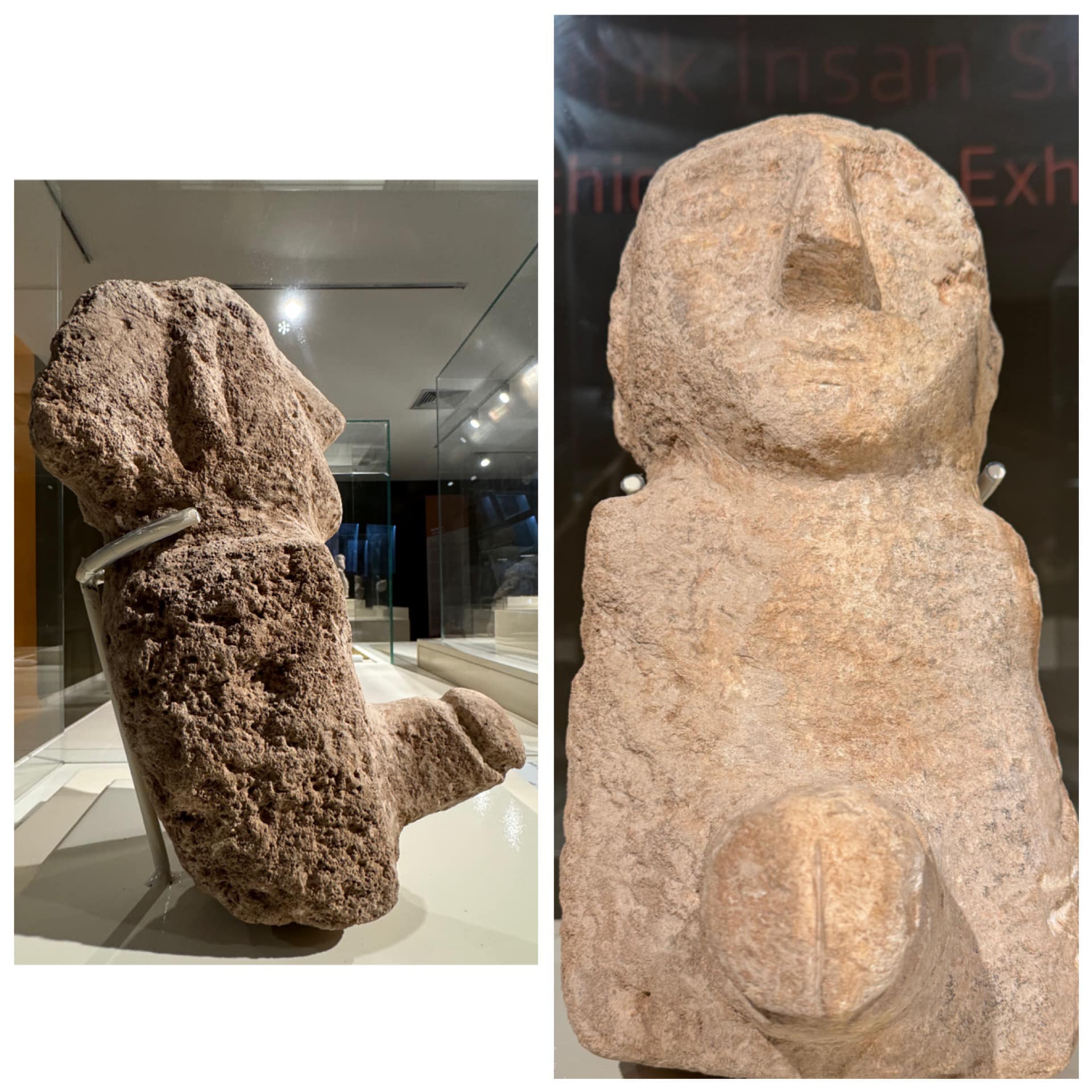
The site was officially discovered in 1994 but a farmer named Şavak actually found one of the first artifacts of Göbekli Tepe, a small statue, in the mid-80s. He brought it back to the village and people were ashamed to look at it because it featured a phallus. He kept it for three years under the hay in his barn because everyone in the village made fun of him. Knowing it must be important, he gave it to the archaeology museum in Şanlıurfa who also didn’t want to pay much attention to it as it was indecent. When German archaeologist Klaus Schmidt came in 1994 and saw this “vulgar” piece in storage at the museum, he asked where it was found and booted up to the area to meet Şavak. The rest is history!
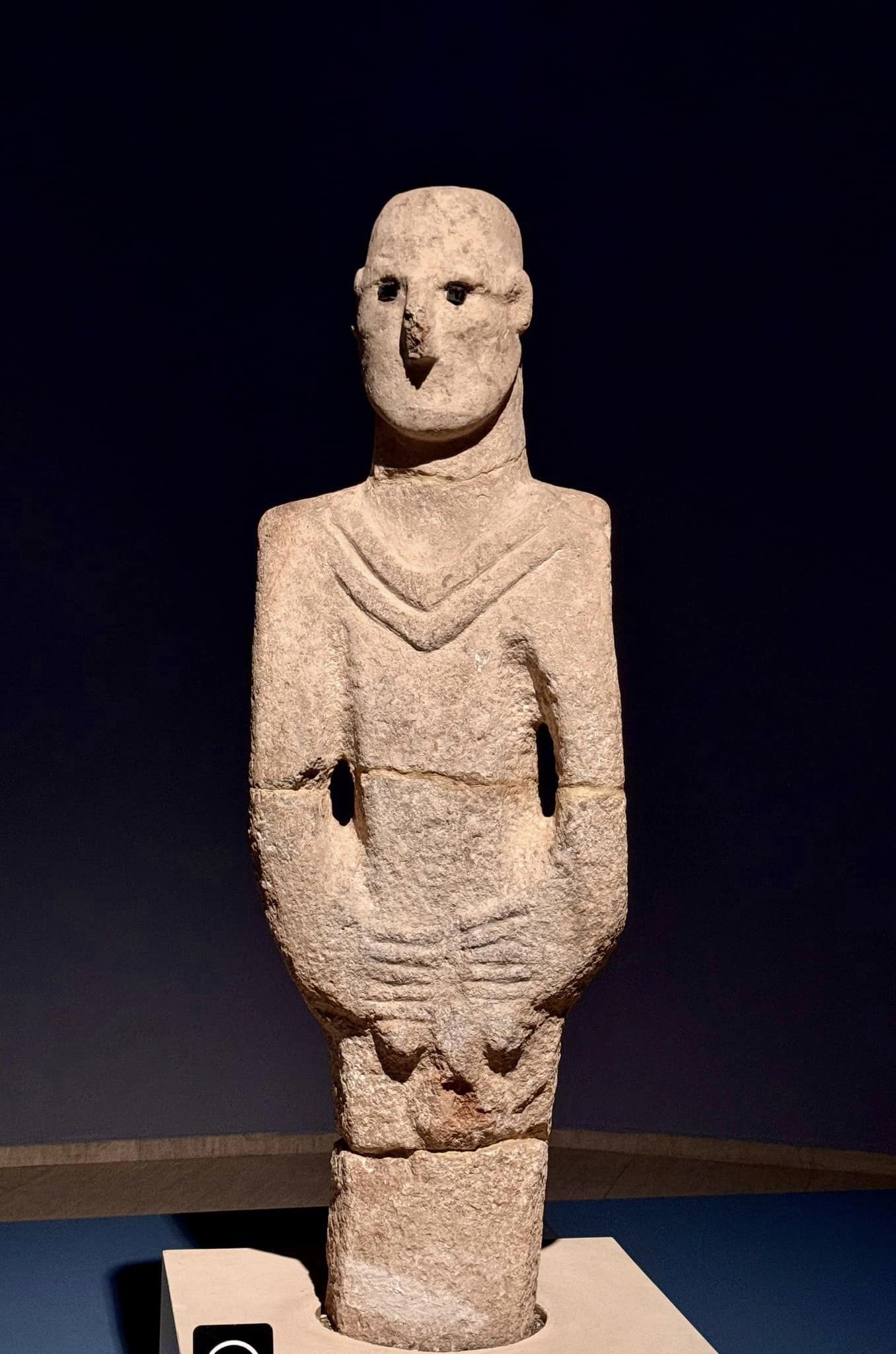
The Balıklıgöl Statue with obsidian eyes is the oldest human-sized statue in the world and was discovered when a road construction crew was building a tunnel. Thankfully the diggers didn’t crush it. I guess that’s why construction takes extra long around here because you never know what you’re going to find!
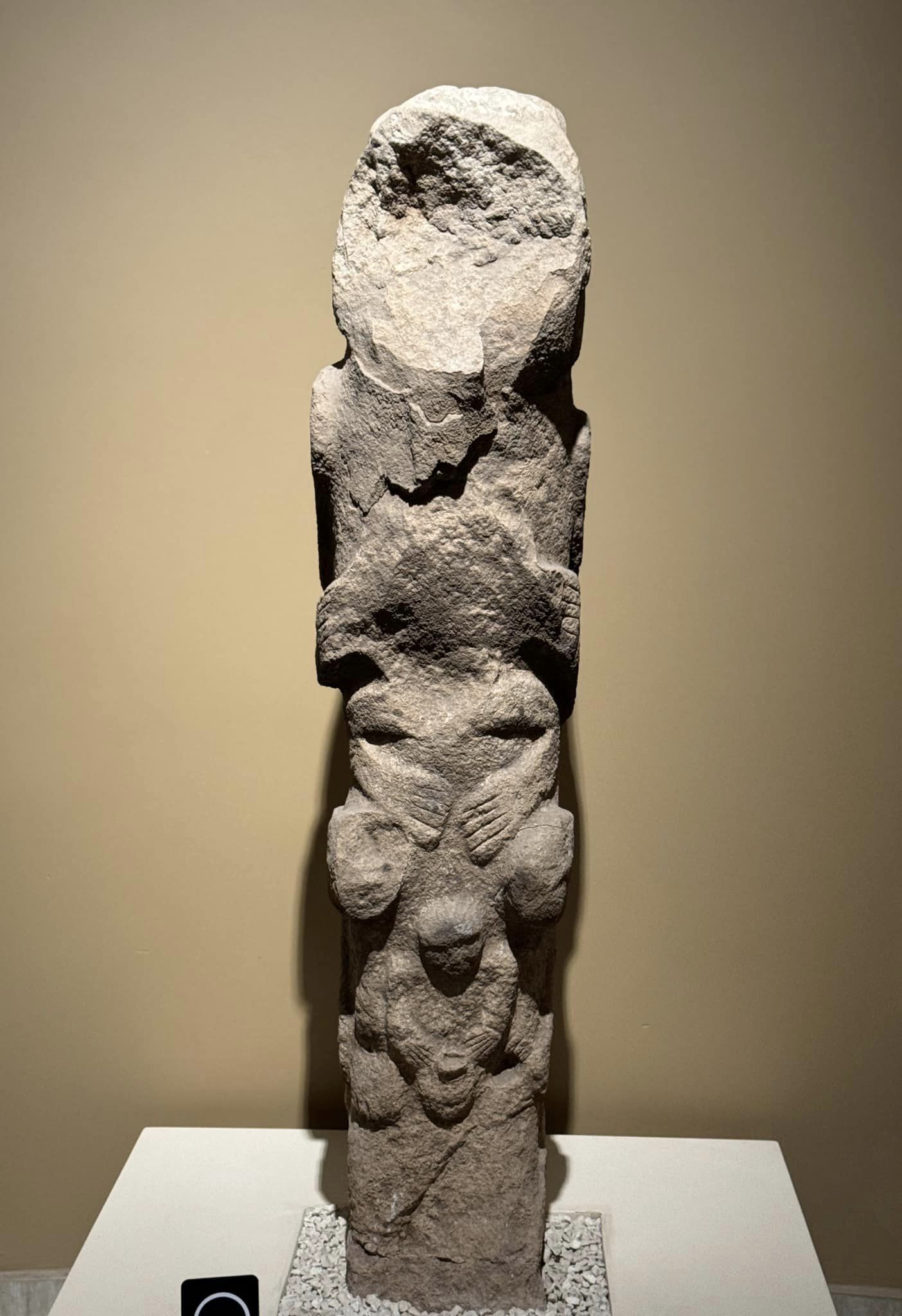
This totem pole, now in the Şanlıurfa Archaeology Museum, was found at Göbekli Tepe. So interesting that “totem poles” like those made by our First Nations in Canada appear here as well.
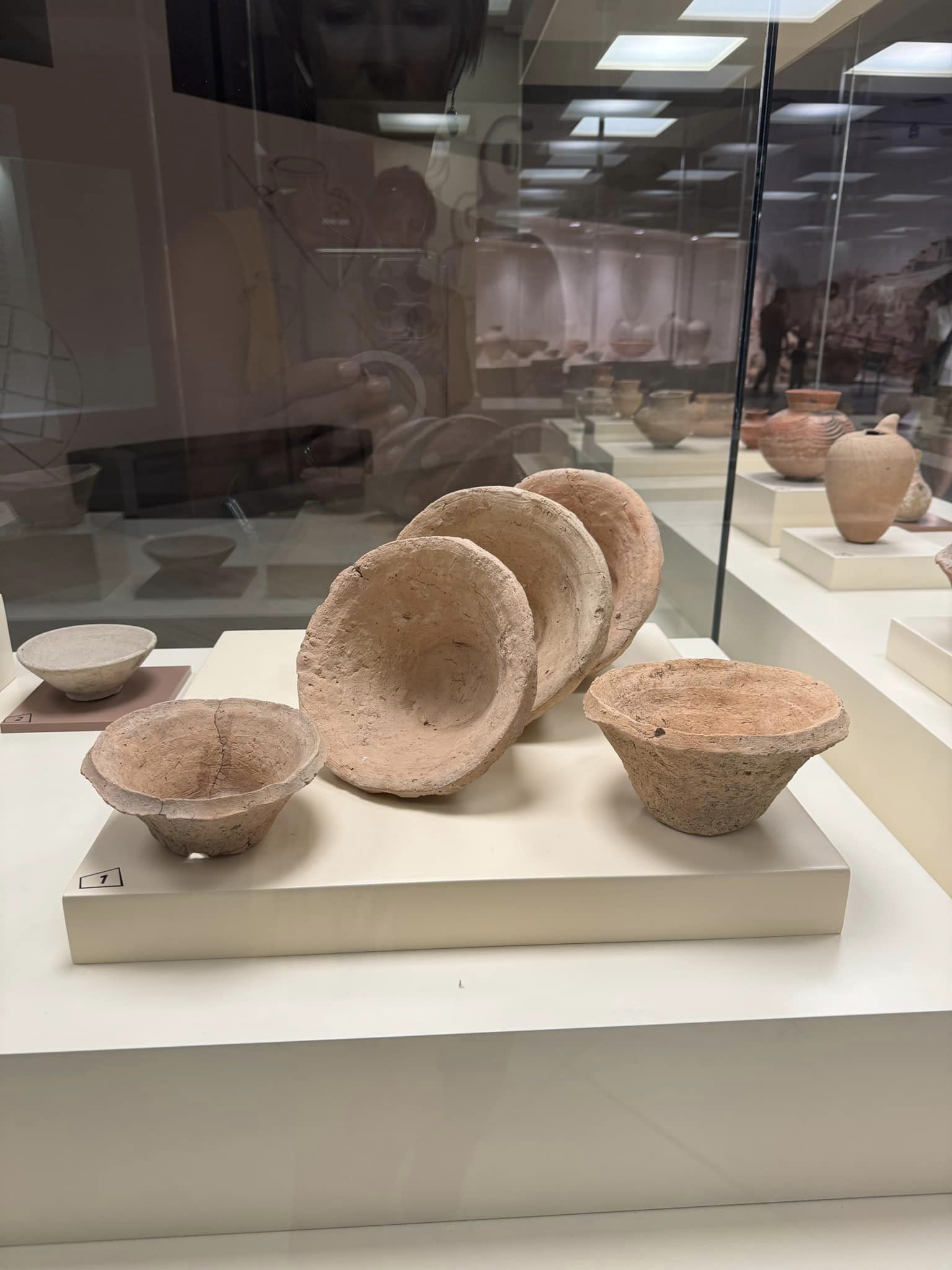
Another interesting find in the Şanlıurfa museum are these beveled rim terracotta bowls. These figure much later than Göbekli Tepe but are worth mentioning because of their use. Not mere bowls, these marked the beginning of minimum wage. These were handmade from a molds that were almost identical in size across the Mediterranean region. Slaves and workers in 3500 BC received their “wages” (ie rations of bread, grain or food) precisely measured out in these bowls.
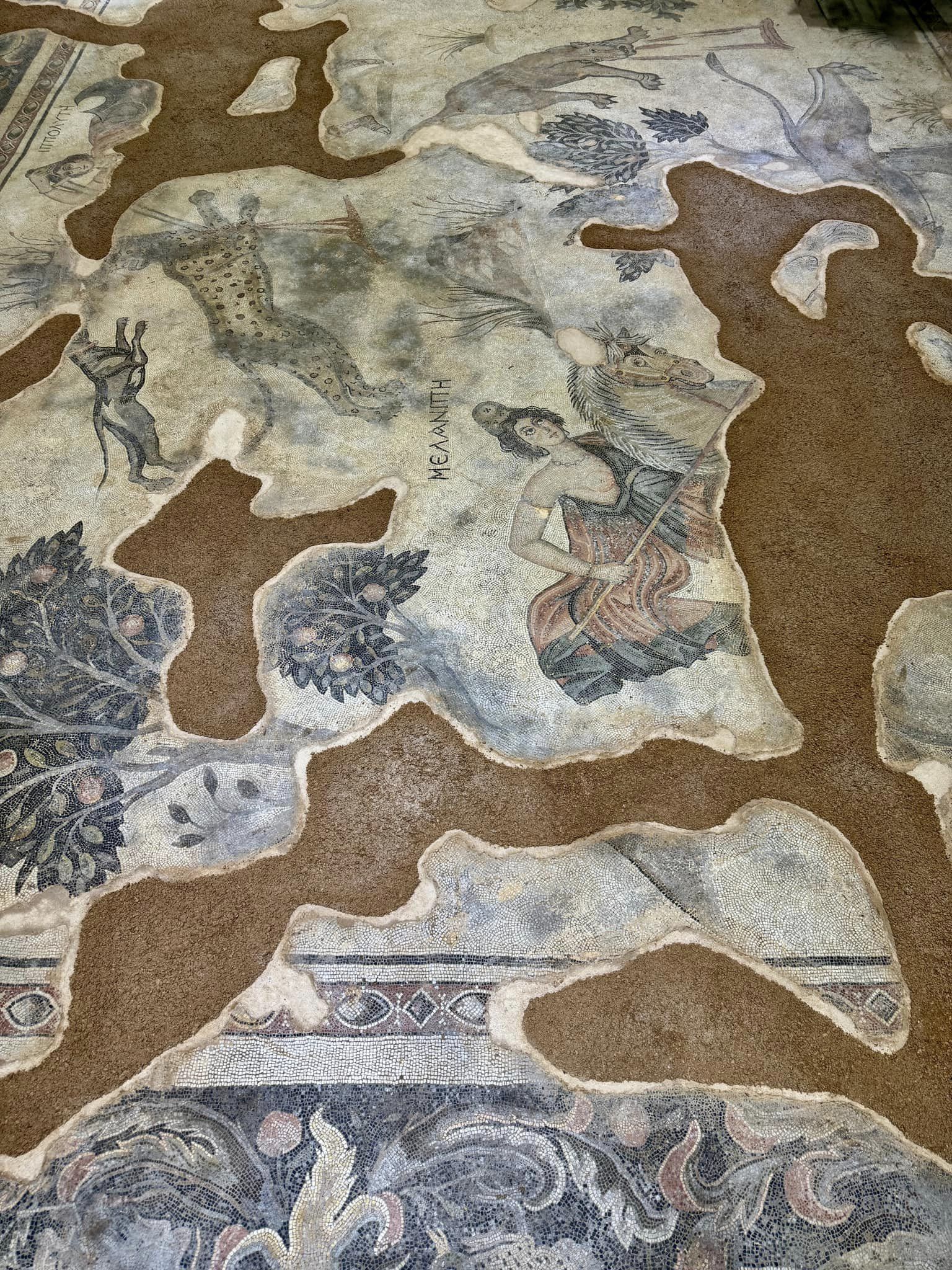
An Amazon in the Şanlıurfa Mosaic Museum. Who knew they had nothing to do with Brazil (I won’t even deign to mention online shopping…). In mythology, they are the daughters of Ares, the god of war. A matricentric community, they are thought to be from the Black Sea area of Anatolia.
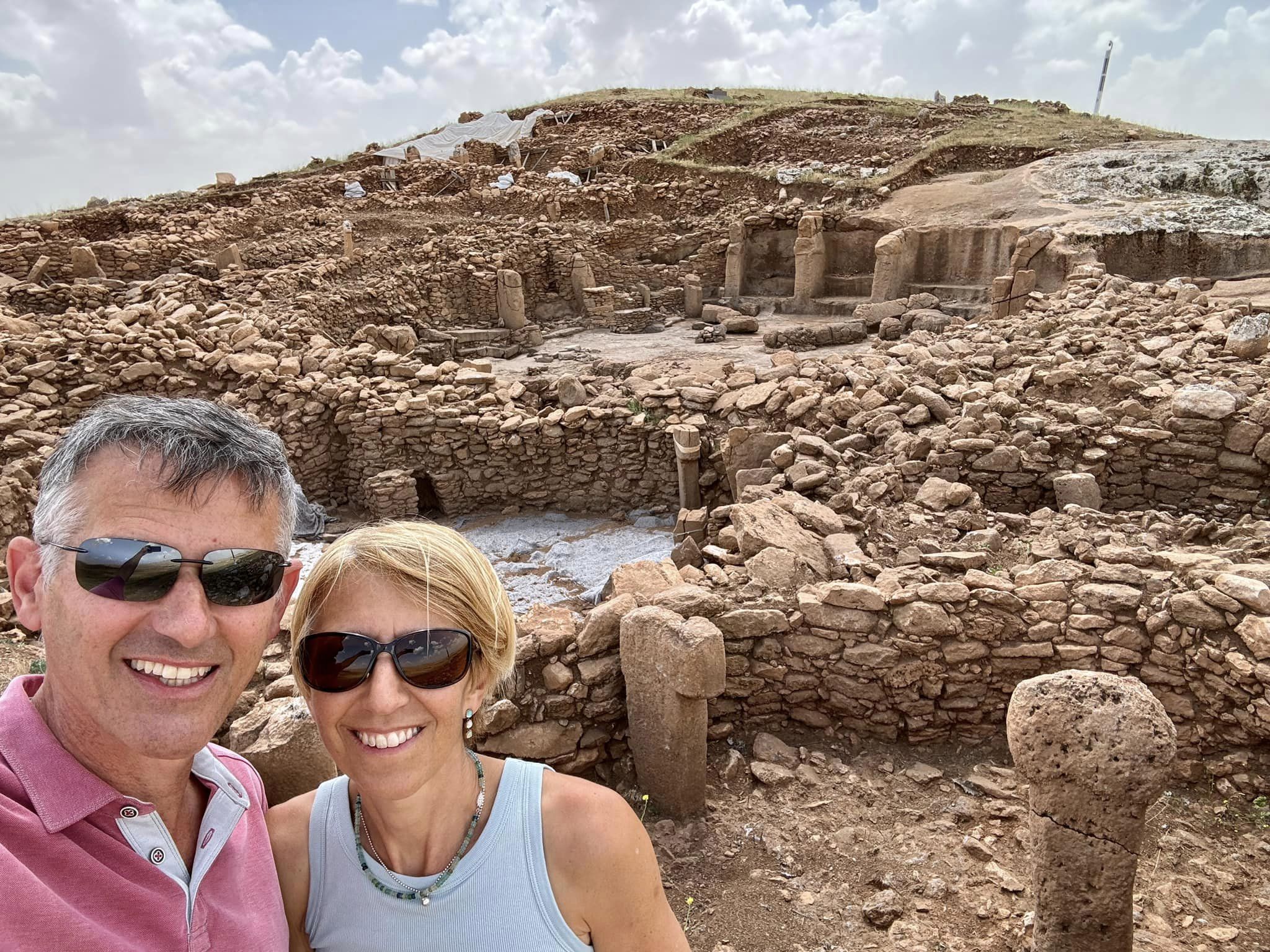
About an hour from Göbekli Tepe is Kaharan Tepe, another site deliberately backfilled in ancient times and unearthed a few years after Göbekli Tepe. It looks older than its more famous neighbour and indeed they think it dates to between 9,000 and 11,000 BC. Here, the pillars are mostly human in form as opposed to the animals at Göbekli Tepe and some suggest that this means Göbekli Tepe may have been more of a place of spiritual gathering and feasting sand Kaharan Tepe was a place to be and become a man (this suggestion will make a bit more sense in the next photo…) This is an active site and we were instructed not to take photos from above looking down as that were the current excavations are going on. Another example of archaeological competitiveness…
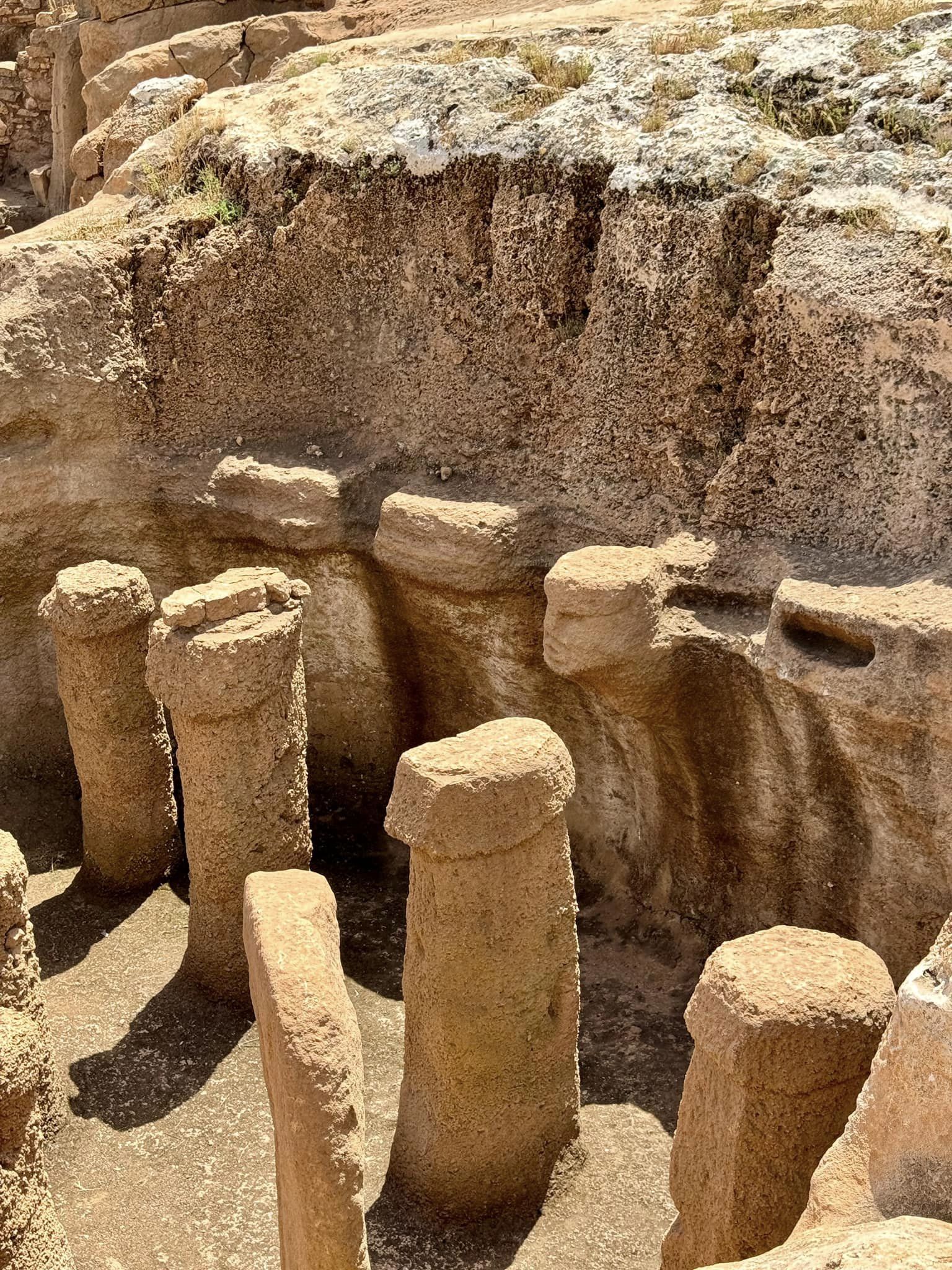
The original man cave? A series of phalluses in one of the Kaharan Tepe buildings with a man’s face supervising the scene.
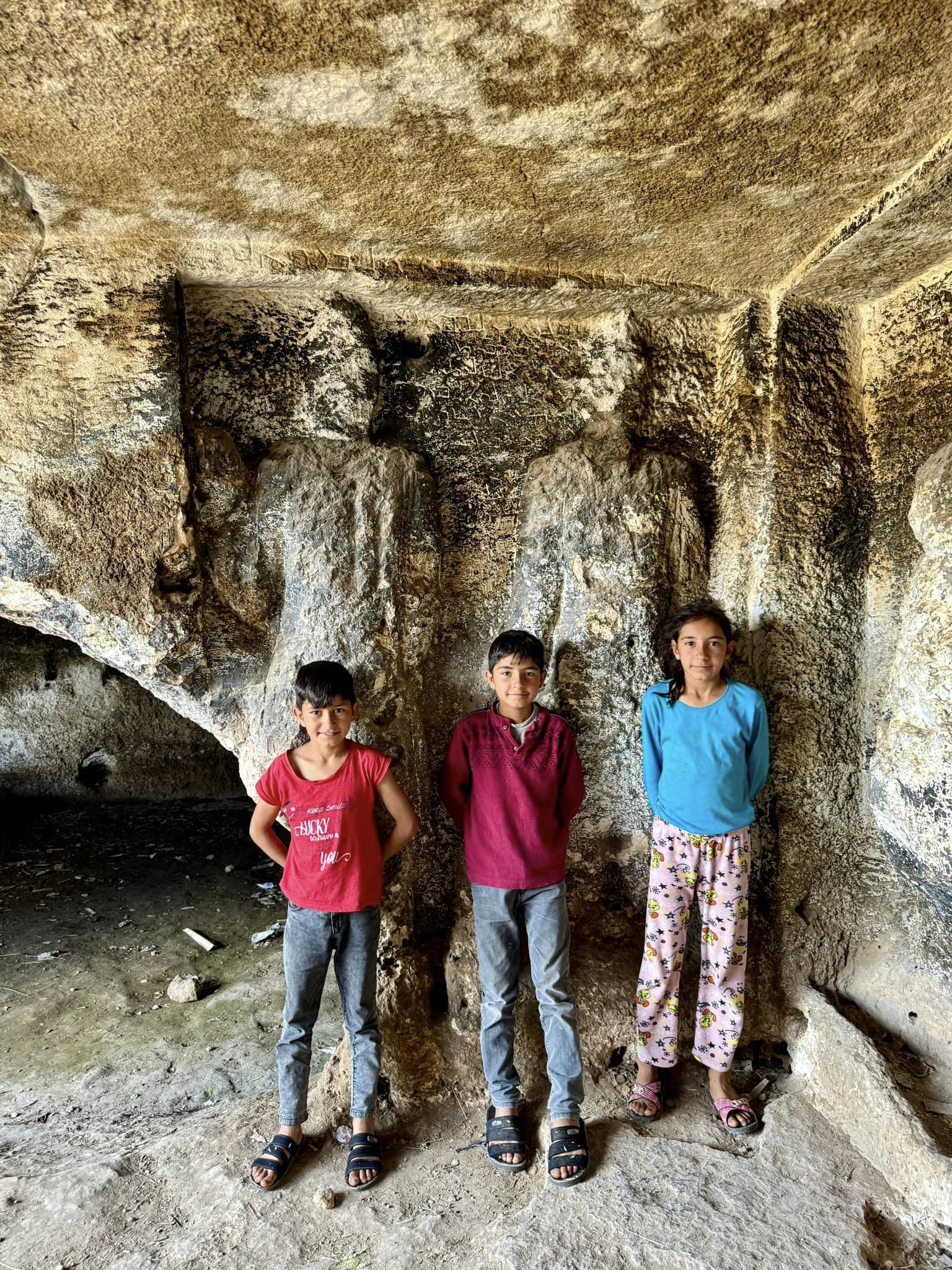
We pulled into the 2nd century AD Sogmatar Ancient City and these three siblings came up the road to greet us. With not a word of English, Zahara (13), Ismael (12) and Ali (10) took us on a tour. Not that they knew it was Mother’s Day but Ismael scooted down another path and reappeared with some flowers for me. This is the place where it is believed Moses lived when he escaped from Pharaoh. The kids took us to Pognon Cave (which I don’t think we would have found on our own), a secret place of worship where there are statues carved into the rock walls along with ancient Syriac inscriptions (zoom in above Ismael’s head) referring to the Lord of the Gods who is thought to be Sin, the god of the moon.
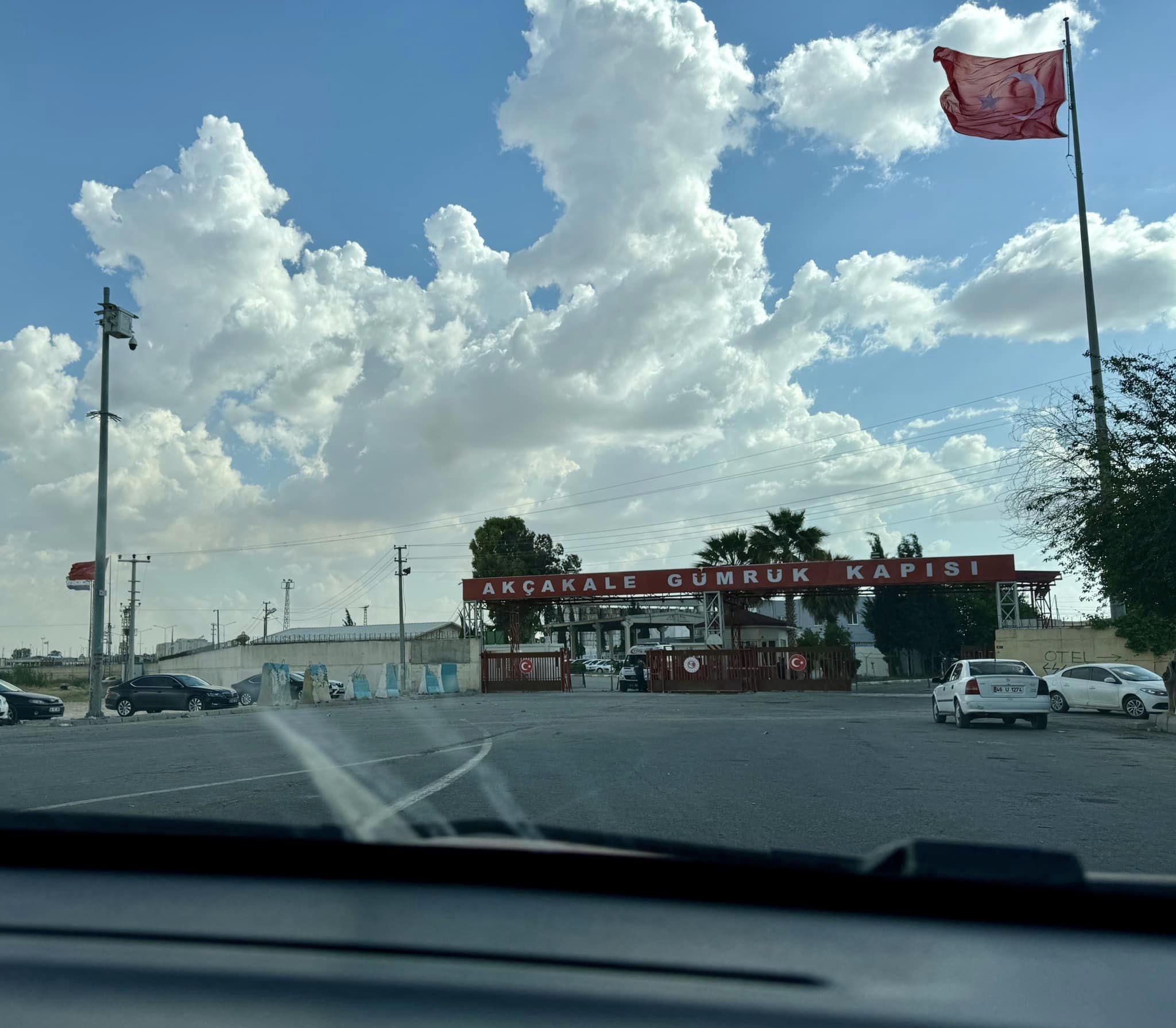
We were 20km from the Syrian border so we decided to check it out. Adam wouldn’t let me out of the car…
Post 2:
Insert Main Excerpt Here

Copy and paste your caption here (either from facebook or from the caption attached to the image on wordpress)