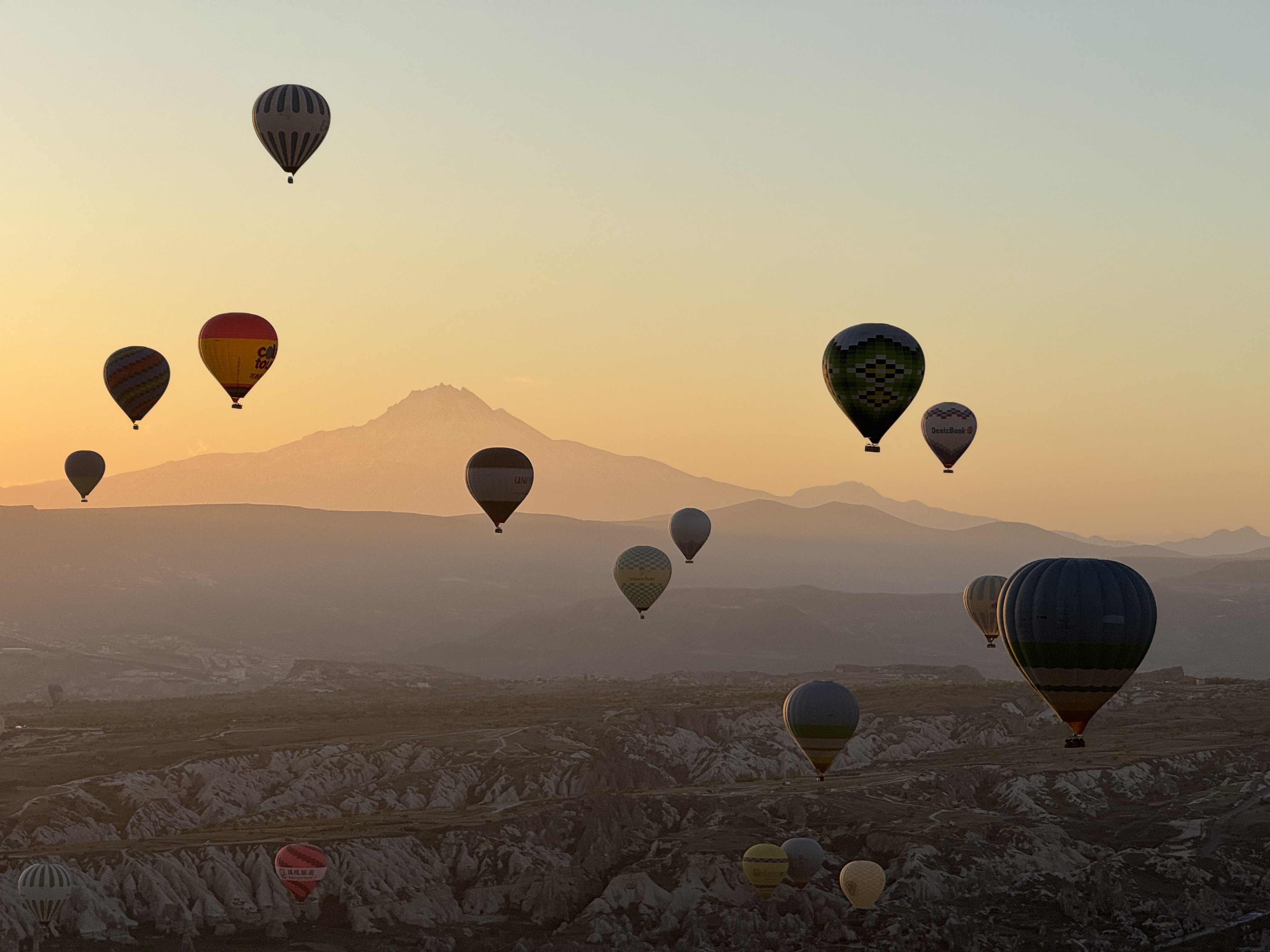
October, 2024
Captivating Cappadocia
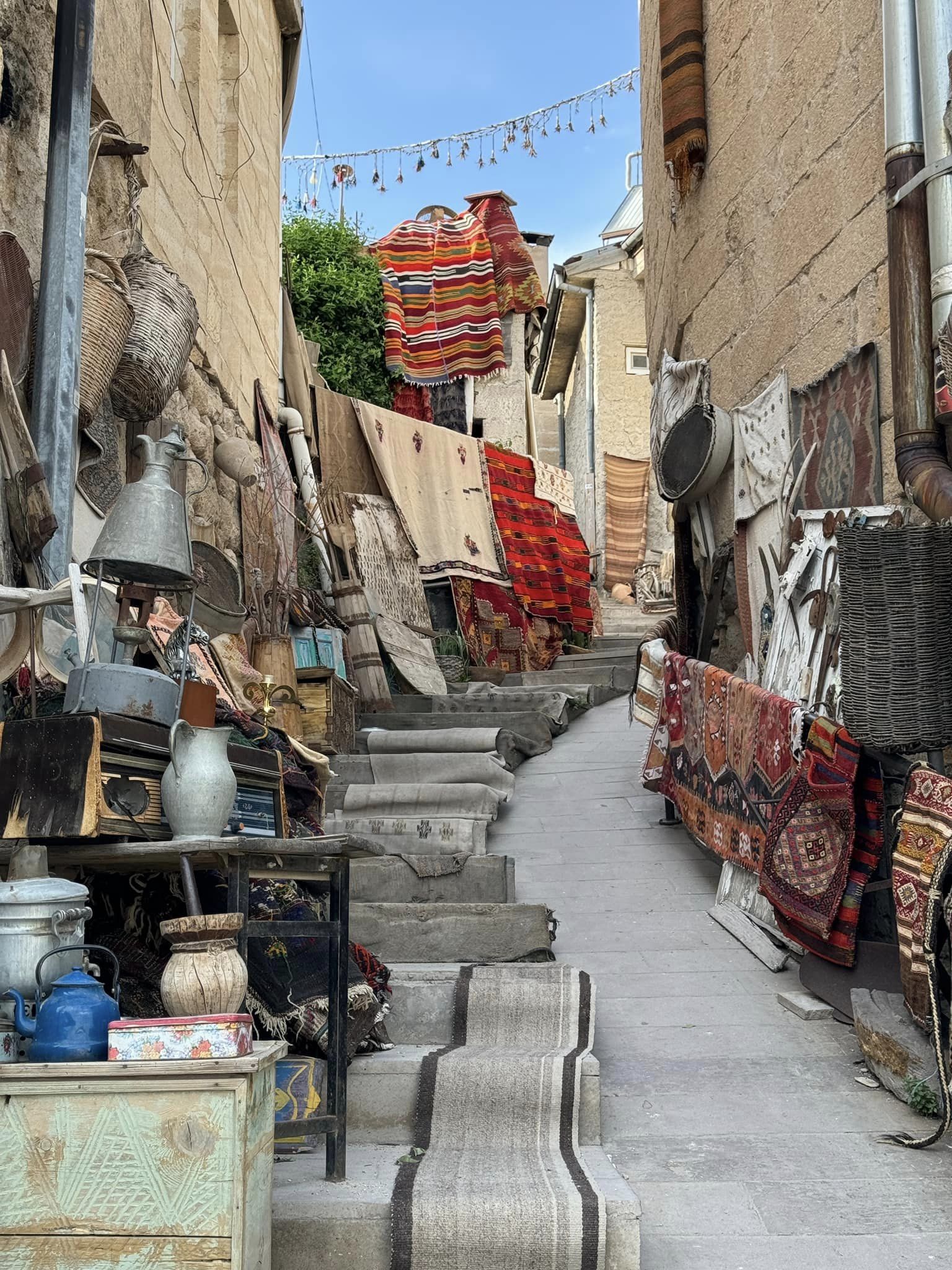
Making use of every corner to sell their wares, this would be my favourite shop. Too bad my floors and surfaces are well-dressed at home.
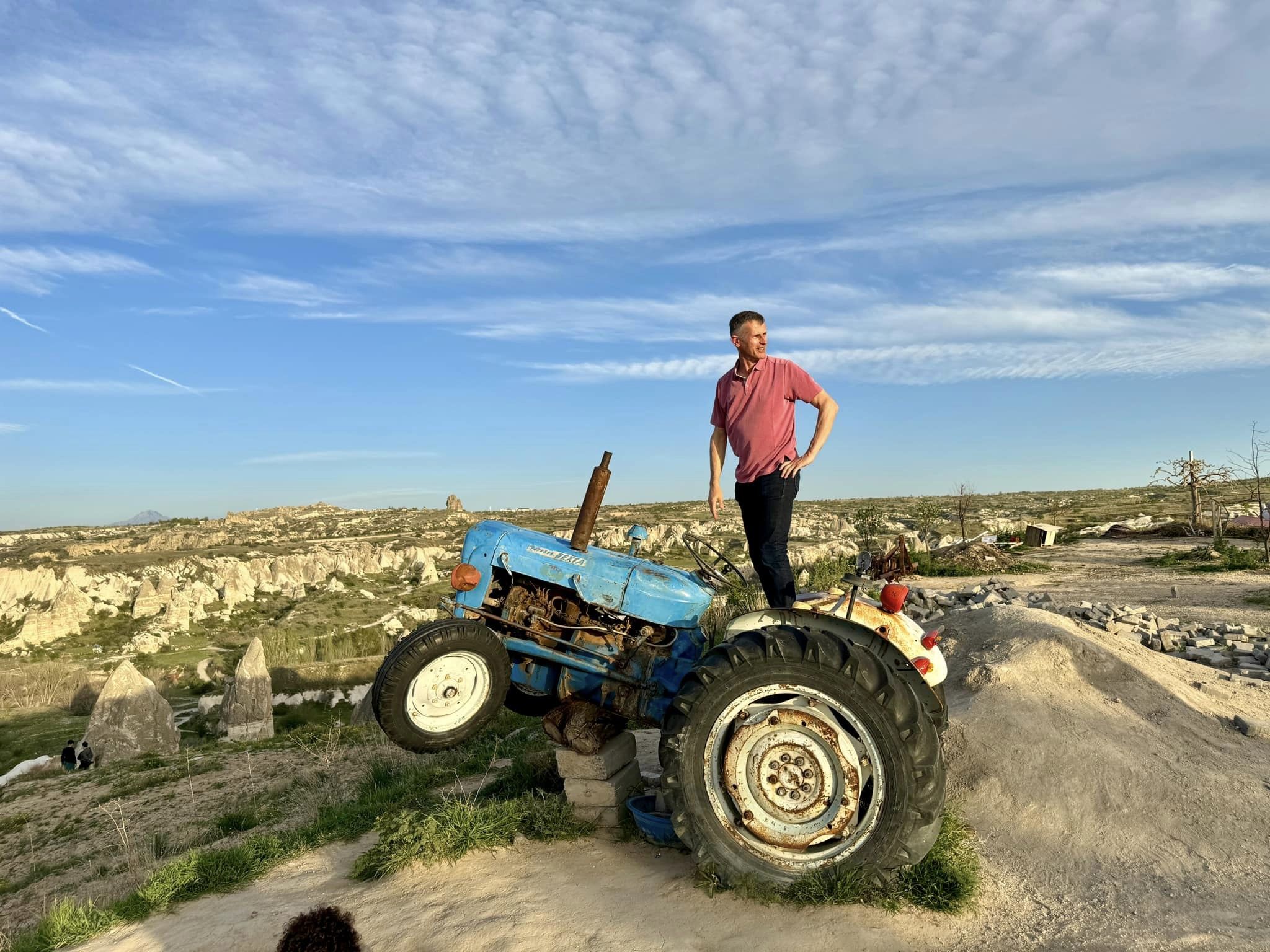
This is when Adam got in trouble. He climbed up on the photo op tractor and was summarily dismissed for standing rather than sitting. No second chances. I managed to snag the photo before the big, burly guy got close enough to be a threat.
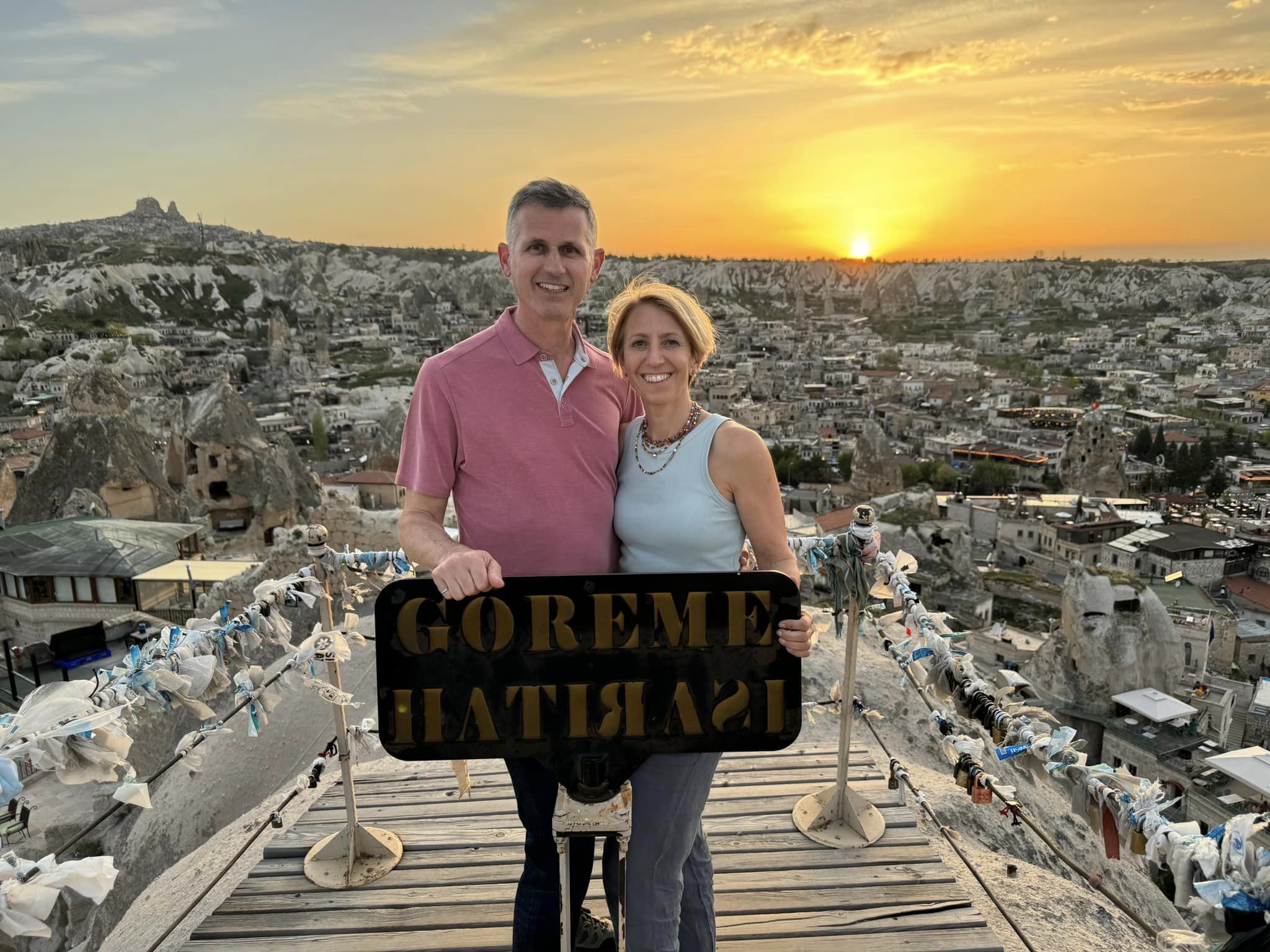
Stunning sunset our first night in Cappadocia. A short hike across town took us up to Sunset Point. In a land of valleys, there sure is a lot of climbing here!
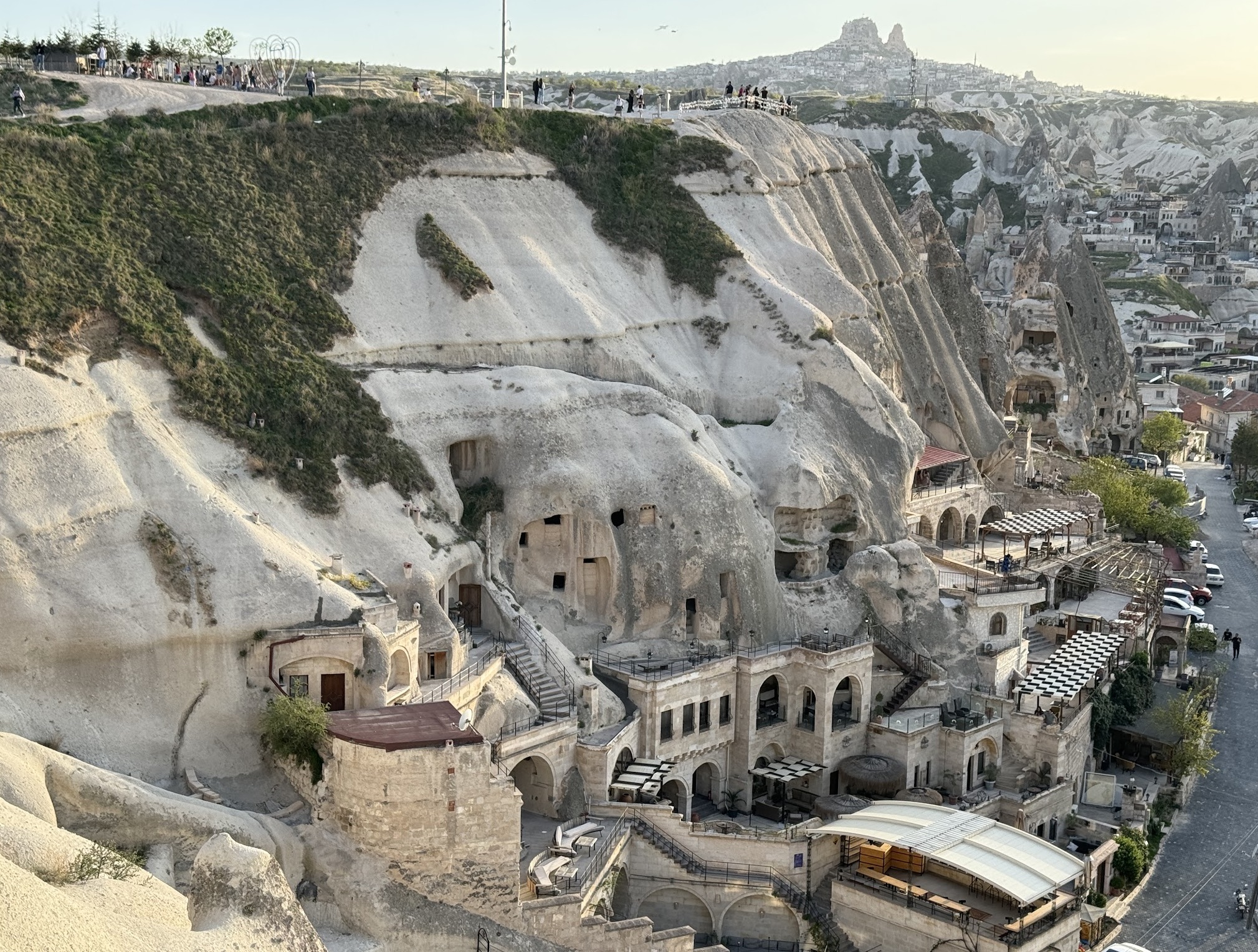
The lovely village of Göreme, set in the rock formations in Cappadocia.
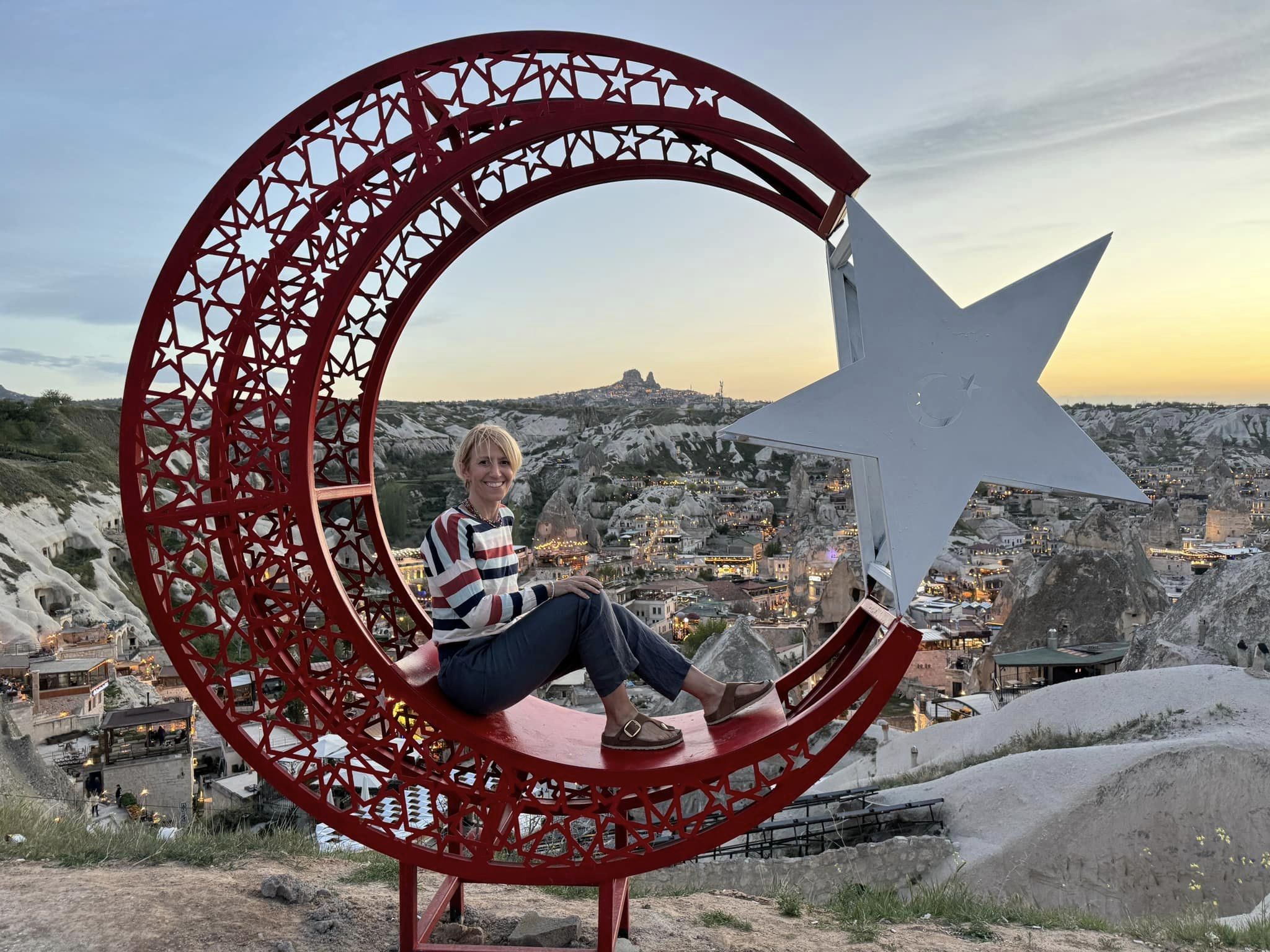
Embracing Turkey in all ways!
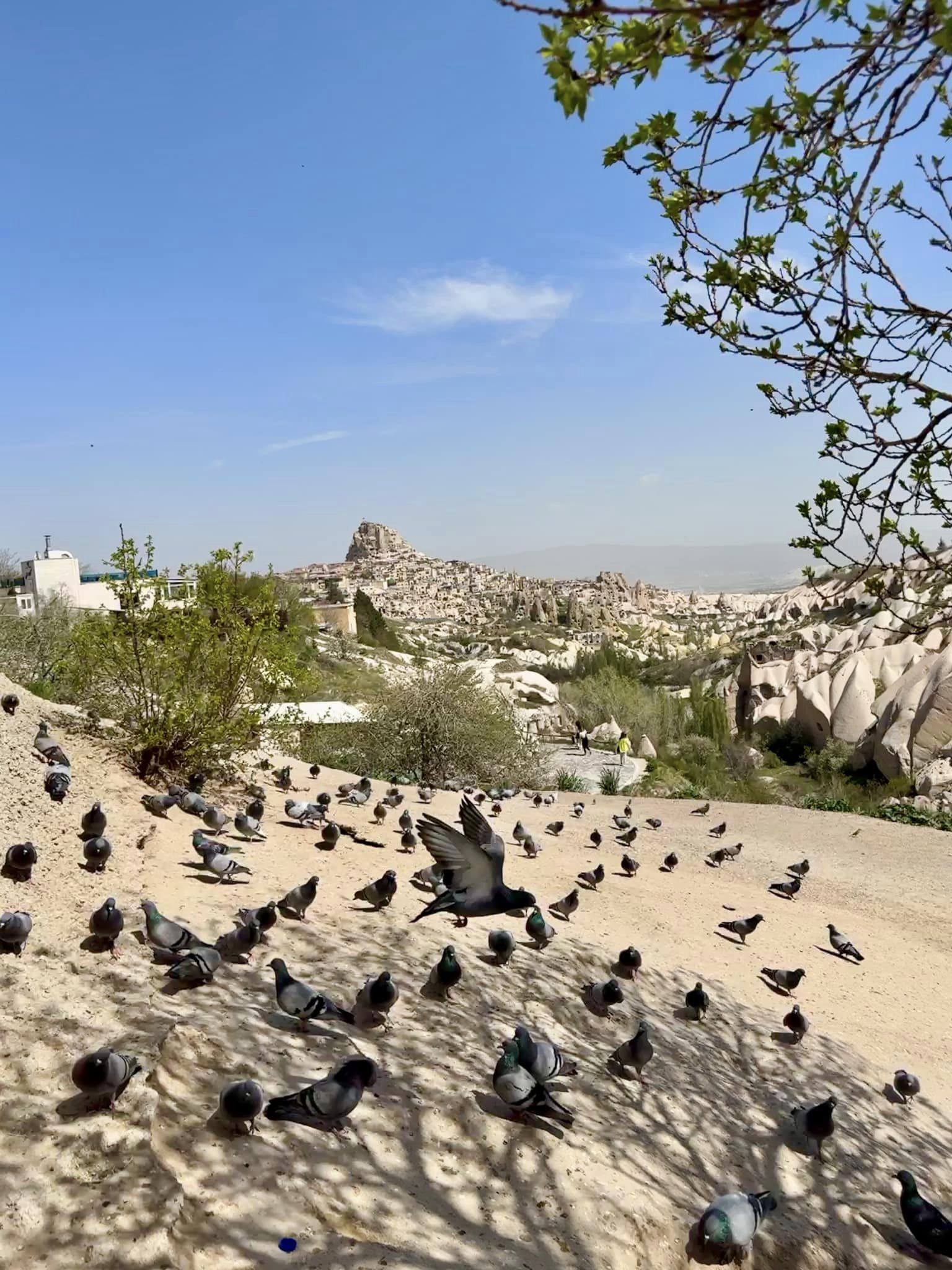
Which valley? Why, Pigeon Valley, of course! Pigeons were essential to life over the millennia in these parts. Their poop was valuable as a fertilizer for crops, their eggshells were mixed with clay and water to make plaster to cover the porous walls and enable them to paint seccoes (basically dry frescoes), the egg whites were used to make paint and of course their meat served an important nutritional purpose. While dovecotes (little openings in the rocks where pigeons perched and pooped) are everywhere, this valley has the highest concentration of them, hence the name. An excellent symbiotic relationship here; pigeons get free housing and people get their poop. Not sure we can create such a symbiotic relationship at home with our volumes of pigeons and seagulls...
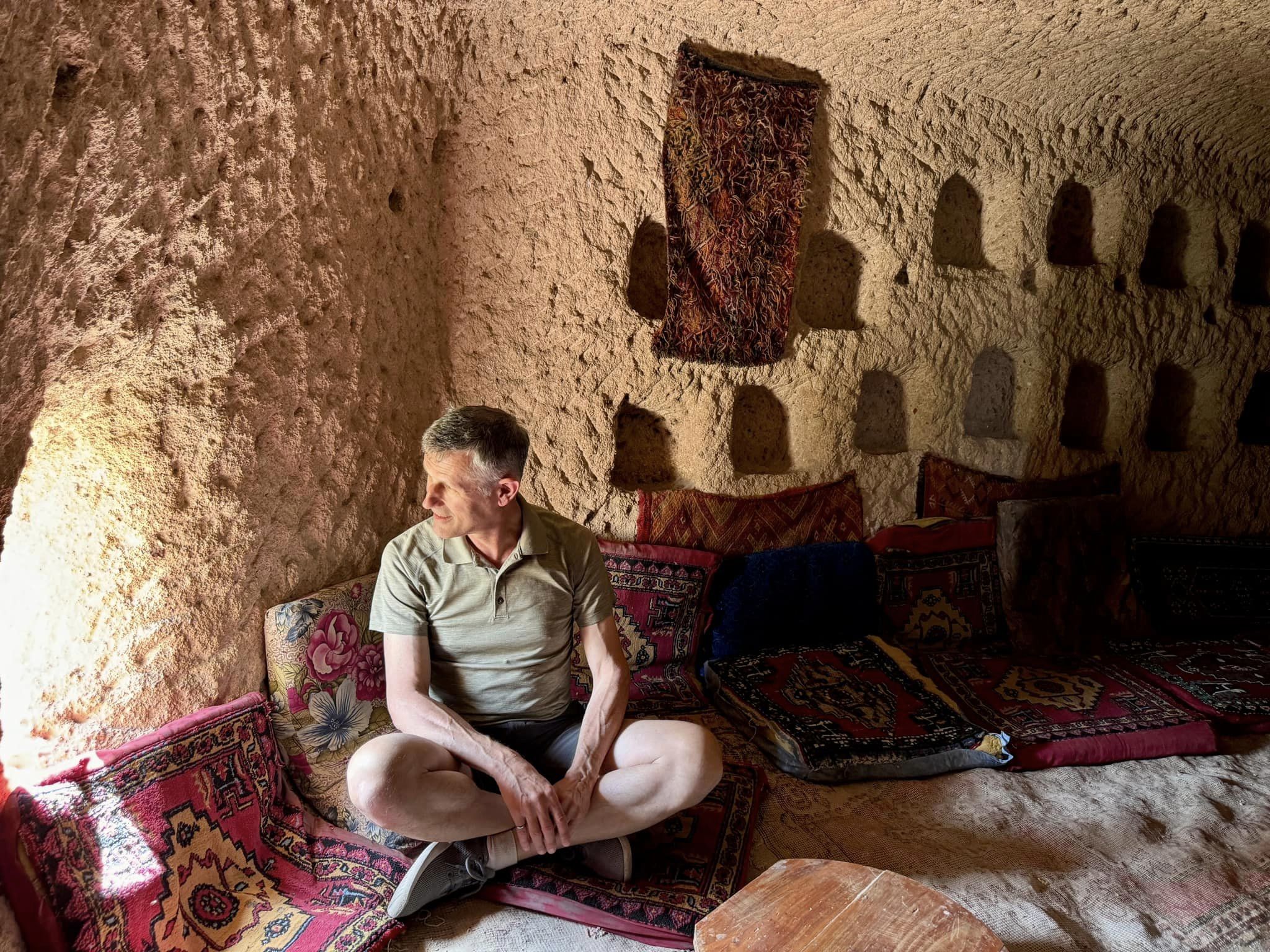
A four-storey dwelling in Pigeon Valley, now lined with carpets and cushions to attract visitors but in the day these rooms would have housed families, with kitchens, food stores, bedrooms and maybe even livestock. Note the dovecotes dotting the walls. The pigeons were trained to recognize where they lived and always came back.
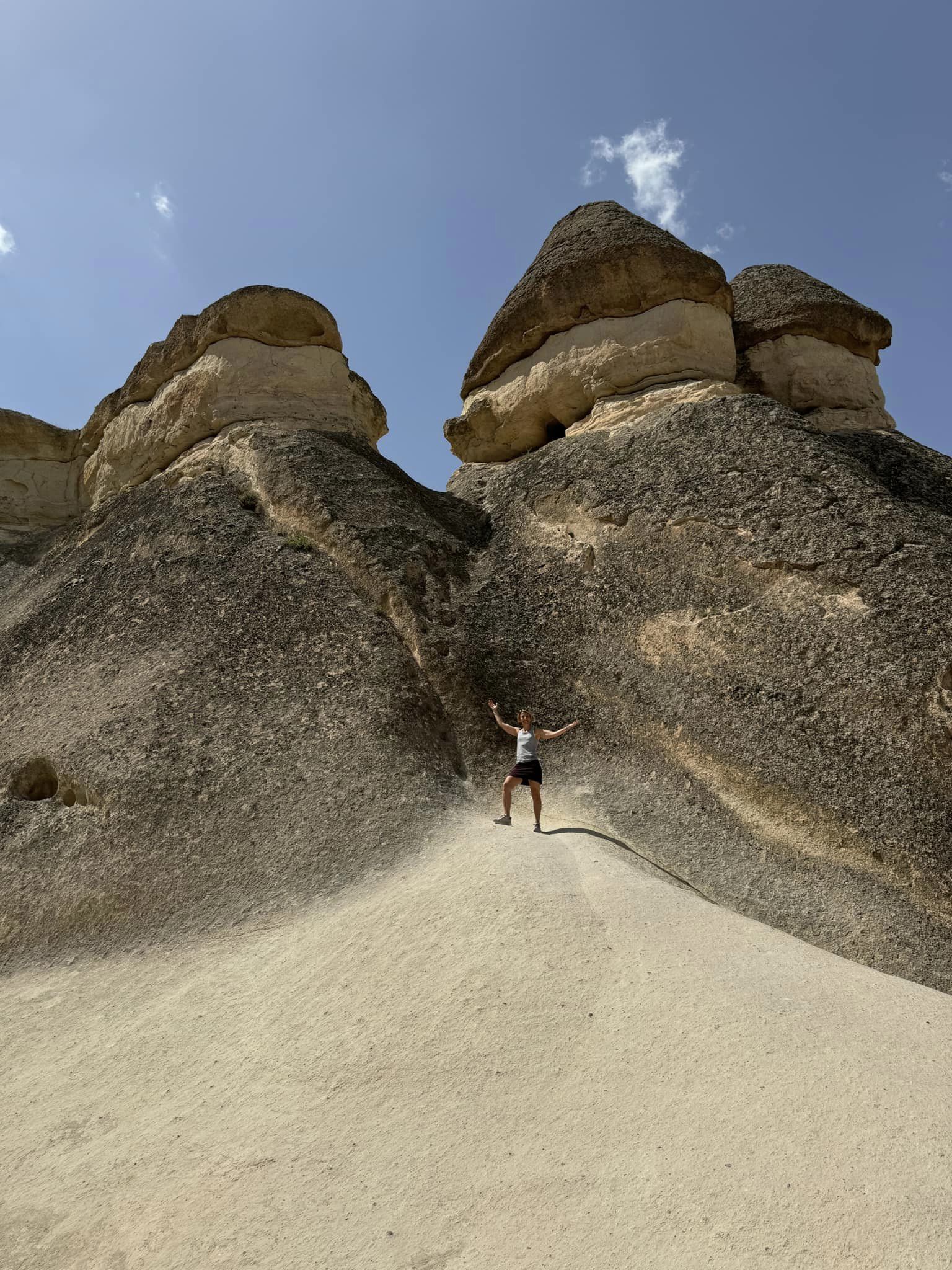
Cappadocia is made up of a number of valleys full of magical rock formations. These tall, spire-like formations are geologically called hoodoos, but here they are lovingly called fairy chimneys. The story goes that when people came upon them many years ago, they couldn’t imagine they were natural and thought they must have been chimneys made by fairies who lived underground. Millions of years ago in this volcanic area, ash would rain down on the landscape following eruptions. The ash hardened into tuff, which was not so tough after all. It’s soft, porous rock that eventually was covered in much harder basalt. Add millennia of rain and wind and the softer tuff eroded into pillars more quickly than the harder basalt which capped and helped protect the softer pillars. The result is forests of pillars that look like giant asparagus or mushrooms.
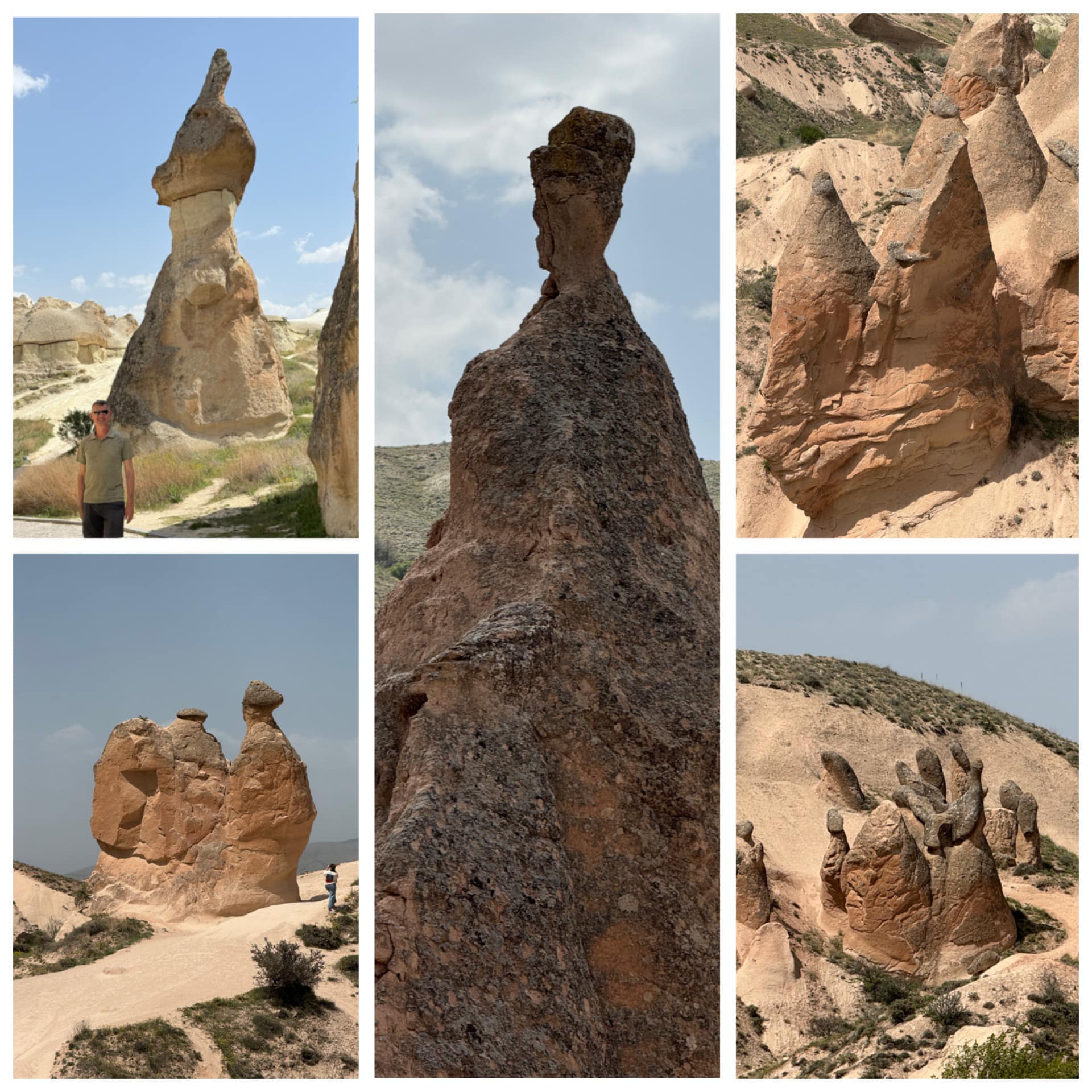
Devrent Valley is full of fairy chimneys that seem to spark our imagination (in English, this is often called Imagination Valley). Can you see what we see? A donkey, a camel, a regal woman, a man in a pointed hat (perhaps picking his nose) and an outstretched hand reaching for the sky.
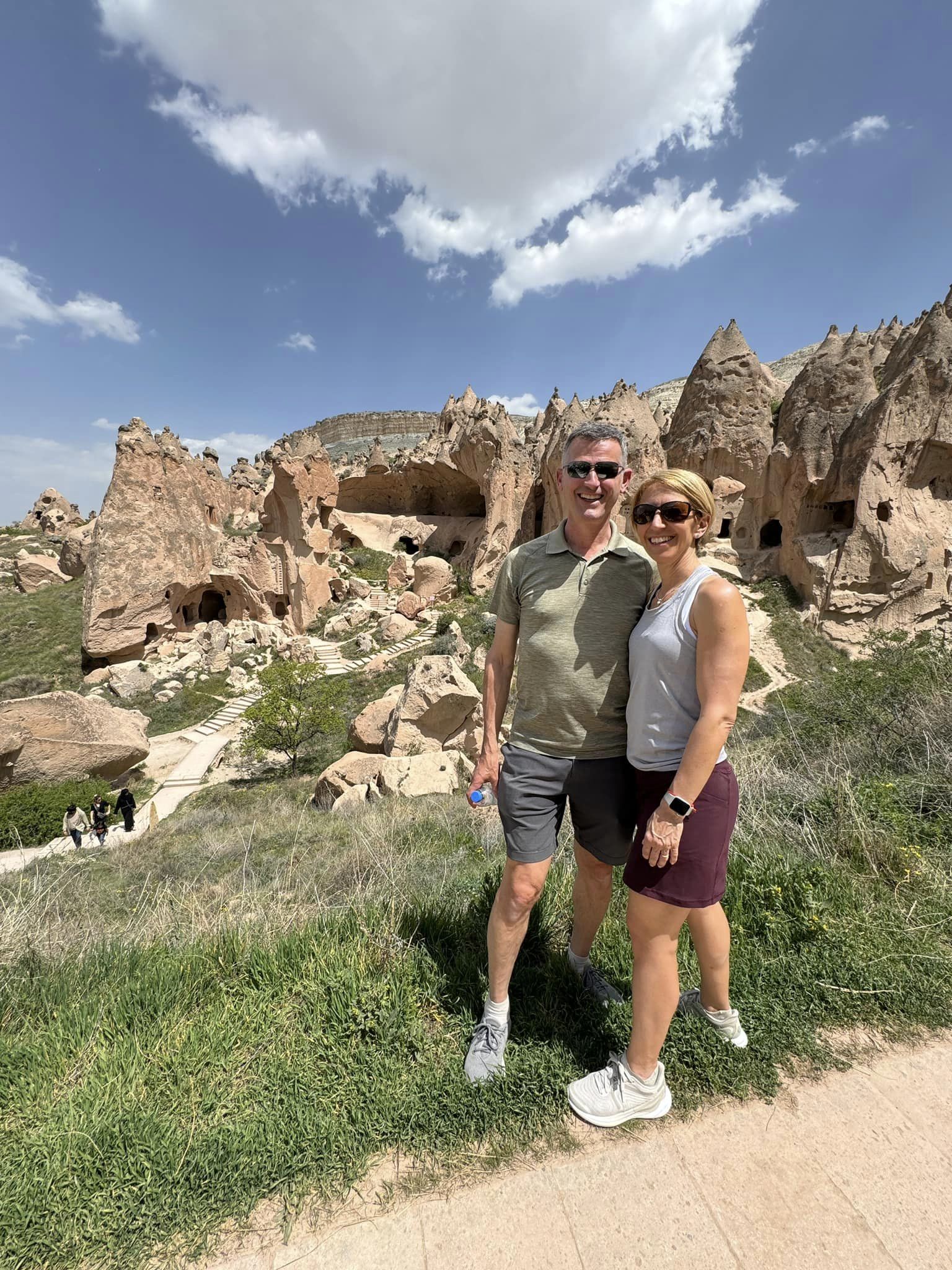
Zelve Open Air Museum deserves much more time to explore than we had. This is an astonishing Byzantine neighbourhood of fairy chimneys that were carved out and made into dwellings, churches, wineries, granaries and even a police station! Churches were the main game in town here. I wondered why they needed so many in a relatively small community but it turns out this was one of the first seminaries in Cappadocia so as a priest’s training ground I guess they needed plenty of locations for the throngs of men who heard the calling. Believe it or not, people lived in these caves until the 1950s when the government moved them out to new digs about 2 km away. Running water and electricity must have been a shock!
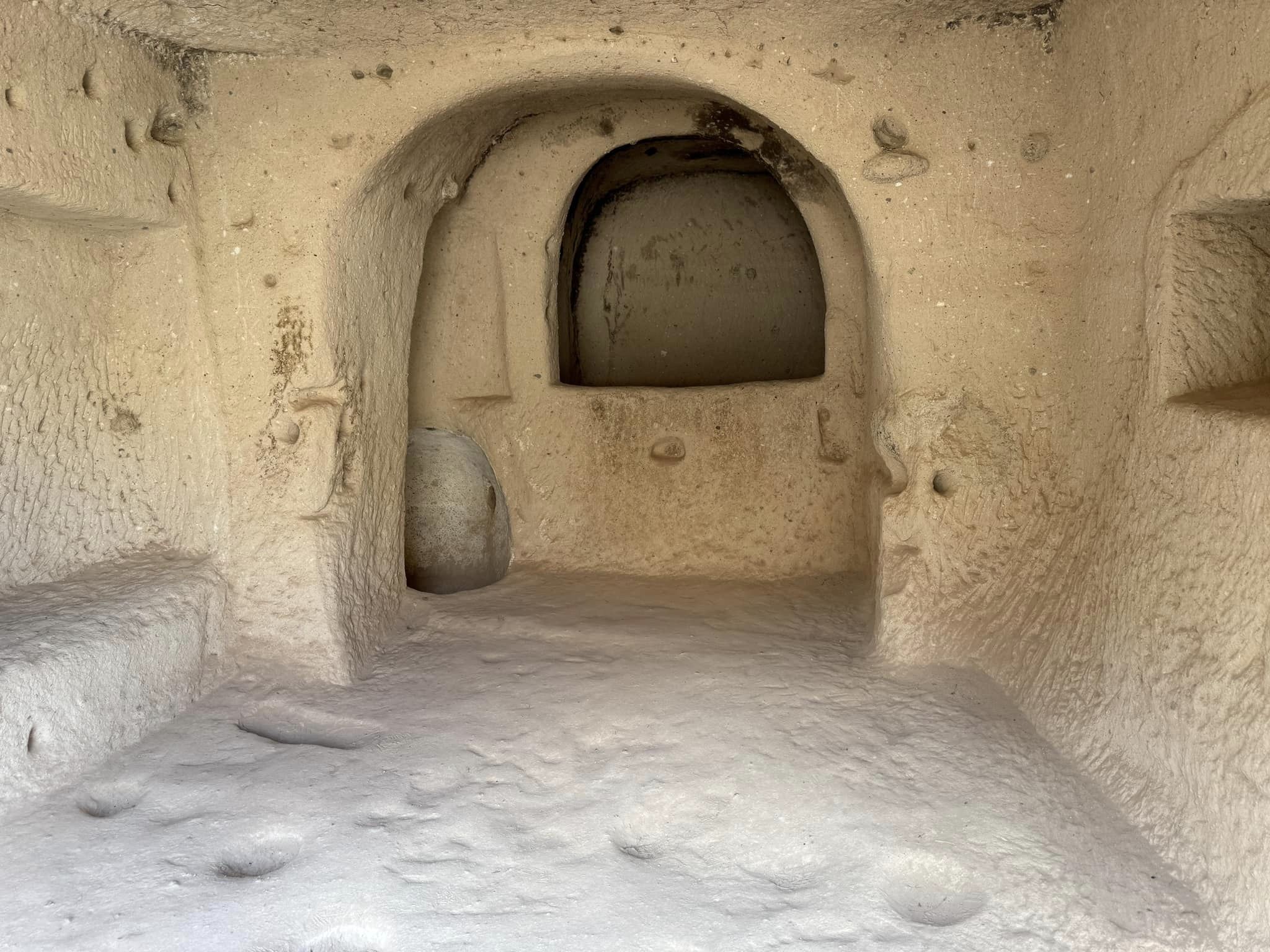
This is one of the more fun rooms. Here they made wine! The dark arch in the very back was where they dumped all the grapes for stomping. Notice the little hole to the lower left inside a smaller arch on the floor. That’s where the juice came pouring out. They would then transfer the juice to amphora to get going on the wine making. Amphora are notoriously unstable with those pesky round bottoms so these people cleverly made dents in the floor to hold them upright. I have to say this is a very dusty place so I’m pretty sure the sediment in this wine would have been akin to the grinds left behind in Adam’s Turkish coffee a few days ago!
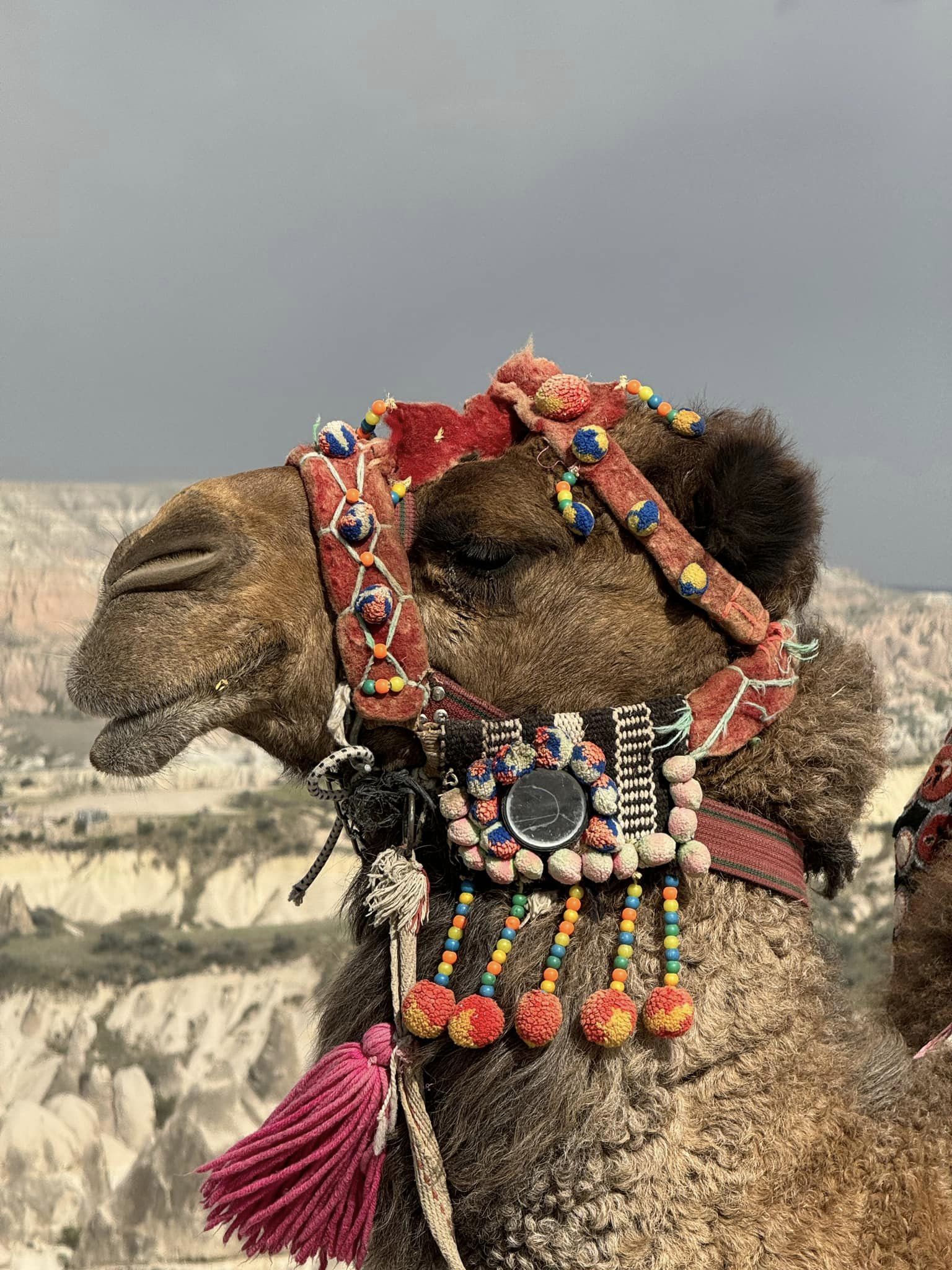
My mother dresses me…
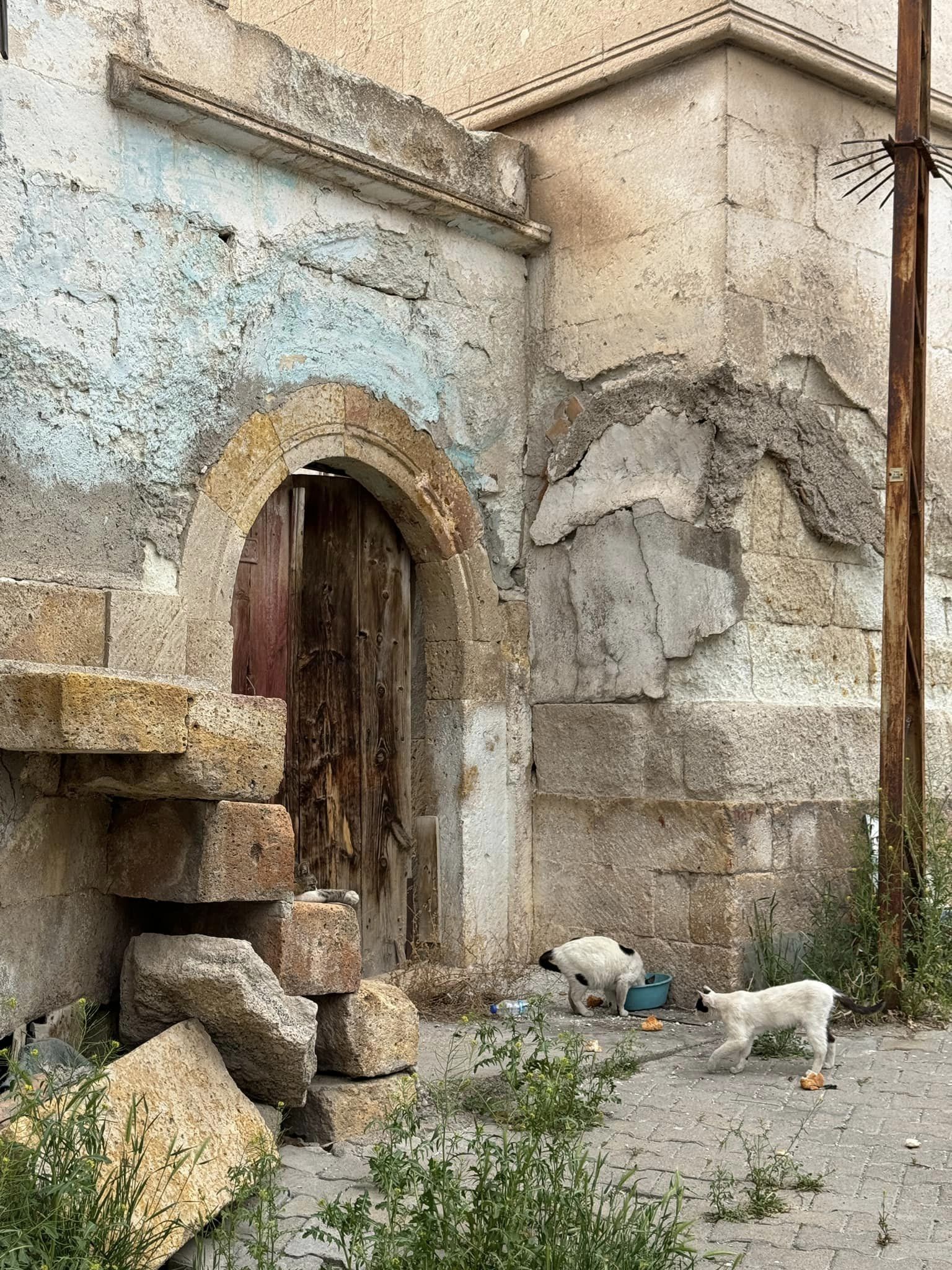
Get ready for a cat fight! Even though food is put out for the cats and there is plenty to go around, food competition is bred in the bone.
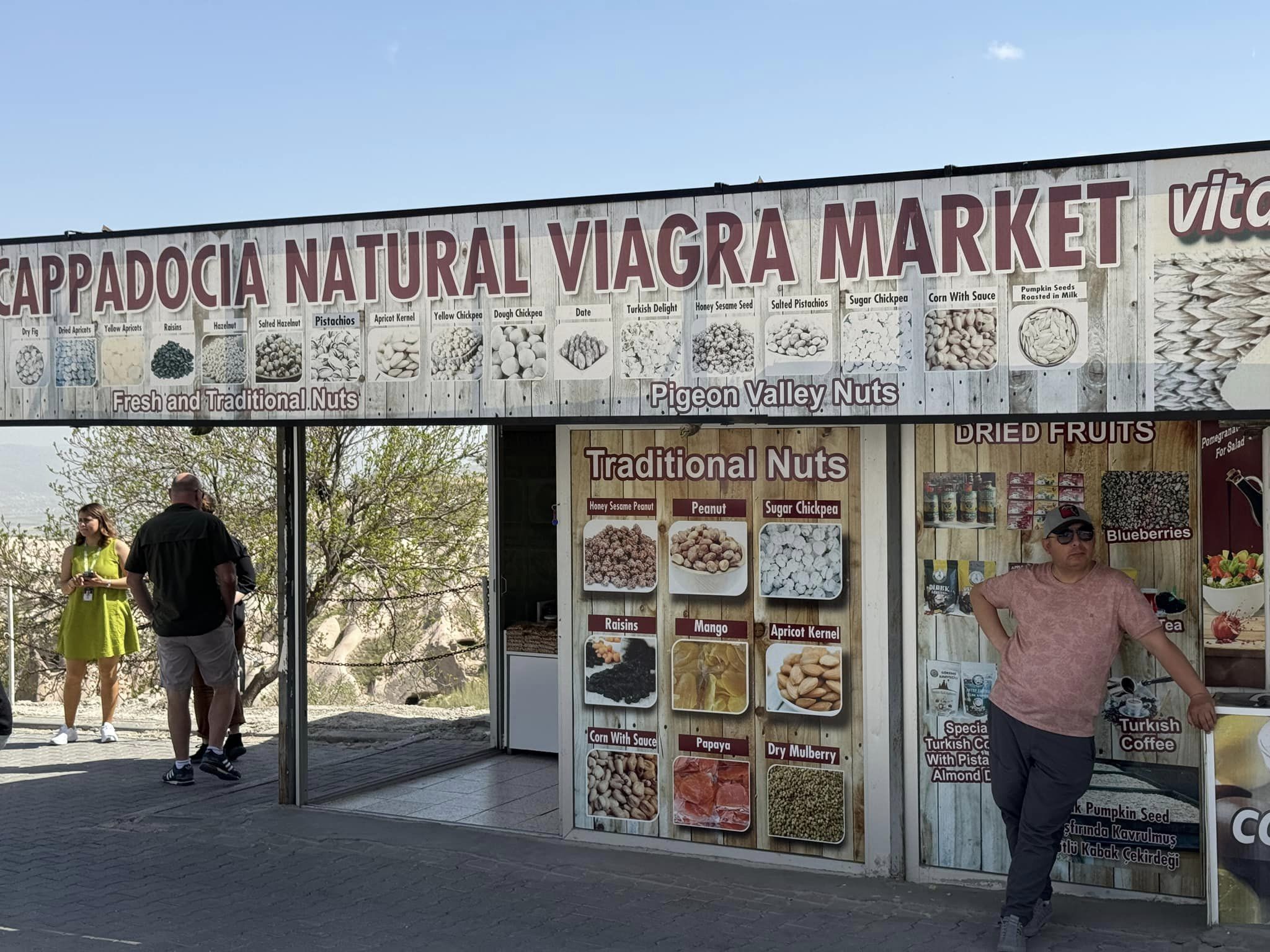
Waiting for the shop to open…
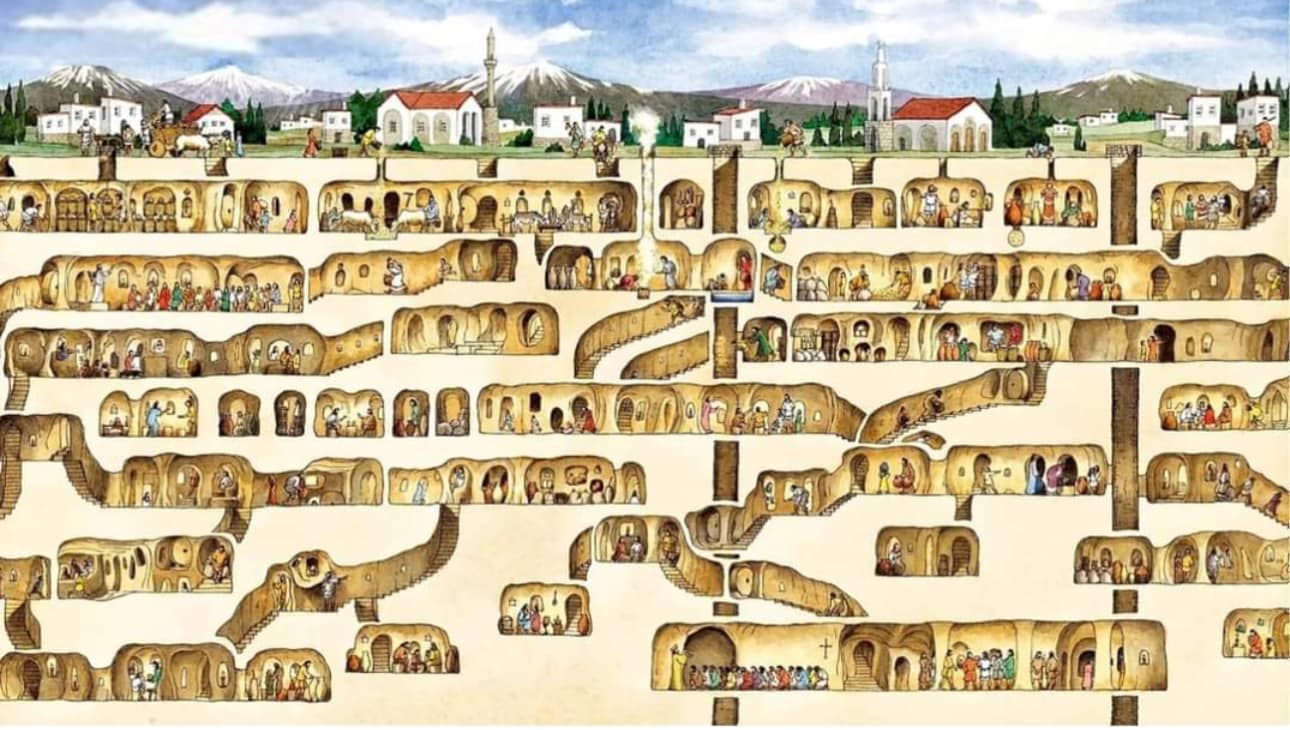
The underground city of Derinkuyu was discovered in 1963 by accident. A local resident was renovating and noticed that his chickens were disappearing through a hole in the wall. He pulled down the wall and found a tunnel that led down into the city. After this find, 600 more tunnels to Derinkuyu hidden in homes in the area were discovered. This was likely first built, in a fairly rudimentary way, by the Hittites around 1200 BCE when they came under attack by the Phrygians. But the big work was likely done in 700 BCE by the Phrygians who were Iron Age architects with the knowledge how to build such an elaborate underground city. Later on, these cities were occupied by Persians, Selçuks and Christians of the Byzantine era, all seeking safety from religious persecution. Each group of residents over the ages expanded it and did some renovations to suit their needs. By the end of its useful life, Derinkuyu had a depth of 85 metres through 18 levels of tunnels. We went down as far as the fourth level. Derinkuyu was abandoned for the last time in 1923 when the Cappadocian Greeks went back to Greece in exchange for the Turks in Greece returning to Turkey.
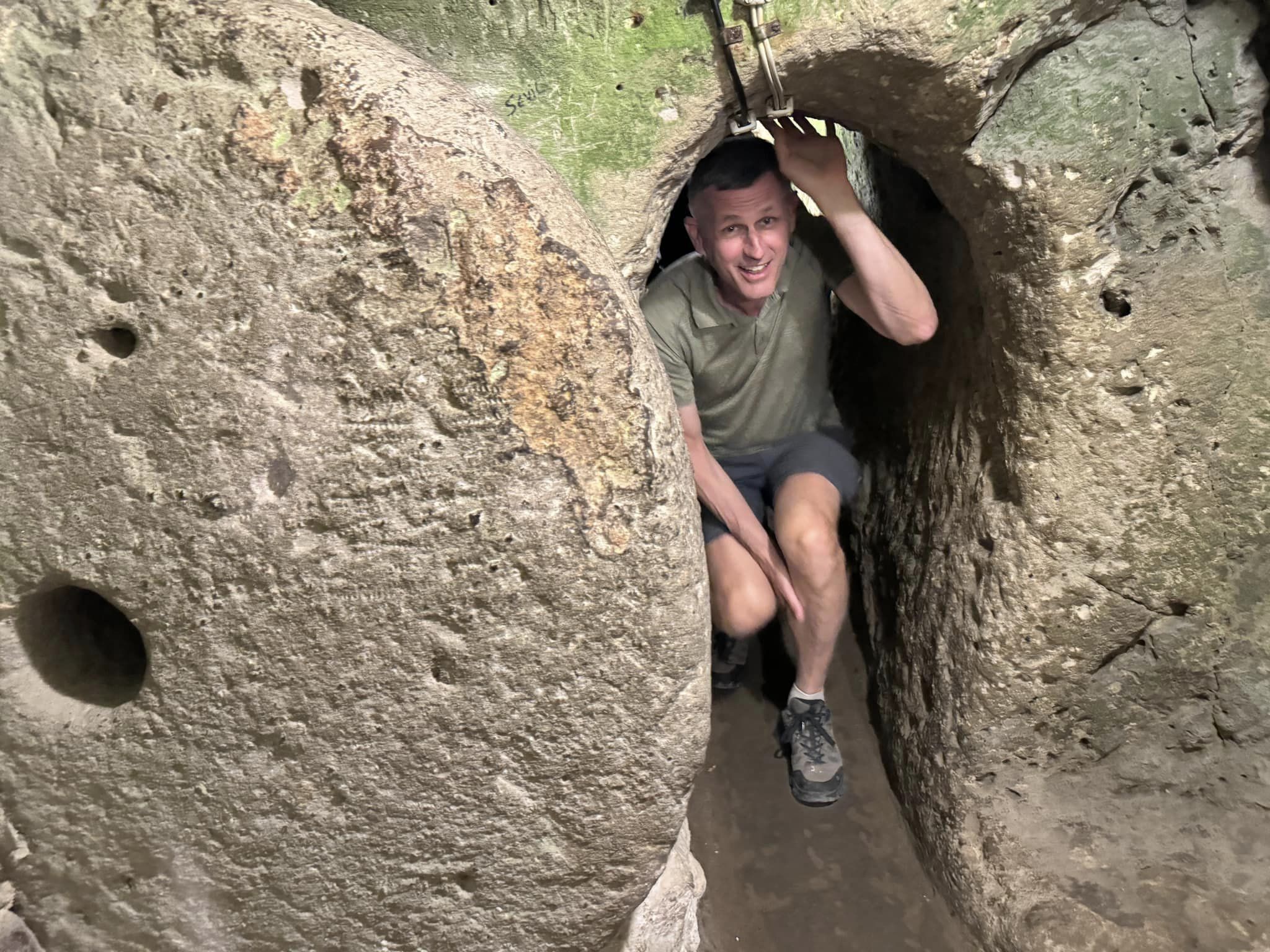
The tunnels were intentionally low and narrow which forced invaders to enter stooped over and single file. Not an opportune position of aggression. There were also ingenious doors that closed off each level in the event of the city being breached. Stone wheels were rolled into place as doors. A small hole in each wheel allowed the residents to spear invaders and perhaps shoot hot oil through.
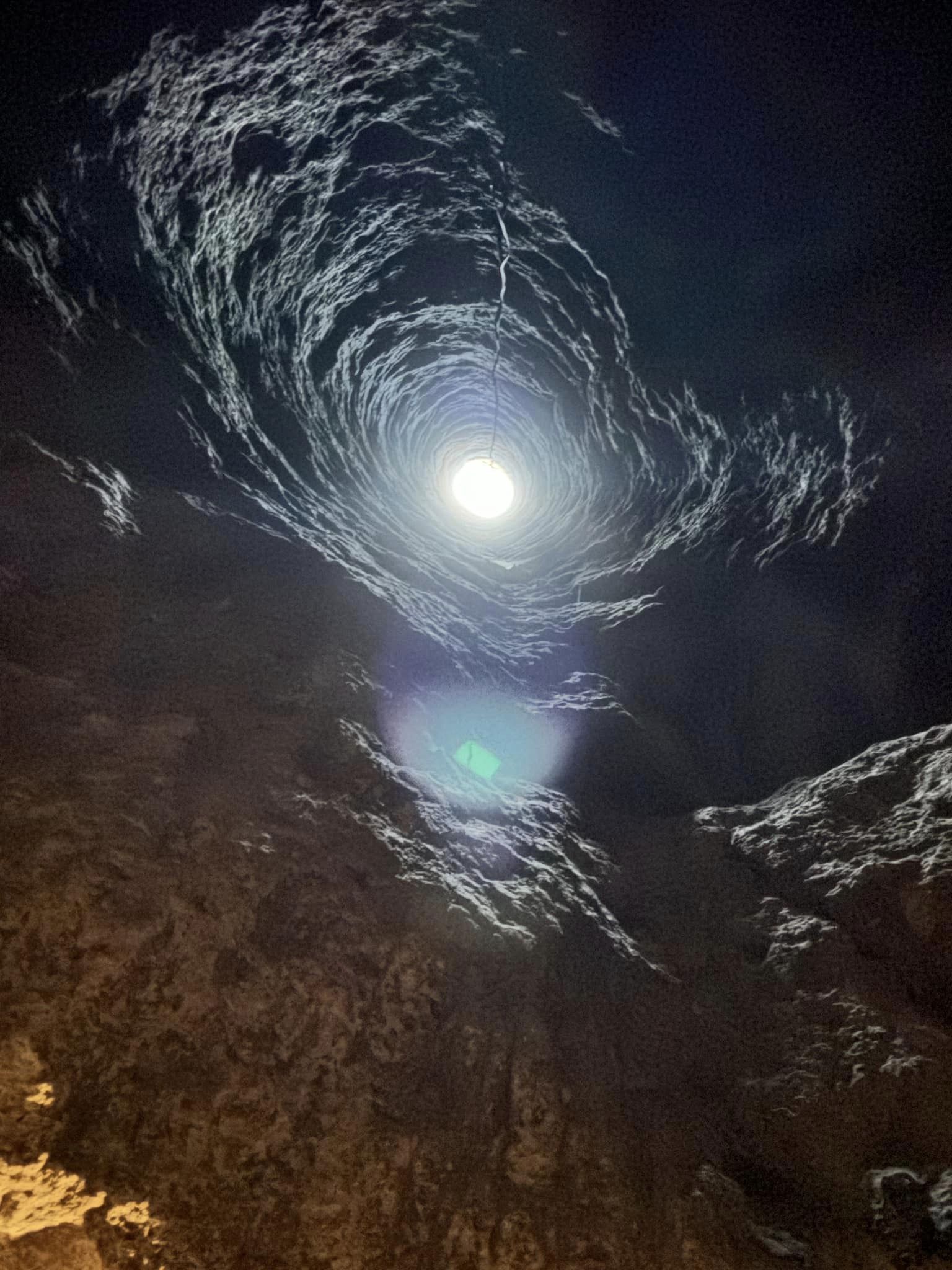
An intricate 50 shaft ventilation system throughout the entire city enabled airflow throughout. The shafts were distributed in such a way as to protect against an attack on the air supply.
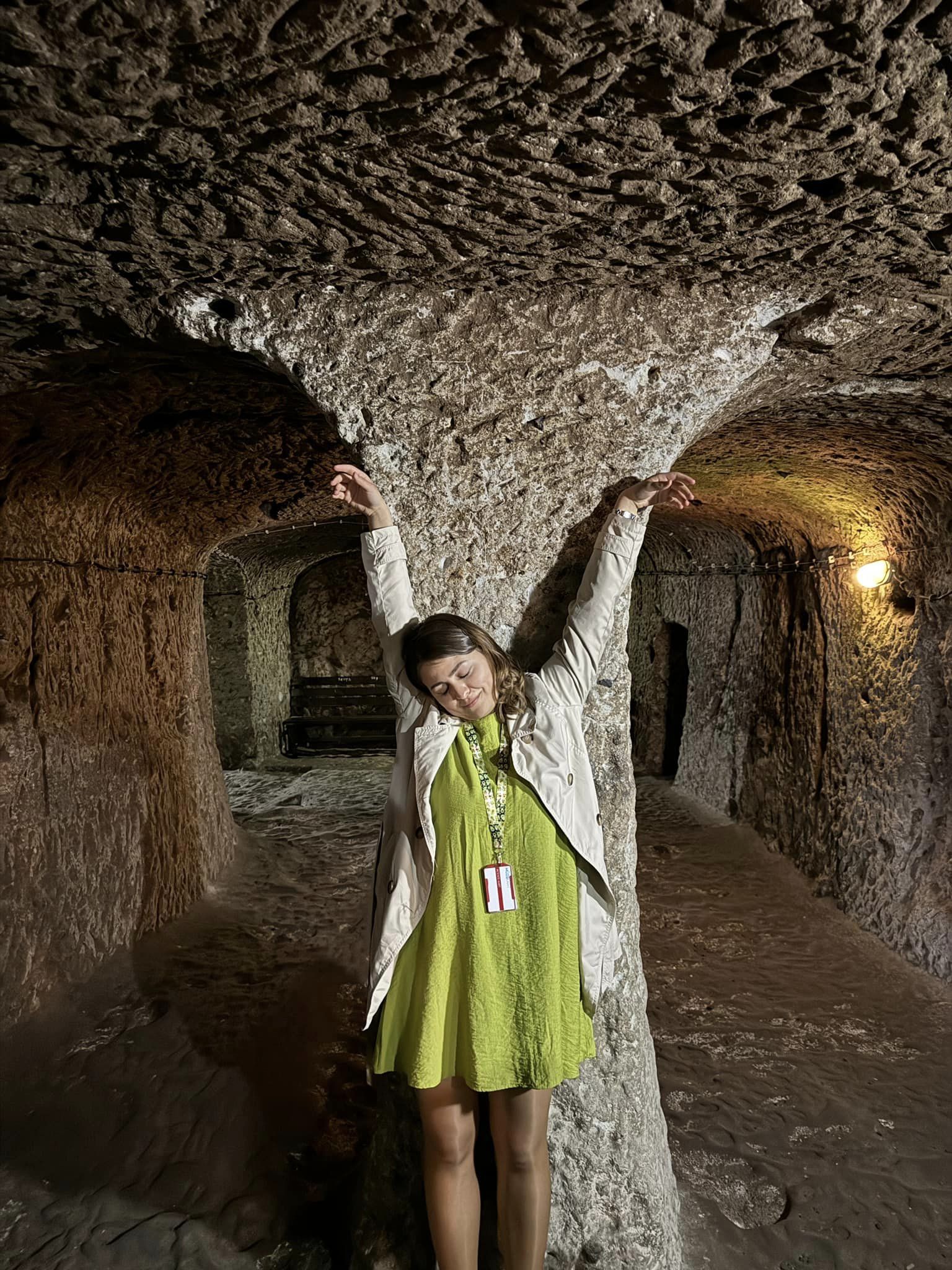
The time out corner… People did bad things; maybe tough living conditions brought out the worst in some people. Our guide is a little short, as were the people in those days so imagine being strung up here through those holes well above her hands!
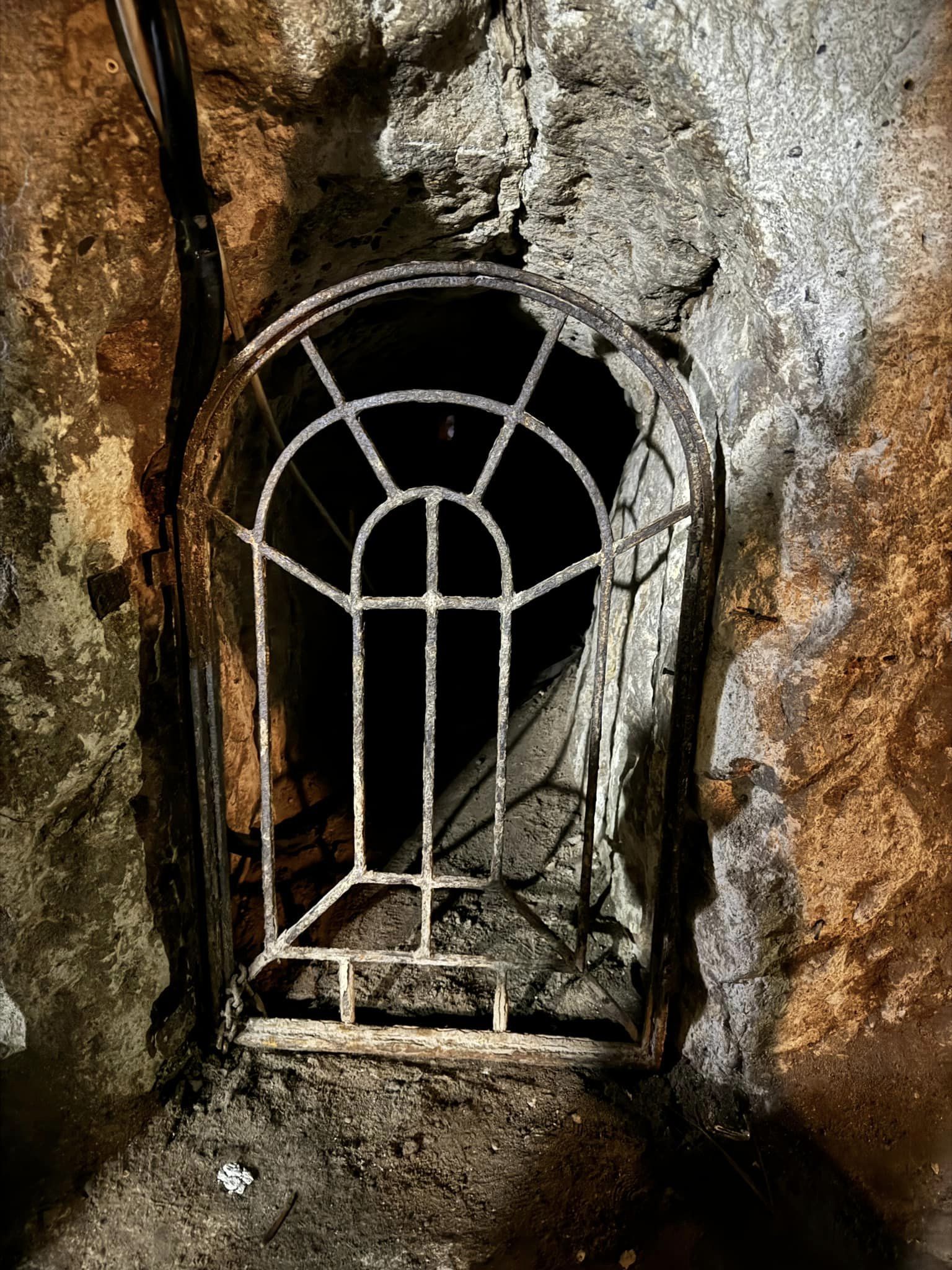
If the perpetrator wasn’t repentant enough, they were sent down this gated passage to jail.
Early intercom system. Perfect for our one-time telecommunications professional!
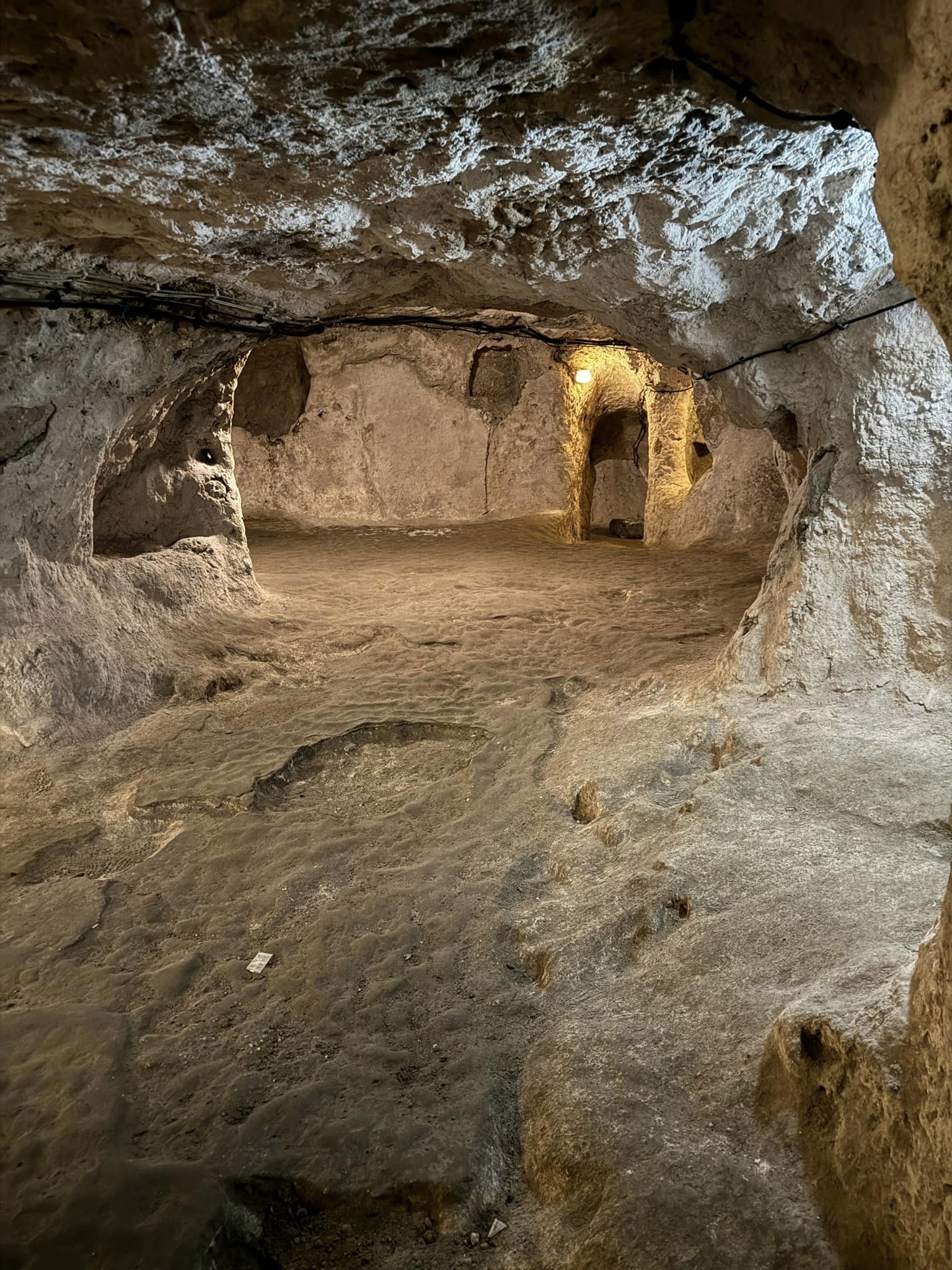
Here’s the stable. Animal stalls were always on the level nearest the surface as it was not easy to guide animals through the small tunnels. This also simplified ventilation because these creatures were stinky. You can see a little hole in the wall on the left. This is where they would tie up the animals. Nobody has figured out where the toilets were down there but maybe people joined the animals when they needed to go…
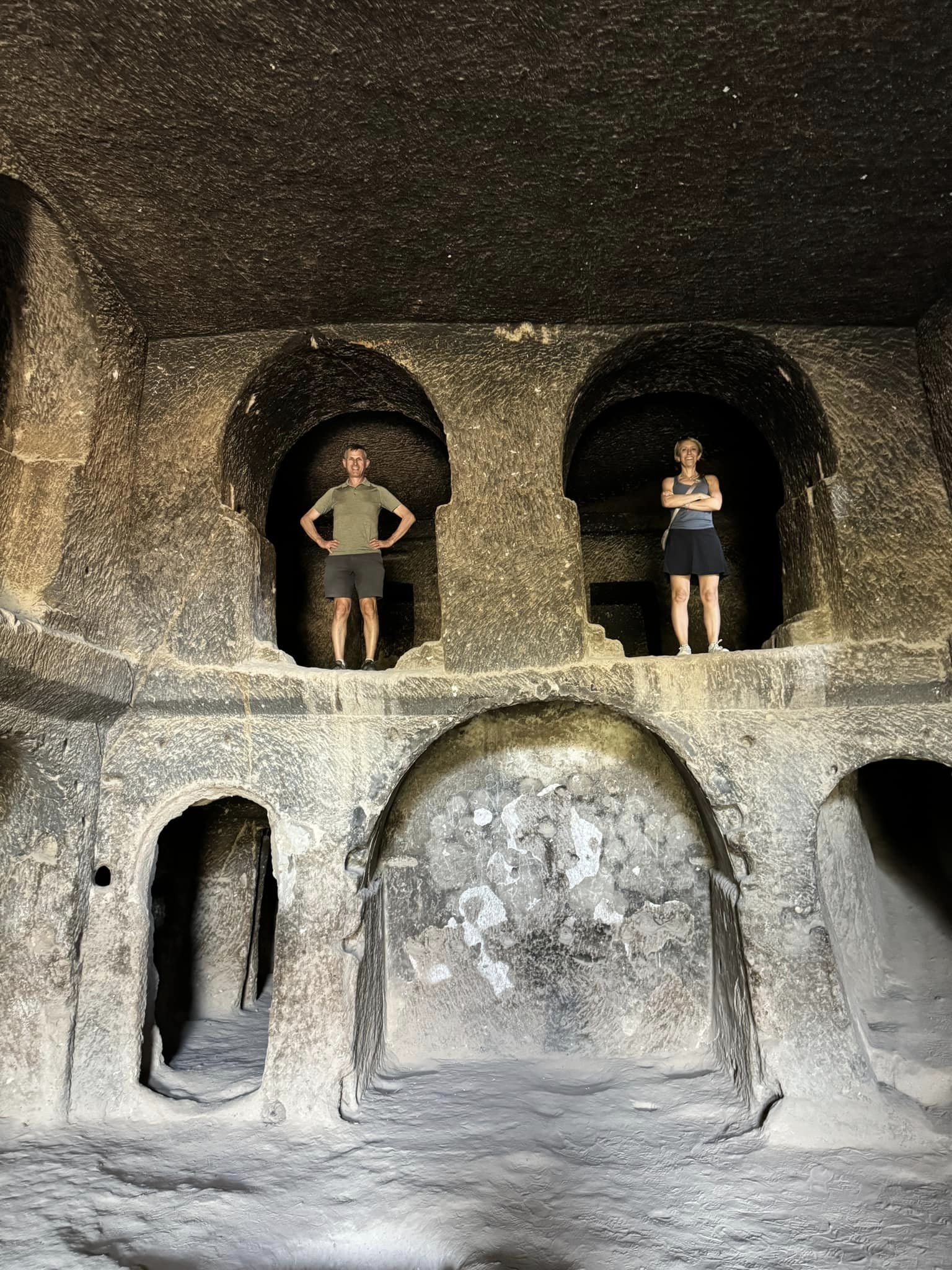
The 9th century Selime Monastery is the biggest cave complex in Cappadocia. It started as an important religious structure in Cappadocia and then in the 10th century morphed into a caravanserai; one of the many “motels” along the Silk Road. The upper level is very fortress-like but probably not very effective as it’s not in a strategic position to fend off invaders. We figure if we stood guard, nobody would dare invade!
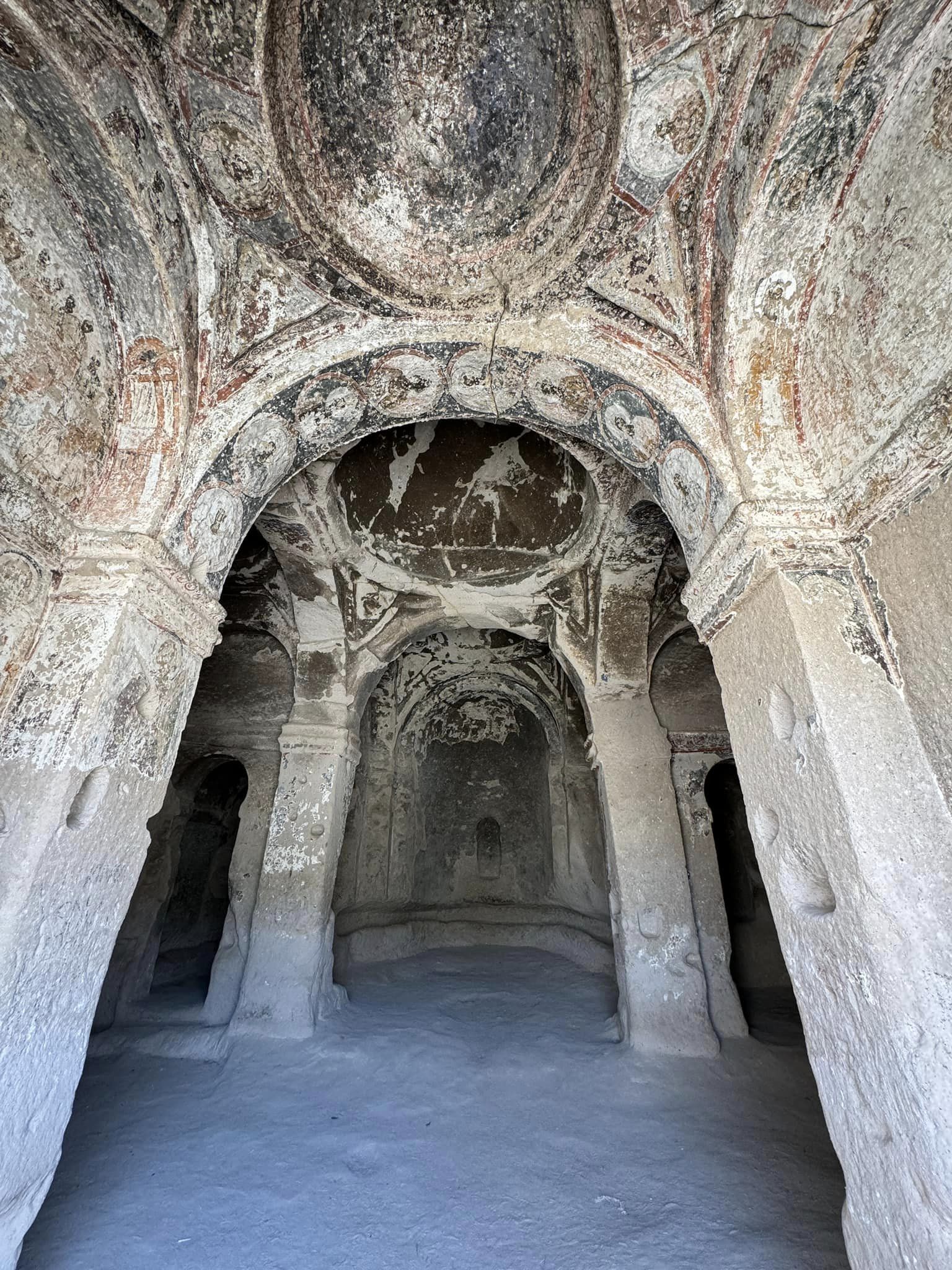
The church in the Selime Monastery, complete with, albeit faded, secco paintings. Because a secco is painted on dry plaster (unlike a fresco which is painted on wet plaster and then become an integral part of the wall) it is less durable and fades more quickly (if you call a thousand years “quick”).
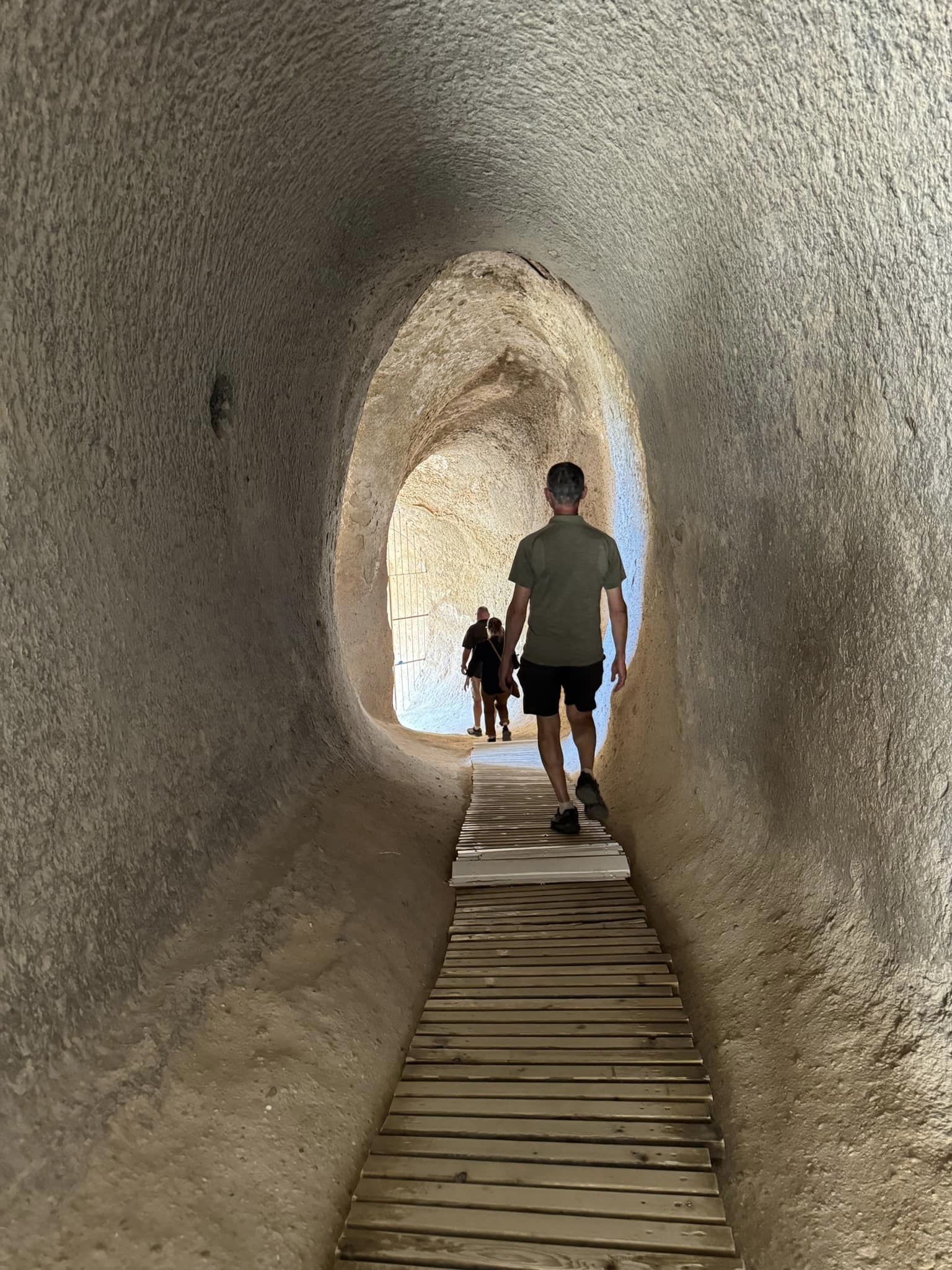
The Caravan Path in the Selime Monastery. Weary salesman travelling along the Silk Road could stay for up to three nights. As their animals were essential to their travelling trade, they would bring them inside to keep them safe. This tunnel was big enough for the horses and camels to pass through.
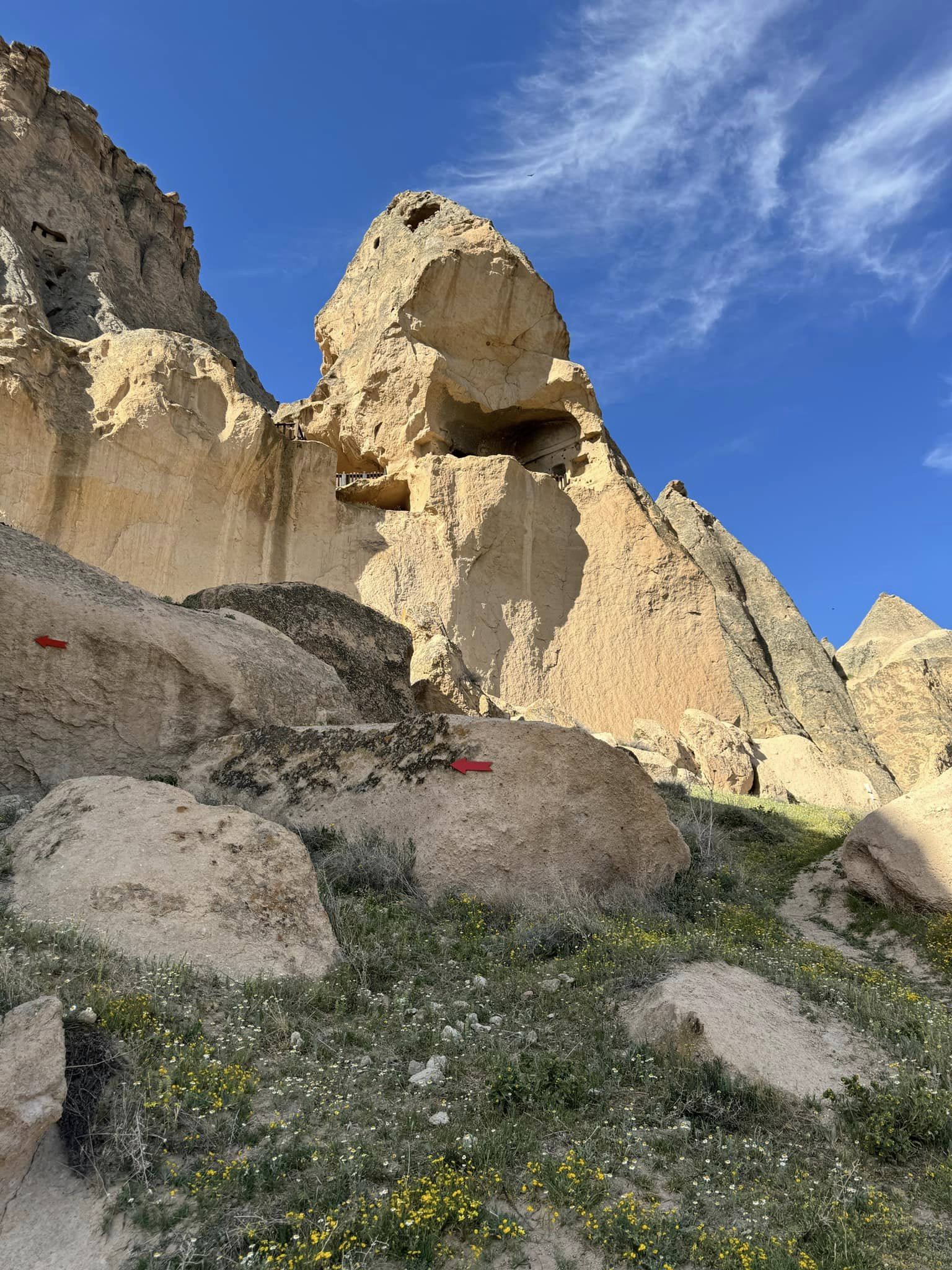
This large room with a view is at the end of the Caravan Path and was the animal’s accommodation. Lucky animals!
Exploring Nature in Cappadocia
After all the geology, history and monuments of the last post, I couldn’t leave out what I think are absolutely beautiful experiences. The hiking here is spectacular and hot air balloons provide an amazing sunrise view over the unbelievable landscape. So let’s go!
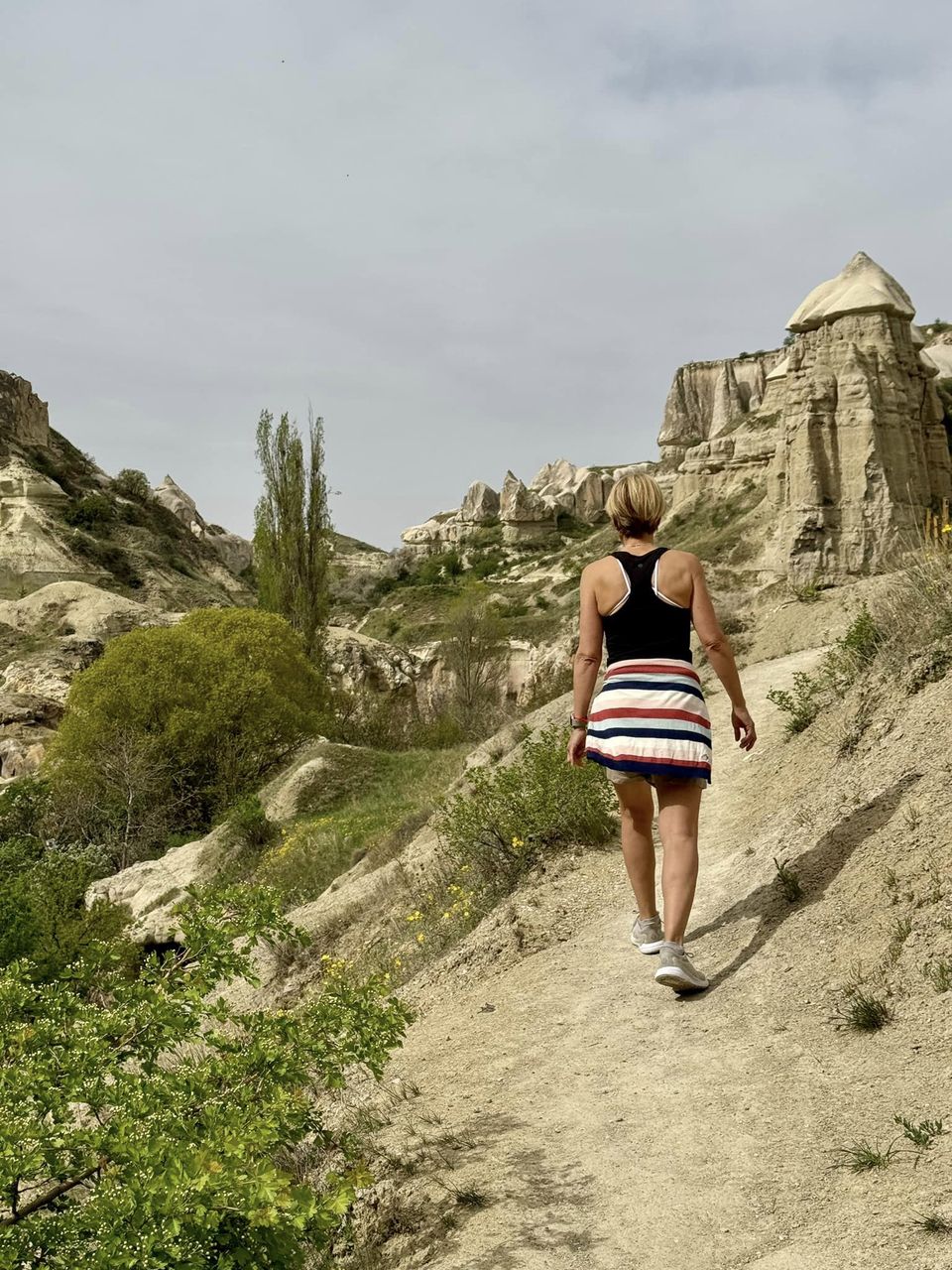
We hiked from Goreme through Pigeon Valley, a pretty arid and dusty place that gets occasional water from rain. Shrubs, tiny wildflowers and the occasional poplar dotted trail. I can’t imagine what it’s like in peak summer with the heat and dust!
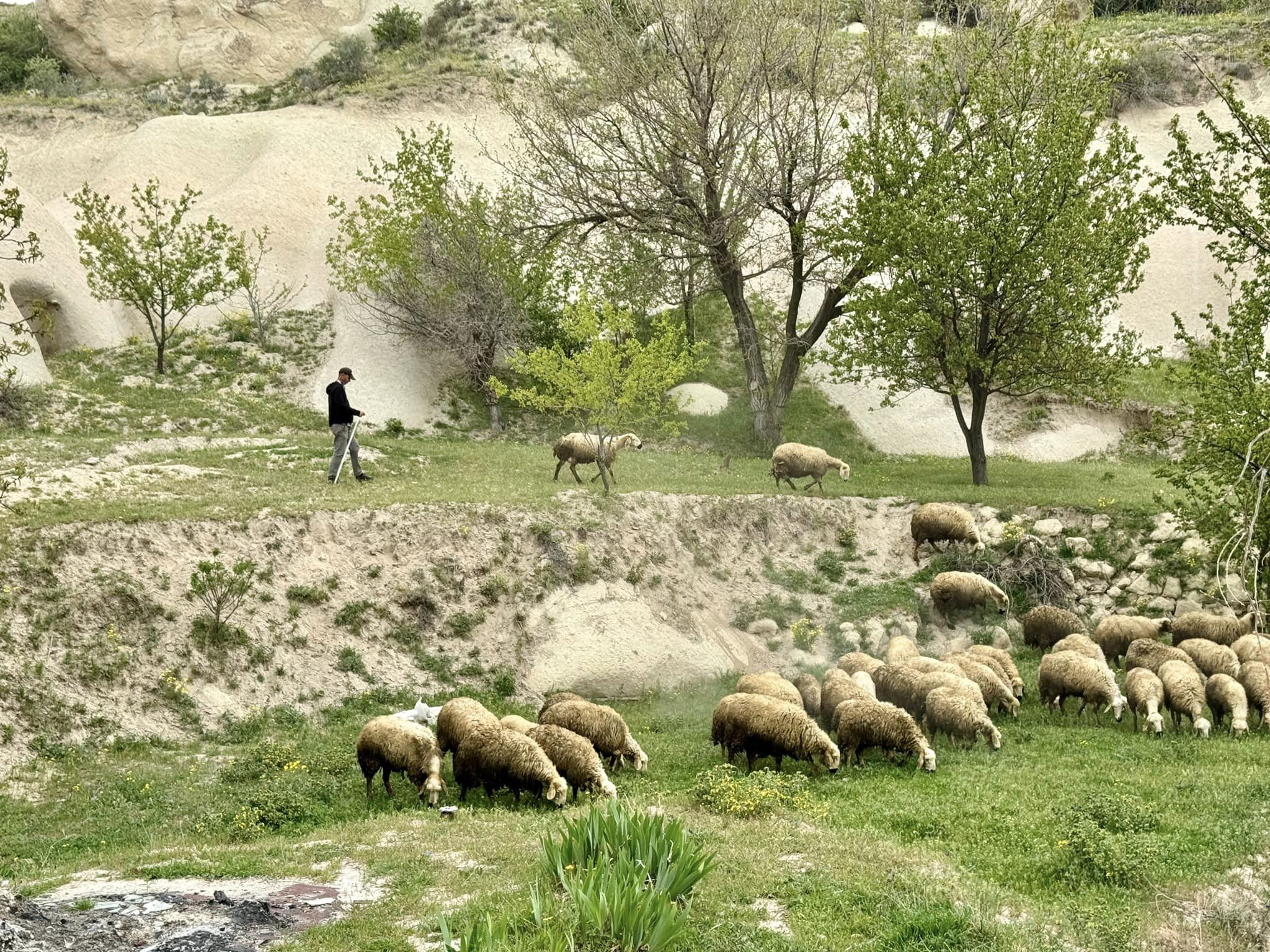
A modern day shepherd with his flock. He’s looking down and talking. I think he’s actually watching his footing and talking to his sheep and not on his smartphone. When these sheep saw this grass, they picked up pace and ran down the little hill.
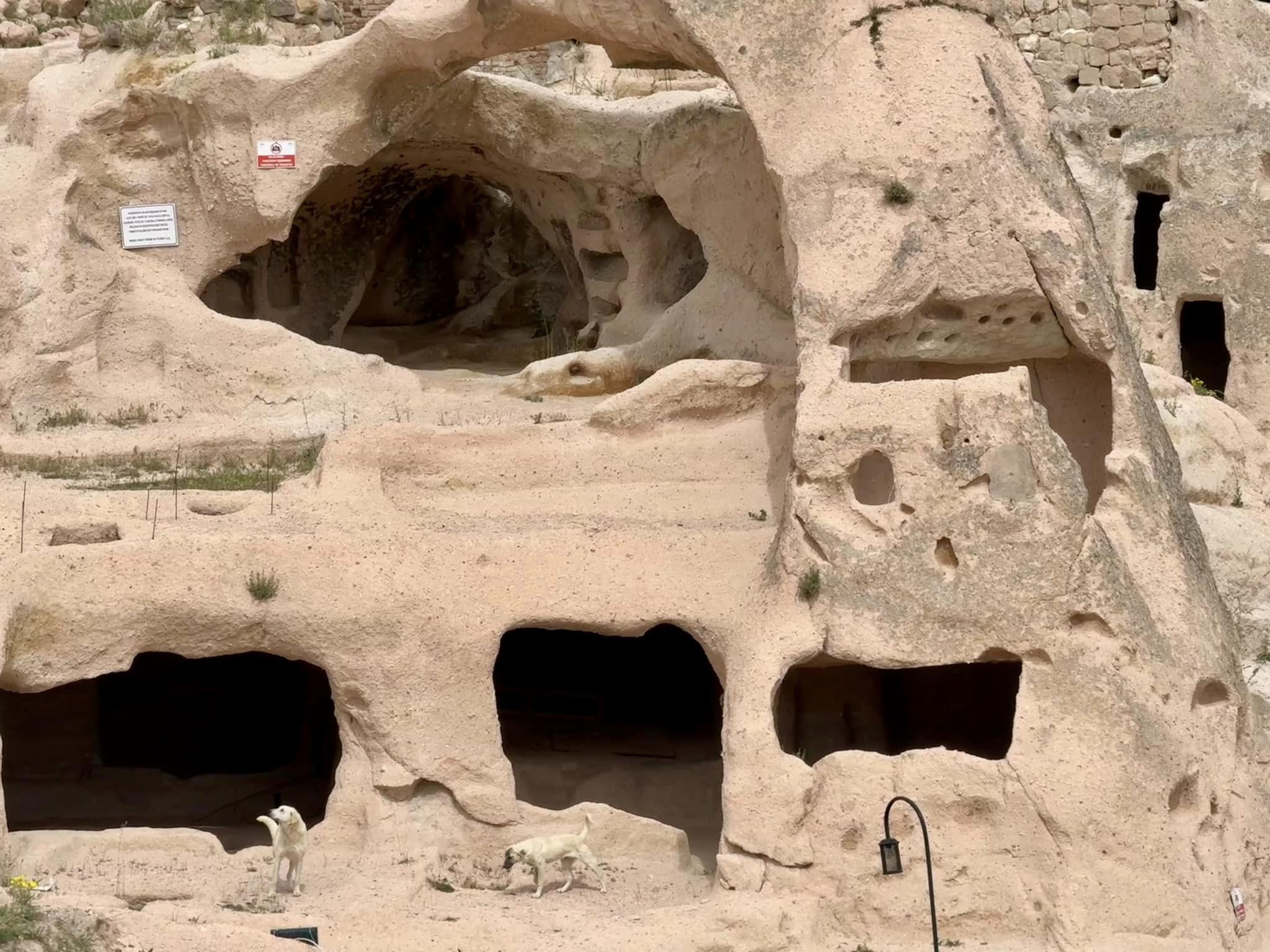
For sale? Hmmm, unfurnished, open plan with great views, dog and pigeon-friendly. Comes with built-in dovecotes.
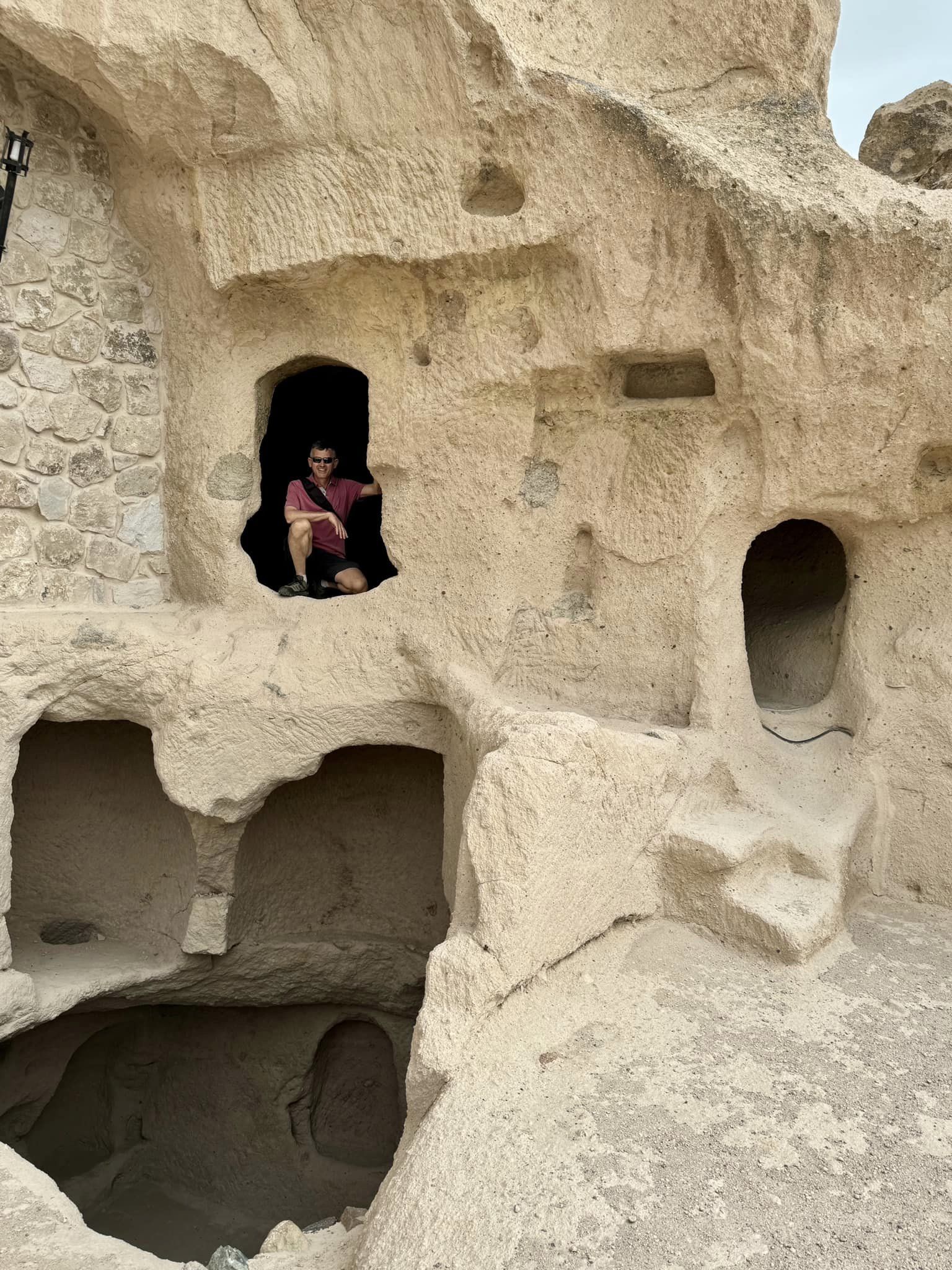
Perching in a window at Uchisar Castle, the highest point in Pigeon Valley. It’s actually pretty amazing, and maybe not such a good idea from a preservation perspective, that we can walk around on this relatively soft surface. Castle is a bit of a misnomer. This was a main defensive post in Cappadocia and when you’re up there, it’s not difficult to see why. There would be no sneaking up on this place.
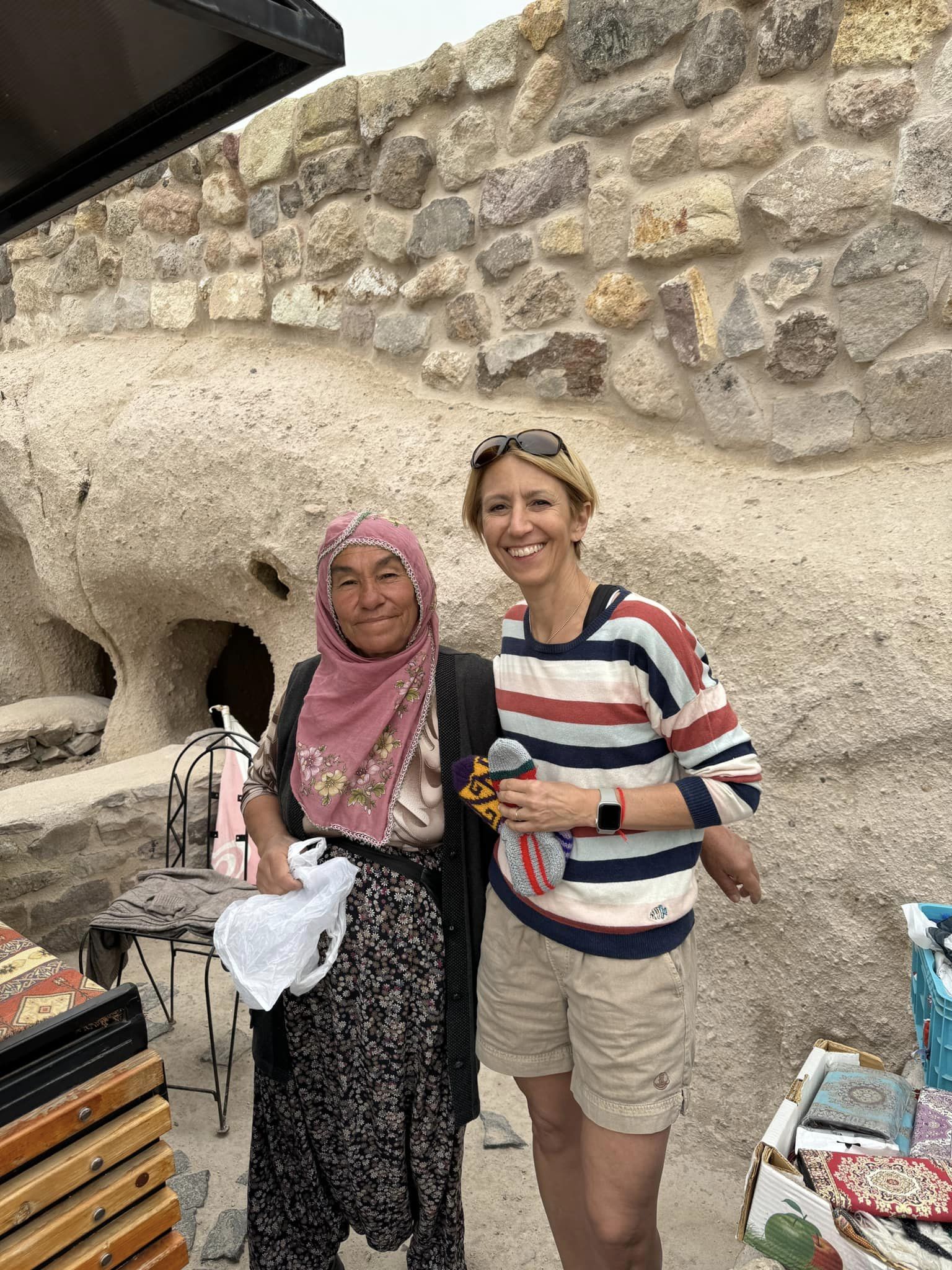
My new friend. She knits, sews and knots lace and sells her wares outside the Uchisar Castle. This day, she was the only merchant who braved the wind to be there. I hope she did a booming business.
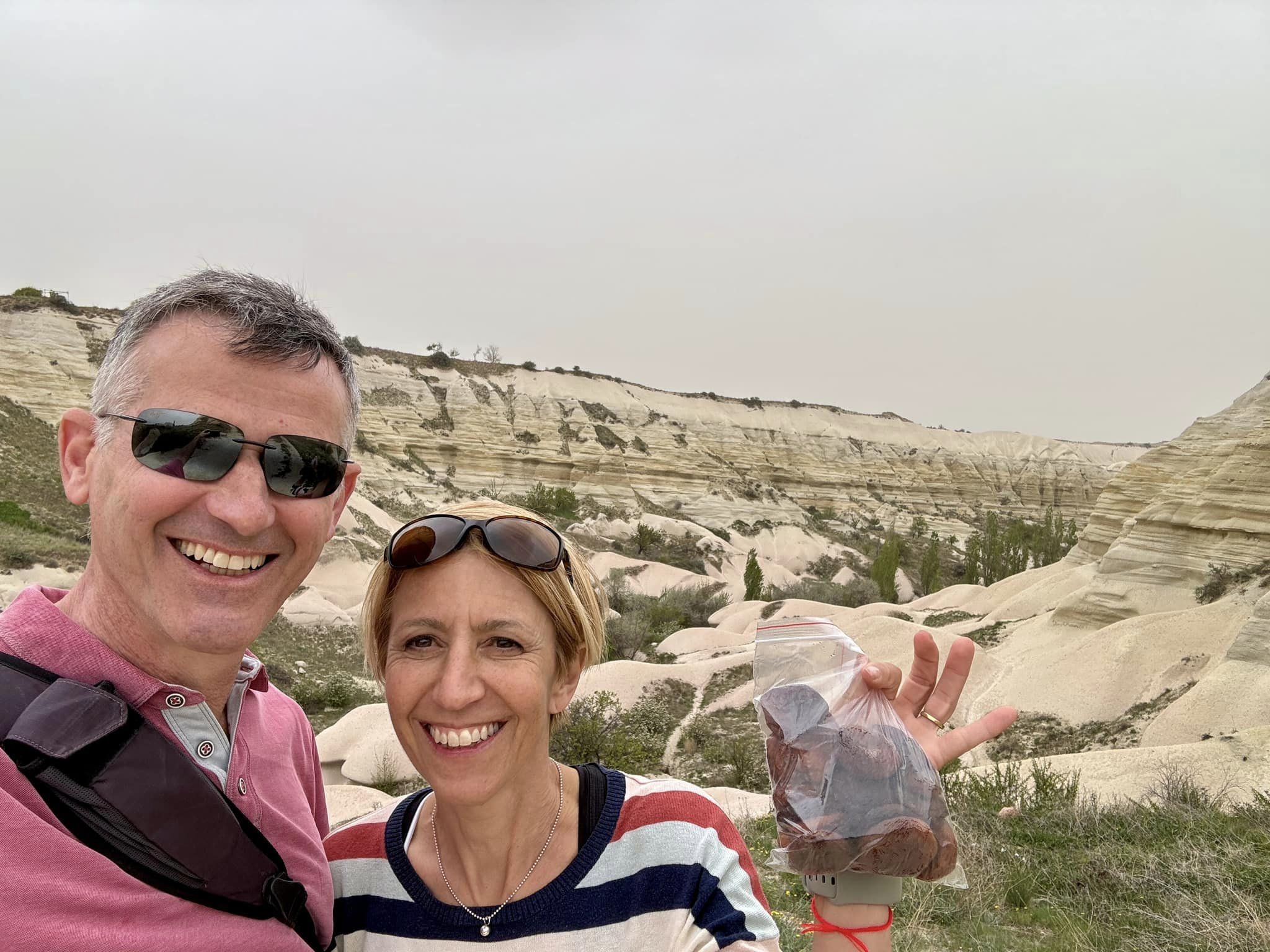
Rain was threatening (it turned out what we saw was actually a dust storm rolling in) so we didn’t take the time to stop for lunch on our hike back from the castle. We met another solitary vendor on the path who sold us some dried apricots and peanuts. Delicious and did the trick to get us back to the hotel.
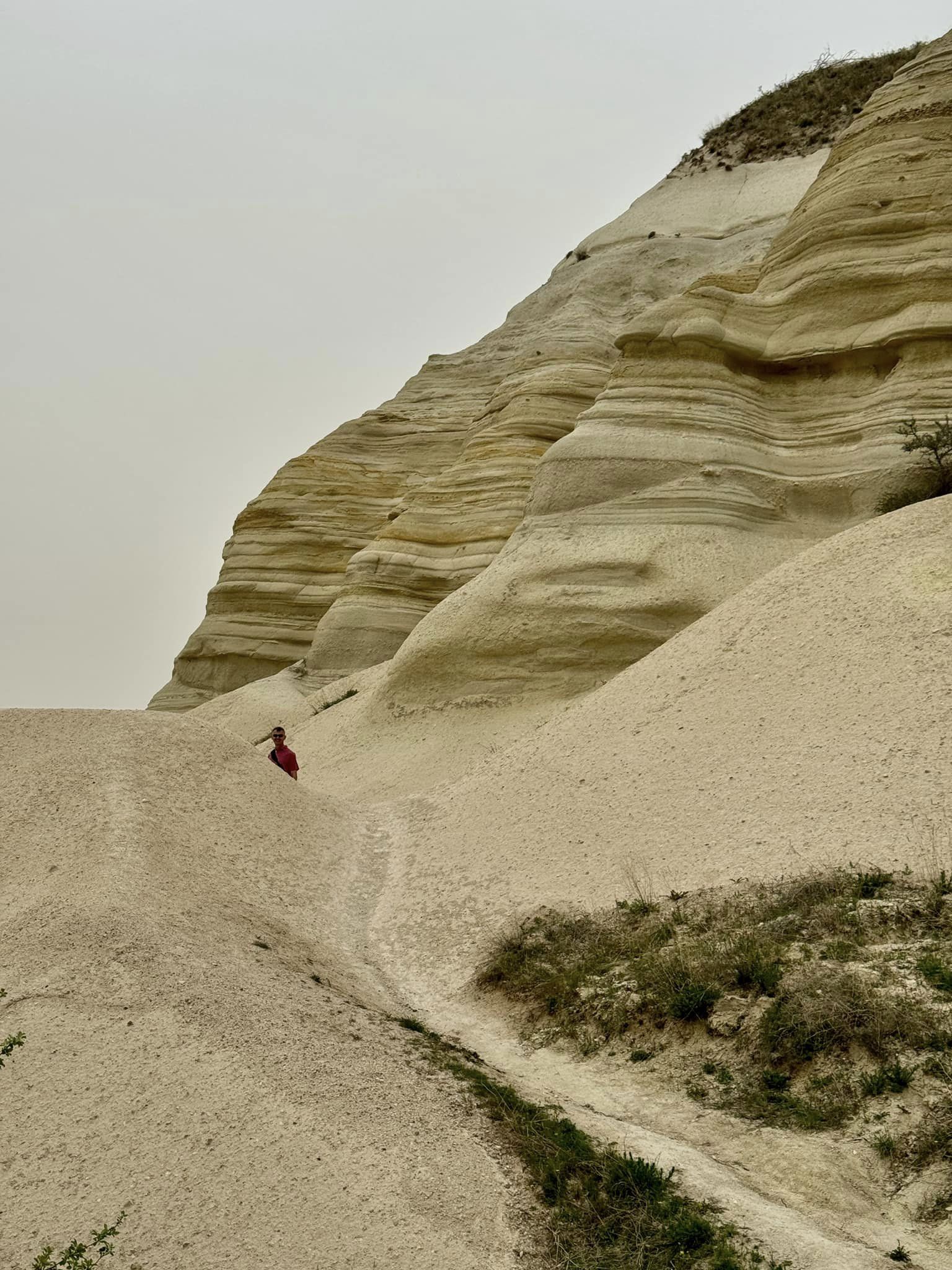
I’m glad he’s not wearing a tan shirt today…almost lost him!
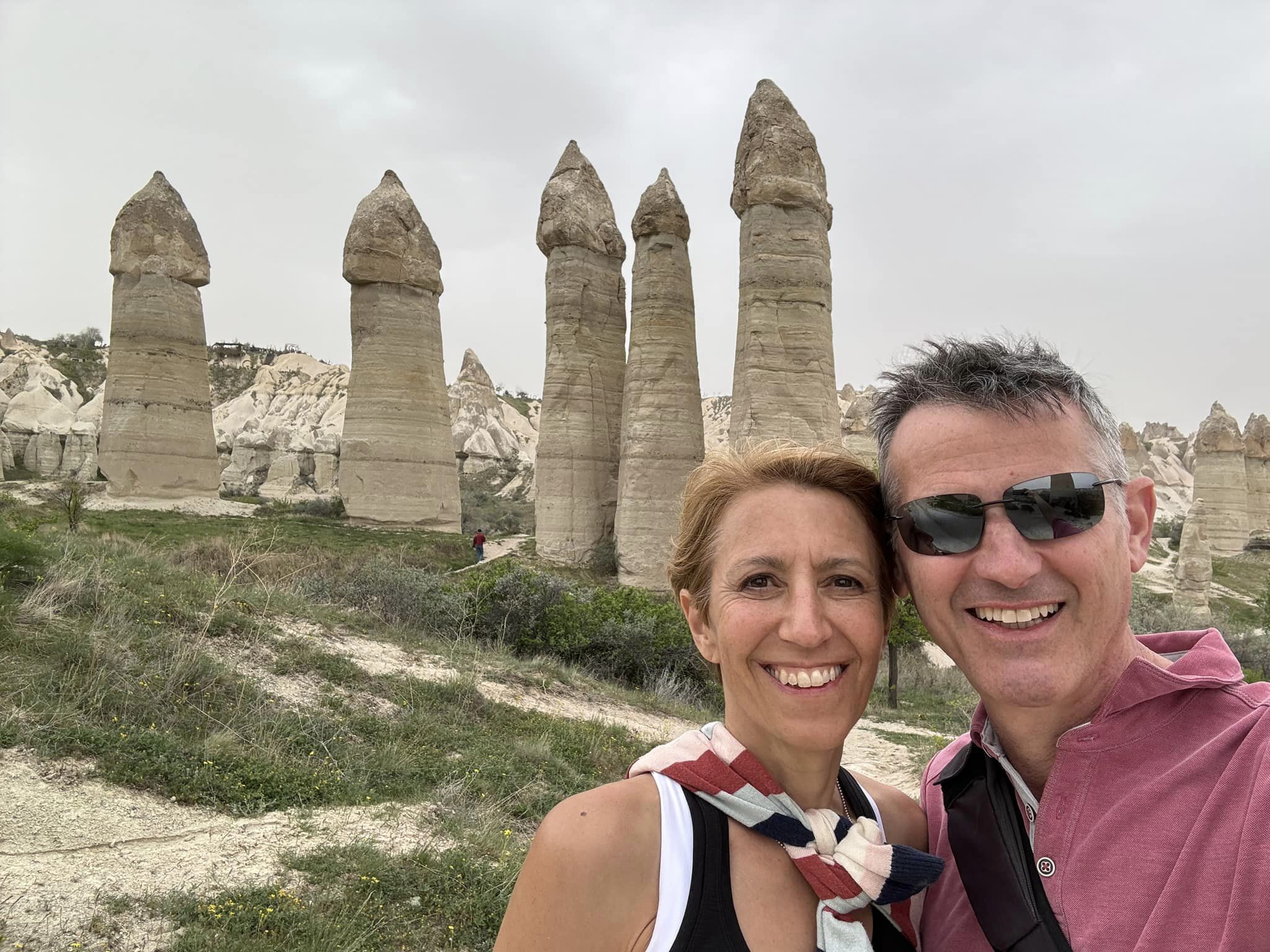
This area is called Love Valley. They say it’s because the tops of the fairy chimneys are heart-shaped. I don’t think so…
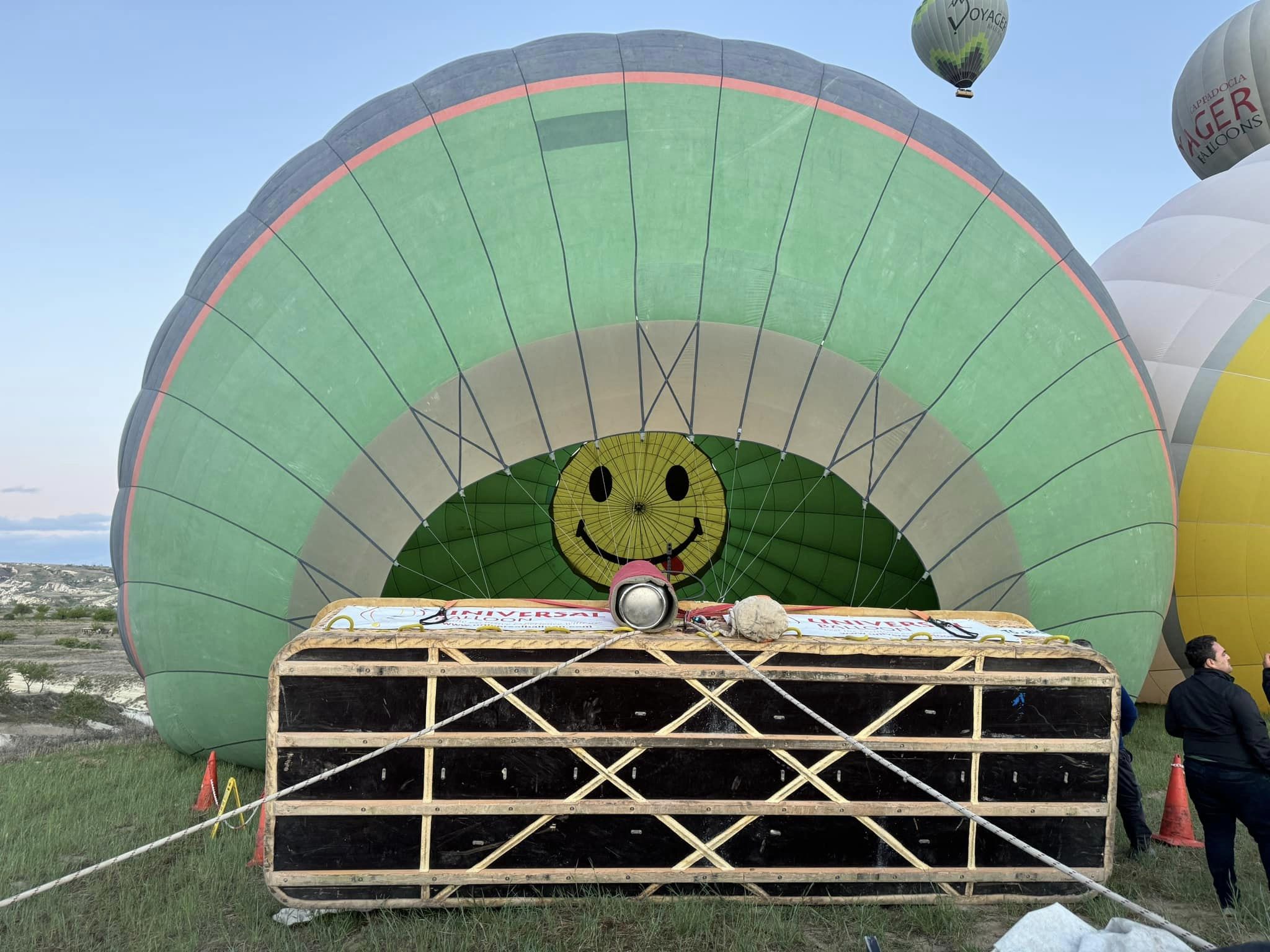
Our first day, the flights were cancelled due to wind. The government assesses the weather and makes a call the evening before as to whether they can fly or not. Our second day, the balloons flew and we got to watch them from our hotel’s rooftop terrace at sunrise. Our reservation was on our third and final day. Bad strategy as that was a windy one (and we hiked through the valleys instead). We took a chance and rebooked for departure day (our flight out was at 10:50am). Success! We flew, got back to the hotel in time for coffee and a bite and went to the airport! Magic!
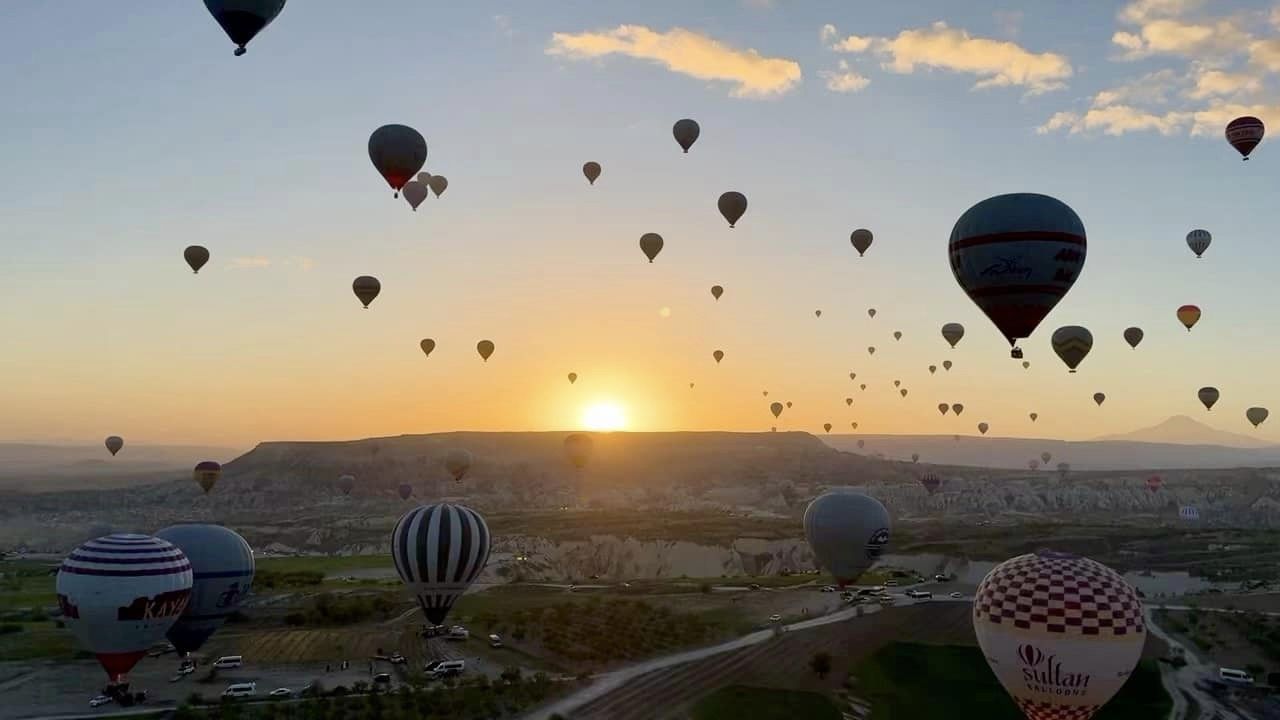
The sun rises over Cappadocia.
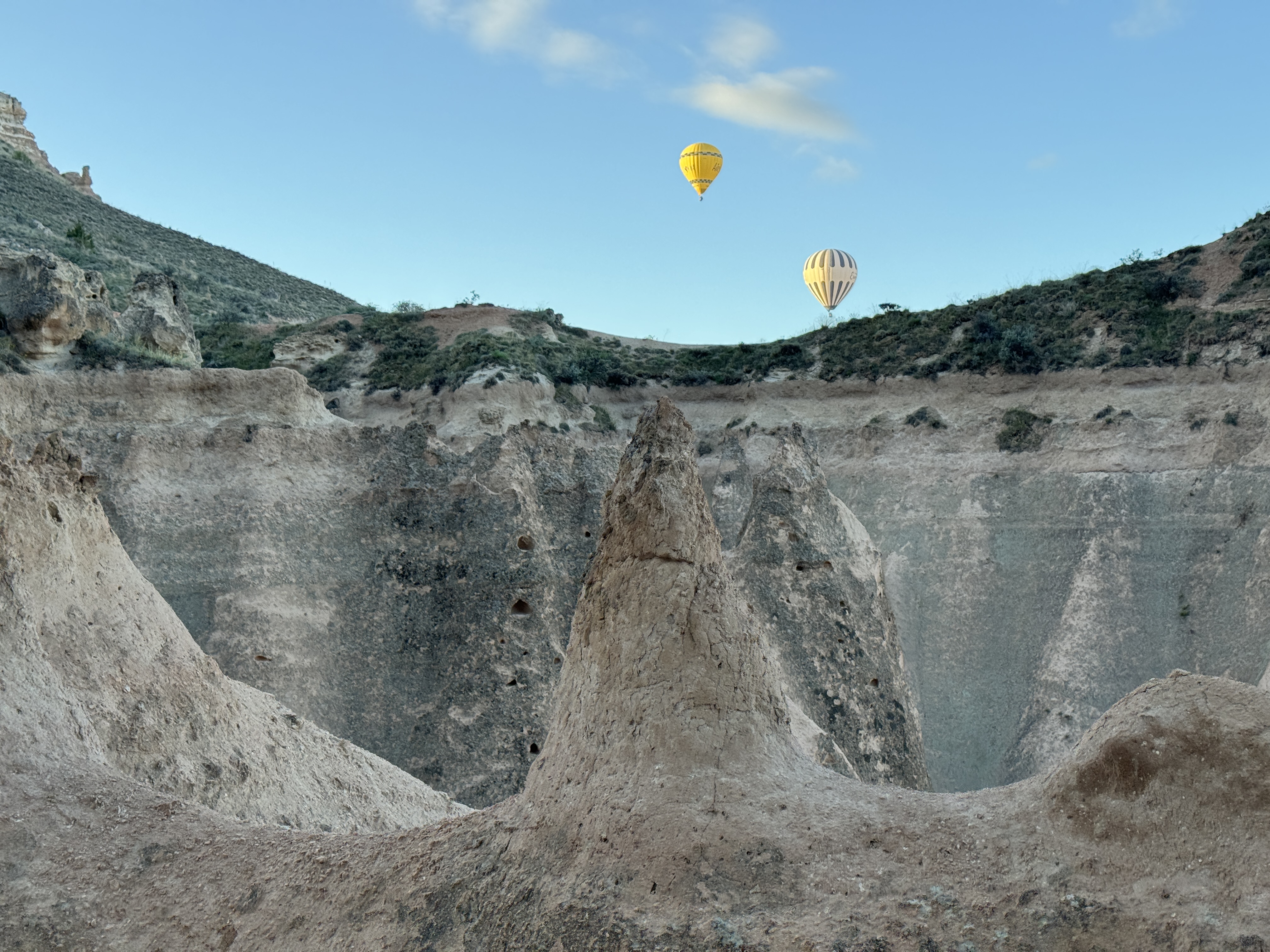
This is magical! Floating above this otherworldly landscape, seeing from above where we hiked and visited below. Our pilot was as skillful as they come. He took us high (1200m), he took us low where we thought we would hit the ground and he snaked us between the fairy chimneys to what seemed close enough to kiss the rocks. He started out by telling us that our direction was at the mercy of the wind, all he could control was the rising and lowering of the balloon. We were lucky to have him as our pilot!
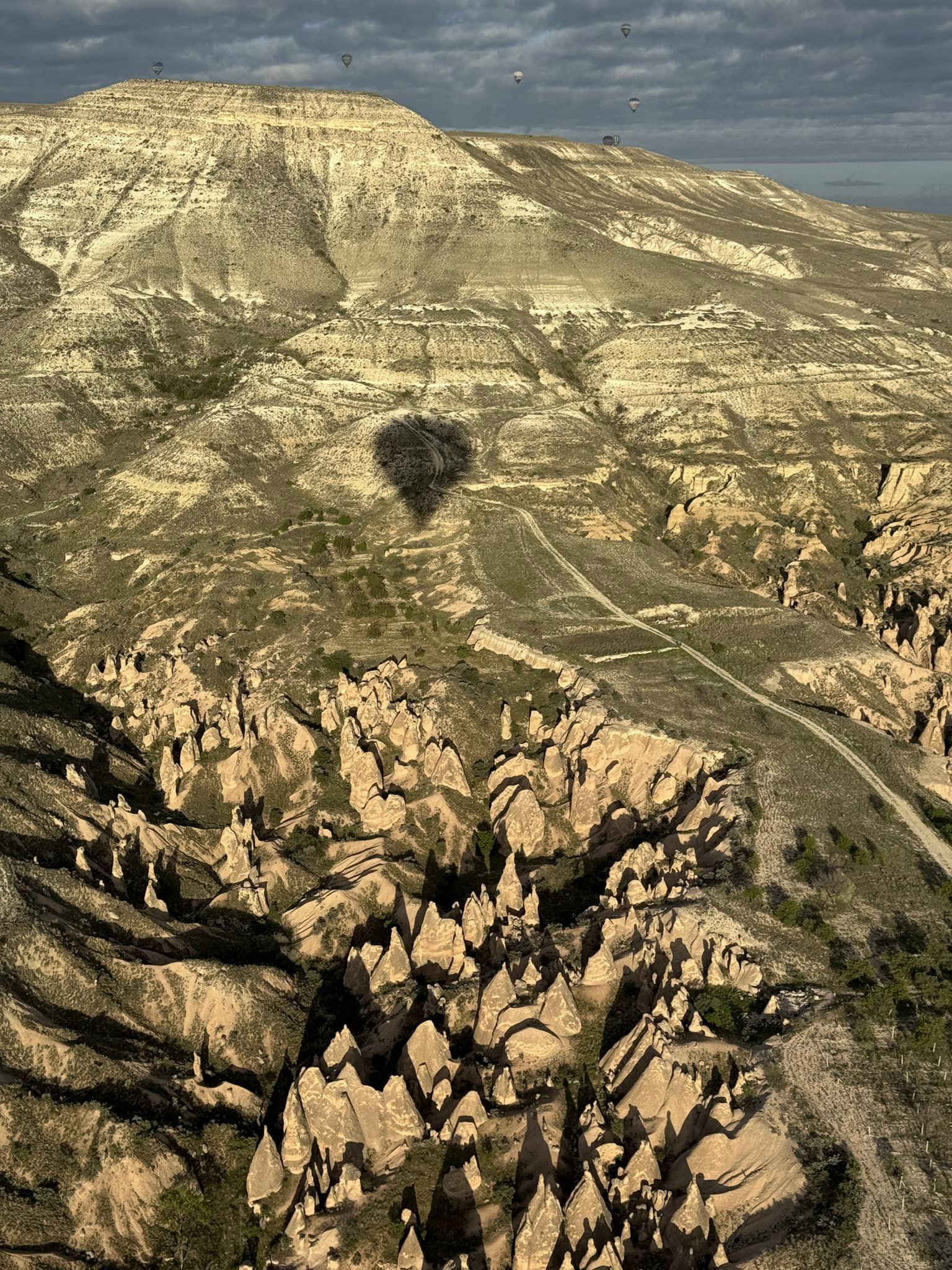
Me and my shadow…
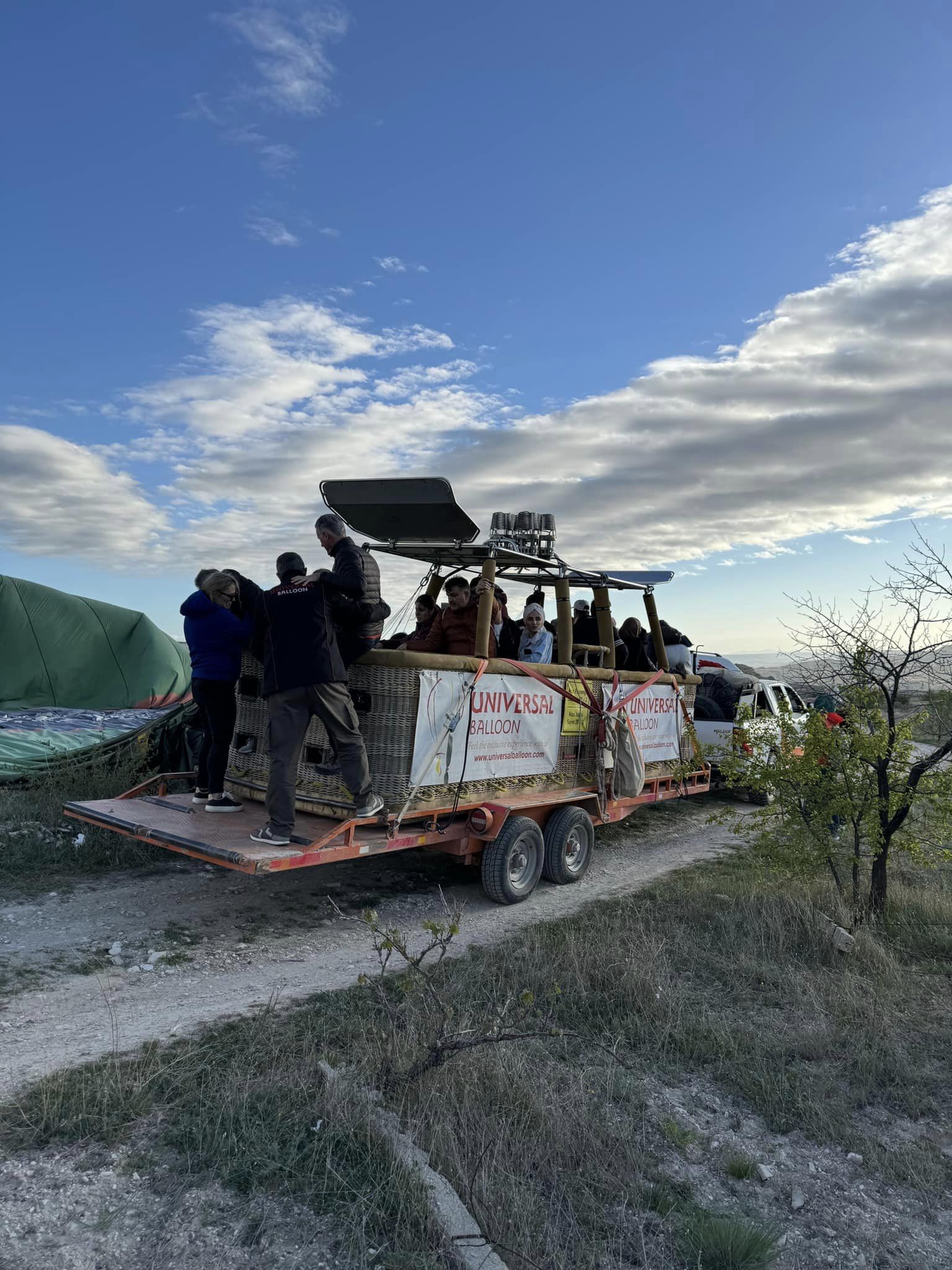
Remember how skillful our pilot was? He managed to land us right on the bed of the trailer that takes the balloon and basket back to the starting point. Amazing control.
Champagne is the tradition after a balloon flight. I don’t think spraying the passengers is supposed to be part of it…