October, 2024
Antalya Abounds with Archaeology
We feel like we’ve hit full on summer in Antalya with hot weather (38C) and blue(-ish) skies but locals look surprised when we comment on how hot it is. This is not hot, they tell us. Come back in a month to see what hot is. Capping one end of the Lycian Way (famous trekking route), this resort area is very popular with Russians. While a full 25% of tourists here hail from Russia, tens of thousands of Russians and Ukrainians have come here to avoid Putin’s war.
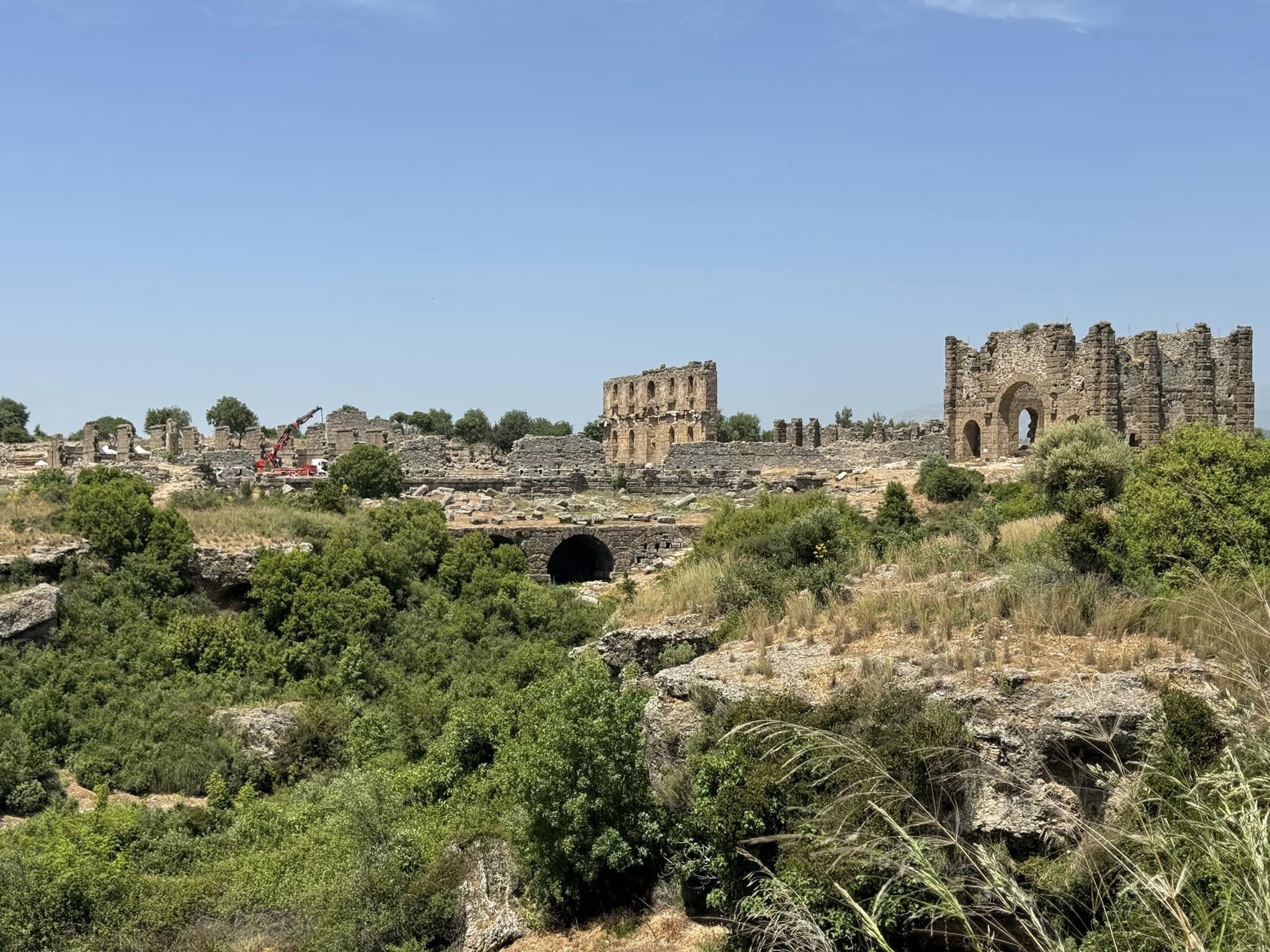
Ancient Aspendos and the surrounding countryside.
Aspendos is another golden oldie, dating back to the 500s BC. This wealthy city of about 20,000 had a lot going for it. Lucky for them they had fertile soil and clever people which put them on a good financial footing from their olive groves, vineyards, salt beds and horse breeding. In fact, they were so known for their horses that Alexander the Great levied an annual tax of 4,000 horses on the city.
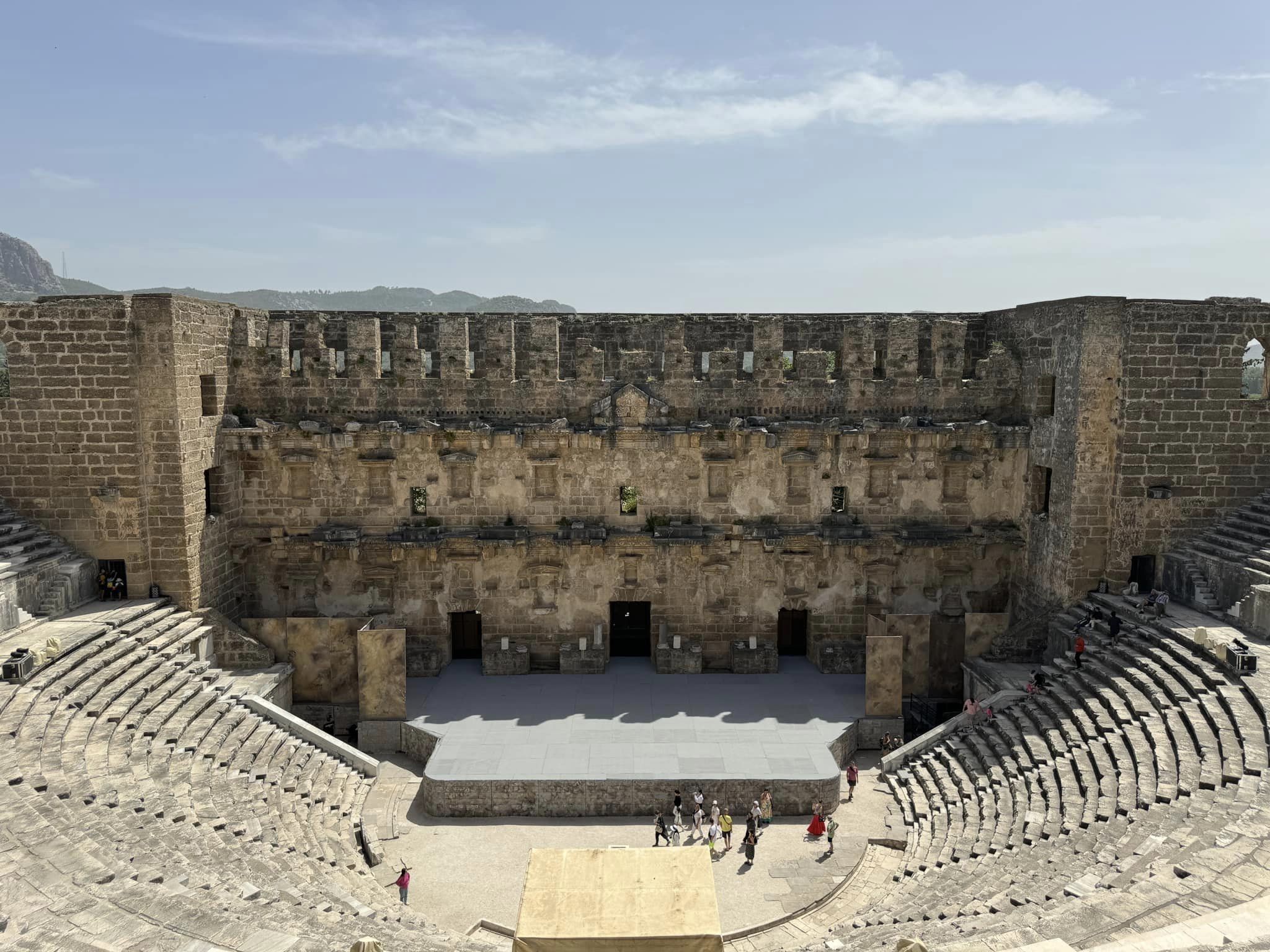
The ancient theatre of Aspendos.
What I loved most about this ancient city was its theatre (again, the theatre!), reputed to be the best preserved theatre of the ancient world. The theatre was built under the reign of Marcus Aurelius in 160-180 AD, and like most theatres of this time, the seating for the 9,000 spectators was dug out of the slope of the mountain. The coolest thing is that it is still an active theatre! Ataturk came to Aspendos in 1930s and announced that the theatre should be restored and the doors should not be locked. It should be visited and used. To this day, shows and events are held here, as you can see by the covered sound booth in the middle of the seating.
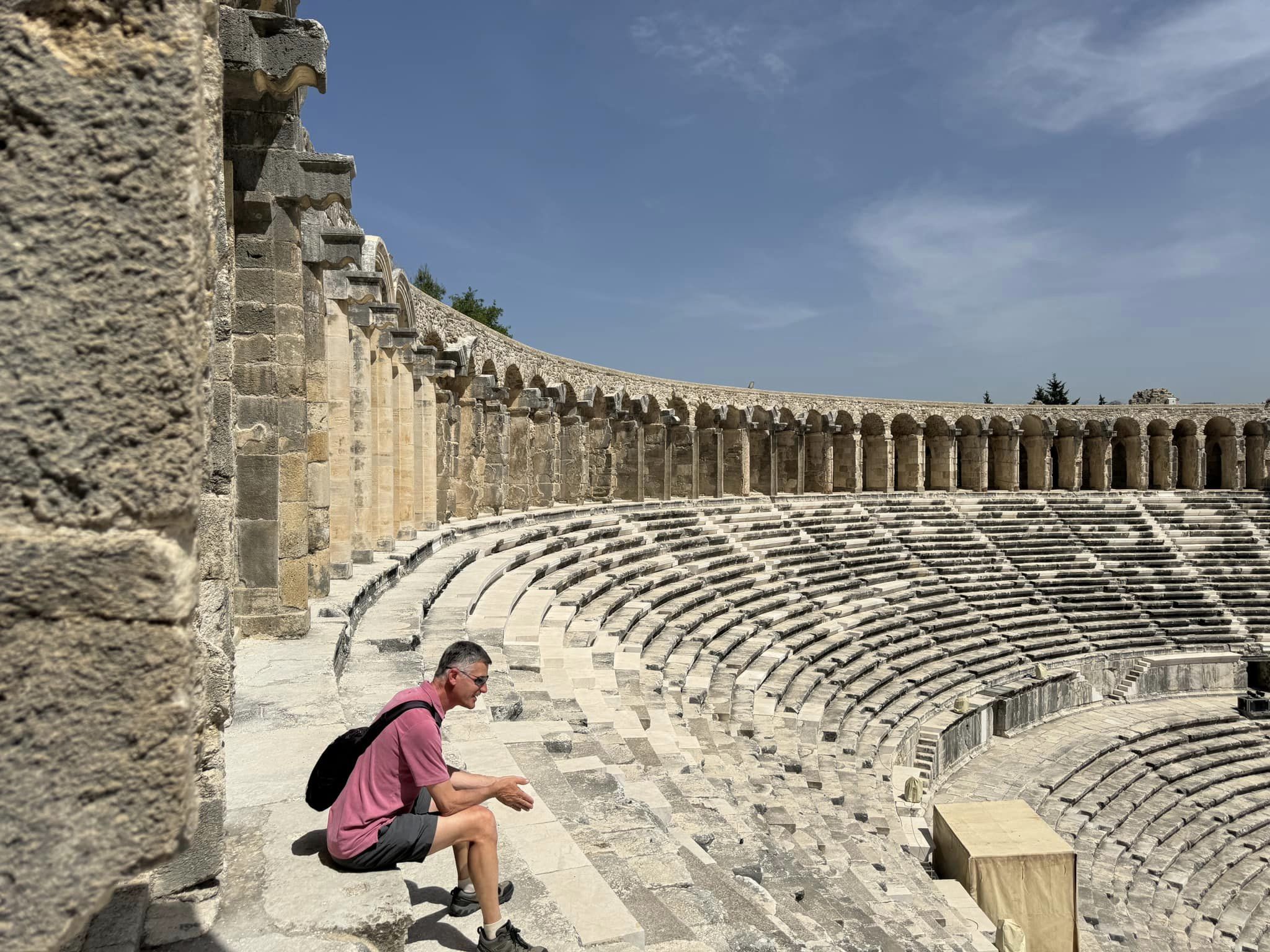
High in the remarkably preserved theatre.
I also love all the legends attached to these places. Like so many, this legend is about a beautiful young woman, in this case Belkis, the King’s daughter. The king decided that whoever created the most useful building in the city could marry his daughter. Suitors started working on their designs. Clever way to get a city built! At the end, the choice came down to the theatre vs. the aqueduct. He chose the aqueduct. Water was critical to life in the city. What the king didn’t know was that his daughter was in love with the architect of the theatre so she insisted he take one more look. When he climbed the stairs to the top of the theatre, he heard a voice saying “the king’s daughter should be mine. They made a mistake”. It was the architect whispering to himself on the stage. The king was so impressed with the acoustics, he chose the theatre!
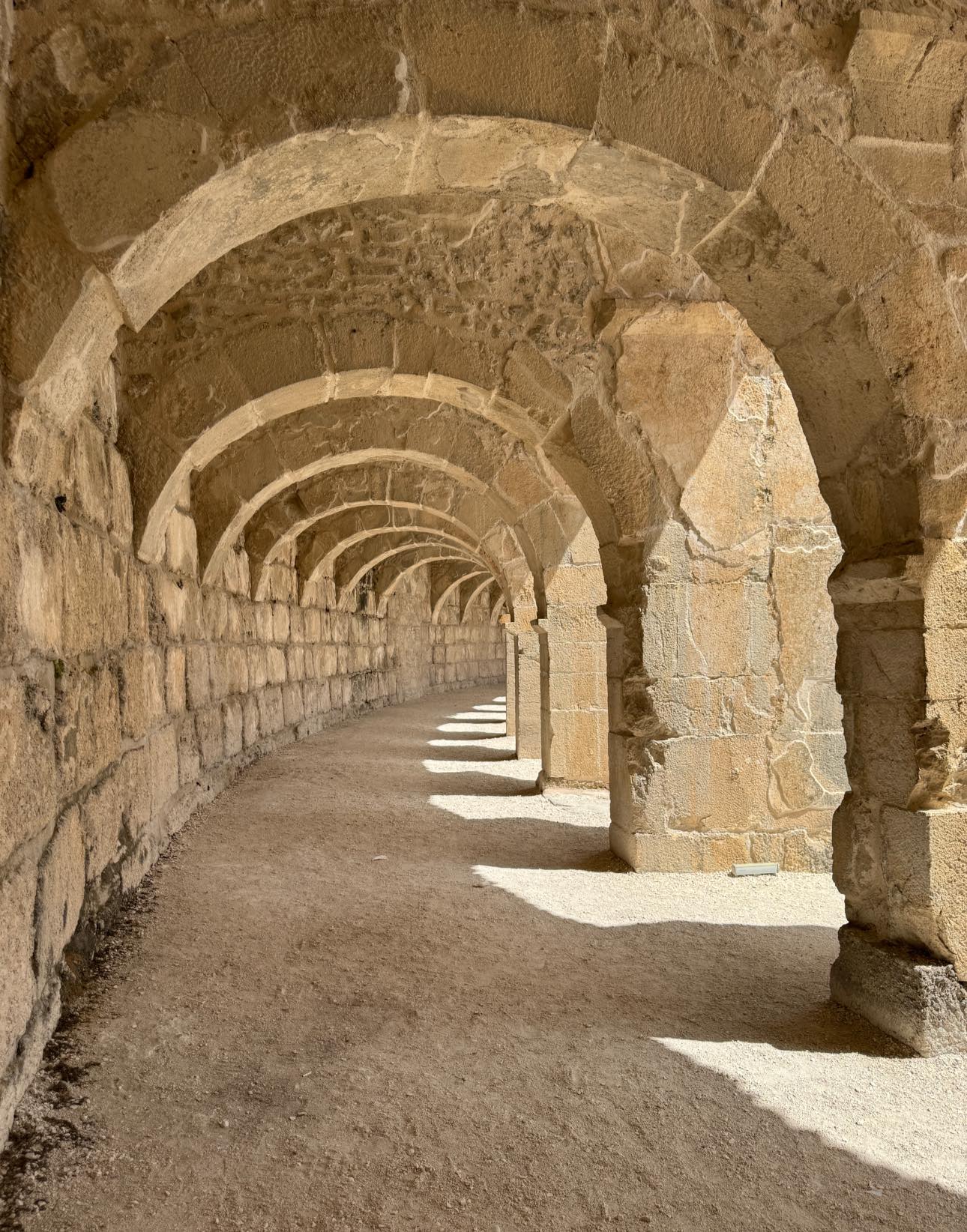
Stunning portico behind the last row of seats. Just imagine the mischief that could have taken place back here!
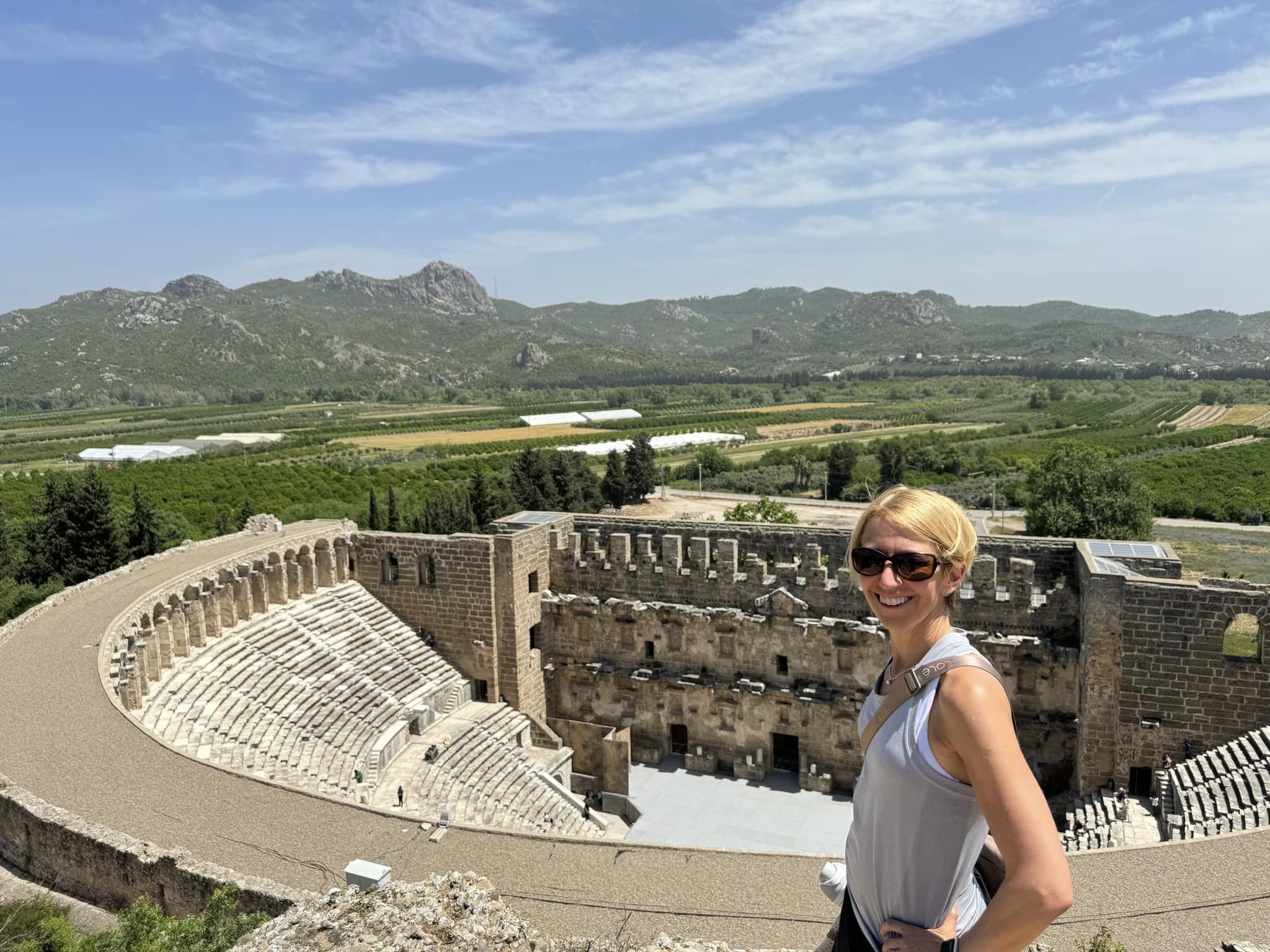
On our way out, we noticed a path up a hill. Up we went, stepping on countless bits of ancient broken pottery (apparently inconsequential bits) and were rewarded with a bird’s eye view of the amazing theatre of Aspendos. Notice the modern addition of solar panels!
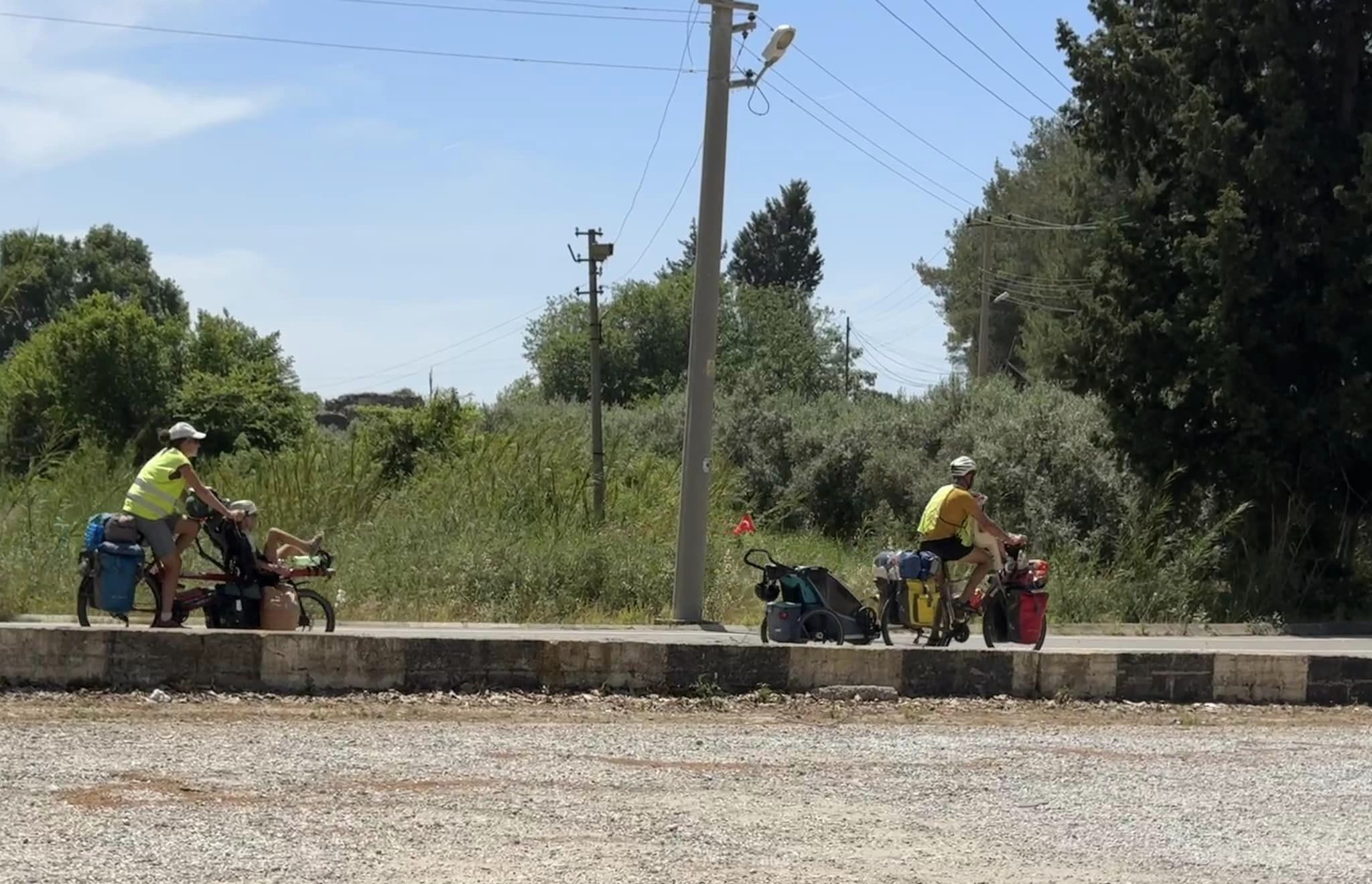
Family travel in 38C. Out of the picture is the pre-teen on his own bike, not carrying any of the family’s travel essentials.
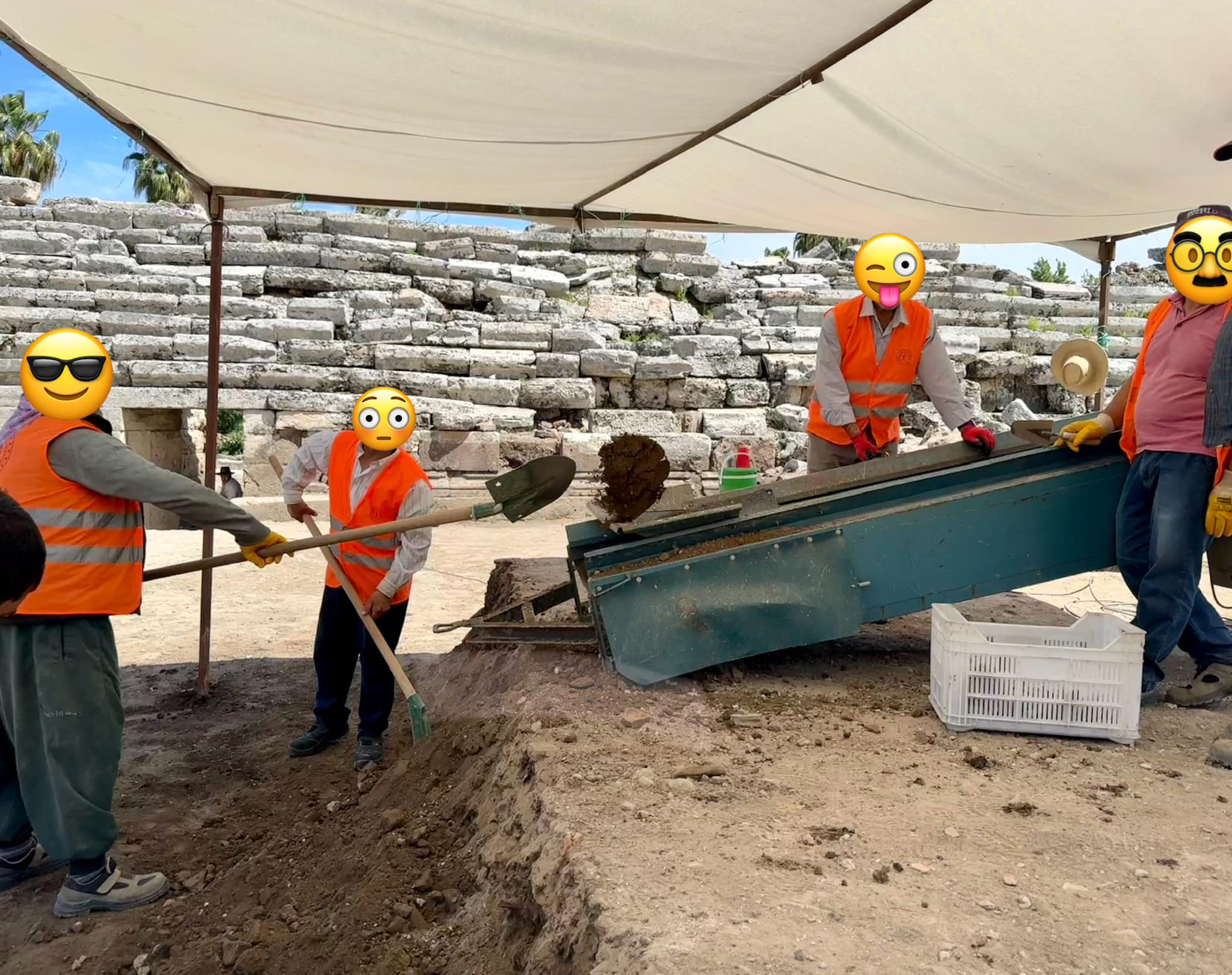
Archaeologists at work in Perge.
We almost passed on visiting Perge thinking “ho hum, another ruin, what could be different here”. Once again, so glad we went. It took up the rest of our day and we would have stayed longer if not for the heat (38C). This will be the next Ephesus…give it 25 years. It’s an active excavation site and we met the most wonderful archaeologist doing his PhD on Perge and was supervising the excavation in the stadium.
While we were chatting with him, two coins were found! One was thinner than the other. That’s when we learned that the current Turkish inflation is nothing new! He told us that the thicker coin (copper) was older and due to inflation, they started making the coins thinner and mixed iron into the copper.
He wouldn’t let me take a picture of the coins (covered in dirt and rust so impossible to identify them yet) because of academic competition. He didn’t want any of my zillions (as if) of followers, especially archaeologists, to identify these coins before these guys who actually found them.
He also wouldn’t let me take pictures of the excavation due to the strict privacy rules in Europe. Hence the minor adjustment to the photo here.
He invited us back for tea when we were finished our walkabout of the site (beautiful Turkish hospitality) but we took too long. They had just finished wrapping up for the day. The tea was finished but the conversation veered into the archaeological academic tousles between the Greeks and the Turks.
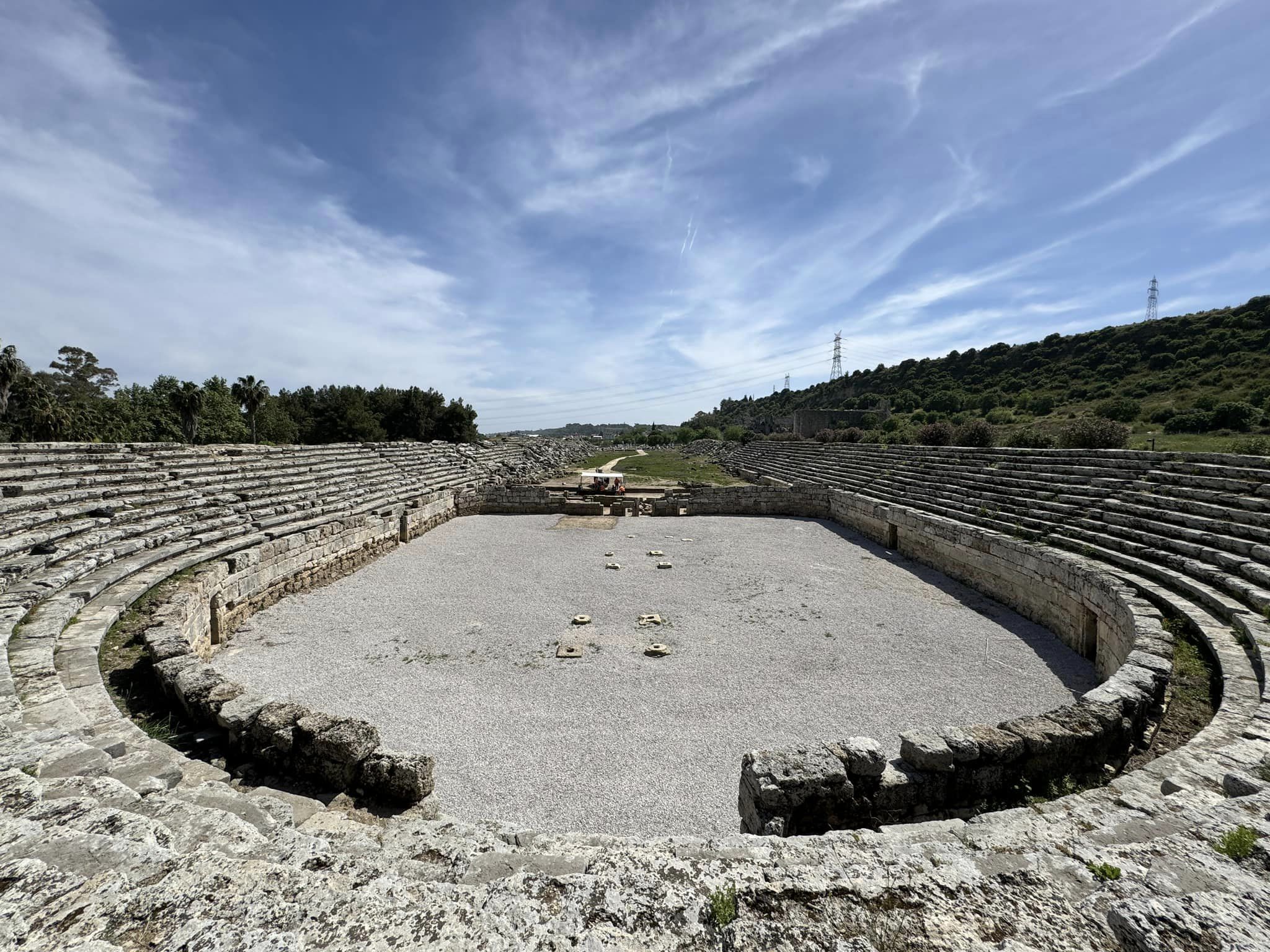
The ancient stadium at Perge.
The stadium was originally built by the Greeks for sporting events displaying athleticism. For the Romans, when they came along, it was more about entertainment. And entertainment meant gladiator fights and the slaughter of exotic animals. Messy bits of business so they built a wall sectioning off the first quarter of the stadium (closest to us in this photo). That made for a smaller area for these more barbaric activities and pens to hold these poor animals. I asked our new archaeologist friend how he could tell who built these places and who renovated them and he said it would take four years to tell me. I’m not up for another degree, as fascinating as he made all this sound, but he did give us a tidbit. He said the Greeks were very precise and cut stones perfectly to fit together. The Romans a bit less so and left small gaps between stones. The Ottomans were in such a hurry to get it done that they were more haphazard builders.
We assumed that what we saw was already mostly rebuilt. In fact, aside from the floor that they were digging out to the original level, the seating is as it was found. It’s hardly damaged. If you zoom in on the picture, you can see a couple of sections of the seating way back that are collapsed but that’s it!
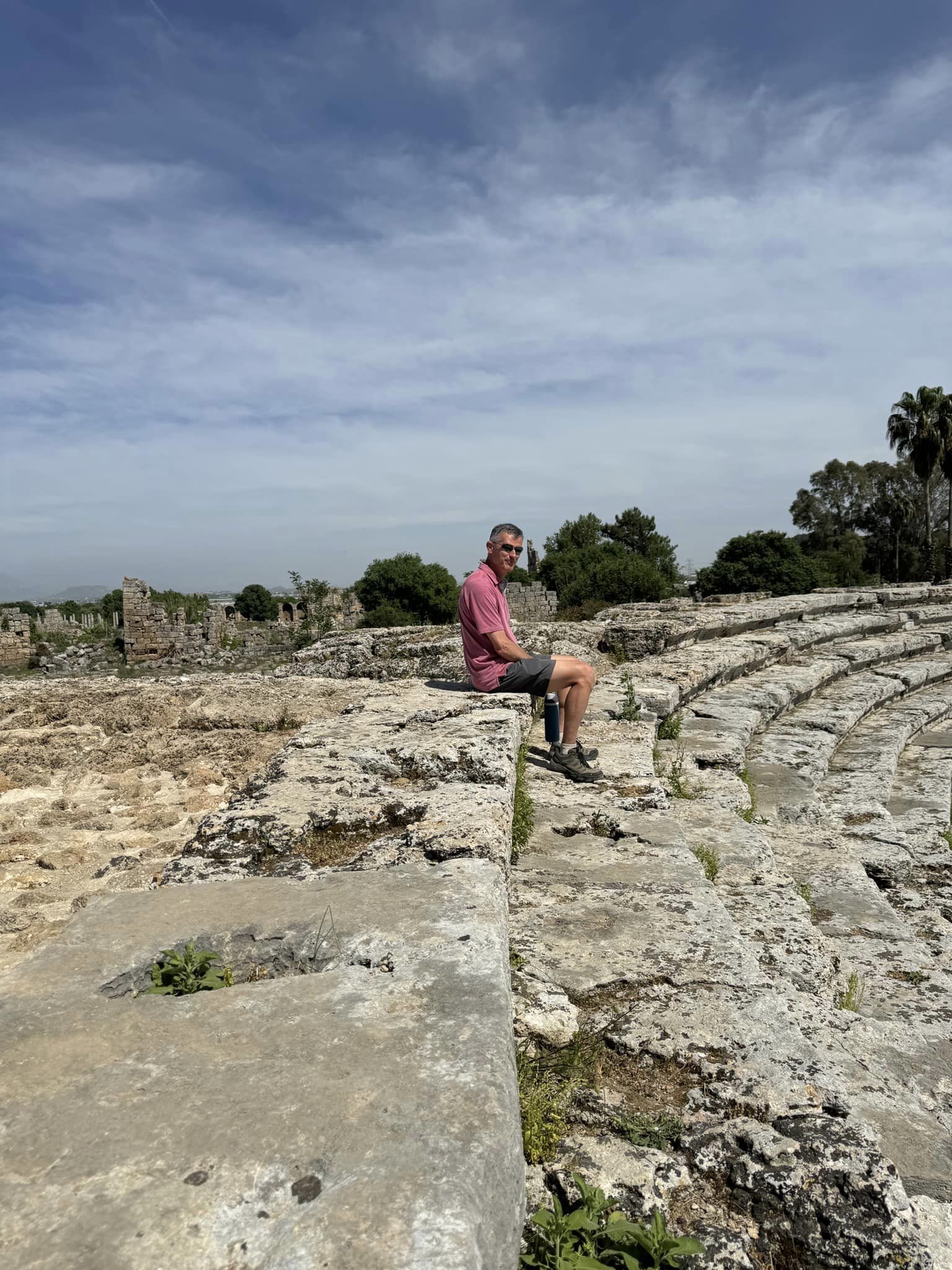
Sitting in the stadium cheap seats…
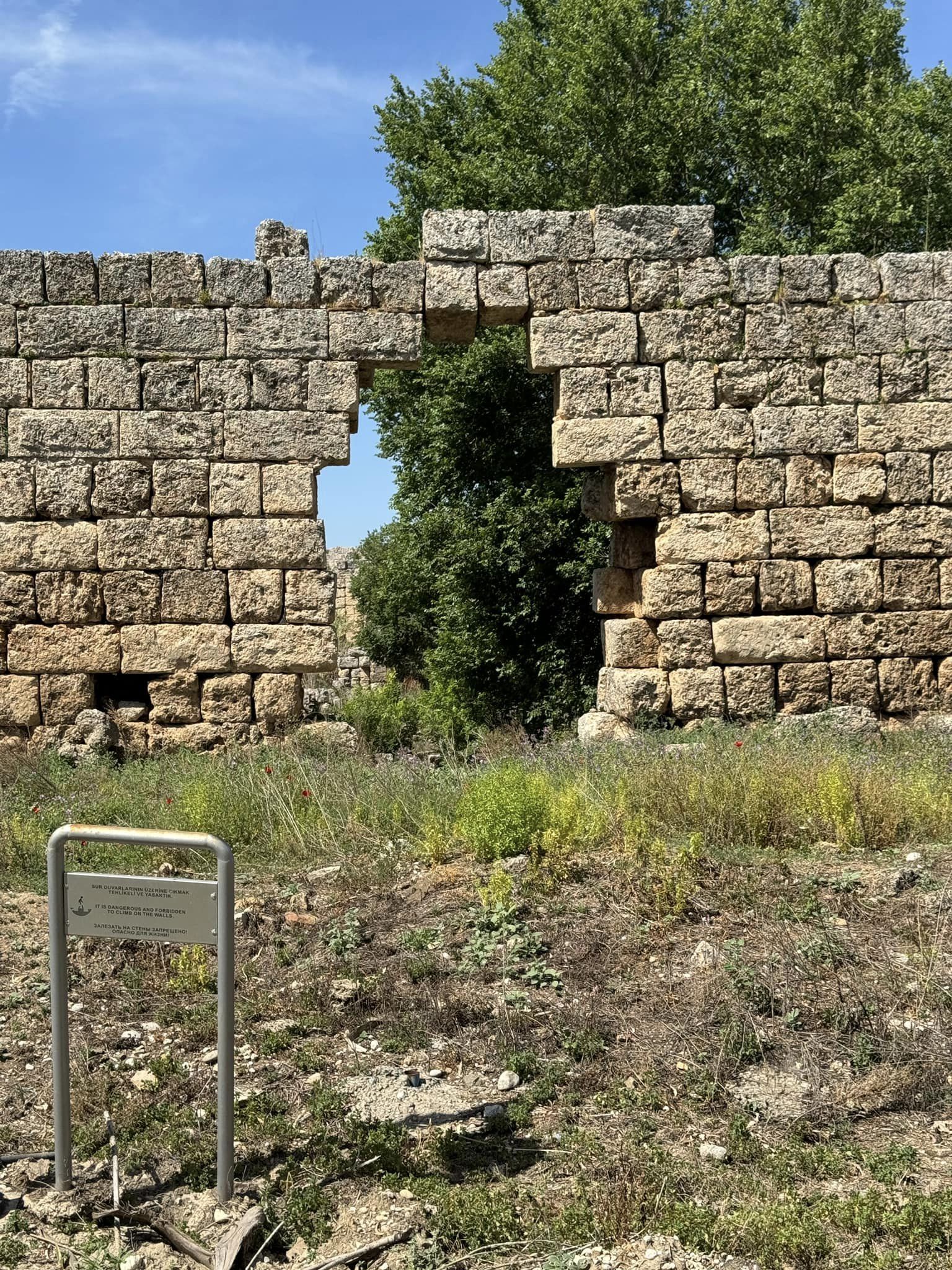
The sign says “it is dangerous and forbidden to climb on the walls”. I would be inclined to agree. I mean they were master builders in the day but I wouldn’t trust those two stones top centre.
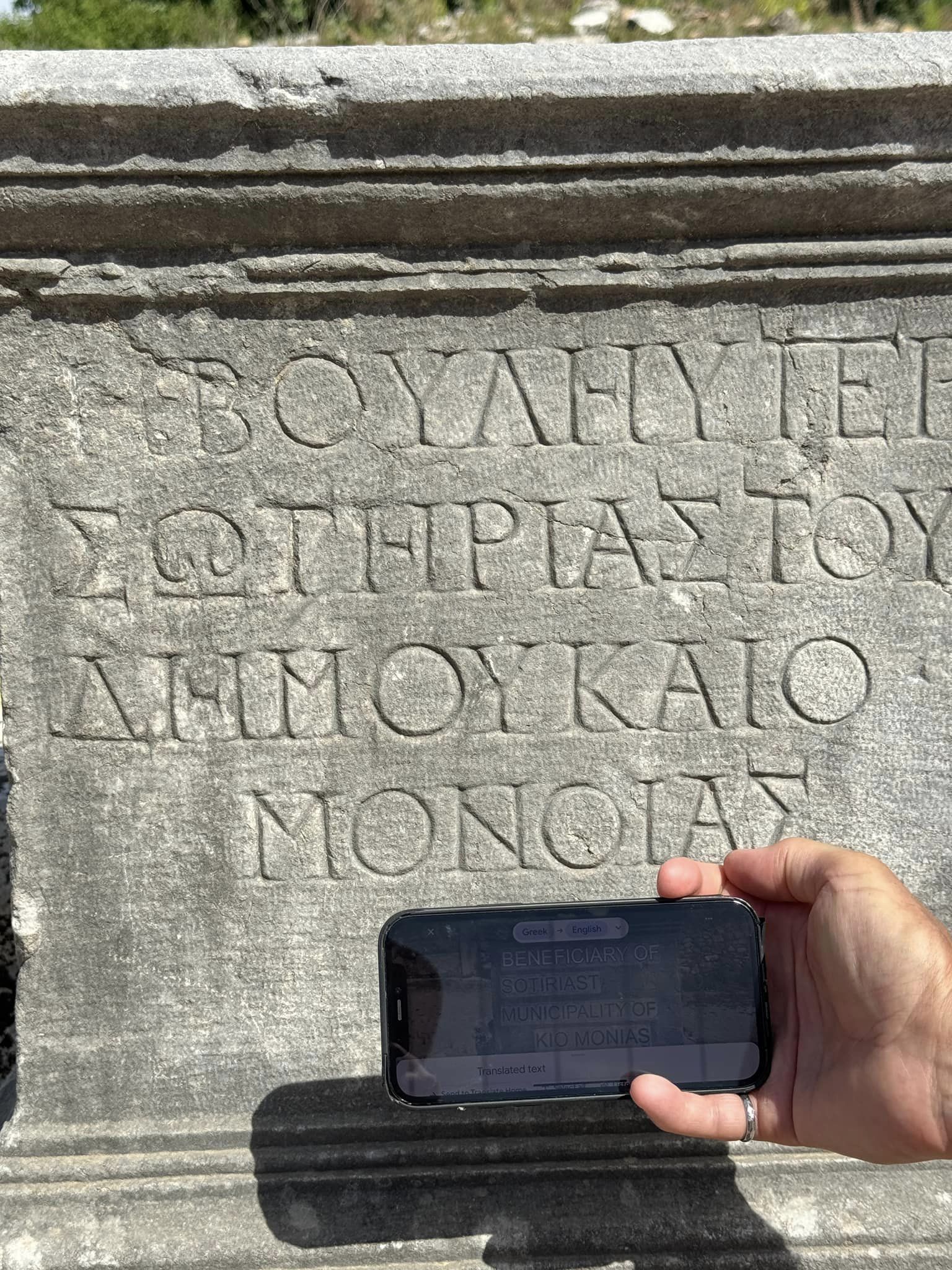
Google Translate can decipher bits of Ancient Greek!
This city had excellent urban planning. There were two columned streets that divided the city into four. We are at the intersection.
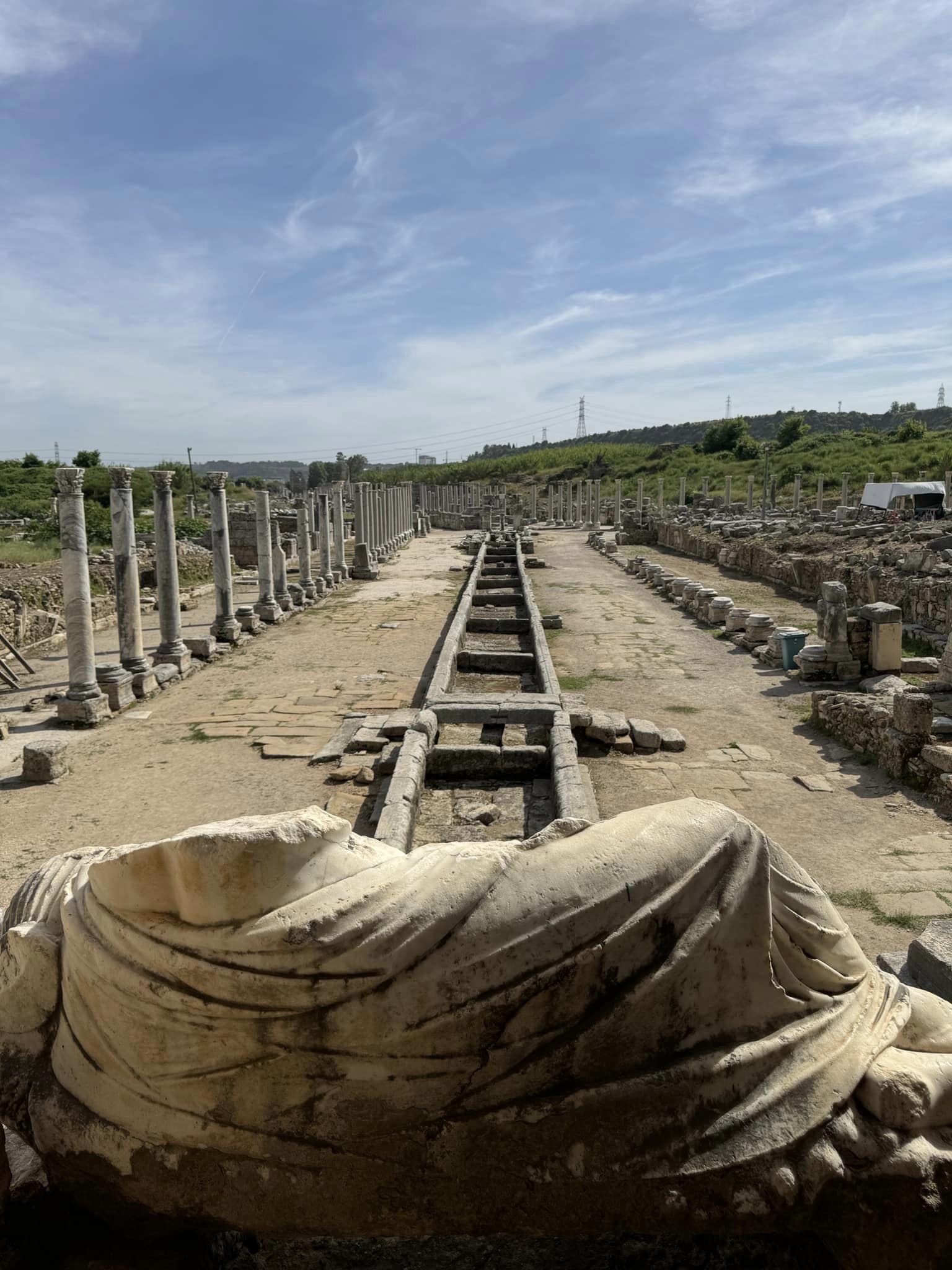
The columned street at Perge.
At the end of the street is this fountain where water poured beneath the reclined river god Kestros into a channel the length of the street. The level of the channel changed a few times along the length of the road to reduce the rate of flow, allowing the dirt to sink to the bottom and make for cleaner water. So smart!
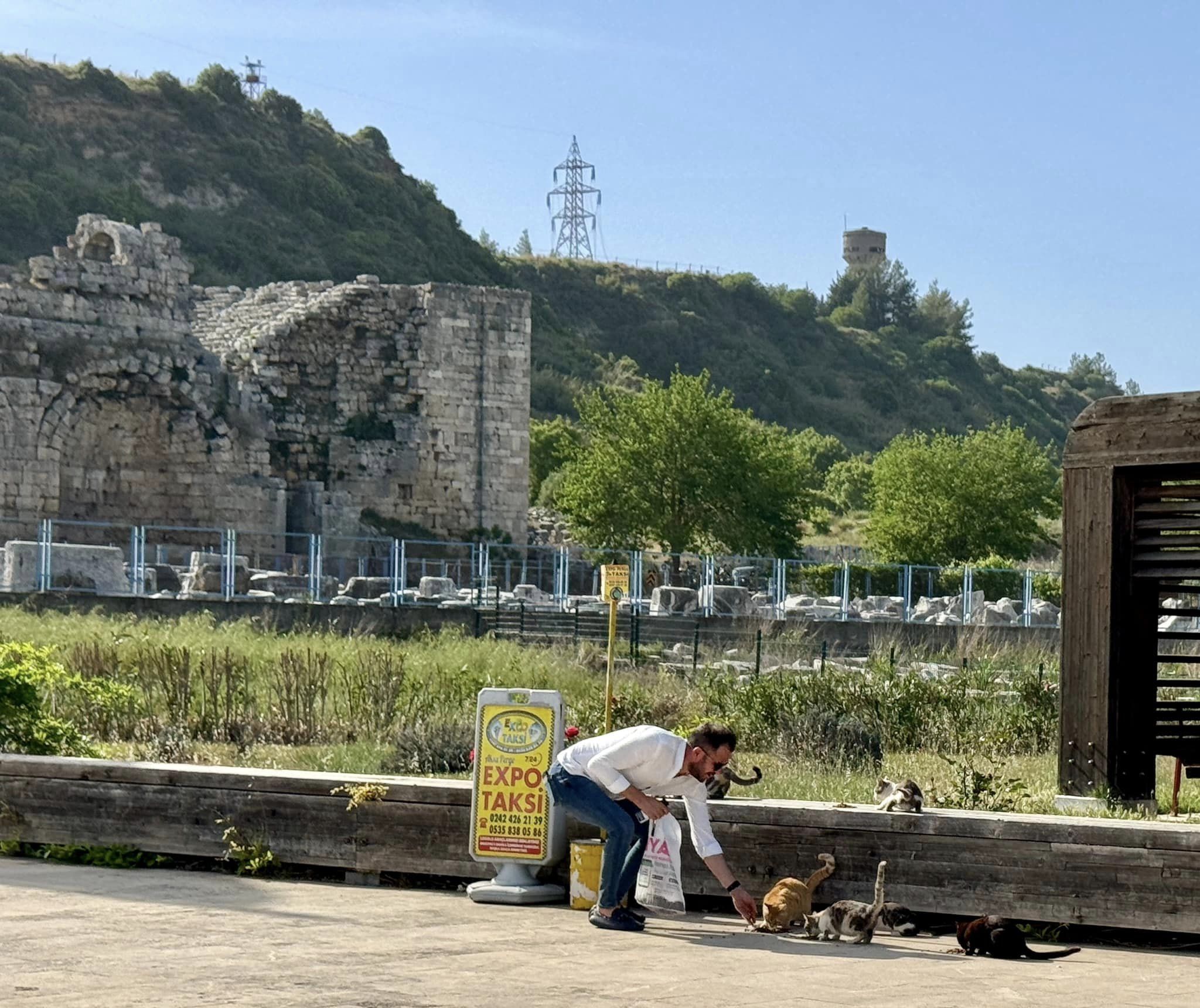
A random guy appeared with a bag full of cat kibble. Didn’t those felines come running when they caught a whiff! No sooner did they settle into their surprise meal than a couple of dogs appear and scare them away. The dogs ate up all the cat food…beggars can’t be choosers, I guess.
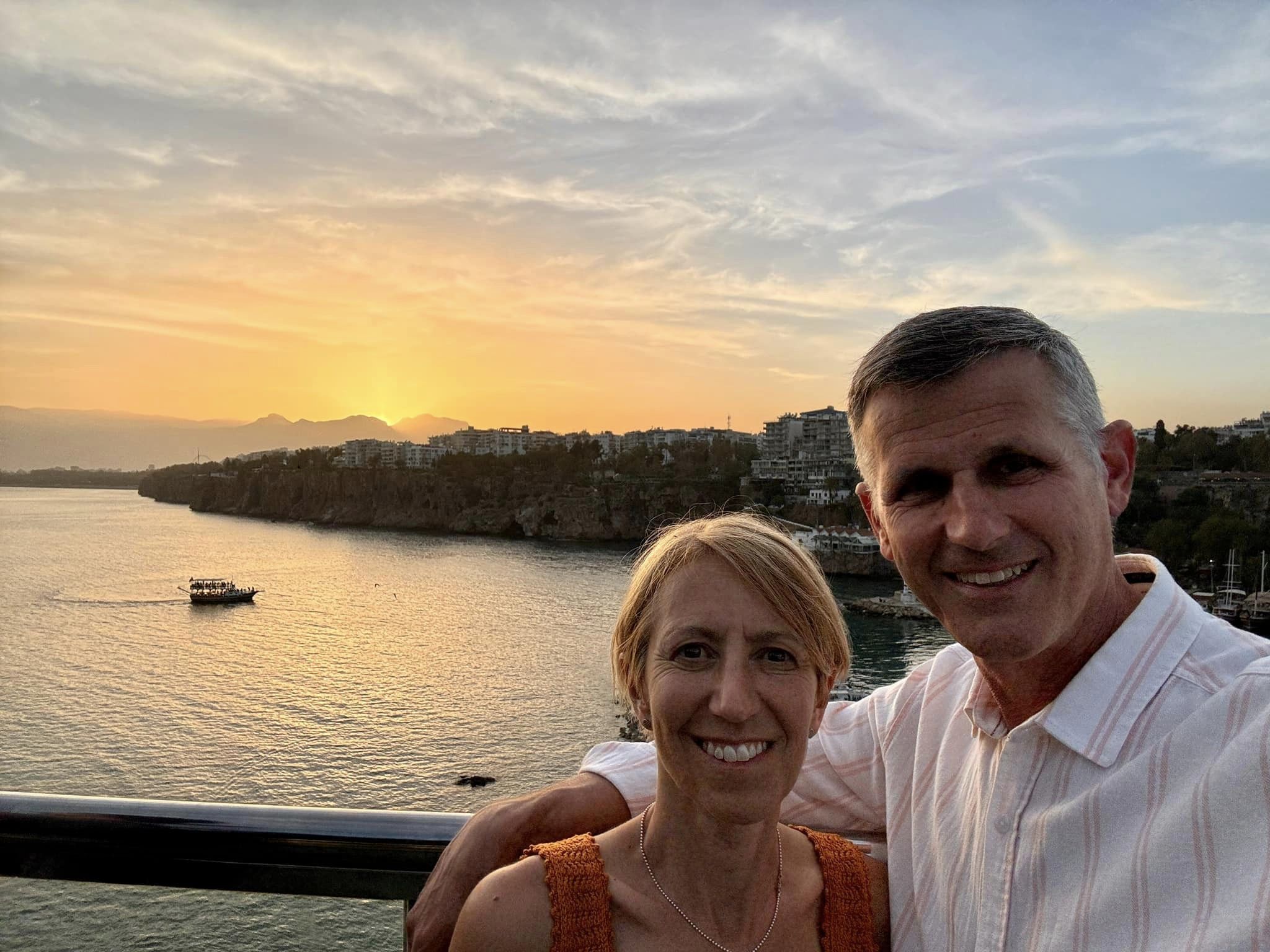
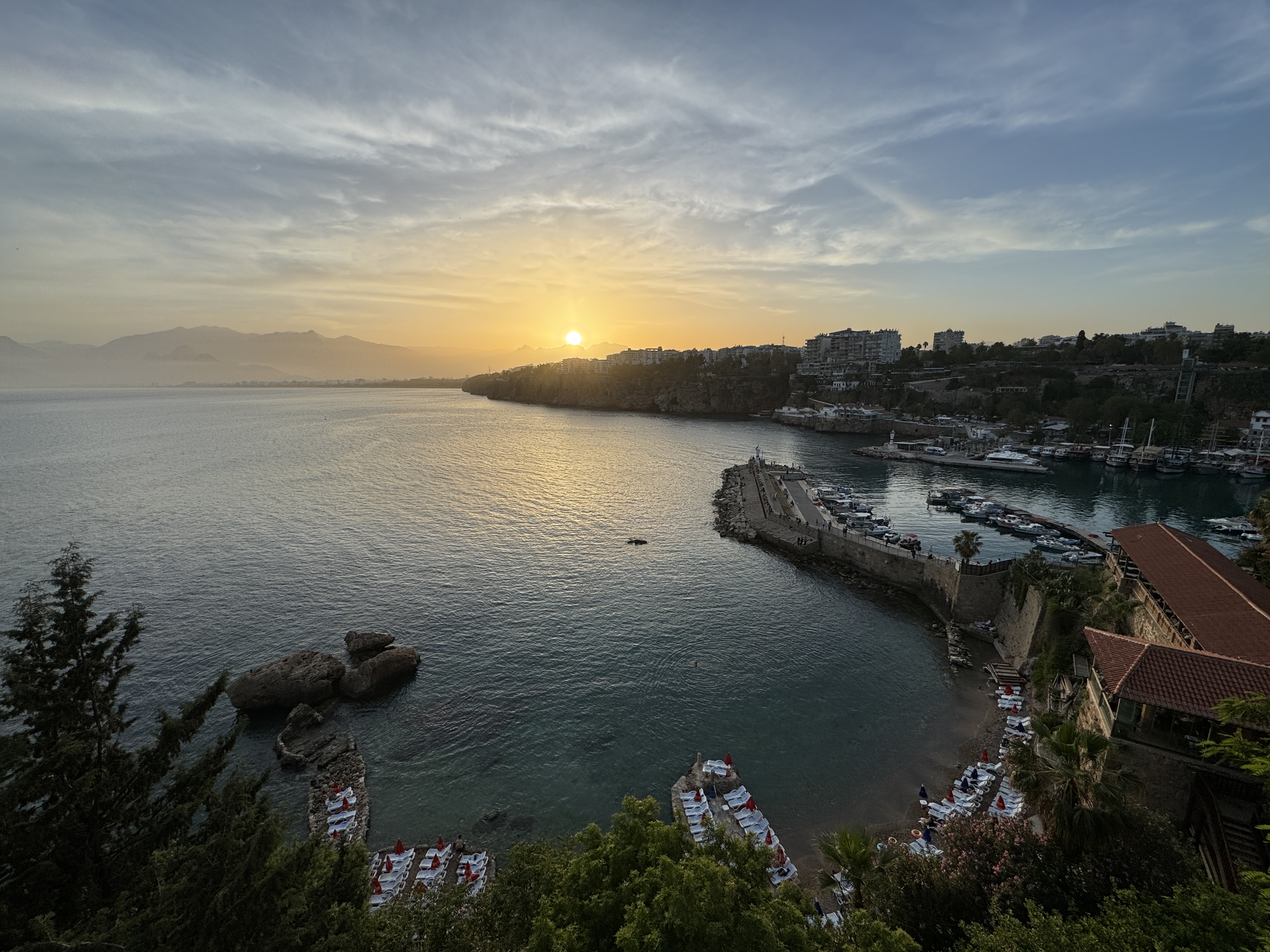
Sunset in the old town of Antalya.
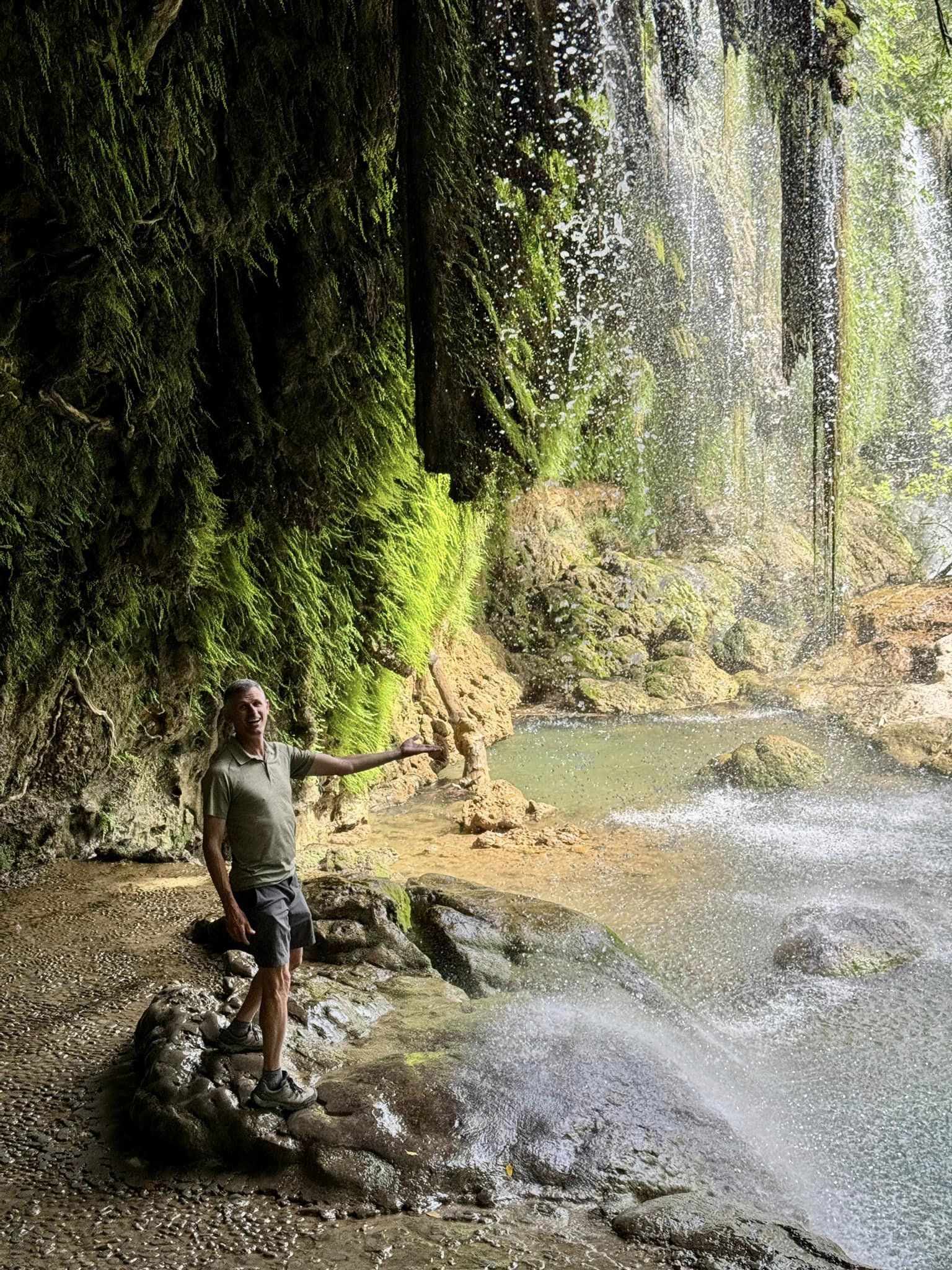
Adam is a lover of waterfalls and we found a couple nearby! The first, Kurşunlu waterfall, was quite lovely with a series of walking paths through the woods surrounding it.
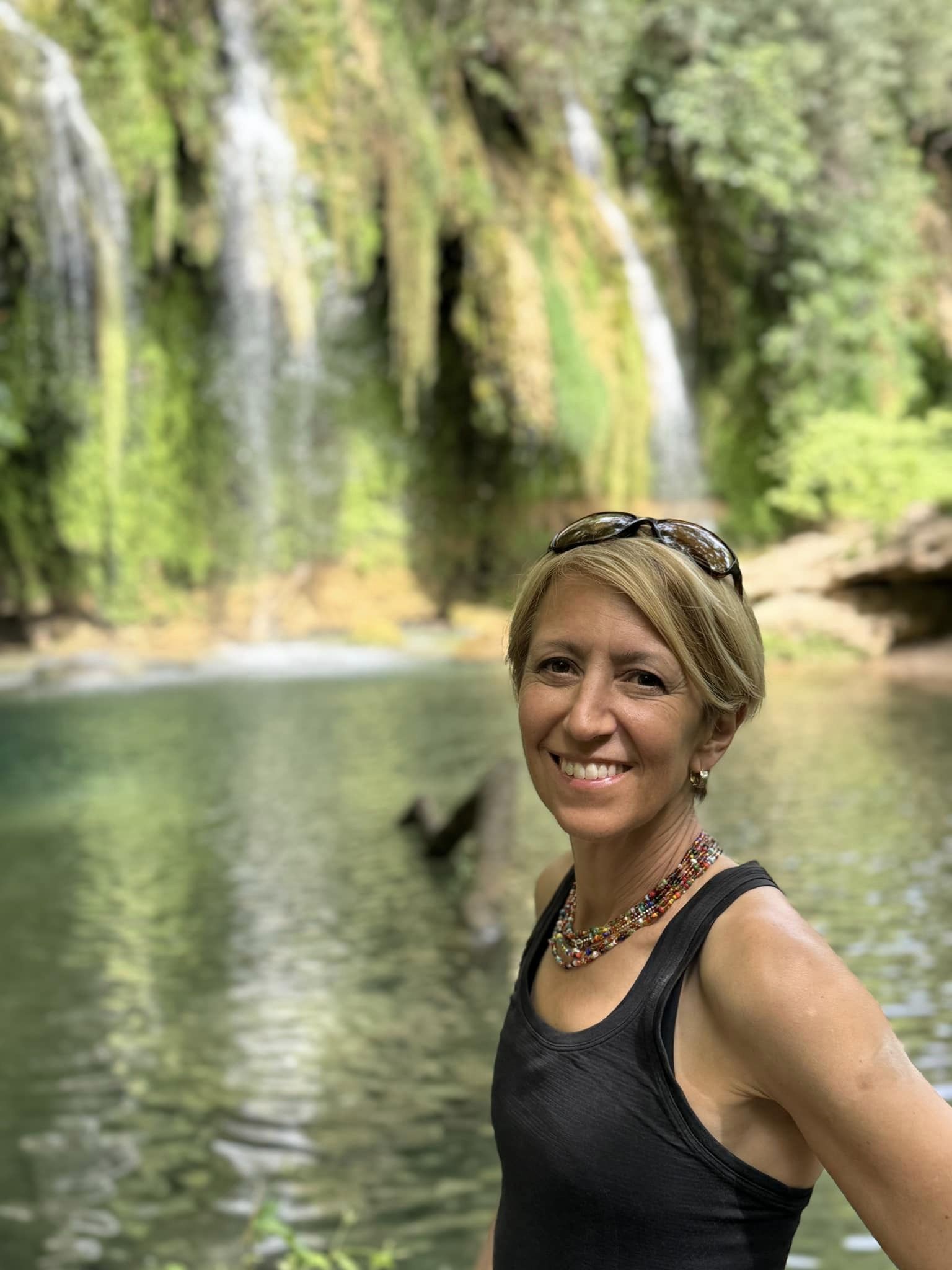
Surprisingly few people at Kurşunlu waterfall.
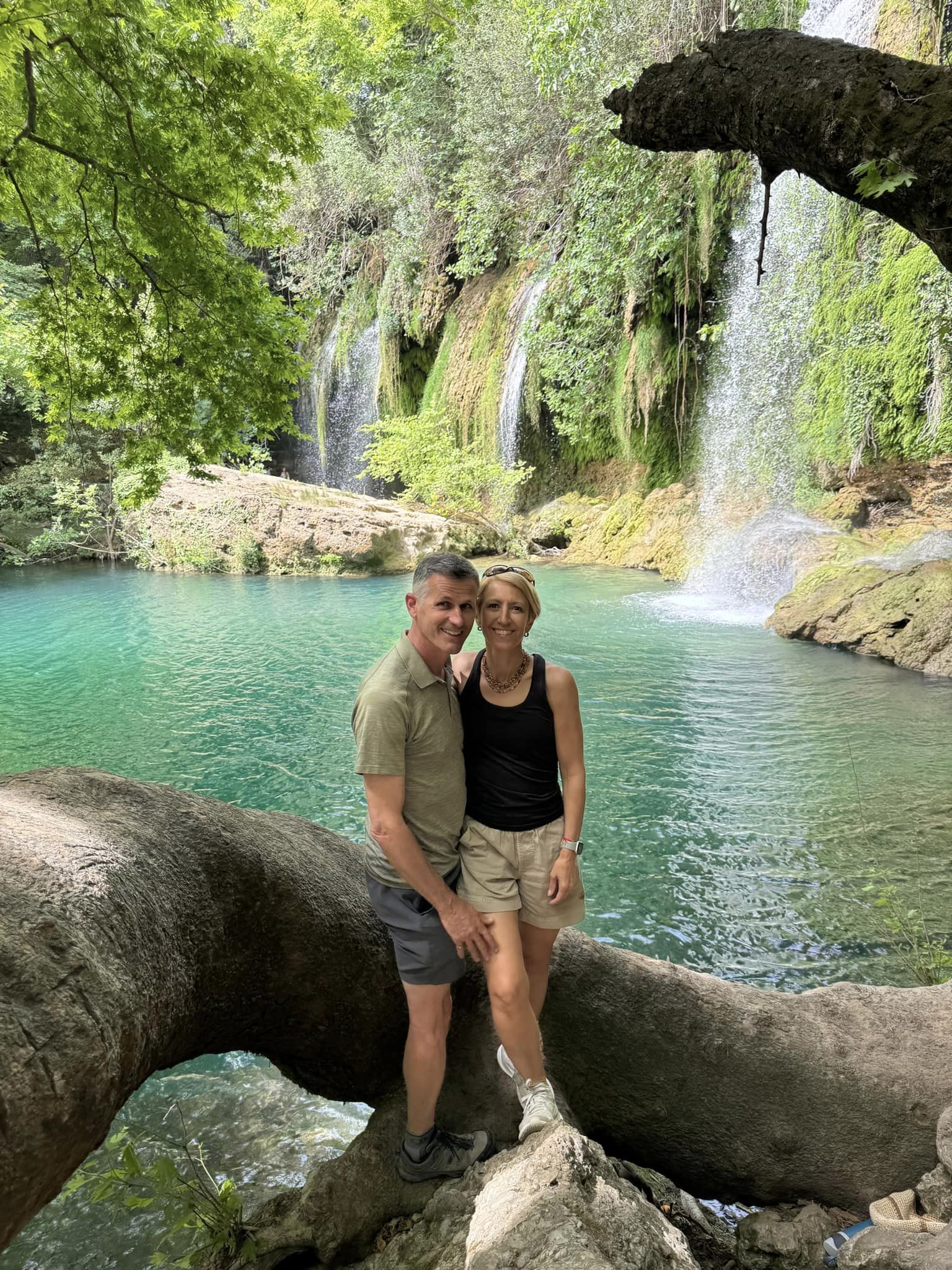
Robyn lounging on the ocean floor.
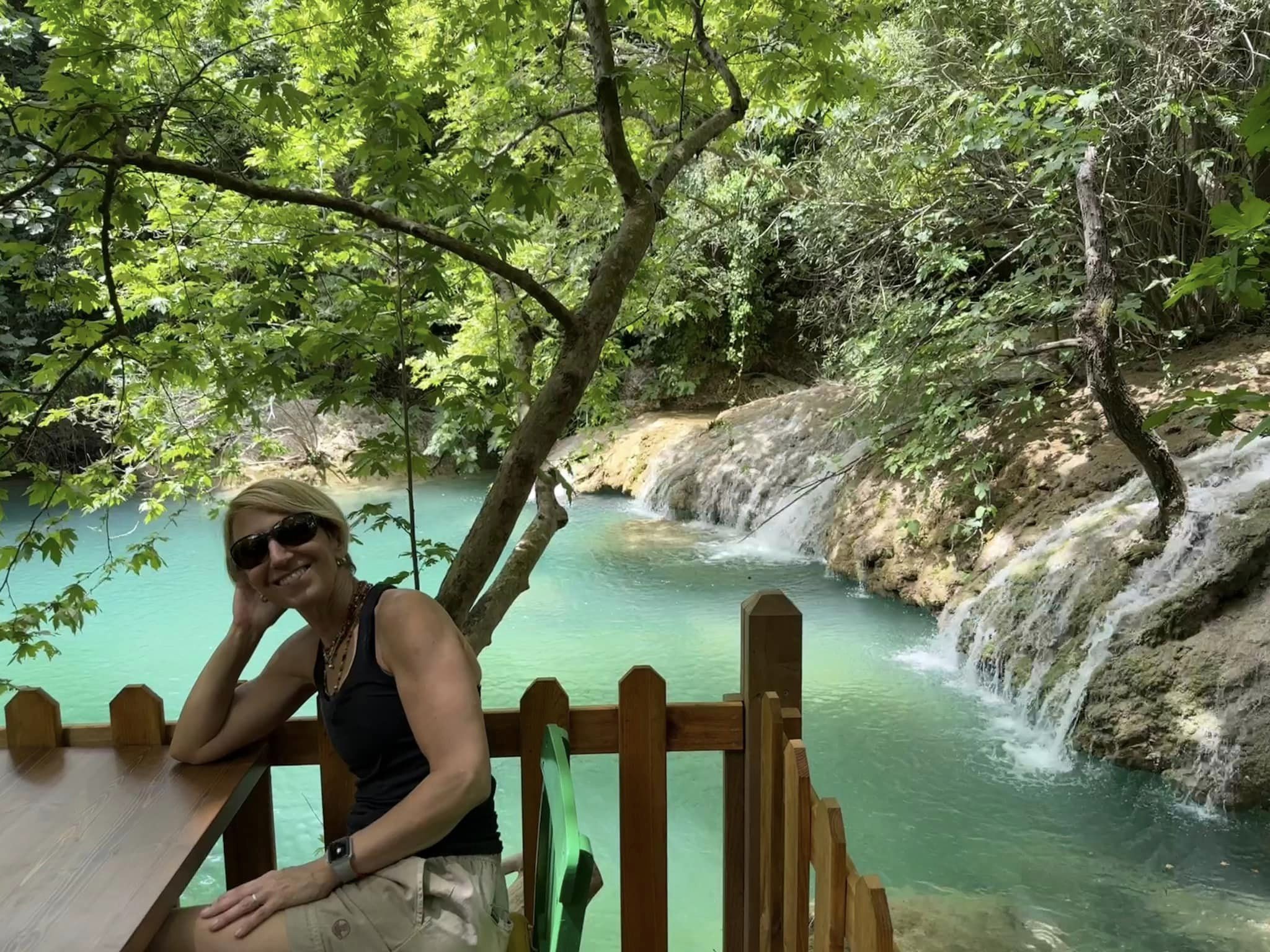
A shaded viewpoint among the falls.
The coffee shop at these falls had an interesting history of the origin of coffee in this area. The Yemen governor of Suleiman the Magnificent (remember his mosque in Istanbul and Hureem, the one love of his life?) became interested in this beverage in Yemen not only because he liked the taste but he discovered it was an important contributor to the academic success of Yemeni students. Suleiman liked it too and gave it to the concubines in his harem. Turkish coffee spread like wildfire around the empire such that the Ottoman Empire carted it around with them (caffeinated soldiers are better performers!). At the siege of Vienna, the Ottoman empire had to pull back and was forced to abandon 250kg of coffee beans. Enter coffee to Europe: the enterprising Viennese opened a coffee house with this bonus left behind by the Ottomans! Coffee preparation went from Turkish coffee at the outset to Espresso in the 16th century and ultimately filtered coffee a thousand years later in the 17th century.
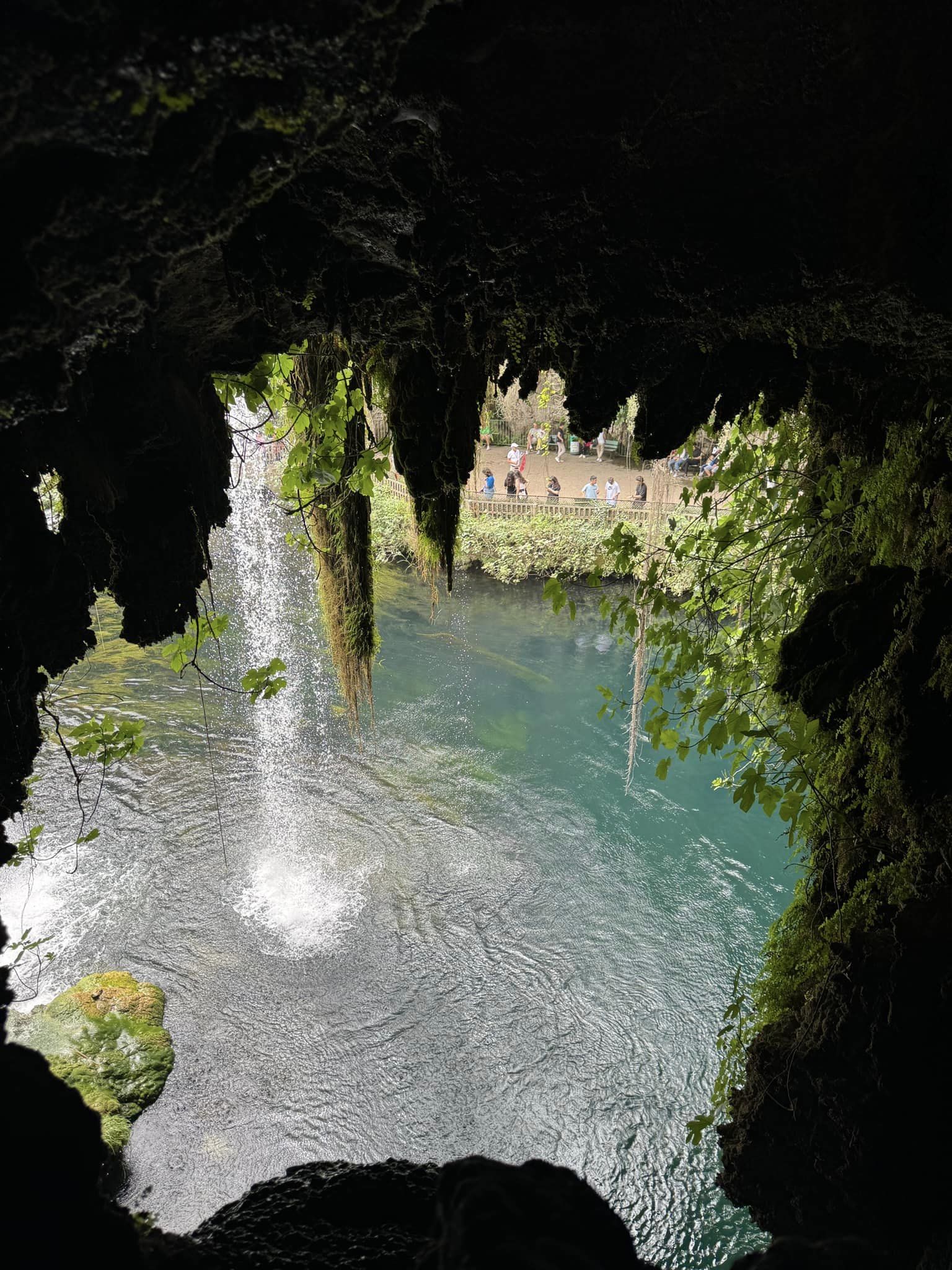
The second waterfall we visited, Duden waterfall, had a drippy cave behind the falls. Made for a very cool view.
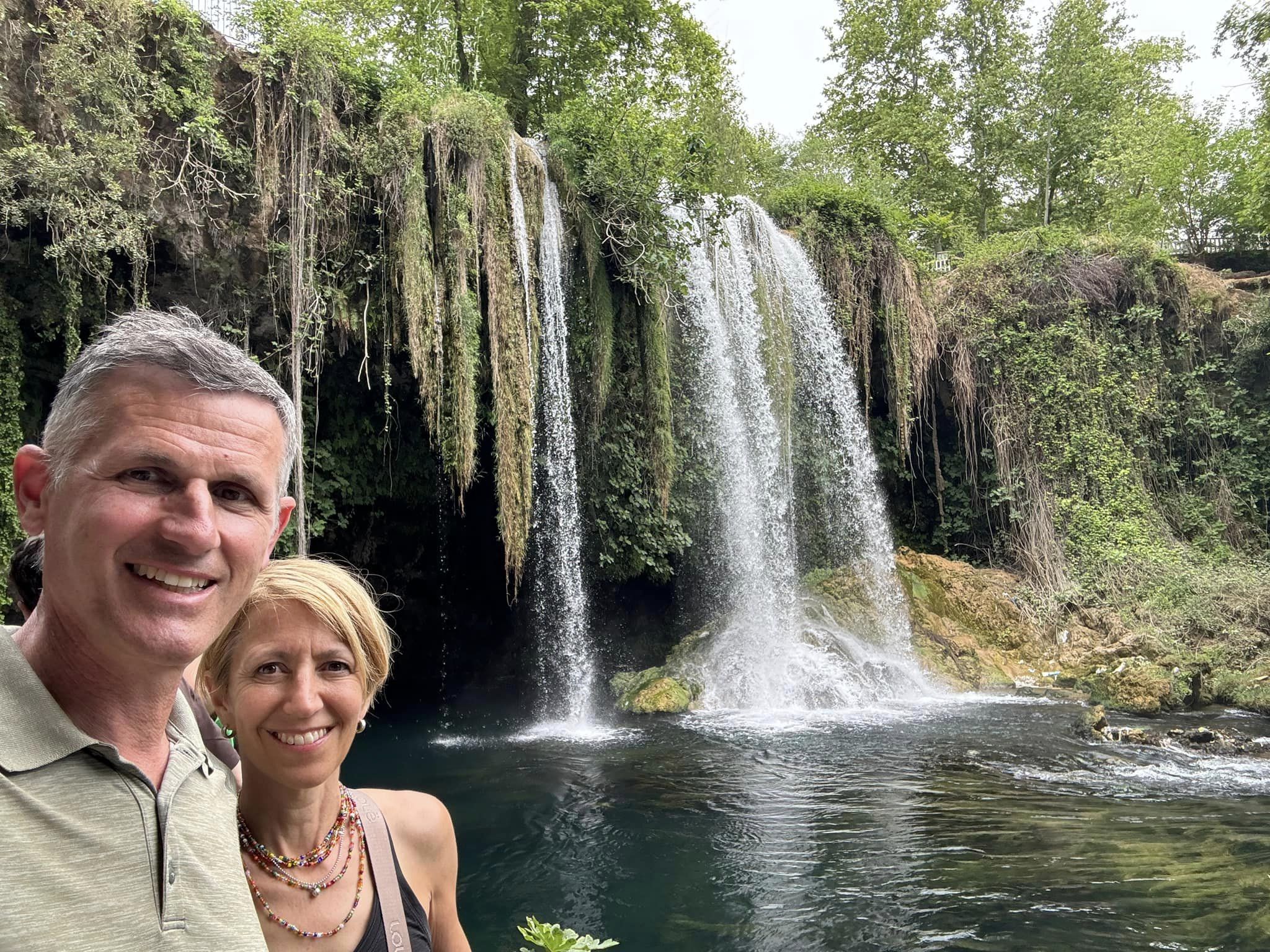
Strategic angle hides how much more popular the Duden waterfalls are! We planned to go for lunch on site and when we got to the restaurant, we just couldn’t bear it. The food we saw looked horrible. We decided we would just wait and hope to find something else en route.
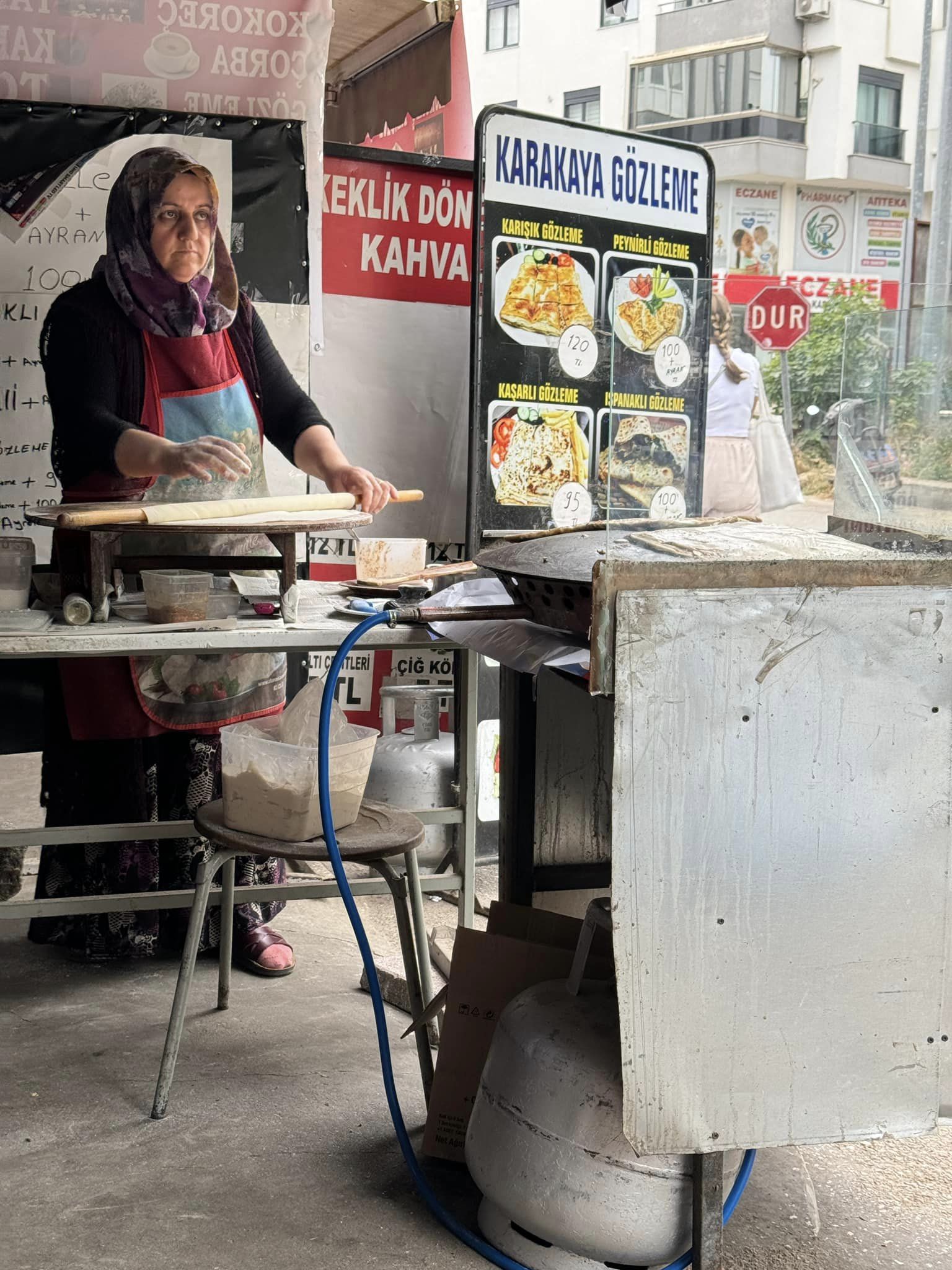
After passing on the lousy food at the waterfalls, did we ever get lucky with this street stand selling Gözleme. The owner starts by rolling a ball of dough into something that seems almost as thin as filo pastry. For us, she layered on spinach, cheese and a spice blend, folded it in half and cooked it on what looks like a flattened out upside down wok.
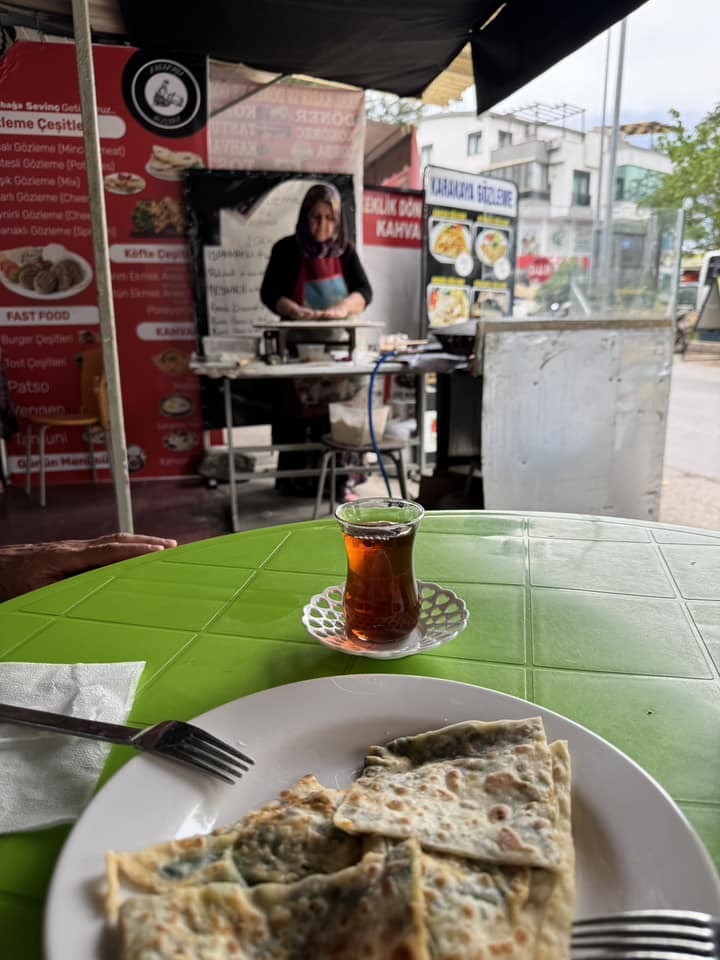
Delicious!
Another one seeking something delicious. My rather persistent and unexpected dinner companion with classic Turkish charm.
The Aah in Antalya
A much needed nature break for a few days, but around here, you’re never far from a historical site and a bit of fire and brimstone.
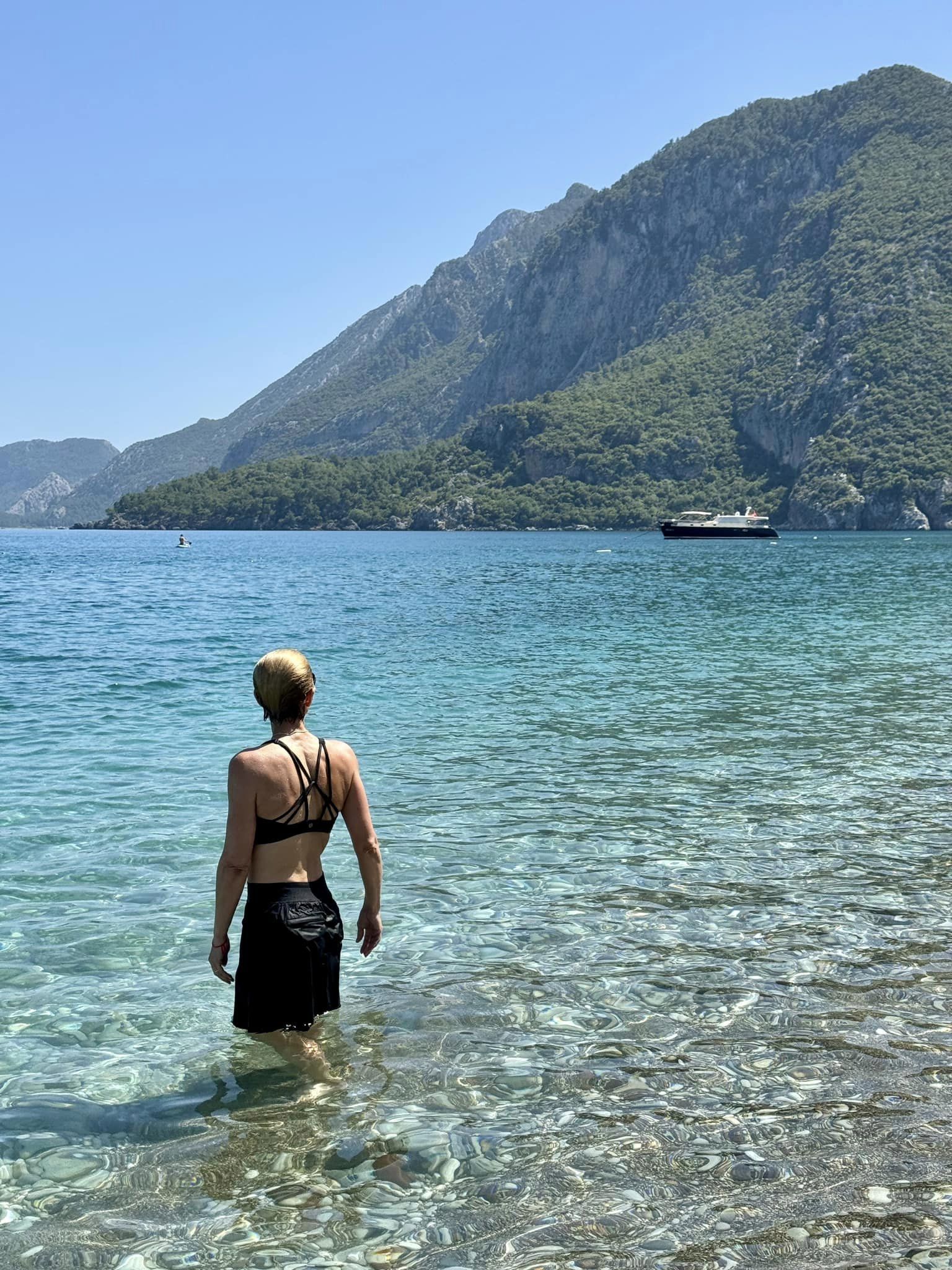
In the town of Çirali, I finally got in a swim. I didn’t know this opportunity would pop up so I swam in my clothes. In this heat, everything dried pretty quickly!
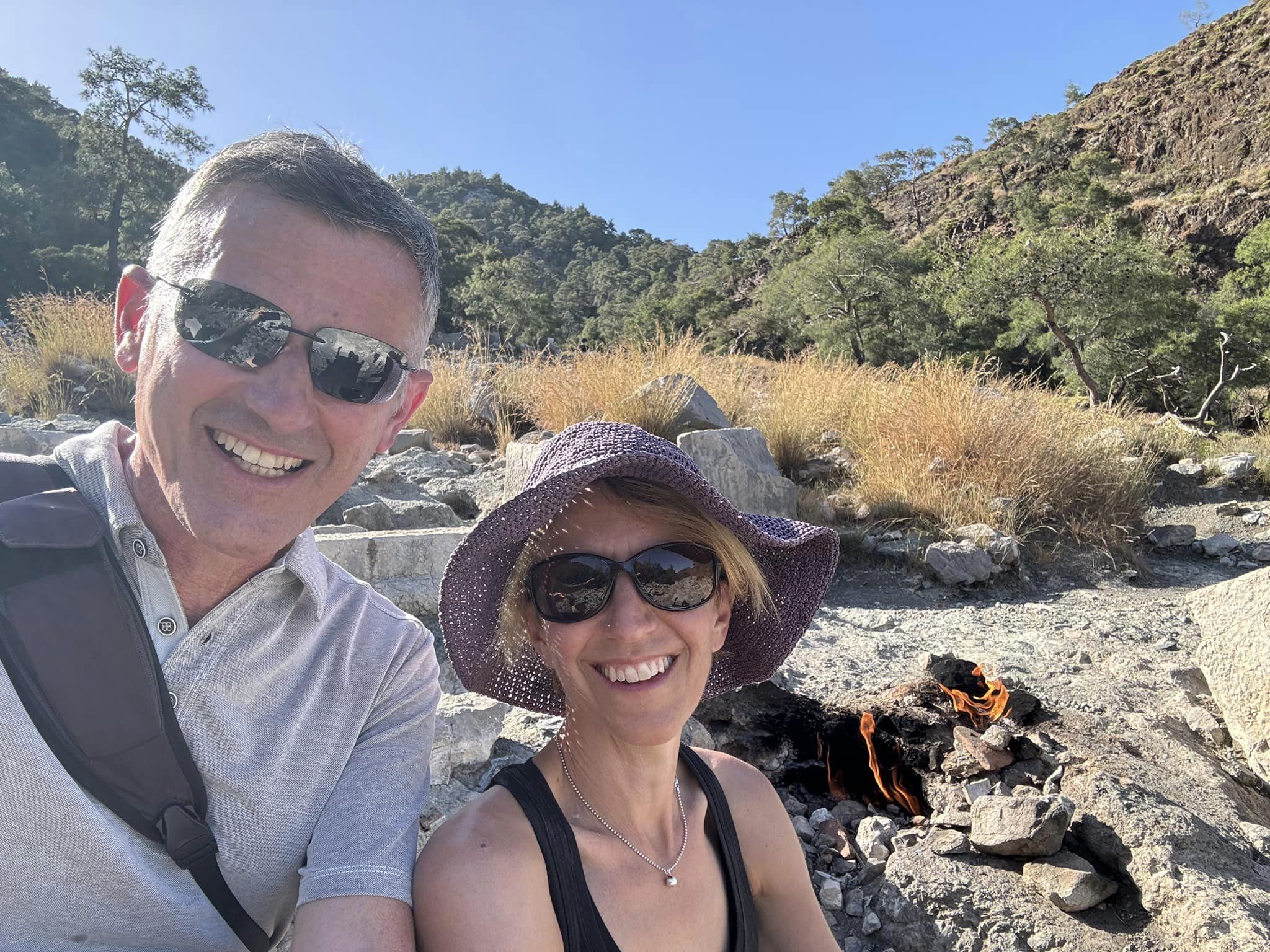
Tucked in on a section of the slope of Mount Olympos are a network of eternal flames. Visible from the sea, these fires of Chimaera have guided sailors for centuries.
The flames here come and go. When one goes, it will pop up from another vent. No need for a lighter to get the fires started again, it all happens naturally. Hopefully all the vents are in these rocky faces as the vegetation around is pretty dry and ignitable. Here you can see five flames. In total, there were about a dozen flames. We heard about others who came here and saw only two flames.
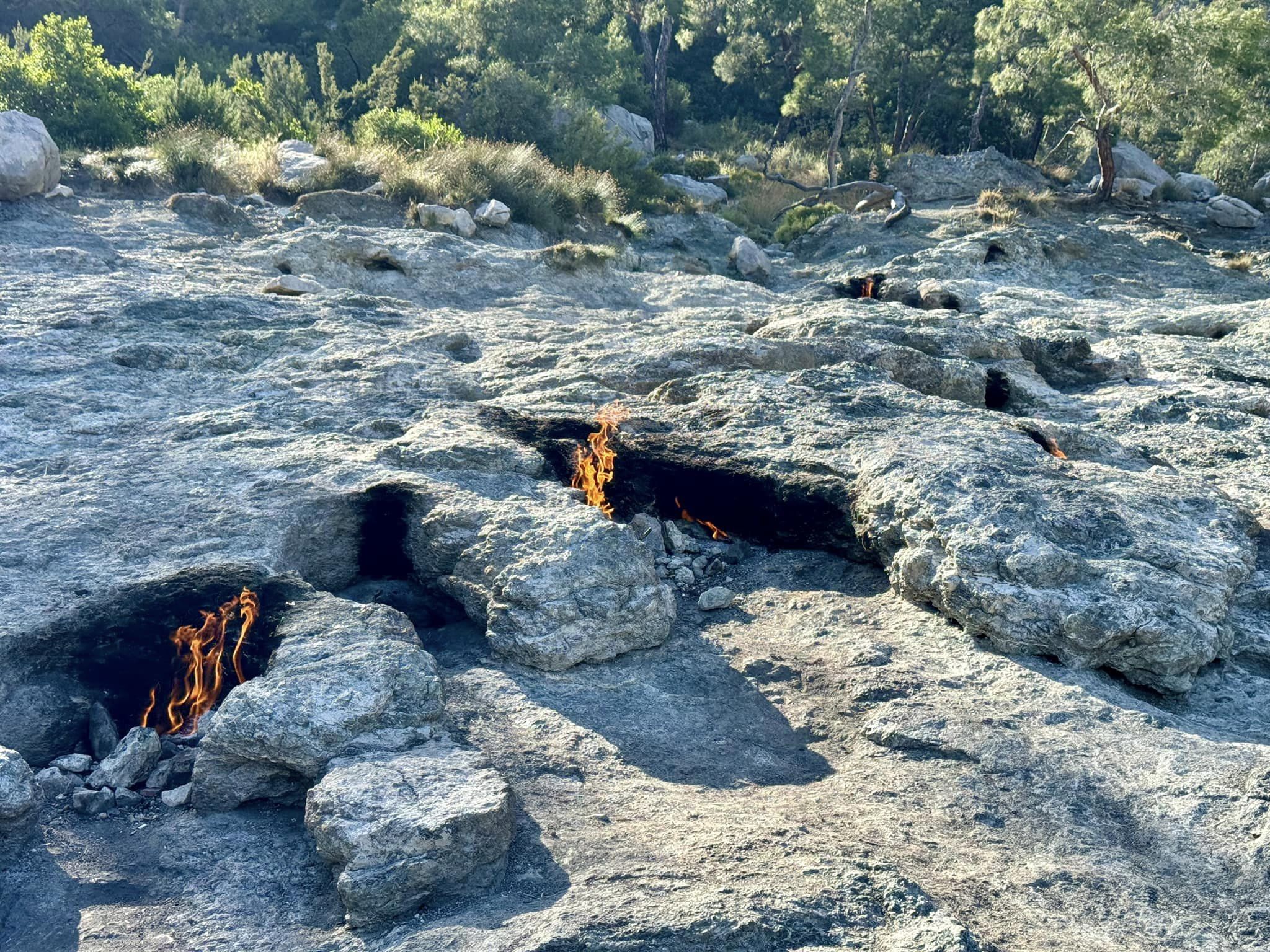
These flames licking out of holes in the rocky slope are natural gas vents where methane leaks out from somewhere deep in the earth. When it comes into contact with air, it spontaneously combusts.
In ancient times, they didn’t know the science behind the mysterious flames and needed an explanation. They came to the conclusion that these fires were the breath of Chimera a fire breathing monster that had the body of a lion, the head of a goat and a snake for a tail. Much easier to grasp than the idea of the spontaneous combustion of methane gas.
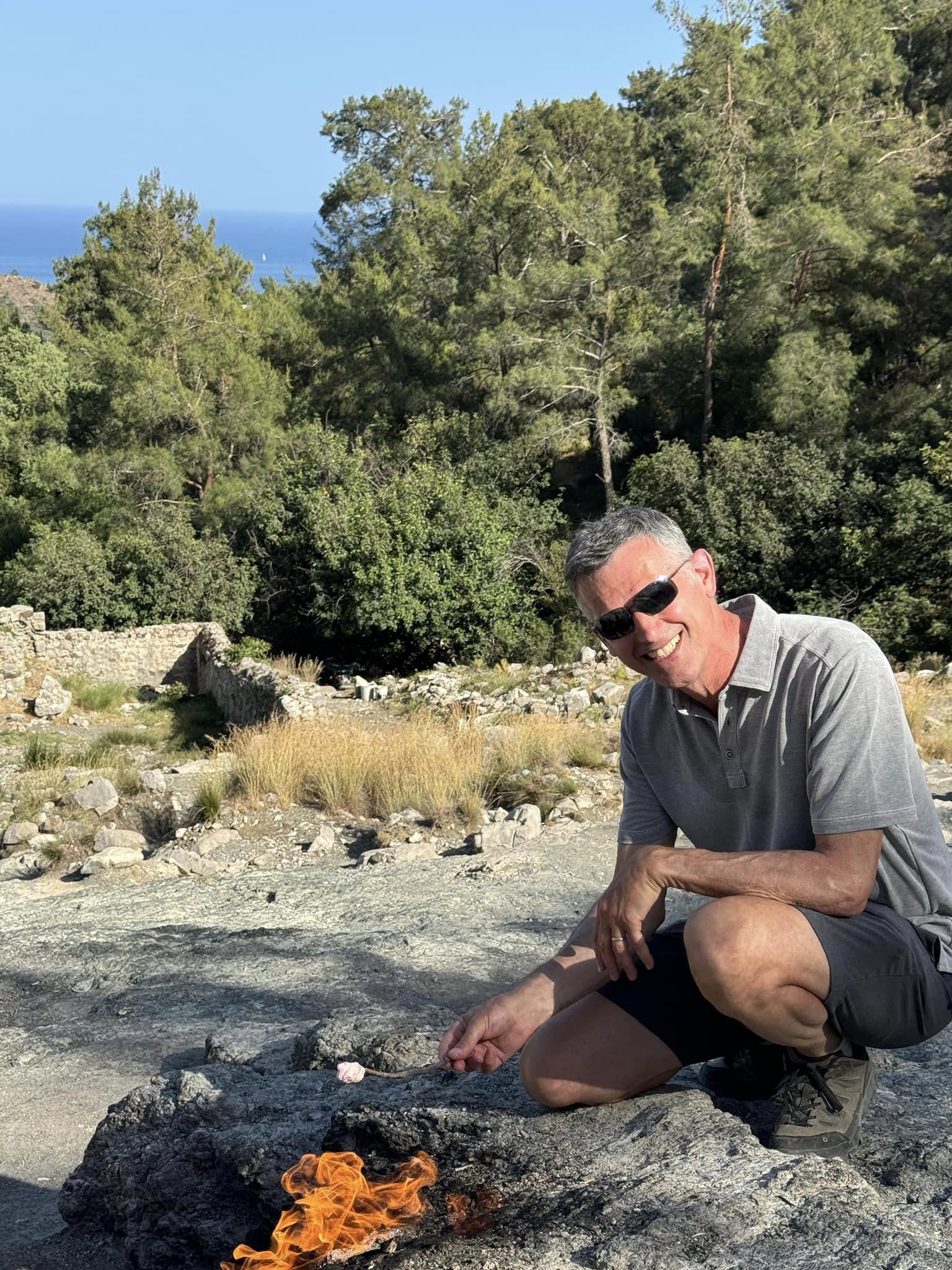
Adam brought a snack!
So, we met a guy and what a day ensued!
Two minutes from our Köprülü Canyon destination suddenly turned into 25 minutes after a wrong turn and magically, a lovely young man came to our rescue on his trusty motorized steed.
Turns out Saefo is a guide and had lots of offerings up his sleeve. I think he pegged us when we passed him on the road and he followed knowing we would miss the turn. Certainly not his first rodeo! We later realized he was one of many guides hanging around the roadside to sell his services. Burst my bubble thinking we had made a new friend.
We had planned on finding a hike and Saefo offered to take us. Adam didn’t think it was necessary. How hard could it be? Saefo told us it could be dangerous (people have died) and I believed him. There’s a reason there are no hikes listed on All Trails here.
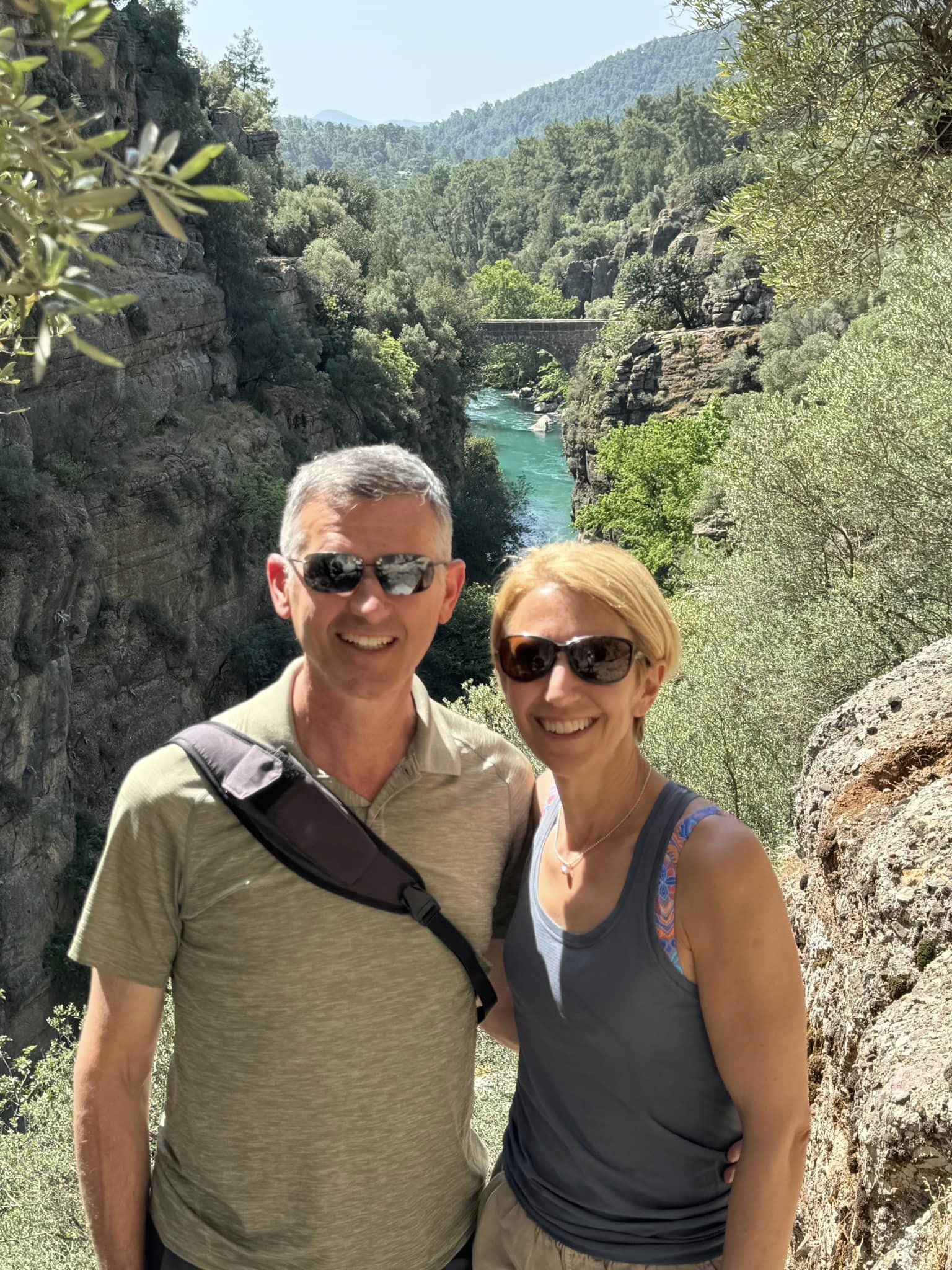
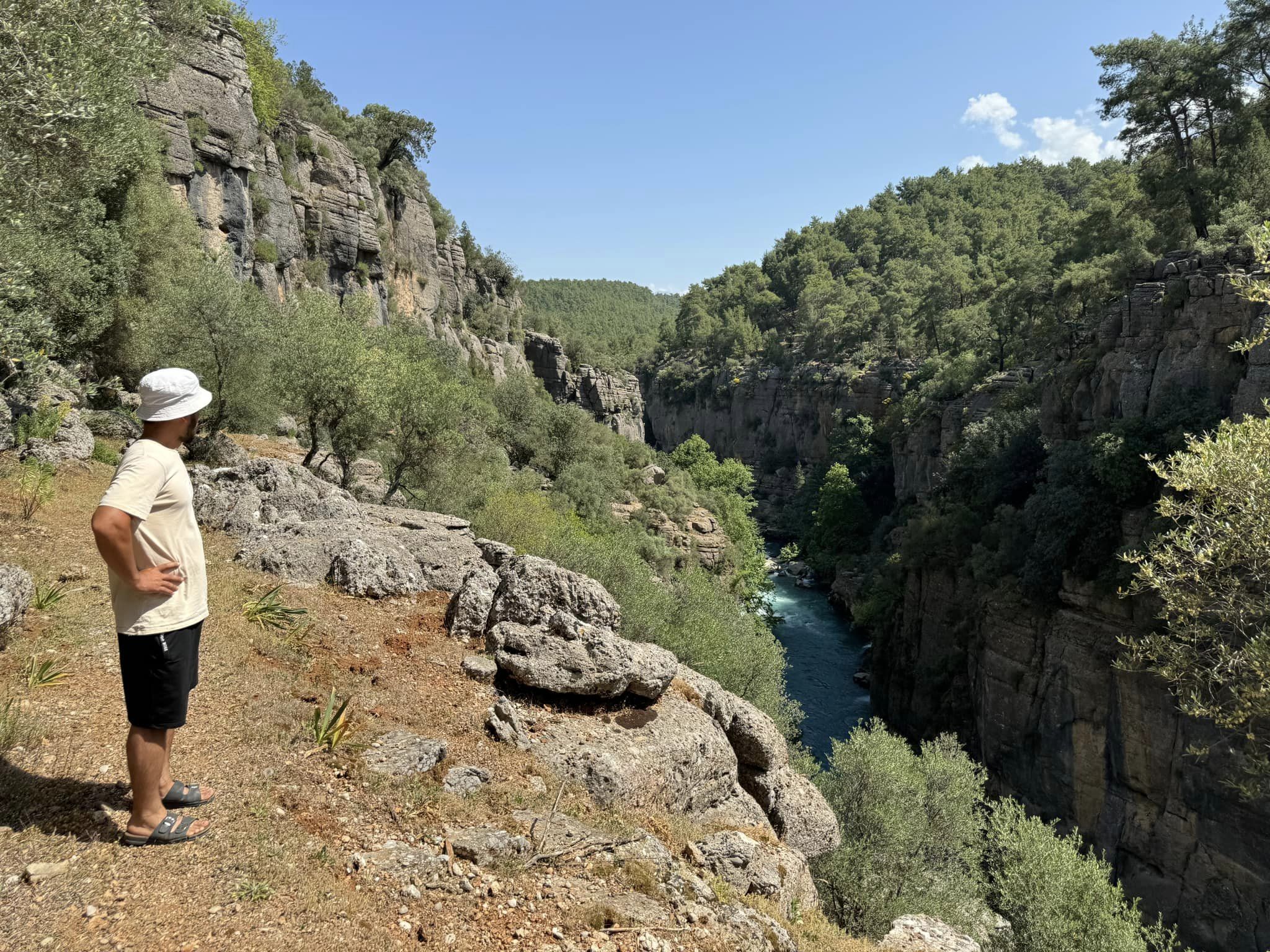
The beautiful Köprü River snaking beneath 100m canyon walls.
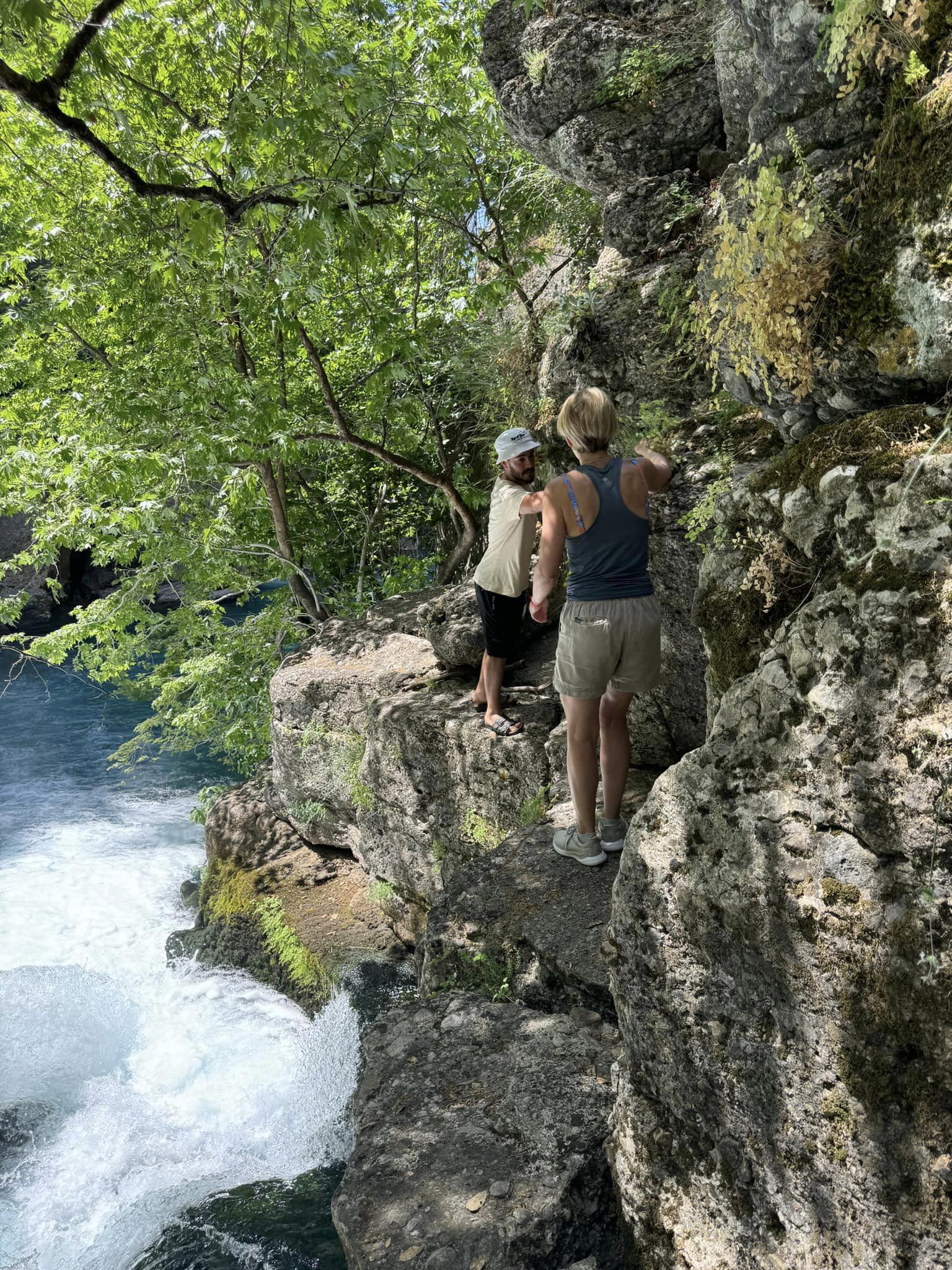
Saefo grew up here and is a veritable mountain goat. Before he took us on the hike, he checked our shoes and deemed them suitable. He was wearing backless rubber sandals.
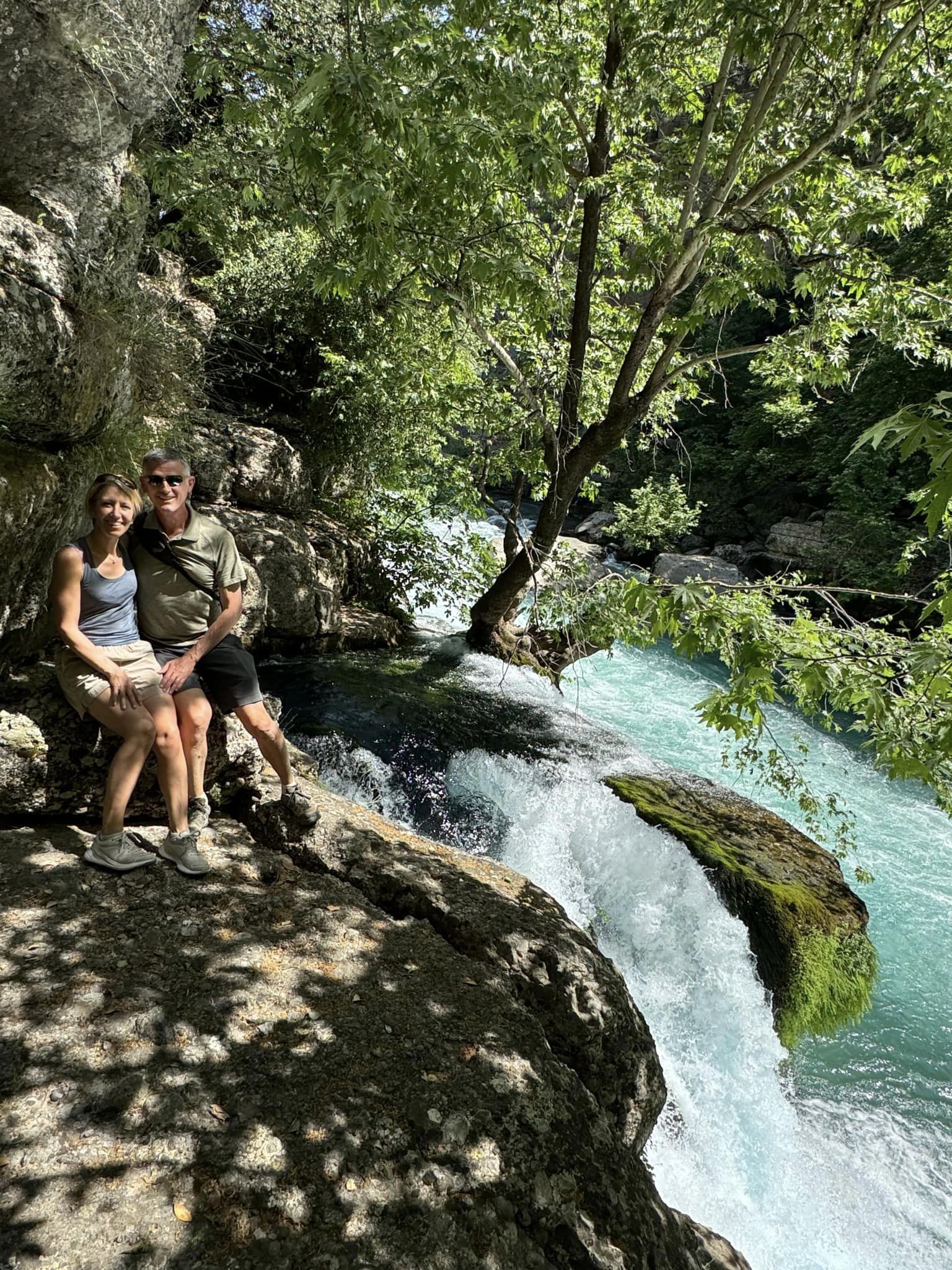
Charming spot for a break above an incredibly powerful flow.
This hike turned into a real highlight for us. Saefo took us places we could never have navigated on our own let alone find. He guided where to put our feet and even used his thigh and his hand, on occasion, as a step for me. We scrabbled up, down and around rocks, rushing water, trees and roots to the most stunning views. Magical.
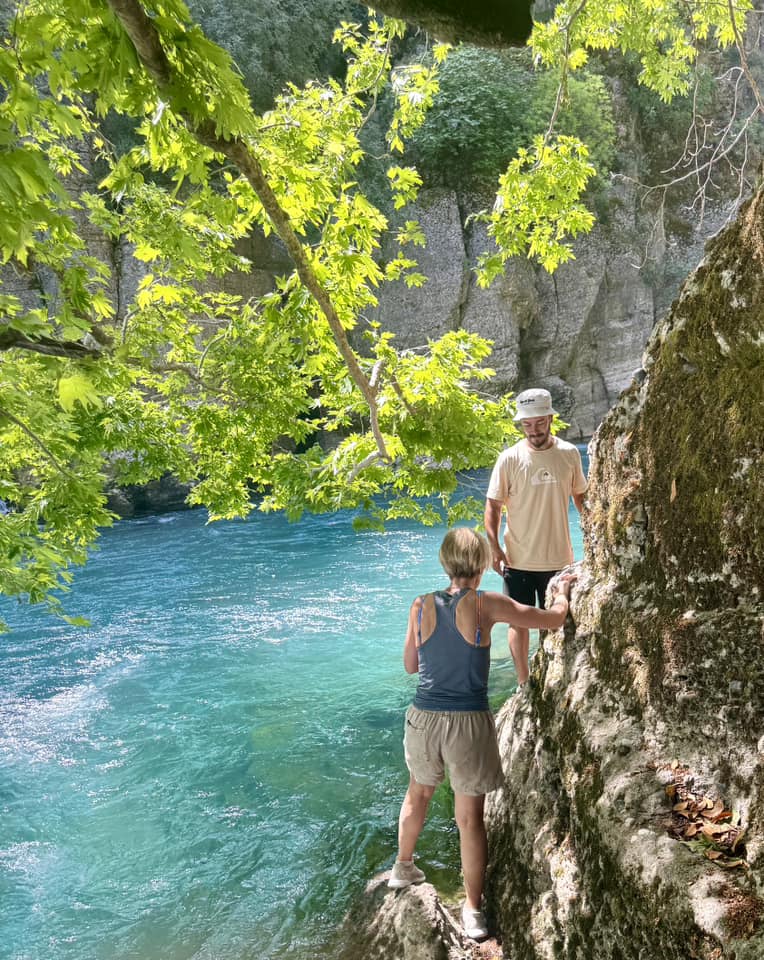
I’m really wondering how I’m supposed to get to where Saefo is…
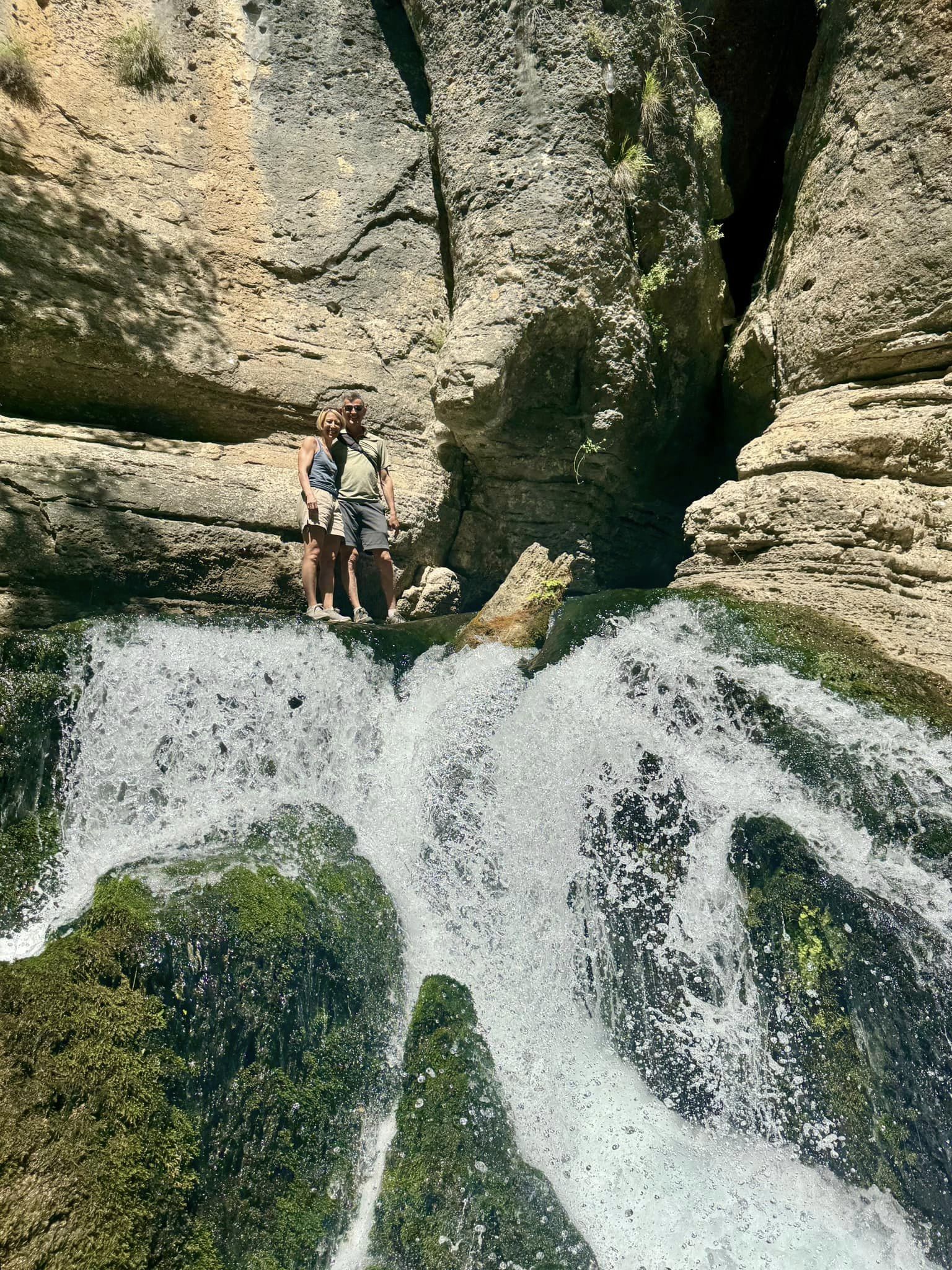
Yup, Saefo is balancing on a rock in this rushing water to get the photo. Glad my camera is waterproof but if he dropped it, I don’t think that feature would matter.
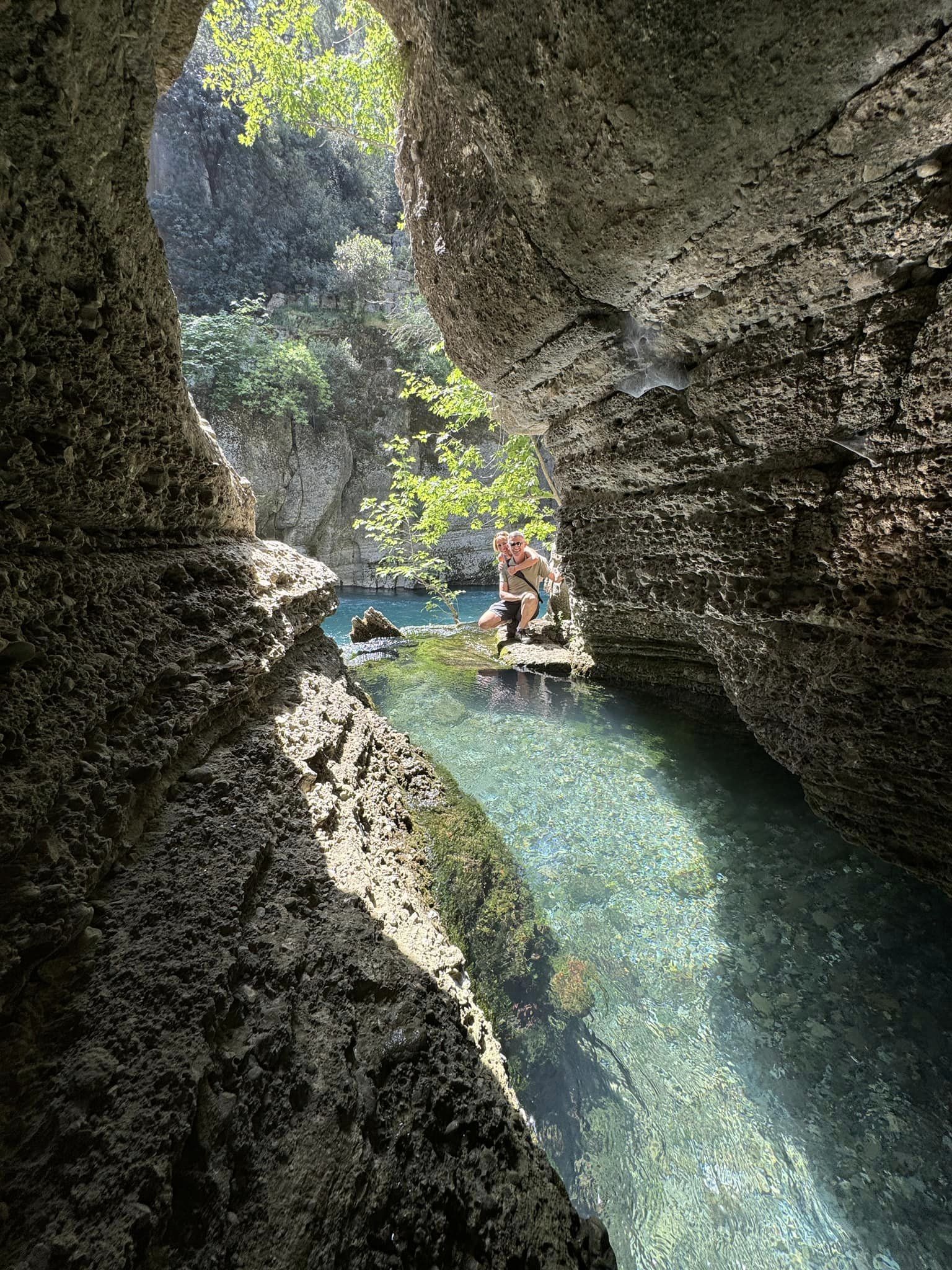
Caves tucked into cracks in the rocks along the canyon walls. Hitching a ride with Saefo for our next adventure.
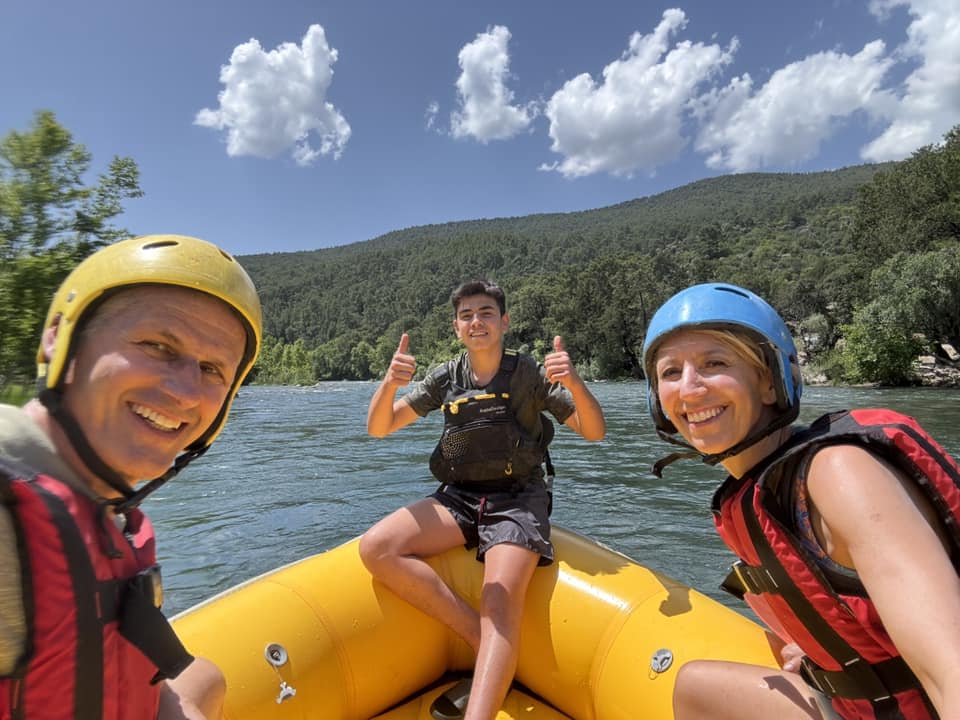
Turns out his family’s business is just up the road. His 17-year-old cousin, (with four years of experience) took us rafting. I was a touch nervous when we started out that he was so young, but he was great! I don’t think I would have stepped into the raft with a 13-year-old guide though…
I’m a first-timer…there’s no letting go of the side ropes for me!
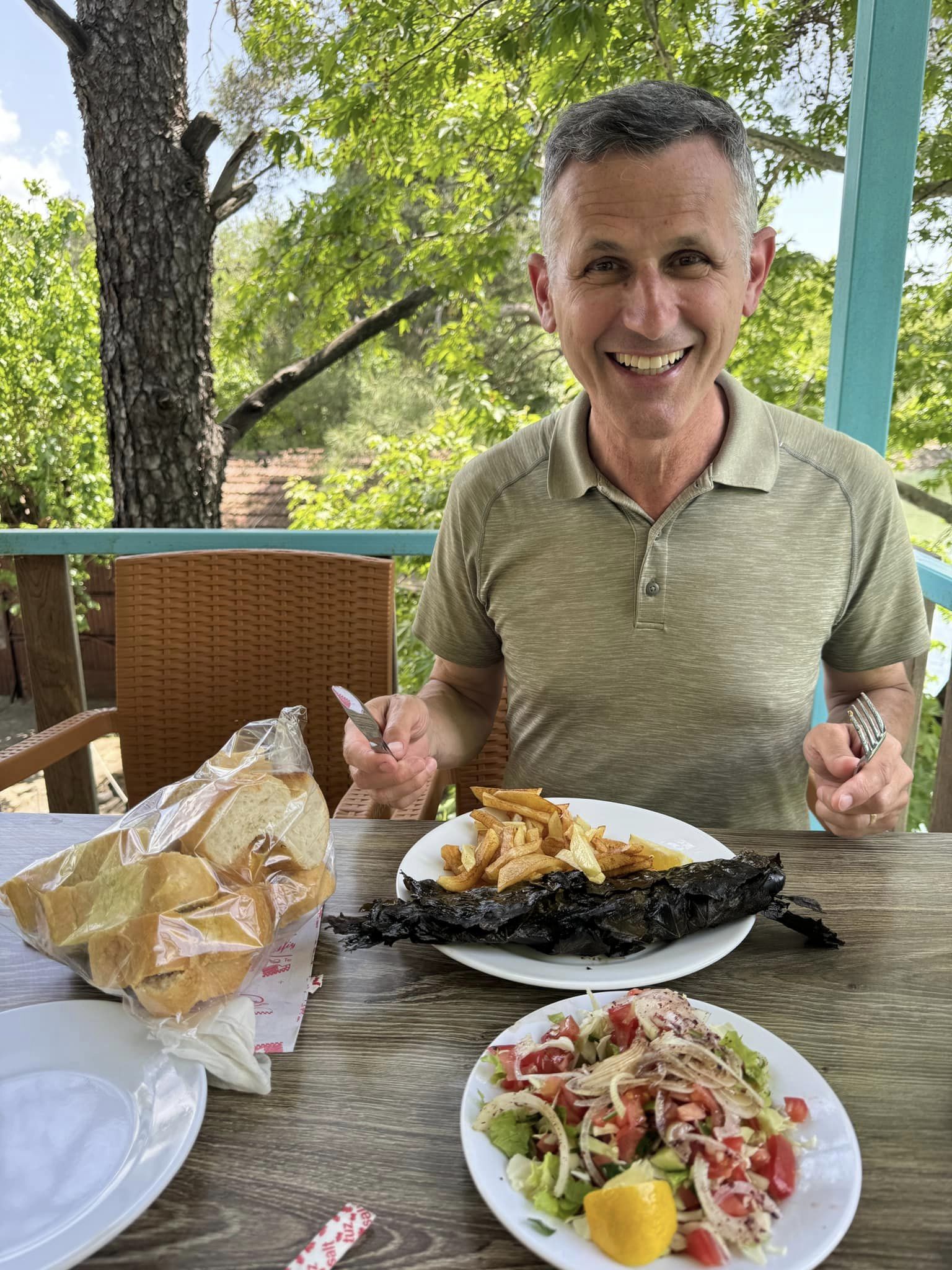
Then, we went to Saefo’s mother’s restaurant for a fish lunch (fish from this very river), wrapped in some kind of leaf and cooked in a big wood-burning oven.
If you ever find yourself in the Taurus Mountains near the tiny town of Selge, just ask for Saefo. Everyone knows him!
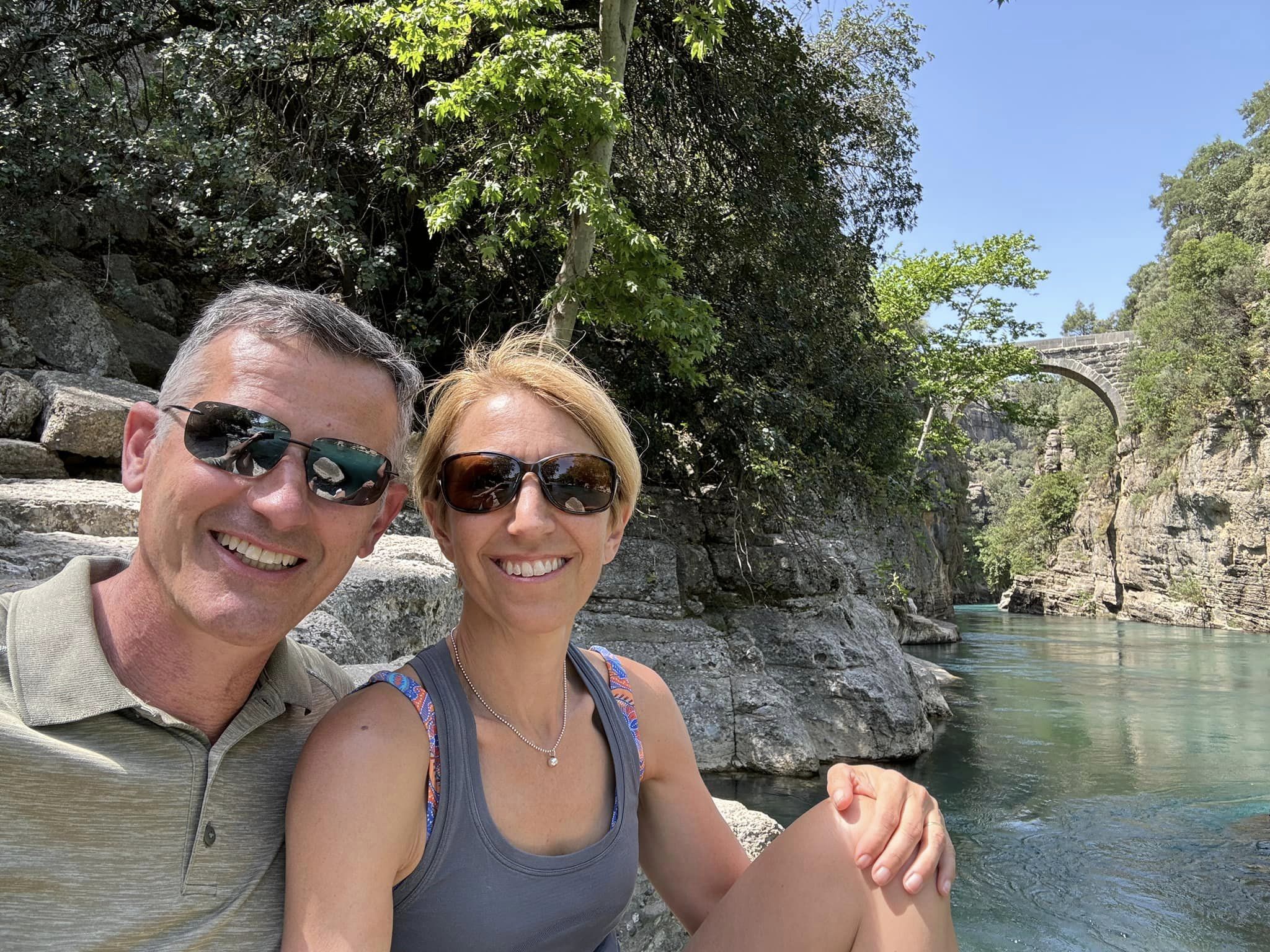
A calm bit of the Köprü River with the 2nd century Roman Oluk Bridge, still open to traffic, in the background. The bridge led to the ancient town of Selge, 11km up a winding mountain road.
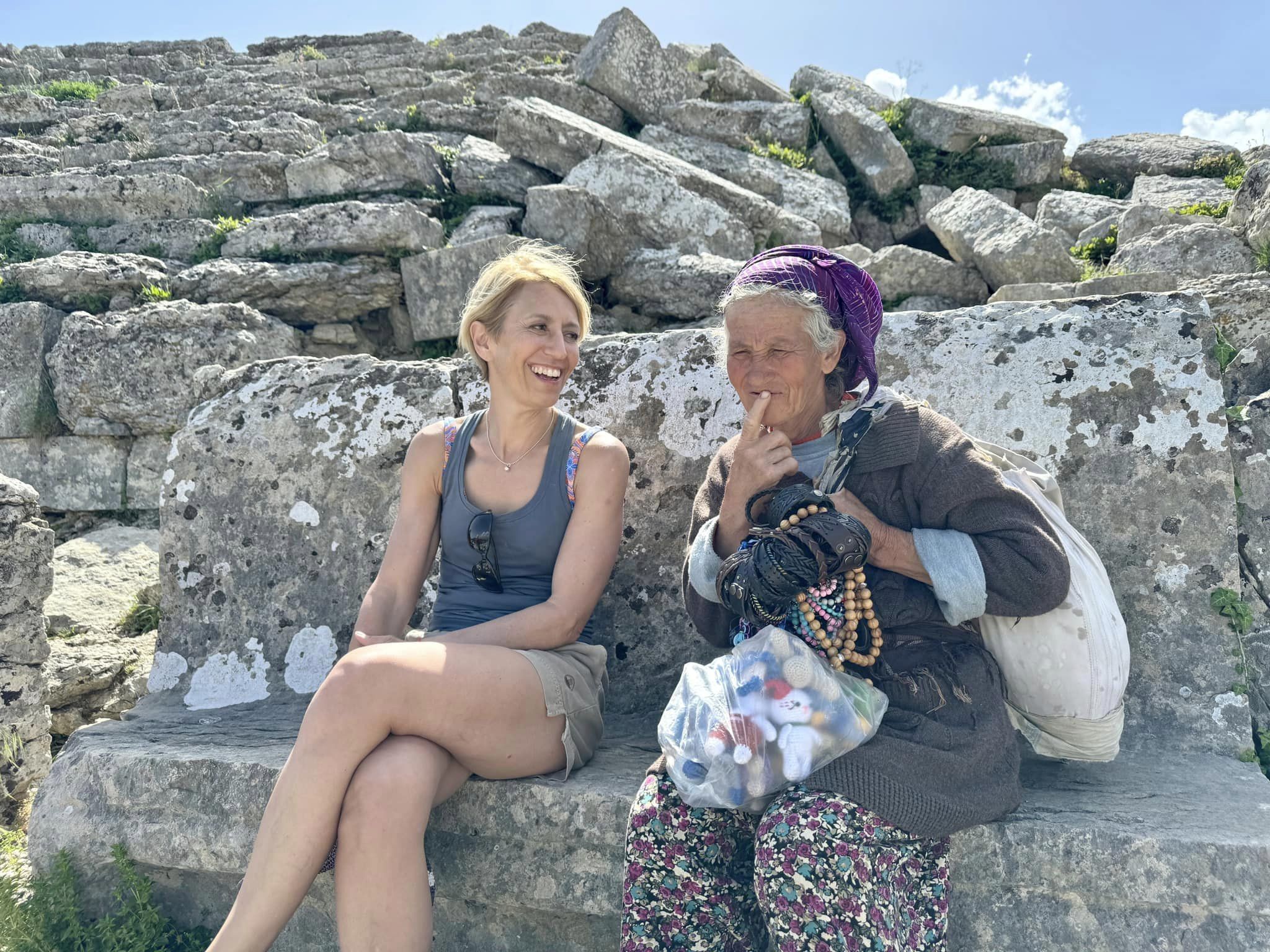
Her name is Una. She sells trinkets at the 3rd century Roman theatre in Selge. She is a lovely, charismatic woman who has an interesting vocabulary of mixed up English, German, French and other languages I can’t identify. Una carries a bunch of bags filled with her wares which she claims to hand make herself. She even had a bag with partially completed bracelets attached to spools of thread and a bottle holding a long needle as proof. She should have been too busy crafting to follow tourists around the theatre as all the ladies here are selling the same stuff.
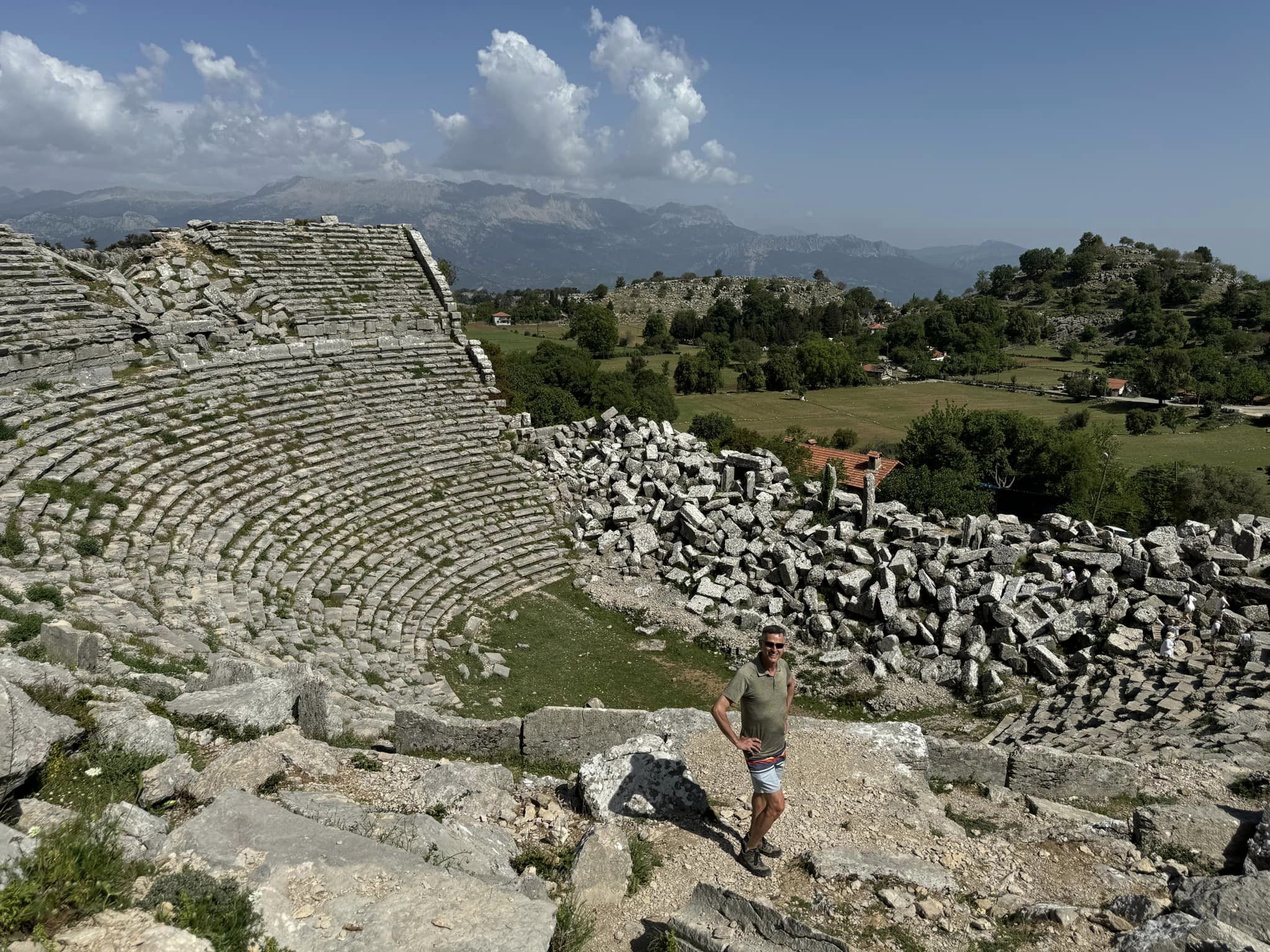
This theatre was last restored during Roman times. It’s in pretty good shape given it hasn’t been touched in 2,000 years.
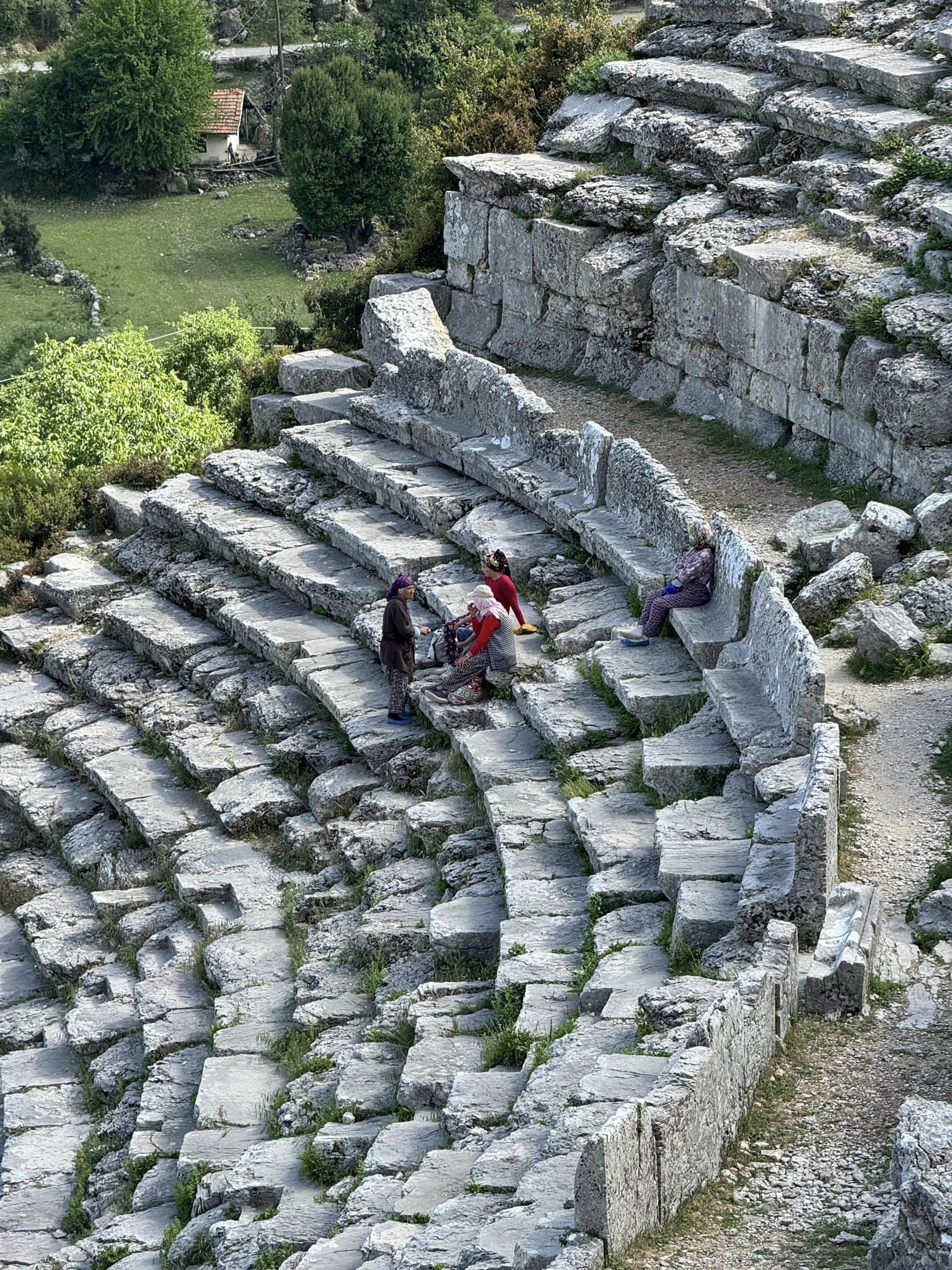
In its ancient heyday, this town had a population of 20,000. People still live here and I would guess the current population is about 50 (I can’t find any current population stats…I guess the census enumerators don’t bother trekking up here to take a tally. Here are a few of the local residents, including Una, arguing and presumably negotiating who gets first dibs at the next batch of tourists to find their way here.
Antalya on Video
Antalya, Turkey — old city Video by Adam Lorant
Antalya, Turkey — harbour Video by Adam Lorant
Antalya, Turkey — waterfall Video by Adam Lorant