April, 2026
Ollantaytambo
Before our hike to Ollantaytambo, we made a stop at Pumamarka, another set of Inca ruins with a bit of a complicated history. No written record of the time means the archaeologists give their best guess, often questioned by others. That’s what science is all about!
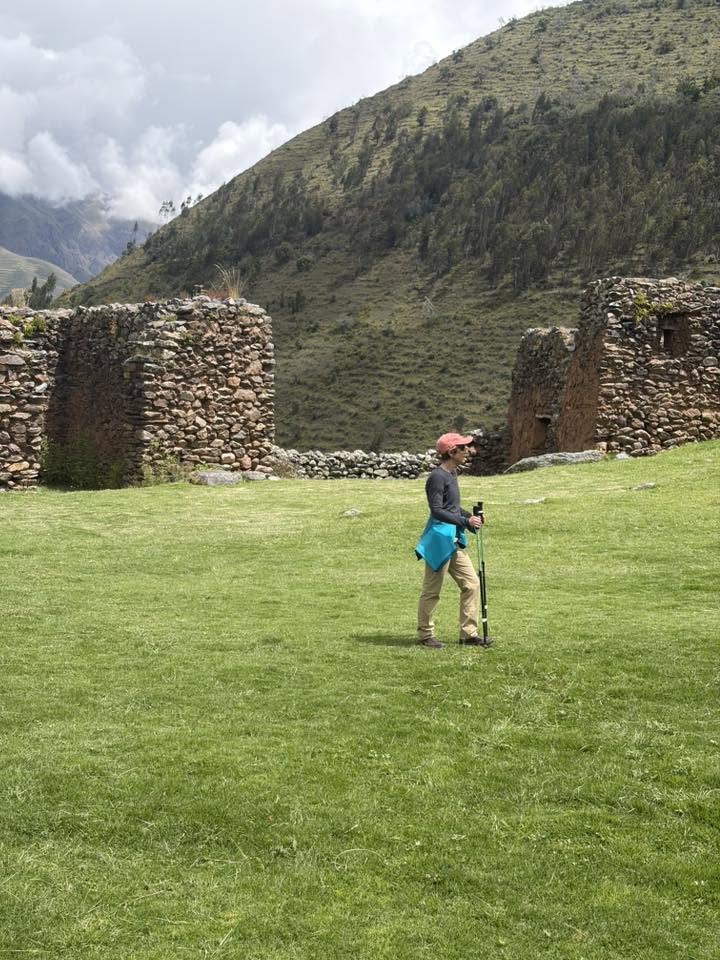
Pumamarka origins are a bit in question. It predates the Inca but it’s a bit unclear if it was built by the Wari (600-1000AD), considered to be the first true empire in the Andes, or the Killke (900-1400AD) who immediately preceded the Inca (1400-1532AD). Some believe that the Inca are actually a Killke group that ended up dominating. The feeling is that too much time passed between the end of the Wari and the beginning of the Inca. But suffice it to say the Inca did to those they followed what the Spanish did to the Inca. By absorbing and building on top of and alongside what they conquered thereby asserting their political and spiritual dominance. This approach said to conquered peoples: “we are the rightful inheritors of everything that came before us.”
The Inca were only really a dominant empire for about 100 years (roughly 1438–1533 AD) before the Spanish arrived, so they were extraordinarily efficient at absorbing existing infrastructure, roads, terraces, and sacred sites rather than starting from scratch.
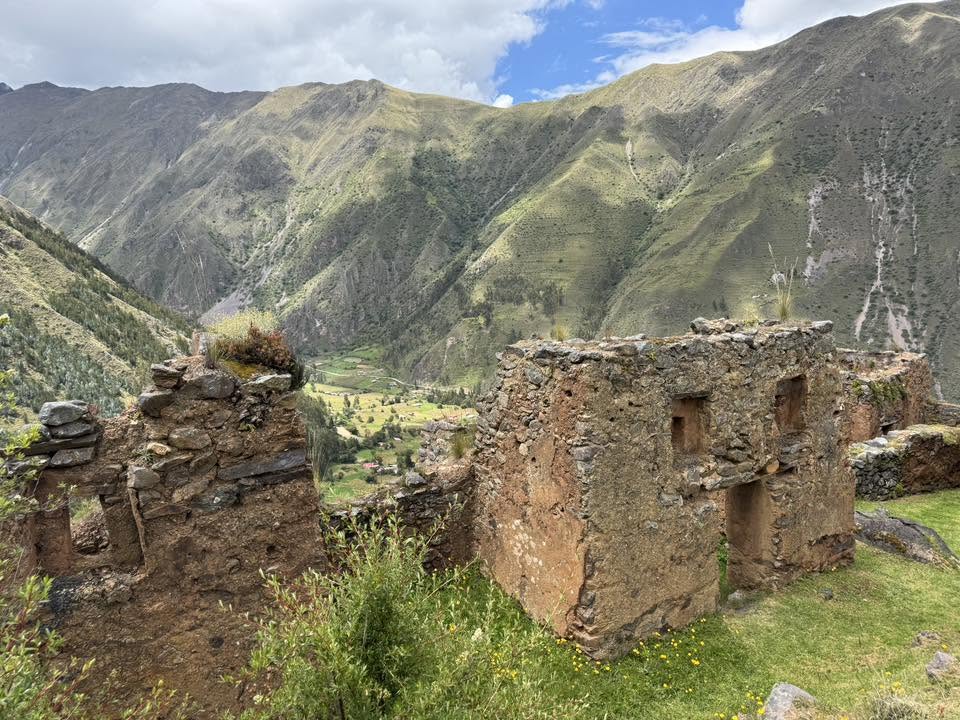
The building methods here (Wari or Killke or a combination) are much cruder than the Inca’s precision stone cutting and building but crude doesn’t mean unsophisticated in terms of engineering. These people built two-storey structures that are still standing today.
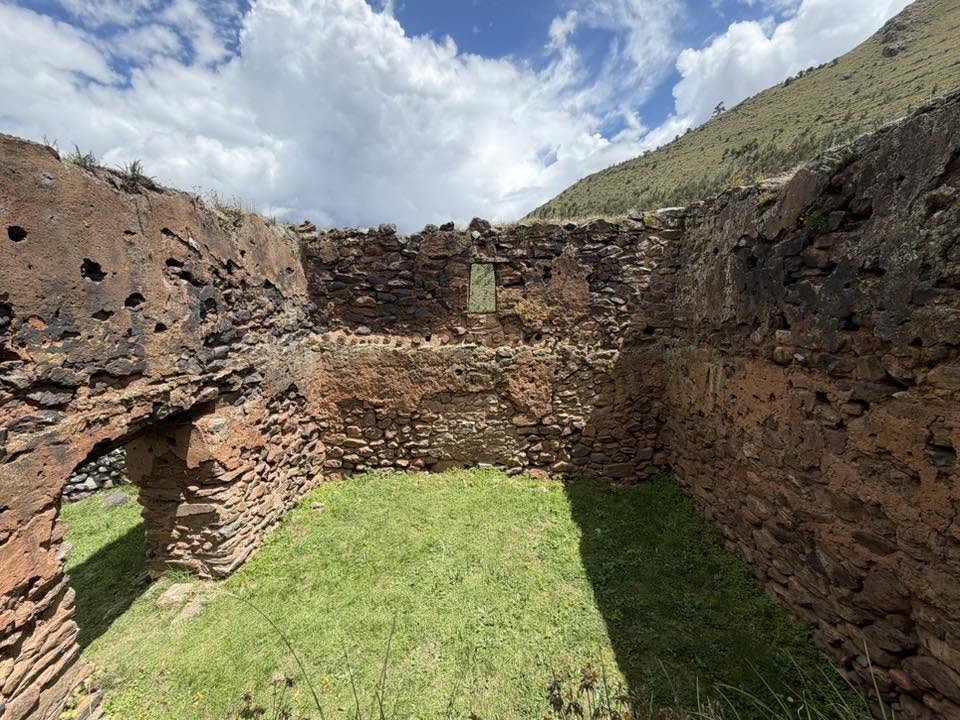
They may not have been as pretty as the Inca’s but they knew how to build load bearing walls to support a second storey with fieldstone and mud mortar. Stone jutting out above the height of a single storey acted as floor beam supports for timber beams long rotted away. The upper floor would have been used as storage with upper windows providing light and airflow. These peoples were obsessive about storage; it’s what guaranteed feeding their people and warriors.
Some upper floors may also have been used for elite visitors, raising them above the common people, or may have been used as look out points given that this was a strategic military place.
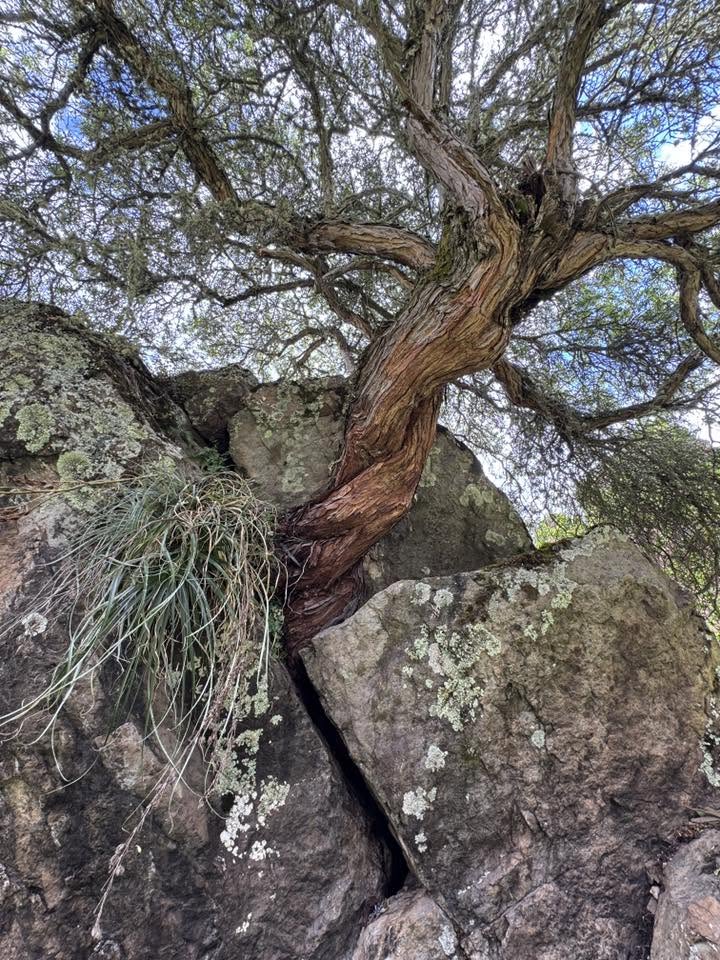
A beautifully twisted tree growing out of the rocks.
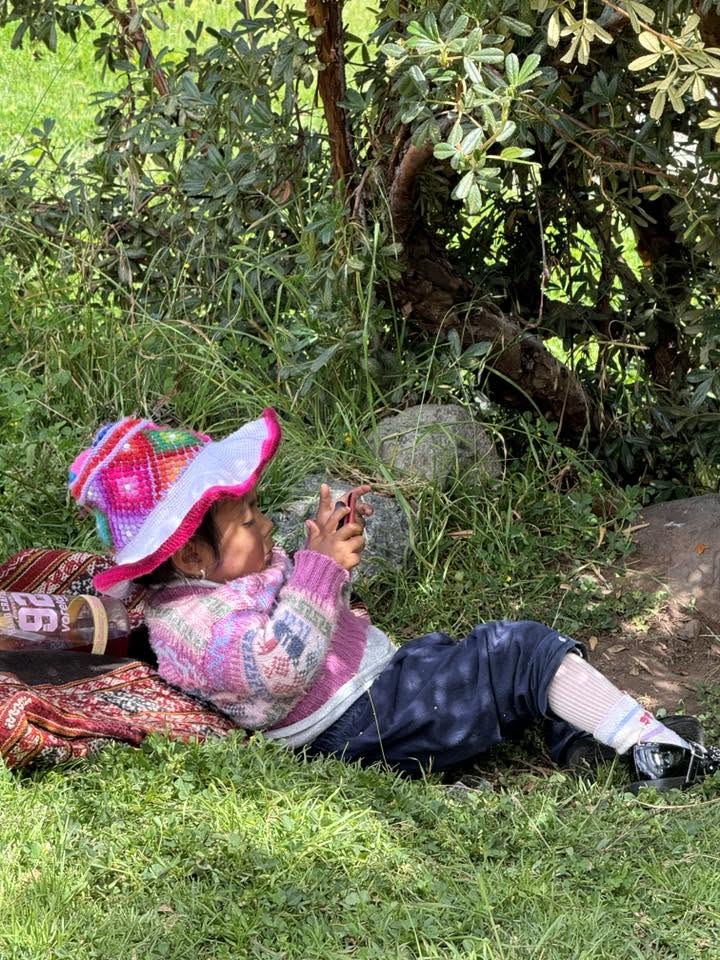
This two-year old came to work with her mom today. Mom had her blanket full of woven and knit items spread on the grass. While mom tries to sell to the very occasional tourist that comes to Pumamarka, her daughter is very busy on mom’s phone, swiping left and right. Who knows what Amazon orders will end up at their village!
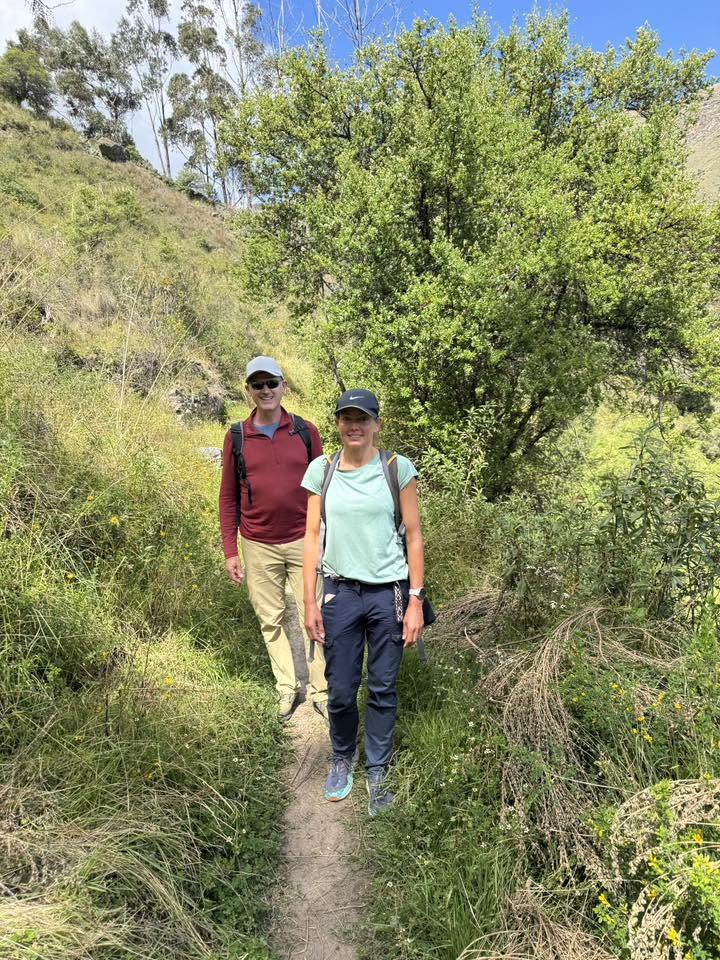
After leaving mom selling and daughter (possibly) online shopping, we began our descent towards Ollantaytambo. Her is Adam with our wonderful new friend Peta. Such a treat to spend the week together with her and her lovely family!
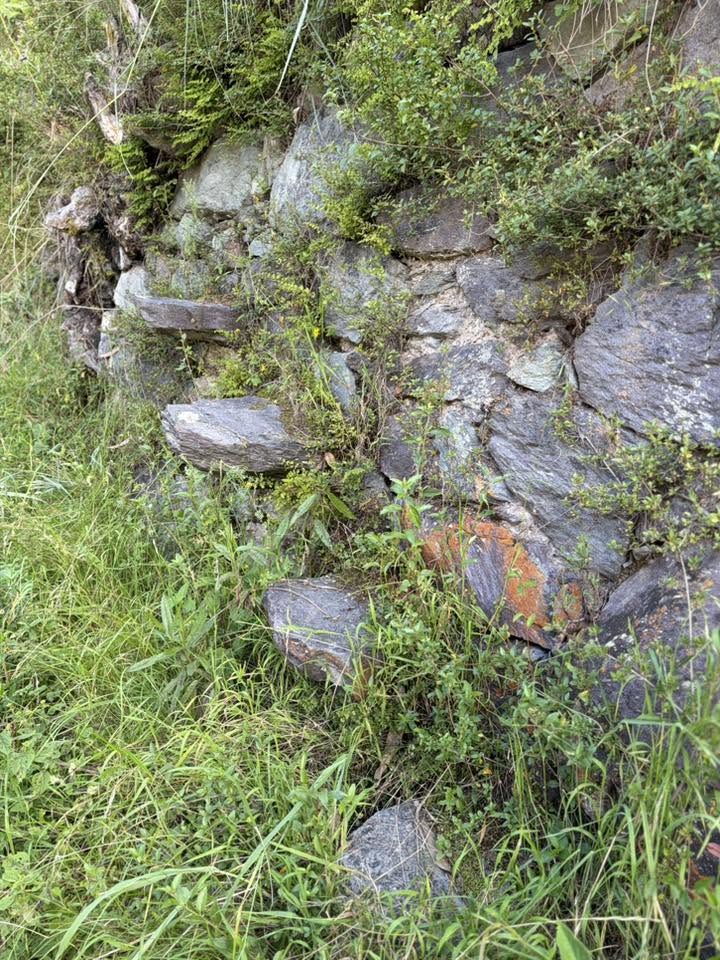
We walked along the overgrown terraces with Inca aqueducts running in channels beneath the grass. Here are the steps the Inca built to climb up from one terrace to another.
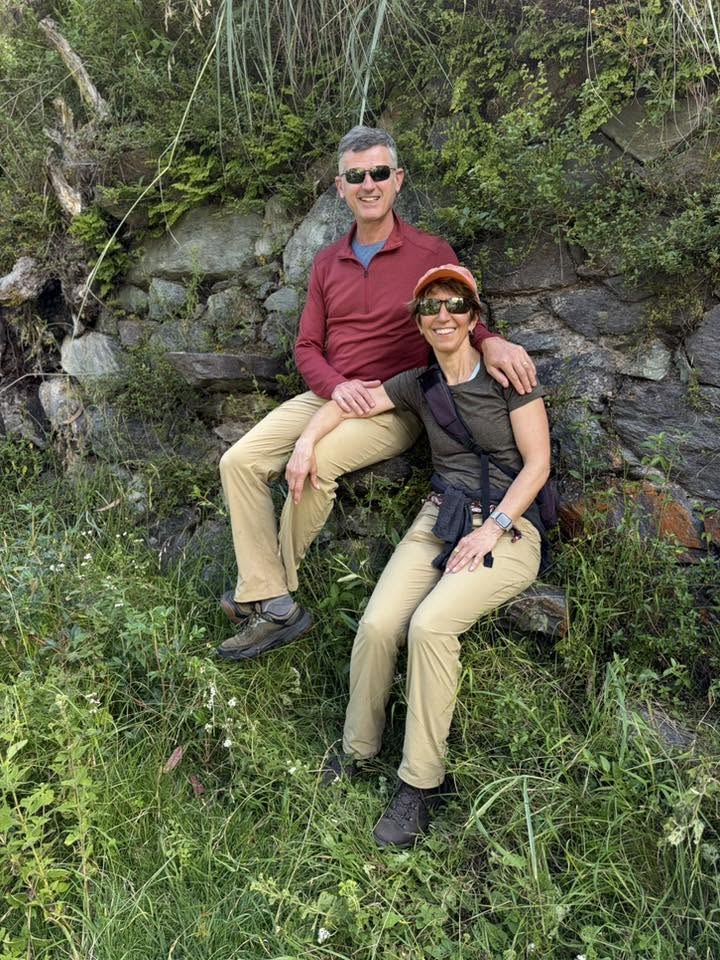
These steps make a perfect resting place!
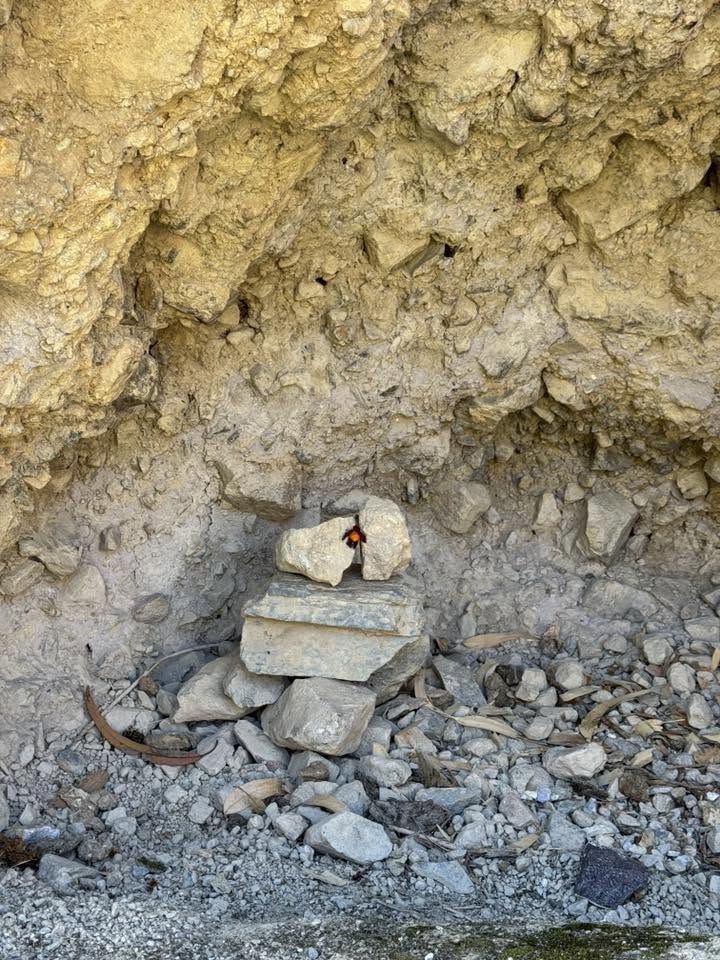
A little floral offering.
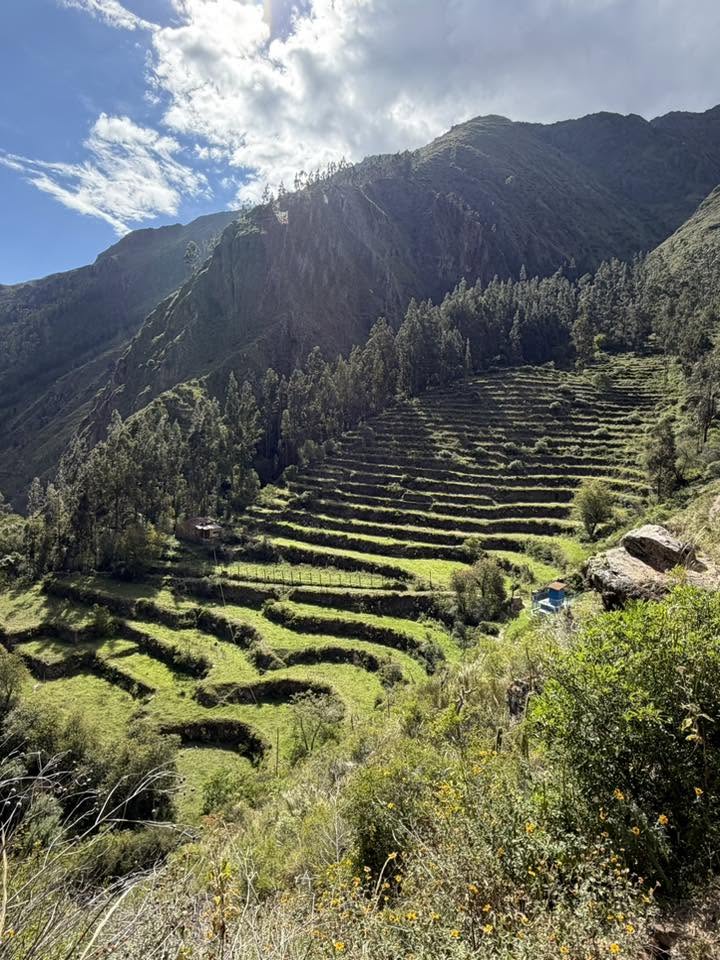
This interestingly shaped terrace complex is called Musqa Pukyo or the Pata Pata terraces. This is a great example of how the Inca adapted their agricultural systems to the terrain they were using. These curved terraces followed the natural shape of the hillside. This maximizes the catchment of water by directing it into the irrigation channels rather than it running straight down and eroding the terrace walls. The curves also create structural strength, like an arch in architecture, resisting the pressure of the earth better than a straight wall.
Among the oldest terraces in the Sacred Valley, these would have gown potatoes, corn and other crops to feed nearby communities including Ollantaytambo.
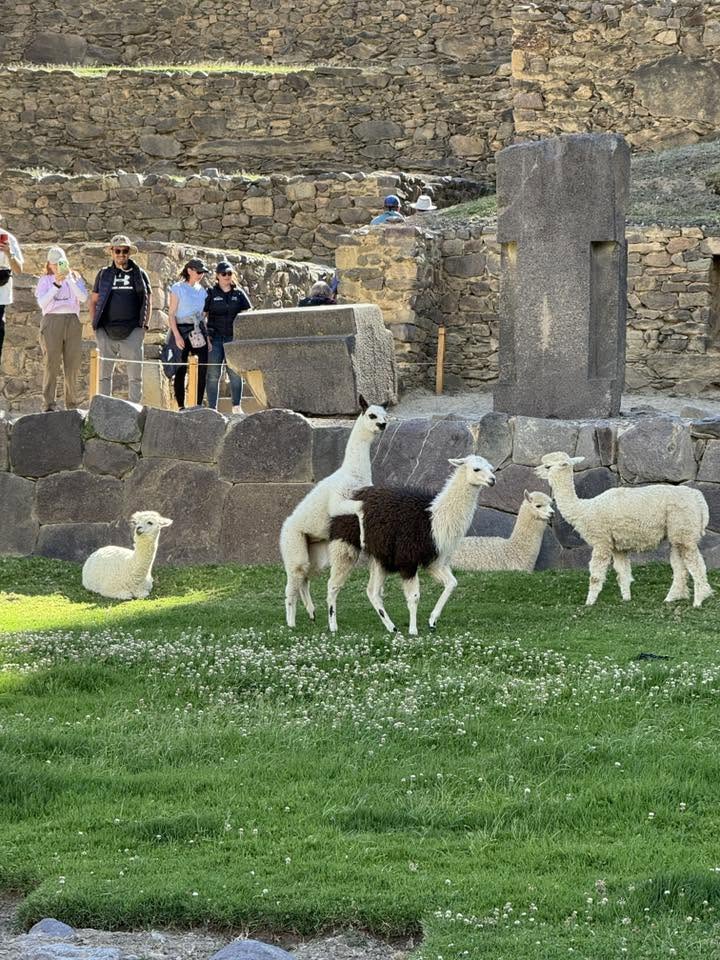
We’ve arrived at Ollantaytambo and were a bit distracted from this remarkable site by a bit of llama funny business…
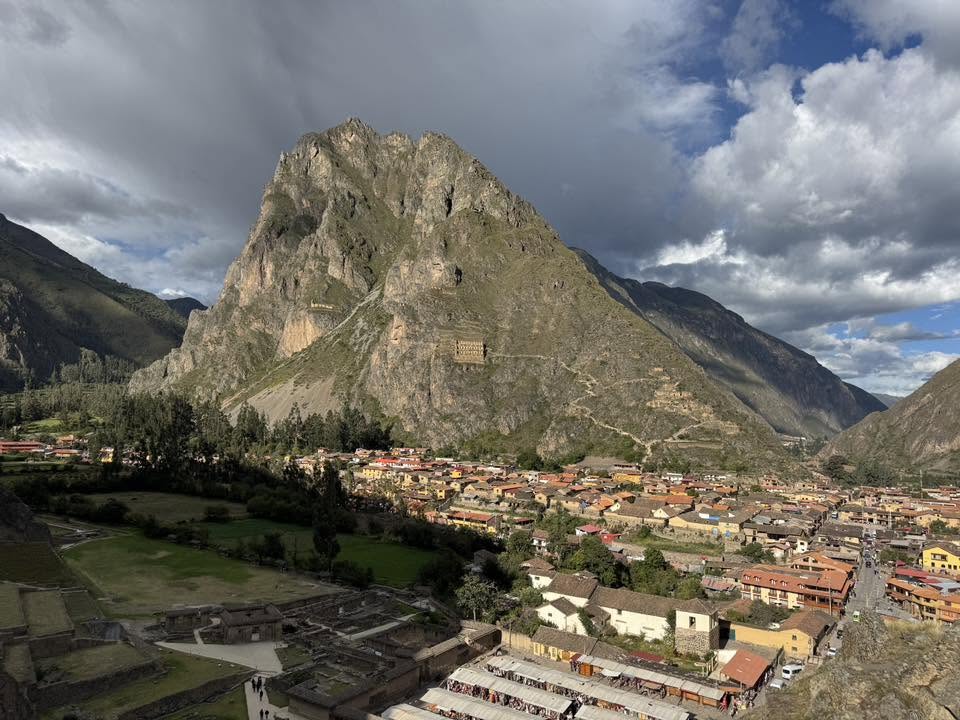
But onto the more serious business of Ollantaytambo…
Packed with history, this was the royal estate of Emperor Pachacuti after the mid-15th century. He built a town and a ceremonial center here and is the only Inca town that has been continuously inhabited from pre-Hispanic times to today. Its streets still use the original Inca water system, which flows through the ancient channels.
There are five valleys that converge on this town which was ultimately its saving grace against Spanish invasion. Was it coincidental or did the Inca realize the strategic importance of this?
By the time the Spanish arrived, this was the stronghold of Manca Inca Yupanwui, the leader of the Inca resistance. With five valleys, supply lines couldn’t be disrupted so there was no way the Spanish could surround them or starve them out. Every valley the Spanish didn’t control was a lifeline the Inca could exploit. When Manco Inca eventually did withdraw in 1537 (not from military defeat but strategic choice), he had his choice of routes to take.
This was the site of one of the few Inca victories over the Spanish. They flooded the plain below the fortress and rained projectiles down from the terraces.
As for Manca Inca, he retreated to Vilcabamba, a remote jungle stronghold, which ended up being the last refuge of Inca resistance. Manca Inca and his successors held out against the Spanish for another 35 years, until 1572, when the Spanish finally captured and executed the last Inca ruler Tupac Amaru I.
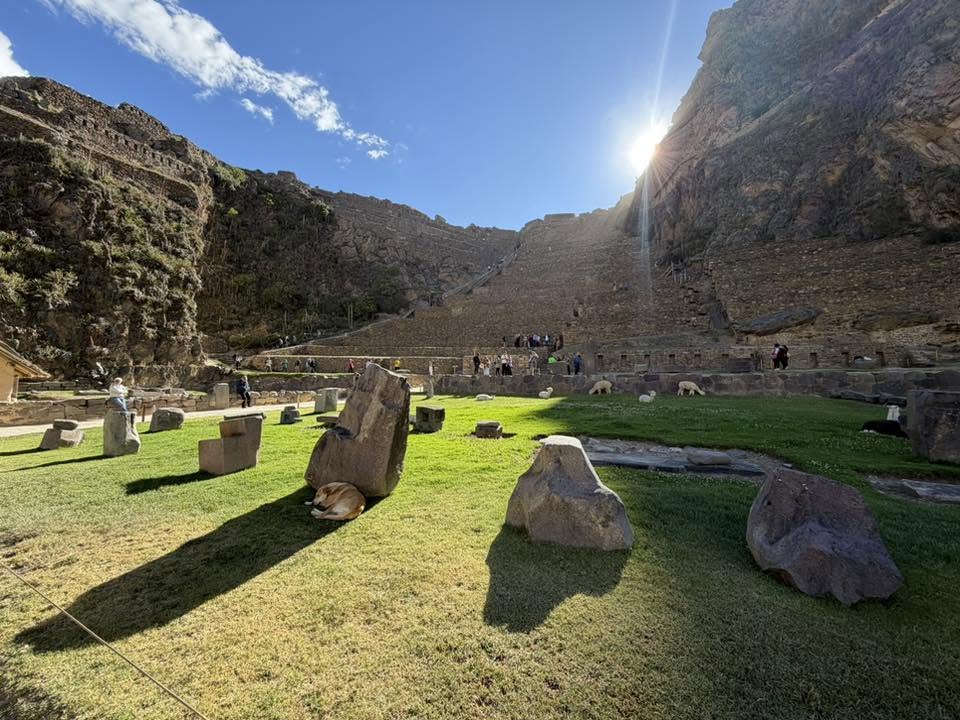
Every city has three parts: the temple section, the living section and the agricultural section. And the land was also divided into three parts: land for the king, land for the people and land for the gods. Facing the town sits the terraces for the king and the gods and above them, the holiest place—the Temple of the Sun.
The Temple of the Sun was never finished. Although they had an unending supply of workers (taxes were paid in labour), by the time they built up the foundations of the temple, the Spanish showed up.
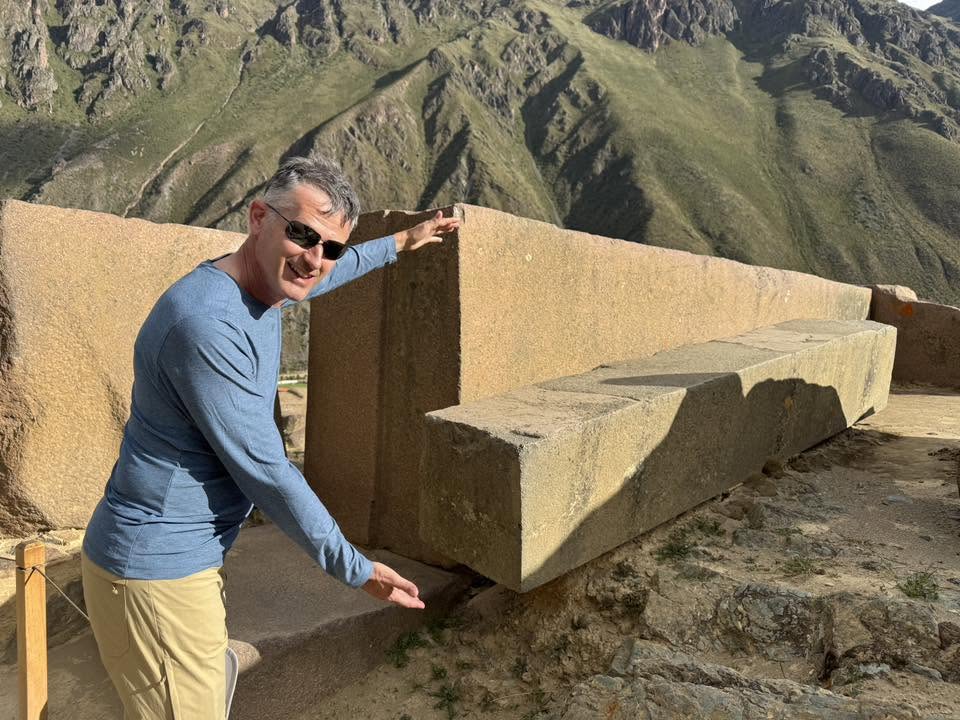
Giant blocks of stone were left at various stages of finishing and assembly.
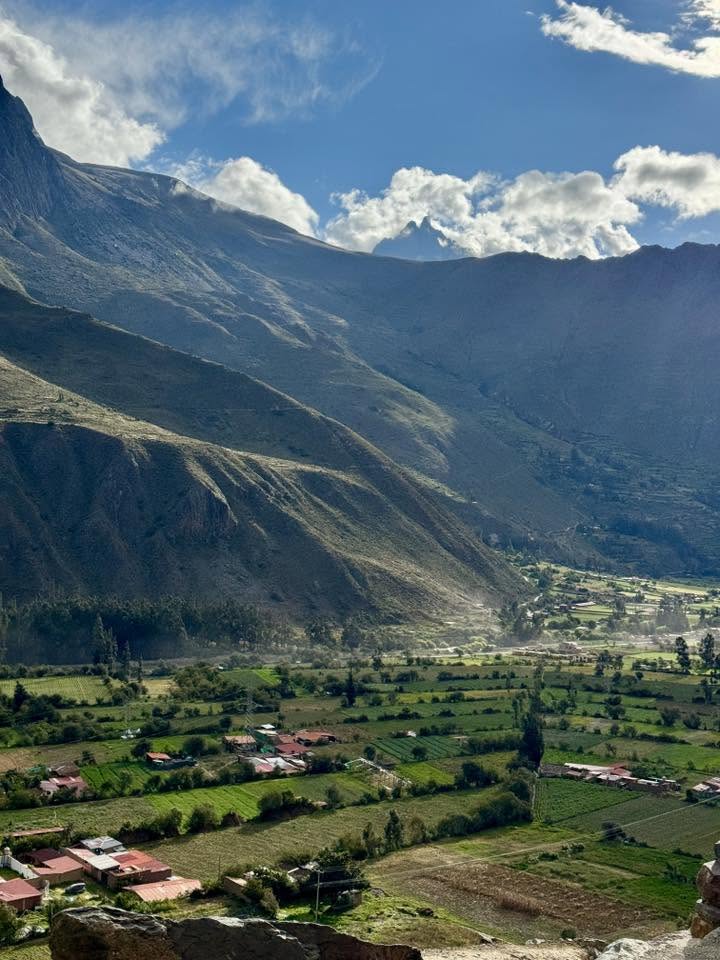
The stone quarry was across the valley to the left of the sacred site. Huge boulders were cut out of the mountain over here, taken across river and hauled up to the site.
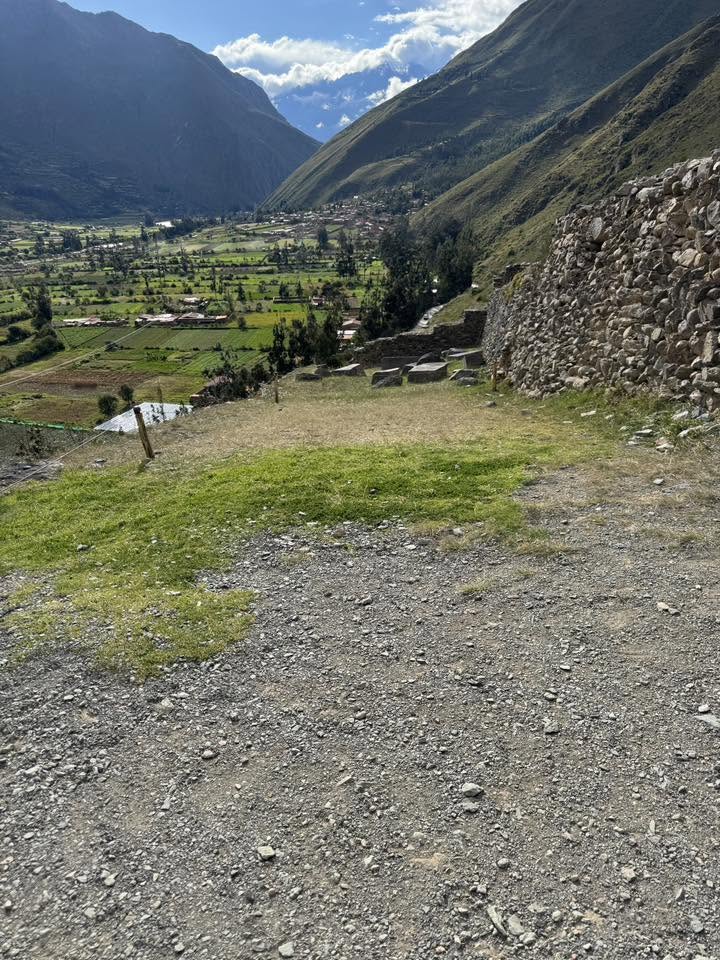
How did they get these massive boulders up here? Why a ramp, of course! Normally the construction ramp would have been dismantled after completion of the project but since it was never completed, we are lucky to see how they moved the boulders. Using logs and platforms, they rolled the boulders up the ramp. Back-breaking work but easier than carrying them!
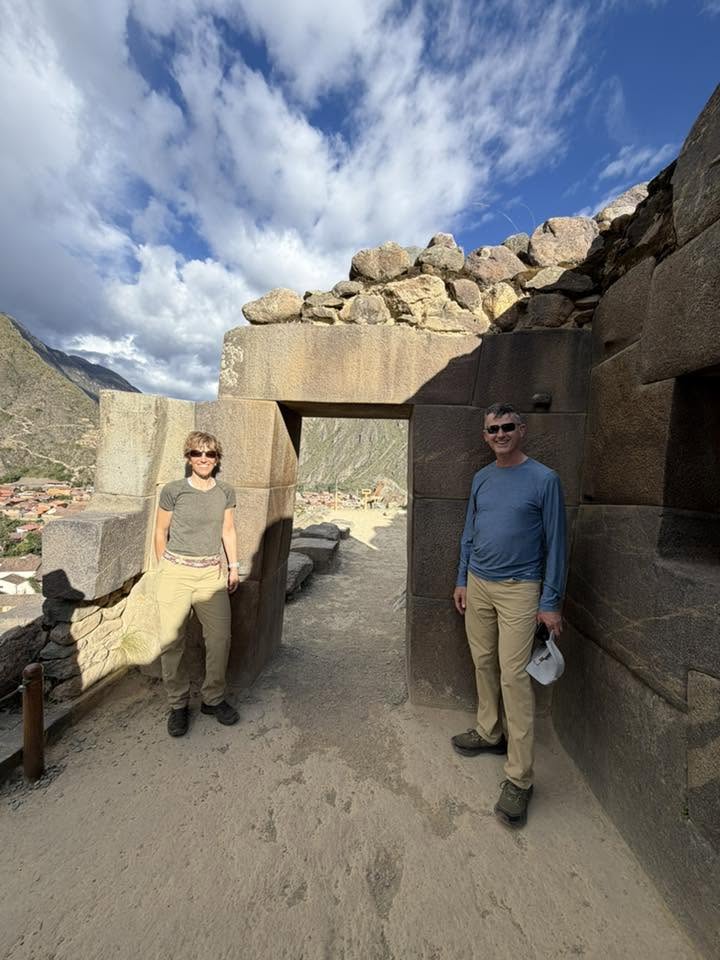
Intipunku, (Sun Gate in the Quechua language-Inti is the god of the sun), was the entrance to the Sun Temple, a ritual threshold into a sacred space. It was strategically positioned so that on specific days of the year the sun would align perfectly with the opening, framing the sunrise. The Sun Temple was one of the holiest places in the entire Inca empire, dedicated to Inti. Only certain people, priests, nobility and the emperor himself would have been permitted to pass through in Inca times. Nowadays, anyone who pays an entrance fee, and has the ability to climb a bunch of steps is free to enter!
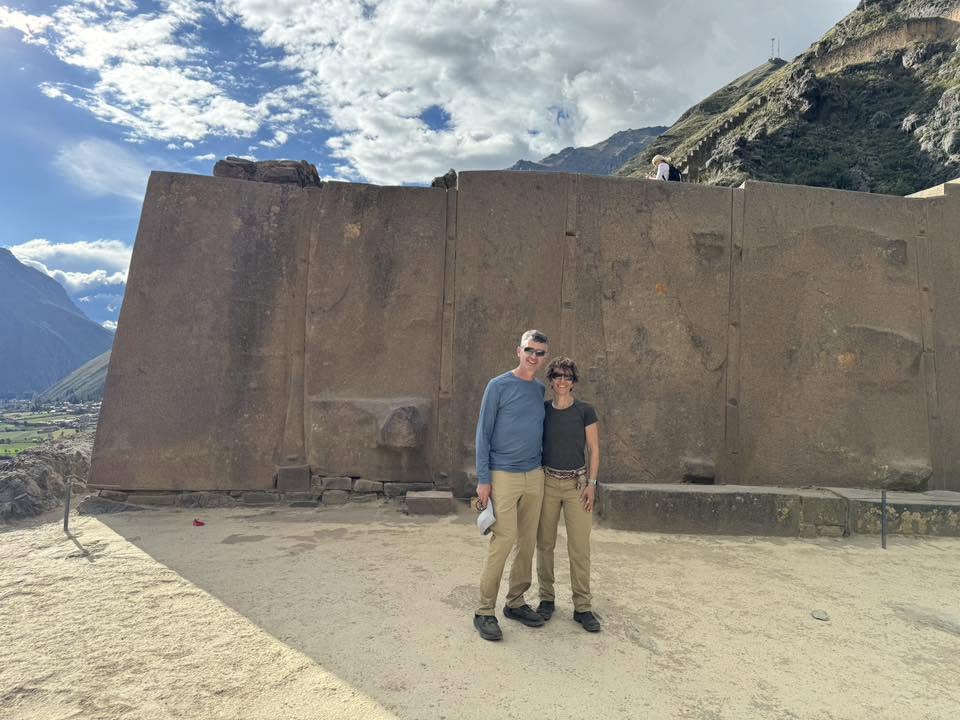
So through the gate, turn right and then right again and now you’re at the Sun Temple in all its glory. The six monolithic rose granite blocks that form the famous wall (the most iconic image of Ollantaytambo) were assembled and in place before the Inca left. The temple was missing its roof, its surrounding walls were incomplete and the ceremonial spaces that would have enclosed and given context were never finished.
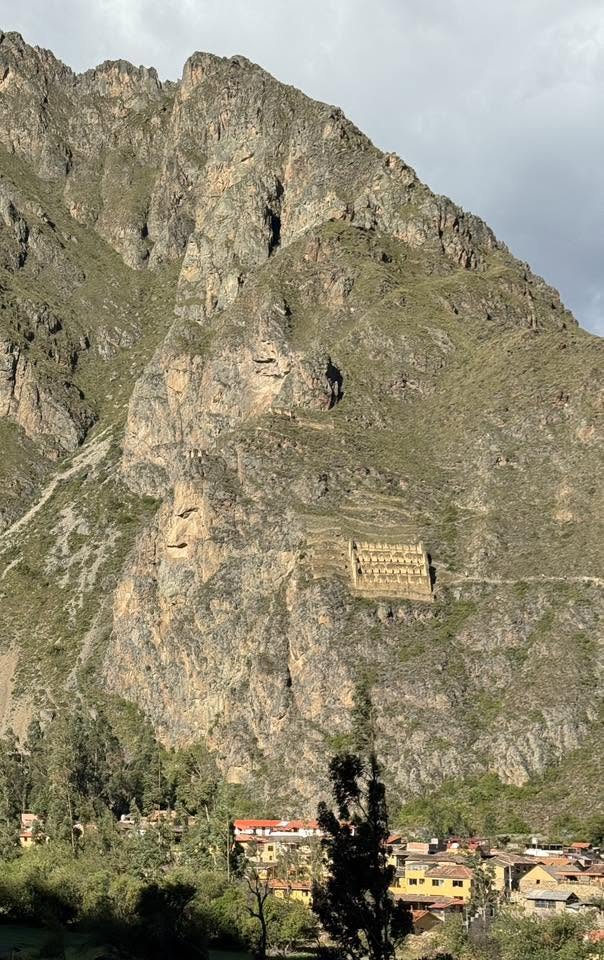
On the mountain face above the town, opposite the fortress and Sun Temple, there are what appear to be an enormous carved human face in the rock. It is believed to be Tunupa, a pre-Inca deity associated with lightning, water, and wisdom who appears across multiple Andean cultures predating the Inca. The fact that the face may represent a pre-Inca deity rather than an Inca god suggests the carving could predate the Inca occupation of Ollantaytambo entirely, another example of the Inca inheriting and building upon earlier cultures’ sacred sites.
The structure to the right of Tunupa is the Pinkuylluna Granaries. The Inca understood the microclimate of this windy hillside, with its high altitude, constant wind, cool temperatures and the thermal mass of the stone itself created storage conditions that could preserve food for years. What did they store? Corn, freeze dried potato, dried meat (early version of jerky) and quinoa. This was food security for the entire royal estate. And being beside Tunupa, the granaries were under divine protection. Nobody would dare steal right under the nose of a deity!
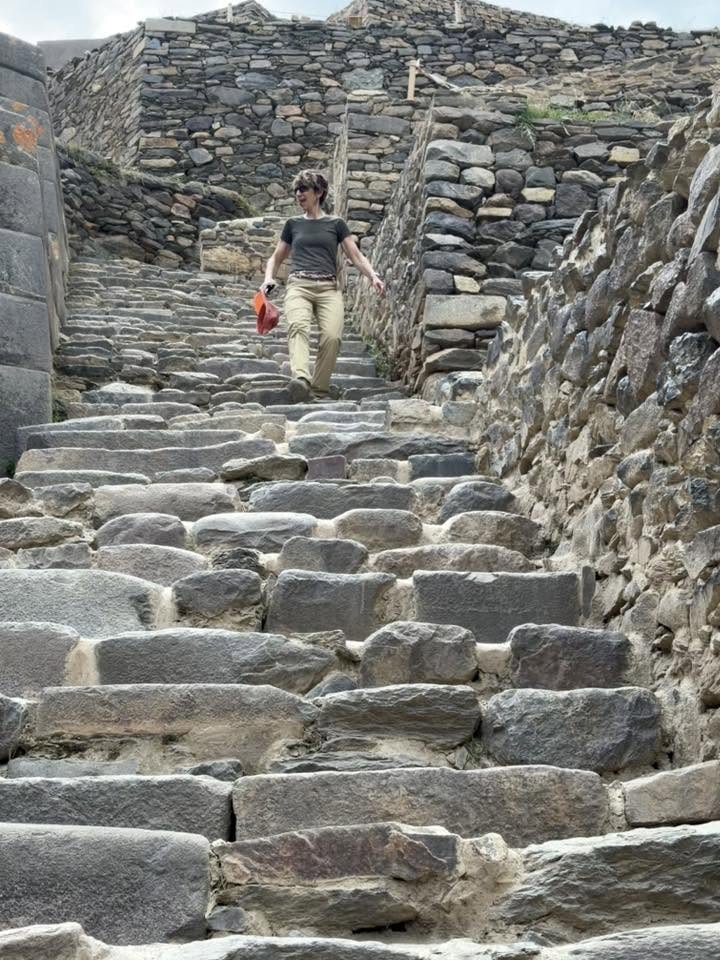
Steps, steps and more steps!
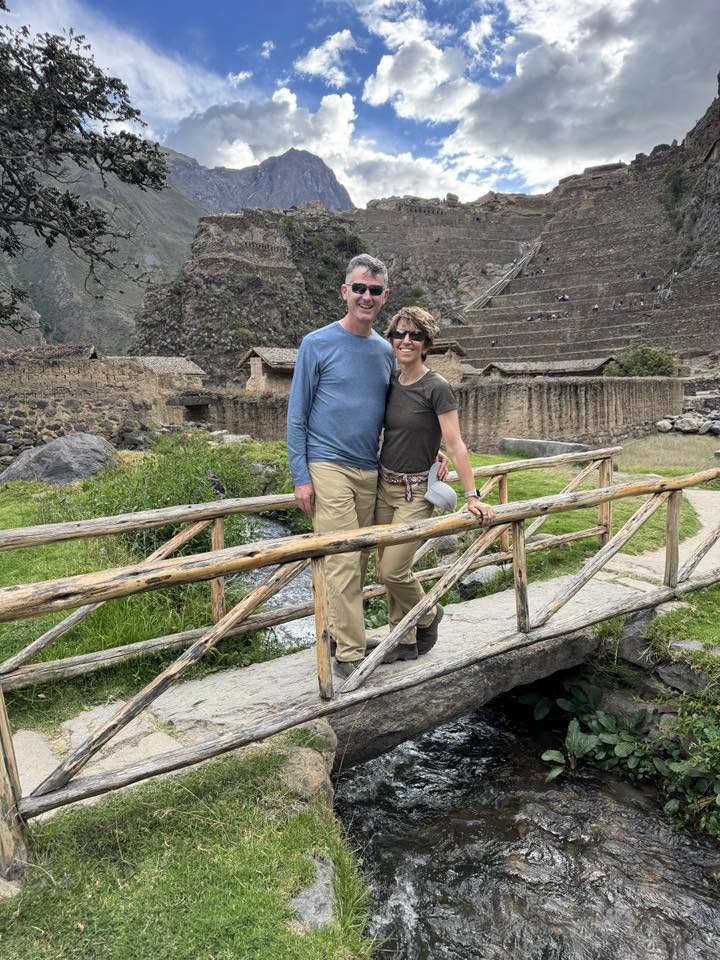
Such a stunning visit!
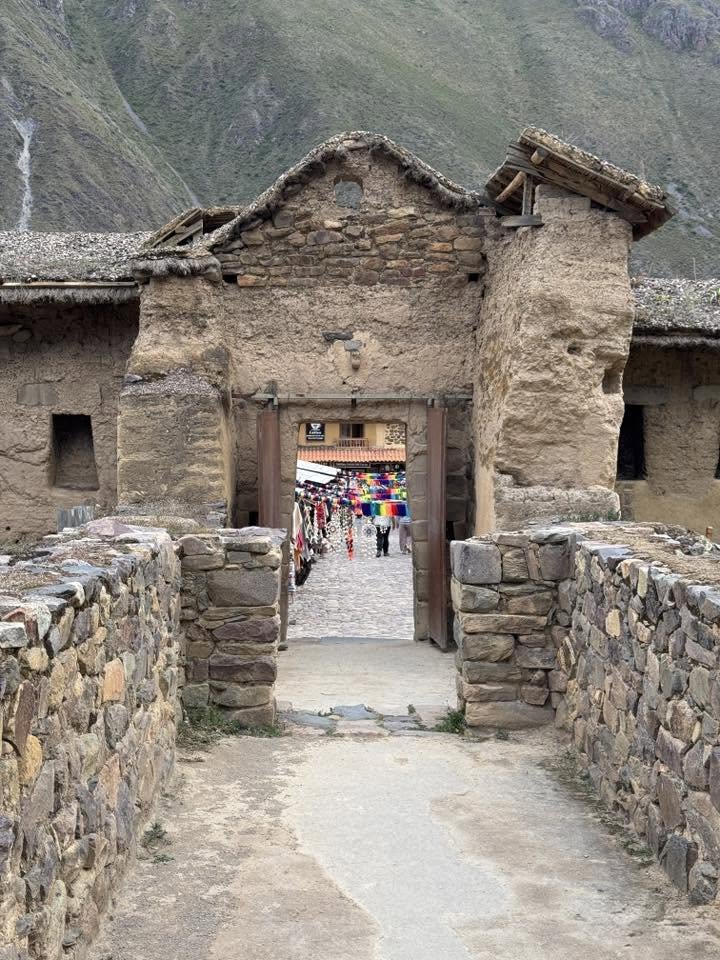
And now back through another gate to the bustle of the modern world and the classic exit through the gift shop!