April, 2026
Iquitos
Iquitos is our jumping off point for our Amazon jungle adventure. This frontier town was at the centre of the rubber boom for around 30 years (1879-1912). When the boom busted, Iquitos didn't have much going for it but it lives on through thick and thin. Our arrival was very delayed so we ended up only having a morning to spend here before heading to the jungle. We went to the Mercado Belén and floating village, both of which were amazing!
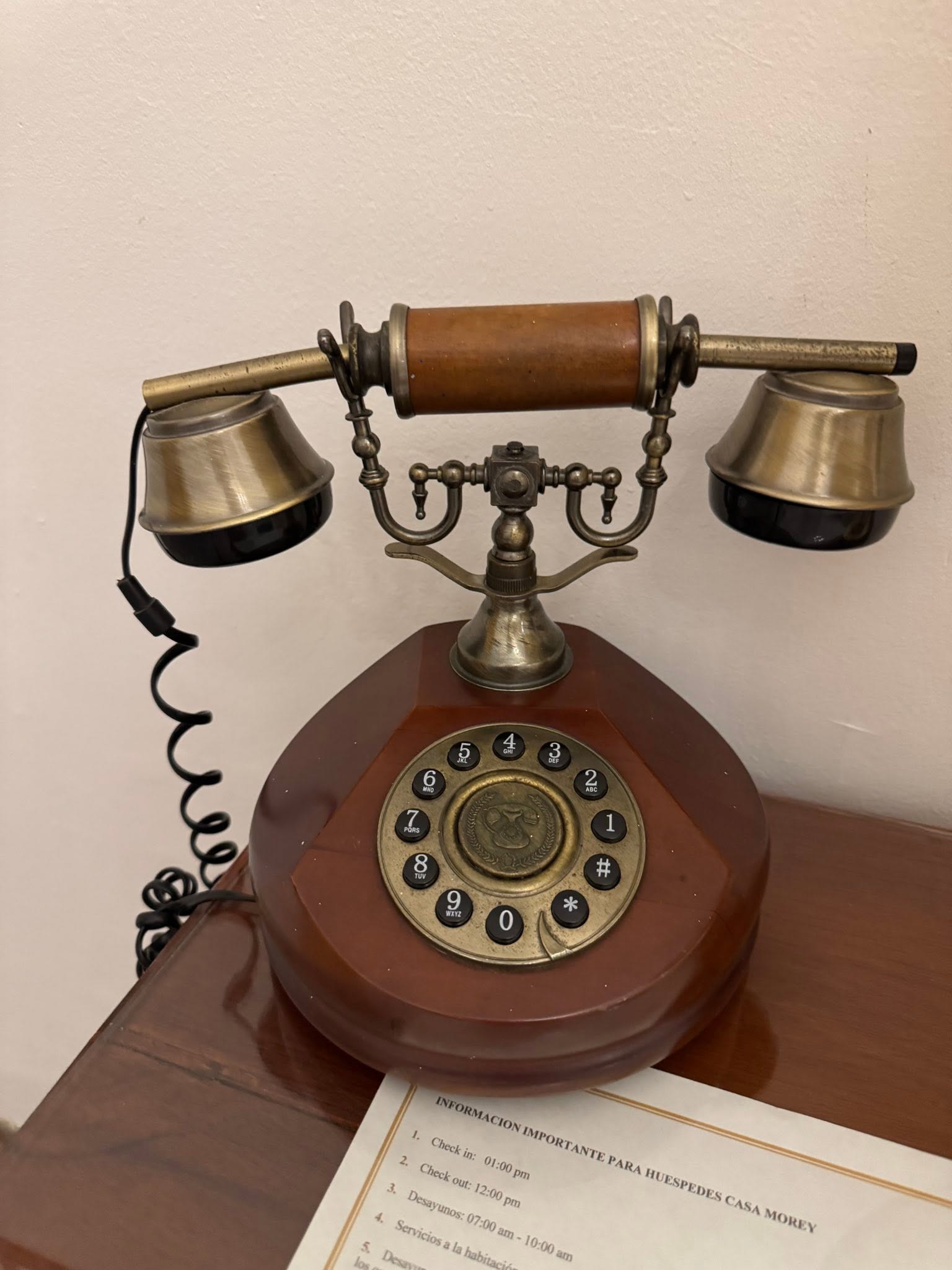
We arrived very late at our hotel in what was once a grand mansion, presumably belonging to someone in the rubber business of the day. It felt like stepping back in time!
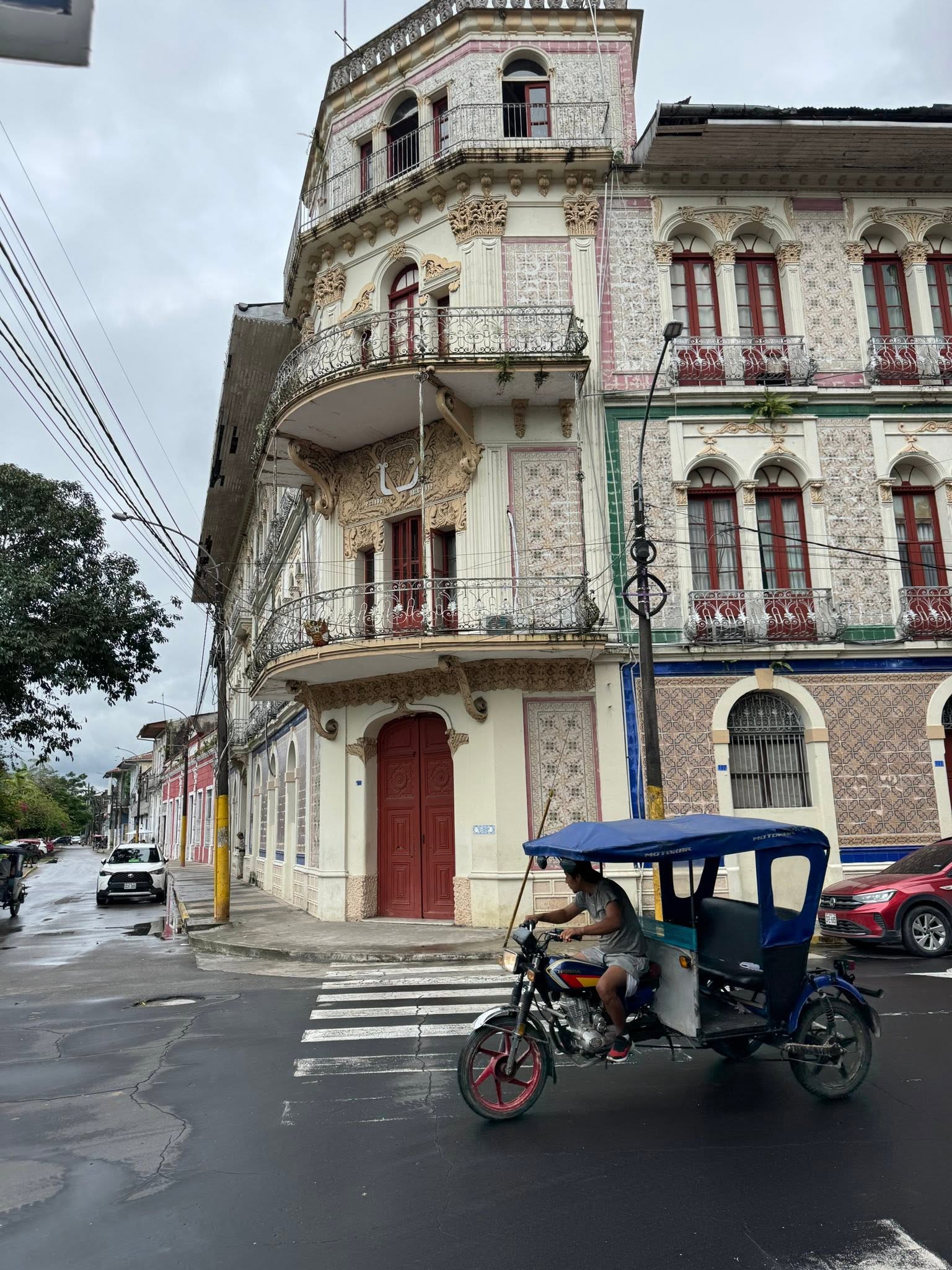
Mansions and buildings harken back to the rubber boom that grew this town into a major port for shipping rubber down the Amazon. Fortunes were made and buildings constructed in European styles with imported materials. But it all ended virtually overnight.
The human cost was staggering. Slavery, abuse and systematic brutality wiped out 90% of the indigenous population in some areas.
Horrible as this slave labour was, it gets even worse. Henry Wickham smuggled 70,000 rubber tree seeds out of Brazil and they were successfully cultivated in Malaysia. This made rubber cheaper, available in volume, and put the Amazon rubber trade out of business, making them rich.
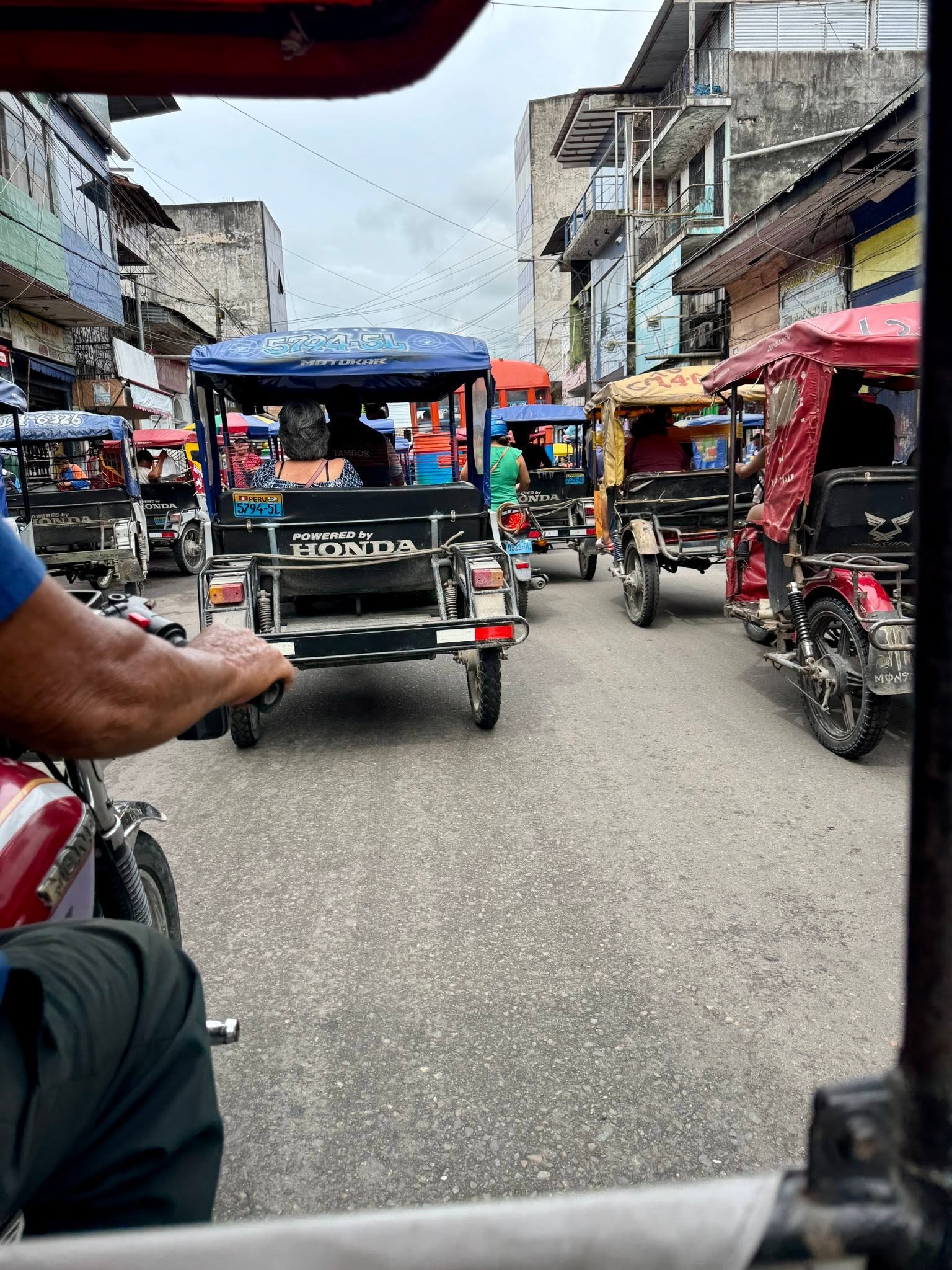
The streets of Iquitos are dominated by about 25,000 tuktuks. As the largest city in the world that cannot be reached by road, tuktuks are the main way to get around. They are cheap, everywhere and a bit hair raising at times!
We met Angel in the street while we were looking for decent coffee and he offered us a tour of the market and floating village. We were a bit wary at first but he was a great guide and we had a wonderful time with him.
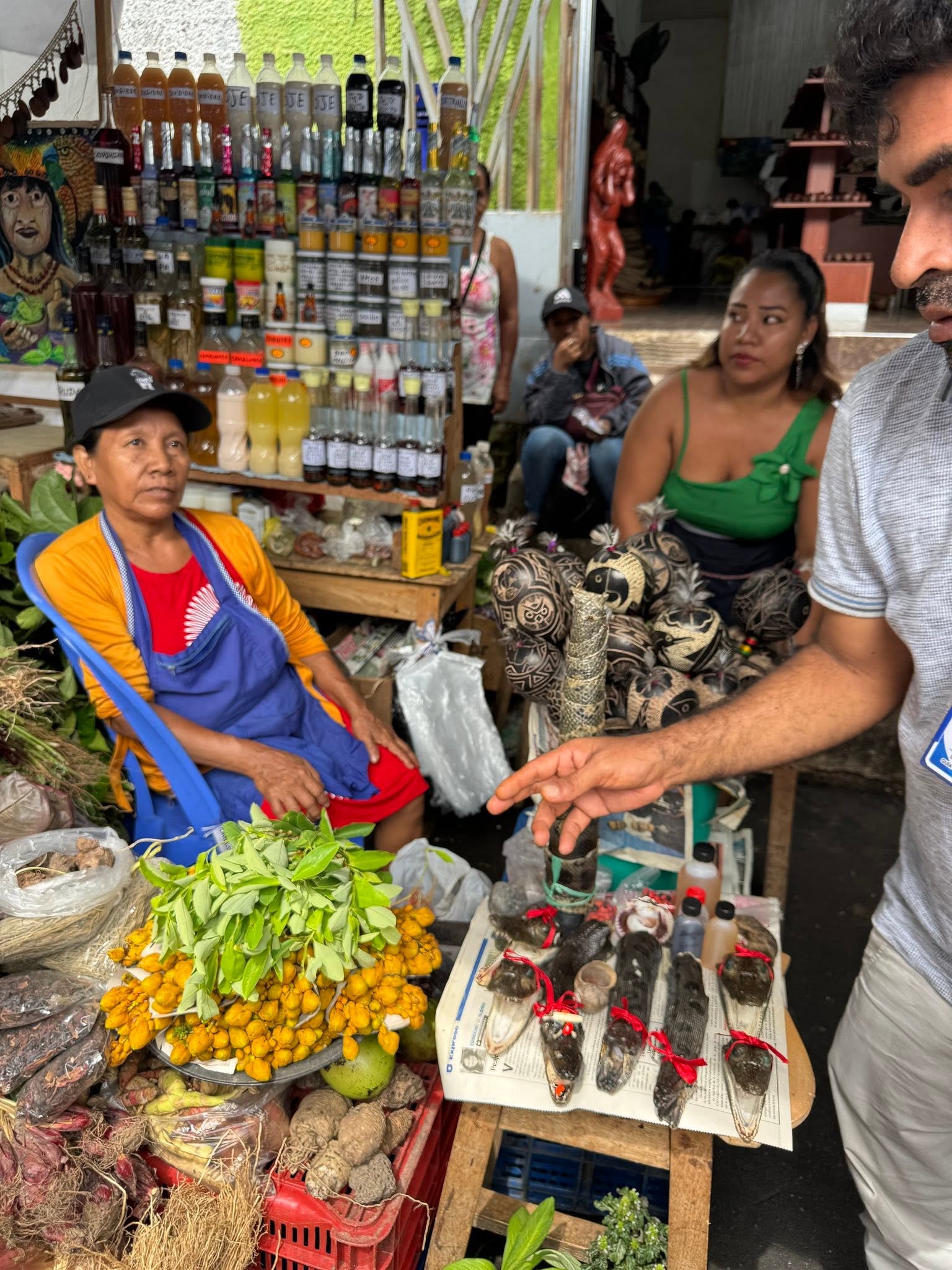
Mercado Belén is the largest open wildlife market in the Peruvian Amazon. You can buy a huge variety of things here, from food to medicine to pets to... well, you name it.
The market is generally organized by type of product. We started at Pasaje Paquito, the medicinal products section. It was a bit of a sensory overload!
Then there’s the hollowed out bull’s horn for fussy babies. You burn shavings of the horn and pass the smoke over the baby to calm it down. Or so they say.
The dried out mini Caiman are amulets for businesses. Displaying this in your place of business will bring you good luck and prosperity. Or so they say.
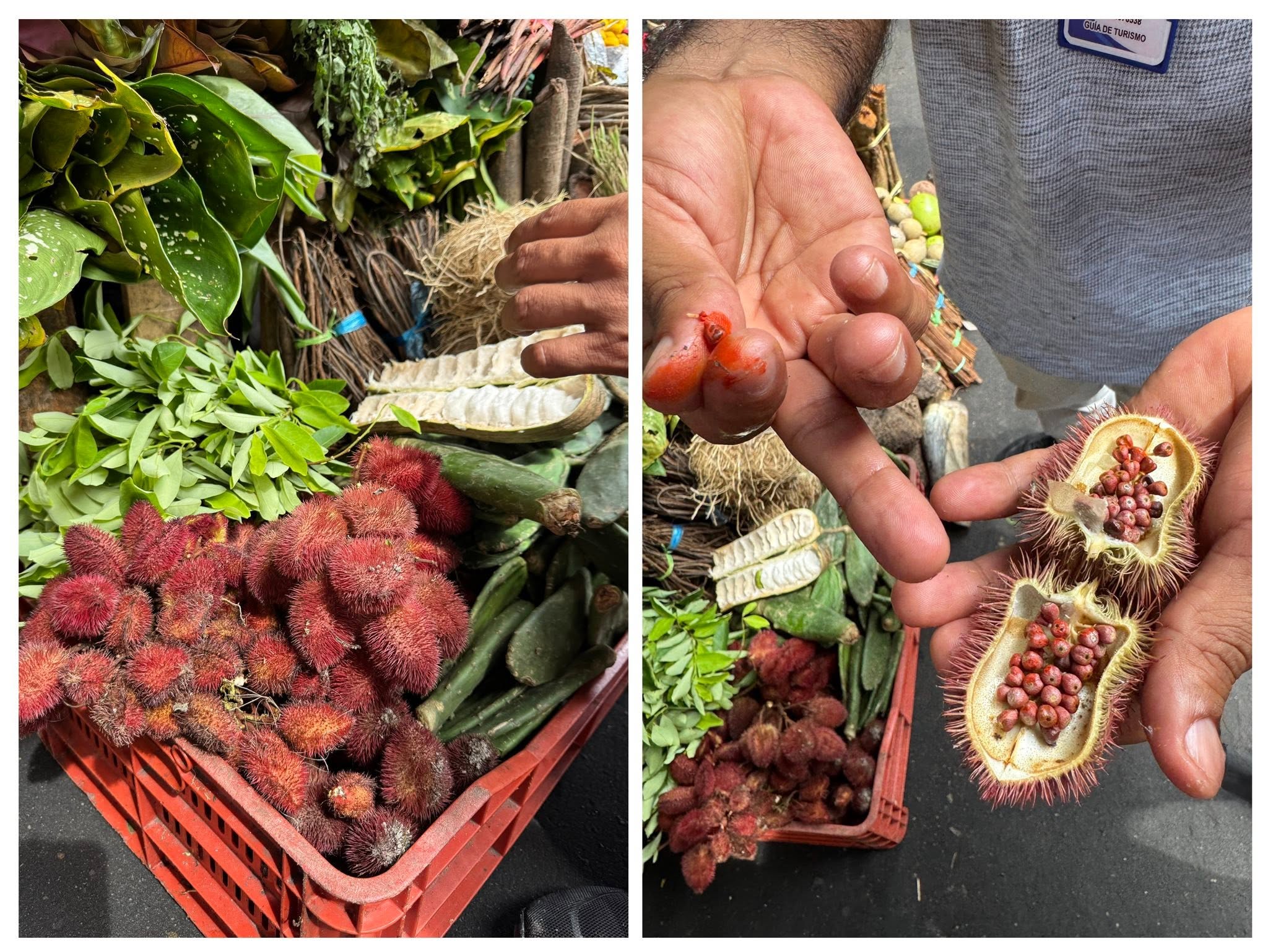
This fun spiky seed pod is achiote aka annatto. It’s a natural red-orange dye and spice used in Latin American, Caribbean, and Filipino cooking.
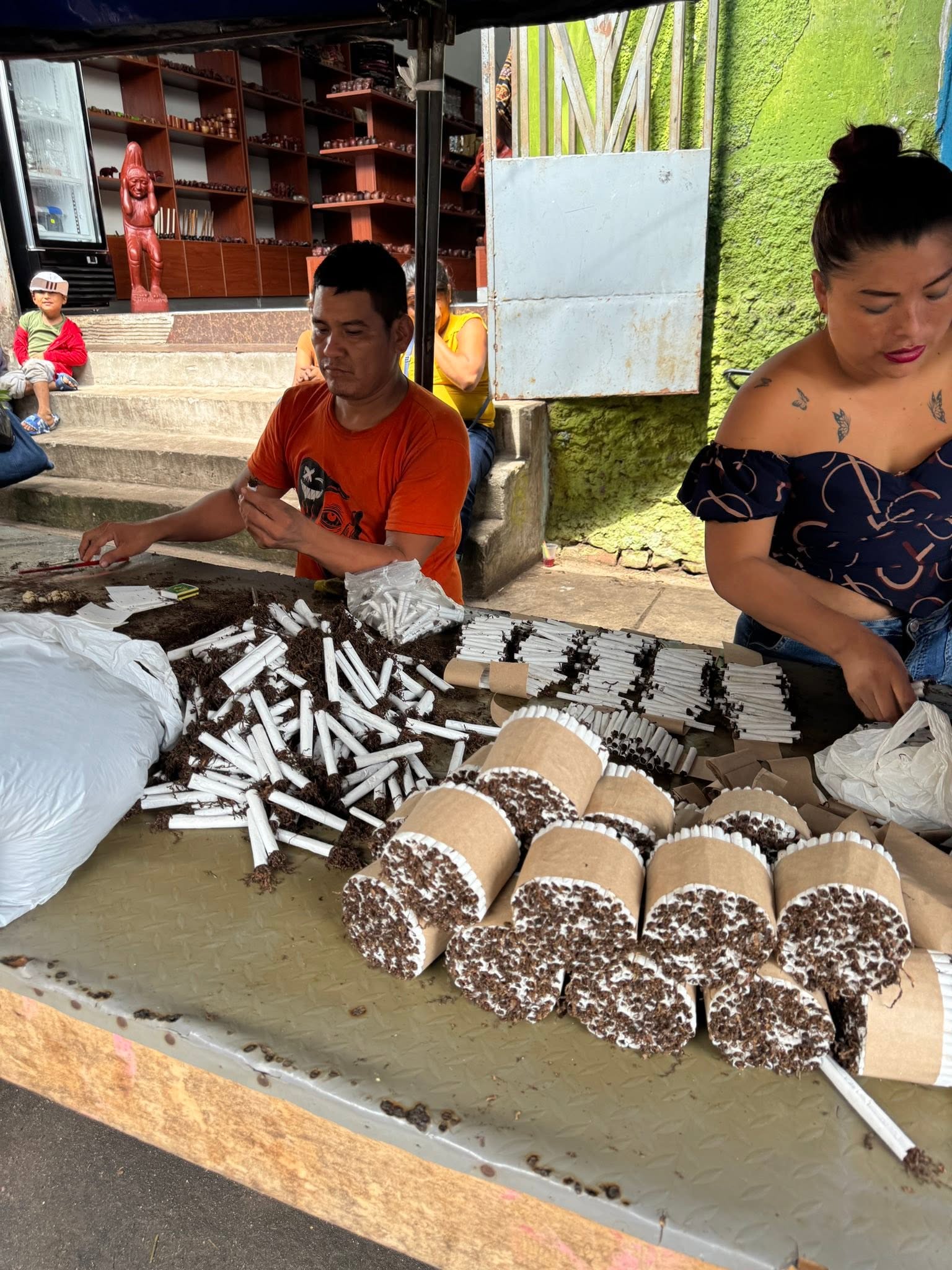
House made cigarettes. No need to roll your own but one does wonder what’s in there!
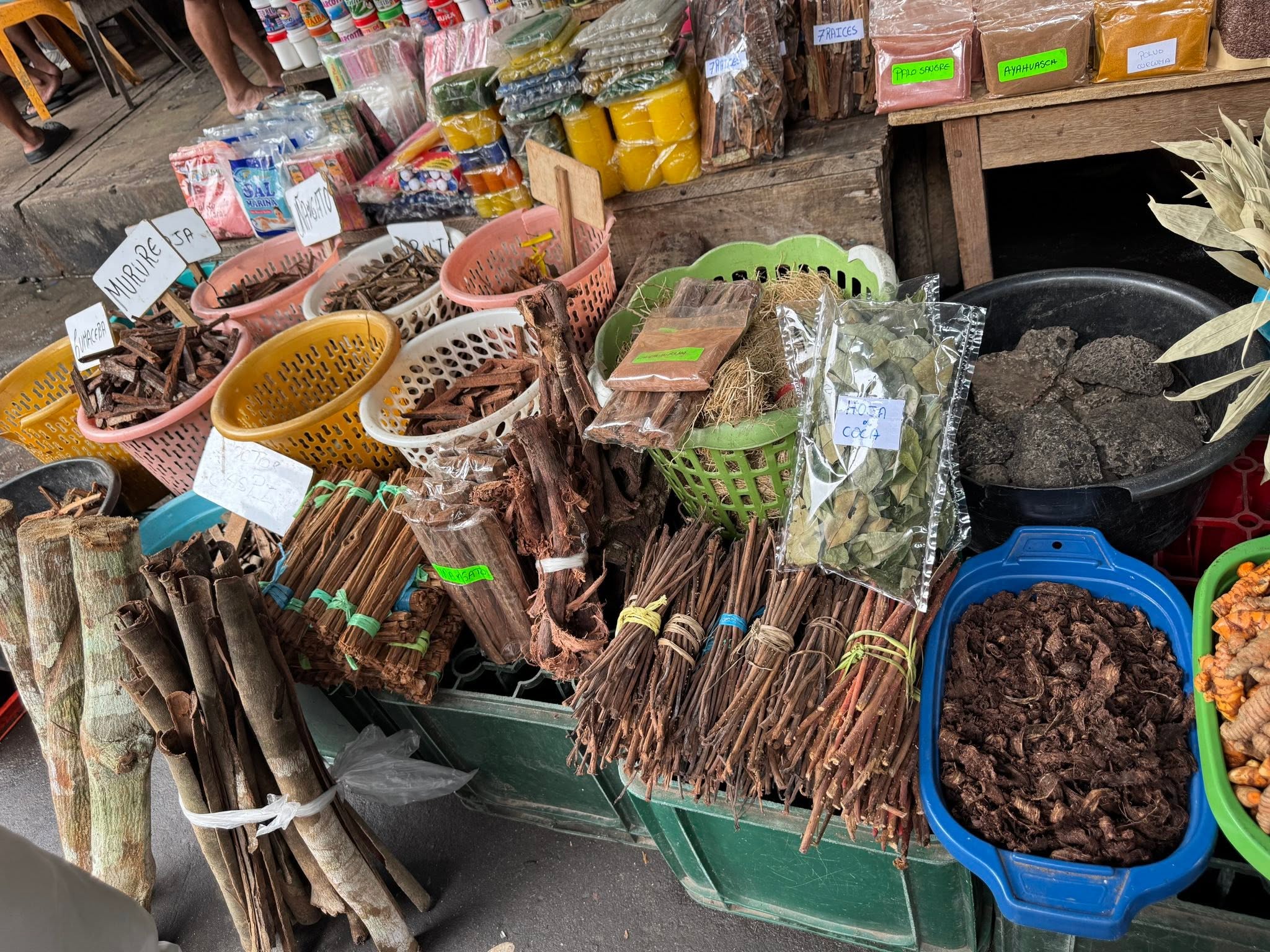
Then there are a host of different types of barks and vines that you boil in water and drink on an empty stomach that will help you with everything from cancer and colds to rheumatism and erectile dysfunction.
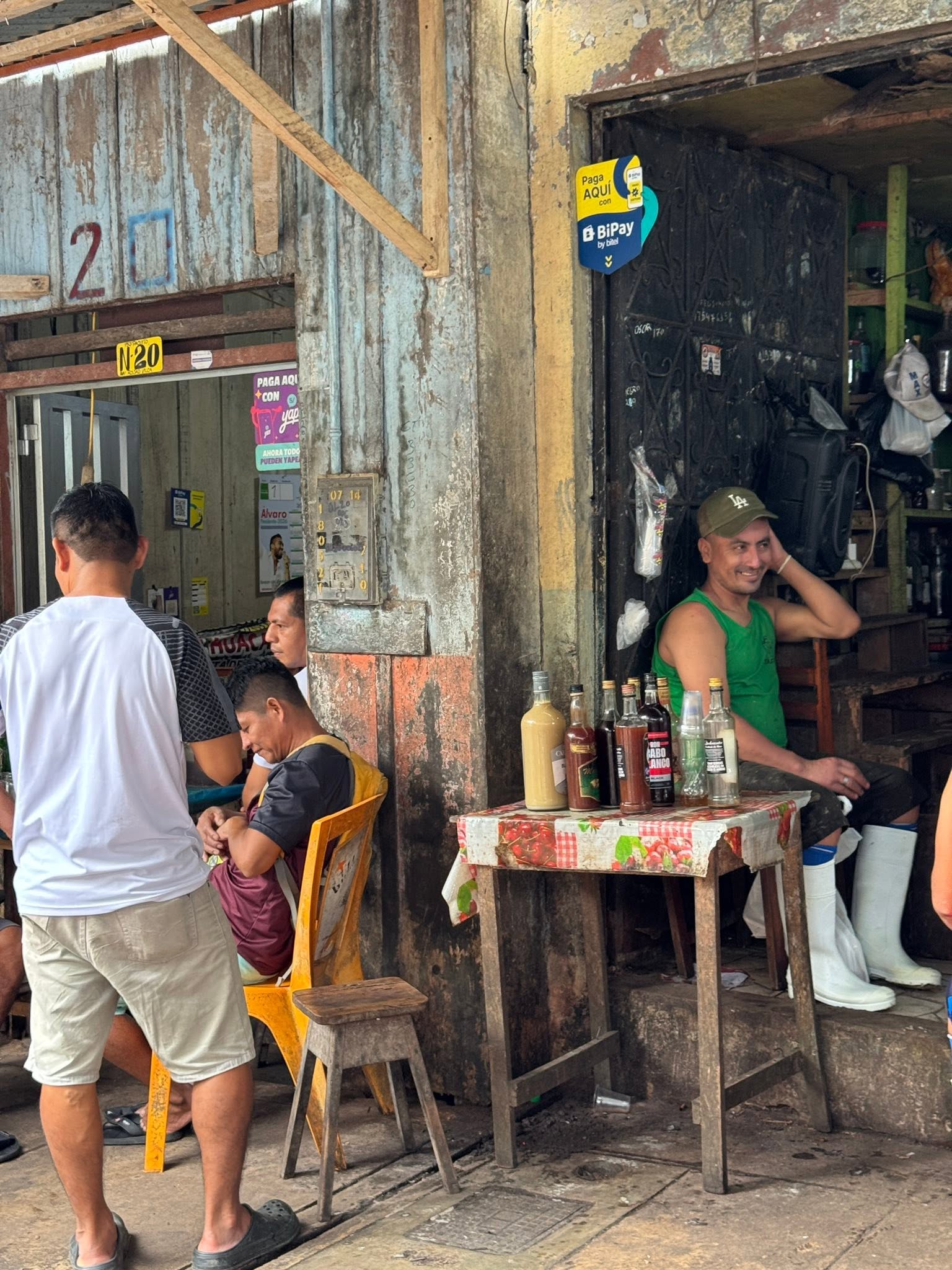
I think these guys resort to moonshine to cure their ills.
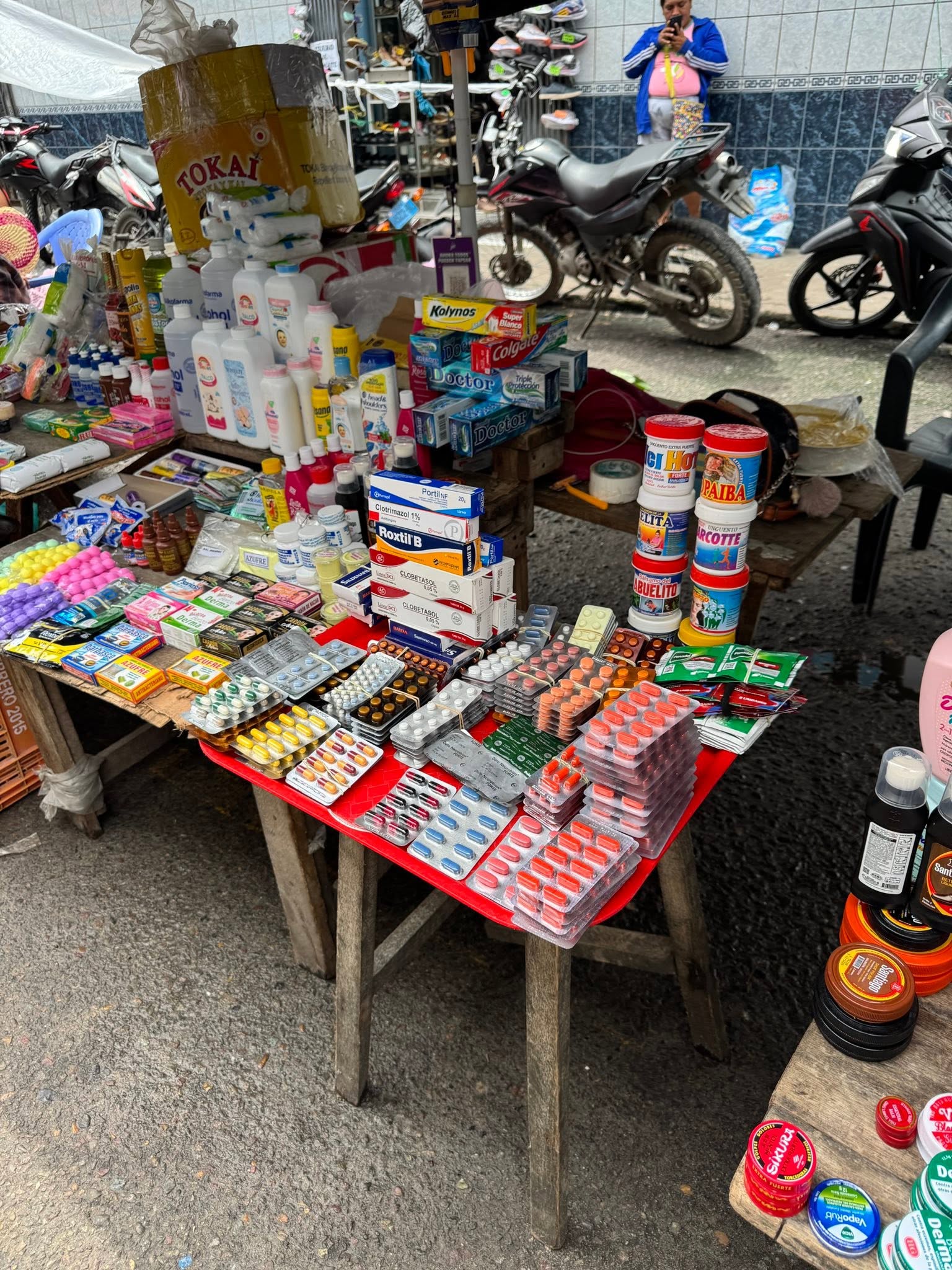
And if the plant-based medicine doesn’t work, there’s always the western stuff available.
Suri! Call me brave, call me crazy…
The suri grub grows inside the aguaje palm tree. When the tree is chopped down to harvest the aguaje fruit, the trunk is left behind, defenceless, to rot. It’s the perfect spot for the South American Palm Weevil lay eggs and the larvae burrow in and feed on the soft interior (that’s the sawdust looking material in the bucket with the live suri. The local people periodically come and check for sounds coming from the tree and when they detect the noise of the larvae chomping on the inside of the tree, they know it’s full of suri! People eat them raw or cooked but I think it would be far better cooked in a bit of butter.
When it comes to trying stuff in markets, sometimes it means having to put on your big girl pants! …and let the guide eat it first.
This is takacho, grilled plantain mashed with salt and pork fat with pieced of pork mixed in. Make it into a ball and serve. We didn’t try it but it looked good.
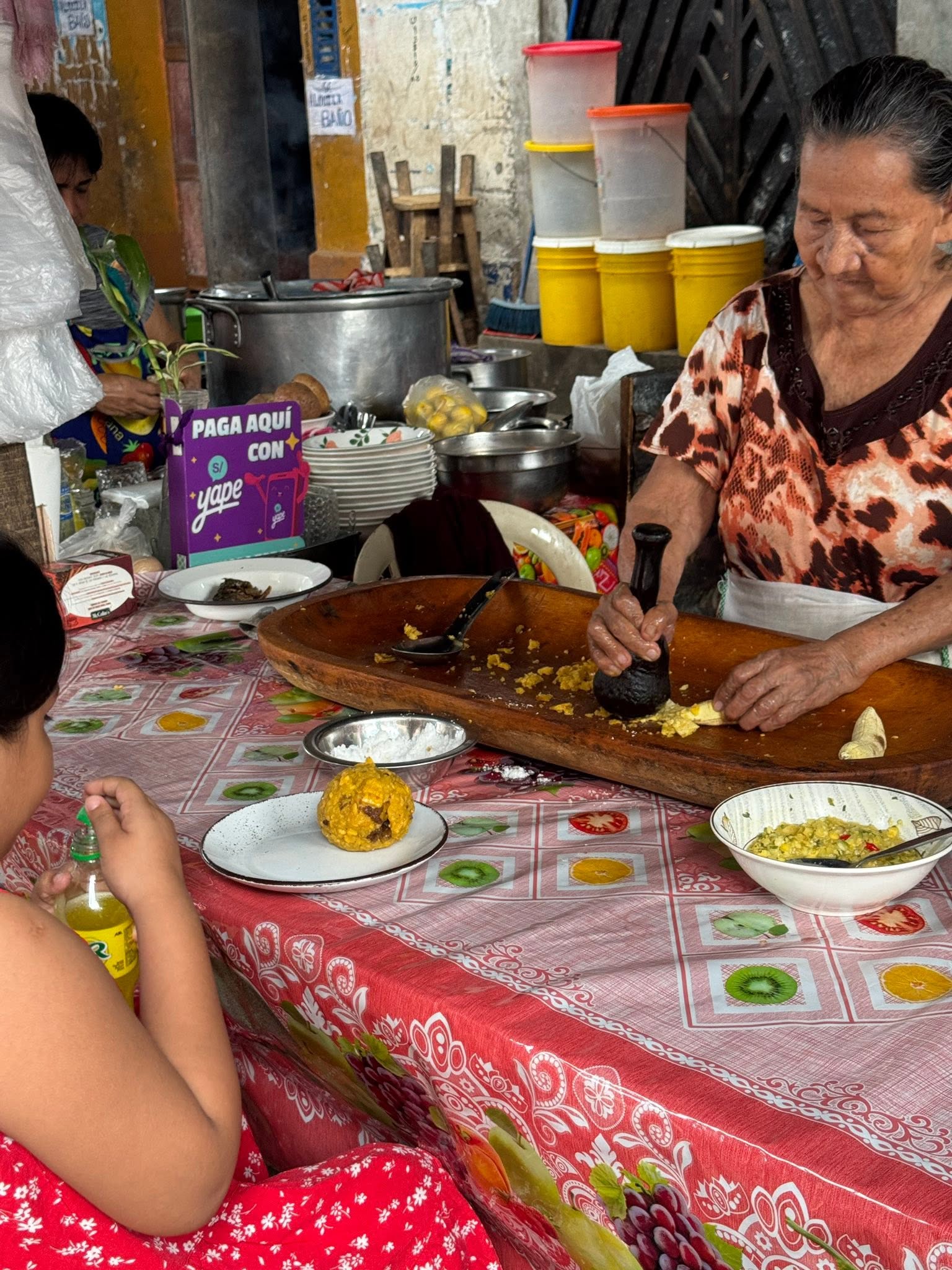
This little girl has been patiently waiting for her takacho.
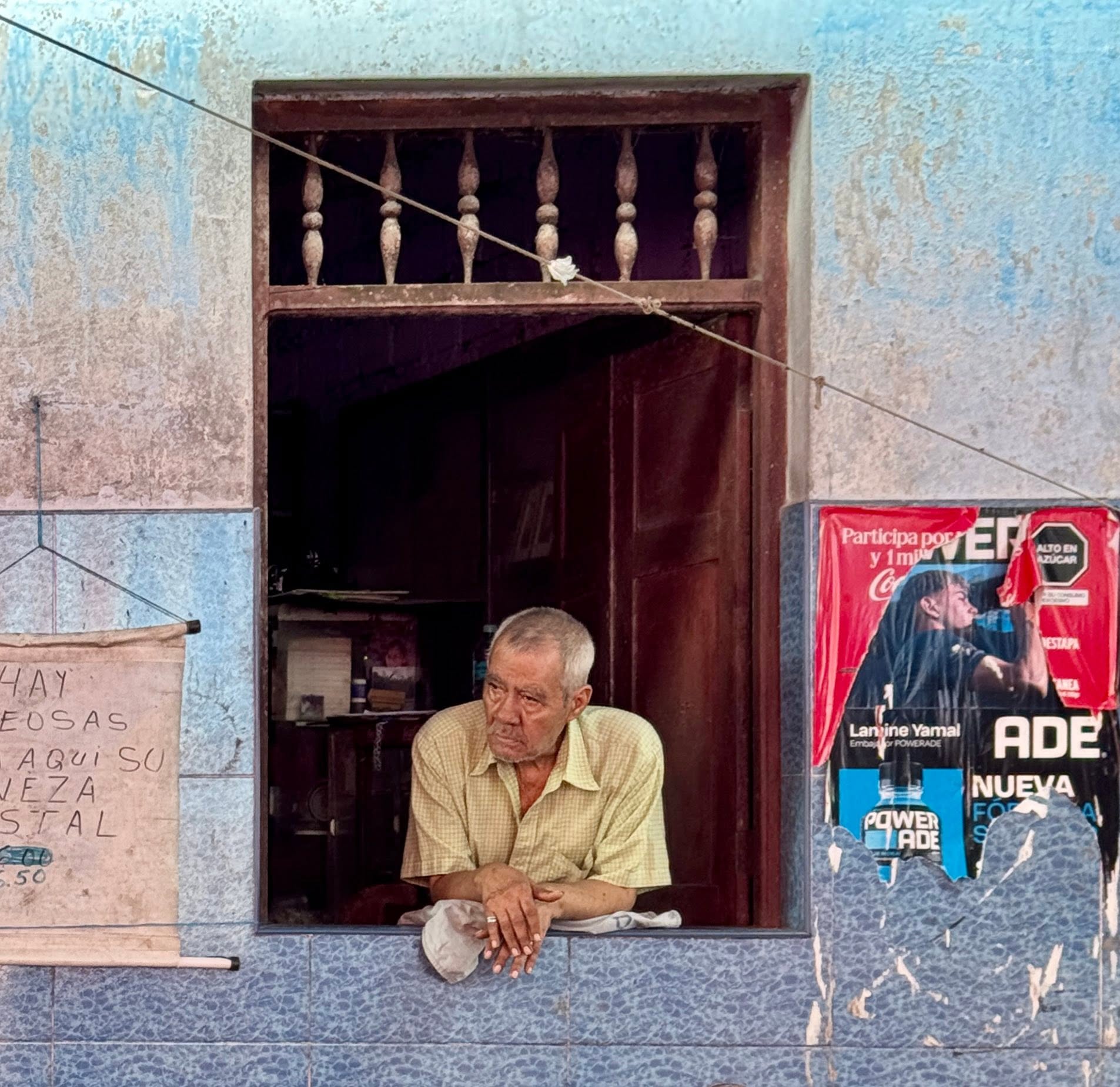
Looks like this guy could use either some moonshine or takacho!
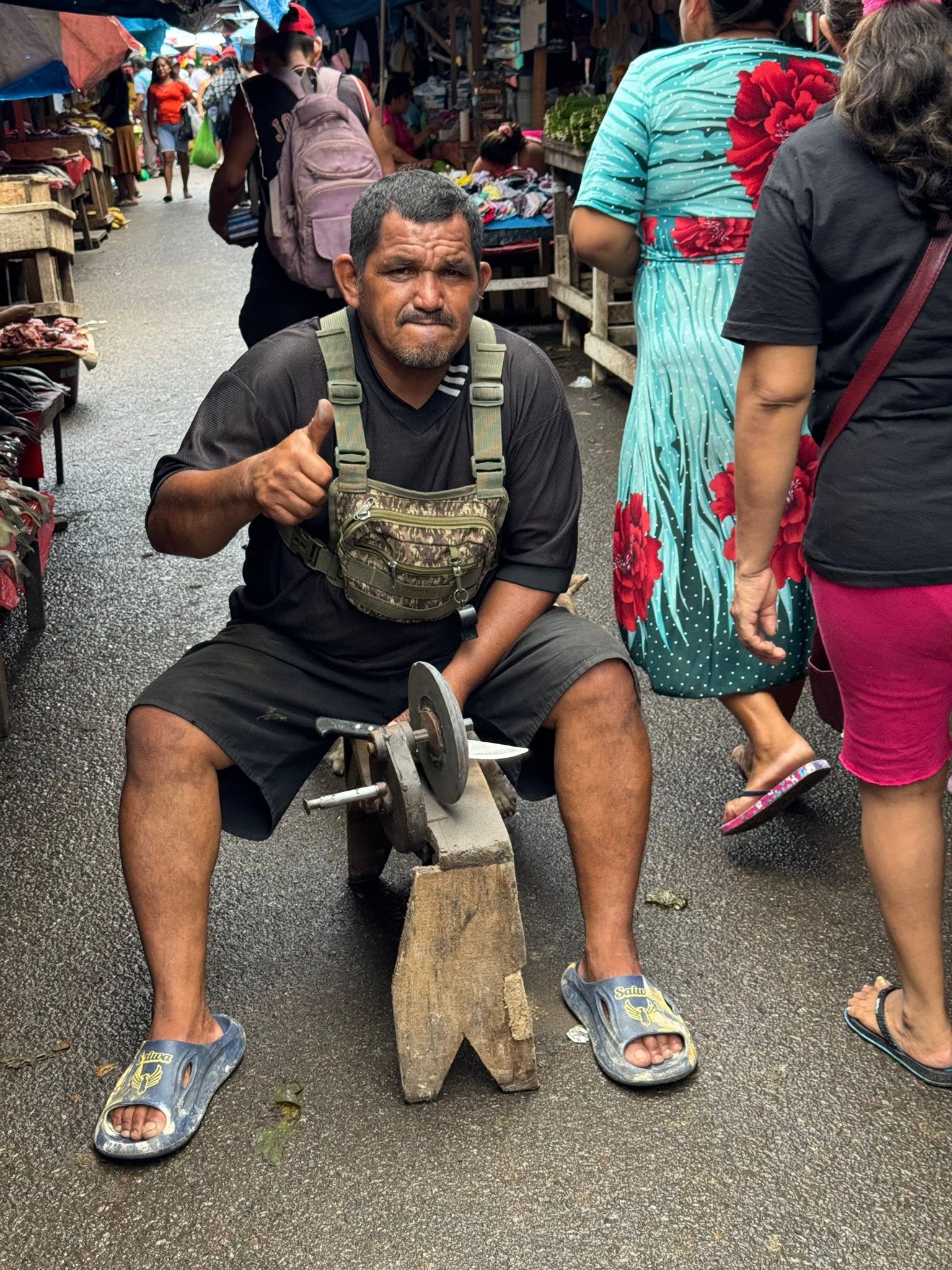
Don’t step too close to the knife sharpener! I can’t imagine what it’s like on a busy day with that vicious-looking blade moving across the stone.
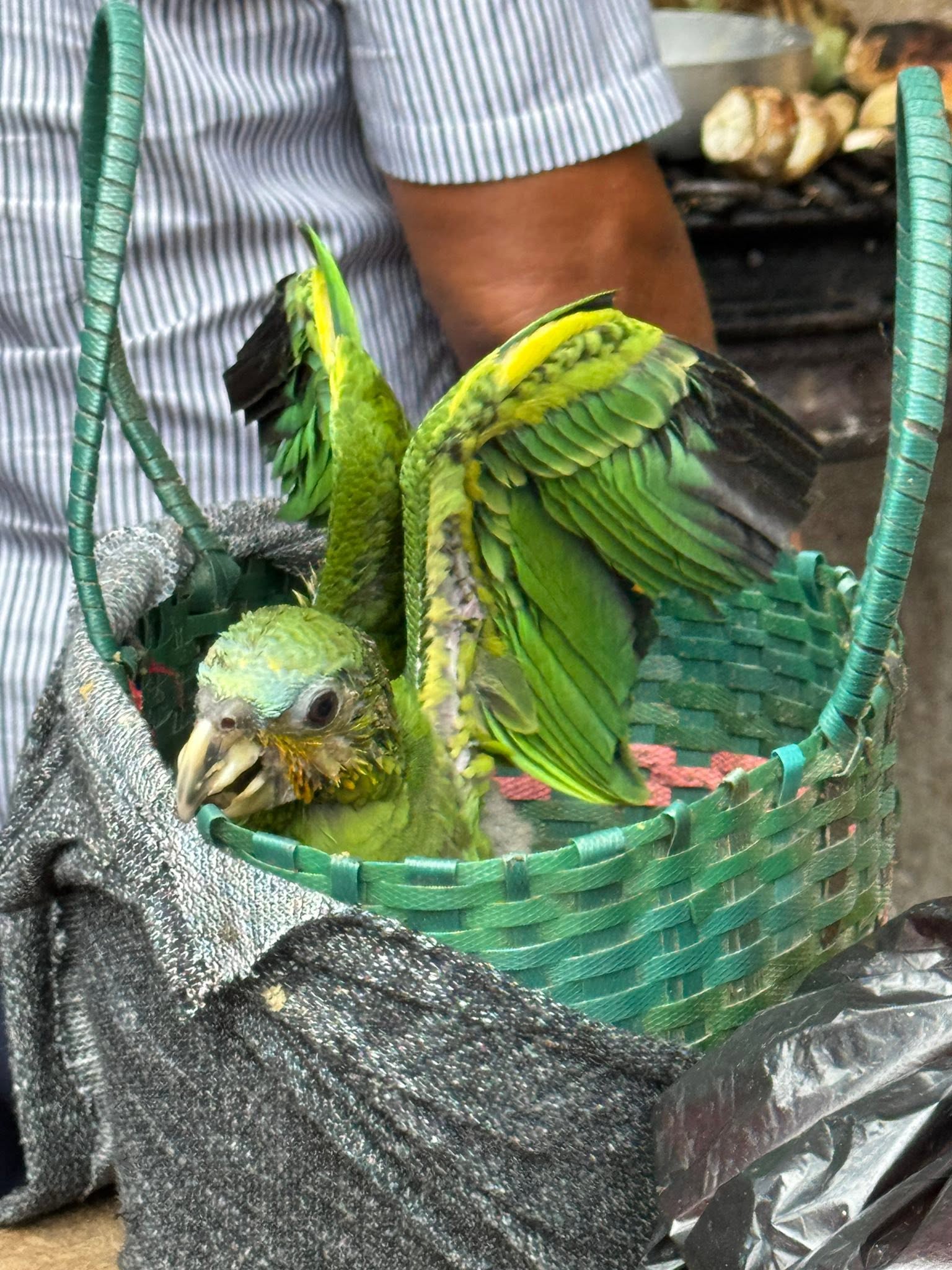
Bring your pet to work day.
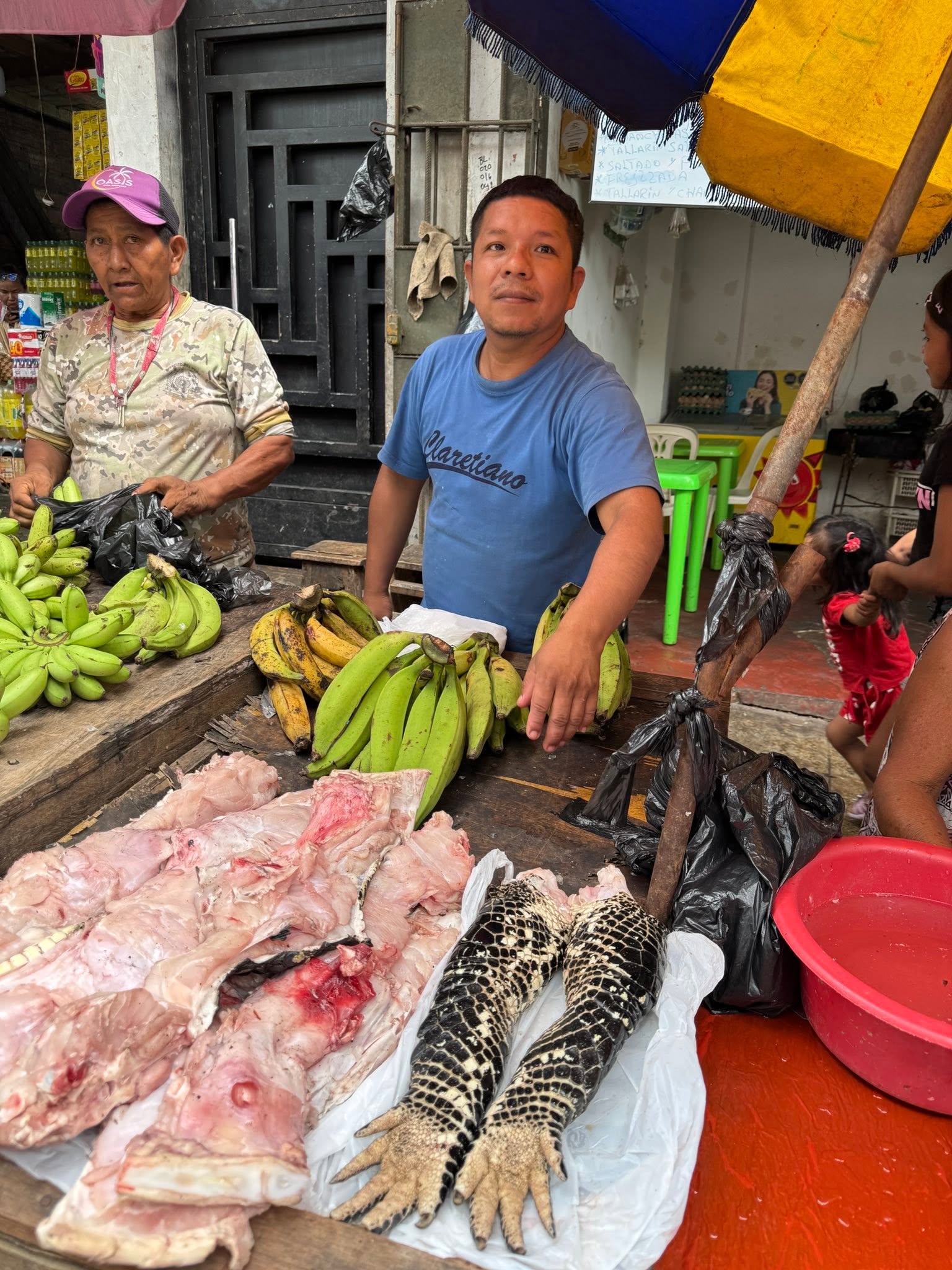
Alligator legs anyone?
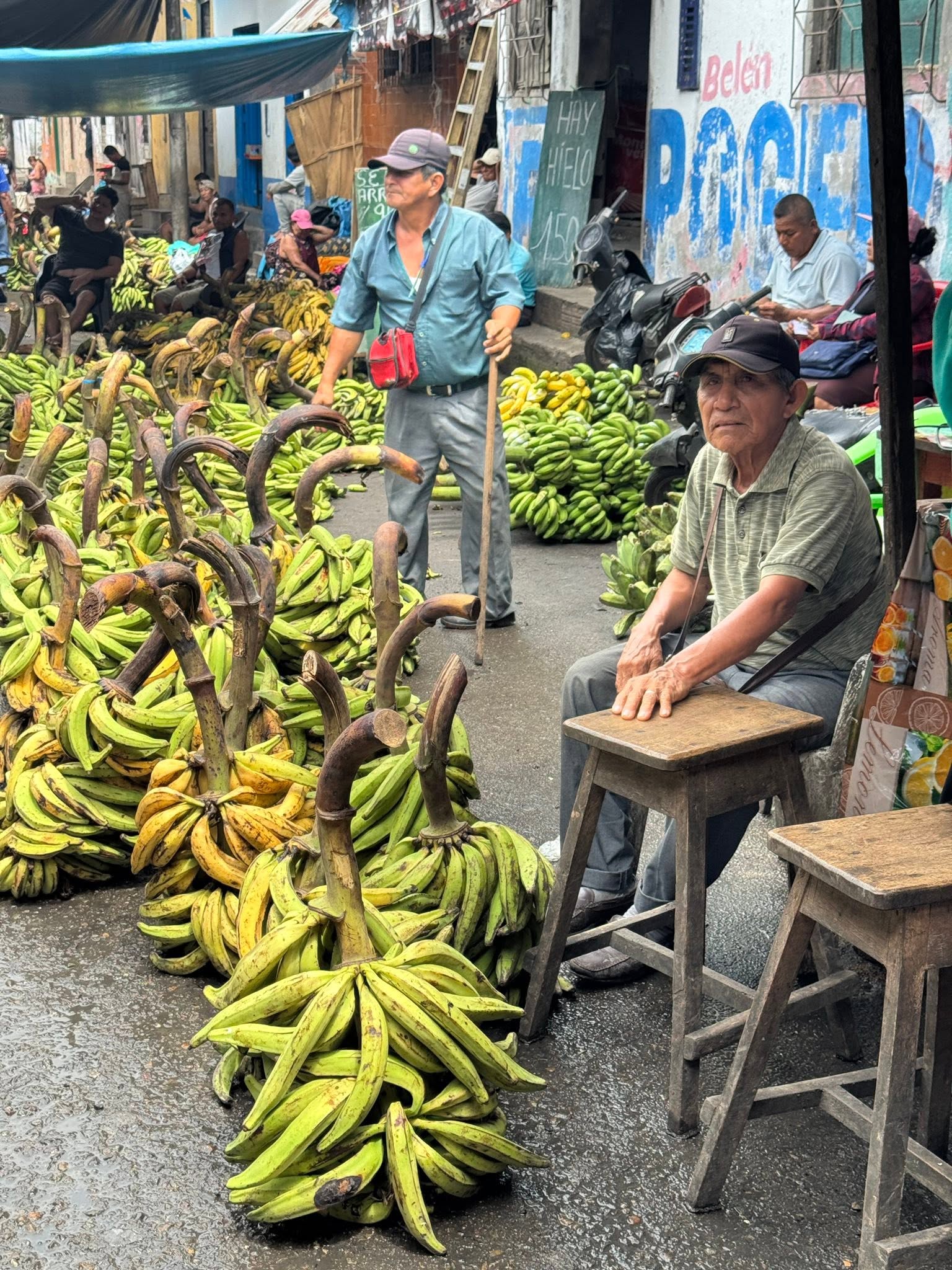
This is the banana section. I wanted to take a picture of the huge bunches and Angel warned us not to go any further. Apparently it’s not a safe section.
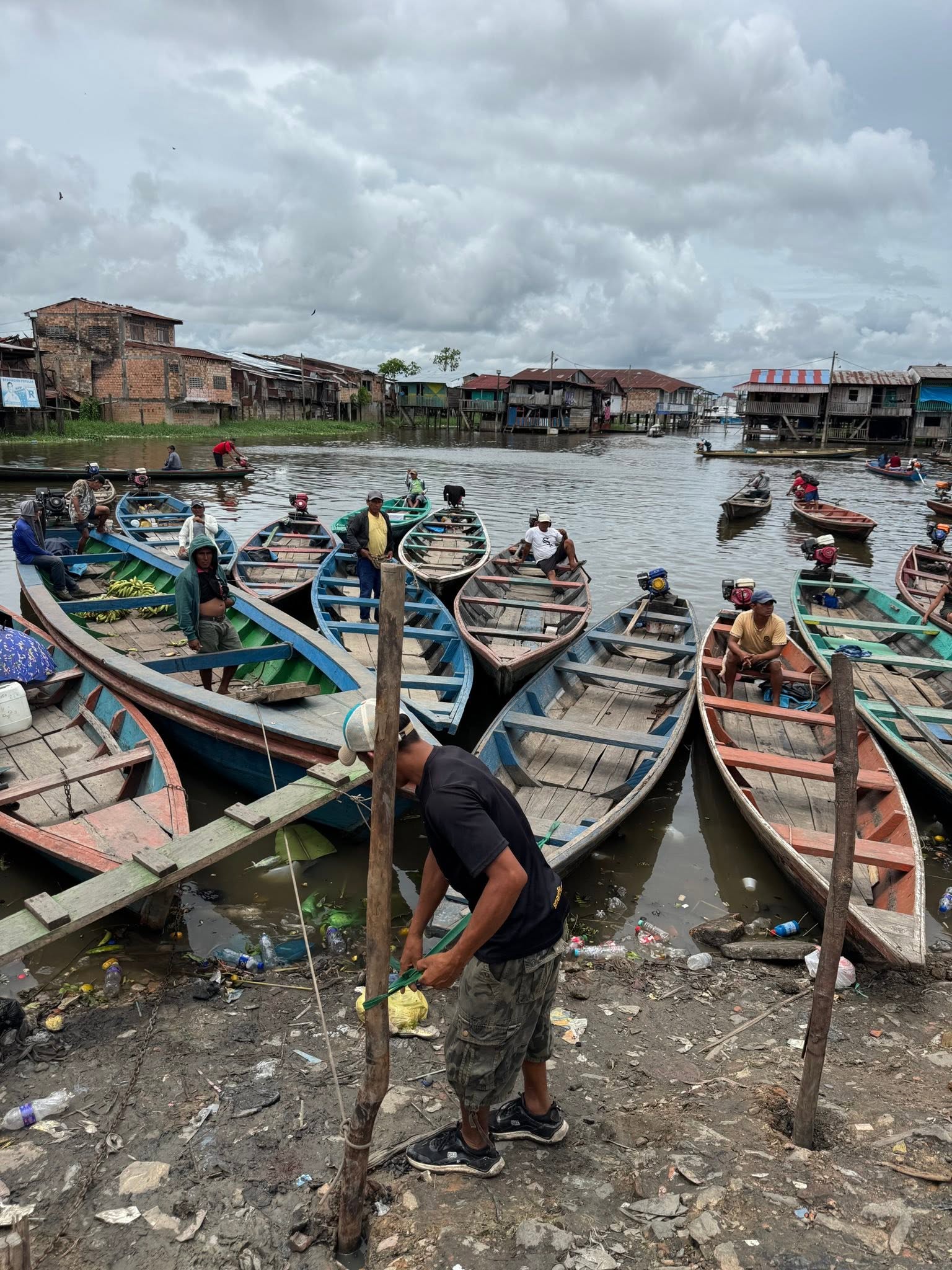
After that enlightening tour through the magical and mysterious market we hopped on a boat to see the floating village of Belén. This first settlement along the river dates back to the founding of Iquitos and grew quickly during the rubber boom. The boom drew people from all over the world looking to cash in and since the poor, working class couldn’t afford to live in the city next to the rubber barons, they settled here. And here they stayed after the rubber boom crash.
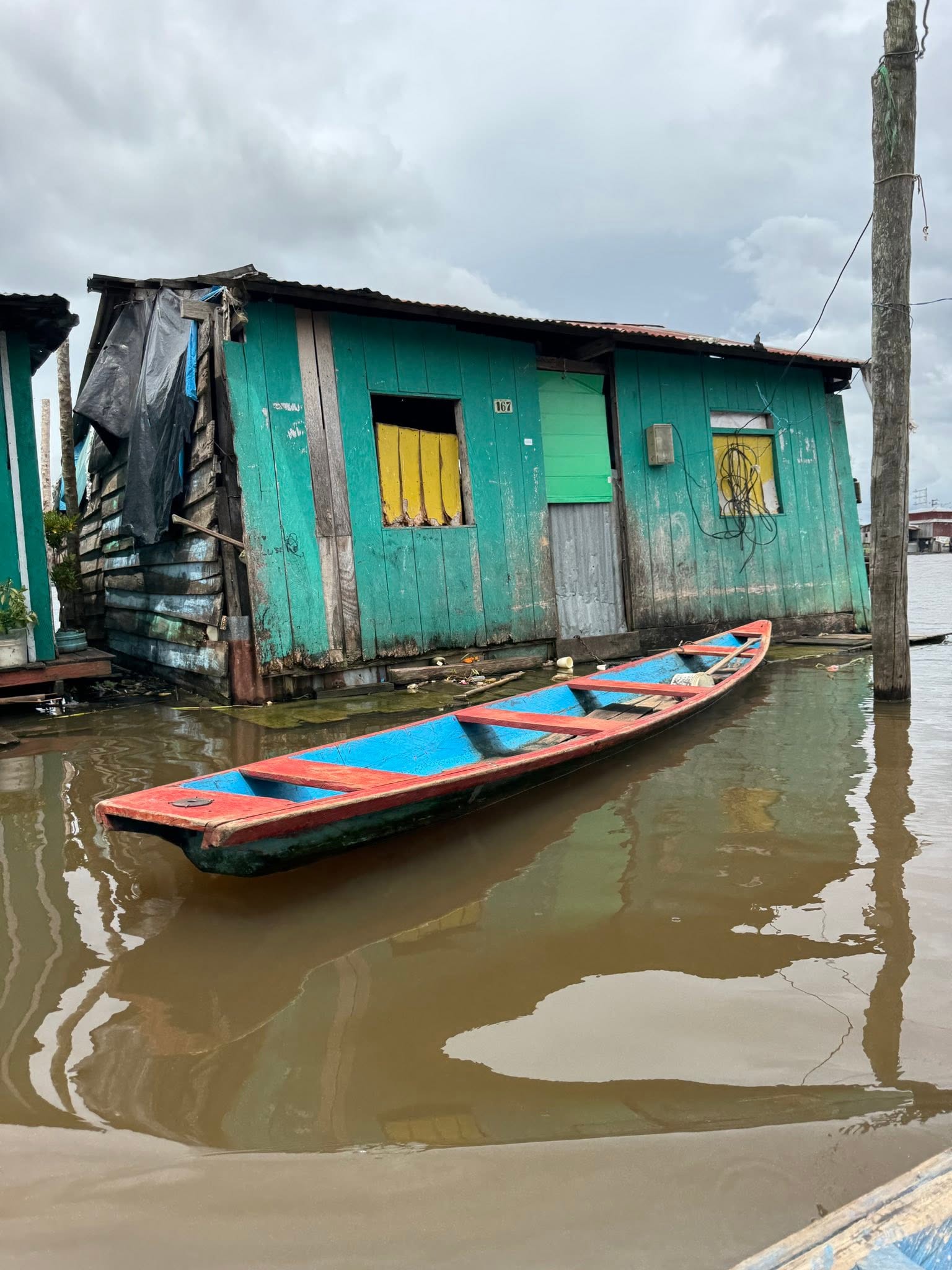
The river rises as much as five metres between the rainy and dry seasons. Some of the houses float up and down as the river rises and falls.
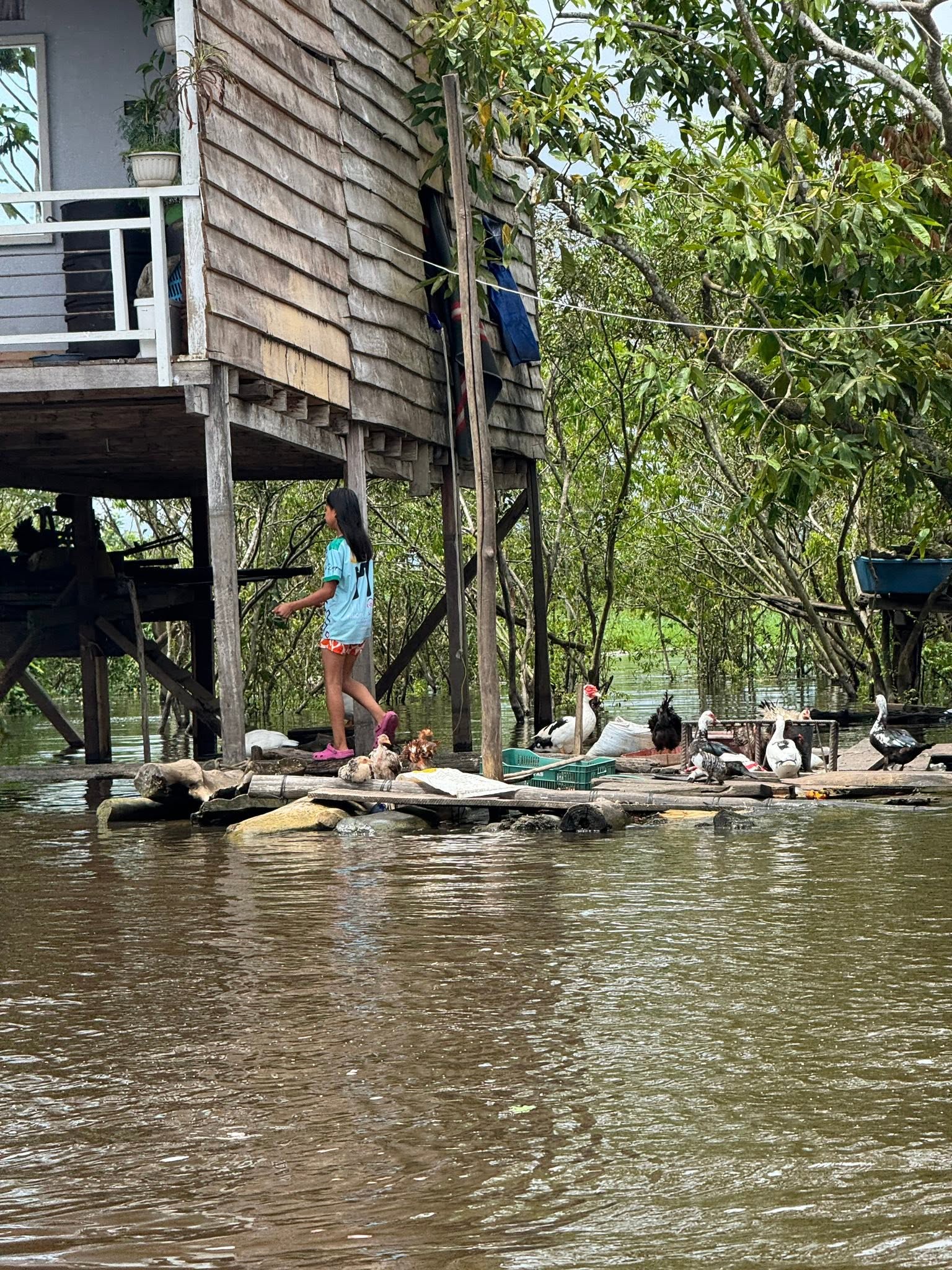
Others are on stilts and people hope that the river doesn’t rise higher than the stilts.
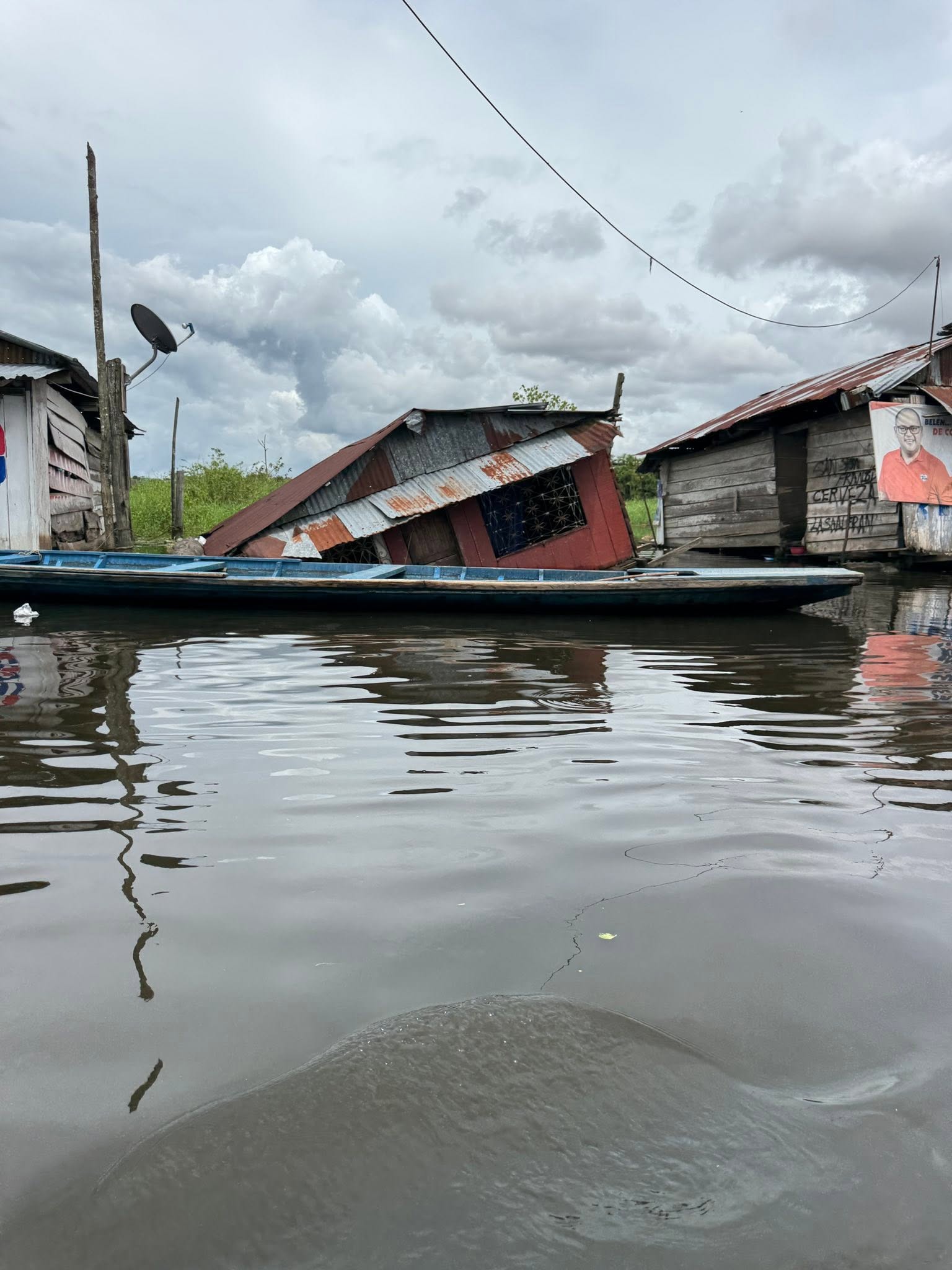
And then there are the ones that sink. These are temporarily abandoned until dry season when the water is gone and the residents can get to work on repairs.
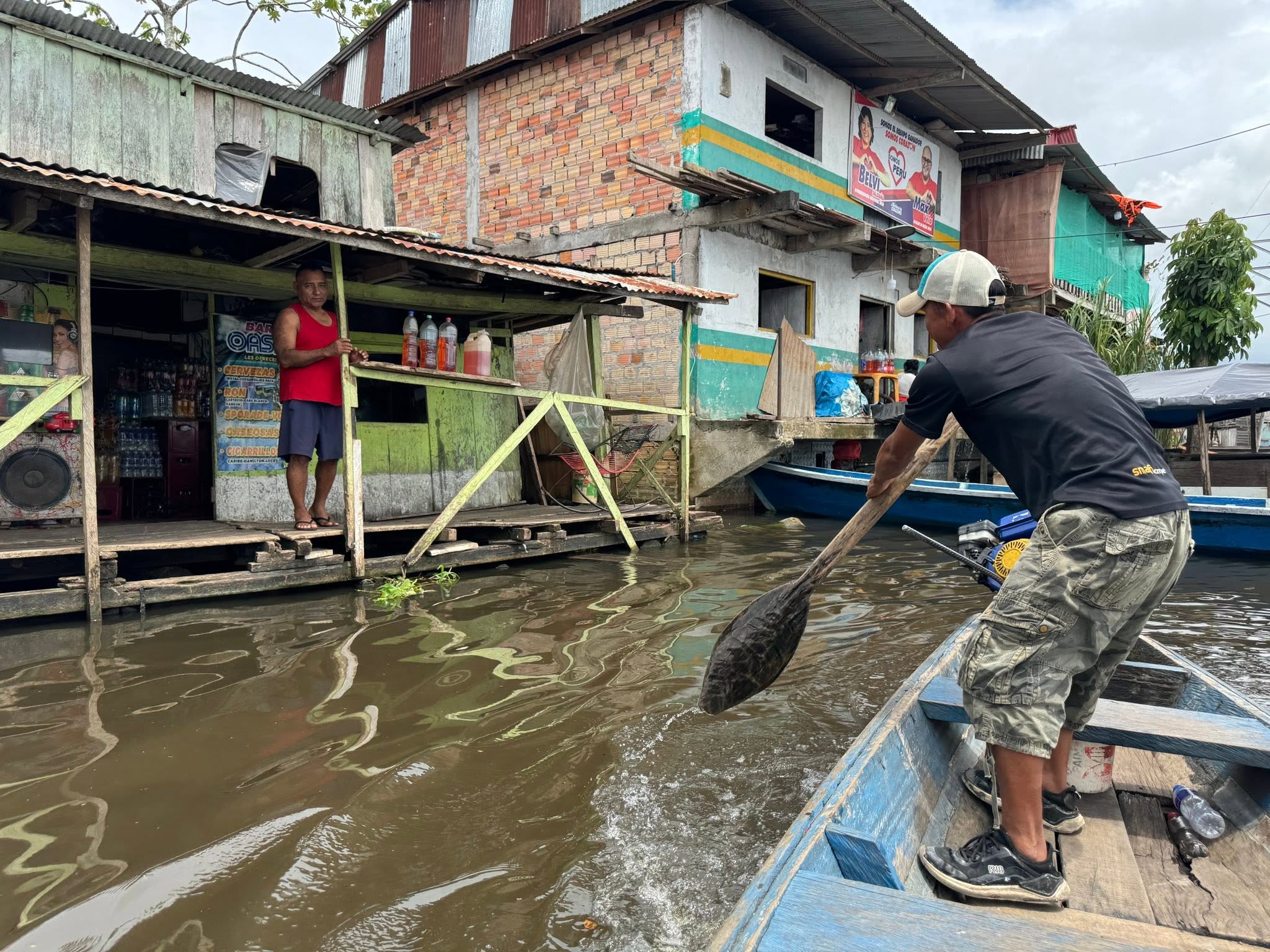
Everything you need is right here on the water. We were low on gas so we pulled up to a floating gas station to fill up. The gas is in the empty pop bottles set up on the railing.
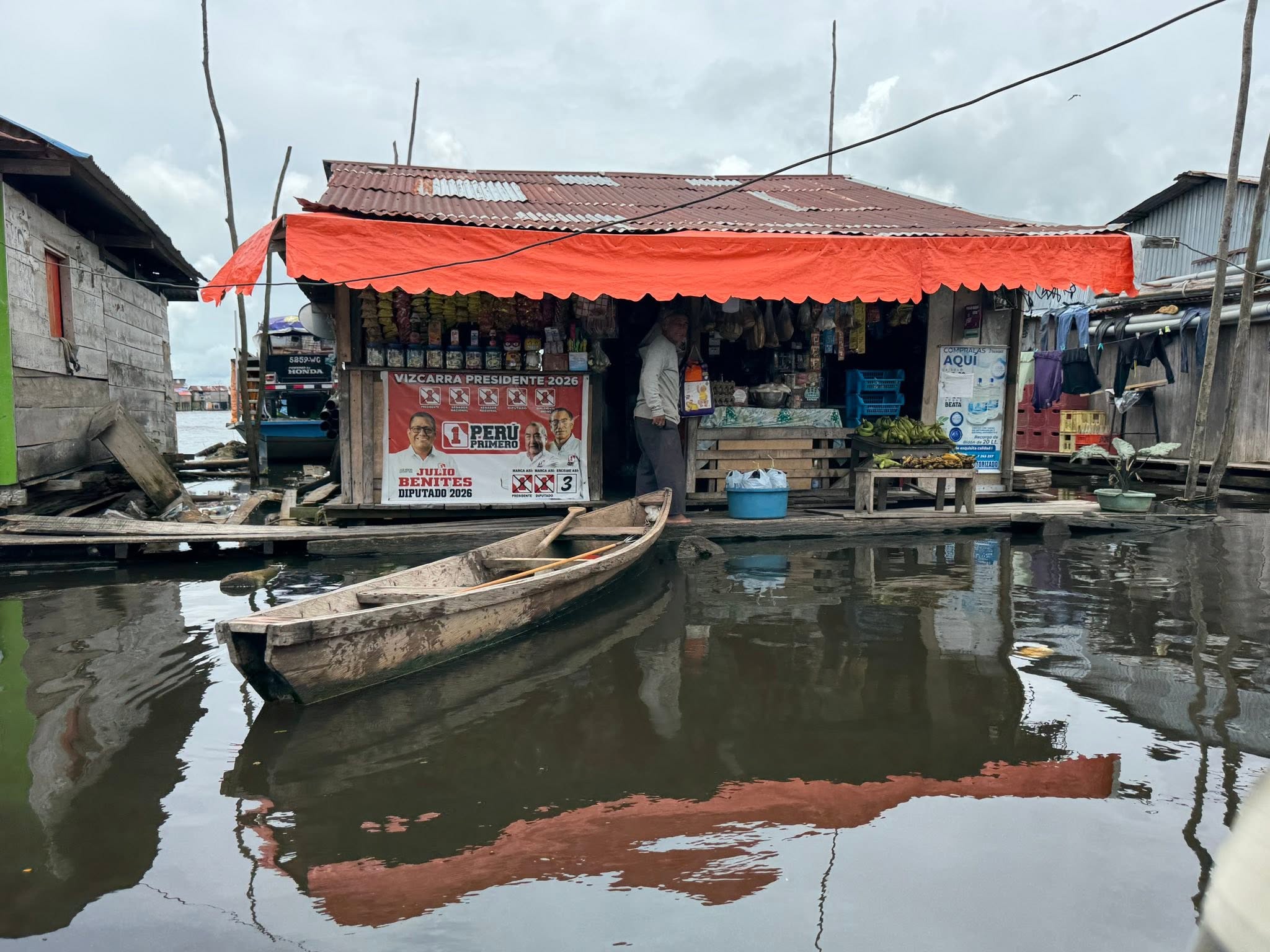
And here’s the local convenience store. There are even elementary schools out on the water. Once the kids reach high school, they go into Iquitos.
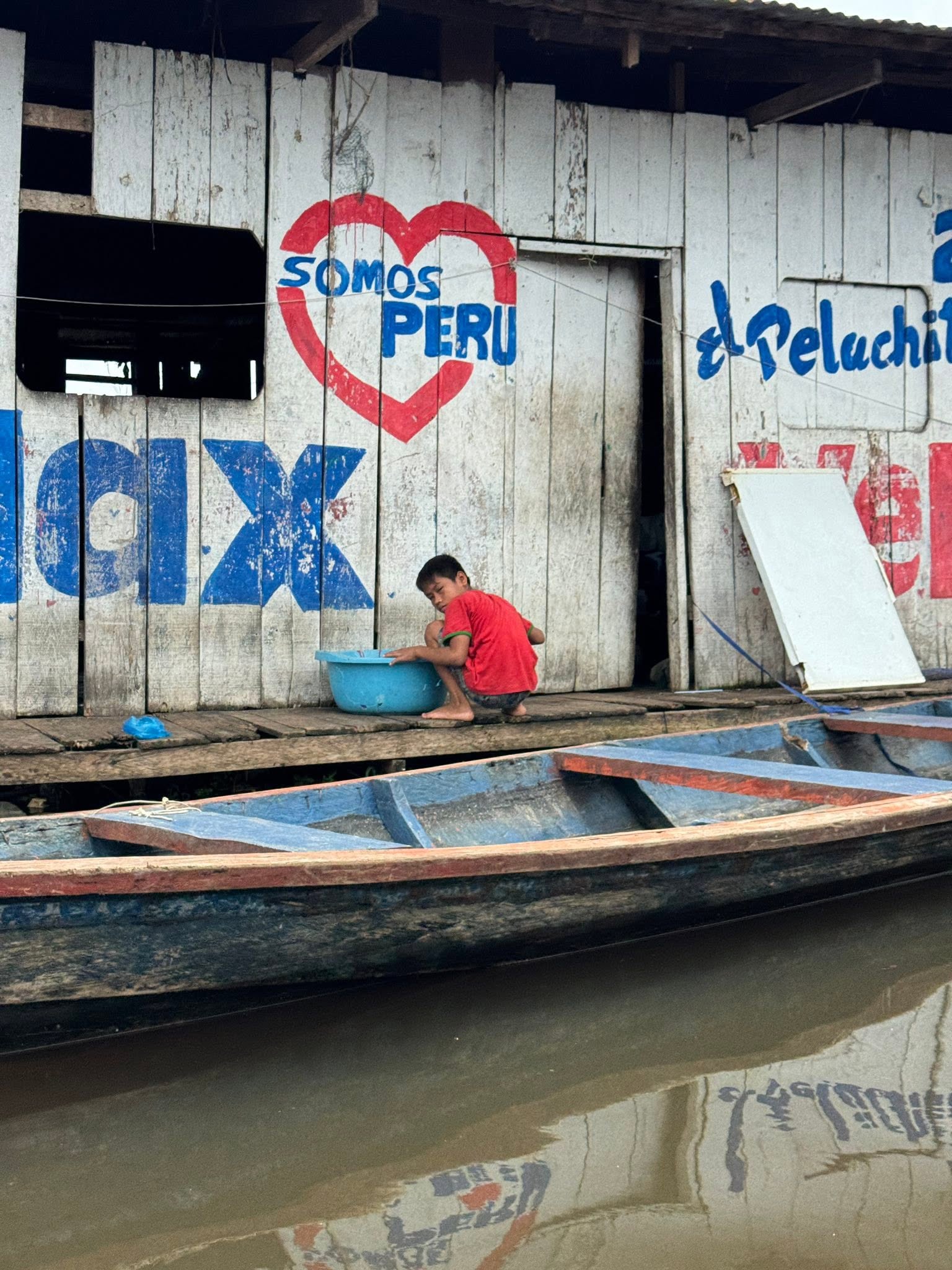
This is one of my favourite pictures from today. I love the red and blue carried through everything and the “somos PERU” in the heart on the wall. I think this little boy is either doing laundry or has been caught red handed doing something he shouldn’t.