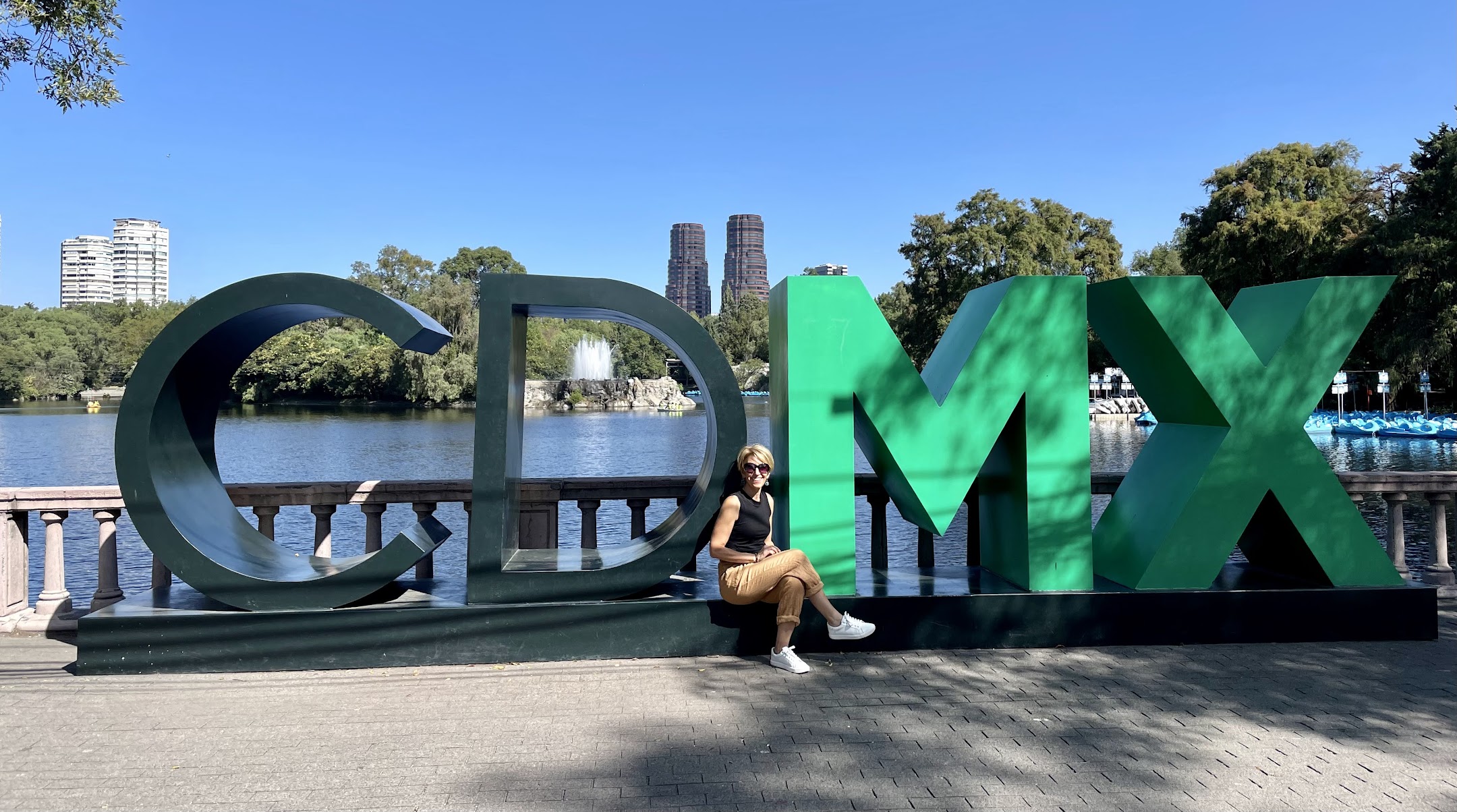
Mexico City, Round 2!
It only took a year to get back to this fabulous city! In a city this big and this amazing, there is always something new to discover…and eat!
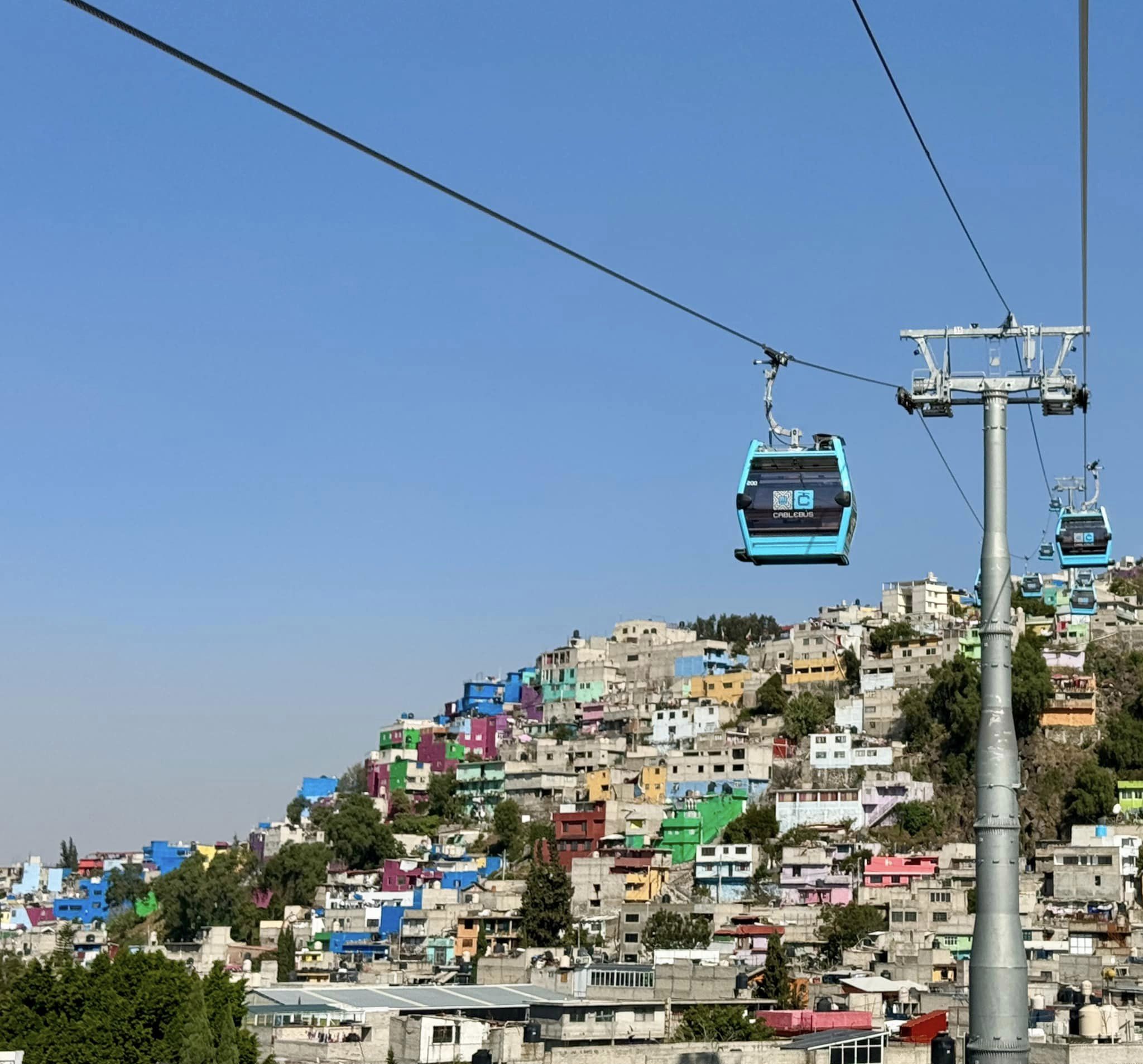
The secret about Mexico City’s Cablebus is getting out. The two lines completed so far are the two longest gondolas in the world at 9.2 and 10.6 km. Built as part of the transit system, and not as a tourist attraction, these gondolas link neighbourhoods that weren’t served by the metro and substantially shrink the residents’ commute, a big deal in this gridlocked city!
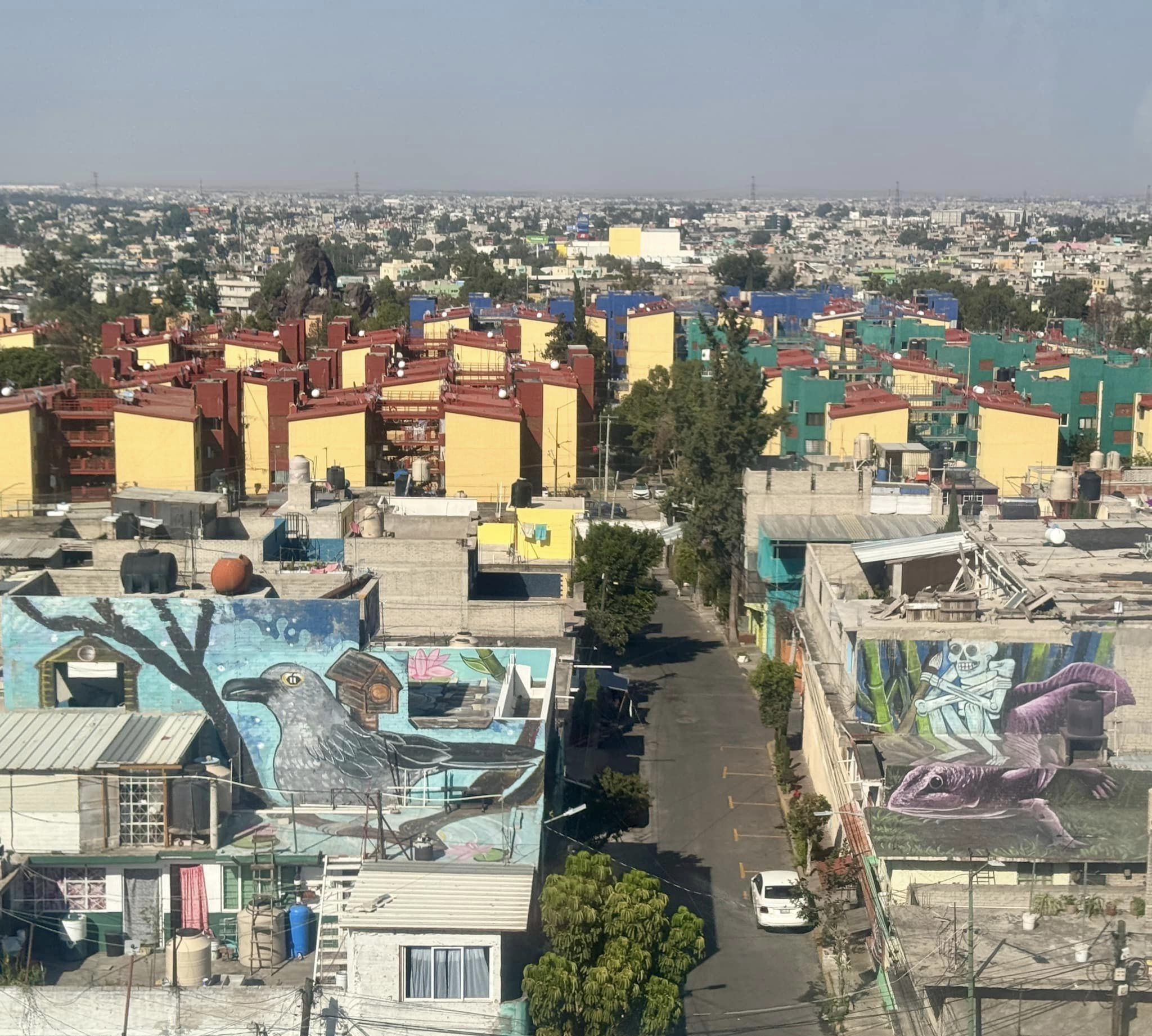
In an effort to make them appealing and clean up the areas in full view of the gondolas, the government hired muralists to paint rooftops and upper walls. It’s a really lovely way to commute: beautiful views, fresh air, and even city sounds (dogs barking, music, birds) piped in through the speaker.
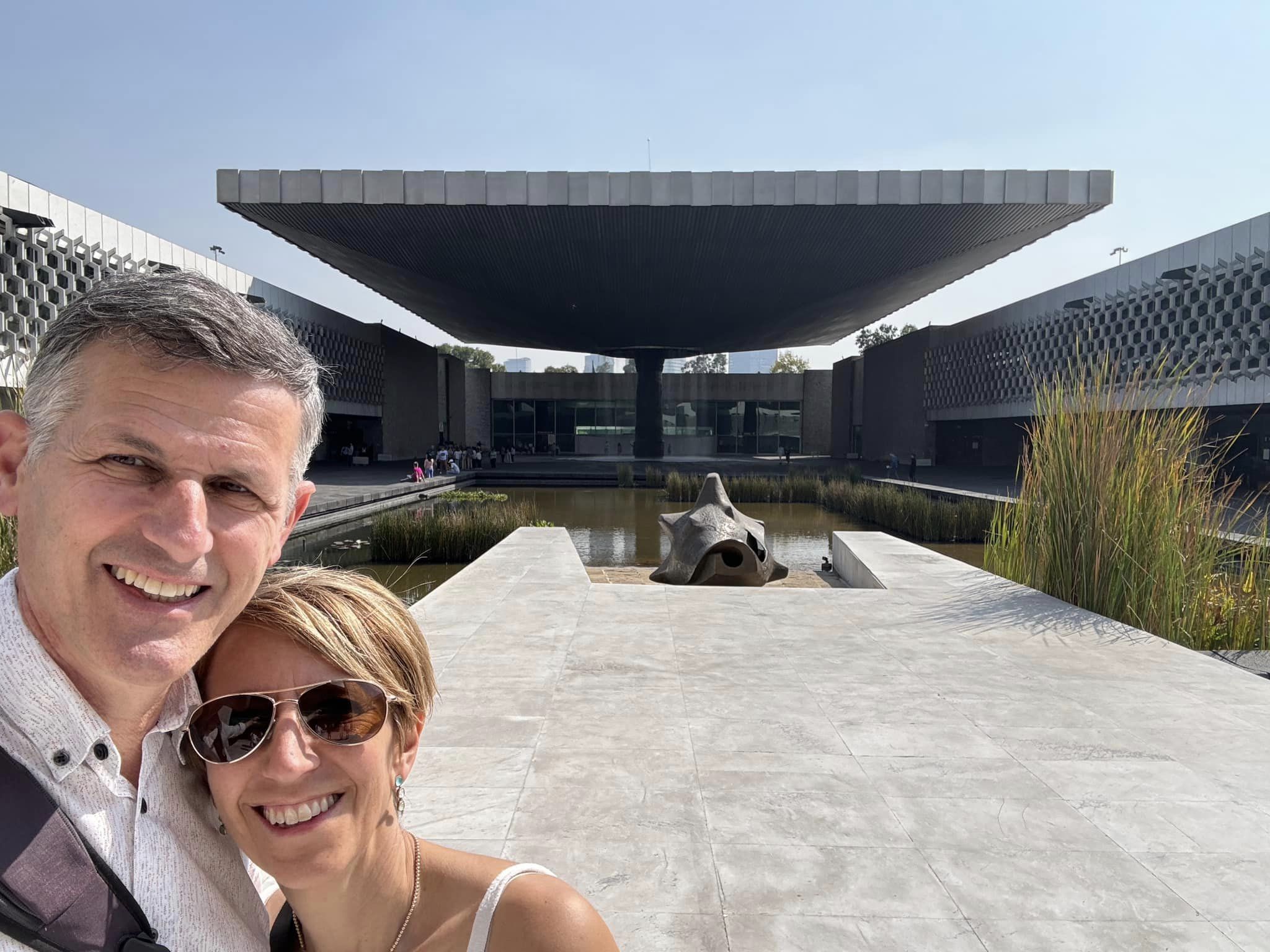
This time we were prepared enough to book a tour of the remarkable Museum of Anthropology. We had a private tour with Maricela whose praises I couldn’t sing loudly enough.
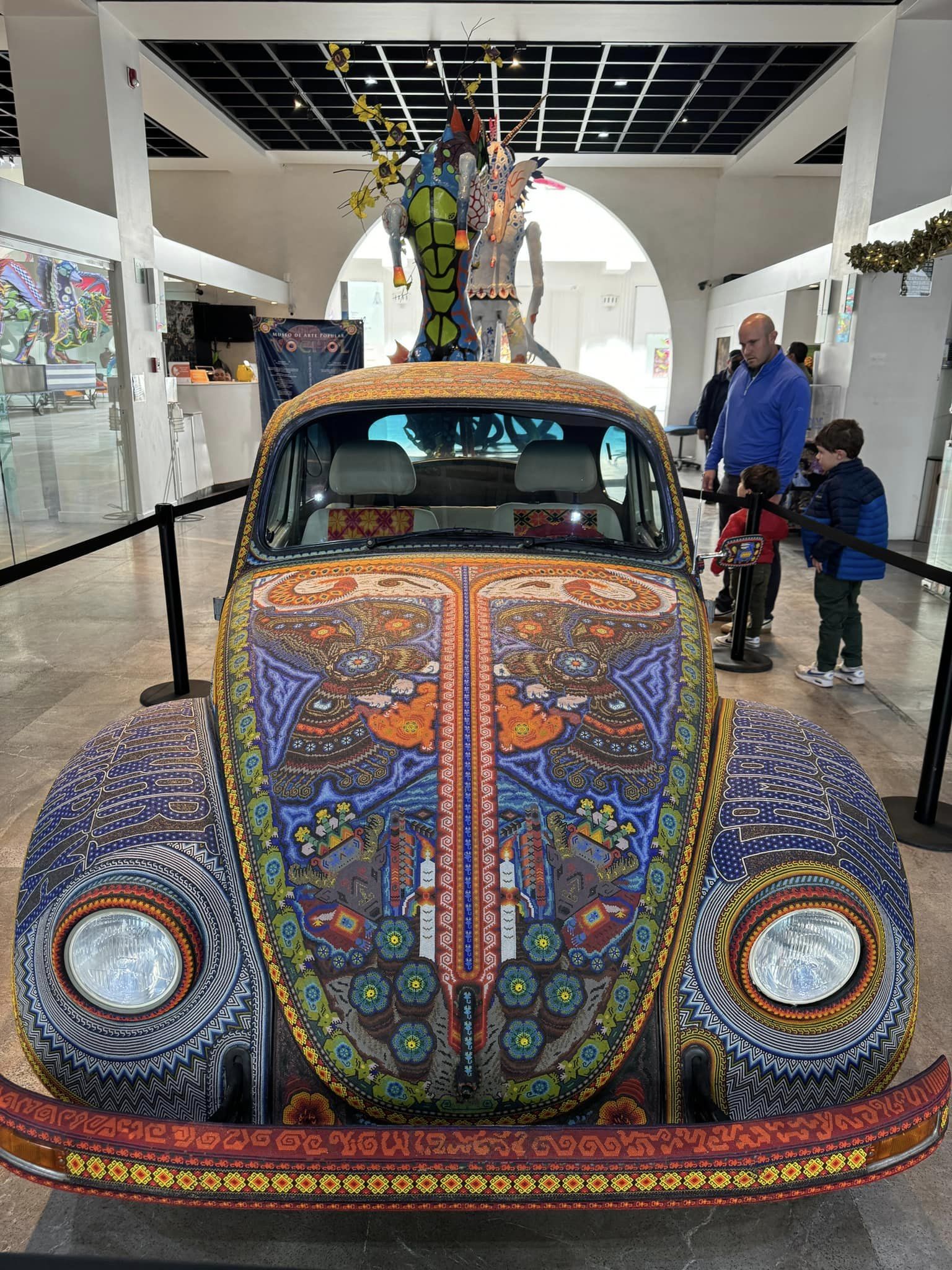
There are classic VW Beetles all over the place here. Apparently Mexico had the last manufacturing site of these beauties, closing in 2003. Why so popular here? Cheap and easy! Not only was the Beetle meant to be an affordable car “for the masses”, in 1988 the government created a tax break, reducing the cost of the cheap car by a further 20%. Mechanically, the Beetle was simple. A sophisticated lawnmower, it was easy to repair. The manual was like a cook book. An old timer taxi driver said he could replace the fan belt with pantyhose! This one, completely covered in seed beads, paying tribute to the Central Mexican Huichol culture, was in a gallery. Eight artisans applied 2,277,000 beads to the car, a project of over 4,000 hours. This could inspire a new beading project for me. I could cover all the dings and scrapes on my old car!
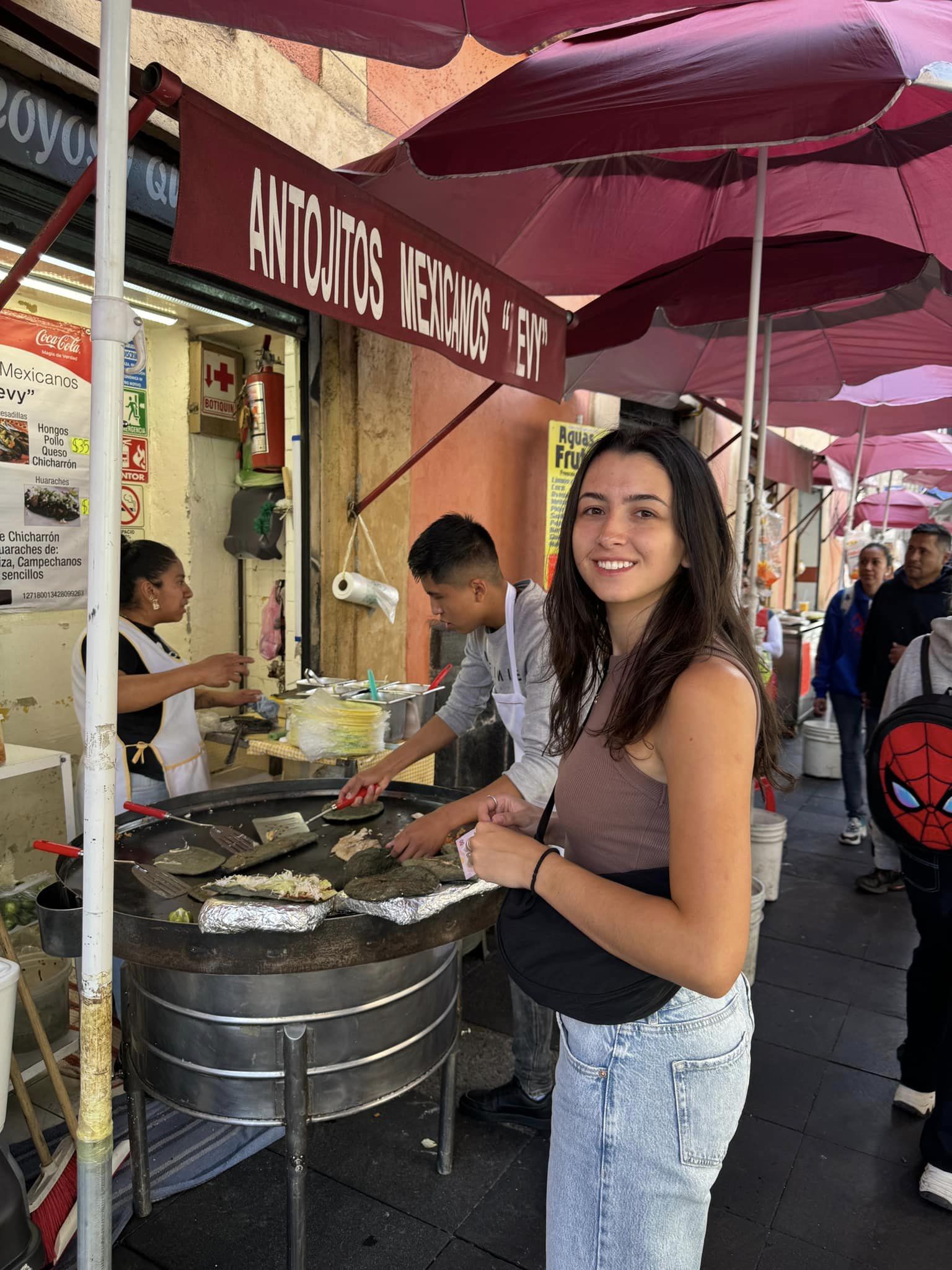
Food glorious food…a common refrain for us in Mexico City! Waiting for a blue corn tortilla, made on the spot from a big bin of dough behind the woman standing in this little hole in the wall, stuffed with Oaxaca cheese and chicken.
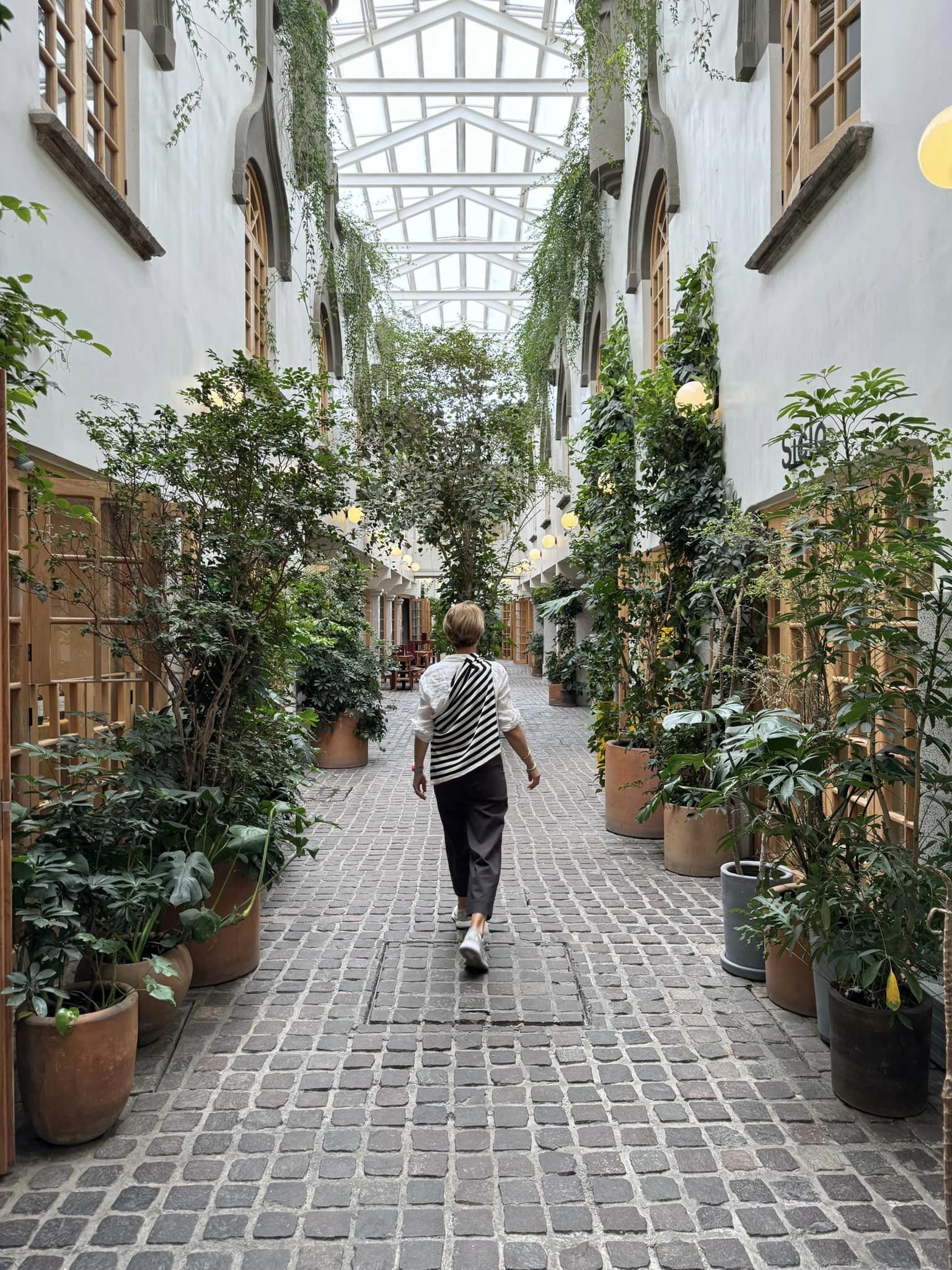
The magical El Parián art-nourveau arcade hidden in the Roma Norte neighbourhood.
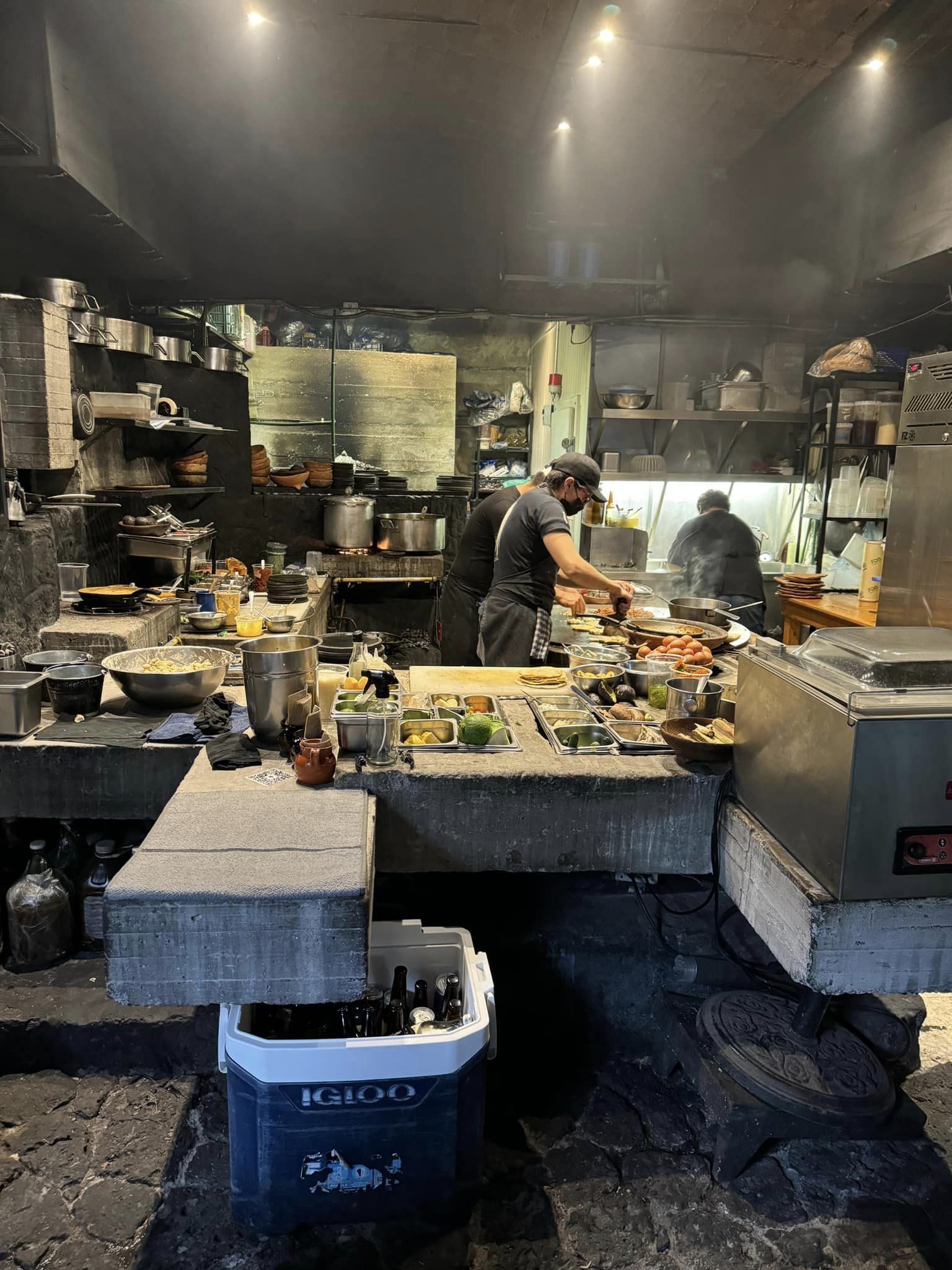
Now THIS! An absolutely spectacular meal at Expendio de Mais Sin Nombre. Owner Jesús Tornés is an unassuming fellow from the state of Guerrero who has recreated his rural childhood kitchen in this lean-to on a street in Roma Norte. For a hidden, unadvertized restaurant, we waited two hours for our seats. Not a hardship as Roma Norte is a cool neighbourhoods to stroll around. Using traditional clay pots, wood-fired comal (the big, metal griddle we see everywhere in the streets) and very local ingredients, the magic happens. There is no menu, you eat shoulder to shoulder, en famille, with whoever is beside you.
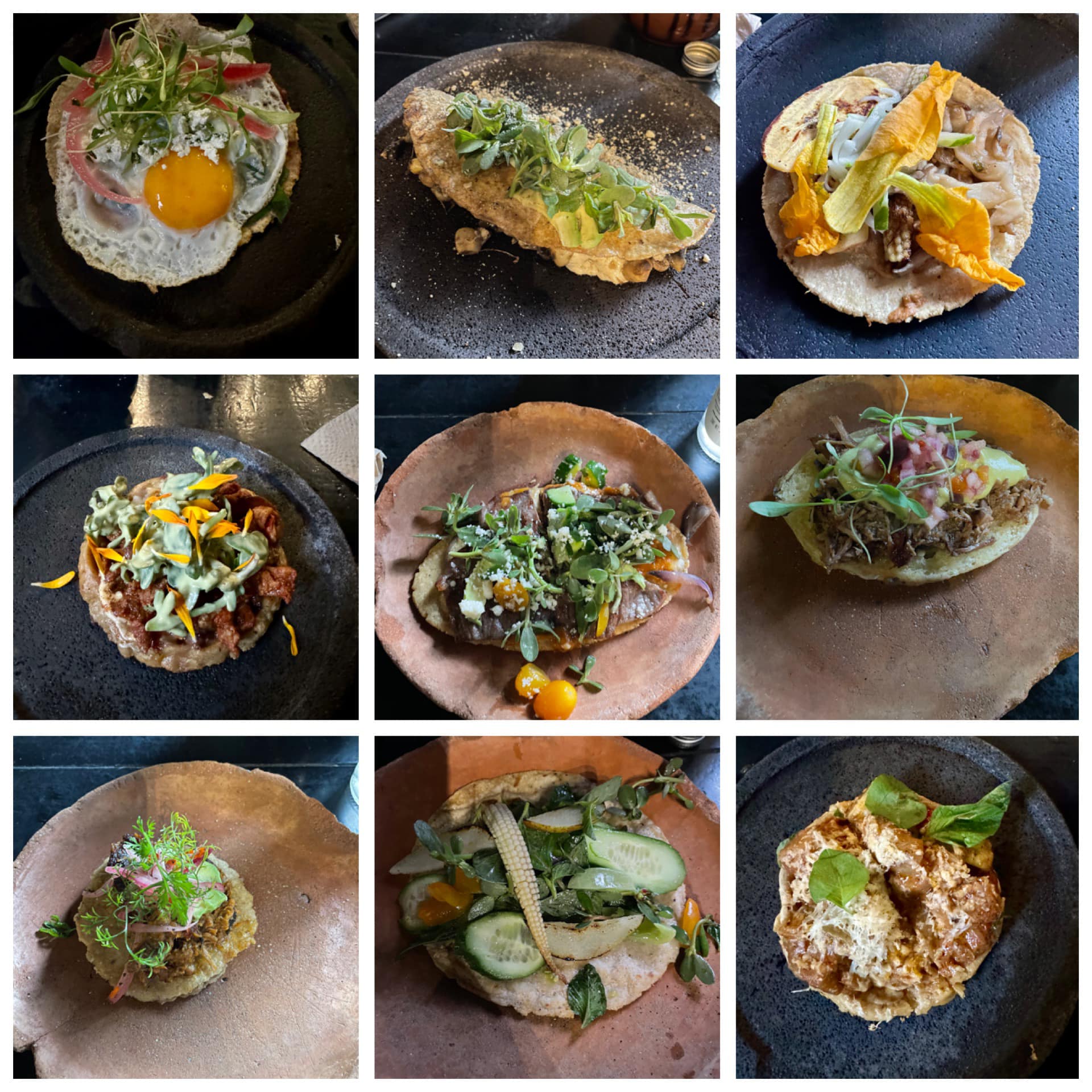
You let Jesús know of any dietary restrictions and then the food comes in rounds, with a meat and vegetarian dish to share (assuming you have no restrictions). After three rounds, Jesús asks if you’re done or want more food. Even if you think you’re done, you want more food. We lasted five rounds. I can’t tell you the details of each dish because my Spanish isn’t good enough to grasp the intricacies of the descriptions but wow…
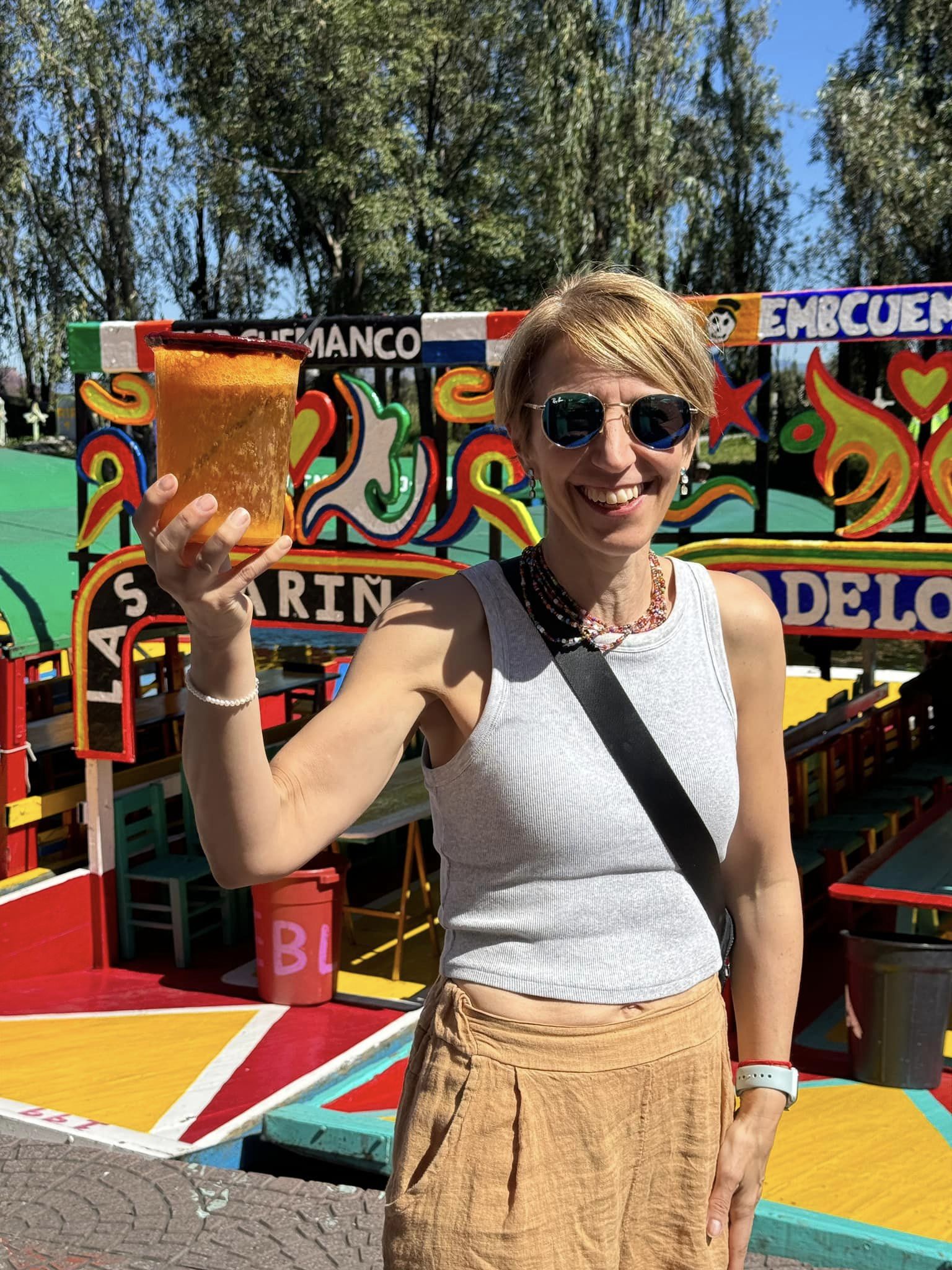
Starting our cruise in Xochimilco, on the outskirts of Mexico City, with a michelada. Corona mixed with mango purée and rimmed with tamarind. Don’t knock it till you try it. There’s a reason the cup is so big!
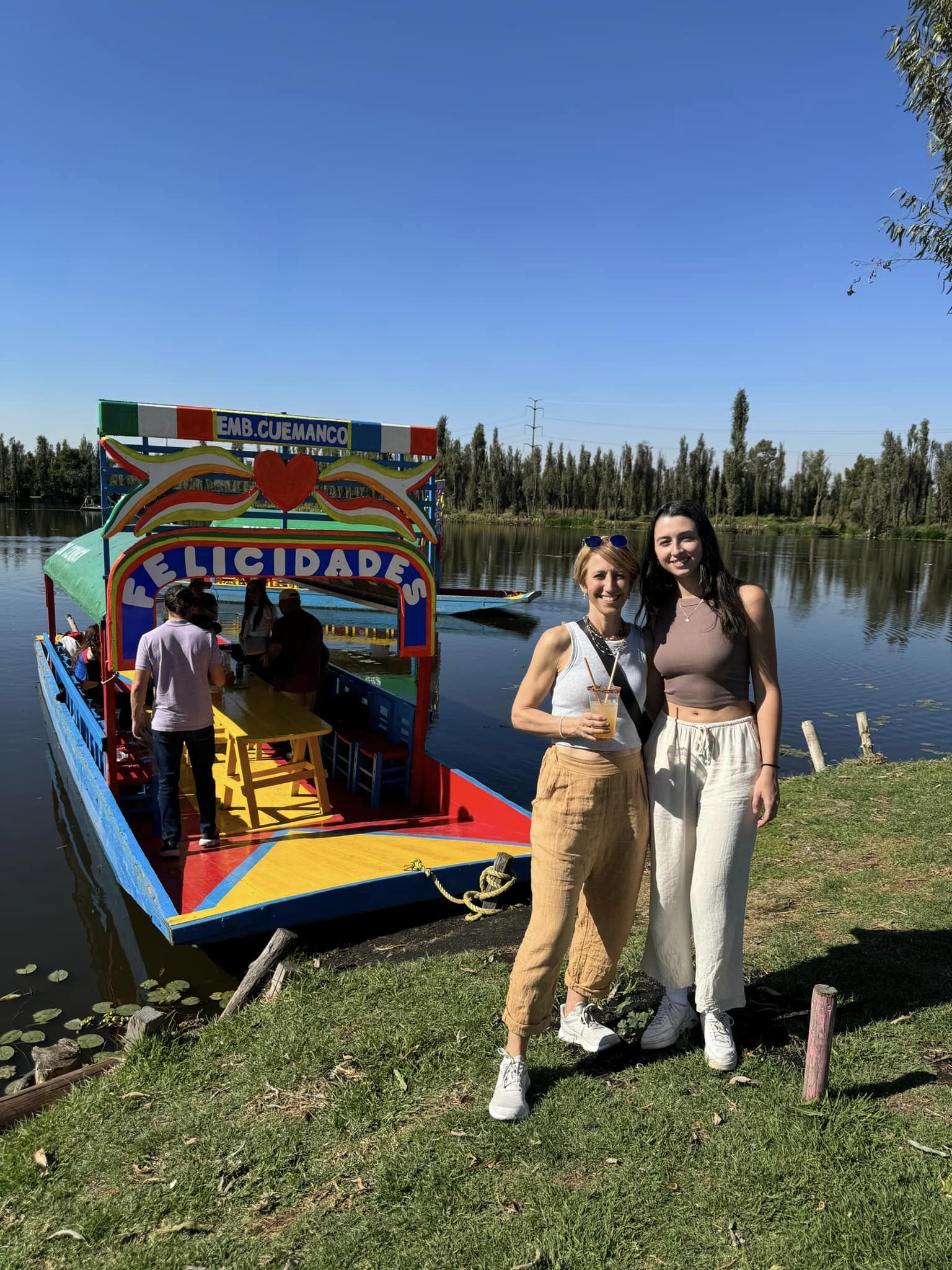
When you think of Xochimilco, you think of colourful trajineras navigating tourists around the Floating Gardens in various states of drunkenness, the Mexican Venice. True, sort of. First of all, the Floating Gardens (islands) are not really floating. All of Mexico City is built on a lake and the industrious pre-Hispanic Mexicans needed solid surface areas to live and farm on. They dredged up mud and silt from the bottom of the lake and piled it up until it broke the surface of the water. Then they planted trees with roots that reached all the way down to the bottom of the lake and held the man made islands (Chinampas) in place. The remaining water resulted in a network of canals that served as shipping and transportation routes. All that’s left from those times is what we can visit in Xochimilco, just outside Mexico City.
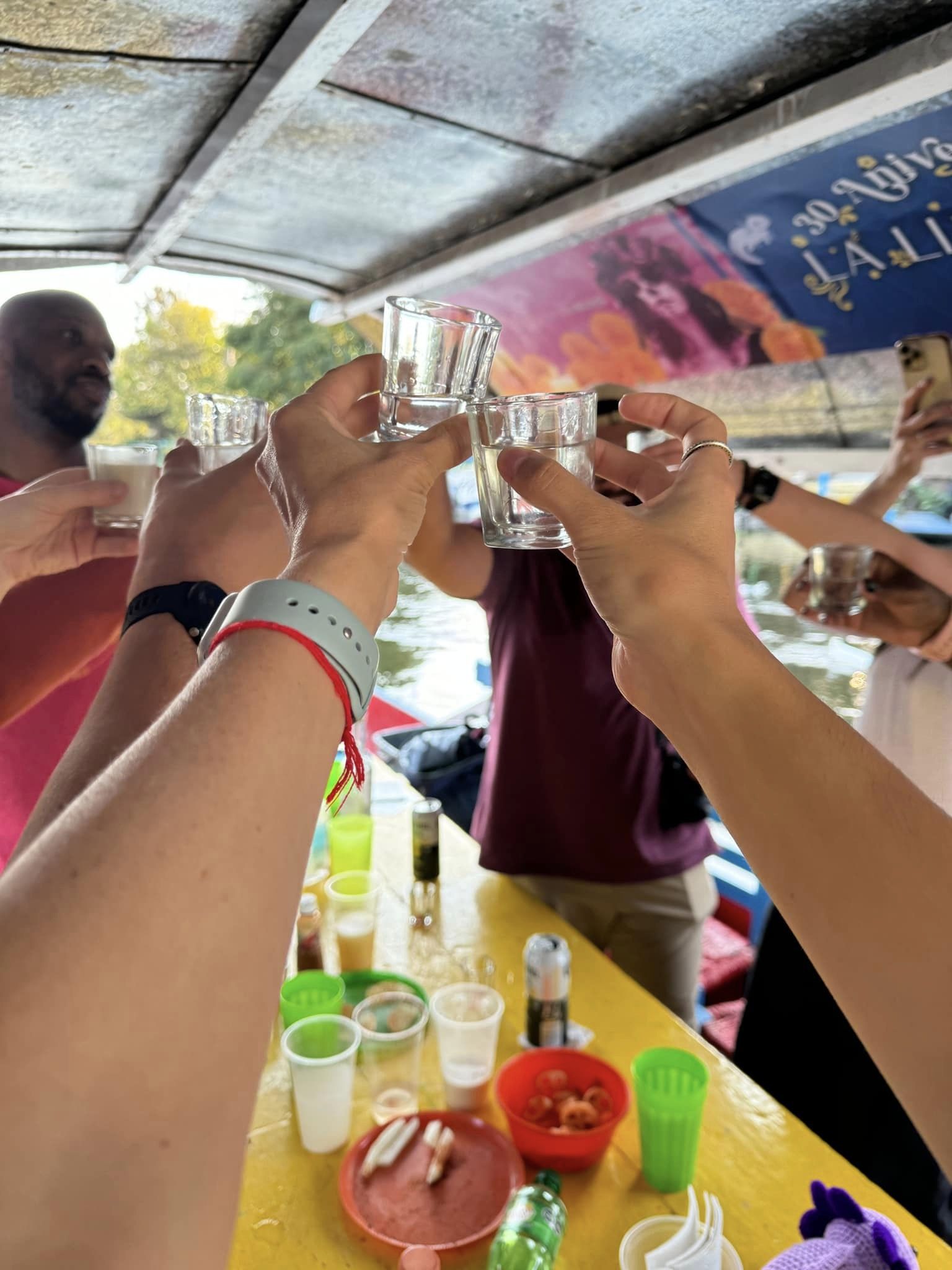
Is it a booze cruise? For some it is, and certainly the evening cruises are solidly about the booze and not so much the views and stops with stories on the way. We went in the afternoon with a fabulous guide and an awesome group of 10. Yup, I was the oldest but I think I held up pretty well! Definitely go as a group or join a tour. The fuller boats are having way more fun. We saw a few of these boats with just a couple of people and a guide and they all looked positively bored.
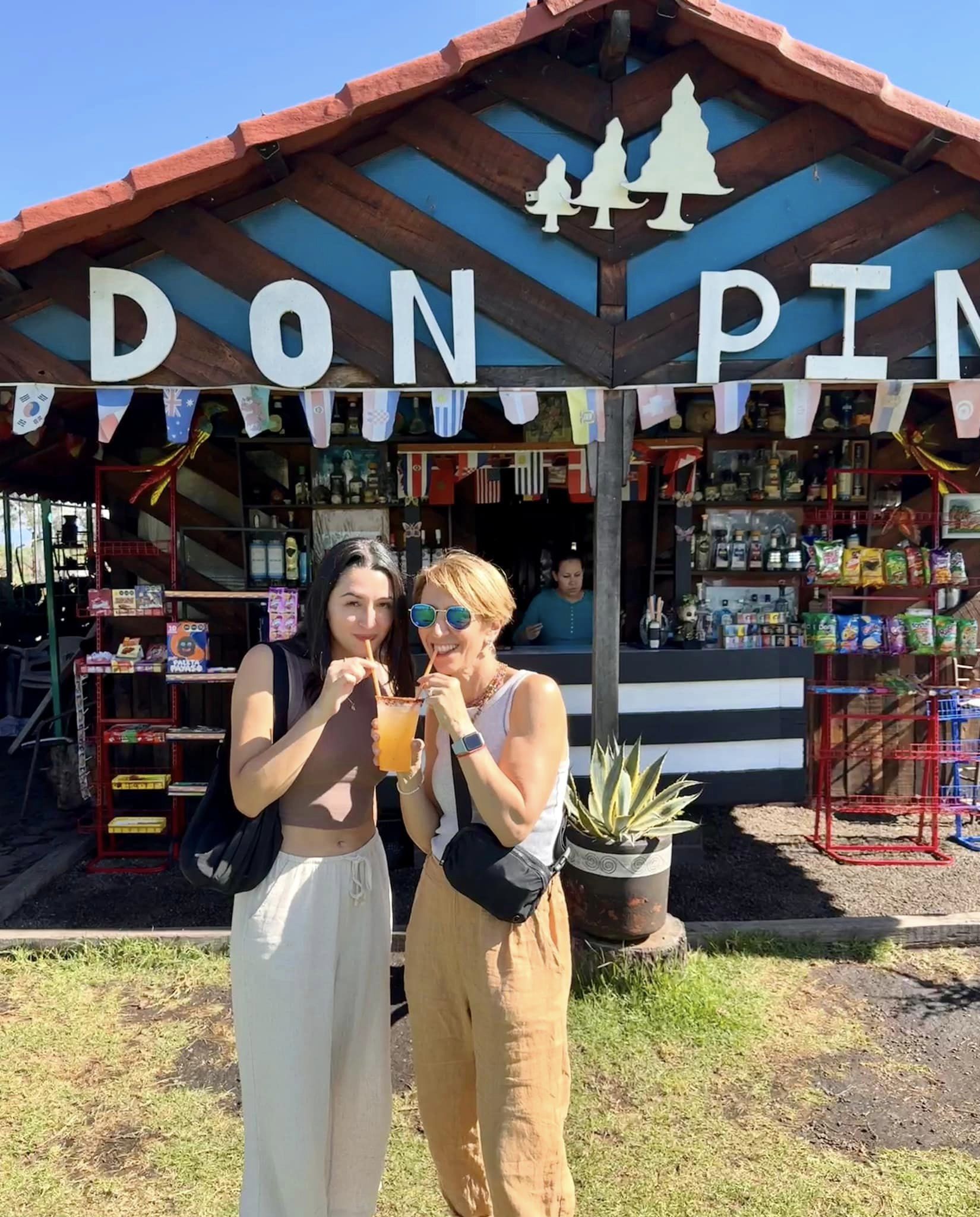
Of course there’s a bar on a hidden island. But not so hidden from the scores of trajineras passing by.
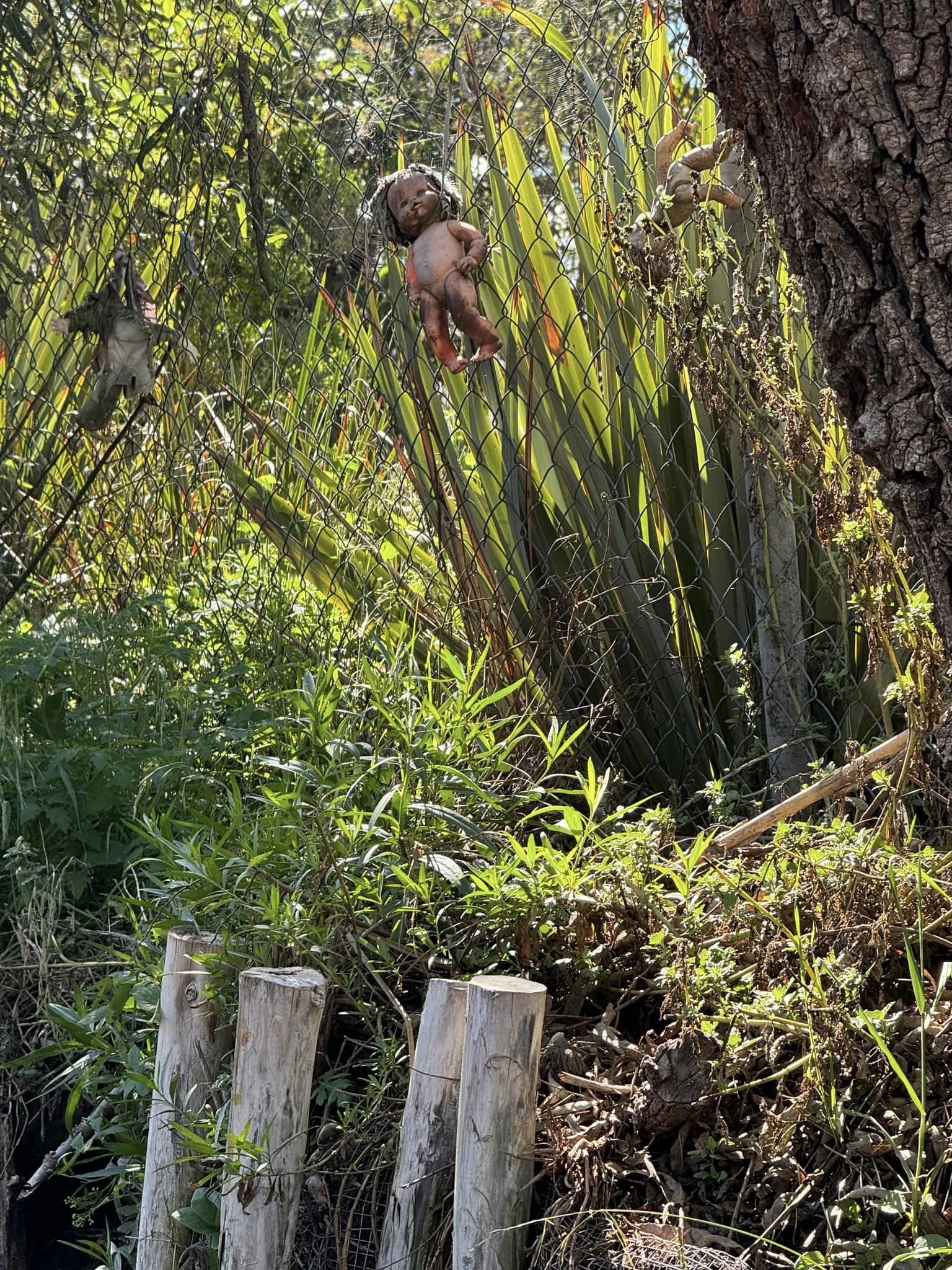
Where we were, there’s a fake Island of the Dolls (the real one is a few hours away). Island of the Dolls sounds like a cute, playful place which is a far cry from its true (?) creepy origin. There are surely countless stories about the origins of the Island of the Dolls, but one fact is consistent. Don Julian Santana Barrera was a caretaker of a small island among the canals about two hours from where we were. One day, he discovered a little girl drowned by his island. Reclusive as he was, he was a bit freaked out by the strange noises and odd shadows that he started noticing after discovering the little girl. Some say he would find his tools scattered around the island in the morning and concluded that it was her restless soul. Wanting to calm her and distract her from messing with his stuff, he hung dolls around the island. Then neighbours joined in to add to the collection. Each doll represented the soul of a missing child in the area. 50 years later, in 2001, the body of Julian was found dead and floating in the water in exactly the same place as the girl who drowned.
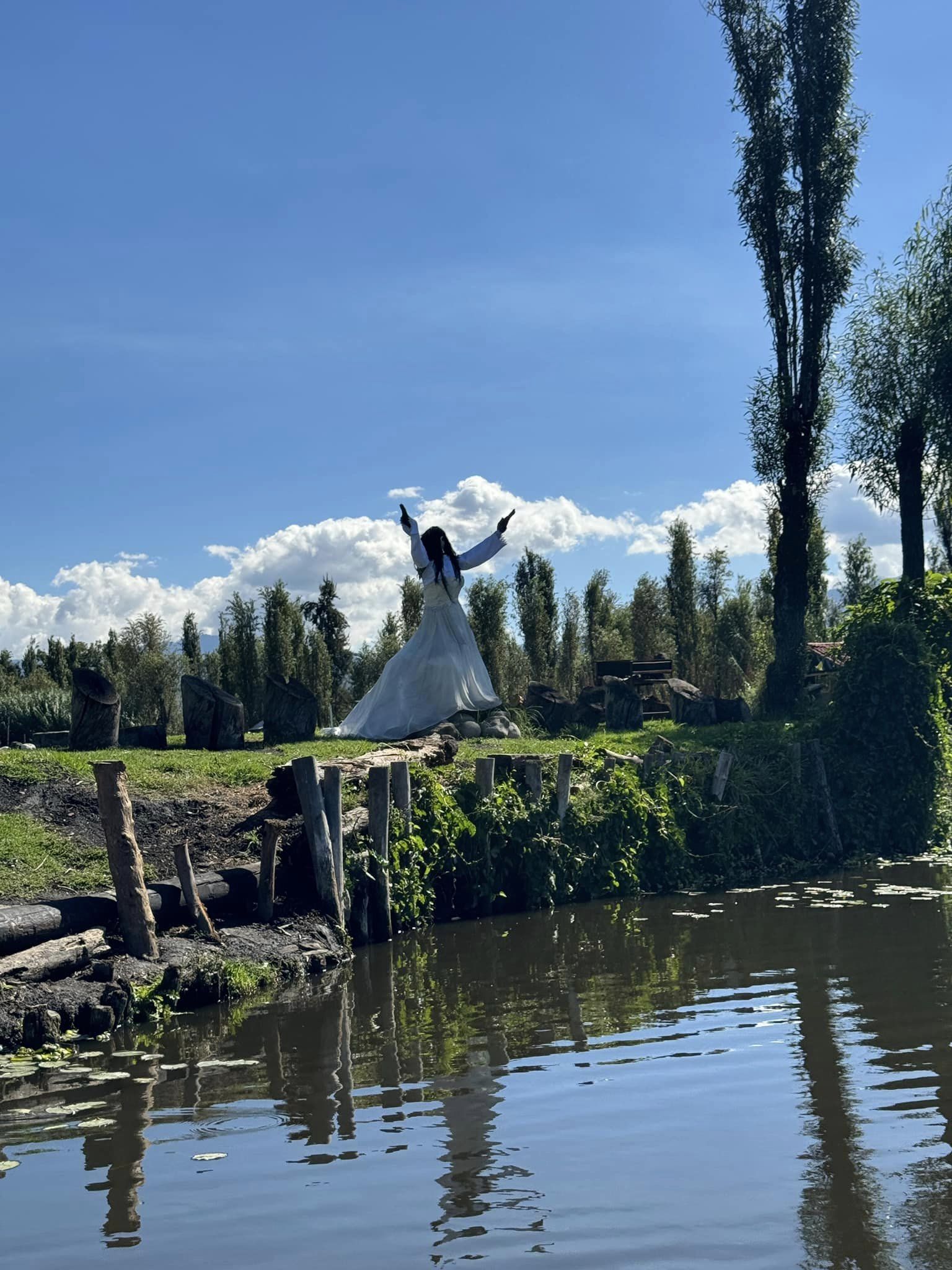
La llorona (the crying woman) is a legend that is shared among many countries around here. Each has its own riff but the tales are told to scare children and keep them from being close to dangerous waters. The tale we were told was of a beautiful woman who became the lover of a Spanish conquistador with whom she had two kids. He leaves, promising to come back. When he finally does, after a very long time, he refuses to marry her and breaks her heart. Turns out he married another woman while he was gone and started another family. Sounds like Puccini’s Madama Butterfly. Some say that in a rage, she takes her children and drowns them here, and consumed with guilt, drowns herself. Others say the conquistador drowns the children to sever the link with her and then she drowns herself in sorrow. Whichever you believe La llorona is fated to wander the earth crying for her children. We landed on an island dedicated to her with objects and outfits placed in her honour. This statue of La llorona has two faces looking in opposite directions, on the lookout for her children.
A mariachi band pulled up beside our boat!
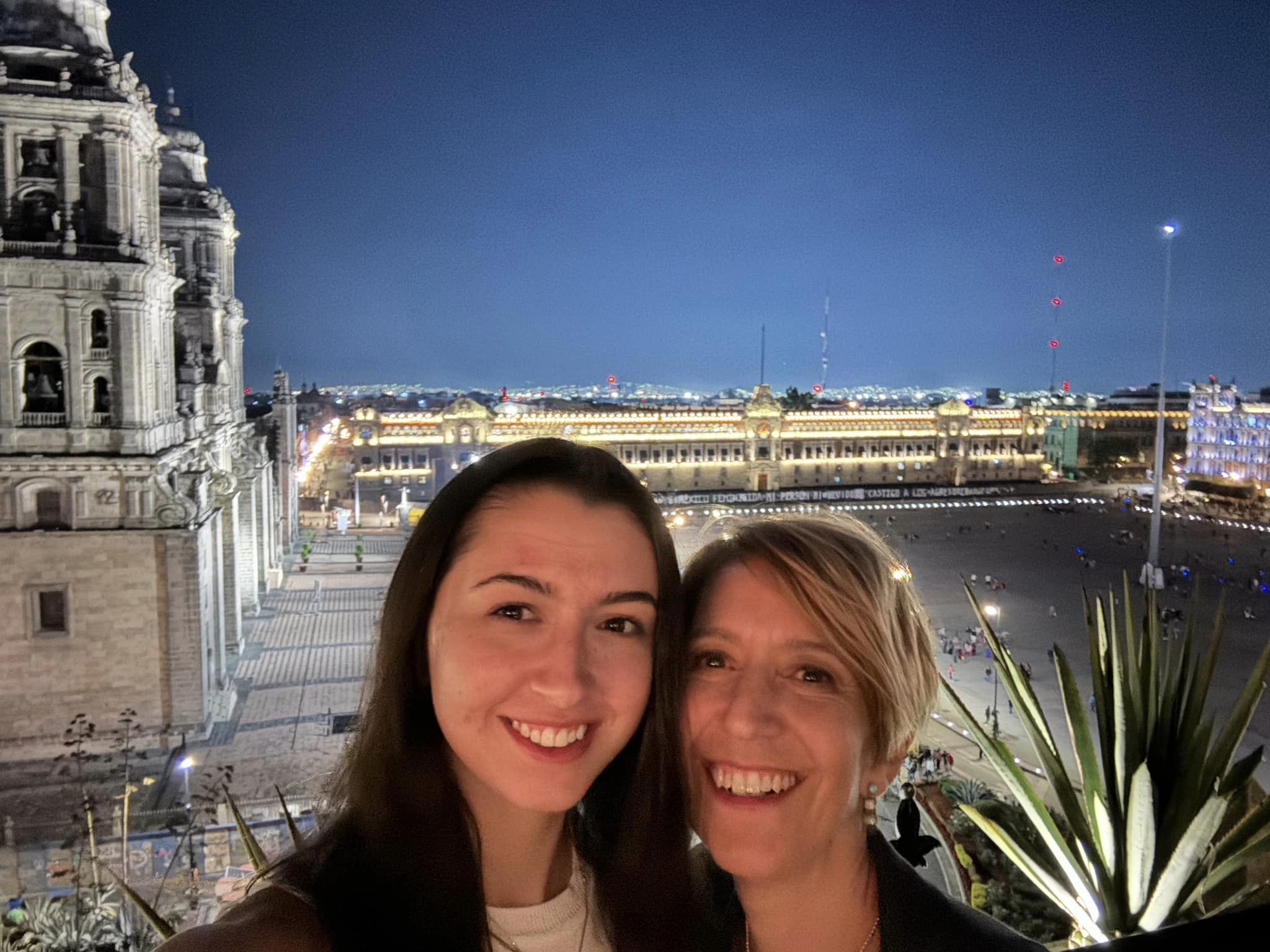
A beautiful view of the Zocalo with the presidential palace in the background. This is where the president lives and works. There are beautiful Diego Rivera murals in the palace, which used to be open to the public. Now they can only be viewed with a free, guided tour and you can only get tickets same day. Someone told us that they limited access to view the murals during Covid and since the president doesn’t actually do any real work, they keep it restricted to the public so nobody can see that! Everybody has some political commentary.
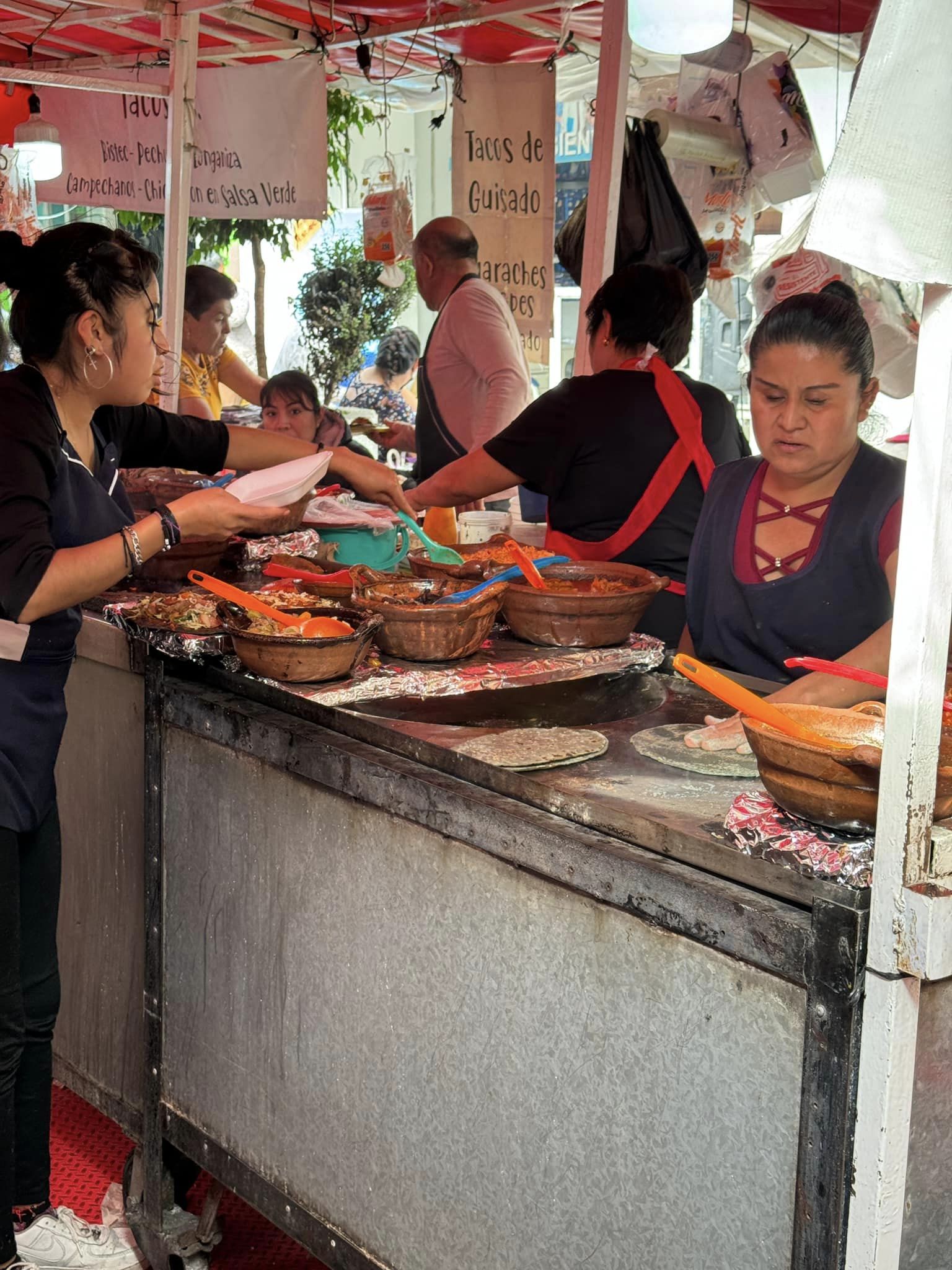
This was another fabulous street food stop just outside a subway station…dozens of stands felt like a food court with more choices than you could ever eat in one sitting
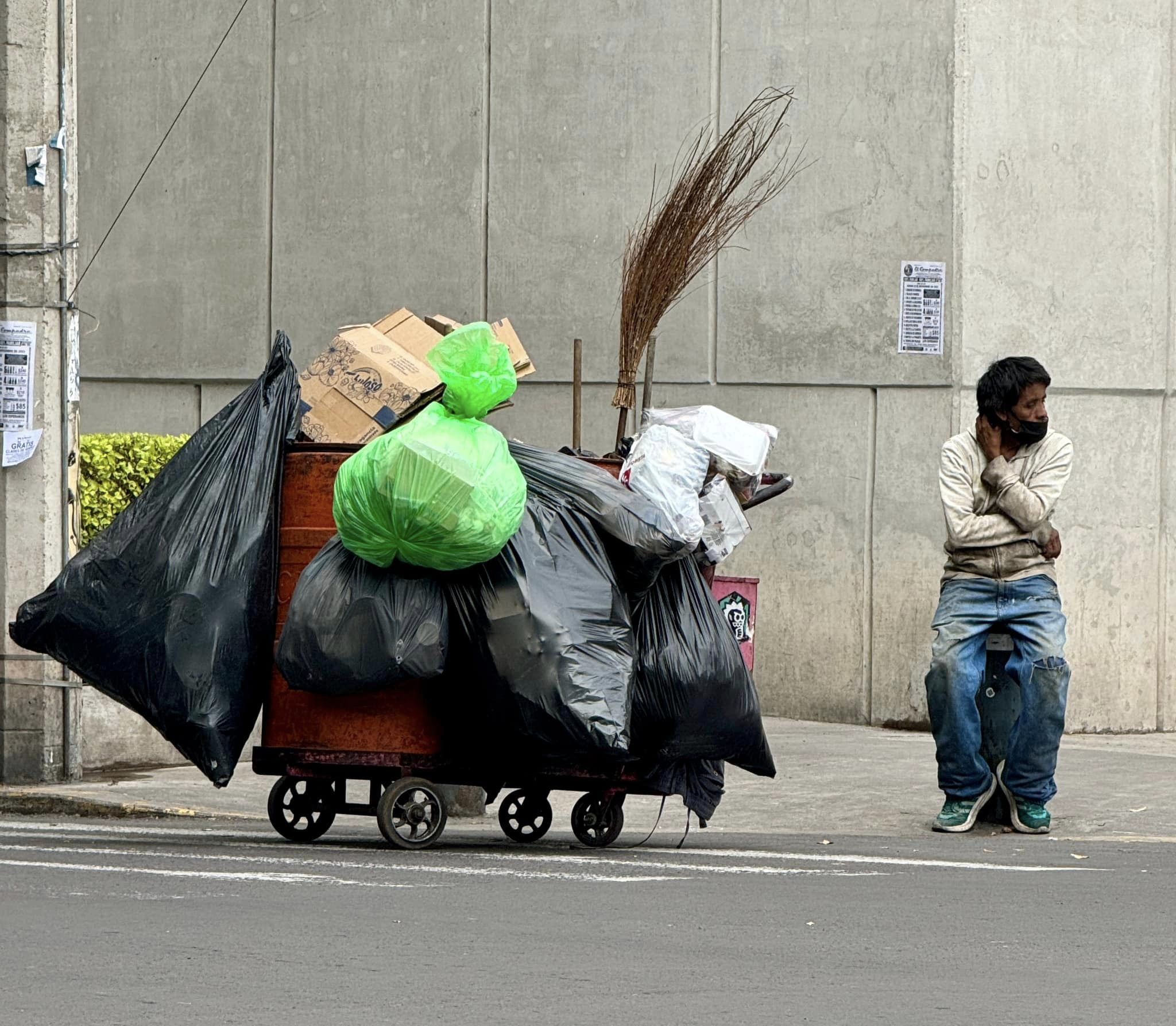
The streets are so clean here!
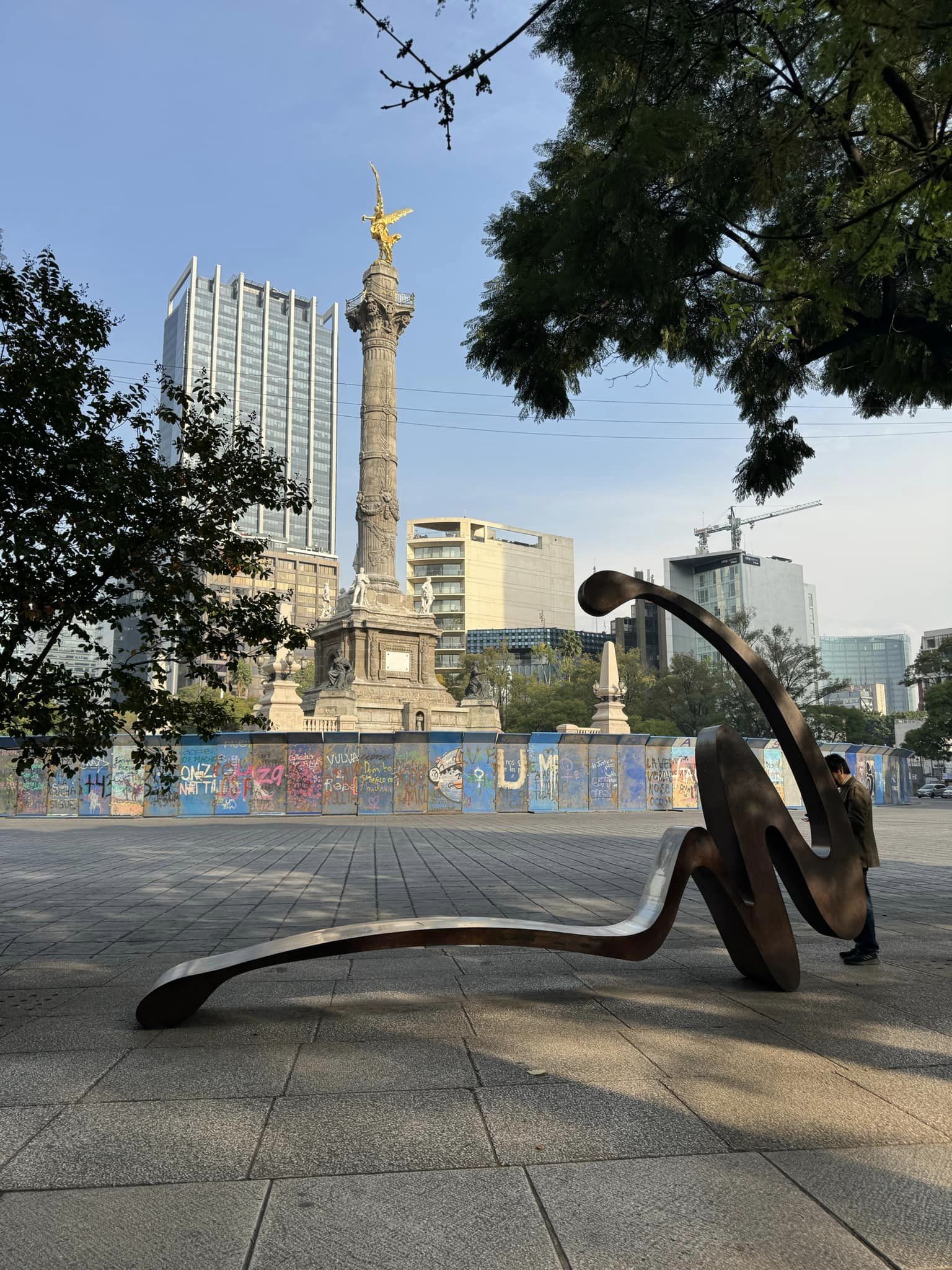
How’s that for a street bench!
First Taste of Mexico City
First time in Mexico City and it definitely won’t be the last. This city is full of life, never a dull moment and never a moment being hungry. Amazing food everywhere from the street corners to the fancy restaurants. A rich and complex history, bits of which will surely expose themselves in the days to come.
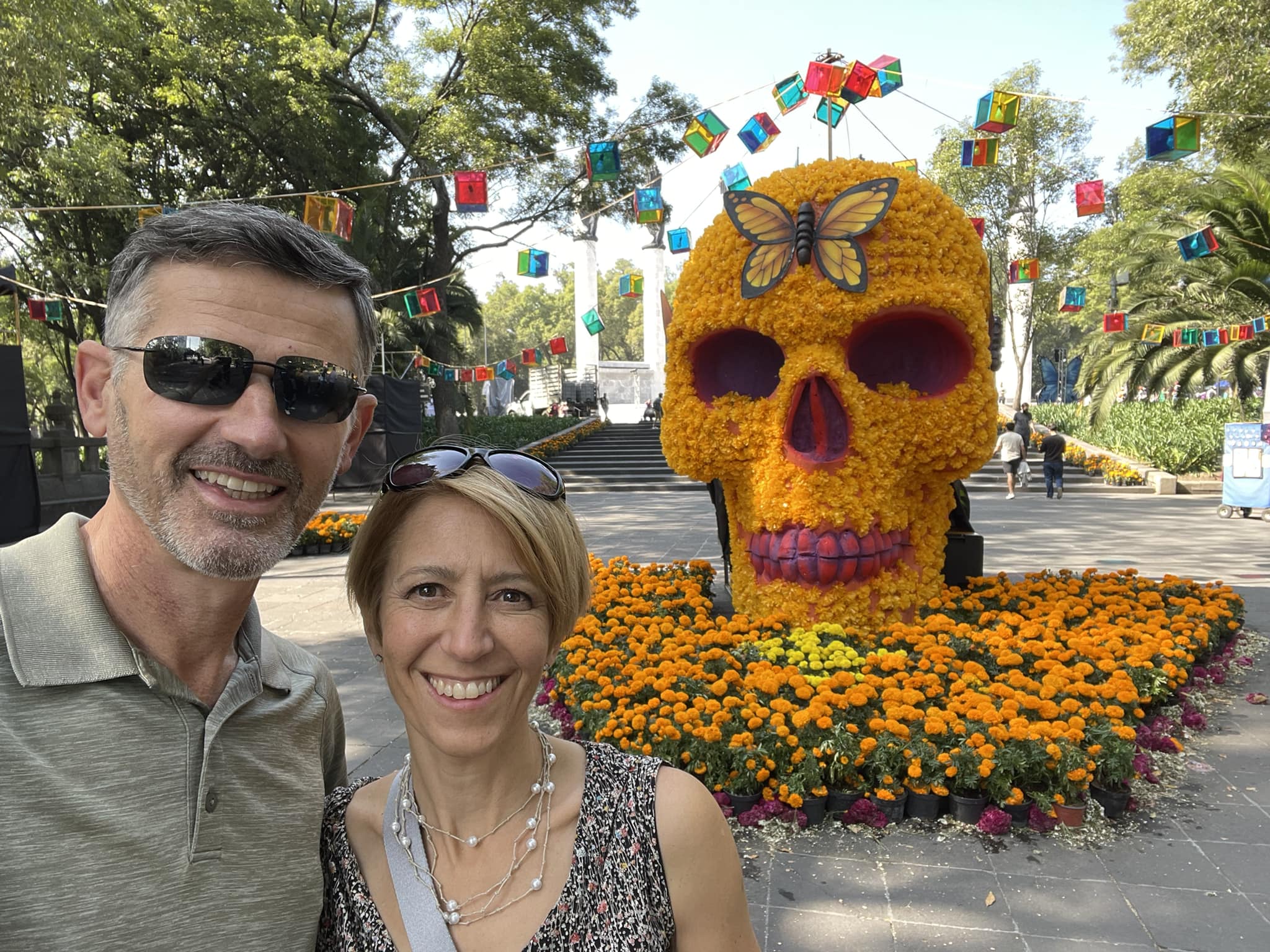
Dia de los Meurtos is not Mexico’s Halloween although, much to the chagrin of purists, North American Halloween traditions are seeping in. Mexico’s Day of the Dead is about honouring and celebrating those who have passed. The traditions originated a few thousand years ago. The Aztecs and other peoples of the time felt that mourning the dead was disrespectful and that the dead always remained members of their communities. They believed the dead returned to earth annually for the party. And party it is! While people grieve their lost loved ones, they celebrate their lives with joy. It’s an explosion of colour and costumes everywhere!
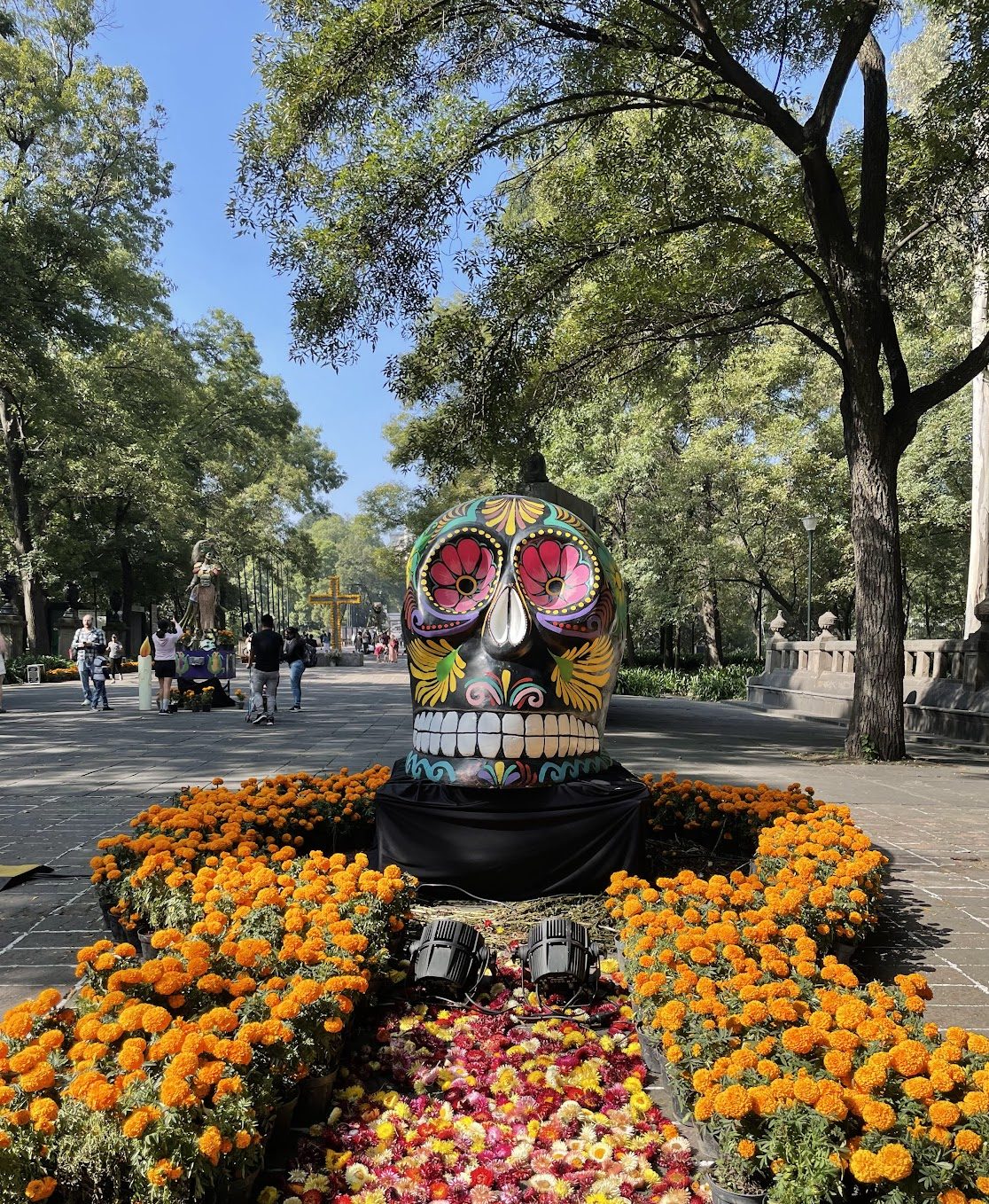
Orange marigolds (cempasúchil) are the flowers of the dead. the flor de muerto. The fragrance is said to help lead the dead back to their family homes and the bright colours add some cheerfulness to the holiday, which is meant to be a celebration, not a sombre time.
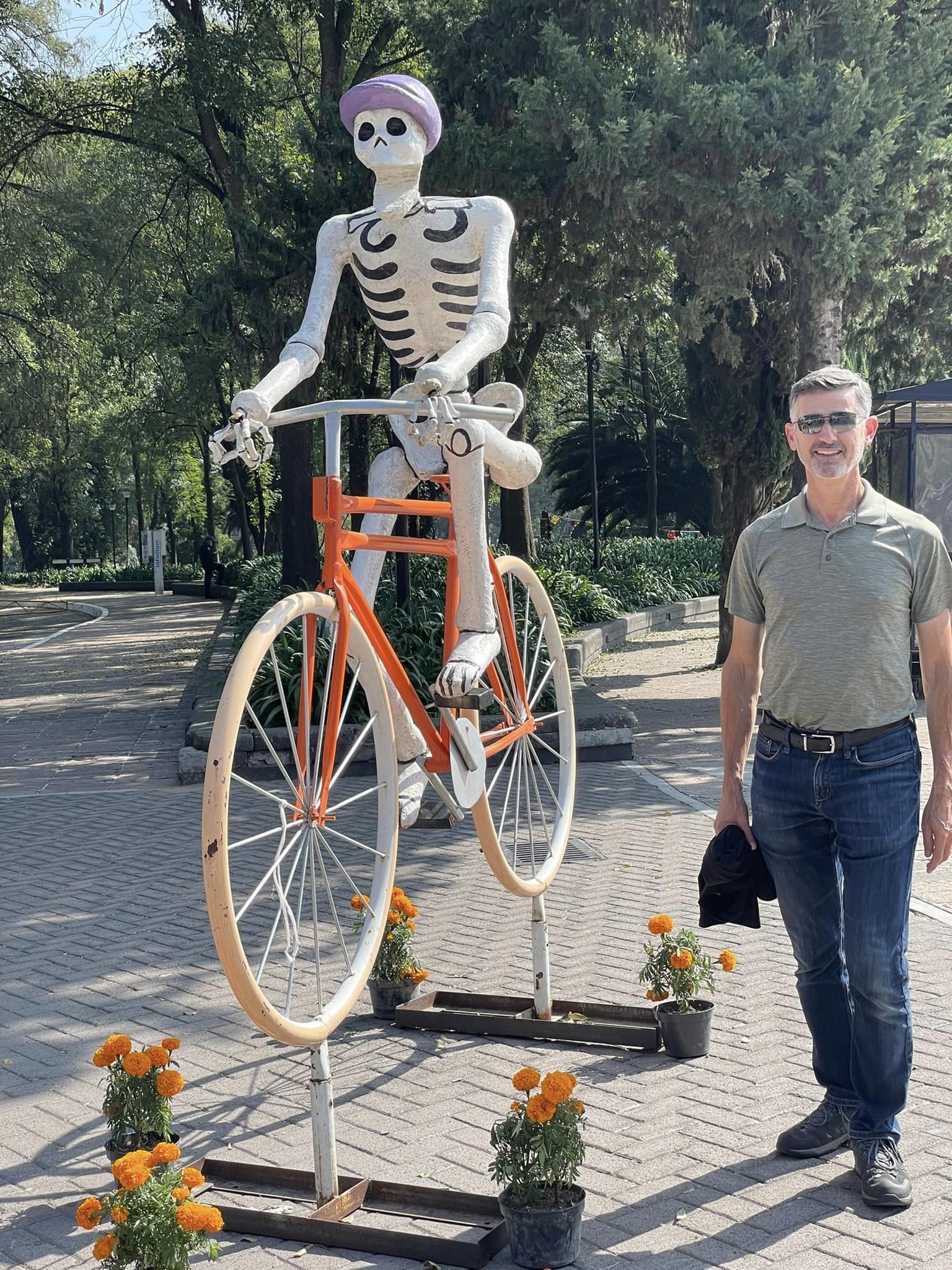
Playful skeletons adorn parks, streets, plazas…everywhere.
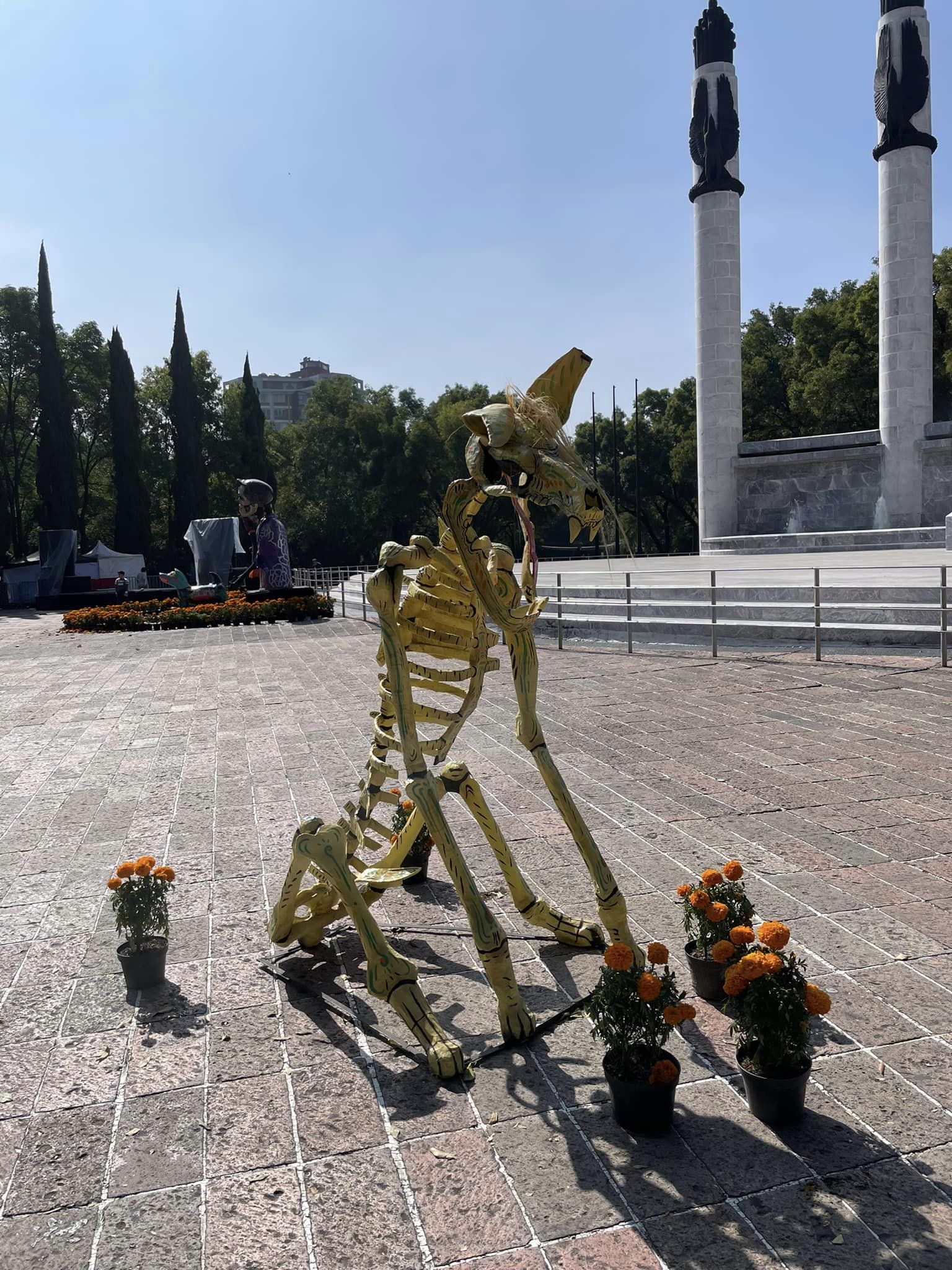
Even skeleton dogs get in on the action.
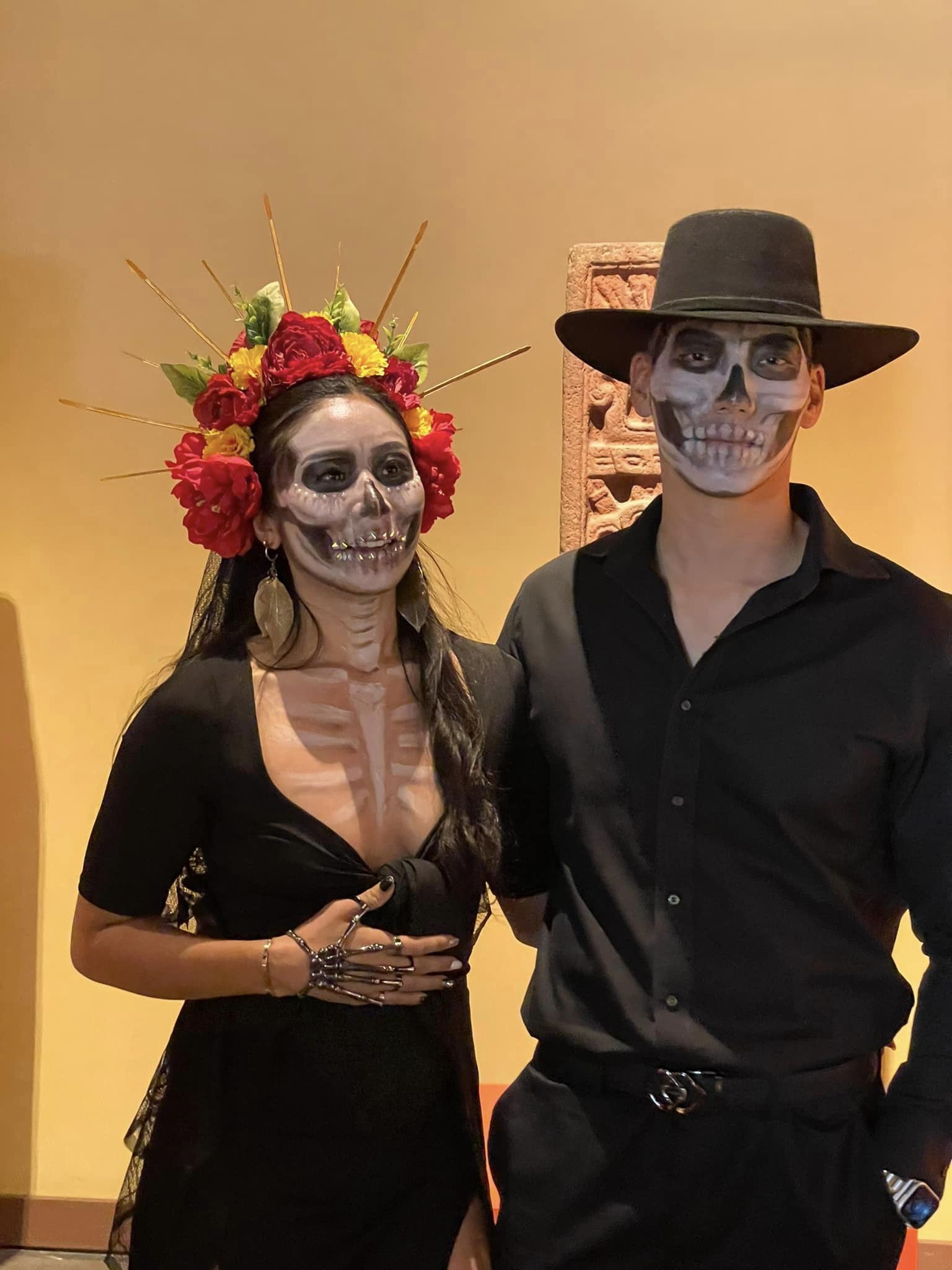
This couple from New York were visiting Mexico City for the first time and really embraced the holiday fully. They did their own makeup and garnered more attention than the artifacts in the museum where we saw them.
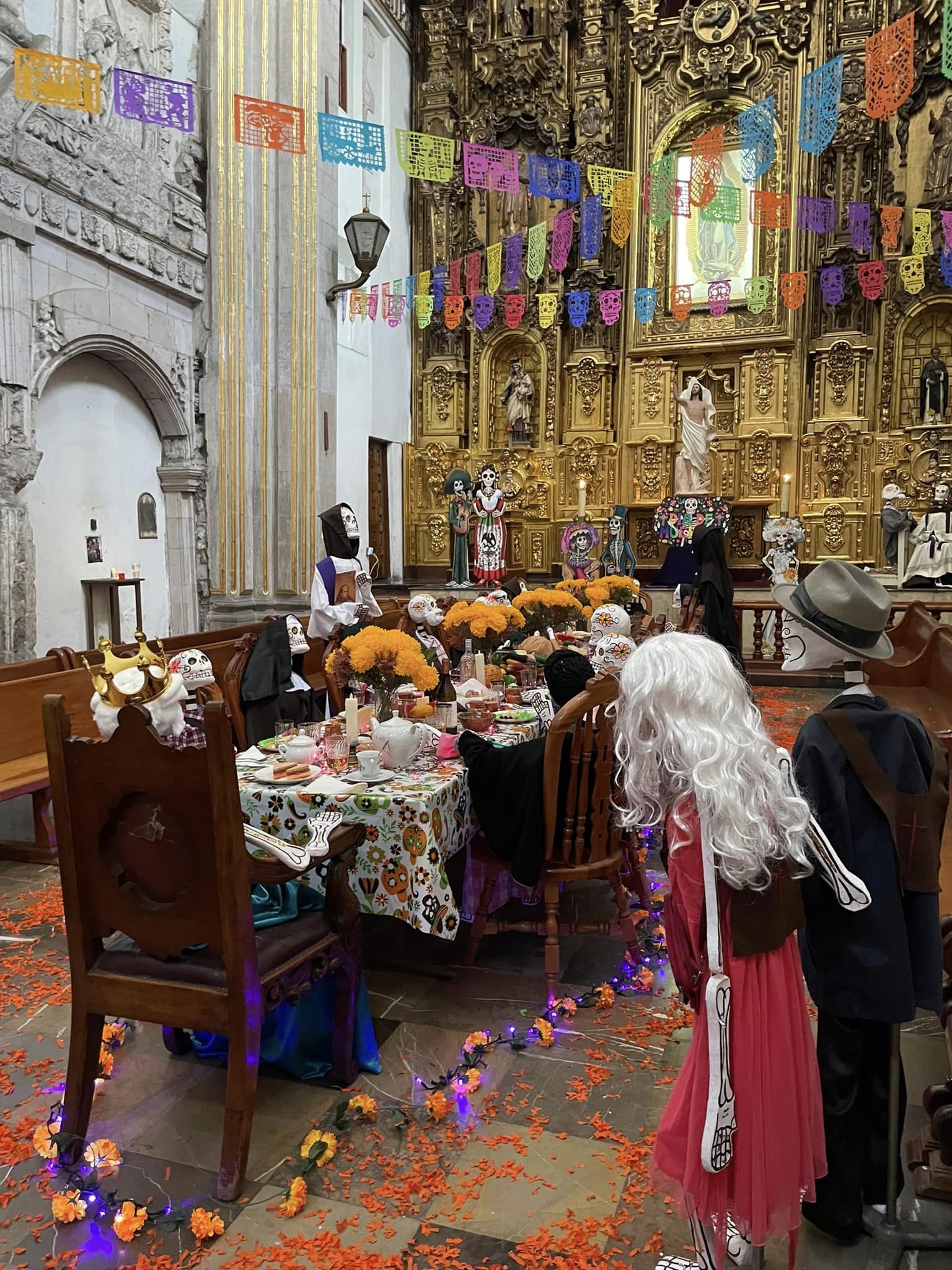
This church had an elaborate dinner table set up to welcome the dead.
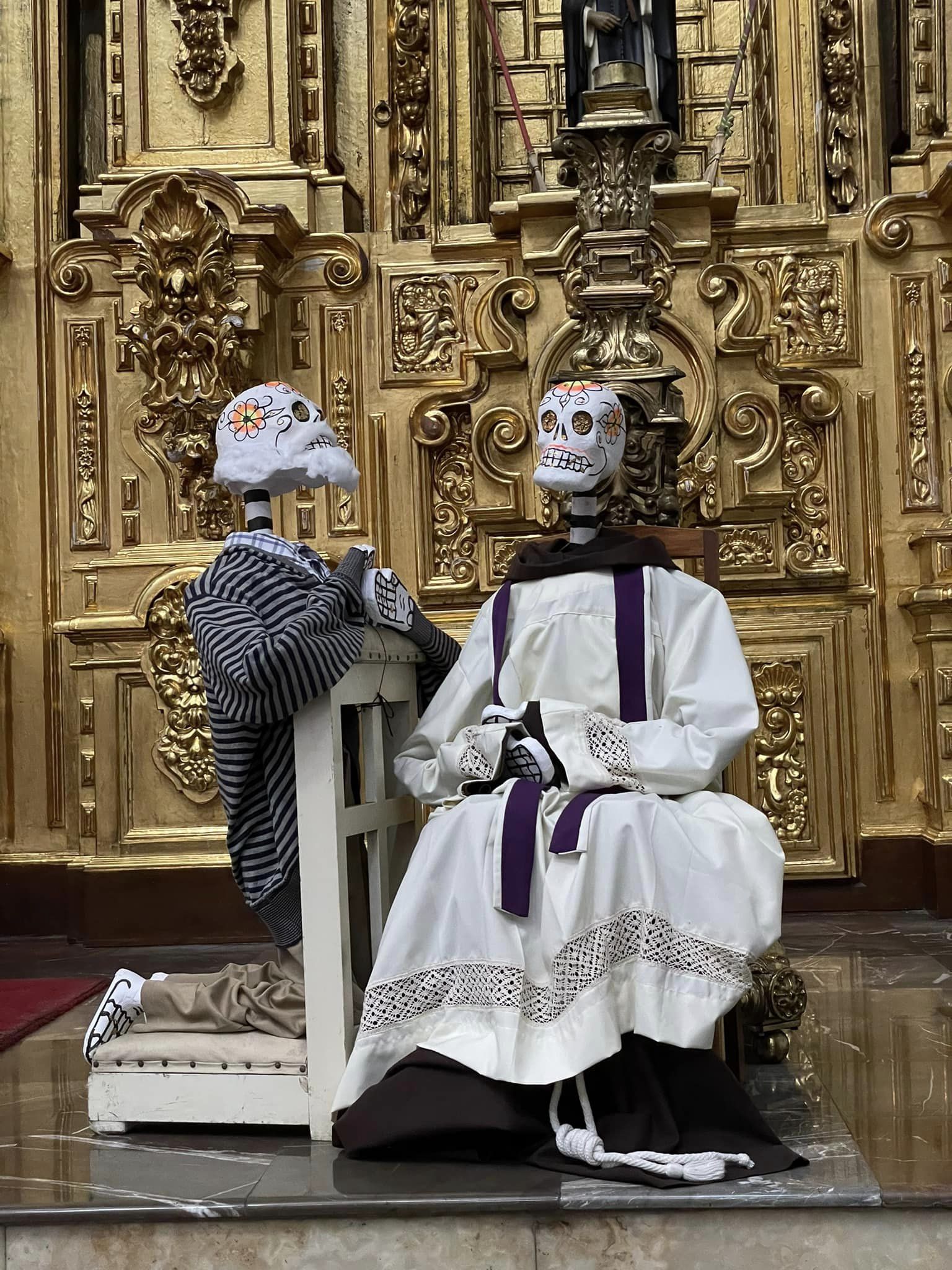
I think it’s a bit late for confession…
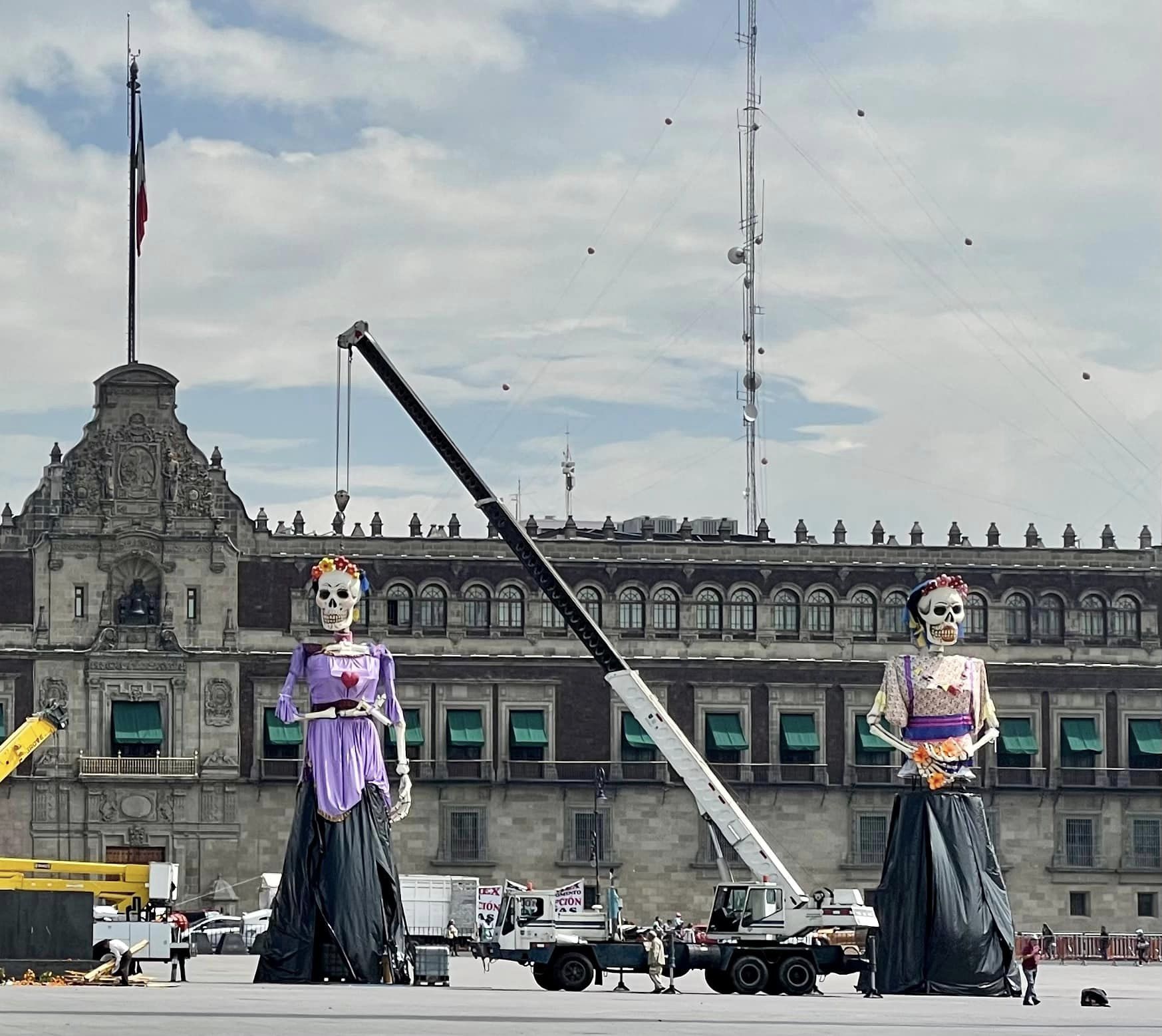
Cleaning up in front of the Palacio Nacional after two days of revelry. Looks like one of the gals is having some posture help. Stand tall, honey.
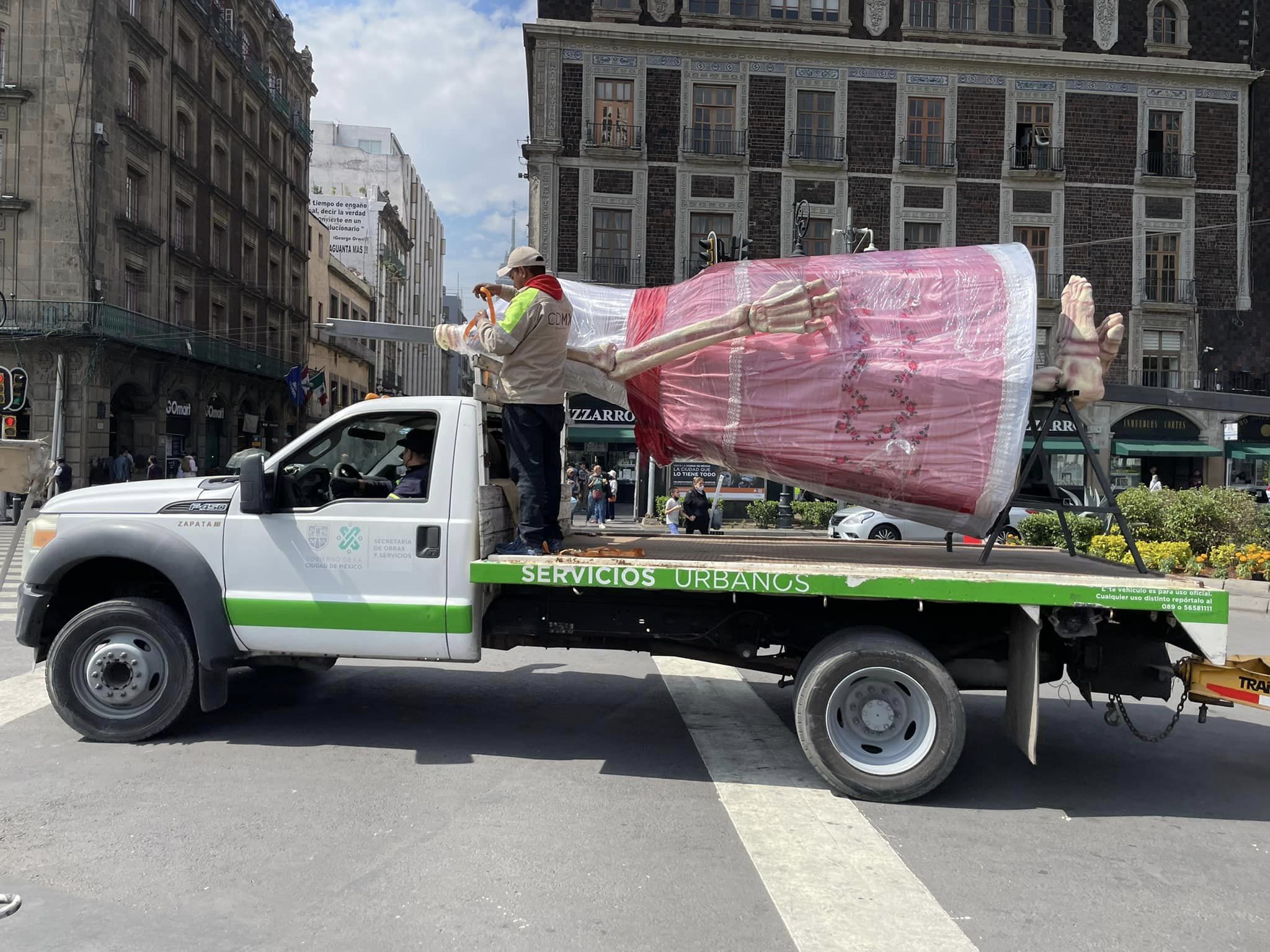
Shrink wrapped up and ready for storage till next year.
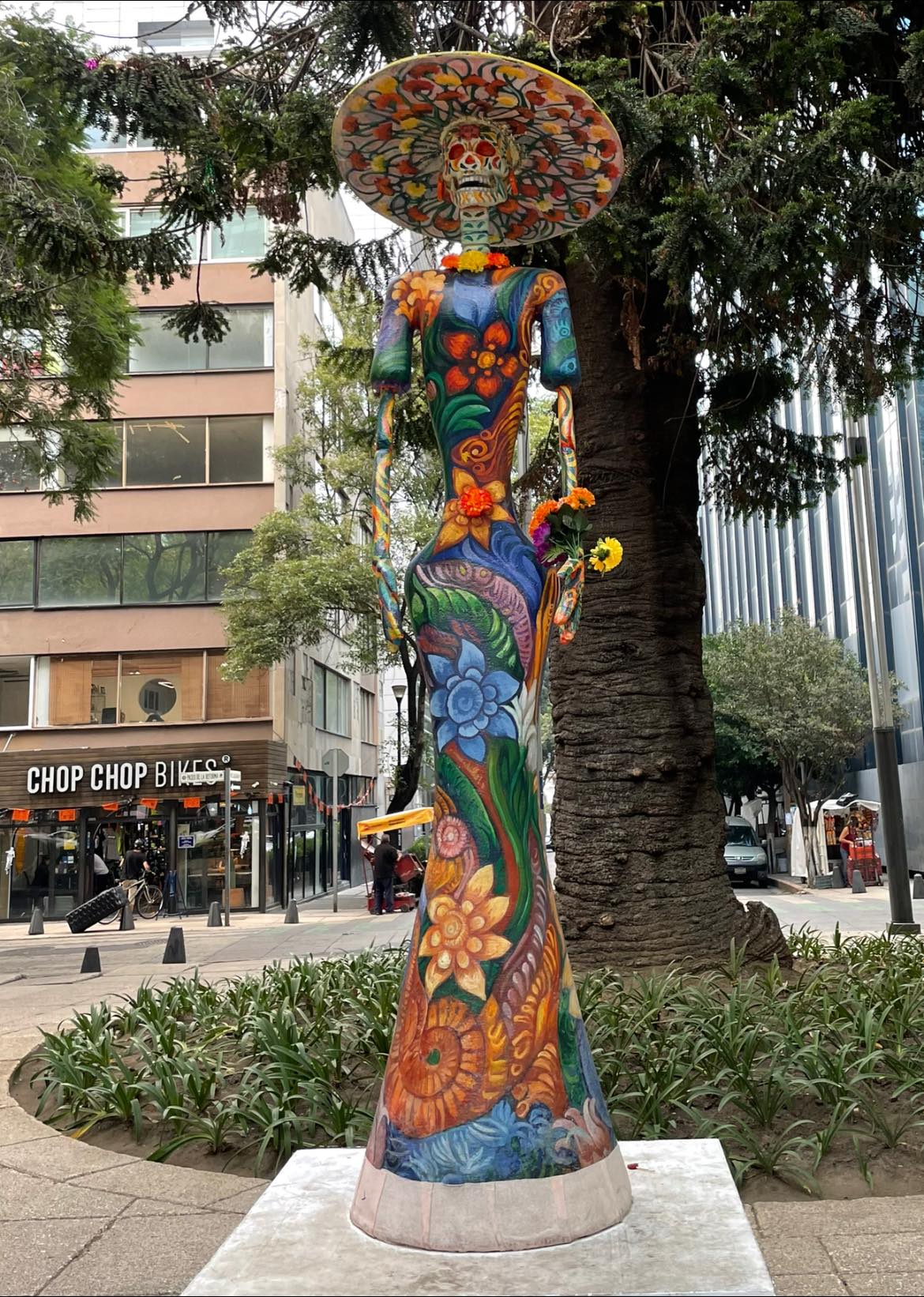
This elegant dame was one of many along the Paseo de la Reforma.
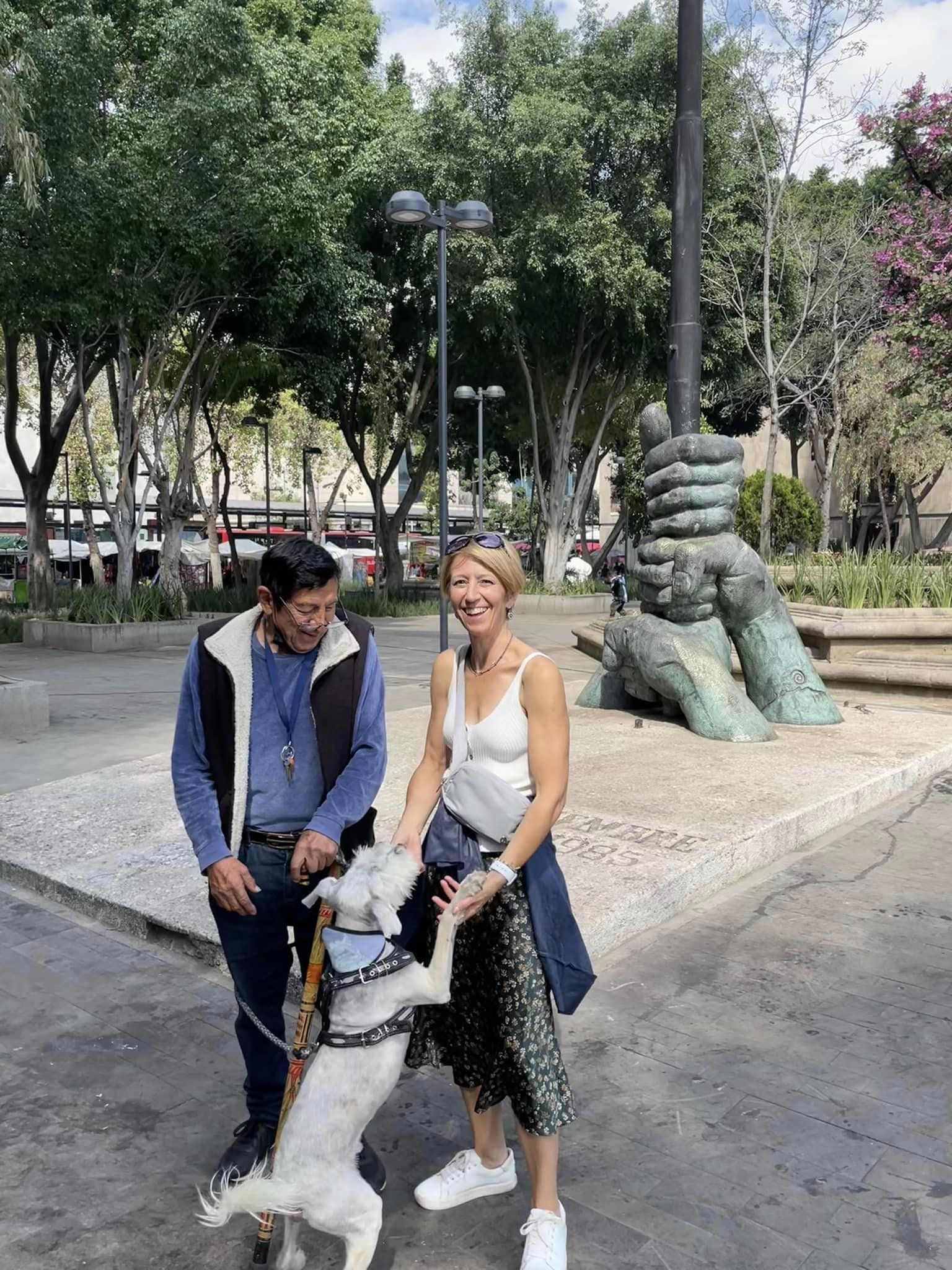
We met Agustin Rocca Espinoza and his dog Rocky by this sculpture commemorating the massive earthquake that killed thousands on September 19, 1985. As we were looking at the sculpture, Augustin came up to us and asked if we spoke Spanish. We said we didn’t and he promptly launched into a 15 minute story about what happened that day…in Spanish. Thankfully, Adam’s recall of his grade 9 and 10 Spanish classes is remarkable. Augustin was working at the Hilton Hotel across the street when the earthquake struck. It was complete mayhem in the area and the military and others came in to help. Nobody was allowed to leave the hotel and he ended up spending the night. Nearly 20 years later, he tells the story with giggles but at the time it was no laughing matter. September 19 has proven to be an inauspicious day in Mexico. 1985 marked the first of three earthquakes on that day killing more than 10,000 people. The next was September 19, 2017 (370 people died) and the most recent was September 19, 2022 (thankfully no loss of life).
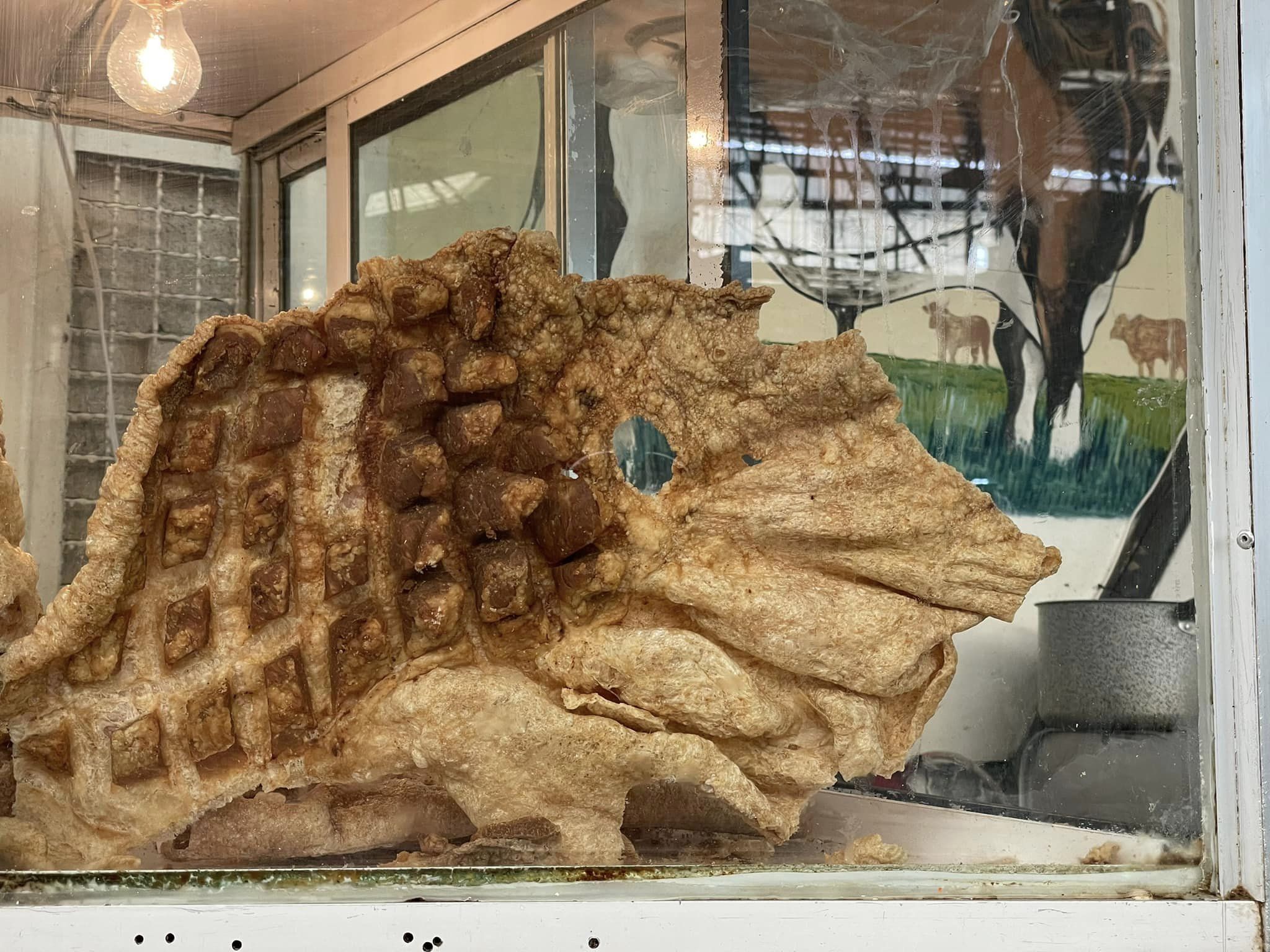
While this may look like a prehistoric fish, it’s my new, favourite snack! A friendly butcher in the Mercado Juarez gave us a piece to try as we were looking at it and wondering what it was. It is chicharrón, aka crispy pork rinds. Think perfectly crisp bacon but better. Now you’d think it would have absolutely no nutritional value, but it actually has quite a bit of protein! We ate it just as is, but in chatting with a fellow at a street food cart, you can top it with salsa and and fresh lime, and you’ve got an amazing snack.
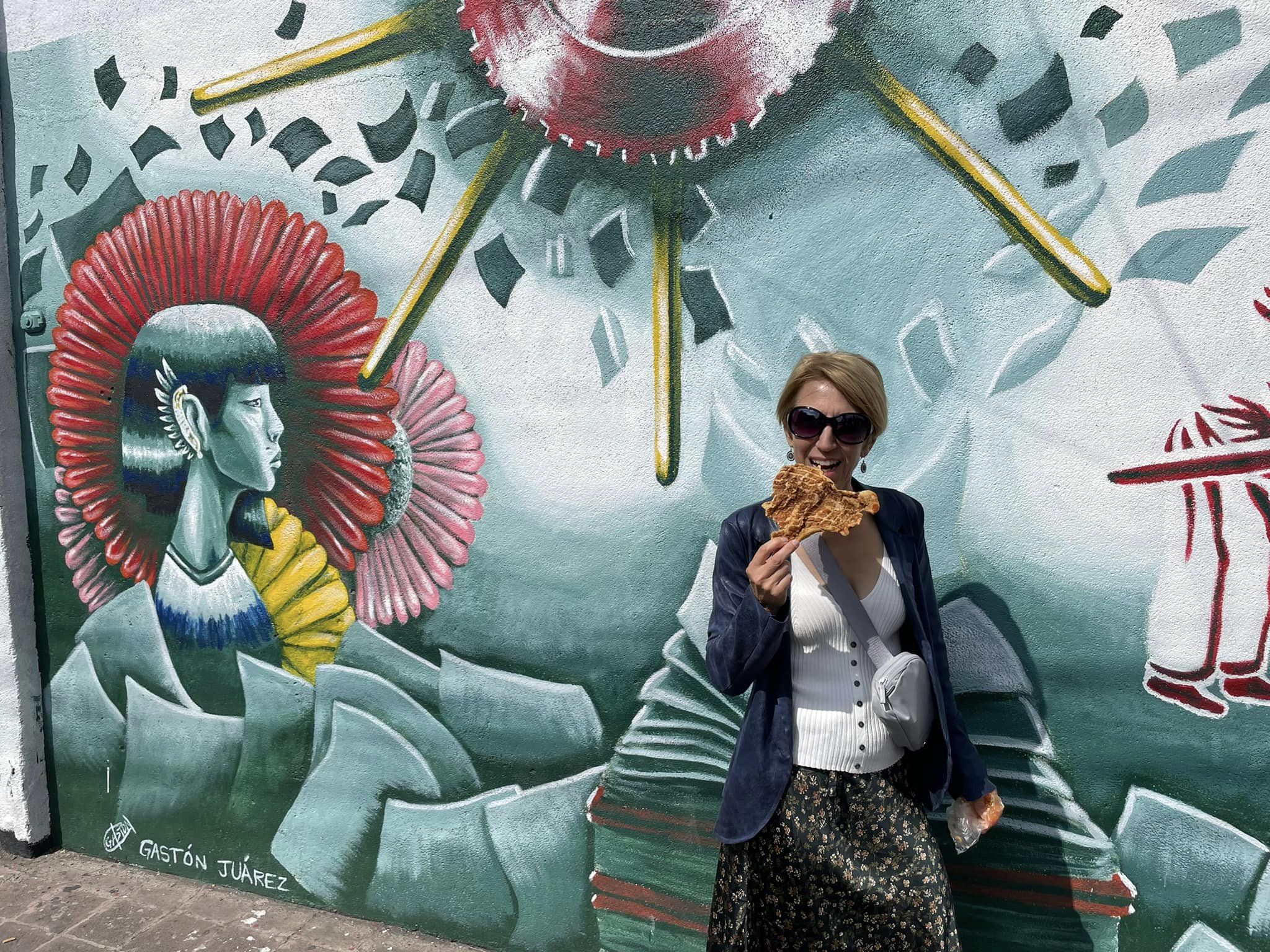
Snacking on chiccarrón.
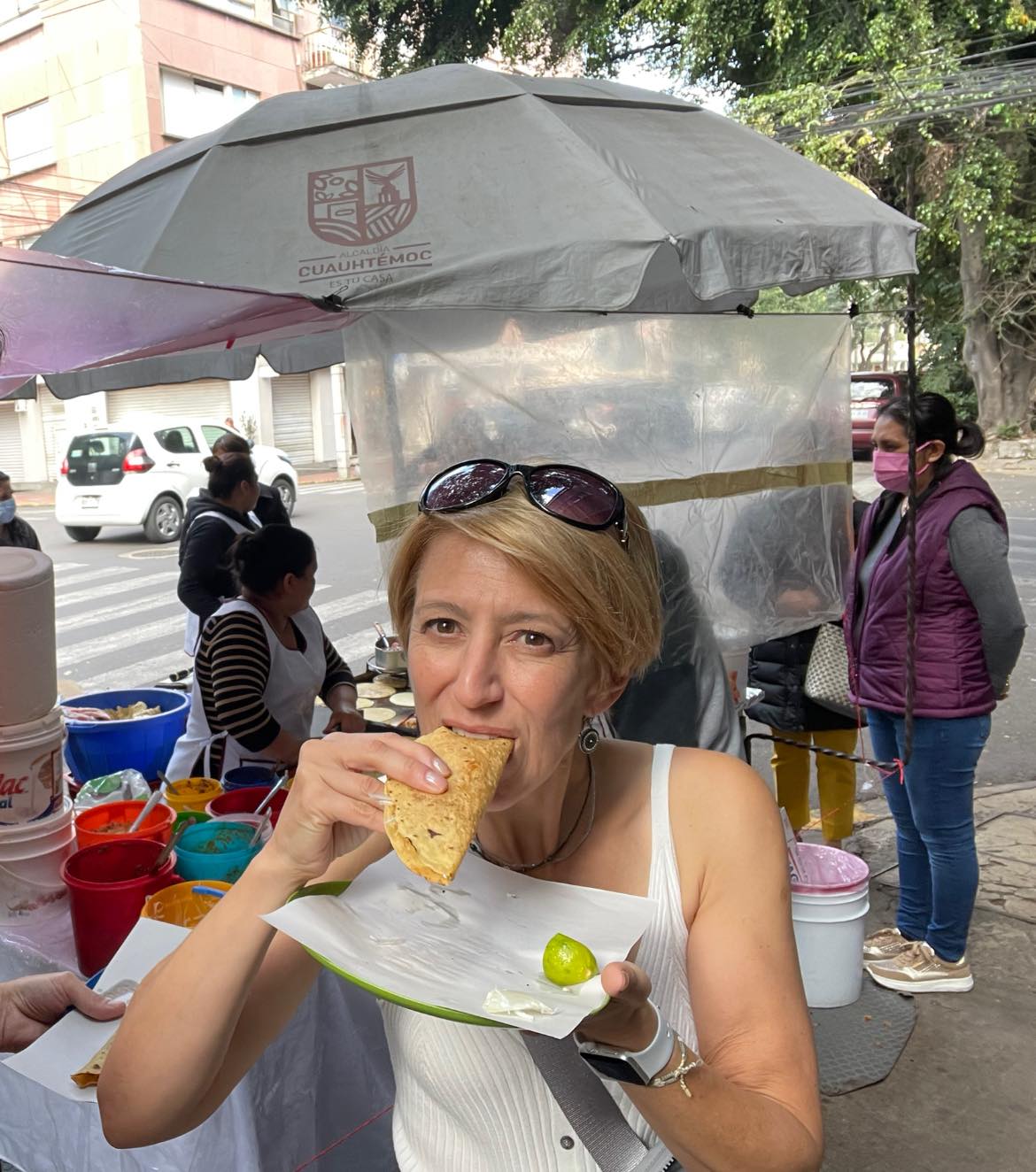
Tacos for breakfast in the street. Perfection! This one was staffed by four people. Two were making fresh tortillas and corditas (they take a handful of tortilla dough, make a little bowl with it and put in a handful of chopped chiccarrón, work it into the dough, flatten it and put it on the griddle to cook), and doing various chopping prep while the tortillas and corditas cooked, one guy was cooking up the desired filling and a fourth was collecting payment.
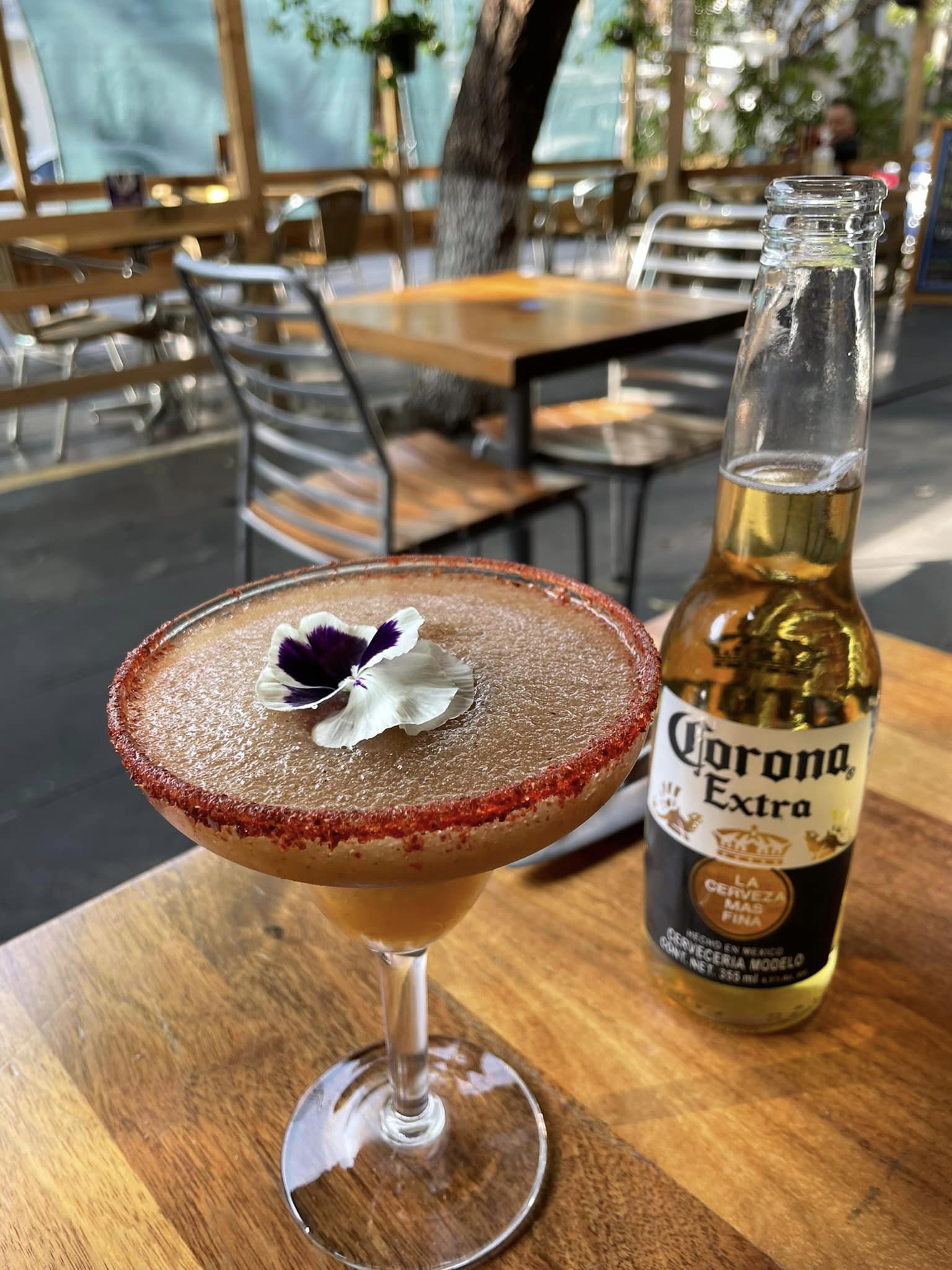
First lunch just had to include Mexican classics. The Corona on the right needs no description. The margarita on the left is a tamarind riff on the classic. Delicious!
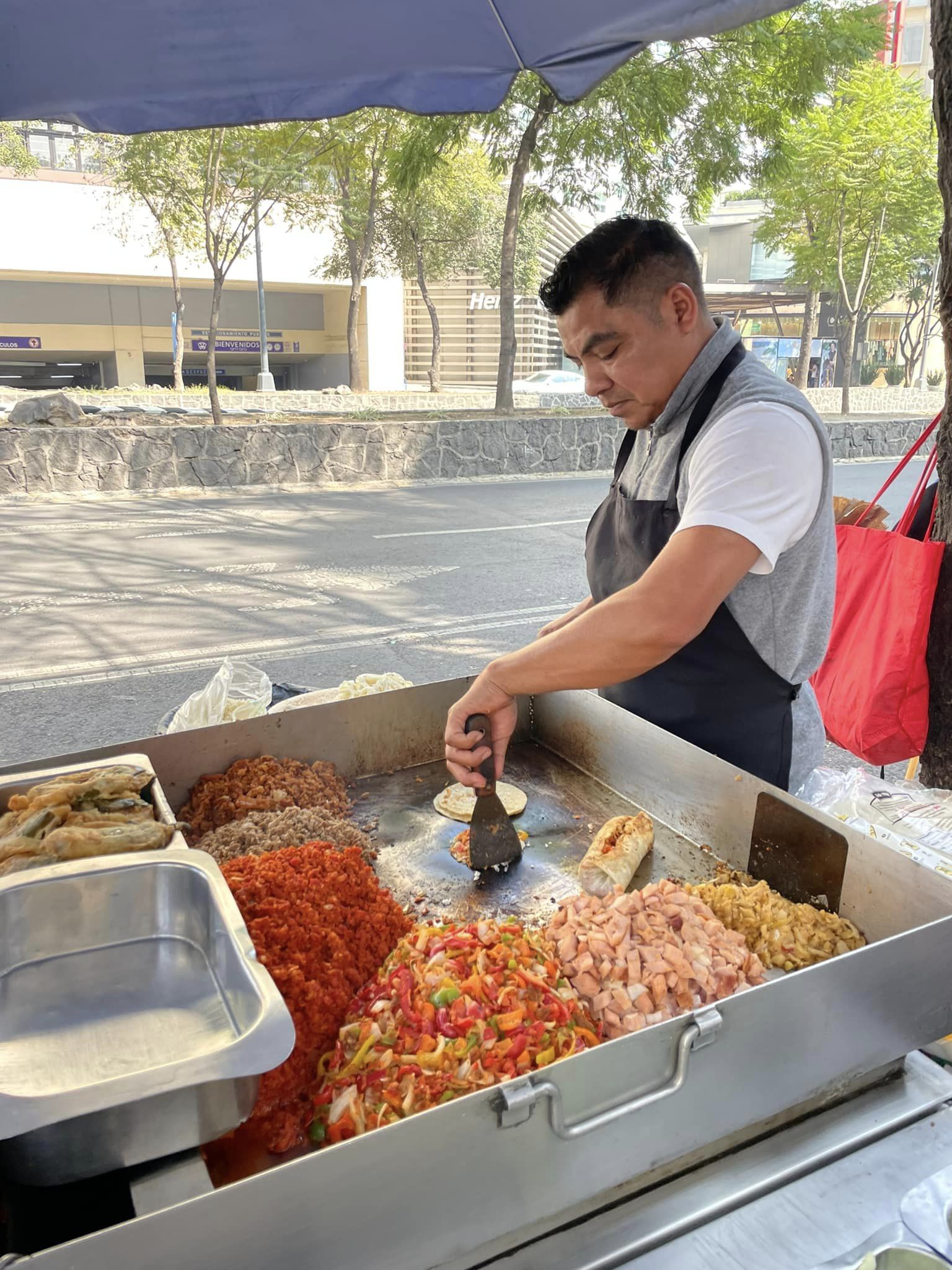
Breakfast again. Another amazing spot. We met a local guy who was touring around a new work colleague who had just moved from India. He’s the one who gave the salsa and lime juice with chiccarrón tip. He told us he had been to Canada in the days when he worked as a manager on a cruise ship and always thought he should move to Vancouver and open a street food stand just like this. He figured he could make millions with amazing food. I was sad to burst his bubble by telling him we had pretty stringent food safety rules and such an amazing food cart would never fly.
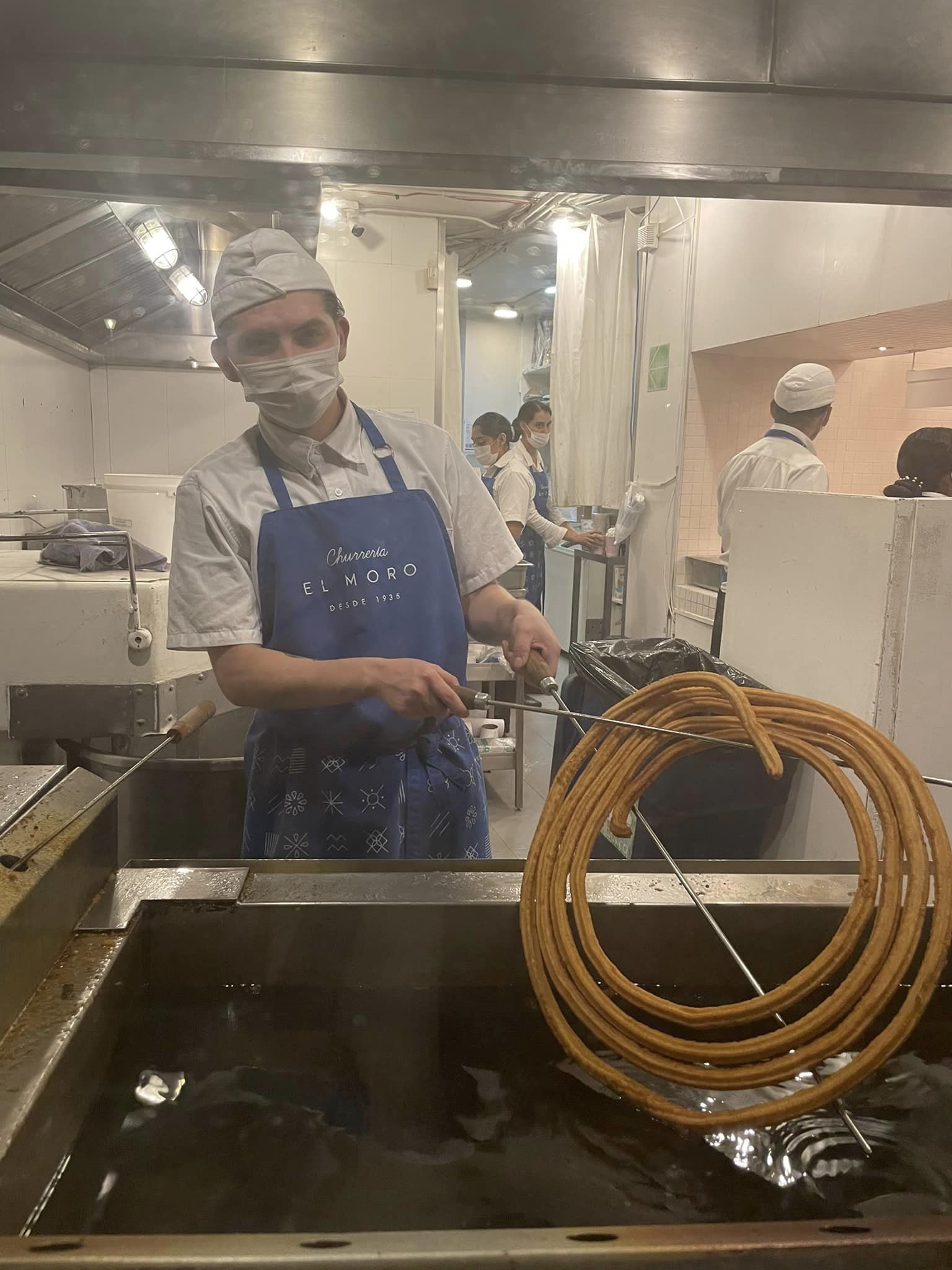
Churros! Made fresh. Amazing. This Churreria el Moro has been around since 1935.
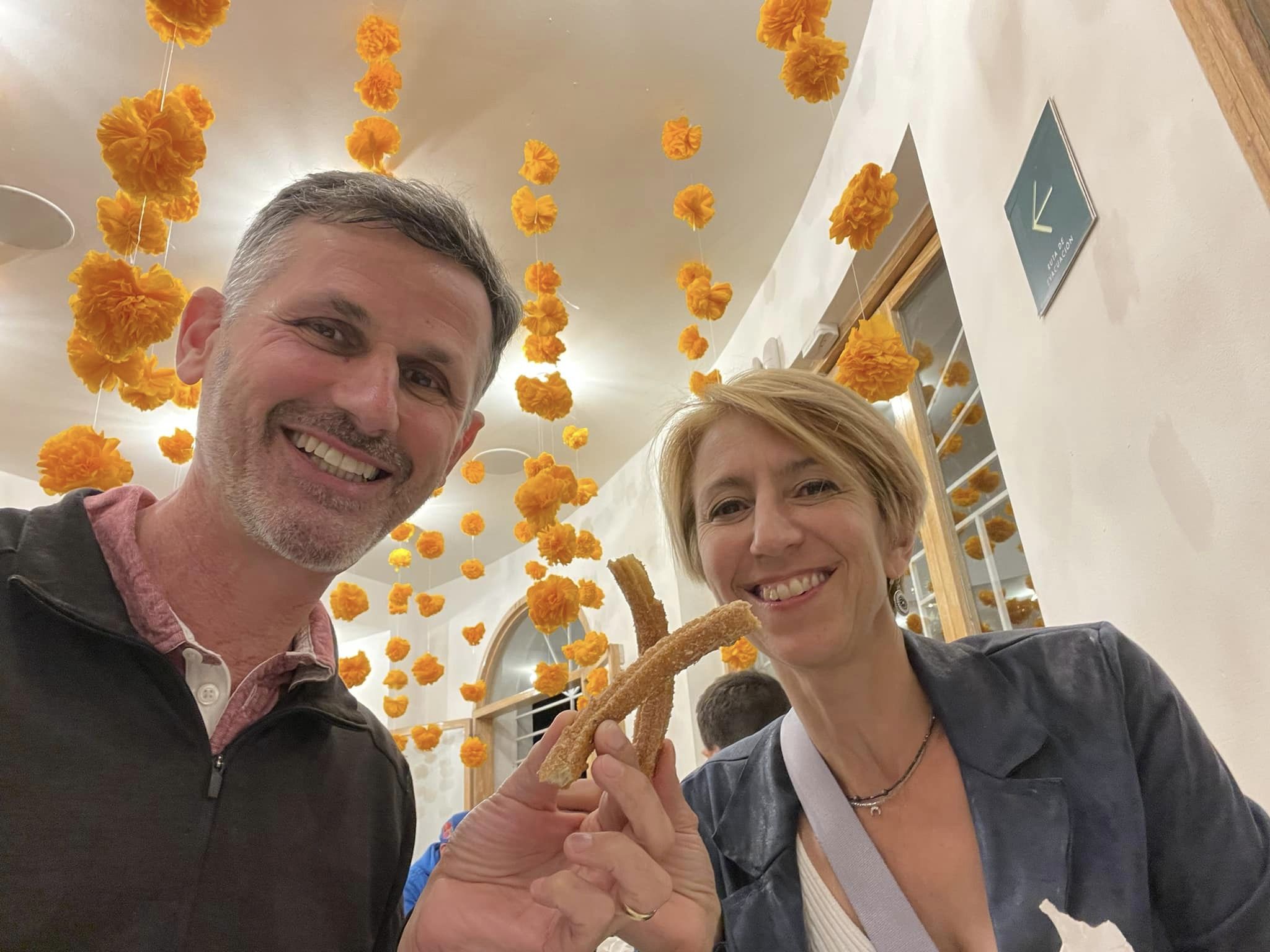
Best churros we’ve ever had!
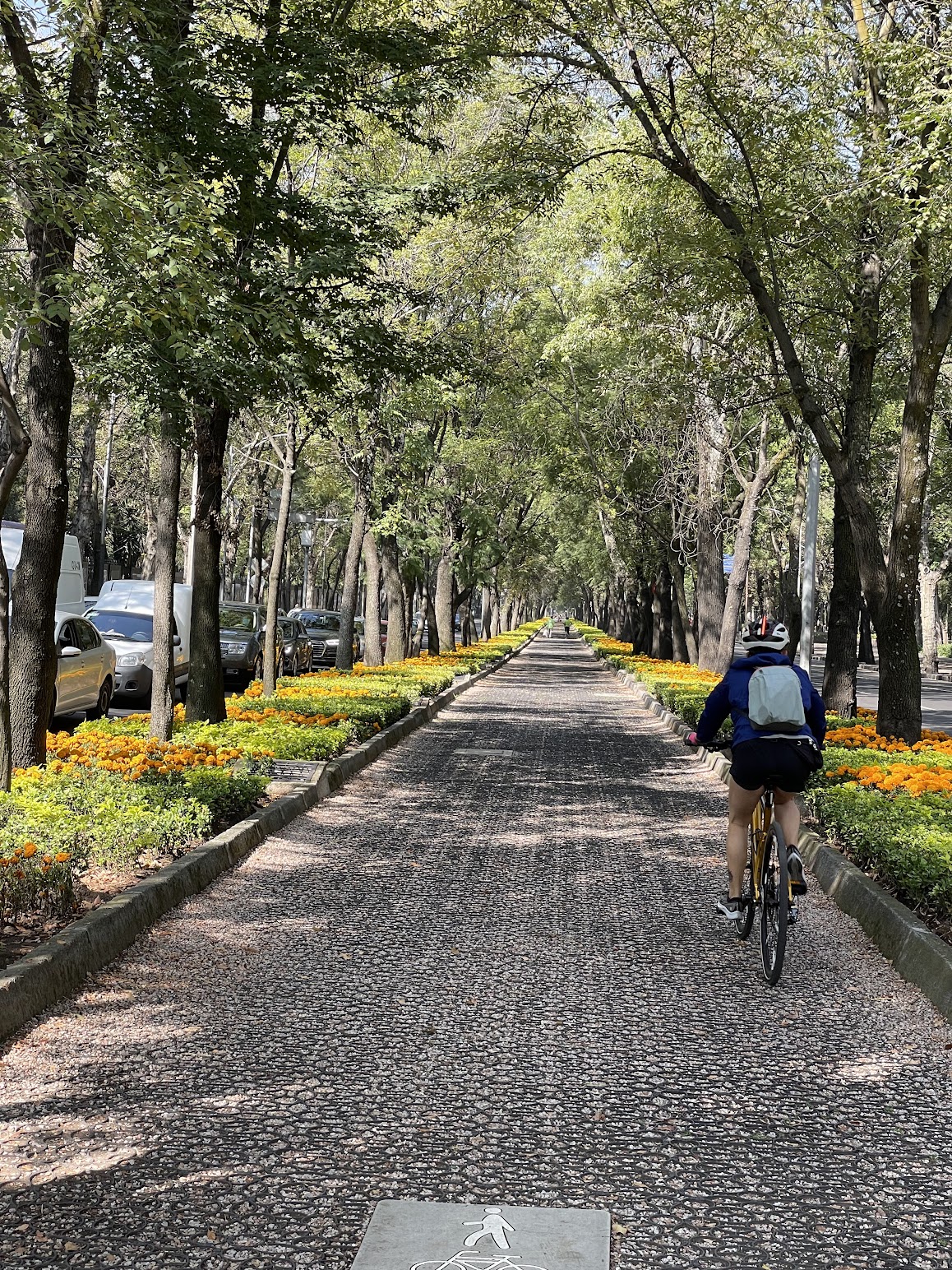
For the sixth largest city in the world (population 25 million) and the largest in North America, Mexico City has a surprising amount of green space. Tons of boulevards and walking paths surrounded by trees, plants and flowers.
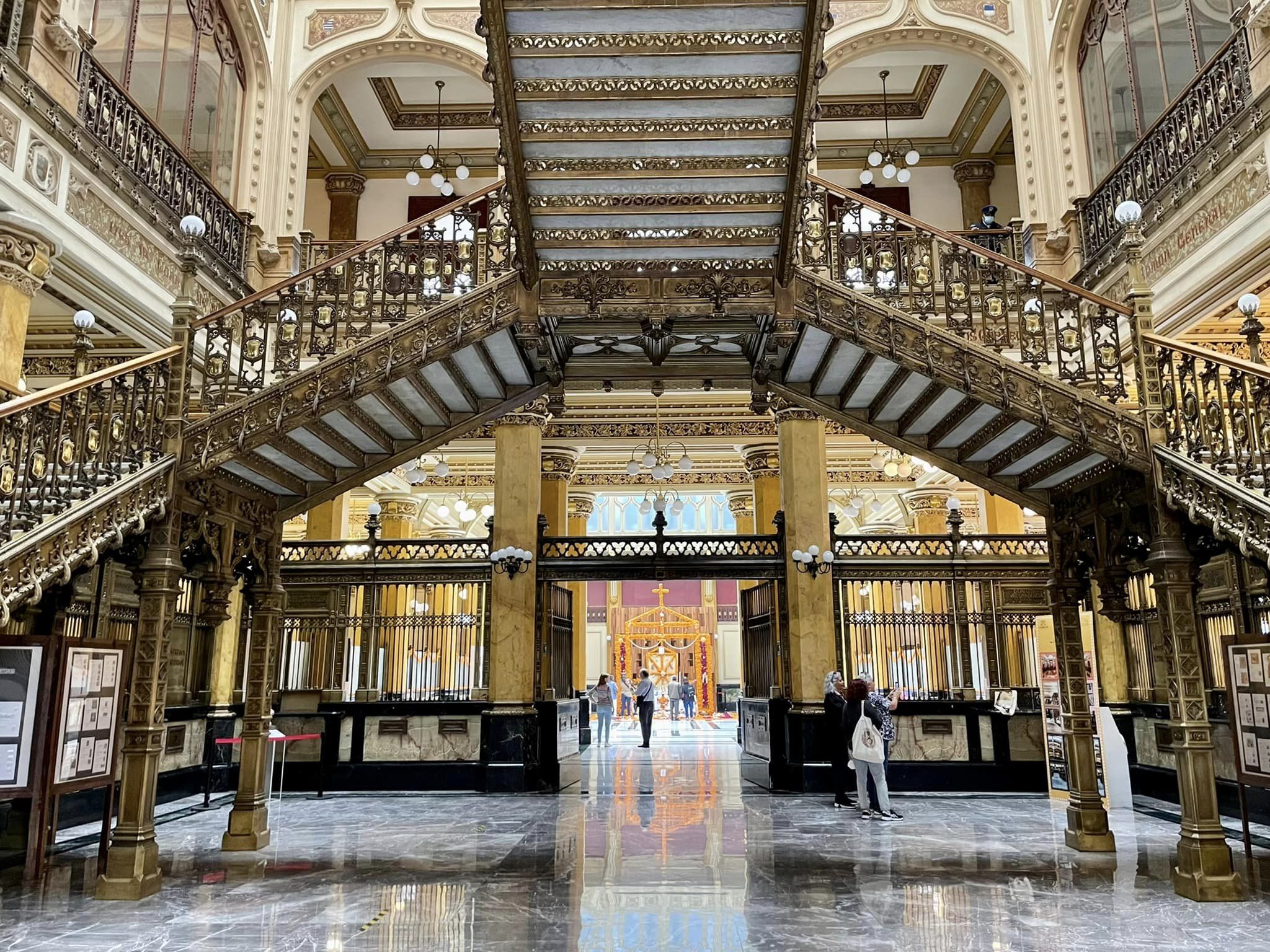
Palacio postal is a stunning art nouveau/baroque/neo classical…(there seems to be no agreement on the style) building, built between 1902-1907. While it could have been perfectly functional as a little shack on the corner (as it surely would have been in some places), this was the flagship of Mexico’s brand new national postal system that linked the entire country’s communication for the first time. Aside from all the gold, leaded glass and marble, the truly amazing thing is that it remain in operation to this day.
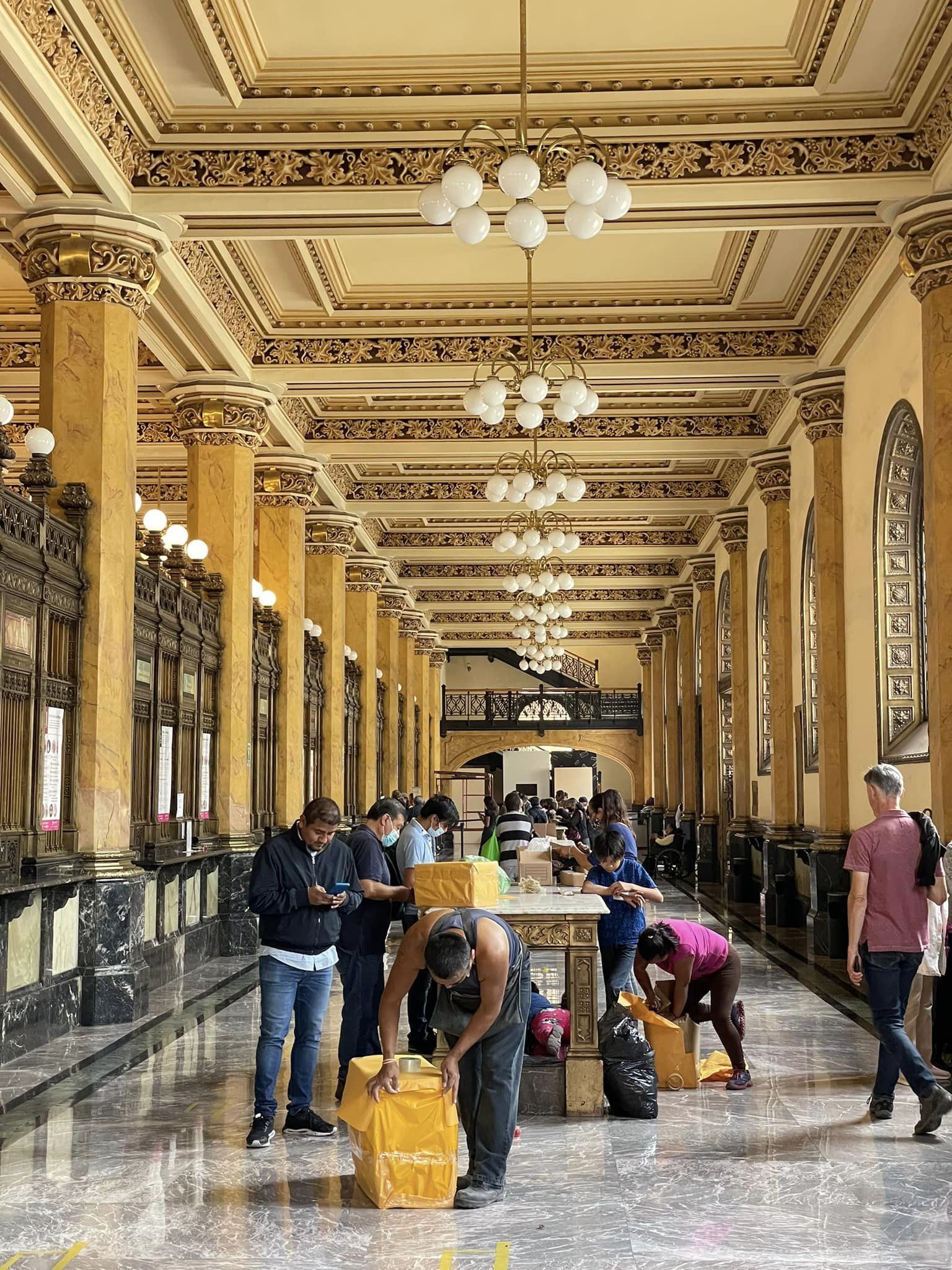
Proof that it’s still a fully functional post office.
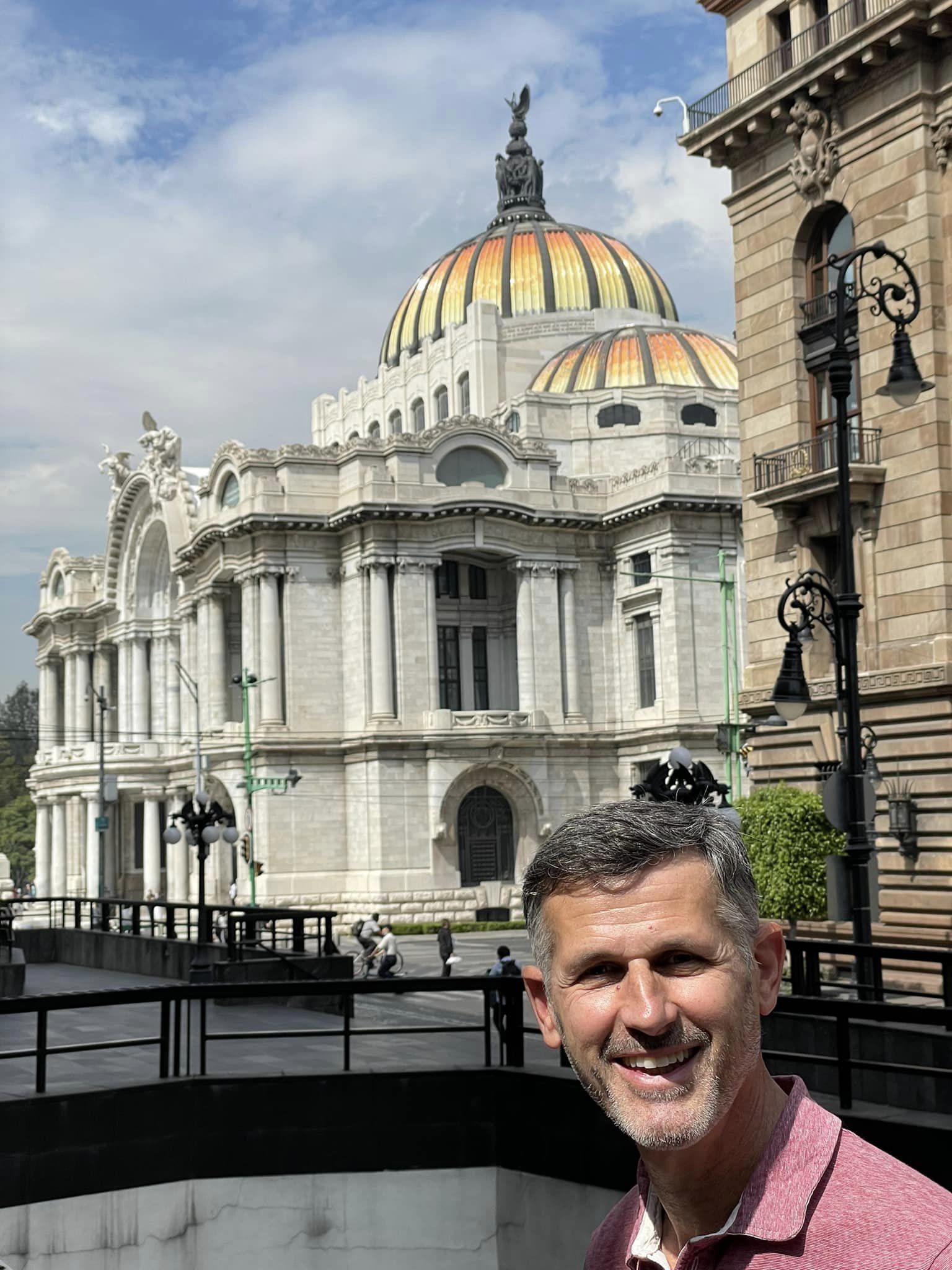
The Palacio de Bellas Artes with its amazing crystal and iron dome.
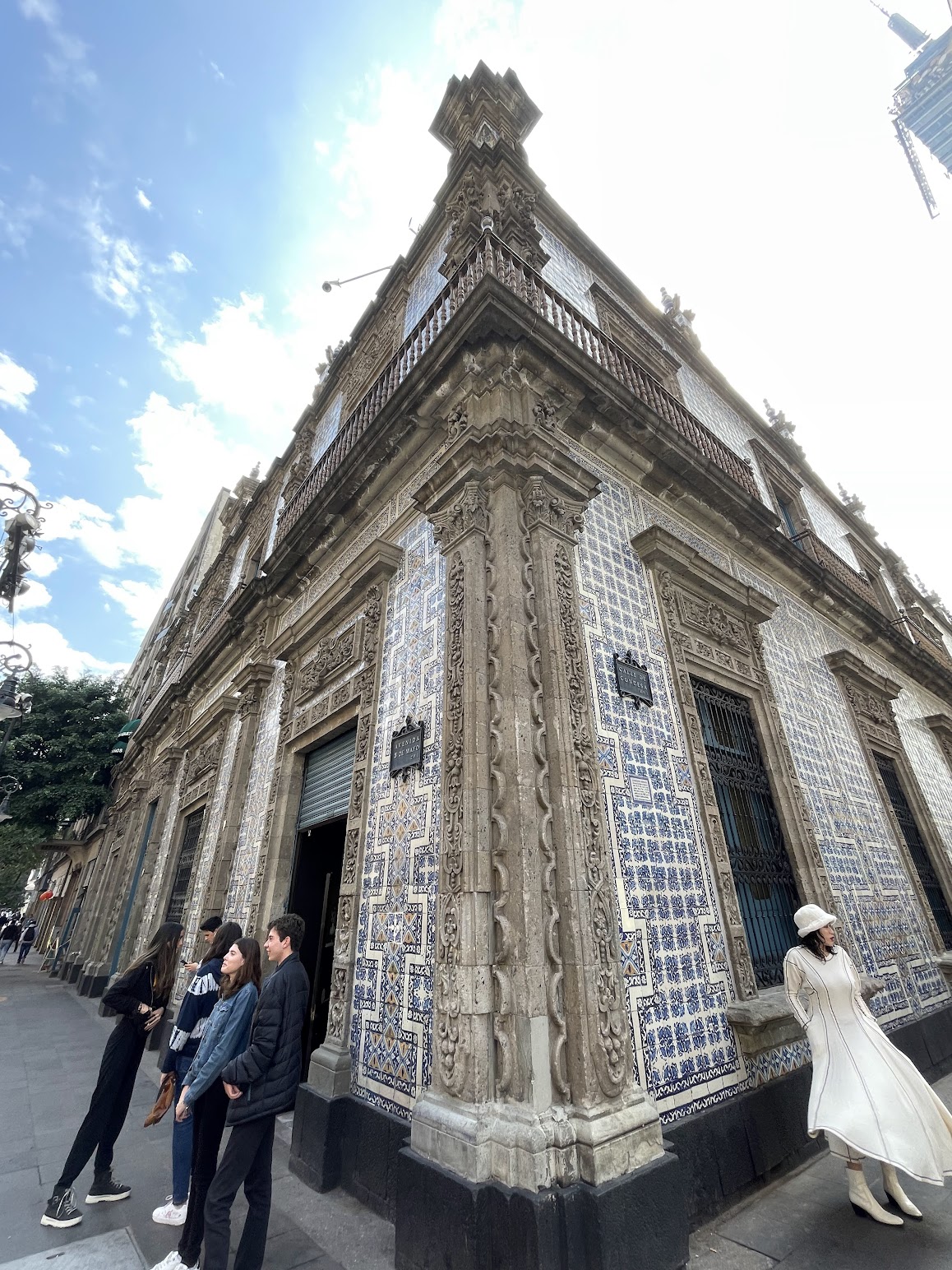
Sanborns is a chain of department stores. There is nothing particularly special about the other locations but this one, in the Casa de los Azulejos (House of Tiles) is an 18th-century palace and houses its flagship restaurant. Covered in blue and white tiles, it’s many an Instagrammer’s photo backdrop, as we witnessed!
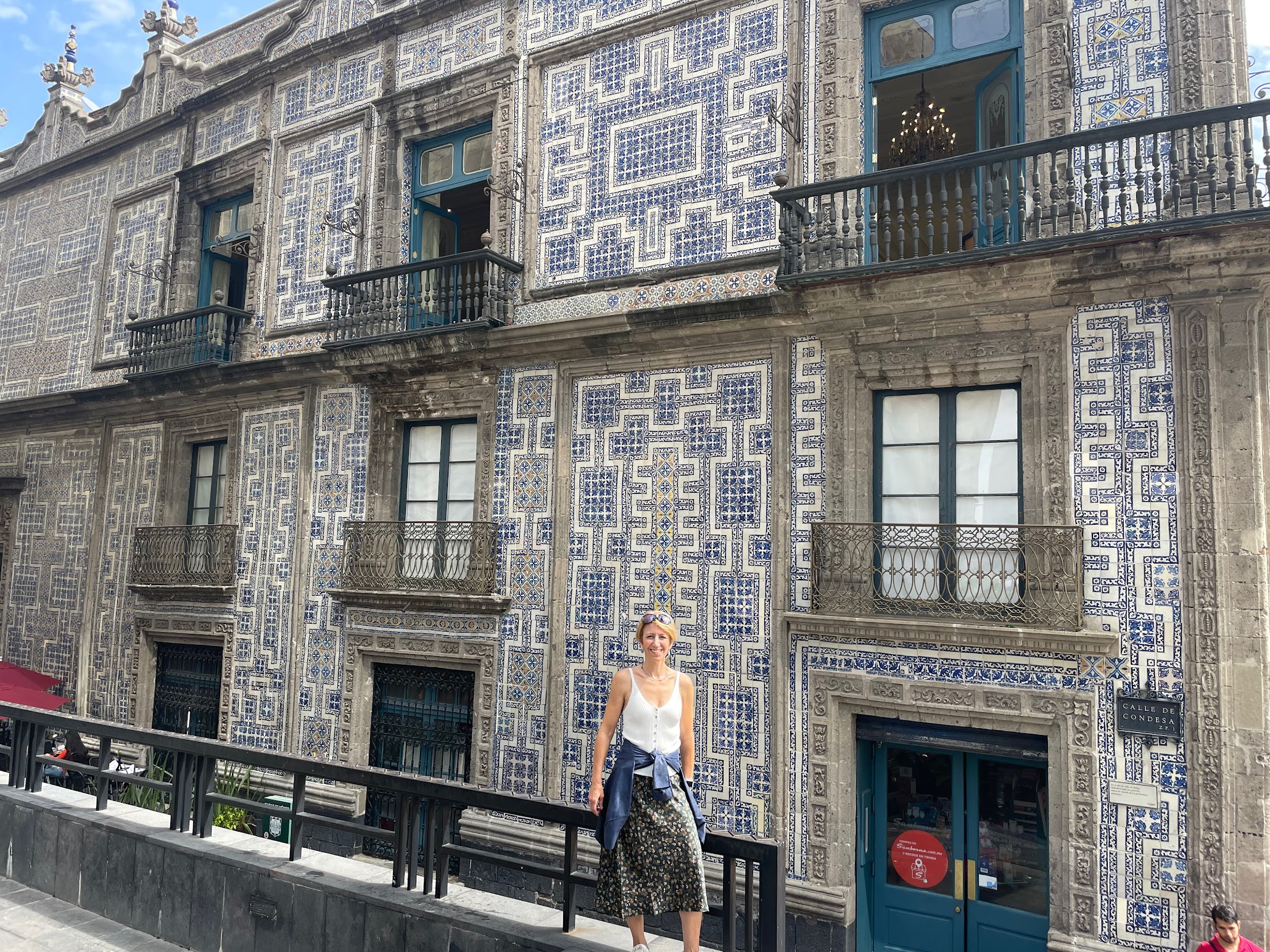
A little more about the Casa, which has seen pretty much all the history of Mexico City. Its first 200 years housed the Counts of the Valley of Orizaba and their families. We don't really know the true story behind the fantastic tiles that cover the exterior, but there are two legends that may explain their presence. One says a son, who in his father's eyes amounted to nothing but a partier, needed to prove to his father that he was more than that. He worked to grow his fortune and then paid to adorn the family home with beautiful tiles. Another story, lacking the "lesson" of the first, says a resident countess was inspired by the buildings in Puebla and covered the family mansion with the special tiles from there. I personally like the cleaned up partier story... After the mansion was sold out of the family in the late 1900s, it became The Jockey Club for elite intellectuals. Then it was the workers’ organization Casa del Obrero Mundial, or World Worker’s House. Capitalism took over in 1917 when it was bought by Sanborns, a retail and restaurant chain out of California.
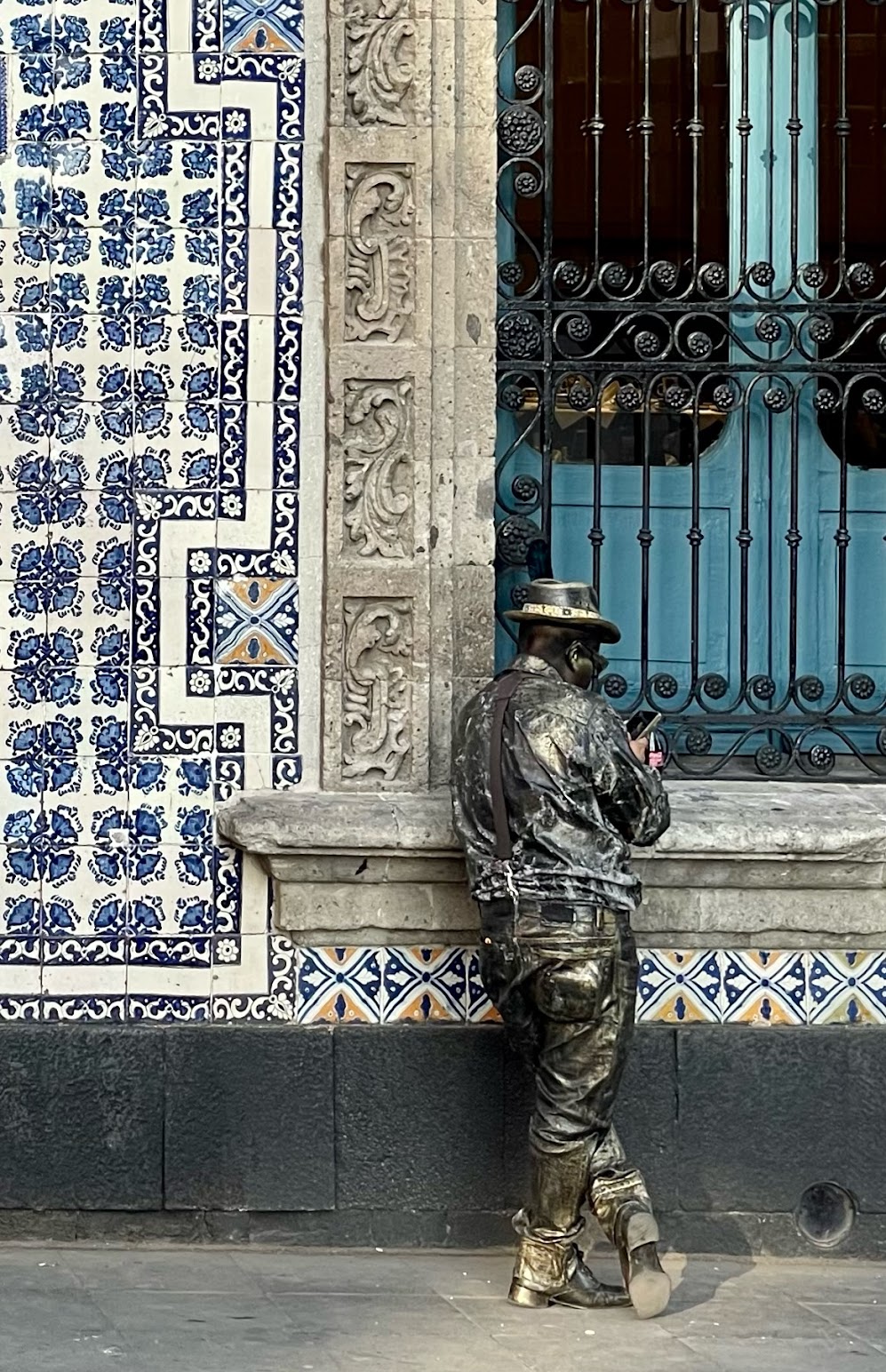
Street performer taking a break.
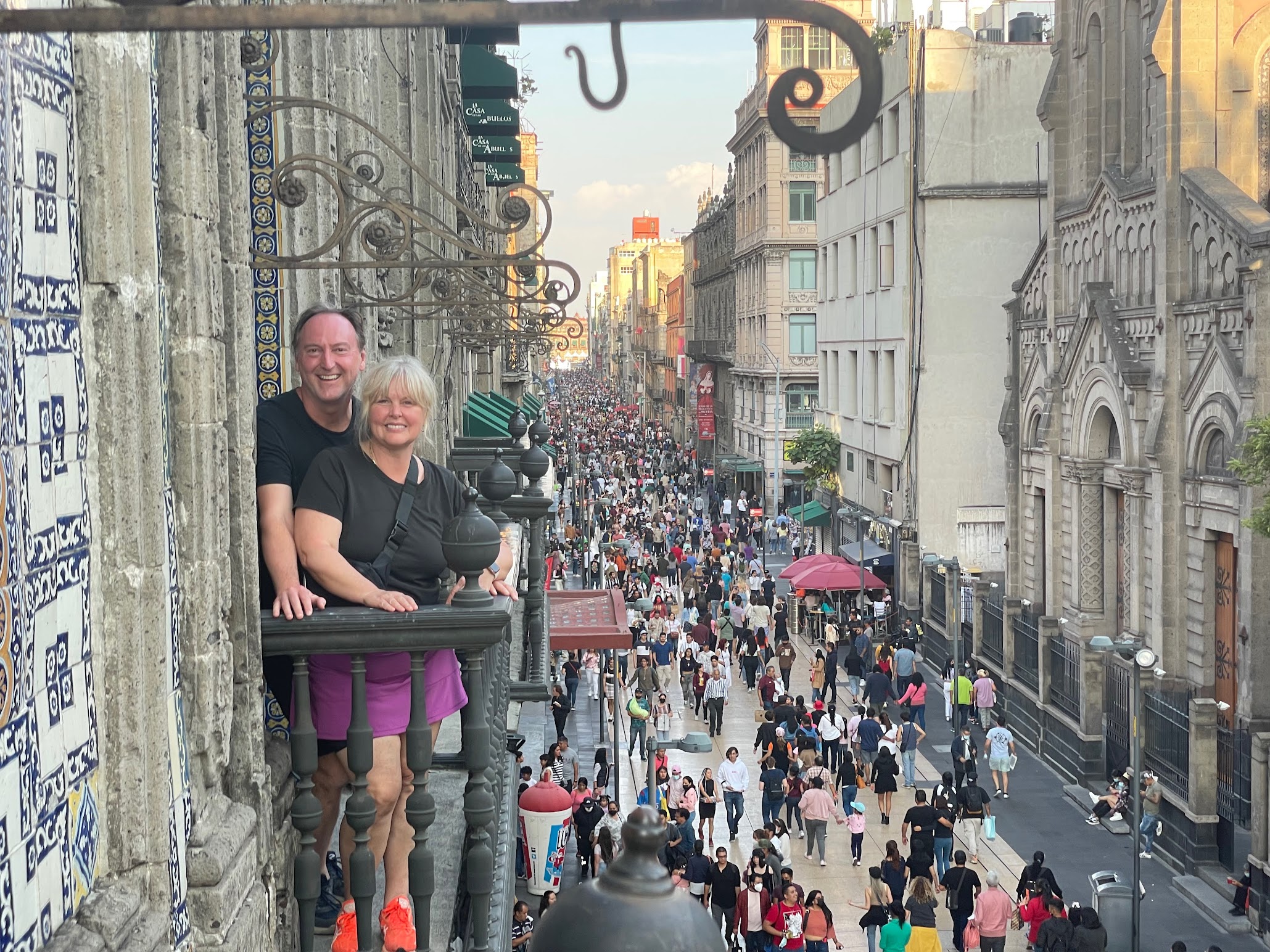
One of the balconies on the upper level of the Casa de los Azulejos overlooking the rocking pedestrian Av Francisco I. Madero. A busy shopping street bustling with pedestrians and competing organ grinders creating a not too pleasant cacophony.
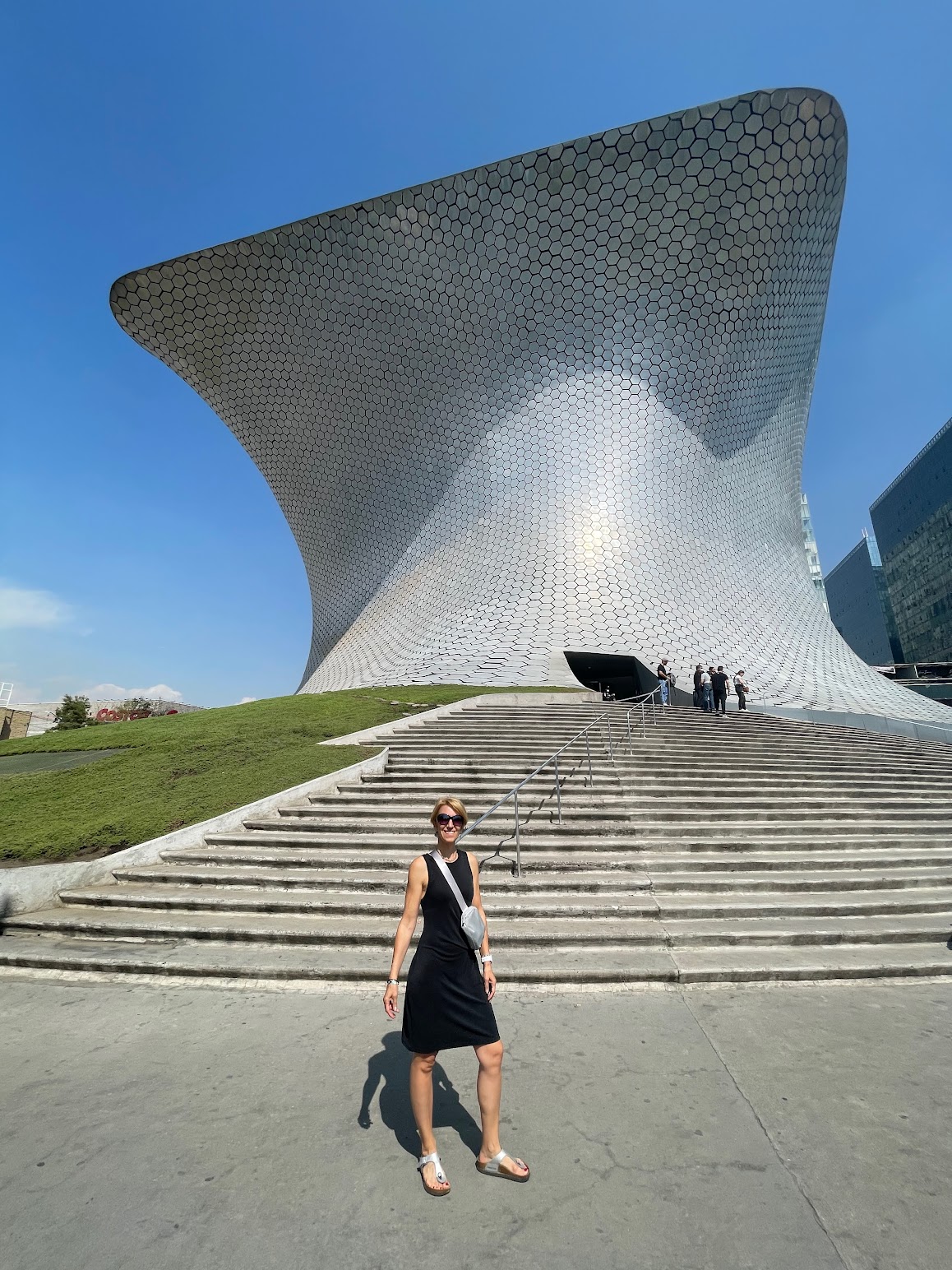
The Museo Soumaya is a private museum owned by Carlos Slim Helu, a Mexican entrepreneur and one of the world’s richest people. It cost $34 million to build this stunning museum to house his billion dollar collection. The asymmetrical curving shape looks different from every angle.
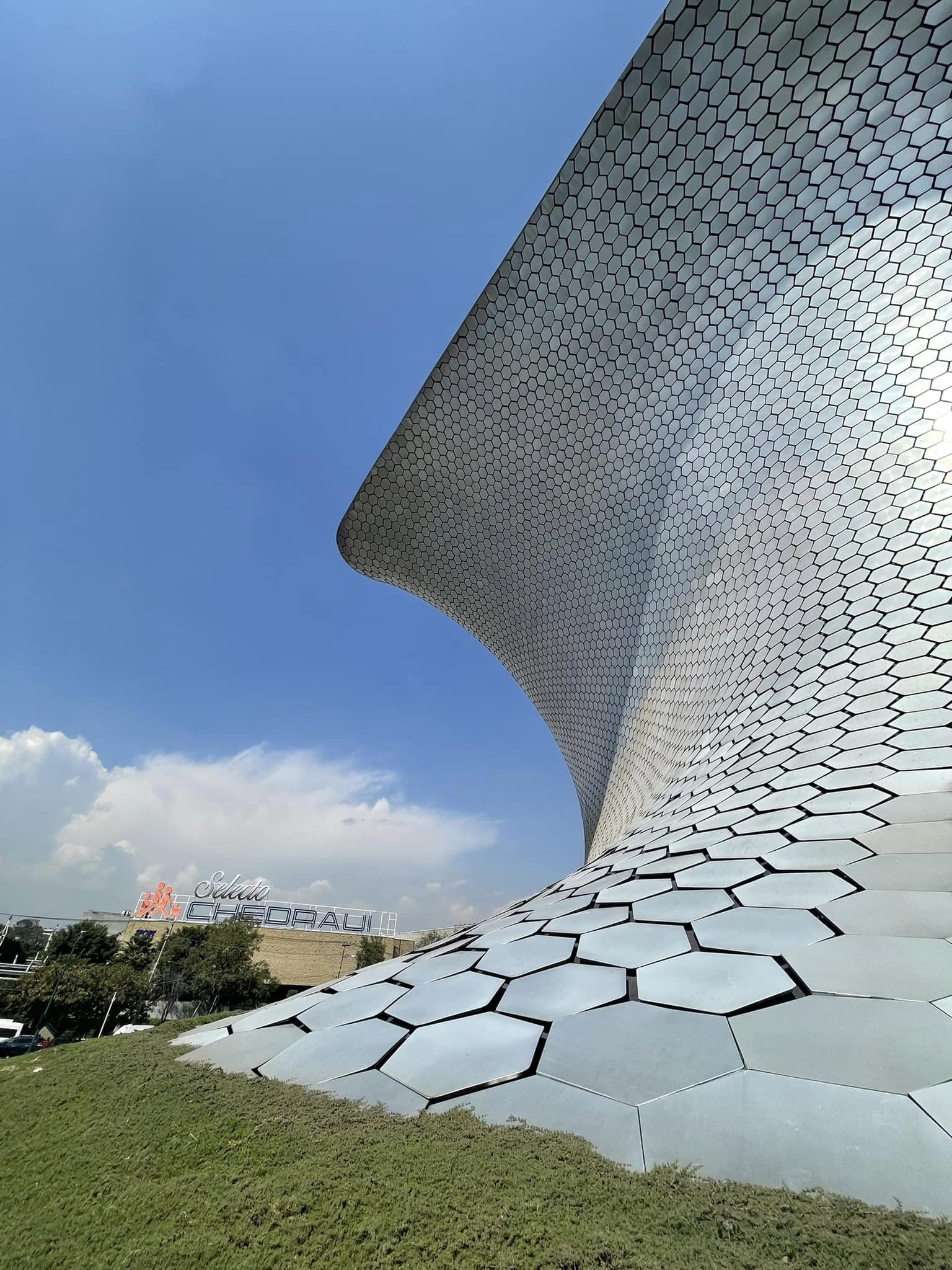
Located in a commercial area, I was just a touch disheartened to see a Costco peeking out from behind the curve of the Museo Soumaya.
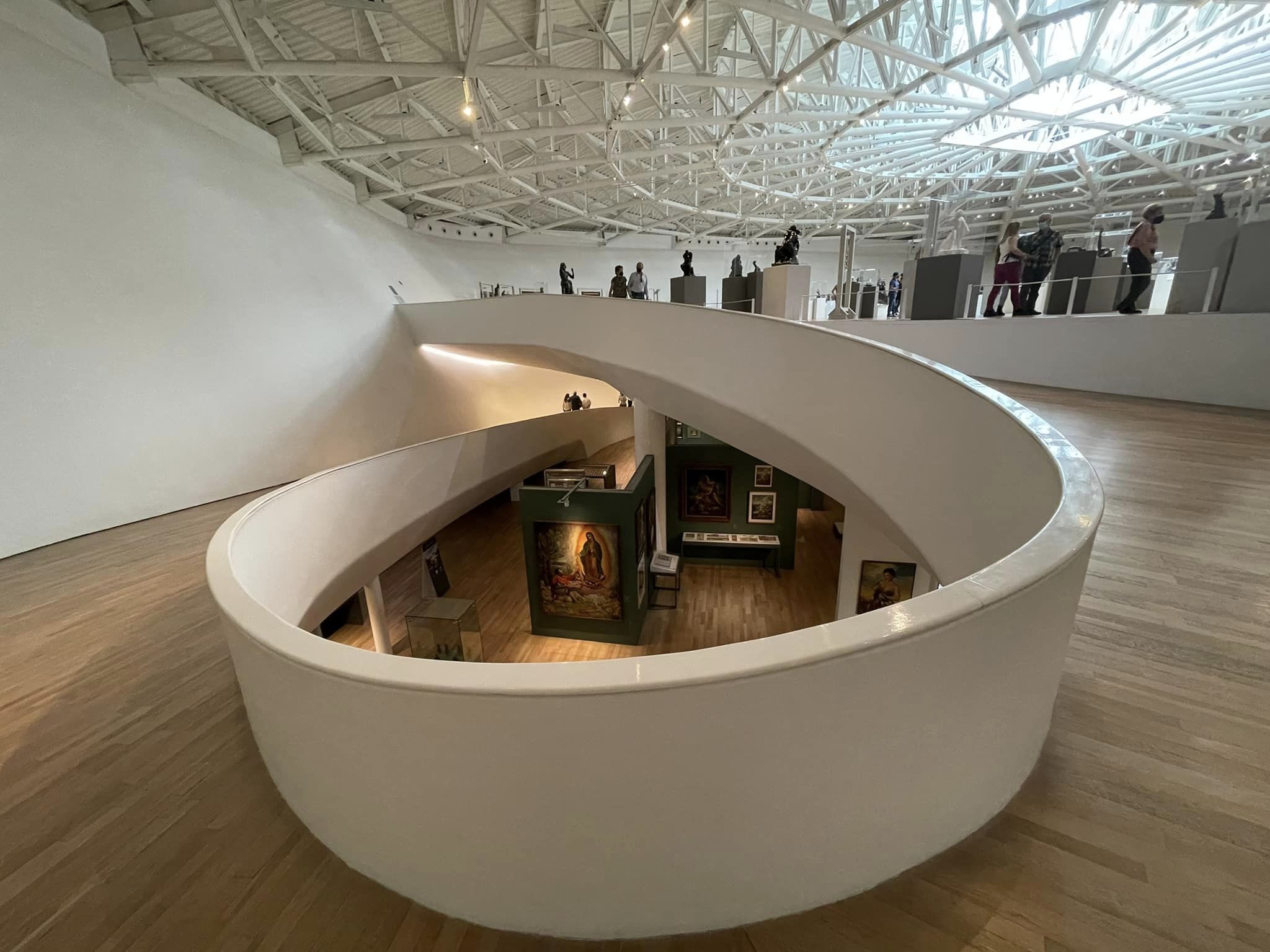
Inside the Museo Soumaya feels a little like the Guggenheim in New York with a ramp running up the circumference of the building from the main floor to the top.

Someone doesn’t want to have his bath in the river. This very long Diego Rivera mosaic mural holds pride of place in the main hall as you enter the Museo Soumaya. It has two sides, the view from the back as you can see here and…

…the view from the front.
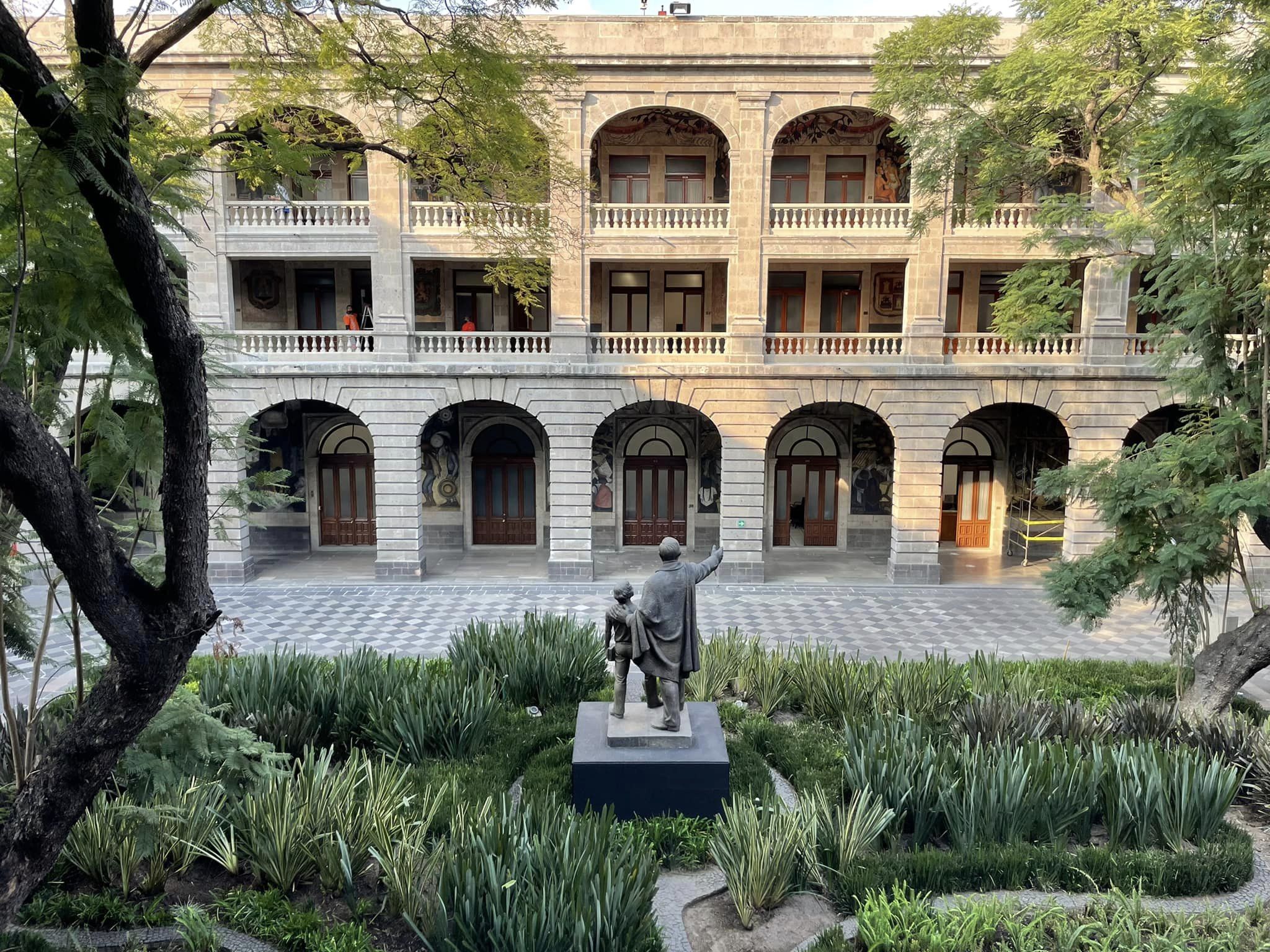
The Secretaría de Educación Pública has an amazing collection of Diego Rivera murals which he painted over a five year period starting in 1923. Adorning the walls of the three story arcades, these are in constant need of restoration as they have no protection from the elements. Covering the gamut from daily rural life to academic pursuits to socialist uprising, famous people (artists, political figures etc) often ended up as cameos in his works.
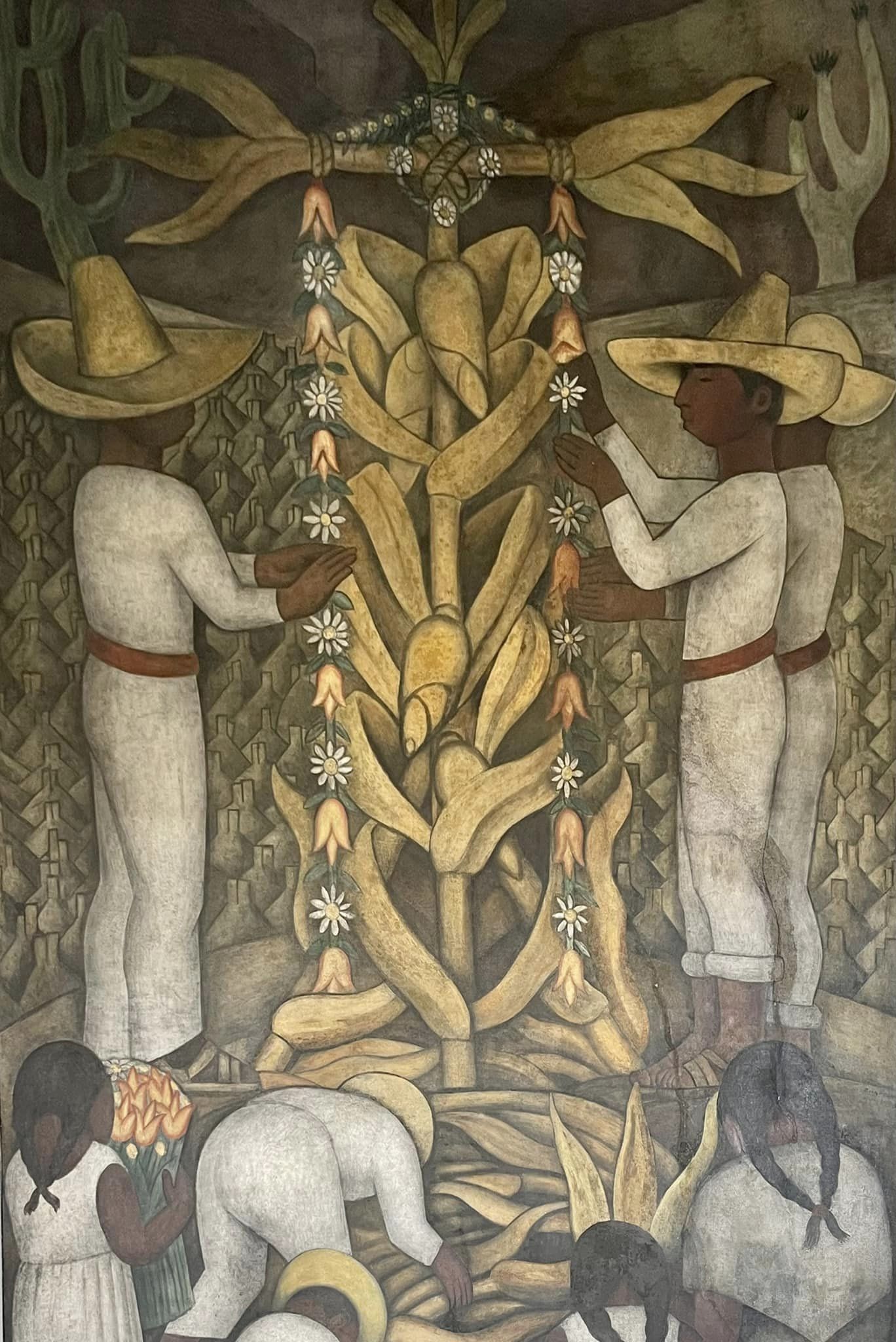
One of over 200 Diego Rivera murals.
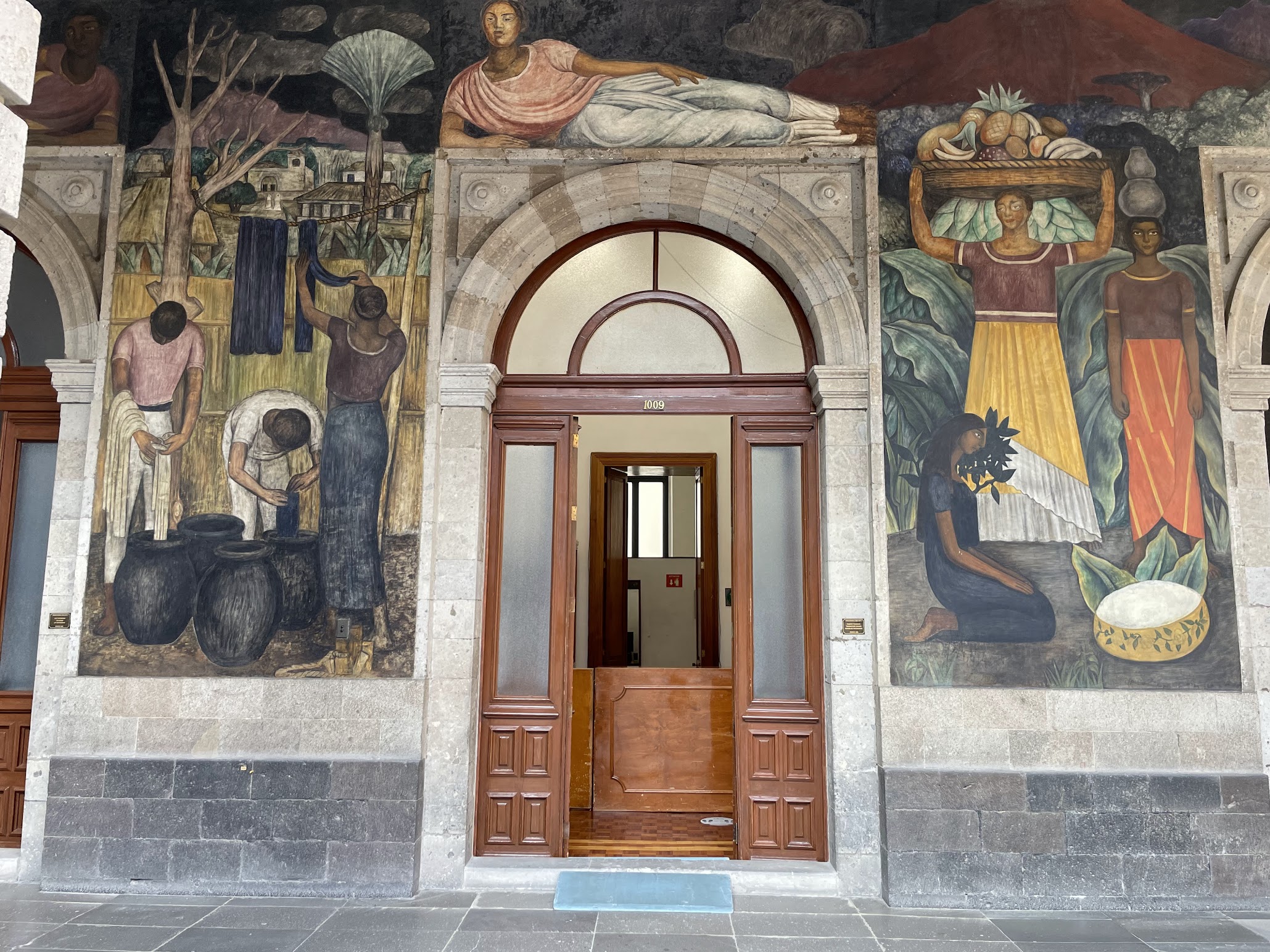
Diego’s murals are painted along the walls and around the office doors.
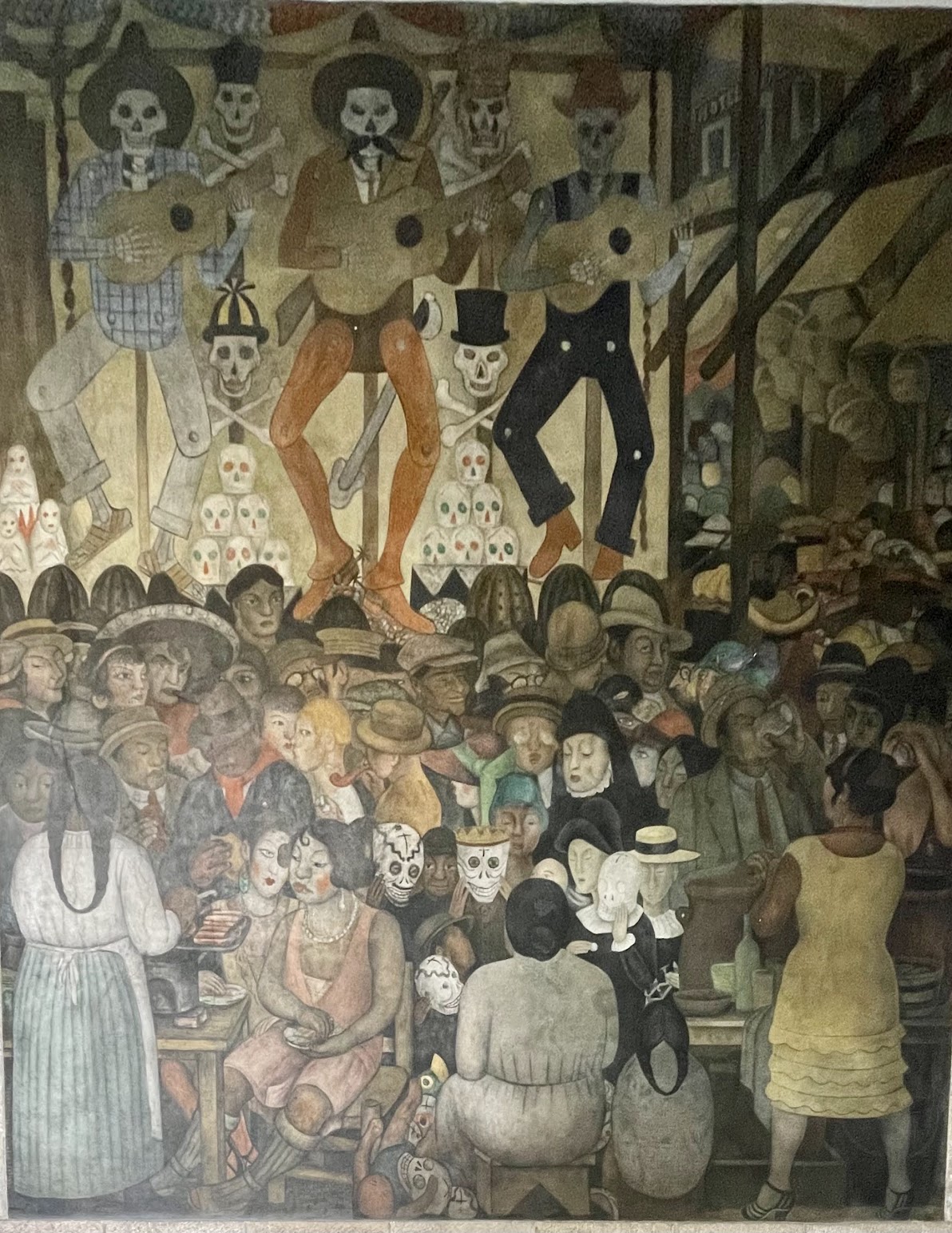
And one more, in keeping with the Dia de los Muertos theme.
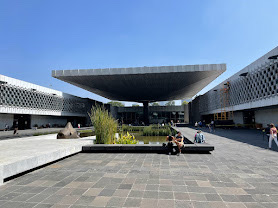
The world-renowned Museum of Anthropology in Mexico City deserves its reputation. It's big, extensive and quite overwhelming as the holder of the world's largest collection of ancient Mexican art. It's a mind-blowing amount of information to absorb and unless you're an art historian with a specialty in ancient Mexico, a guide would make the experience much more digestible. There were no on-site guides when we went, nor were there audio guides to rent. Next time, I would book a tour in advance. Like the Louvre, Uffizi or the Met, this is a place to revisit every time you come to Mexico City.
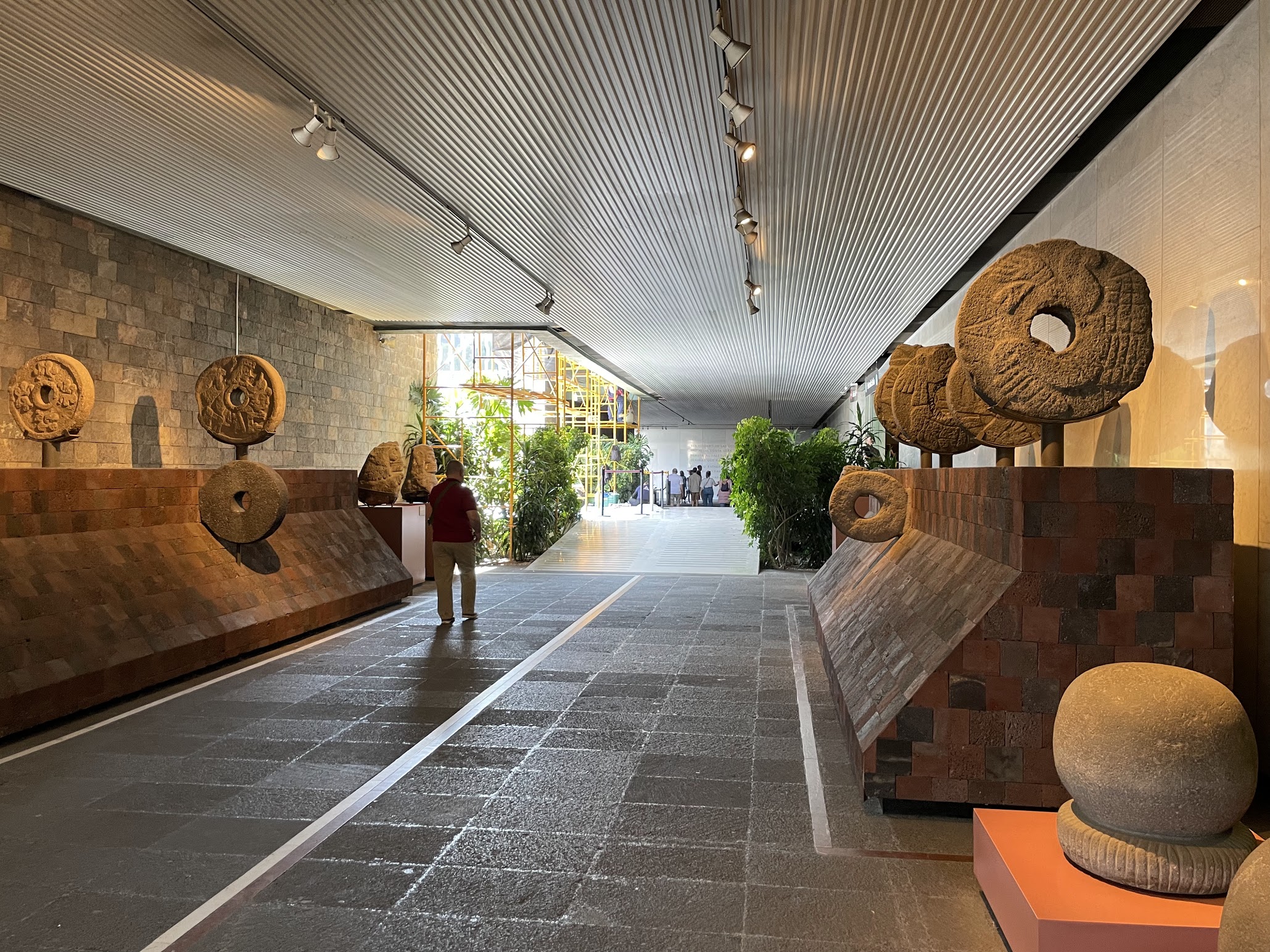
There are way too many exhibits and artwork to share from the Museum of Anthropology, but one of the many intriguing cultural bits is the Ball Game. This brutal game was played in an ally flanked by stone rings. There are no texts about this game but archaeologists are always so good at piecing together what things are based on the bits and pieces left behind. It seems the goal was to get a 5kg rubber ball through the rings using only the hips to move the ball. Some later depictions of the game suggest sticks or rackets may have been added to the fun. The dodgy thing is the game was often used in ritual human sacrifice. Whoever lost (whatever losing meant), would be sacrificed and their decapitated head would be mounted on a spike. Some sites had sizeable collections of heads on spikes, all arranged in rows.
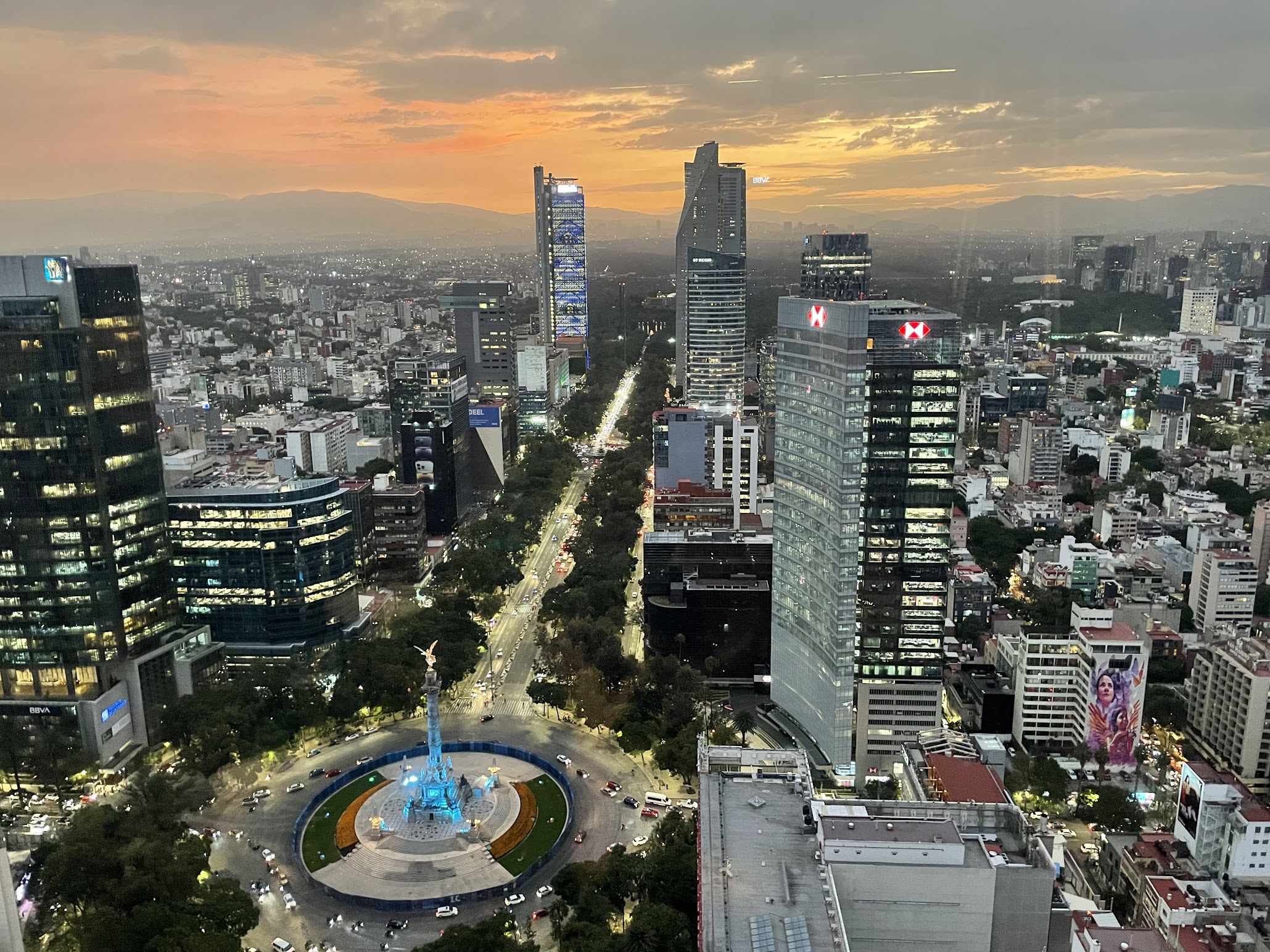
Stunning location for a sunset drink. The Cityzen bar sits on the roof of the Sofitel Hotel with a spectacular view of the Paseo de la Reforma and the Angel of Independence. Facing the other direction, you look over the Chapultepec Castle. You need to make a reservation to go up to the 38th floor and then you sit inside waiting for your turn for an outdoor table. That's where the magic is!
Culture and Cycling with Chums
Culture and cycling took us to two very different parts of this massive city. The Frida Kahlo Museum is in the house Frida grew up in and then became her home with Diego Rivera. Located in the artsy Coyoacán neighbourhood known for its cobbled streets and colonial architecture, it’s a far cry from the upscale, manicured Paseo de la Reforma.
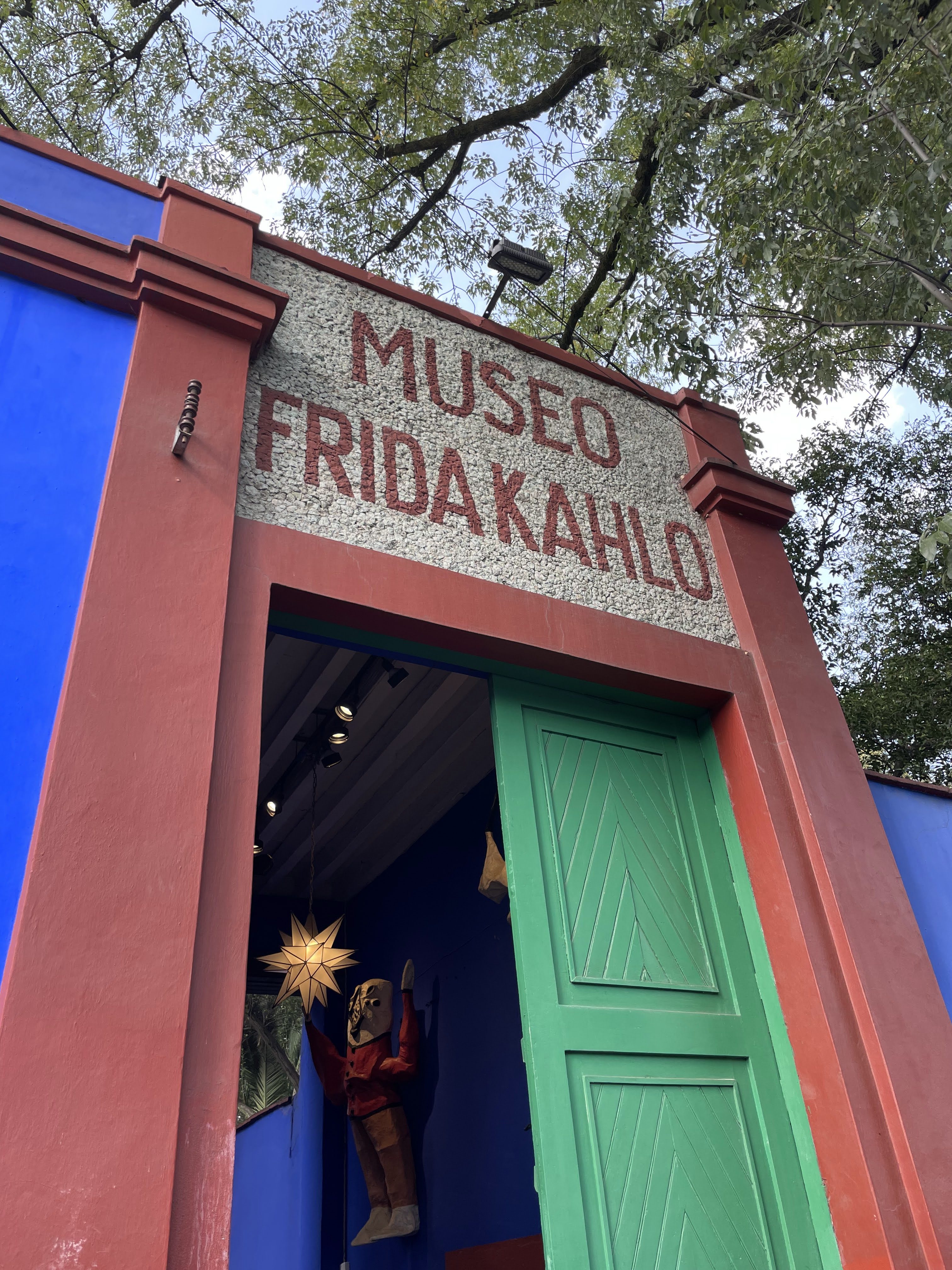
They say suffering adds a special depth to an artist. If that’s true, Frida Kahlo’s drama-filled life paved her way to the incredible artist she was. At the age of six, she contracted polio which resulted in her right leg being withered and shorter than her left. She powered through this adversity and focused on her dream of going to medical school. Then at 18, she was a passenger in a tram accident where a metal bar impaled her, damaging her spine, uterus (another great sadness in her life was her inability to have children) and abdomen, along with a broken collarbone and leg. Surprising that she survived, she was confined to bed for months. If you haven't seen the movie Frida, with Salma Hayek, it's excellent.
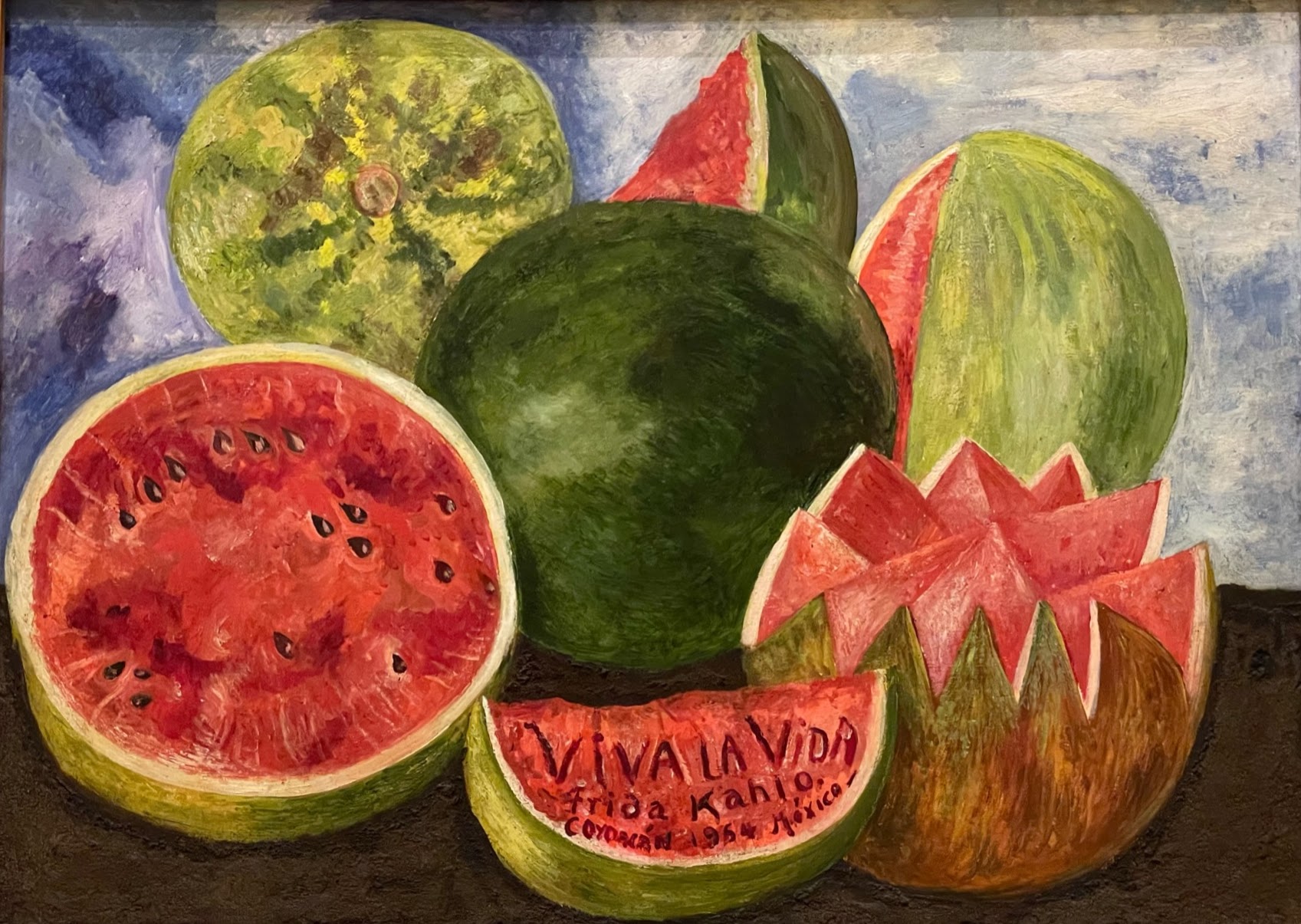
Viva La Vida is the last of Frida’s paintings. She fished this painting eight days before she died with the Viva La Vida inscription on the central oiece of fruit. Some interpret the watermelon hard skin and soft and sweet inside to symbolize Frida’s life in that she had to develop a tough exterior to protect herself from her physical ailments and her tumultuous marriage to Diego Rivera.
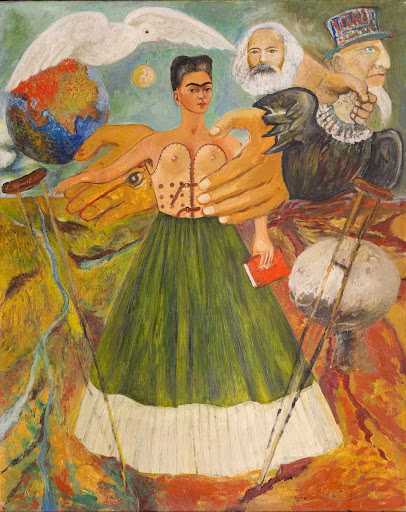
Marxism Will Give Health to the Sick was one of Friday’s last works and represents her transition to the afterlife.
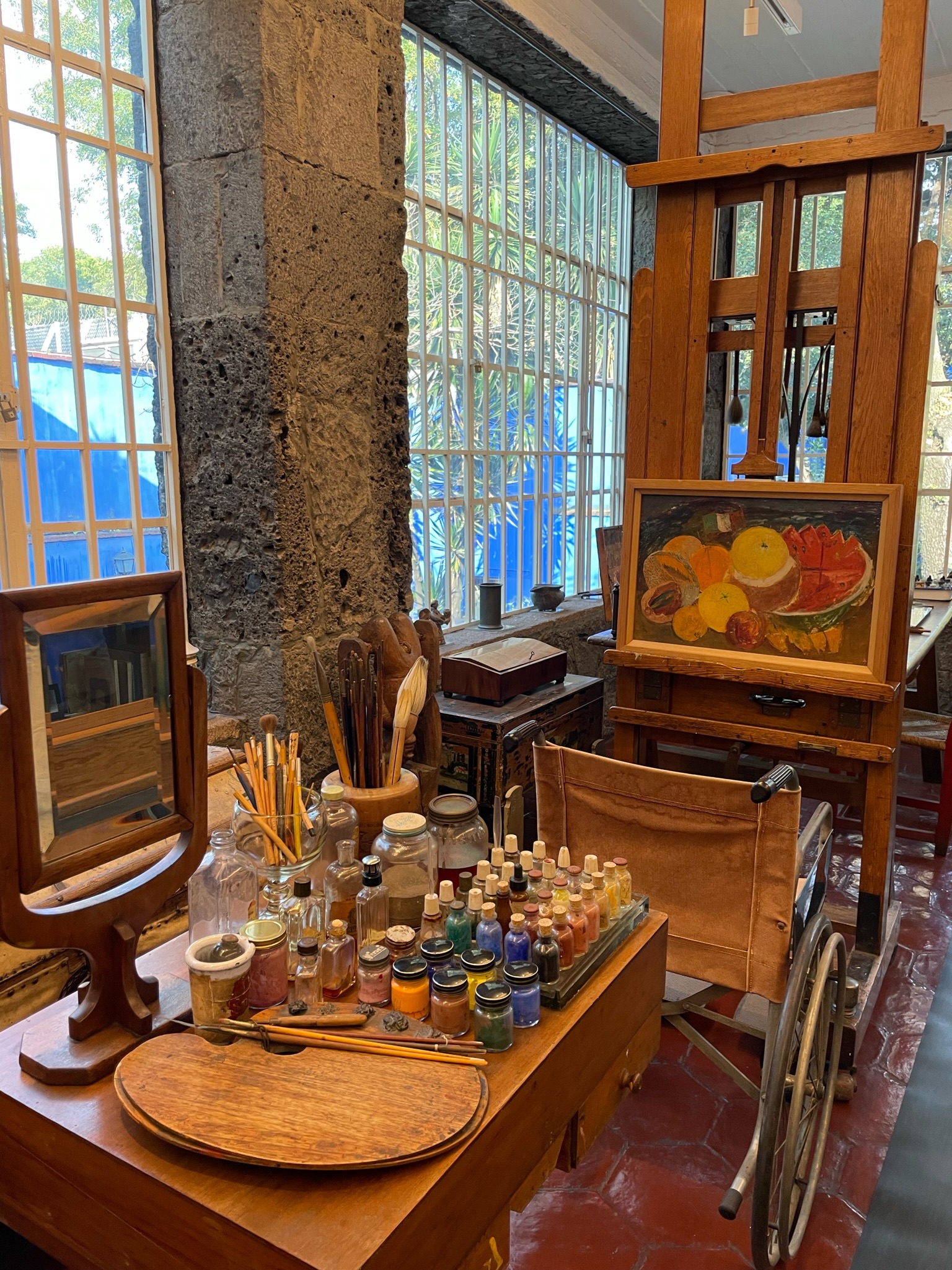
Frida’s studio near her bedroom that suited her ergonomic needs. One bright spot in all of this, she realized she had talent and was encouraged by many, including Diego Rivera. She ended up marrying him (twice) and would say that her second major accident in life was marrying him. They divorced and remarried a year later. Diego commented “The remarriage is working out well. Fewer quarrels, greater mutual understanding…I finally realized that such is life and the rest is just windows dressing!” Words to live by!
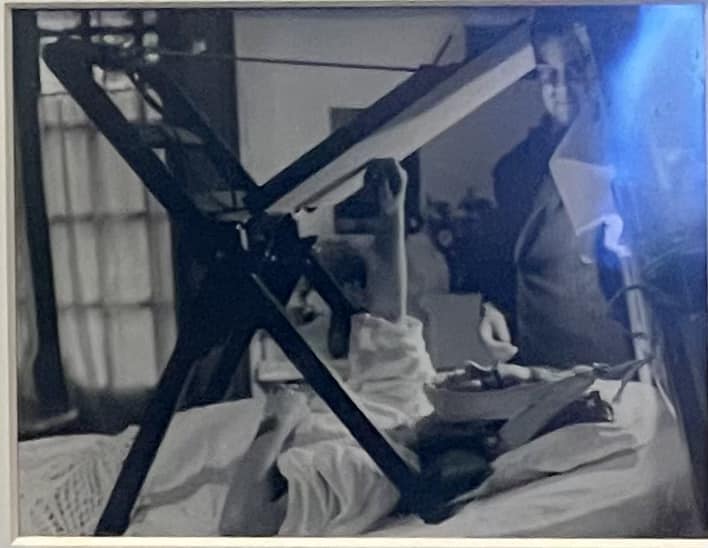
Bored out of her mind Frida began to draw and paint. Her mother installed a mirror above her bed so she could do self portraits.
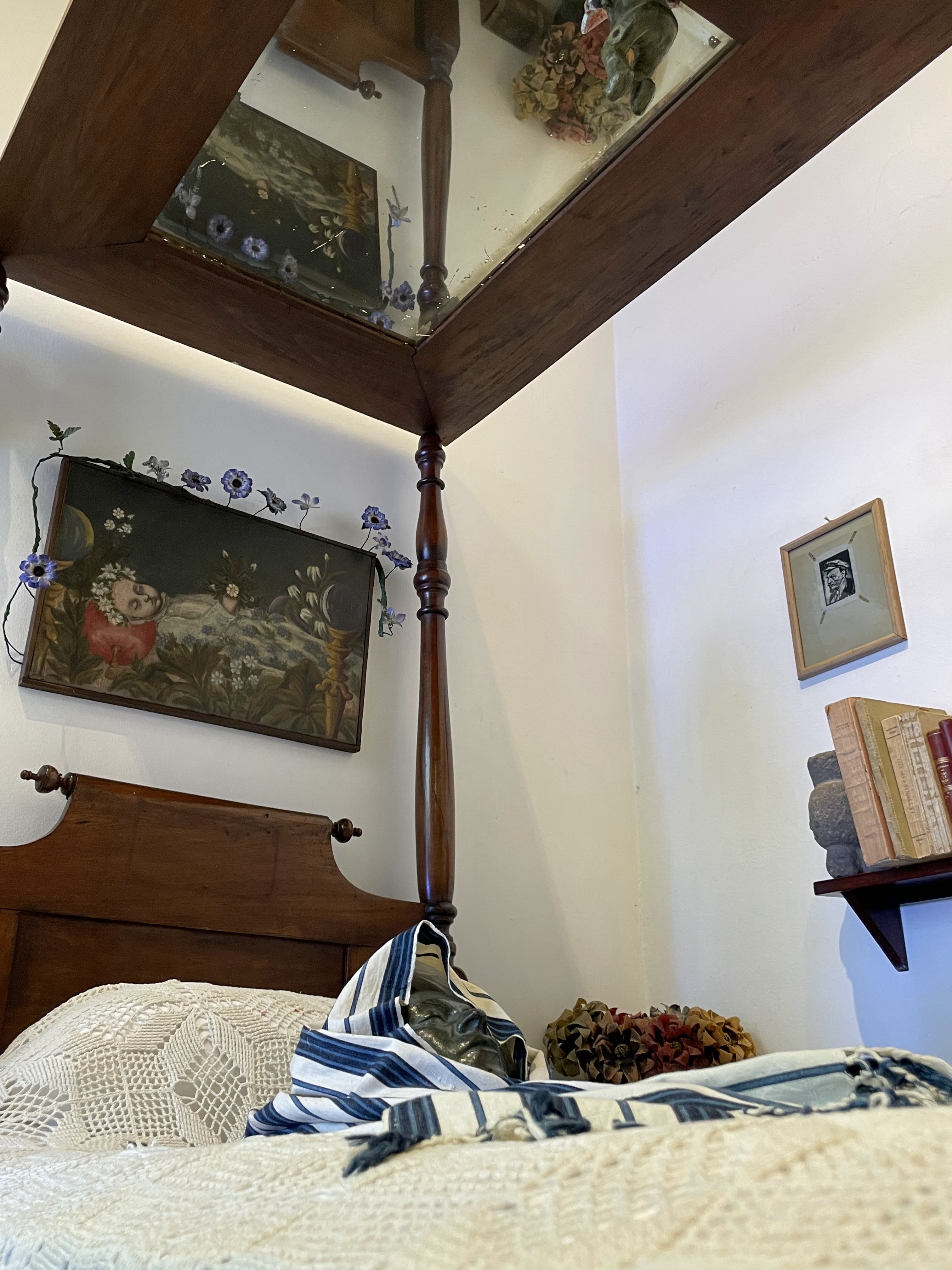
Frida’s bed with the mirror that helped start everything.
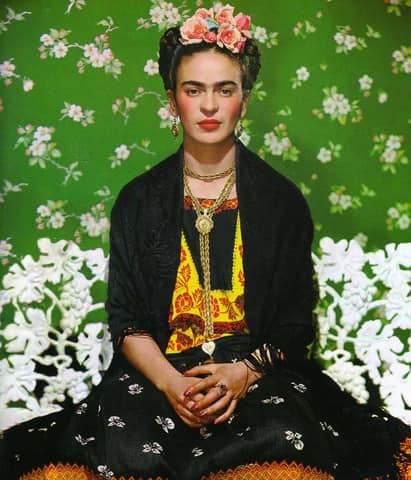
Frida was very aware of her disfigured body as a result of polio, the tram accident and 22 surgeries that tried to “fix” her. She developed a personal style that both hid her disfigurement and the special supportive corsets she had to wear, and paid homage to her mother’s Tehuana heritage. Her full length, ruffled skirts hid her misshapen leg, her heavily adorned, square short tops and dramatic jewellery drew the eye upwards, away from her lower body, and helped make her look taller. Her creative instinct enabled her to present herself to the world as she wished to be seen.
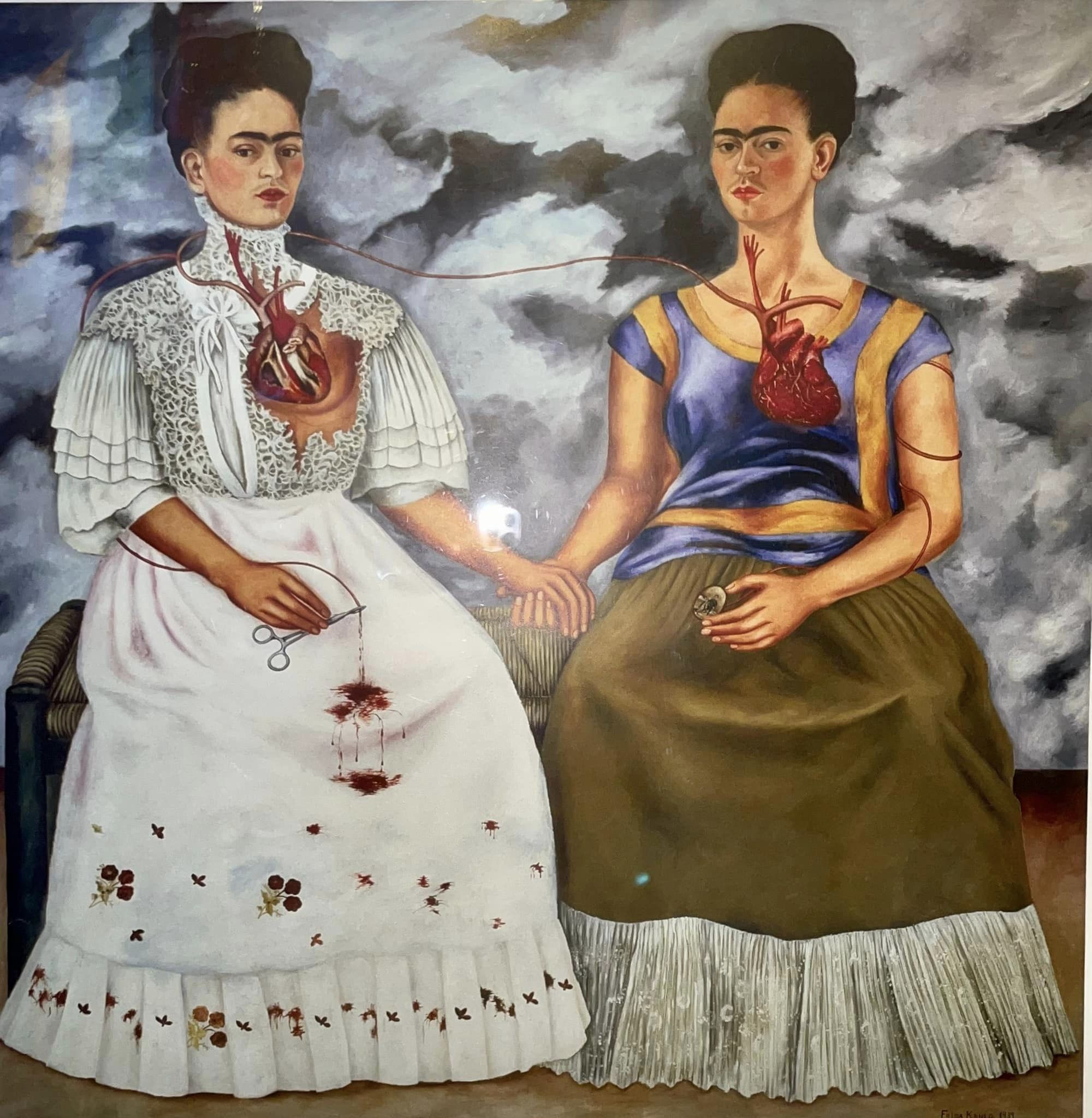
The Two Frida’s (1939) was bought in 1947 by the Instituto Nacional de Bellas Artes (National Institute of Fine Arts) in Mexico City for 4,000 pesos ($1,000 at the time), the most ever paid for one of her paintings in her lifetime. She painted this shortly after her divorce from Diego Rivera, and shows Frida's two different personalities. On the left is the traditional Frida in Tehuana costume (with a broken heart) holding the hand of an independent, modern-dressed Frida. Traditional Frida’s heart is torn open with the main artery dripping blood, putting her at risk of bleeding to death. The stormy clouds represent her inner turmoil from the divorce. They remarried a year later.
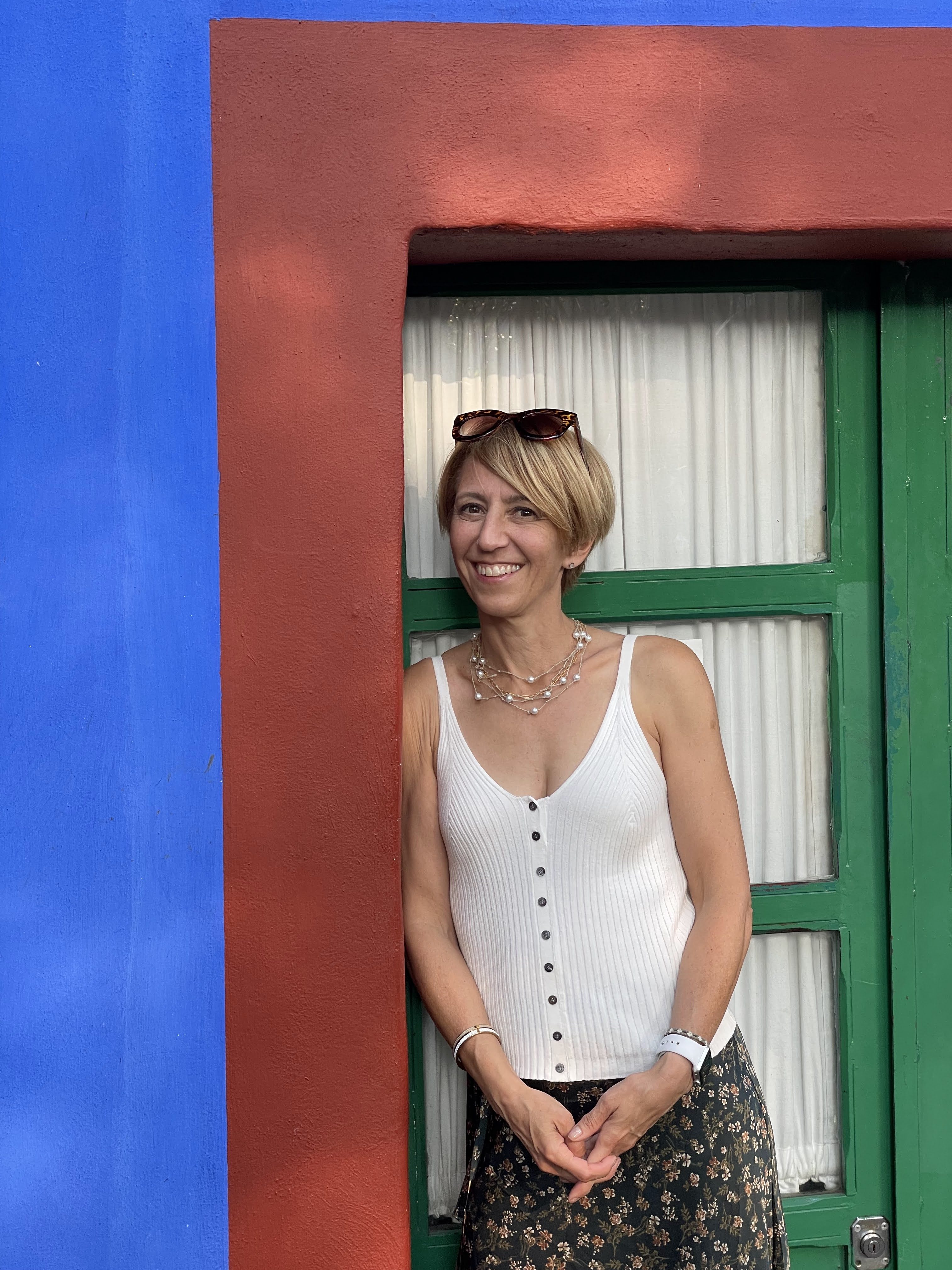
Hanging out in a doorway in Frida's garden.
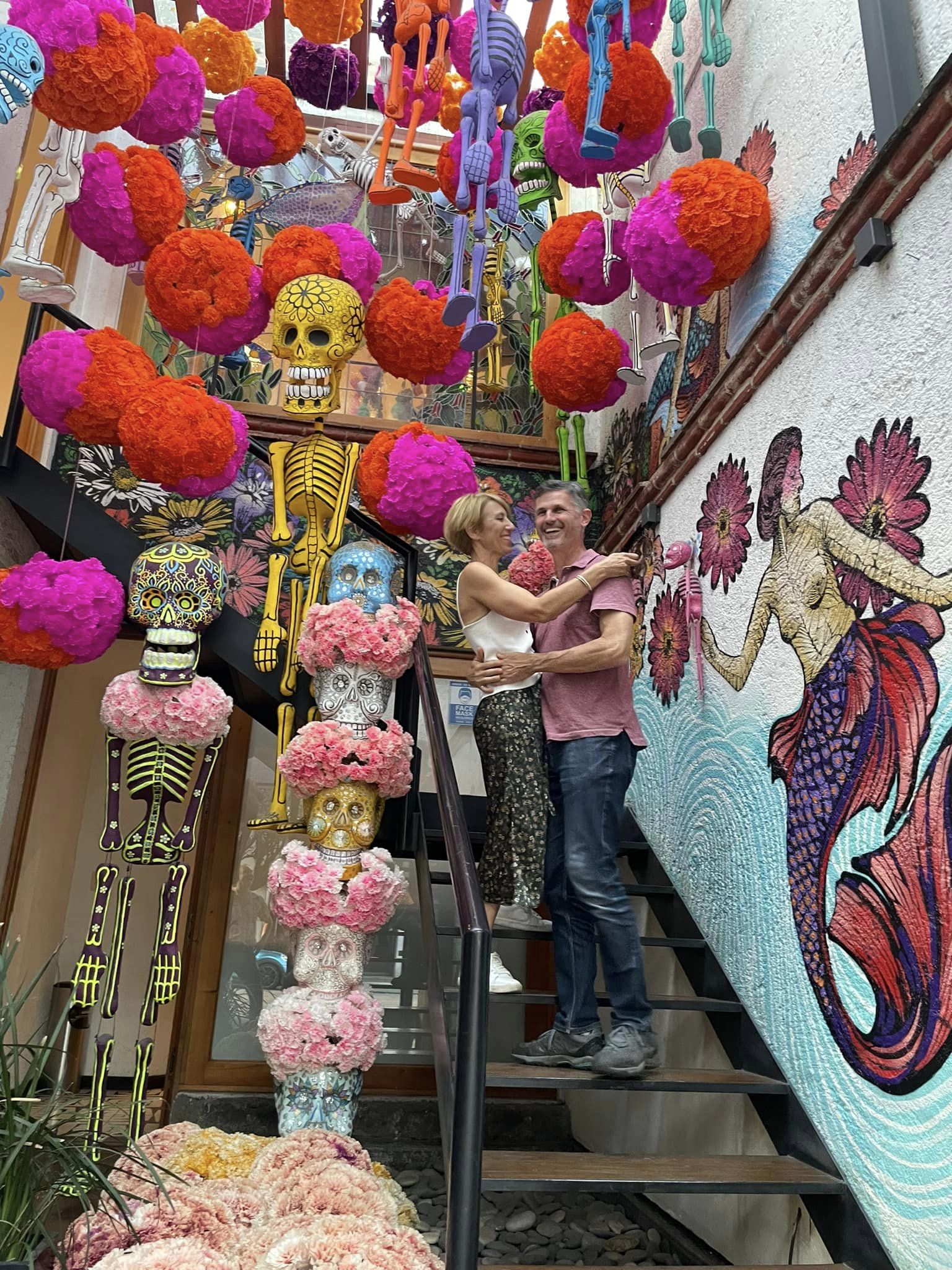
Colourful stairway drew us in.
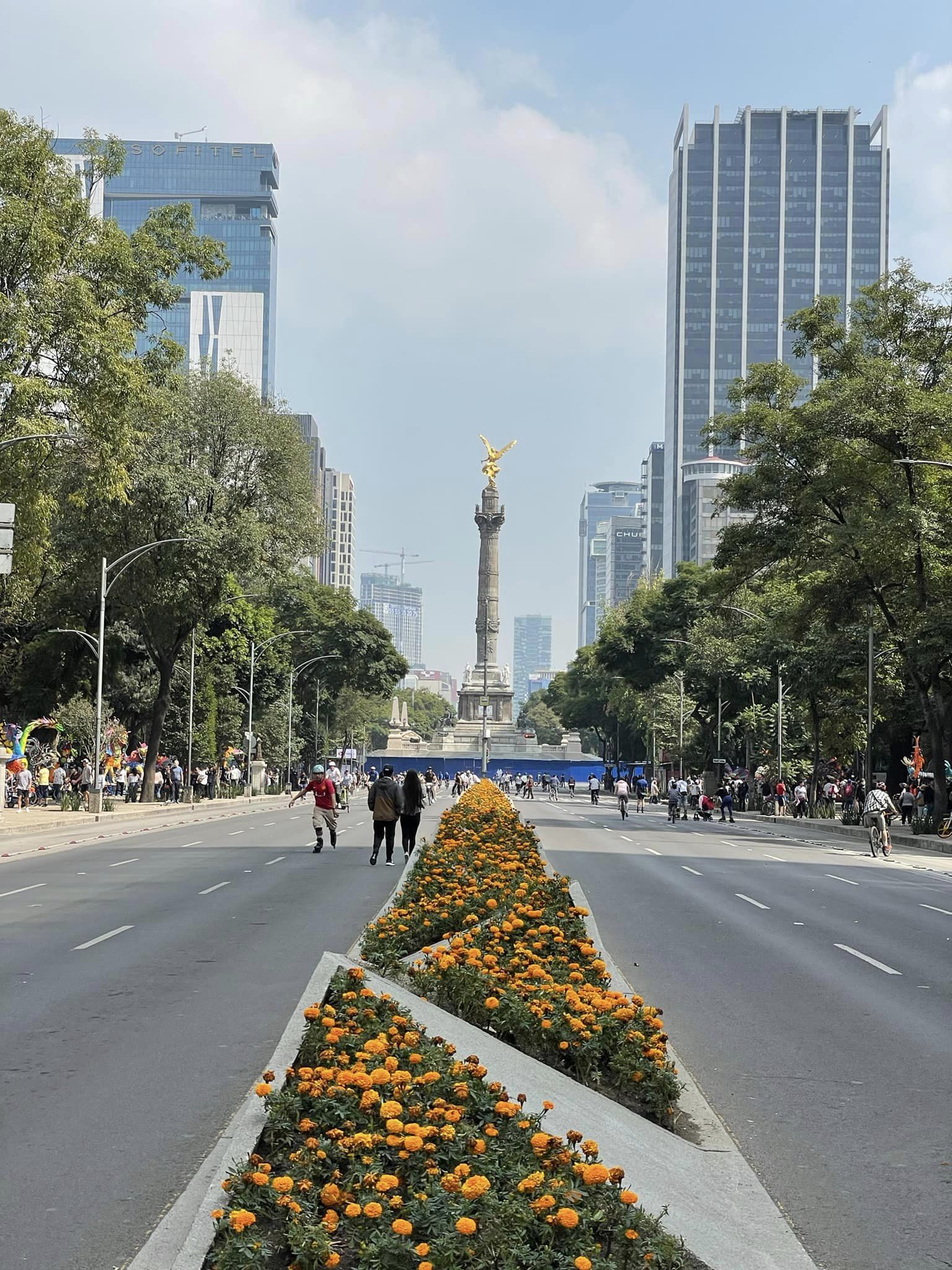
Paseo de La Reforma was originally built by the Hapsburg Emperor Maximilian as a route from his home at Chapultepec Castle to the National Palace. It was named Paseo de la Emperatriz in honour of his wife Carlota, who, it turns out, may have been the brains behind the Emperor. The name of the road was ultimately changed to Paseo de la Reforma in honour of the reforms made under President Benito Juarez after the defeat of the emperor. The 15km route is a wide boulevard full of monuments, flowers and temporary art displays.
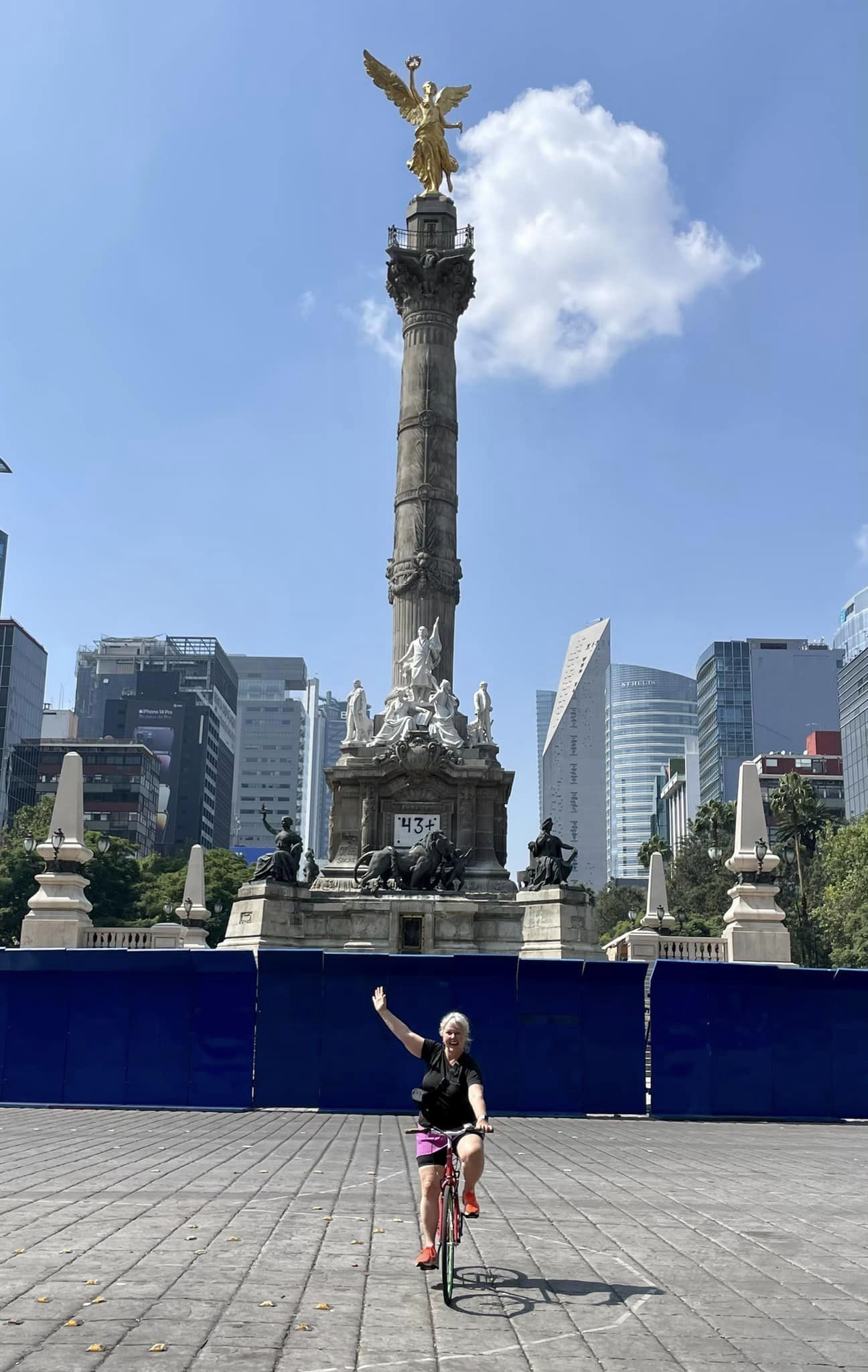
The Paseo de La Reforma is closed to traffic every Sunday until 2pm and is chock full of cyclists, joggers, roller bladers and pedestrians.
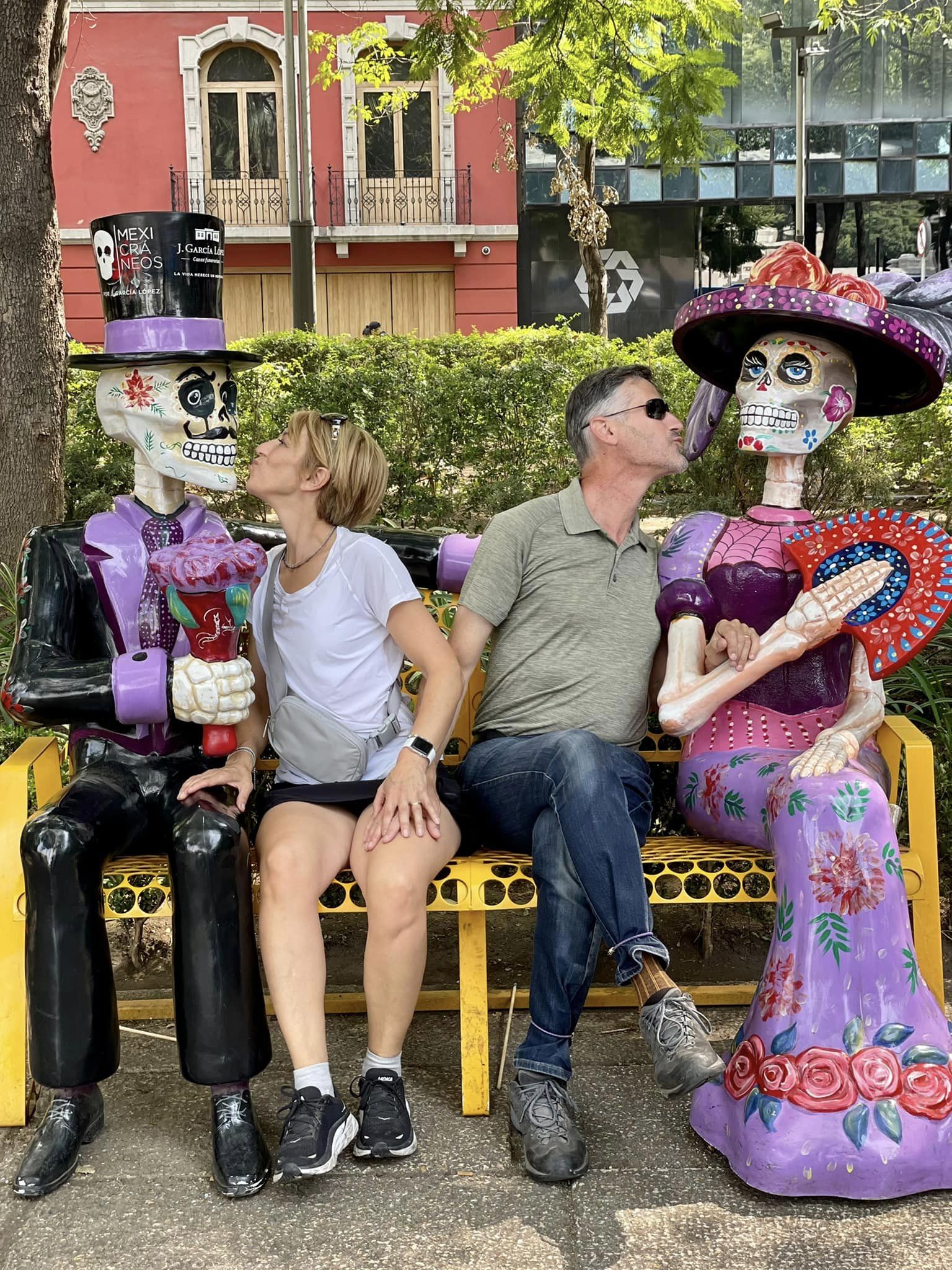
Making new and everlasting friends.
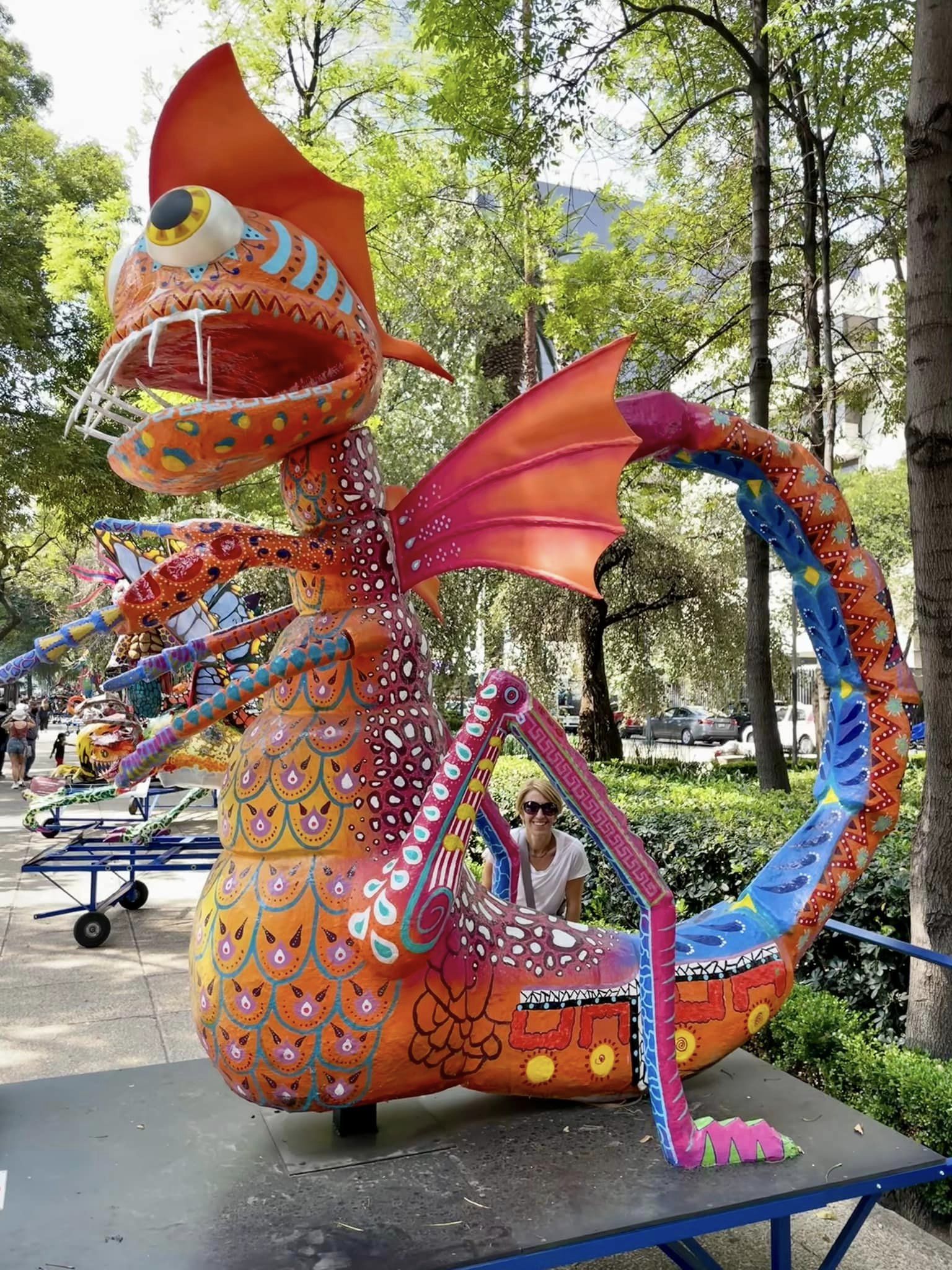
Mexico City Artist Pedro Linares had fantastical hallucinatory dreams while sick with a fever in 1936. In his dreams, he saw clouds and rocks turning into brightly coloured creatures with various combinations of wings, horns and bulging eyes, mixing up body parts from a variety of birds, animals and fish. Crowds in the dreams were chanting a made up word: alebrije. When Pedro recovered, he was compelled to recreate what he saw in his dreams in papier-mâché. His Alebrijes caught the interest of Frida and Diego but things really took off when a British filmmaker did a documentary on Linares in 1975. In 2007, Mexico City’s Museo de Arte Popular (Museum of Folk Art) sponsored a parade of Alebrijes from the Zocalo to the Angel of Independence along the Paseo de la Reforma, where after the parade, they are displayed for two weeks. The event has grown from 35 Alebrijes in 2007 to more than 200 in 2022. We were lucky enough to see these amazing sculptures during our Sunday bike ride along the Paseo de la Reforma.
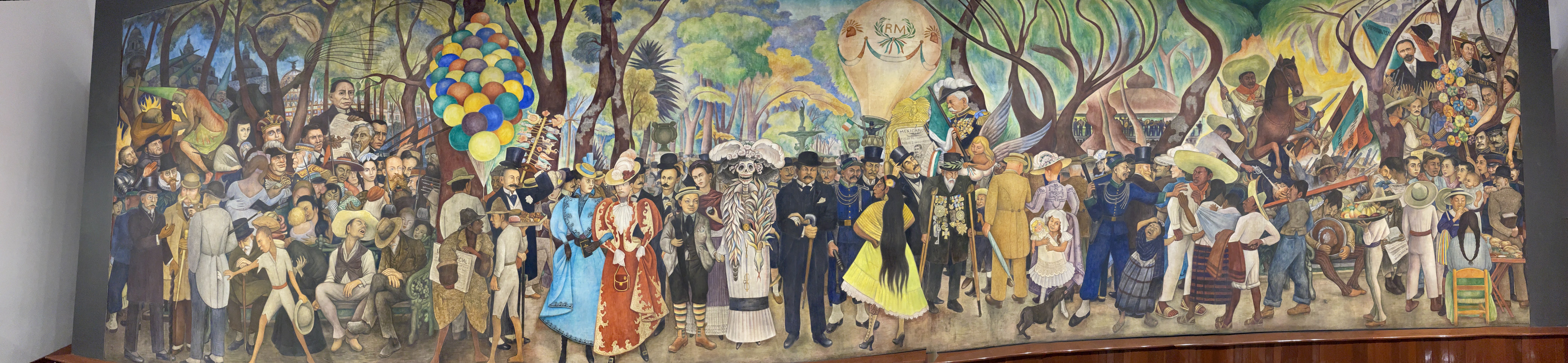
We came across the Museo Mural Diego Rivera where Diego Rivera's 1946–47 mural Sueño de una Tarde Dominical en la Alameda Central (Dream of a Sunday Afternoon at Alameda Central) is now located. In the 1985 earthquake, some 400 buildings collapsed and another 1,000 were so damaged that the needed to be demolished. Among these 1,000 was th Hotel Prado, where this 70 square metre frescoe was located. Amazingly, this mural barely suffered any damage beyond a few cracks. The dream, built around 100 figures tells the story of the history of Mexico, from the Spanish Conquest and Holy Inquisition to the first half of the 20th century. He portrays himself as a child in the centre, holding hands with the famous Catrina (skeleton) and her creator, José Guadalupe Posada,, who was one of Diego’s greatest influences. Behind him is Frida, the future live of his life. The traditions of Mexico, the colours, the people, the music and the conflicts are displayed in all their glory.
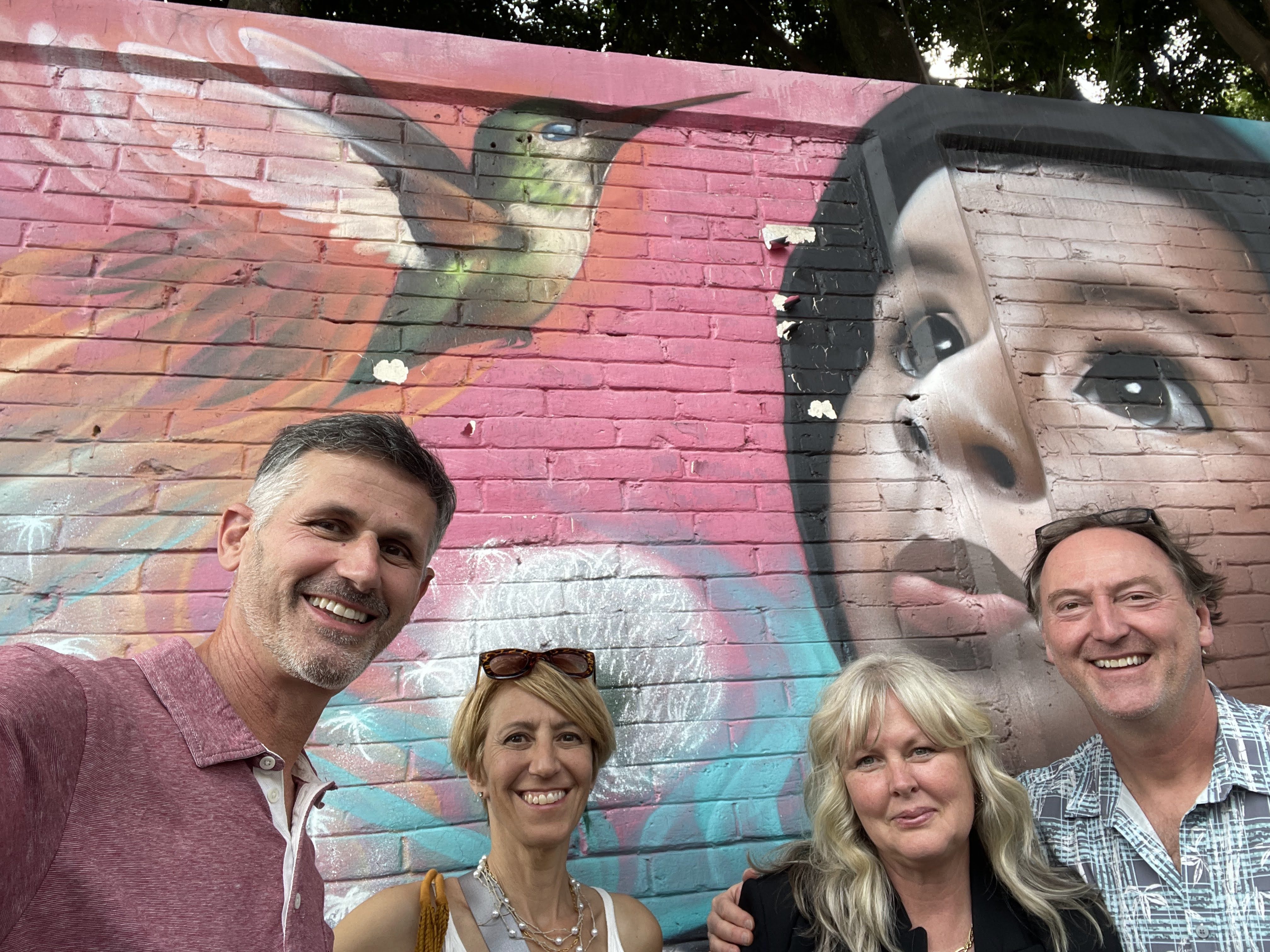
Photobomb! Diego inspired countless artists and murals. I wonder what he would think of this one..
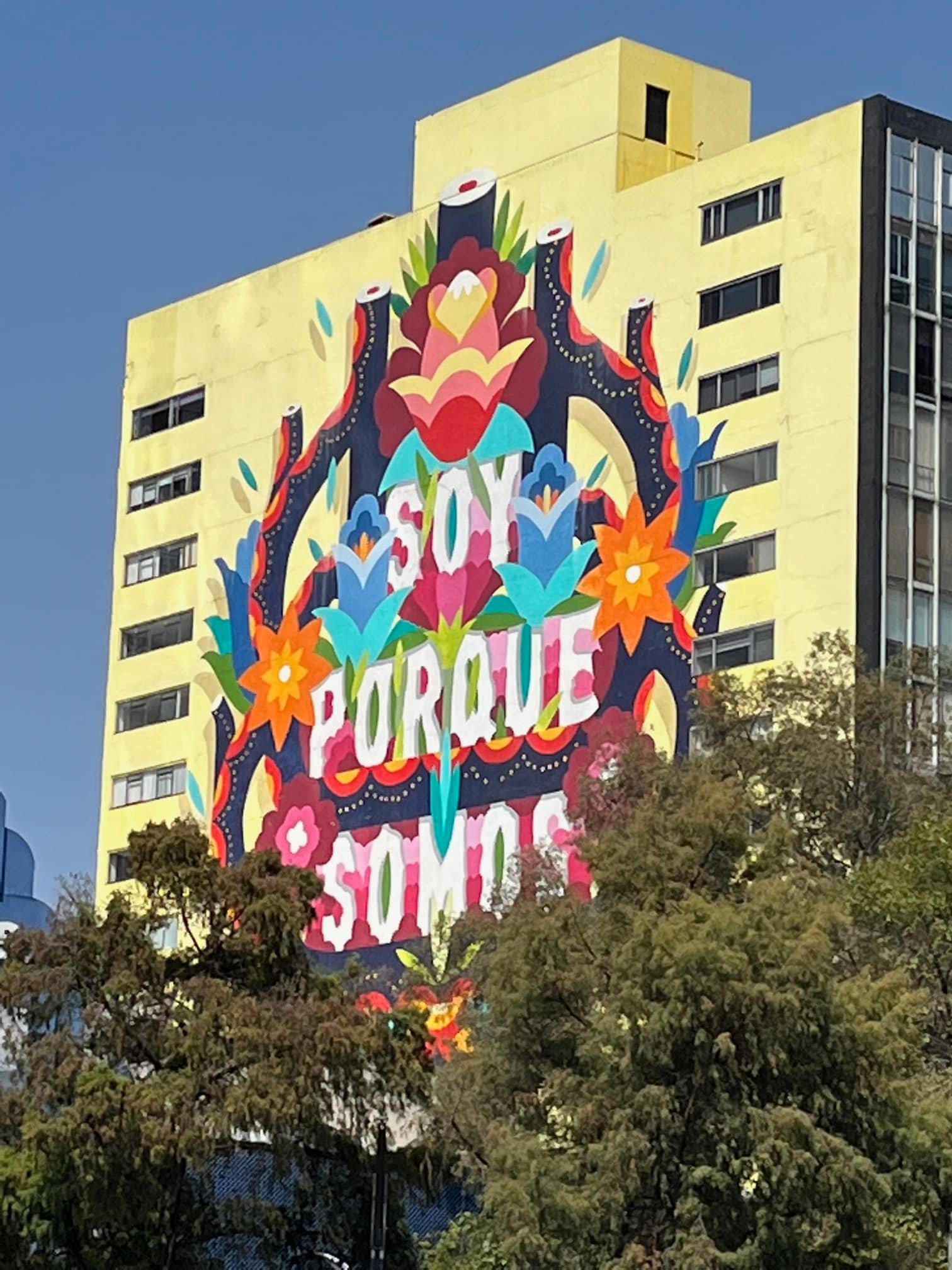
I Am Because We Are
Up, Up and Away to the Past
A spectacular day floating over the ancient city of Teotihuacán. A 5 am pick up took us about 50 km north of Mexico City. No traffic for us heading out of the city, but it was already rush hour heading south into the city with lines of stop and go cars almost the whole way. After the hot air balloon flight, we visited the ancient ruins and learned about the history, including some questionable theories. This was a rocking, powerful city in its day, among the largest in the ancient world with a population of at least 125,000 people and 2,000 buildings in an 18 square kilometre area. There was a bustling market along the main avenue in its day. Funnily enough, it’s still a bustling market today, full of street vendors selling tourist junk of questionable origin. This aside, is an amazing site to see (just look past the hucksters)
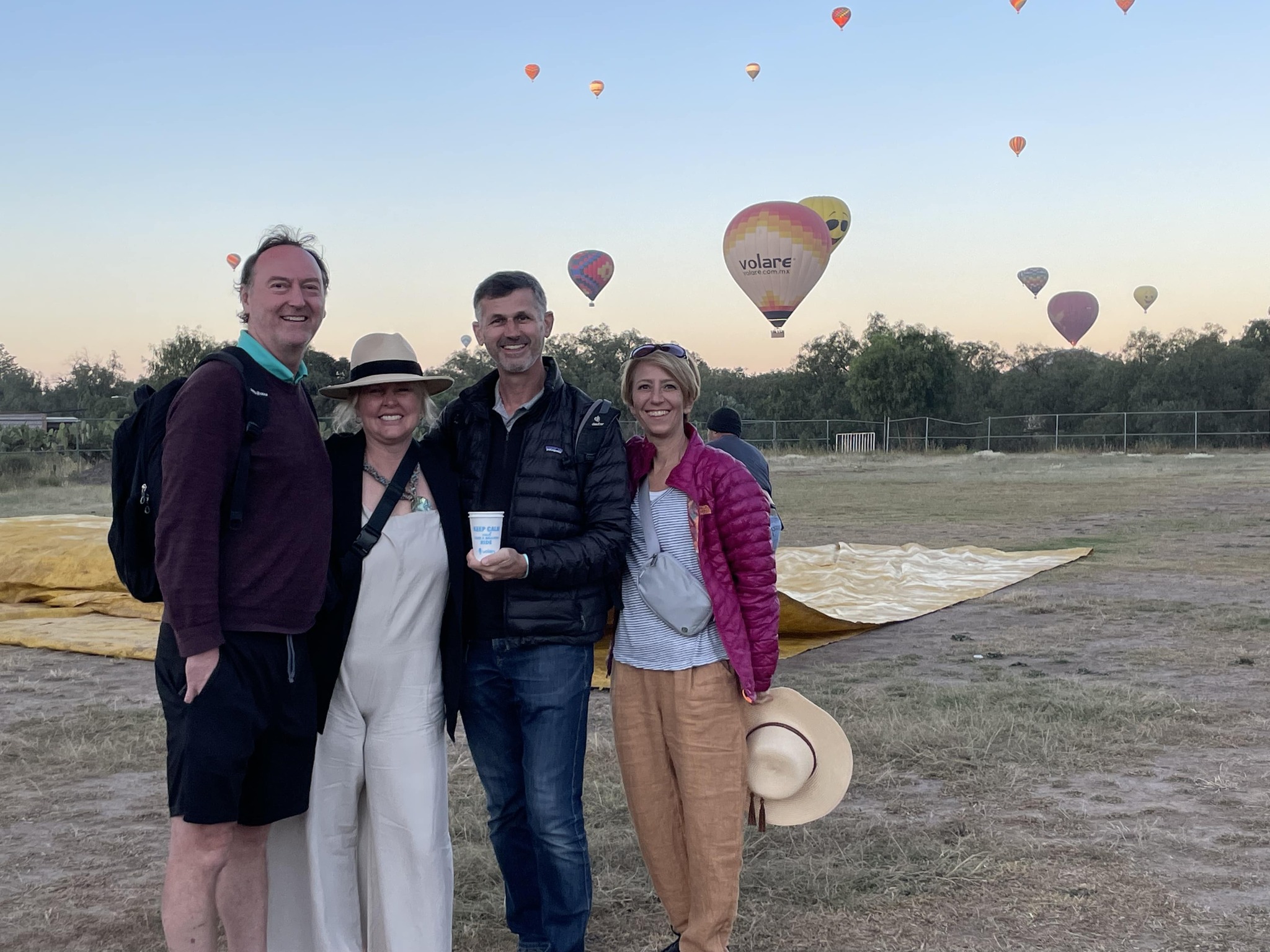
Bright and early arrival!
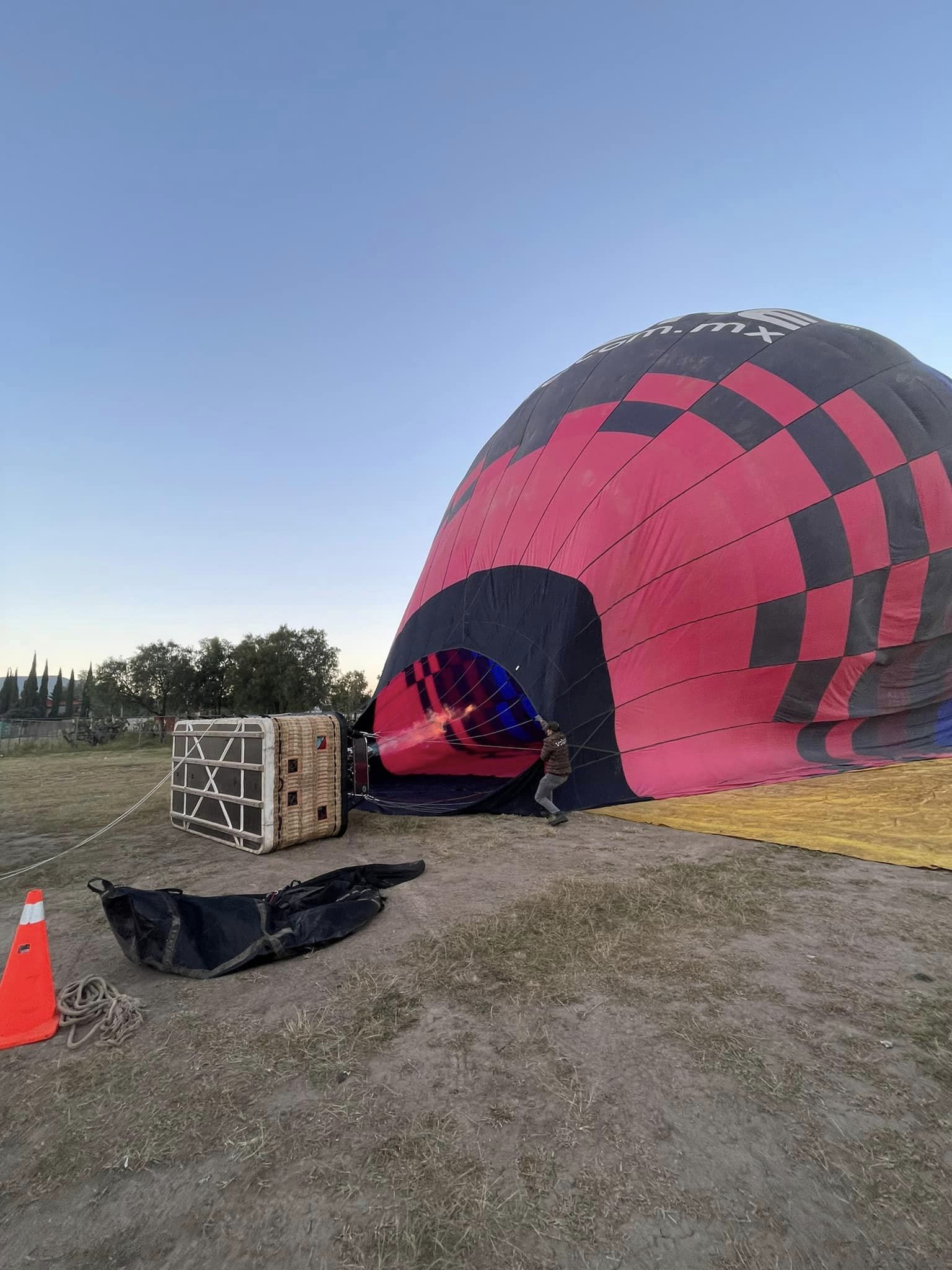
Fill her up!
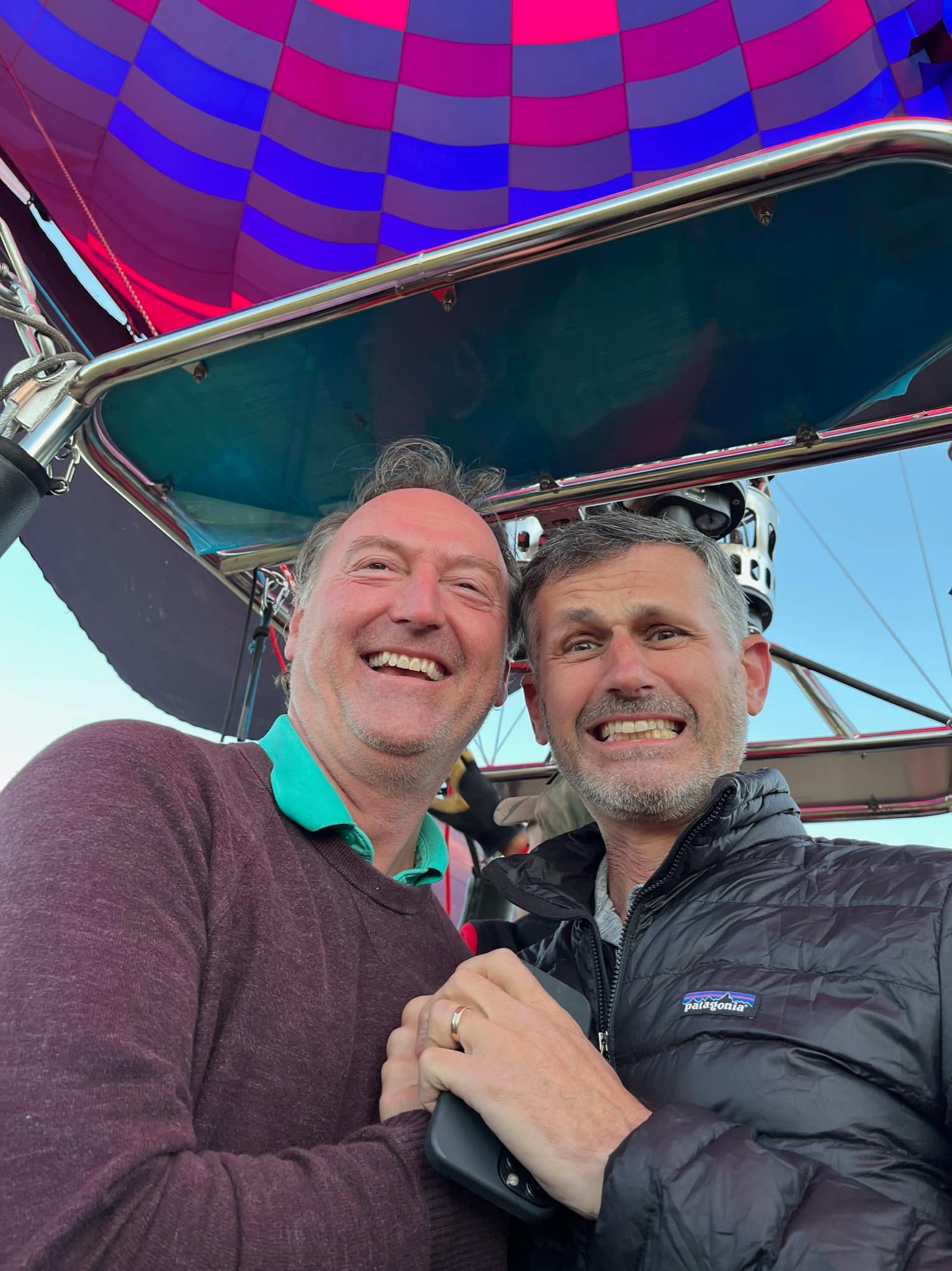
Who’s afraid of heights?
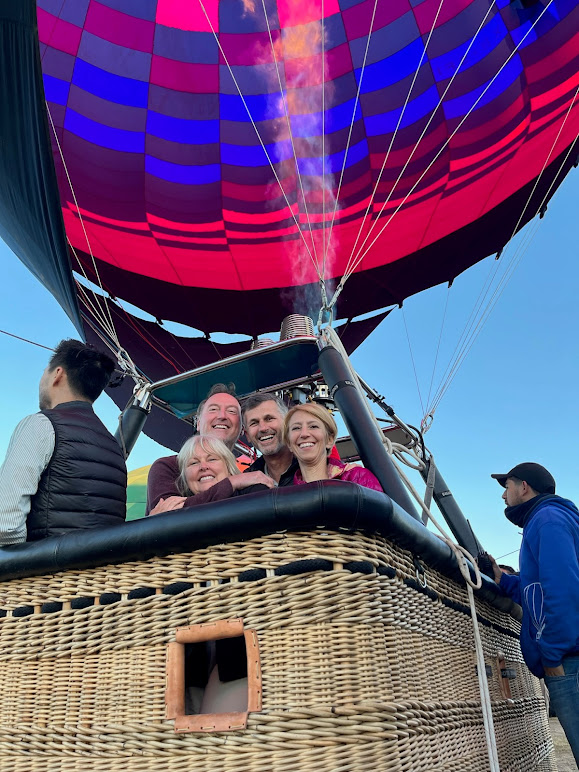
Ready for takeoff!
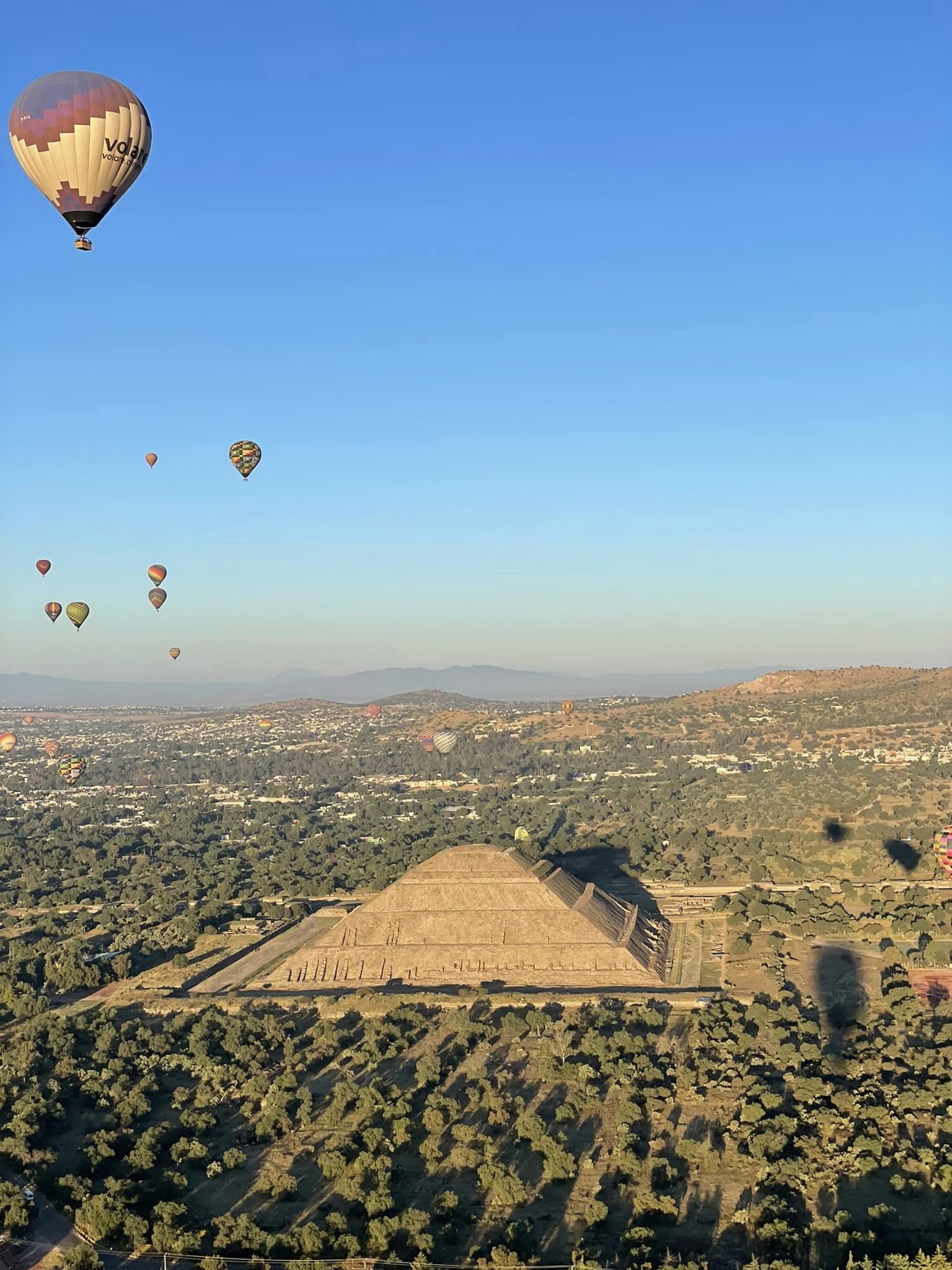
The Temple of the Sun, the 7th largest pyramid in the world and astonishingly, the size of the platform is identical to that of the main temple in Giza.
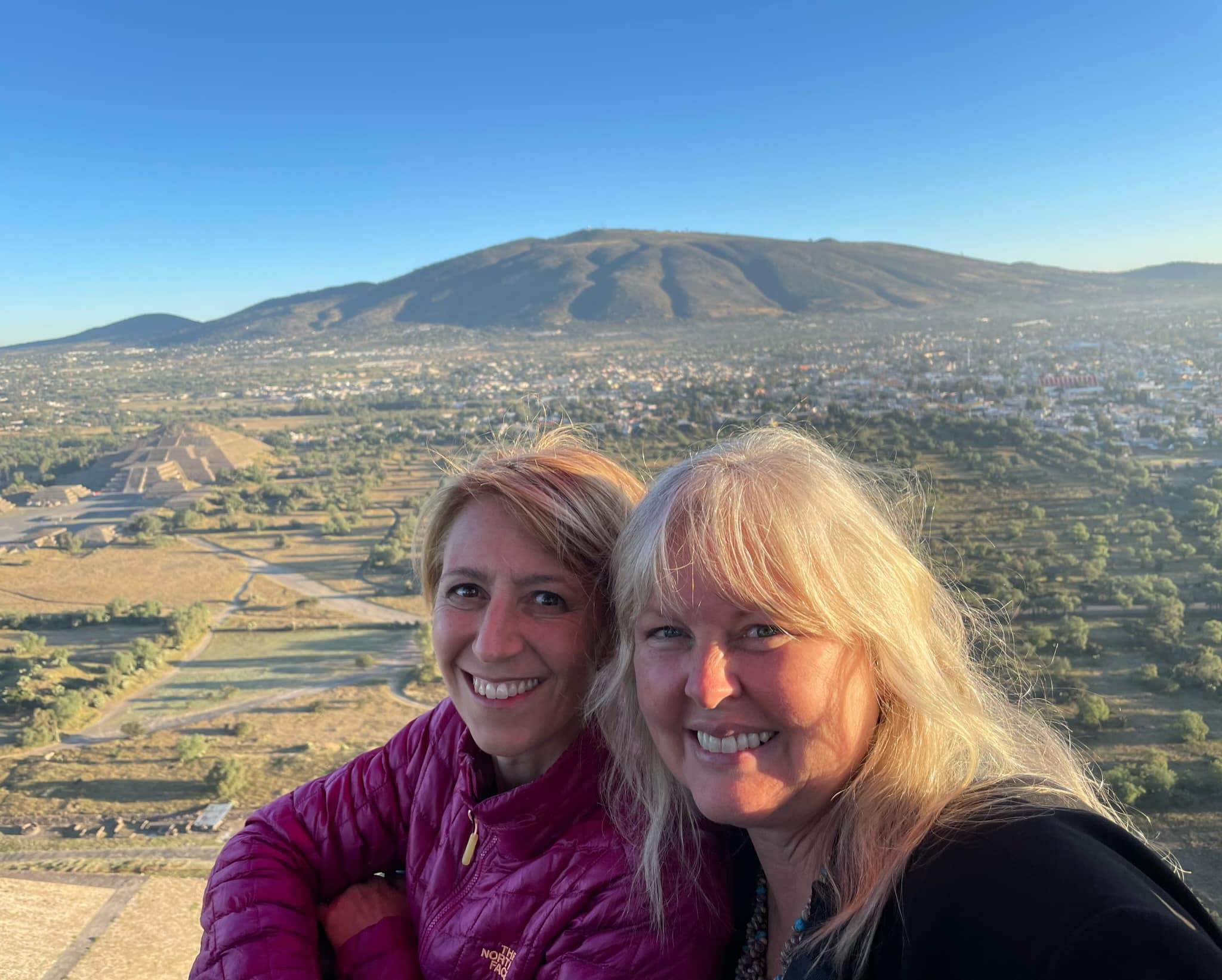
Given our magical aerial position, the ancients would have definitely considered us to be the Goddesses of the Temple of the Sun.
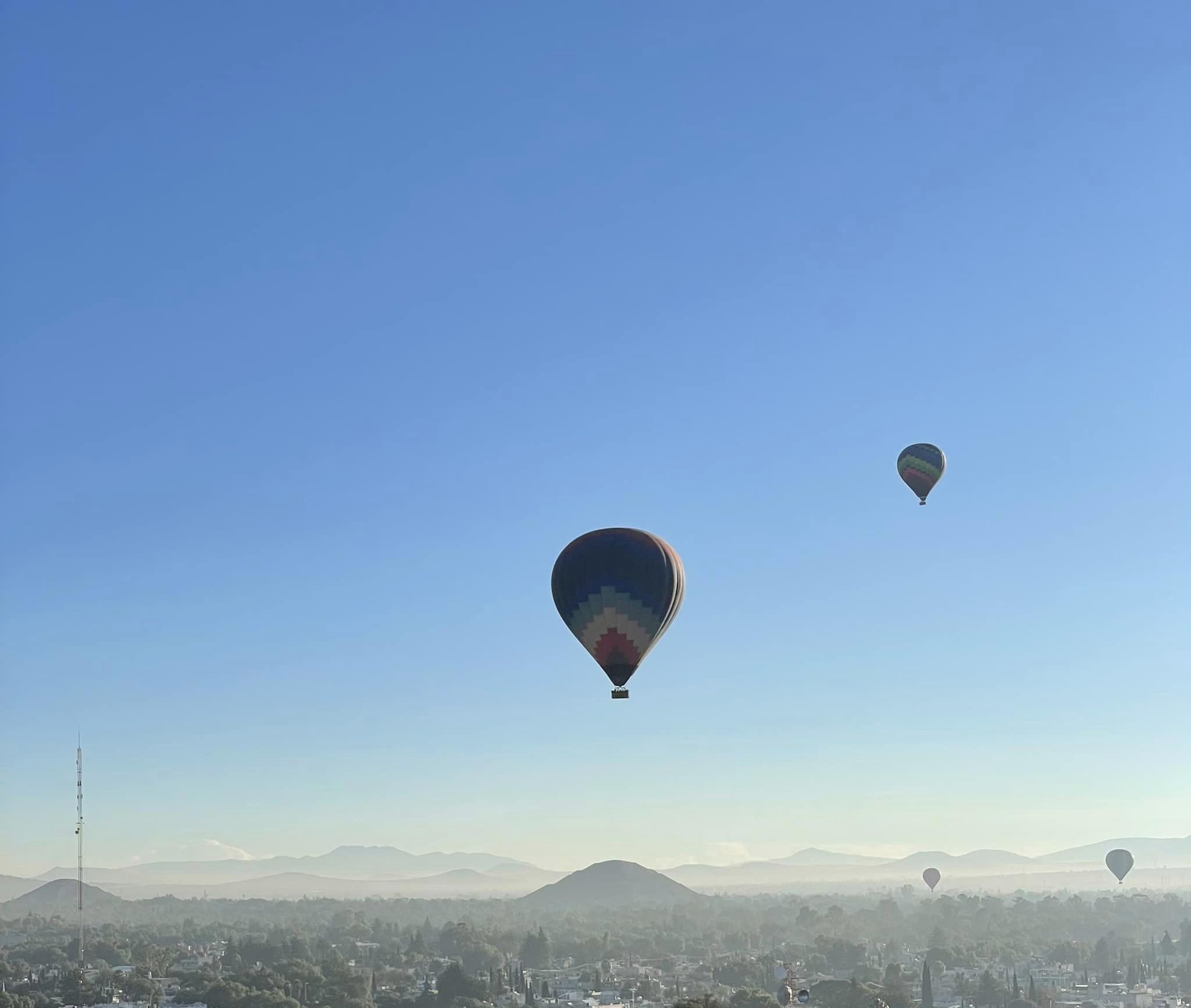
So serene.
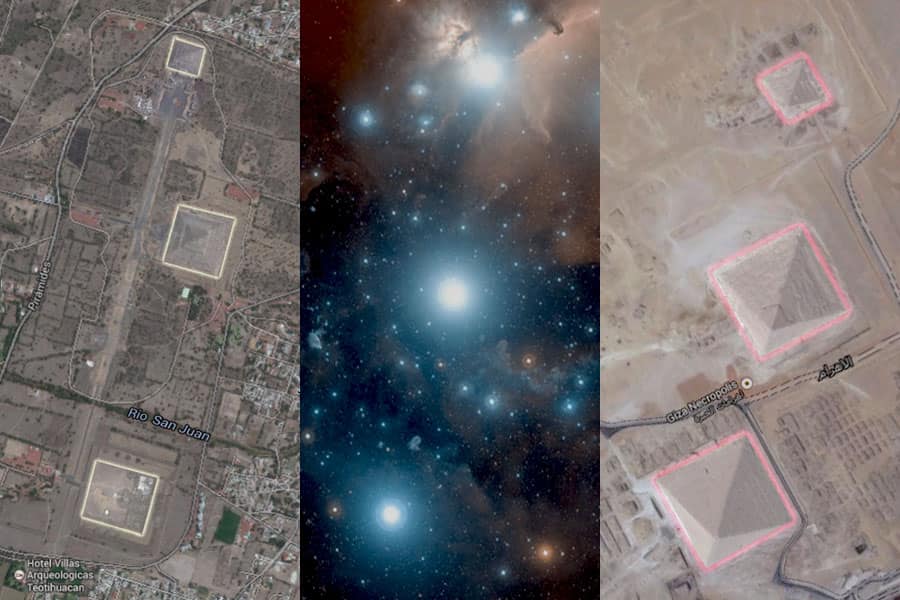
Teotihuacan on the left, Orion’s Belt in the centre and Giza on the right. See the pattern? Easy to fall into the trap of believing if you didn't know that 4,500 years ago, the constellations didn’t look quite the same as they do today. So back when the ancient Egyptians were looking at the stars for inspiration, they didn’t see what we see (and theorize about) today.
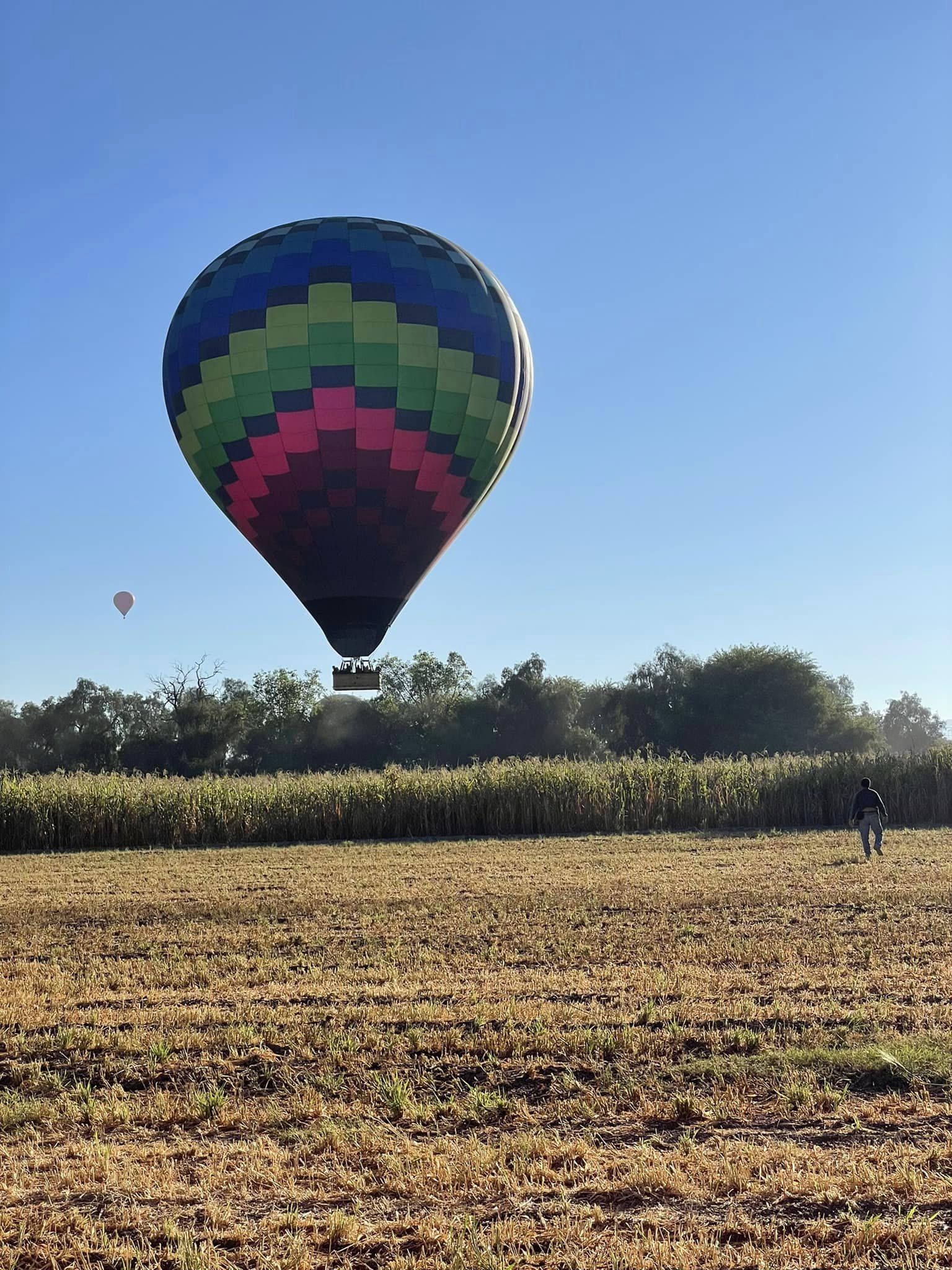
Landing in a farmer’s field…
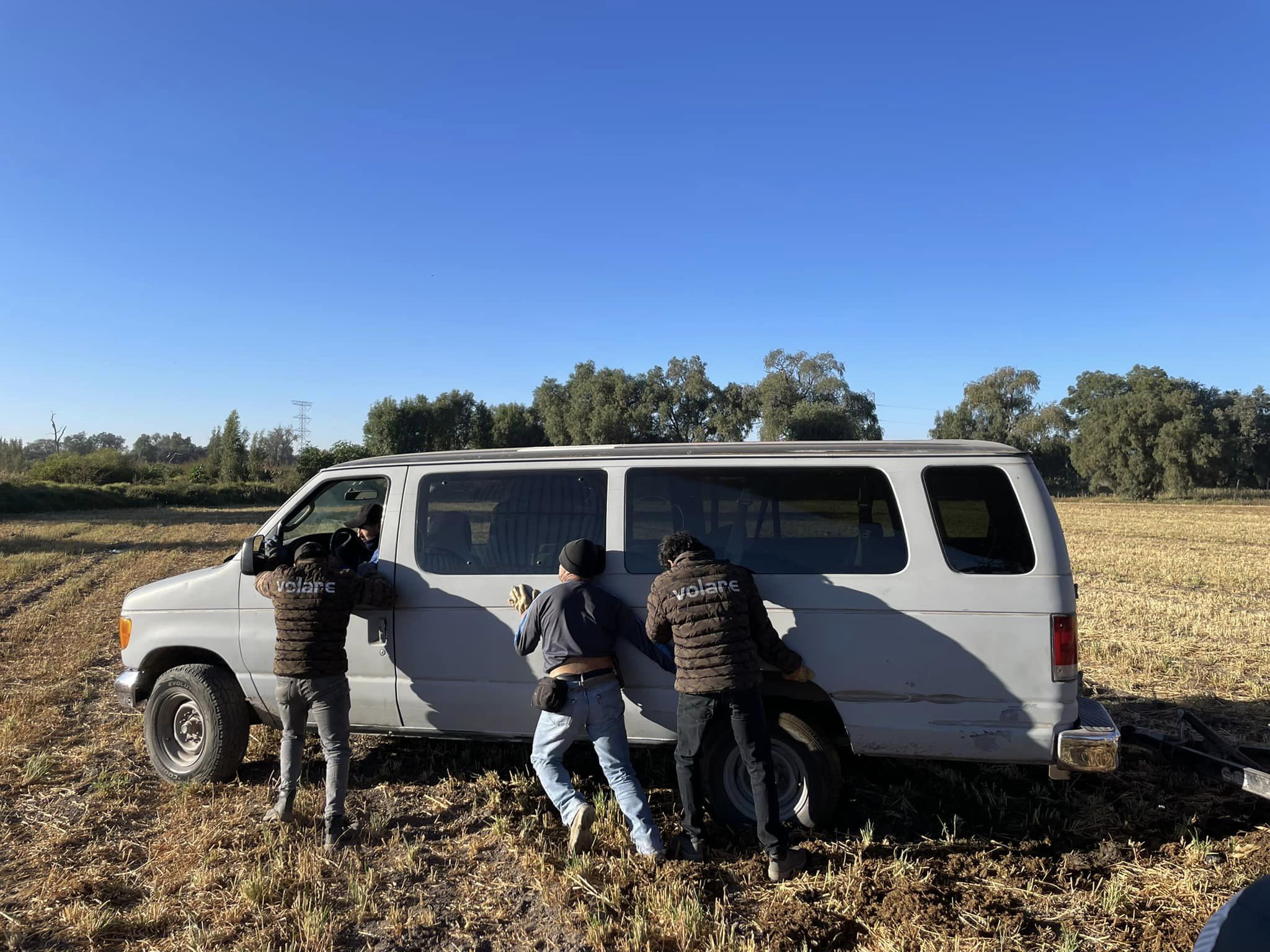
…literally in a field of cow sh*t (not so serene)!And the truck that came to get us got stuck. Sh*t happens, I guess. Thankfully nobody was pushing from behind at risk of getting sprayed by the rear tires.

More than happy to share in the tradition of champagne after a hot air balloon flight. In 1783, the Mongolfiere brothers first flight landed in a field. The villagers were so shocked by these unbelievable visitors, they prepared to attack. They believed this contraption was flown by witches. The brothers had a bottle of wine on board so to appease the villagers, they shared their wine. And so began the tradition of champagne after a flights.
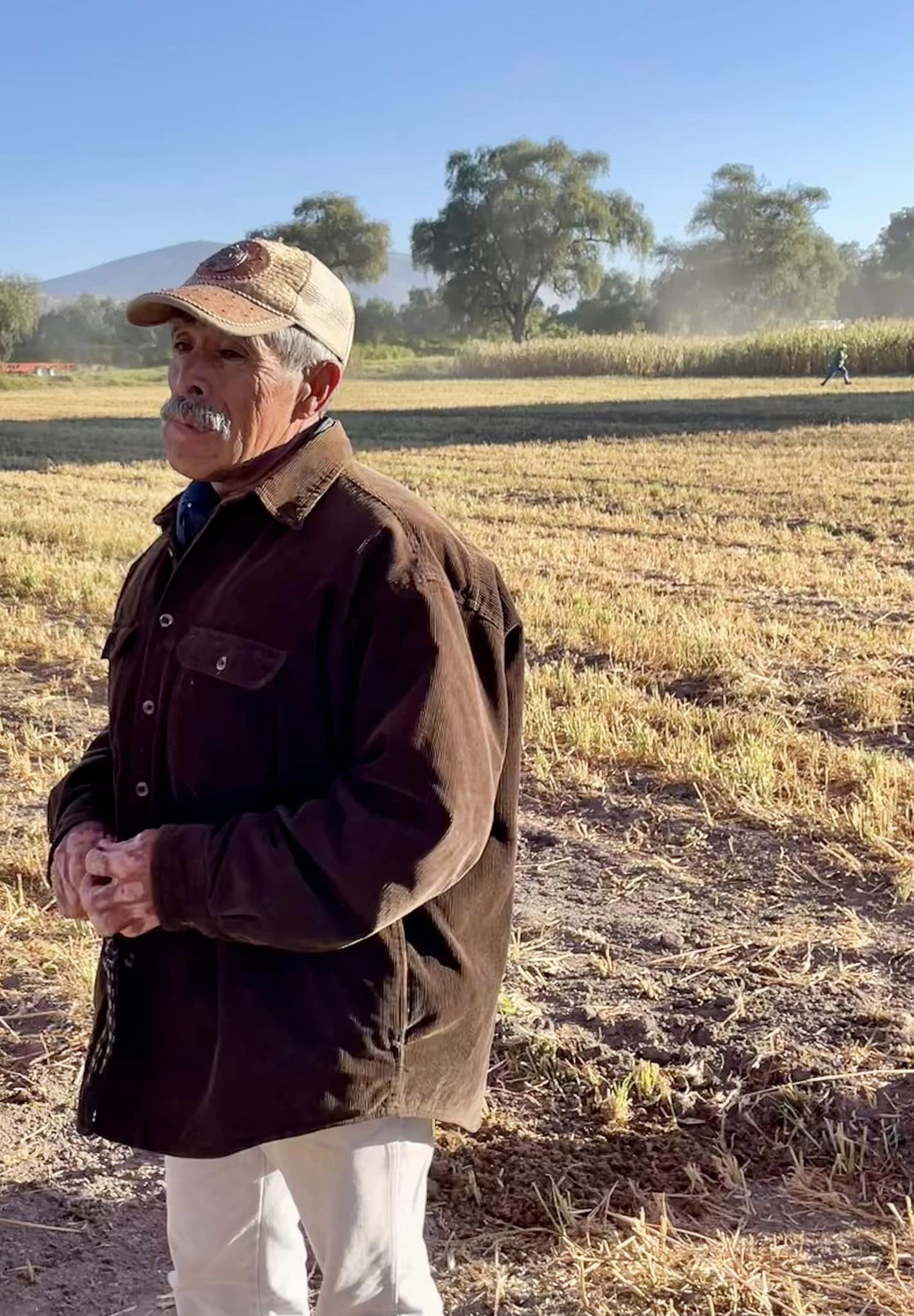
Here’s the farmer coming to collect “taxes” for landing in his field.
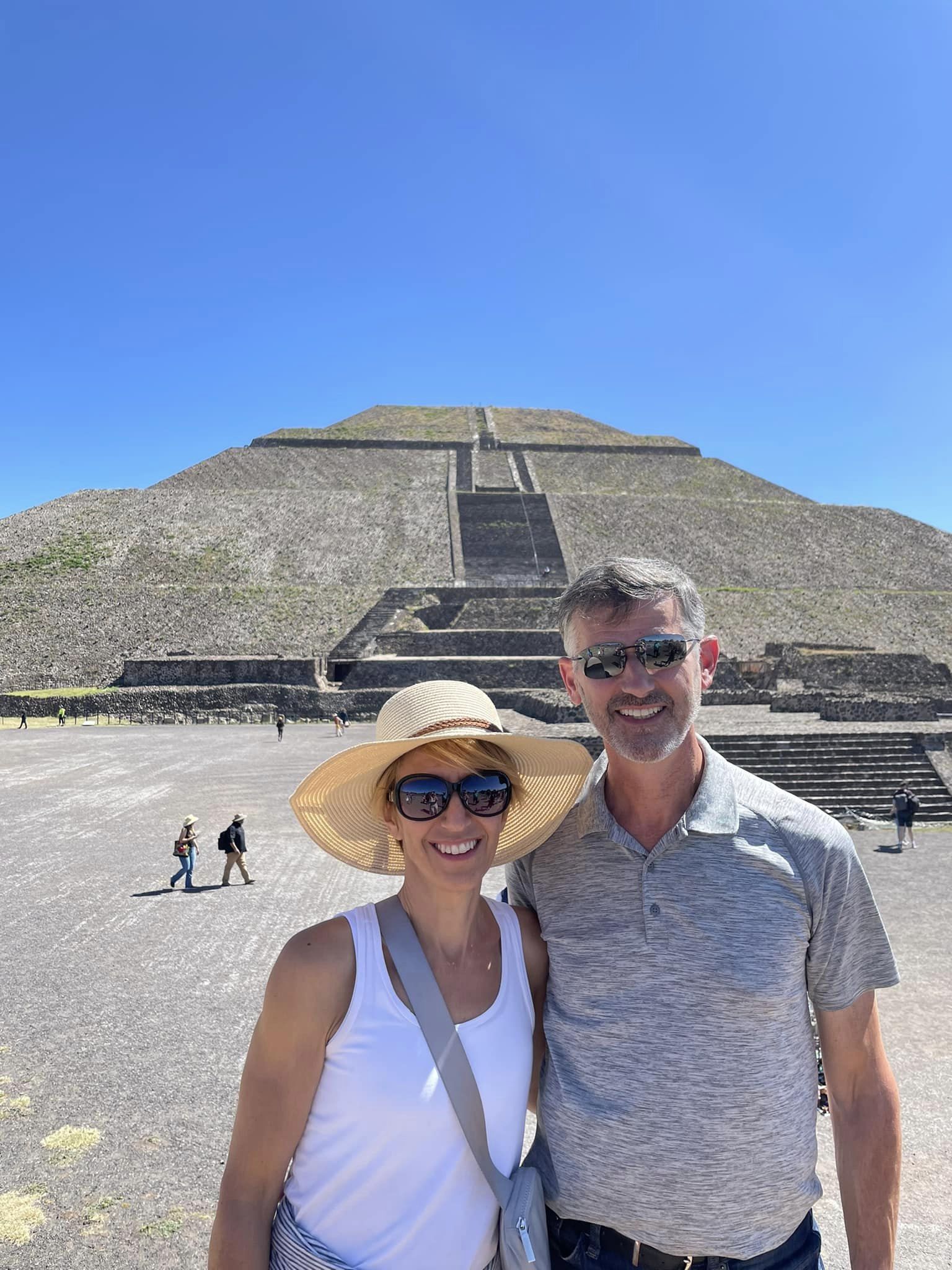
People can no longer climb the pyramids. They closed them using Covid as an excuse and now the rule has stuck for preservation purposes. Ten million people visited in 2019 and not only do the surfaces wear down with all those feet scraping along the steps, the weight of all the people slowly climbing shoulder to shoulder (crowded!) rather than spread out also causes damage.
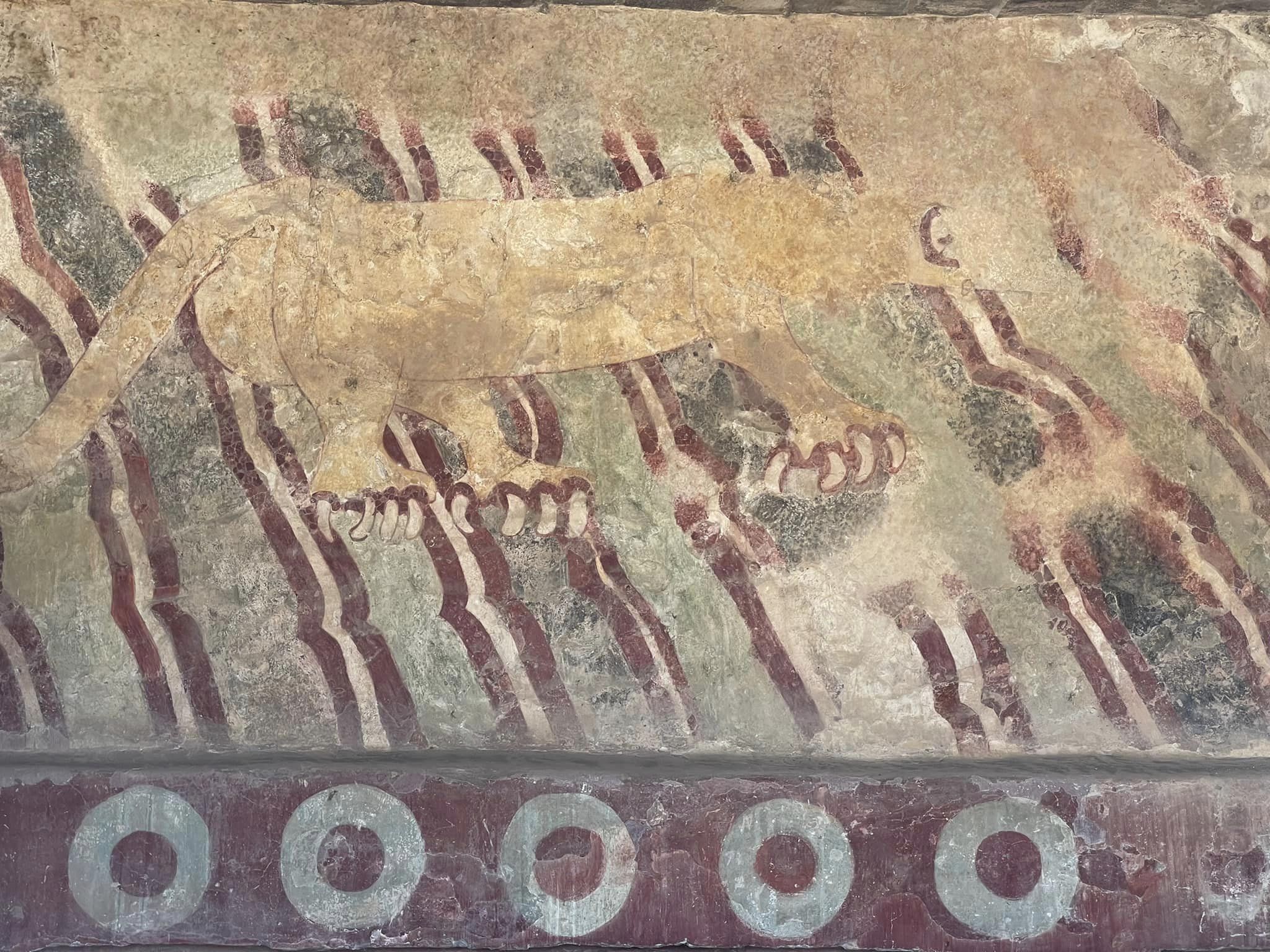
The ancient people here believed every 52 years marked a new era and ceremonies were held to stave off the end of the world. At these points, the builders of Teotihuacan added a new layer to the temples which ended up getting bigger and bigger as the eras passed. Archaeologists found hidden paintings beneath the layers. Here, a jaguar which was a being of the day and night since it had such great vision in the dark. It was a deity believed to move between two worlds.
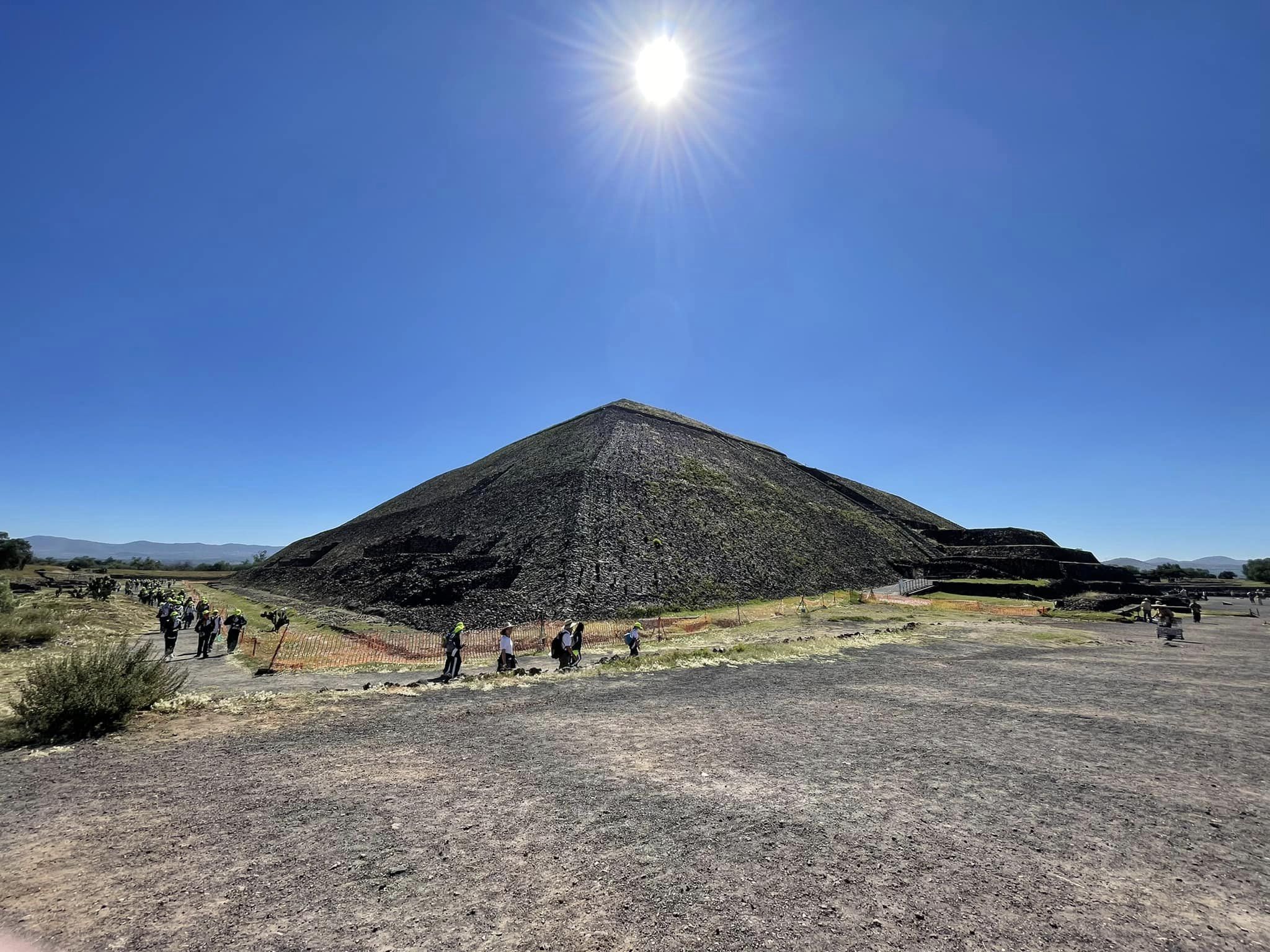
Guess how we know this is the Temple of the Sun?
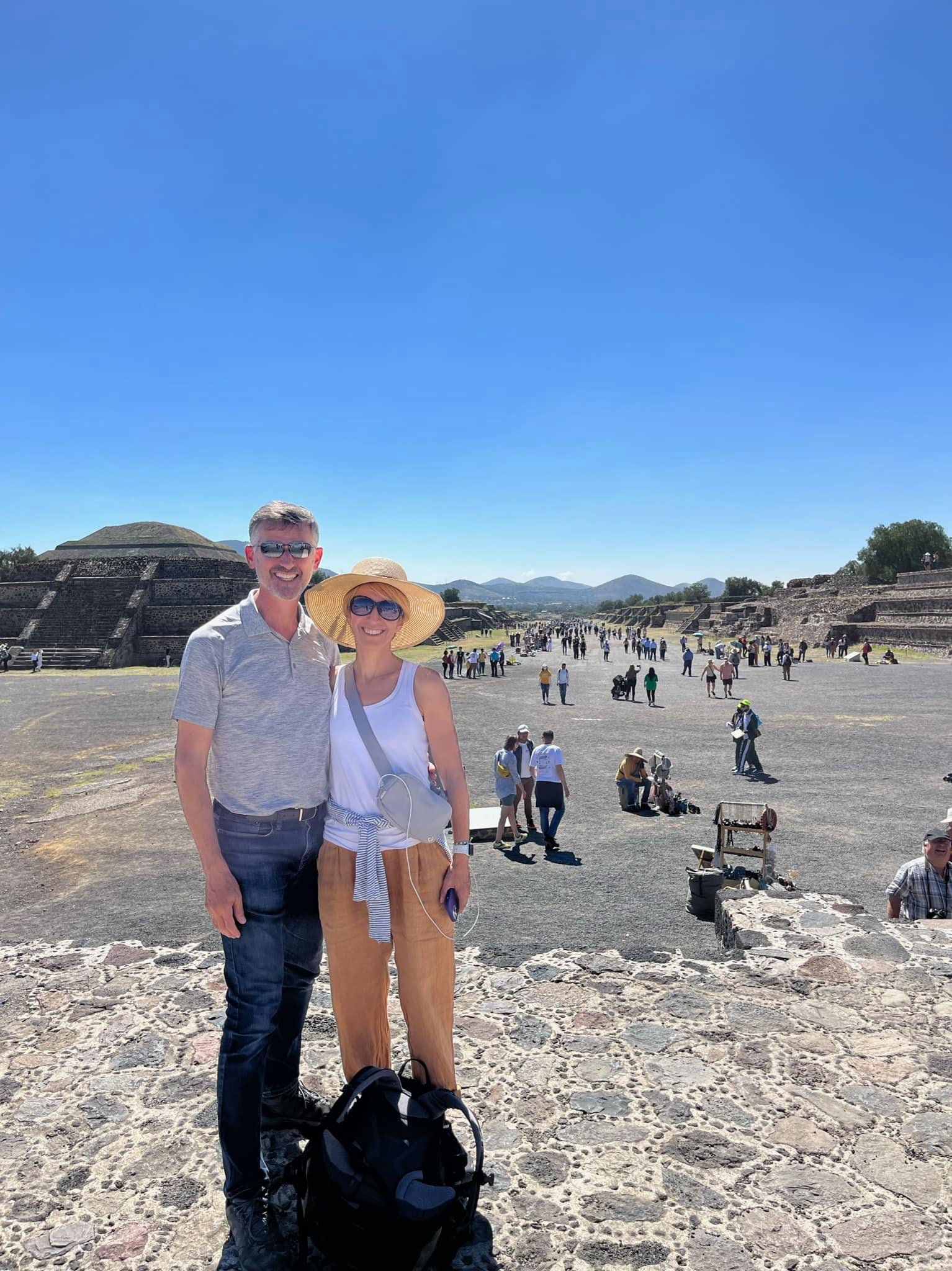
Looking down the Avenue of the Dead from the Temple of the Moon towards the five water cisterns. The road was built at a 3% grade so that when it rained, the cisterns would naturally fill up. This location was a major trade route for Meso America and became the centre of the Obsidian trade. Teotihuacan controlled two obsidian mines and cornered the market, leading to their position as one of the most powerful cities of the world at that time.
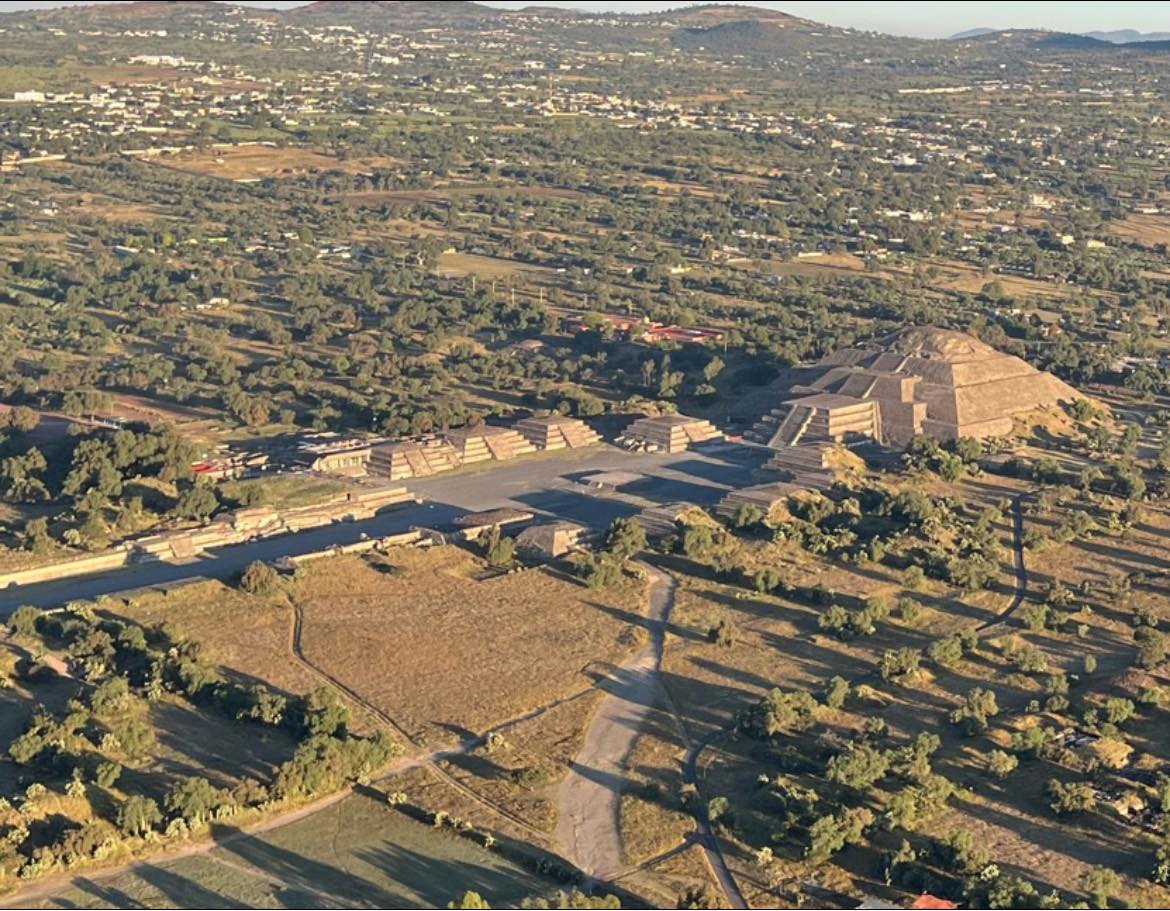
The once bustling city of Teotihuacan remains a mystery to this day. Nobody actually knows who built it, and how and why it disappeared without a trace. The city was built 1000 years before the Aztecs showed up in the area and named it Teotihuacan (meaning the City of Gods). The archeologists have also discovered that many peoples including the Maya, Mixtec, and Zapotec lived here. Was it a multi ethnic society where everyone coexisted happily until…? Maybe someone said something that offended someone else and then it became us vs. them? Were there struggles between the elite and the working class that led to an uprising and civil war. Whatever started it, it culminated in full on looting and the burning of the city. And that was that. Here we are today exploring ruins and trying to figure out who, what and why.
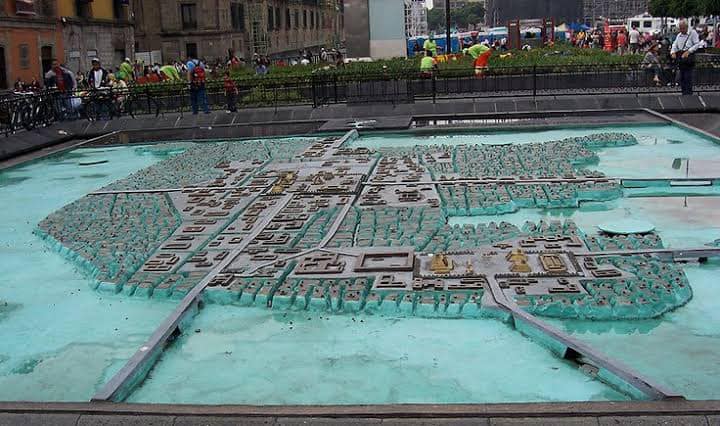
The Aztecs were said to be guided by their primary god Huitzilopochtli, depicted as a hummingbird. They followed Huitzilopochtil across the land (perhaps after they left Teotihuacan) until they reached an island in Lake Texcoco where they saw an eagle holding a rattlesnake in its beak, perched on a nopal cactus. This vision fulfilled a prophecy telling them that they should build their new home on that spot, the city of Tenochtitlàn. Through amazing engineering and architecture, they built what is now Mexico City on the island in the middle of the lake. They sunk platforms to the bottom of the lake and built their temples and city on top, extending the surface area well beyond the island. The city was accessible only by four aqueducts/bridges. While some strategically built their cities on top of hills as protection from invaders, the Aztecs (known as the Mexica) parked themselves in the middle of a lake making it virtually impossible to conquer. Very clever…until the Spanish conquistador Hernan Cortés rolled into town in 1519. Moctezuma, the Aztec king at the time believed that Cortés was Quetzalcóatl, the feathered serpent god and one of the most powerful gods until the collapse of Tenochtitlàn in 1521. Montezuma welcomed Cortés with open arms, making it easy for the Spanish to overthrow the Aztec empire. A classic snake in the grass story…
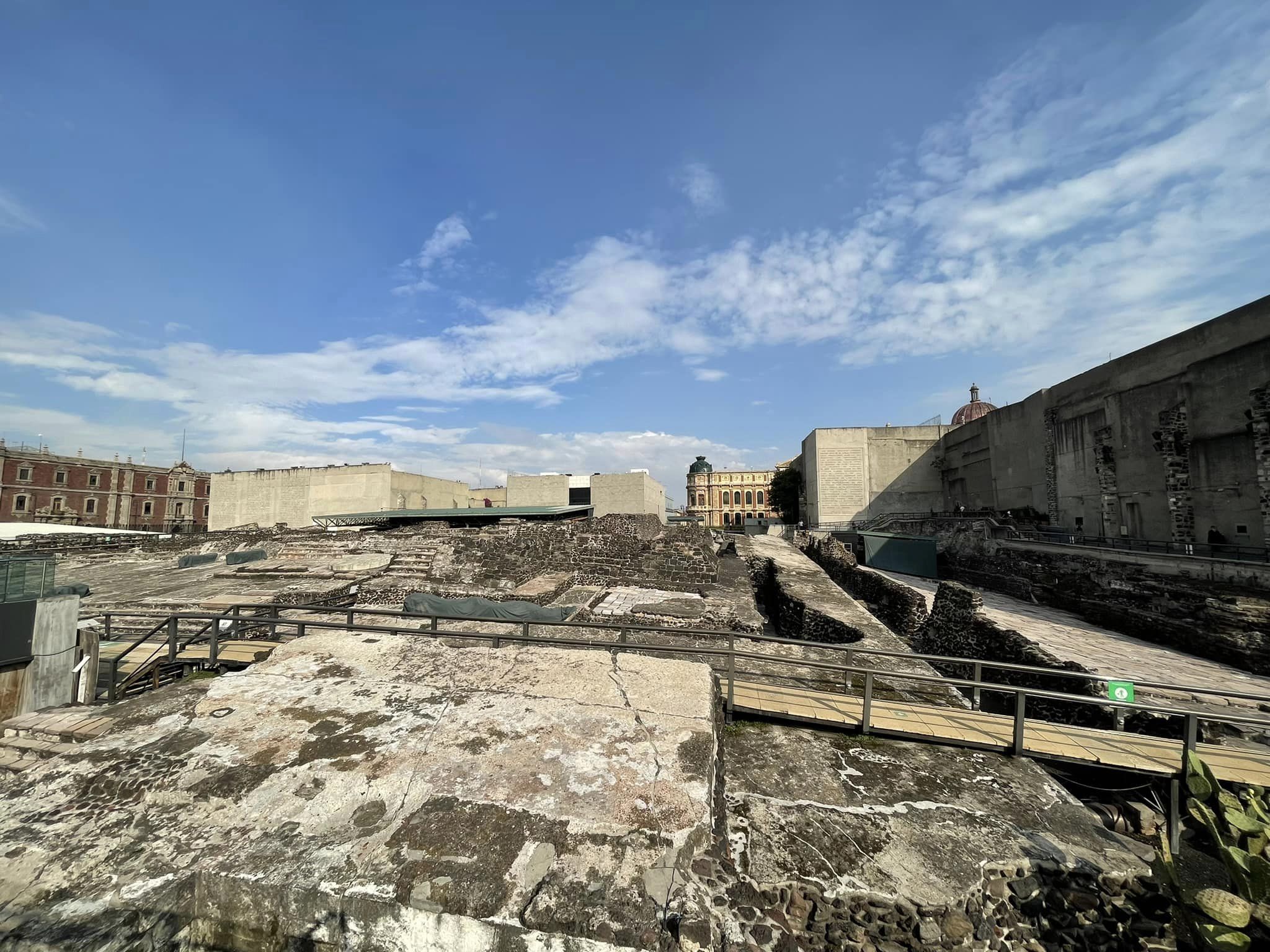
The Spanish conquistadors didn’t have the engineering expertise of the Aztecs and drained Lake Texcoco. As a result, parts of Mexico City are sinking. It is believed to have sunk 10m over the course of the 20th century. In 1978, electrical workers were digging near the Zocaló (main square) in the historic centre of Mexico City and hit something hard. Thankfully they were using shovels and not a digger as they hit carved stone disk that showed a dismembered and decapitated woman. It was the ancient symbol of the moon, the Coyolxauhqui Stone. Archaeologists started excavating and found the ruins of the Aztec Templo Mayor. The Spanish had torn down the top of the temple and built their own building on top of what remained at ground level. Remember how the Aztecs built the temple? They sunk a platform and built the temple on top, the weight of which kept the platform anchored to the bottom of the lake. When the Spanish tore down the Temple and built on top, the platform at the bottom of the lake lost its anchor and in time the centre of it rose up. Today, you can see how the original platform (right side and front of this picture) is angled.
More Food Adventures
Seriously, this is food paradise. It just gets better and better…
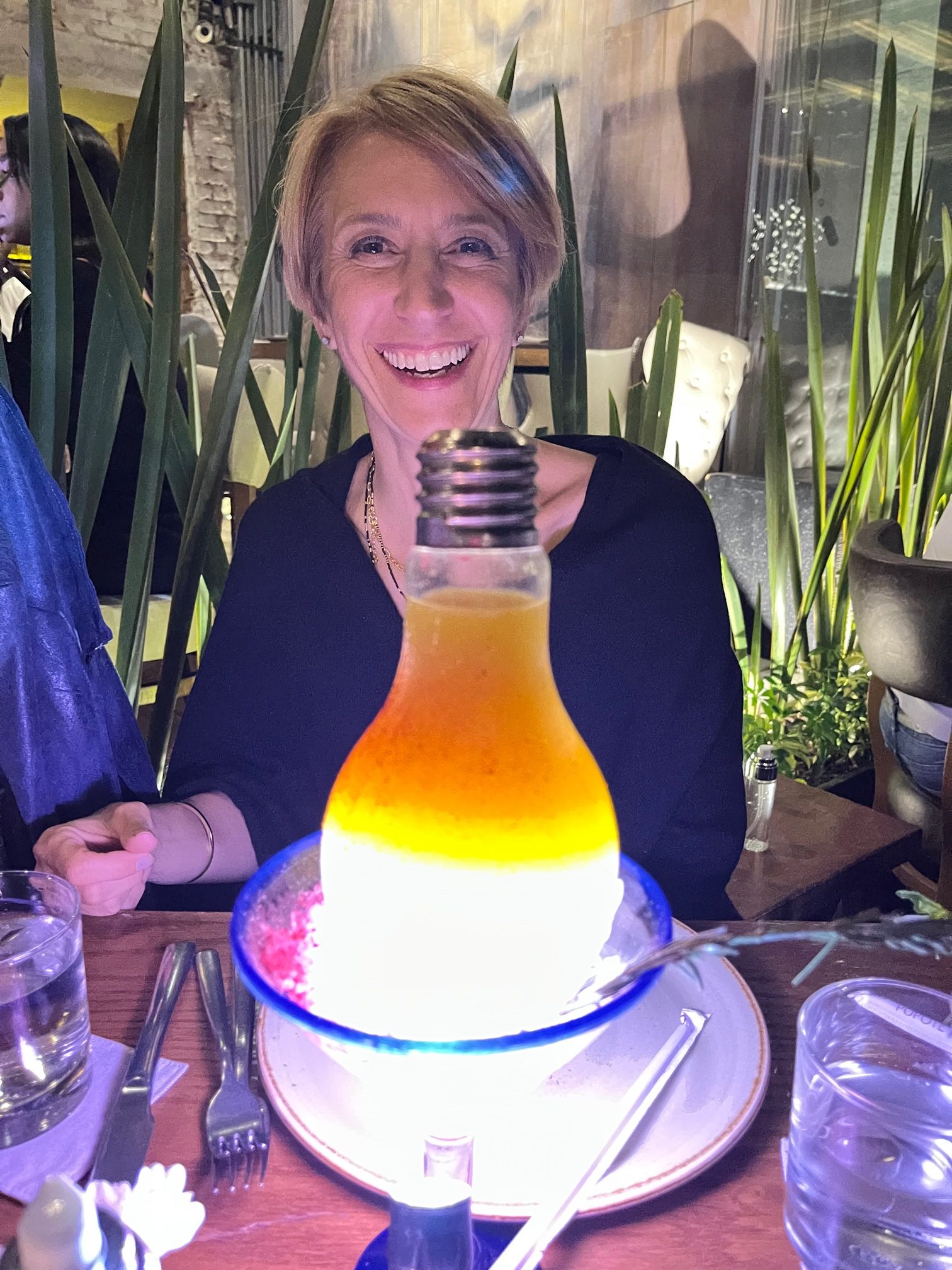
Fancy passion fruit cocktail in a lightbulb. Not so clever in application: I had to stand to drink it with the straw! Yes, it was a biodegradable straw.
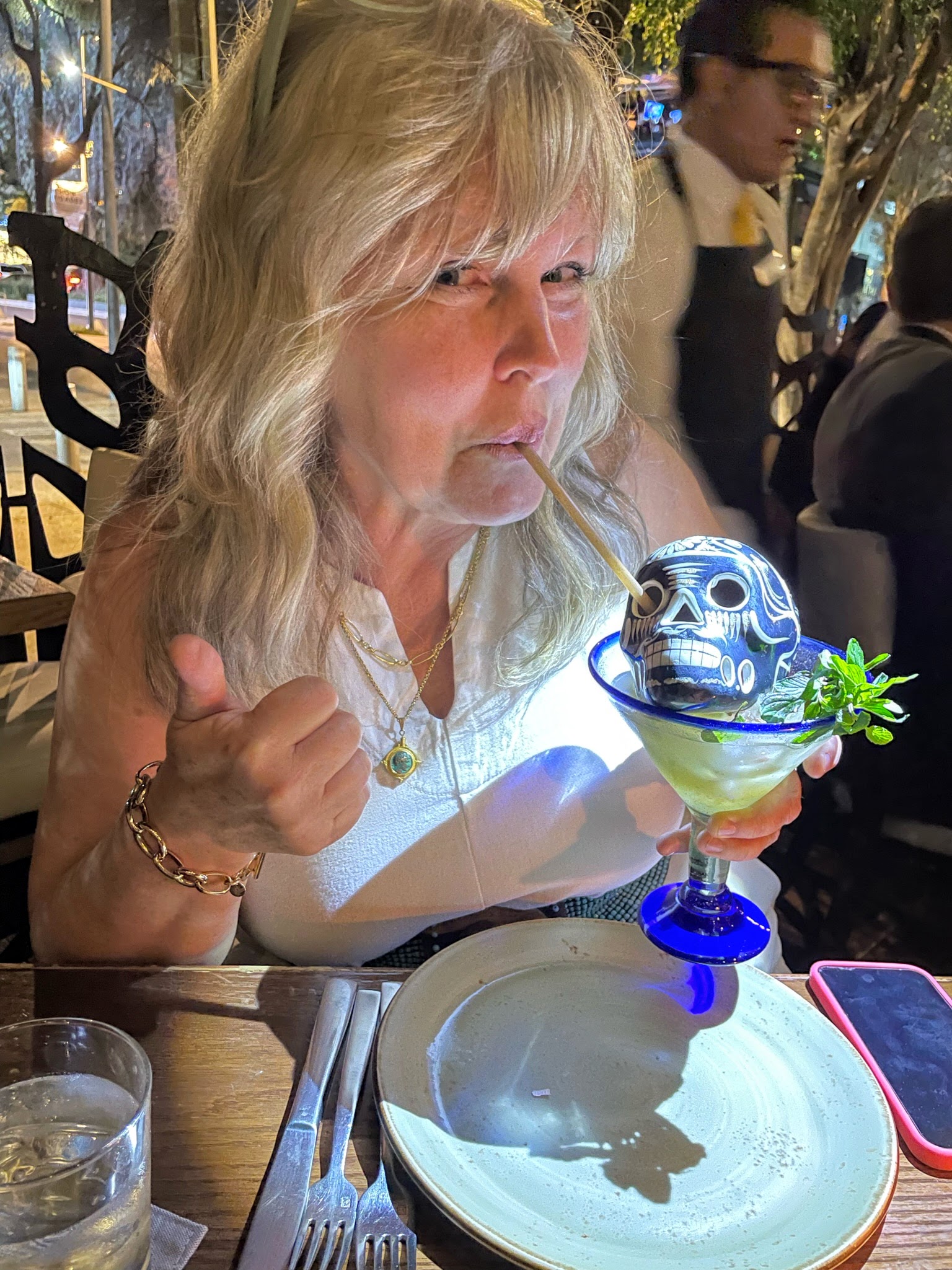
Poke my eye out with a straw!
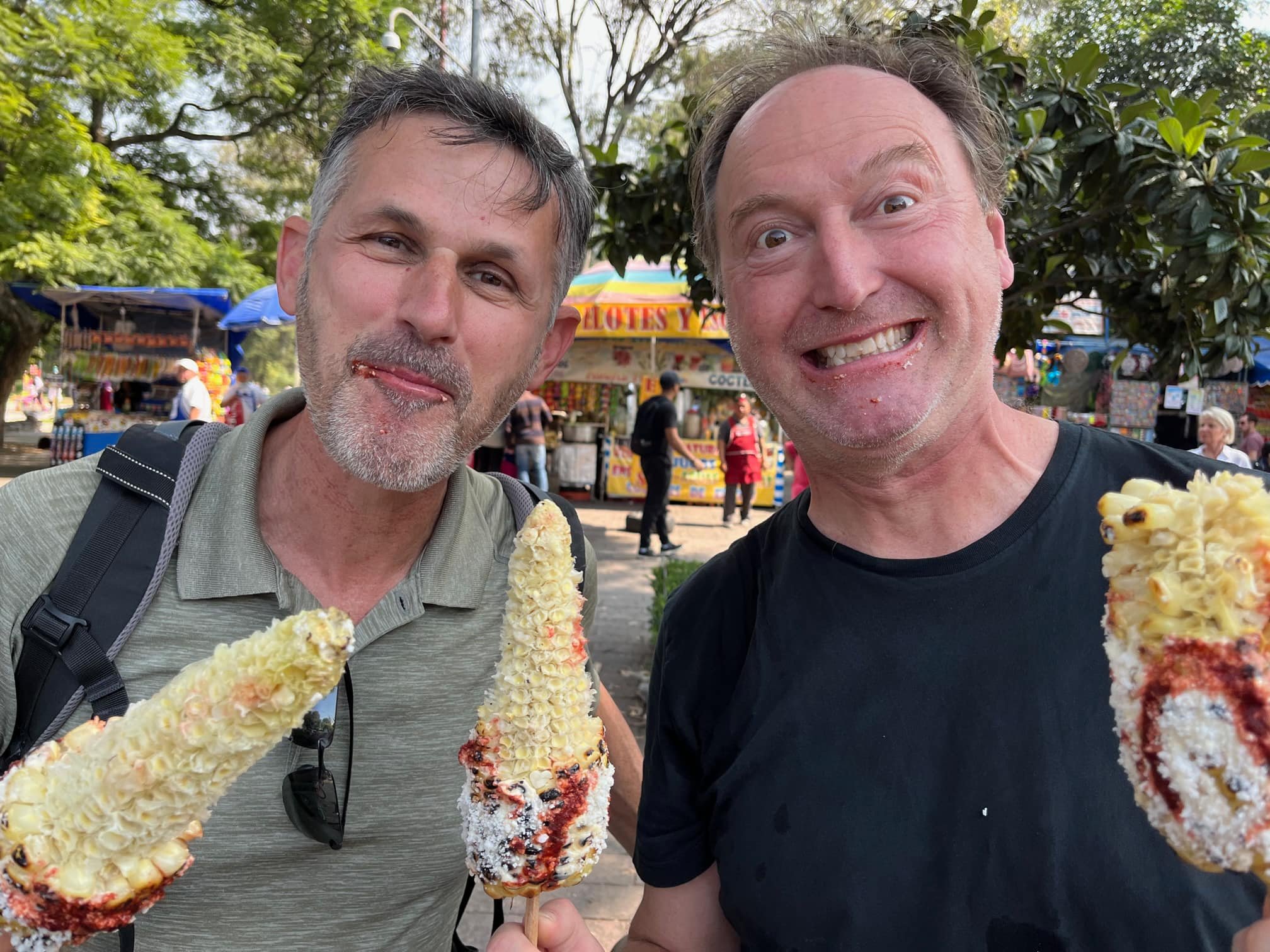
The corn (elote) is amazing...grilled on the cob and then coated with a sauce made up of mayonnaise, sour cream, cotija cheese, Chile powder and lime...with a little extra hot sauce for good measure.
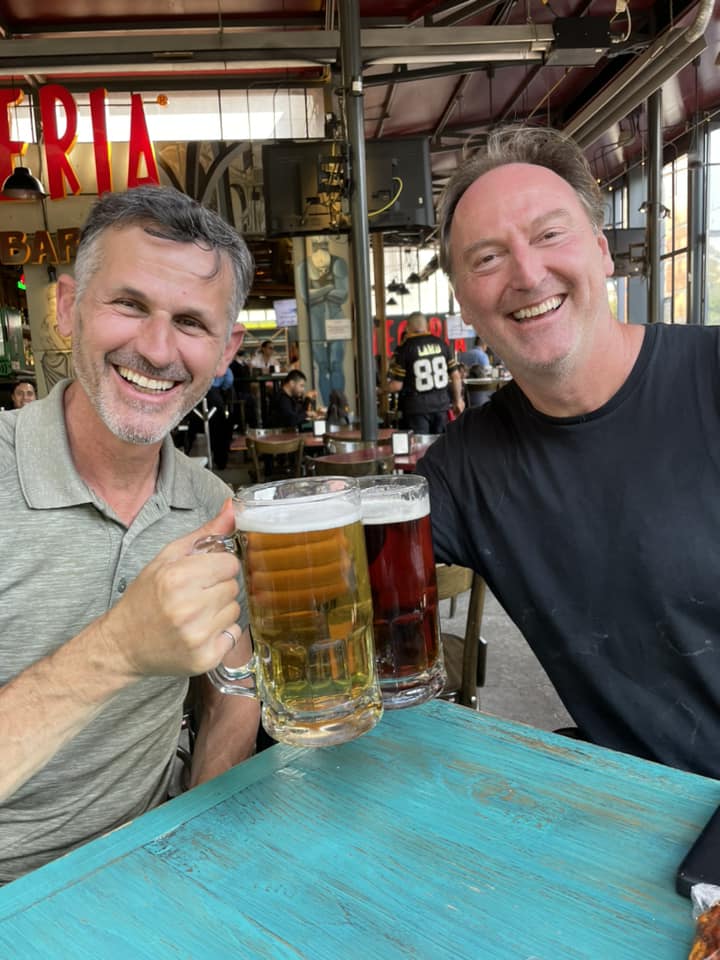
A great way to rinse the corn off the teeth!
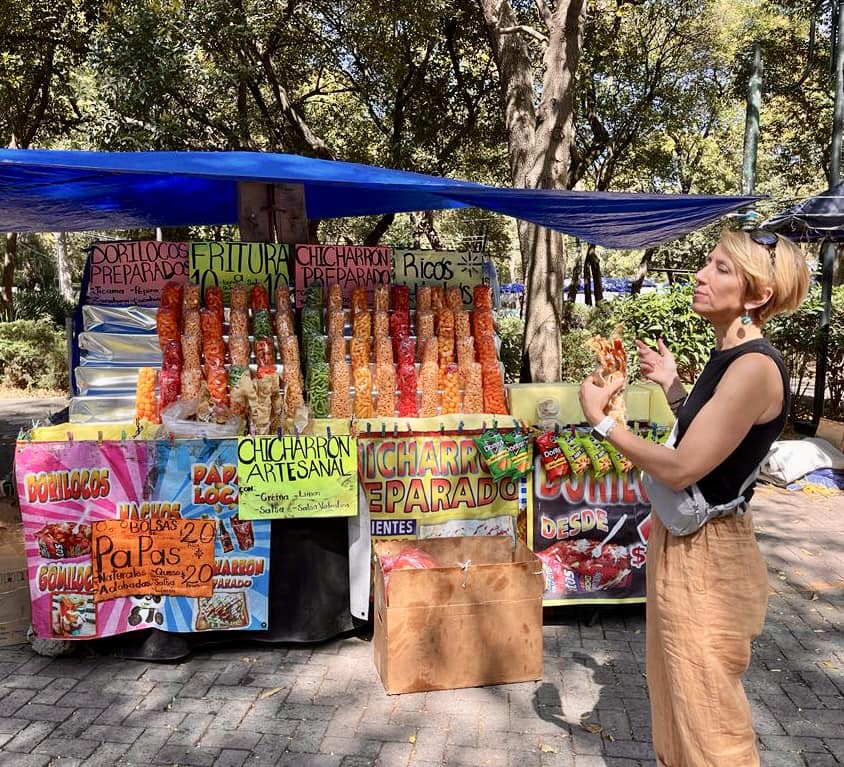
Oops, I did it again…chicharrón, this time with fresh lime and salsa!
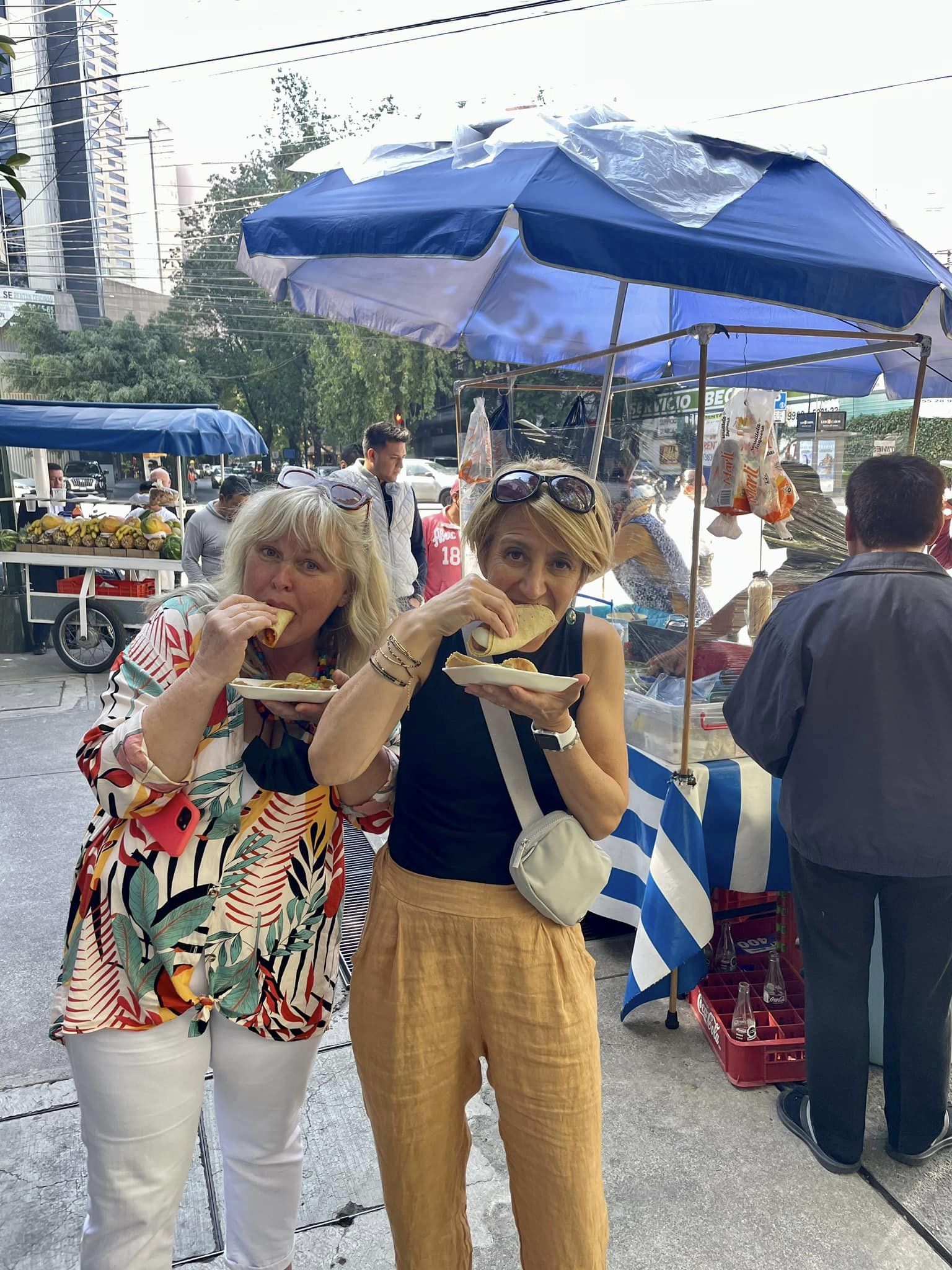
More amazing street food in CDMX.
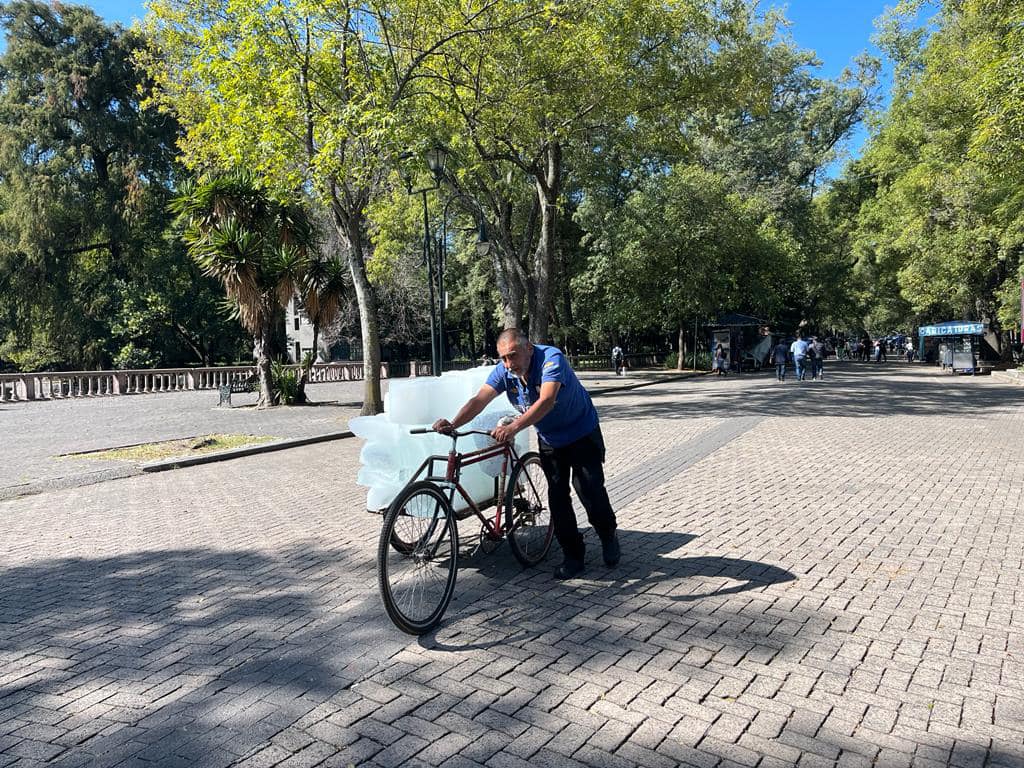
Hope that ice is safe…
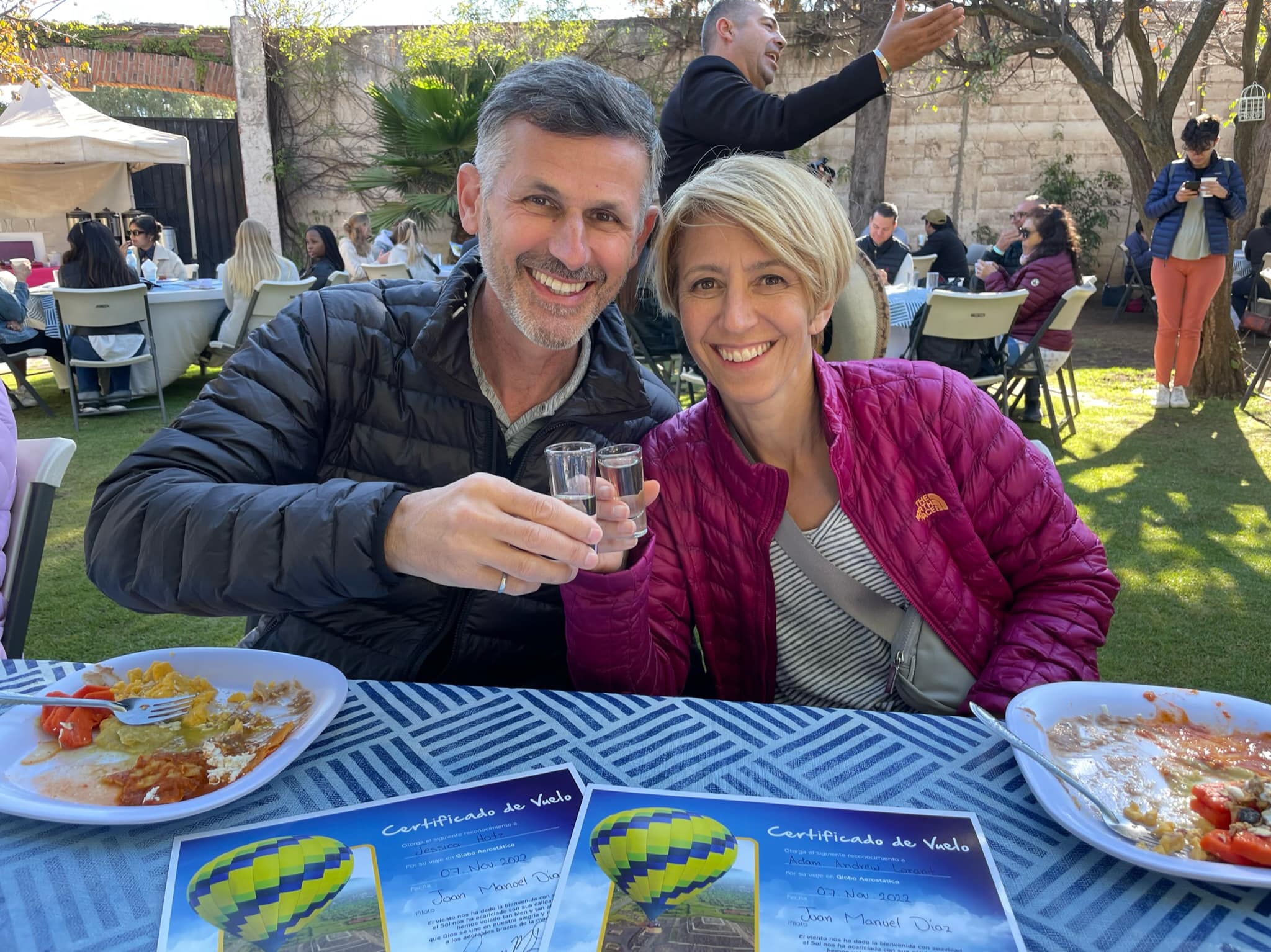
Tequila with post hot air balloon breakfast…what? It was 9:10am. Respectable time in Mexico, I think.
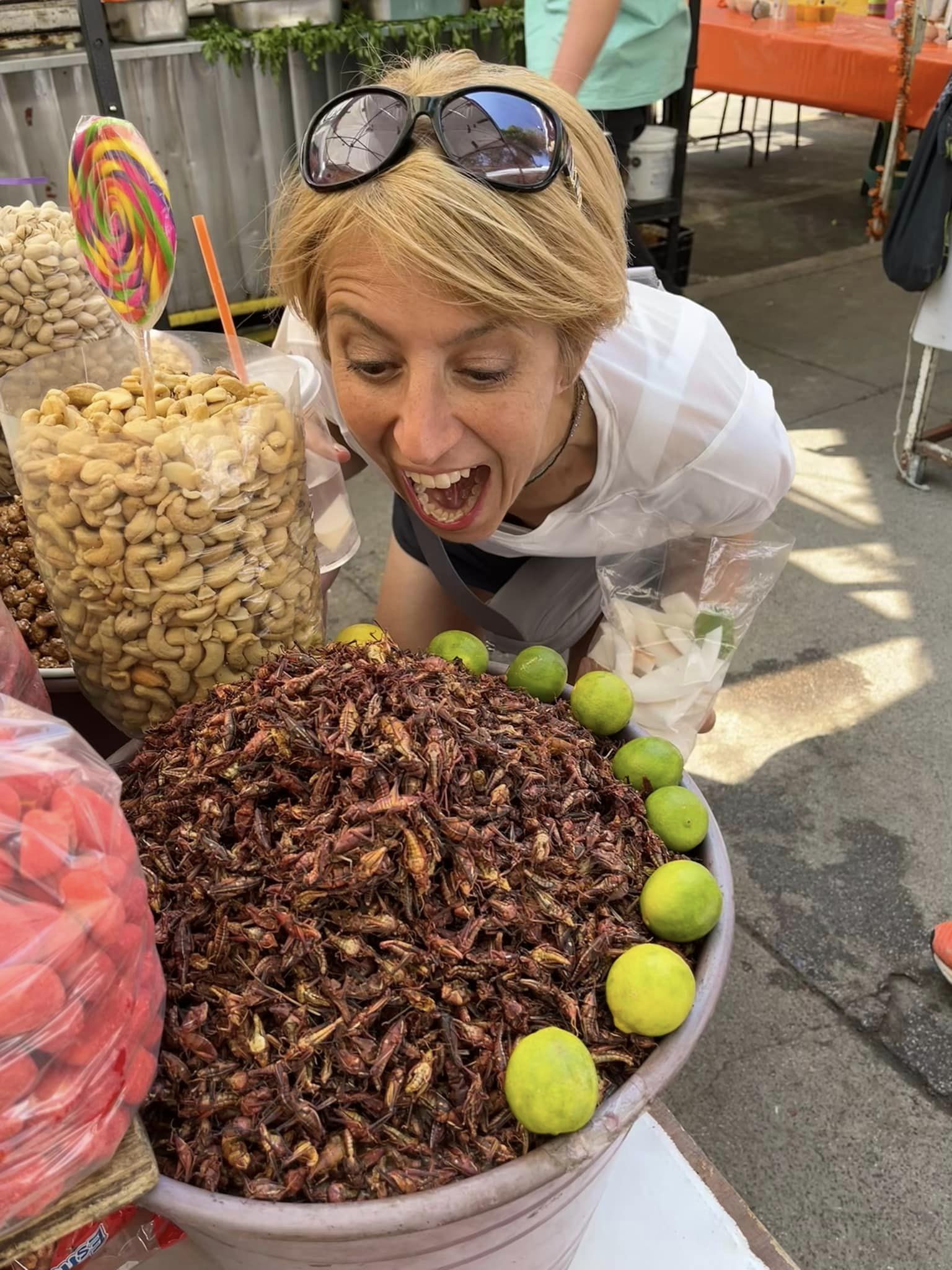
Enough chapulin for everyone!