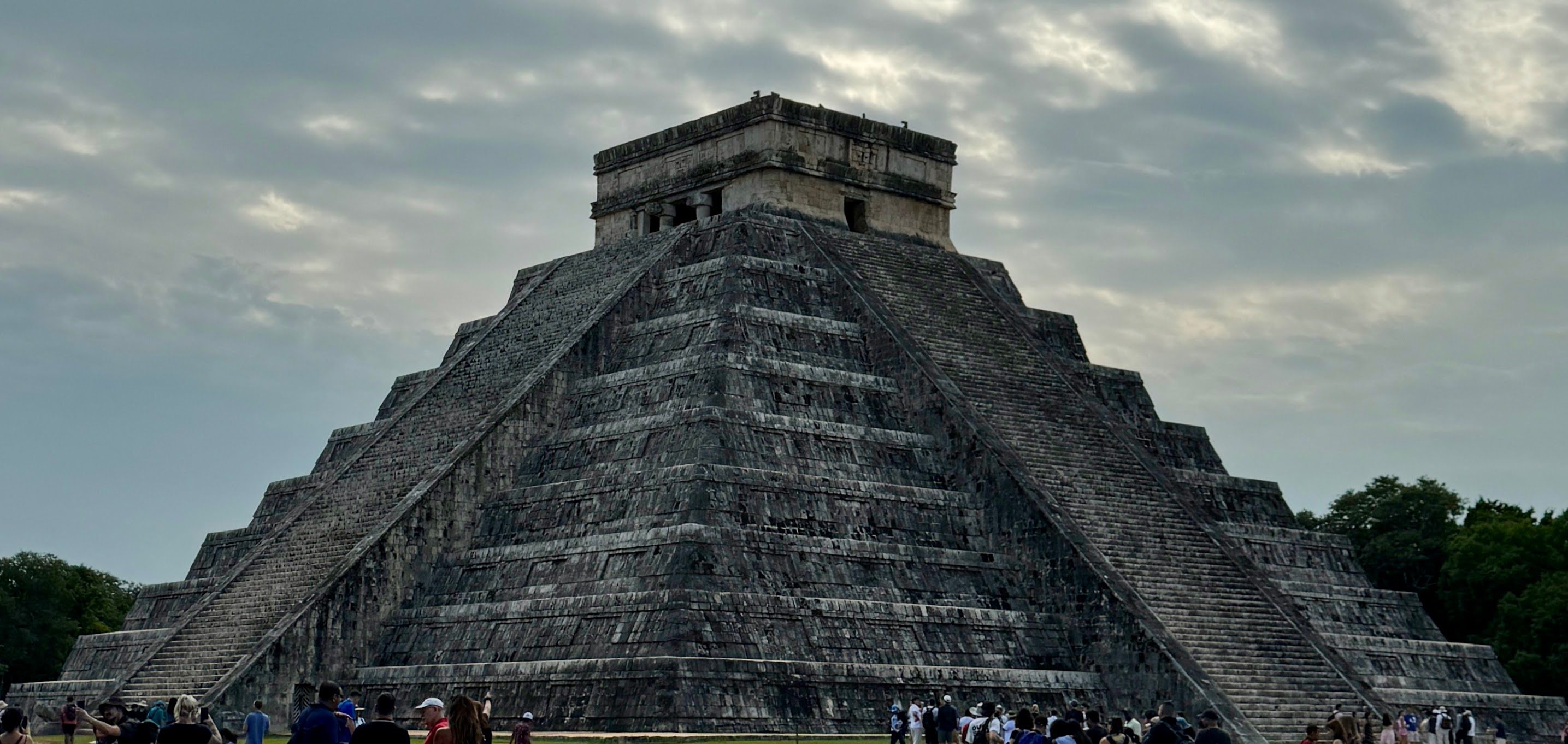
Remarkable Ruins
Chichen Itza is one of the seven new wonders of the world and is one of the most visited archaeological site in Mexico. Sound like a tourist trap? Pretty much, but the trappings are pretty spectacular. In its pre-Columbian-times heyday, 70,000 people lived in this bustling political, commercial and religious power city, surrounding some pretty remarkable temples and pyramids.
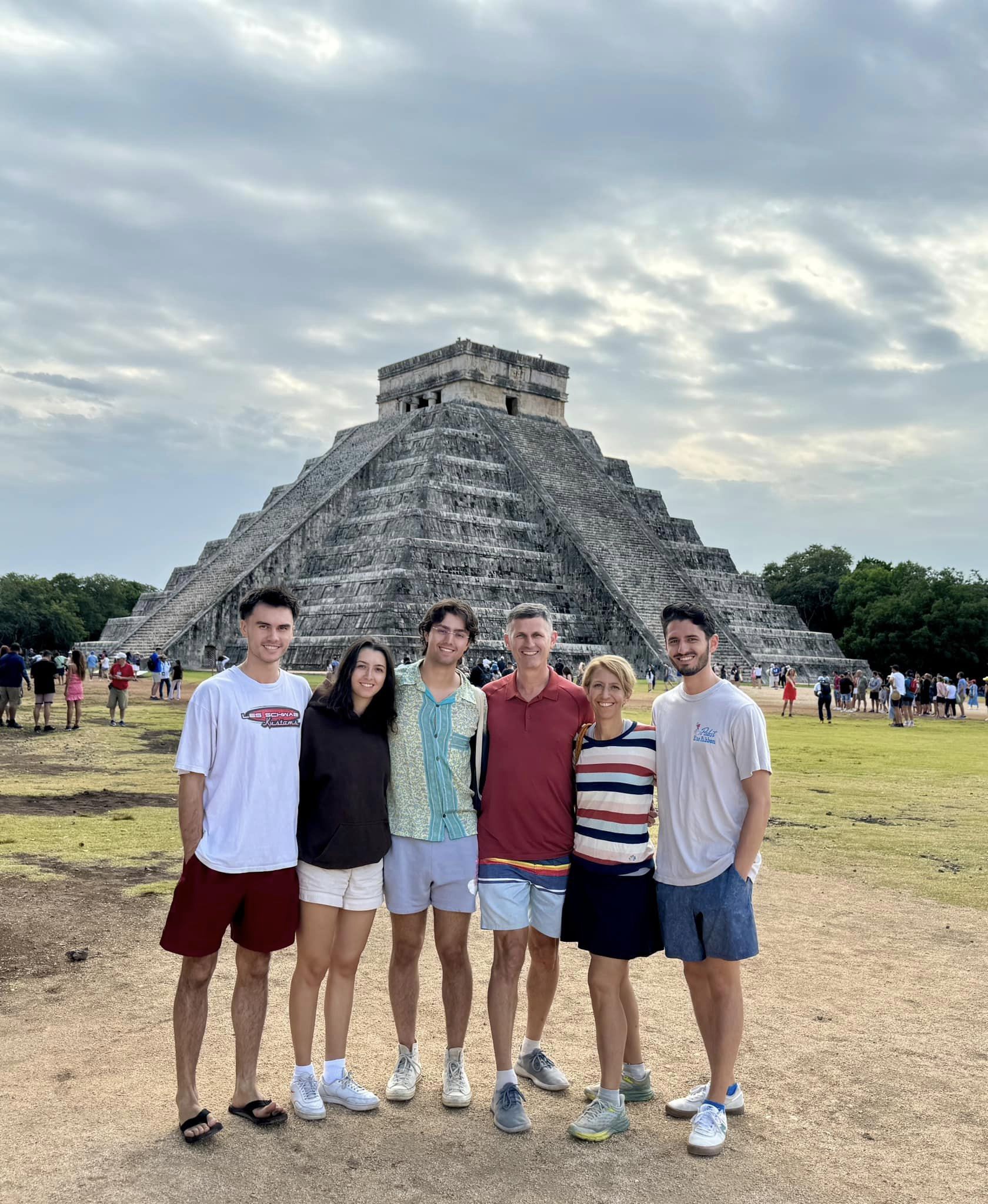
The iconic Temple of Kukulcán, also known as El Castillo by the Spanish conquistadors, or by its formal archaeological name, Chichen Itza Structure 5B18 (those archaeologists can be so creative). There’s a bunch of real life magic in this pyramid. The mathematicians, astronomers, and architects made a great team here. They built this temple in honour of their chief deity, Kukulcán, the feathered serpent, the creator god, and the god of rain, wind, storms, and life. Watching the skies, they figured out a year was 365 days (and even realized that there was an additional six hours to each year, hence our leap year). This temple was built with 91 stairs on each of the four sides and one additional step into the temple at the top. Total = 365. What we see here is the third temple nested on top of two previous ones. Every 52 years, the 365 day solar cycle would line up with the Mayan 260 named day cycle (some say the 260 days corresponded to the length of pregnancy). Imagine two wheels, one with 365 cogs and the other with 260. Every 52 years, the starting cogs would line up and that would begin another cycle. Using an existing temple or pyramid as a foundation, they would build a new one on top making improvements based on the knowledge gained over the 52 years that had passed. This Temple of Kukulcán has two temple inside it and this temple 3.0 has some amazing new features.
The ancient Maya were masters of echo. The most sophisticated calculation here is in the precise design of the steps and platforms. If you stand in a particular spot in the large plaza in front of the pyramid and clap your hands, you’ll hear an echo that sounds just like the sacred Quetzal bird. It is a small, colourful bird with one metre long tail feathers. When it flies it looks like a snake (remember the chief deity is a snake). The special feathers were made into headdresses but because the birds were sacred, they were always released after the four long tail feathers were collected. These special tail feathers would regrow every year. These feathers had great monetary value and in Guatemala, to this day, the currency is called the quetzal!
Have a listen to our guide, Alfredo, the master clapper. If you’re not standing in the right spot, you can’t hear the echo from your own clapping but someone across the plaza will.
Now imagine the plaza full of Maya citizens and three strategically positioned drummers. When they drummed together, everyone, regardless of where they were standing, could hear the call of the quetzal.
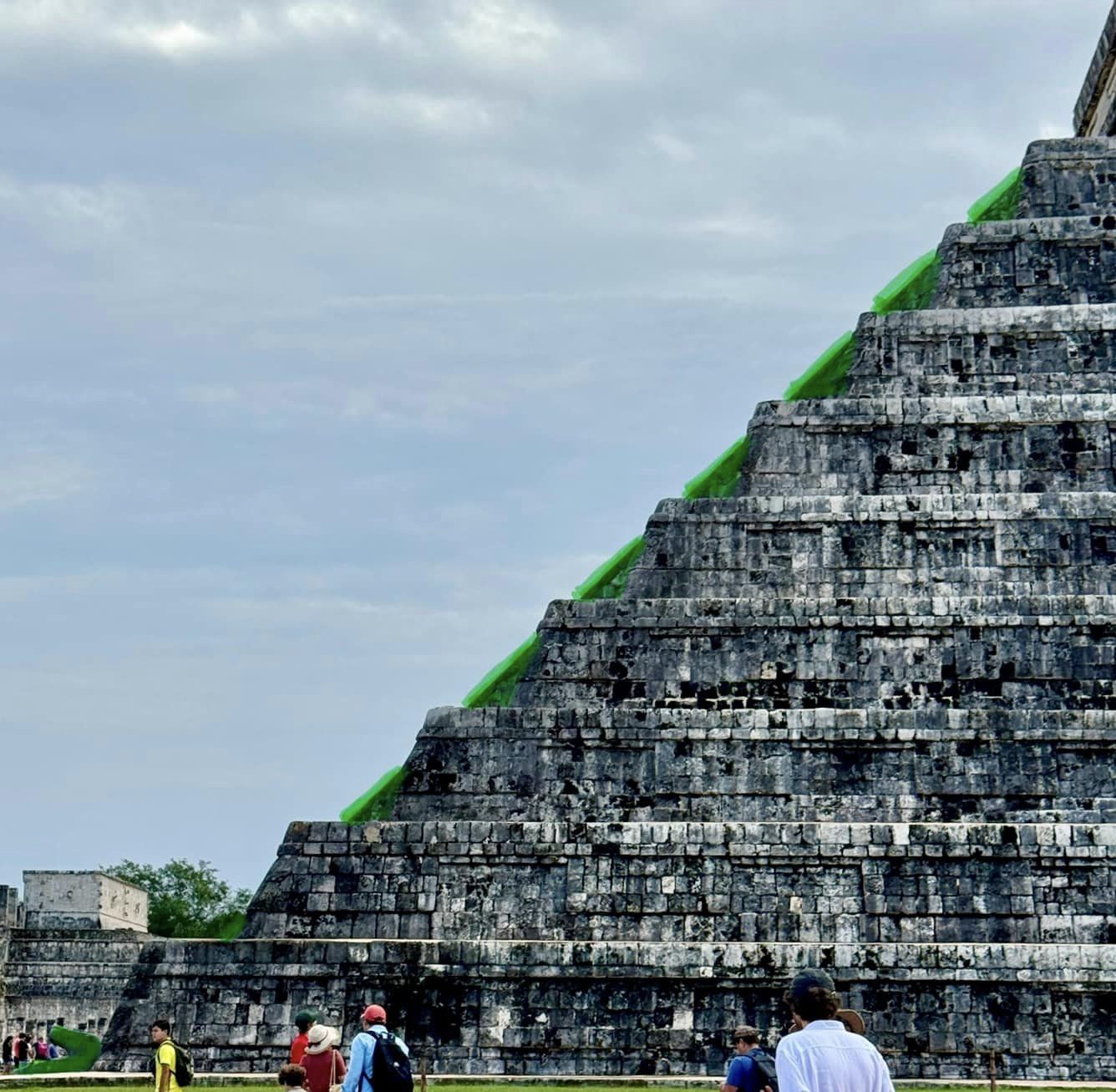
The ancient Maya were also master farmers. Their incredible knowledge of the seasons from their deep dives into the study of moon and sun cycles, enabled them to know that the optimal time plant was the Spring Equinox and the perfect time to harvest was the Fall Equinox. How did they share that with the masses? A security guard at Chichen Itza (not the many who made a lifetime study of the site) figured out the secret message the ancients left. At both the Spring and Fall Equinoxes, the rising or setting sun hits the pyramid in such a way that the illumination and shadows along the edge of the pyramid looks like the snake god Kukulcan descending. Since it wasn’t the equinox when I took this photo, I’ve illustrated in green where the illumination would be, from the top left side all the way down to the head of the snake at the base of the stairs on the next wall of the pyramid.
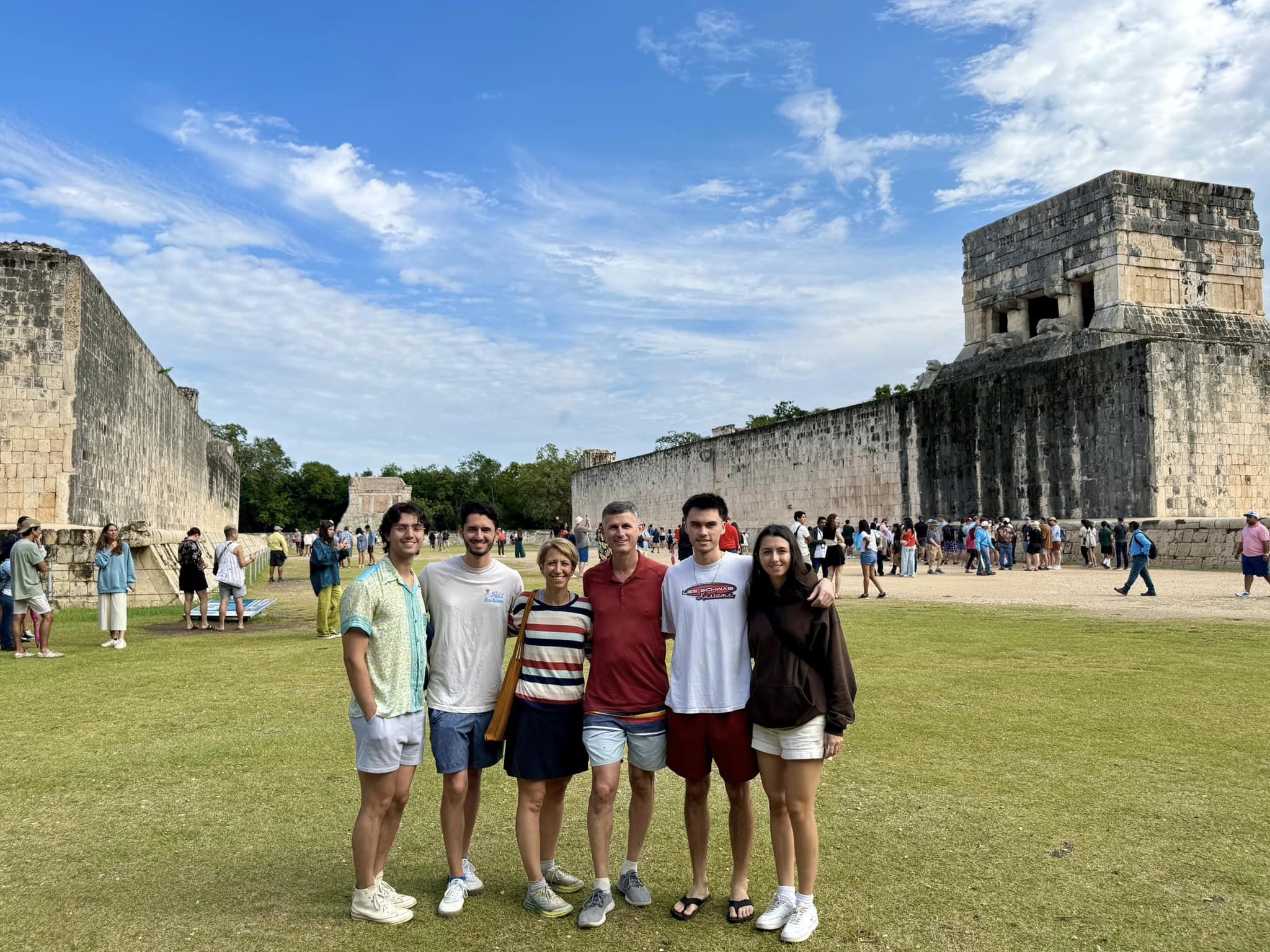
Chichen Itza has the largest Ball Game Court in Mesoamerica. Another bit of magical construction here. The acoustics have been studied but nobody has figured out why the sound during play is not at all affected by wind direction or time of day. There was enough room to seat 2,000 on top of the walls surrounding the court. Given the population of 70,000, the seating would have been reserved for the elite. Unlike the Aztecs who could only use their hips to hit the heavy rubber ball through the rings at the centre top of the side walls, the Maya could use their knees and elbows. The engravings on the side walls show the players with knee and elbow padding. The ultimate prize for winning? A trip to heaven!
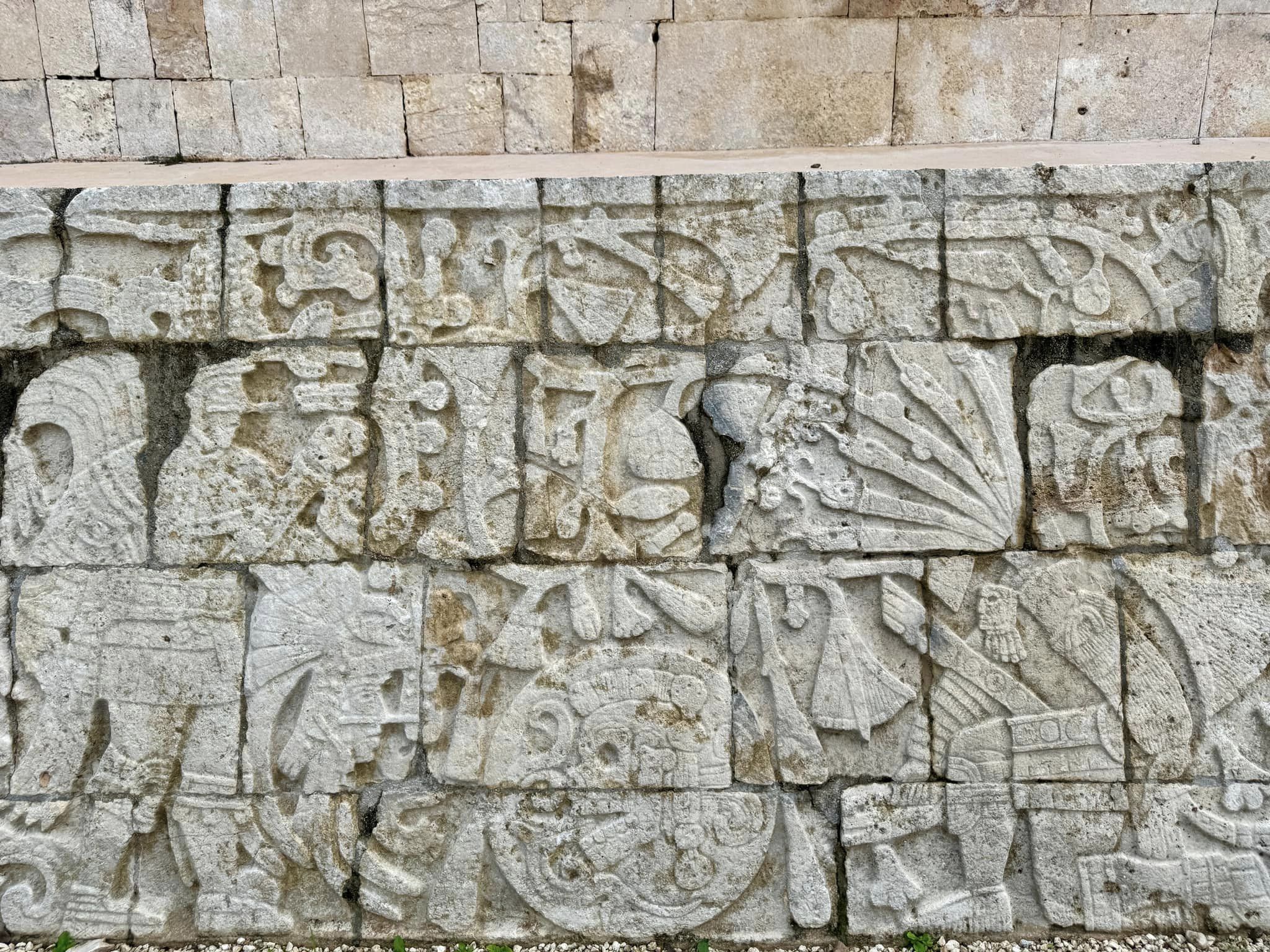
The captain of the winning team indeed gets a fast pass to heaven. Literally. In this relief sculpture, you can see the ball at the centre of the panel with a human skull in the middle. To the right you see the captain of (presumably) the winning team on one knee. The six snakes coming out of where his head should be represent the blood spurting out following his decapitation by the captain of the losing team (who is pictured to the left of the ball holding his opponent’s head in one hand and a knife in the other). Winning the ball game was an honour that won a direct ticket to heaven without having to pass each of the thirteen steps to the peaceful heaven.
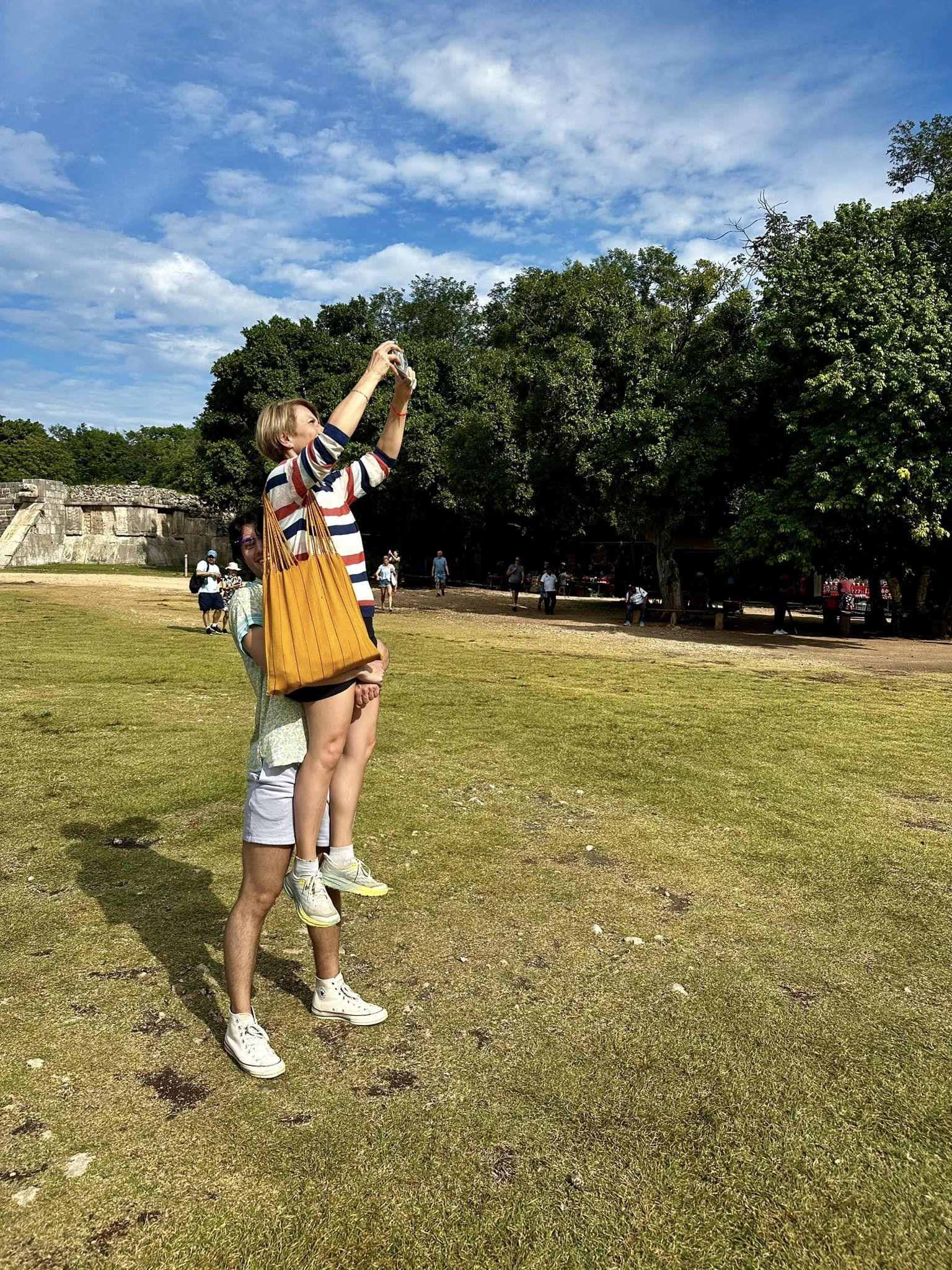
Getting a boost to get the shot…
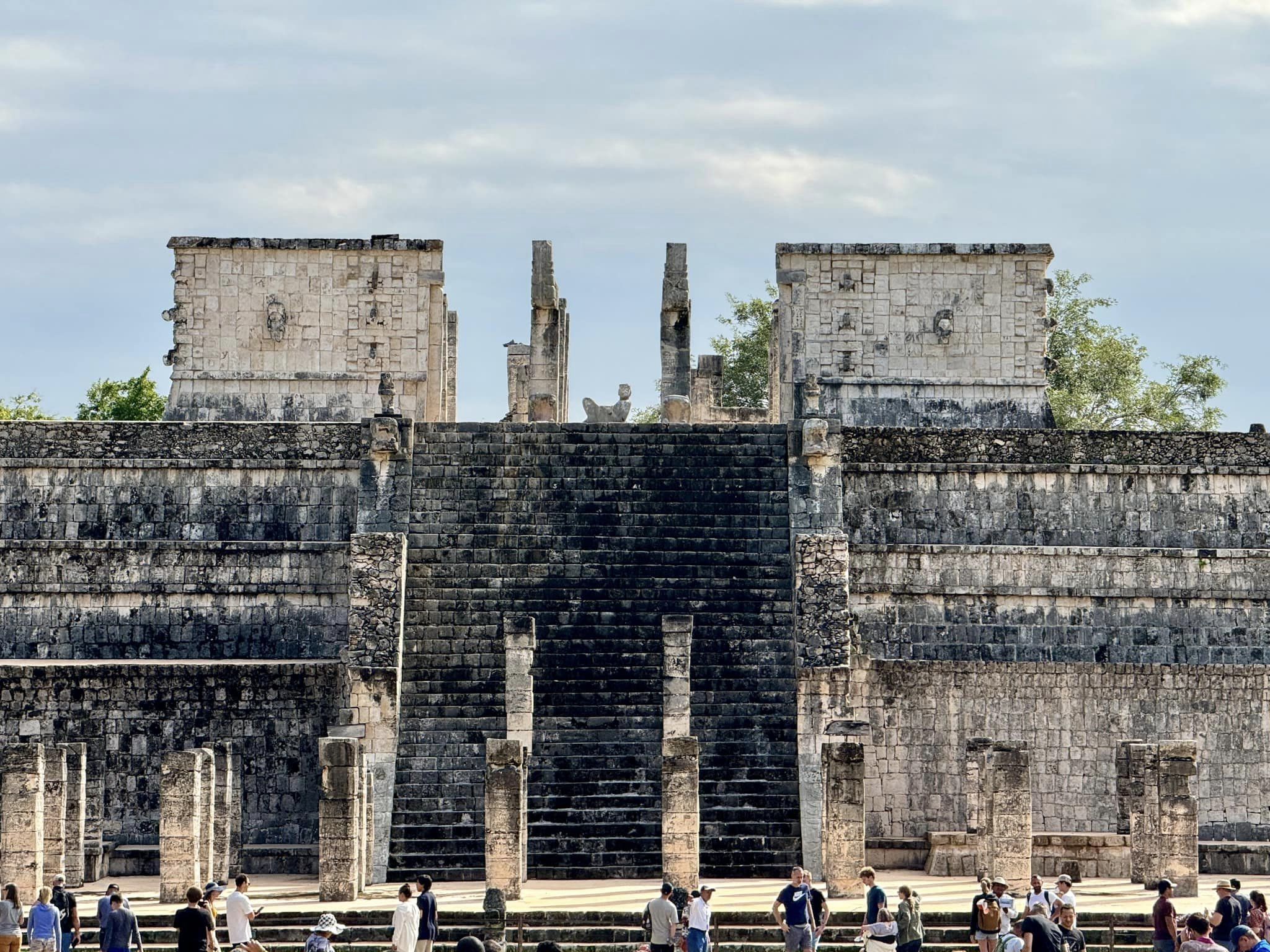
You can only see Chaac Mool sitting atop the Temple of Warriors if you are a fair distance away. Hence the boost to try to exclude as much of the crowds in front as possible. Chaac Mools were a place to make non-sacrificial offerings to the rain god in hopes of good crops.
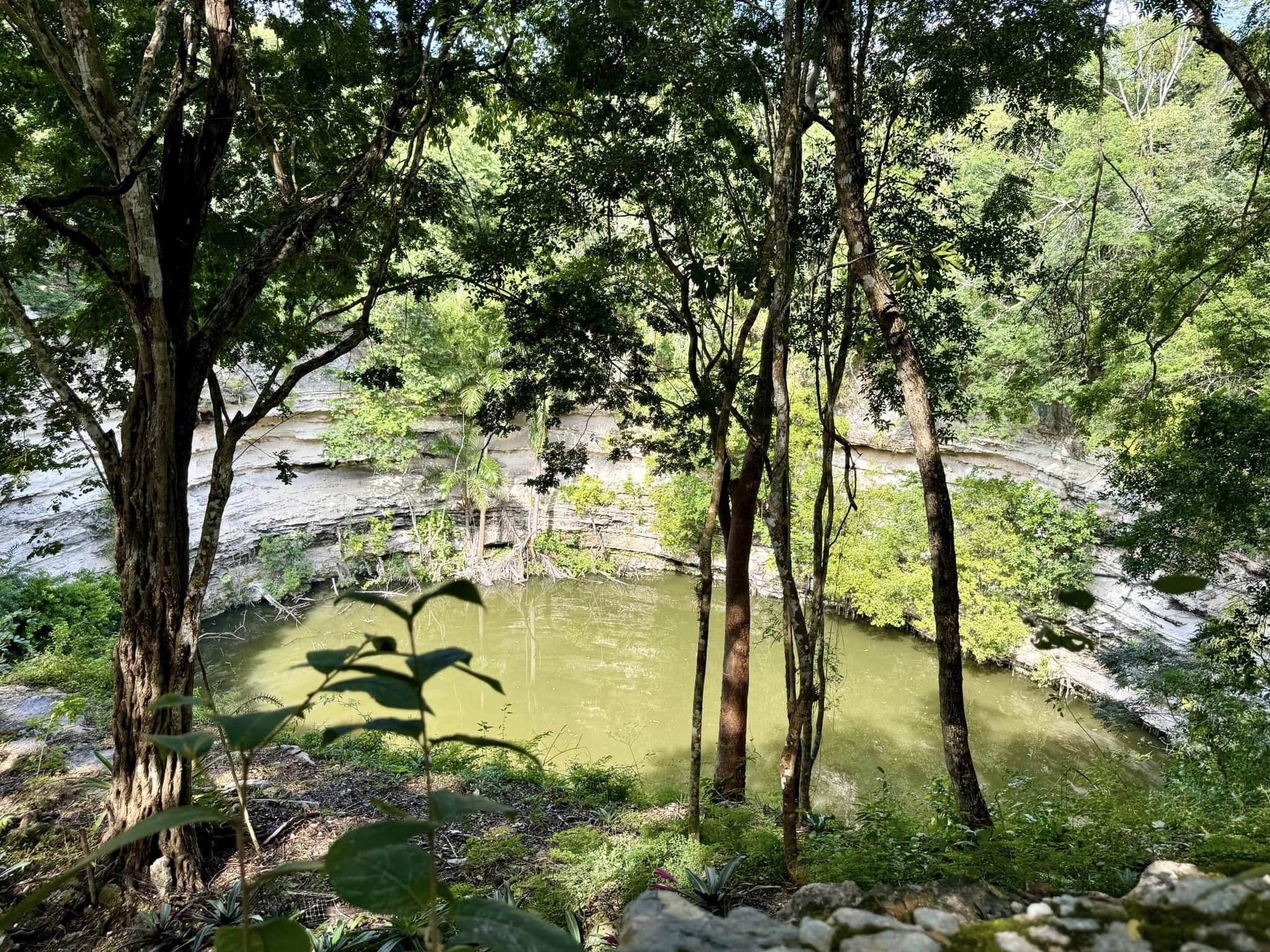
Like hunter gatherer settlements around the world, Chichén Itzá was built by a source of fresh water, Cenote Sagrado. This sacred cenote became a place for offerings to the rain god to support the crops. It was a slippery slope when it came to offerings, starting with objects of value like pottery, gold, jade and other precious objects. Later, they introduced human sacrifices to appease the god, probably feeling like they needed to up the ante in times of drought. The unfortunate offers were warriors, children and maidens. To date, archaeologists have found over 200 bodies, jewels, gold pieces and ceramics when dredging the bottom of the cenote. Needless to say, this is a cenote for looking and not for swimming!
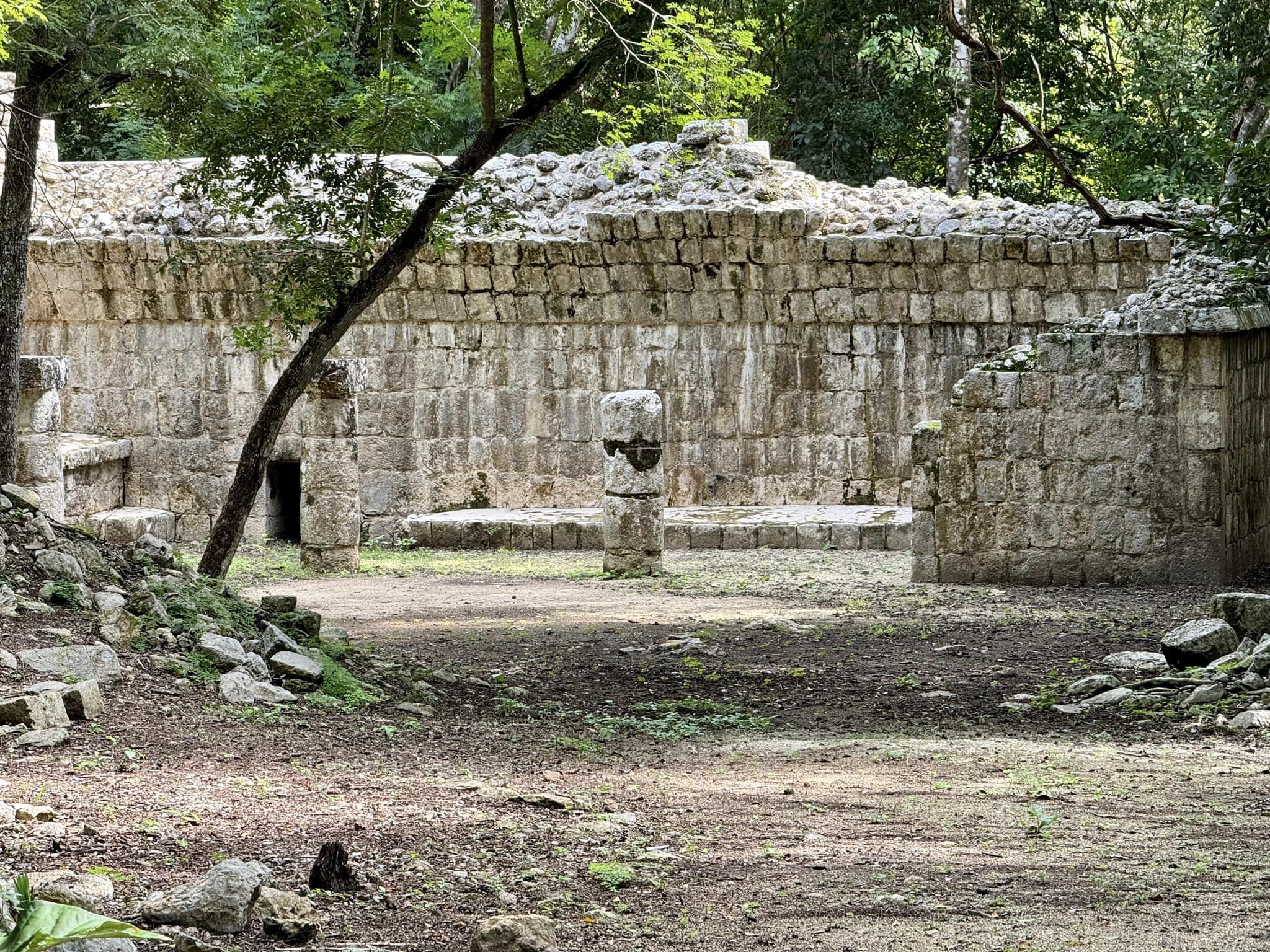
Chichen Itza even had a spa with hot rocks heating the water for those fortunate enough to partake.
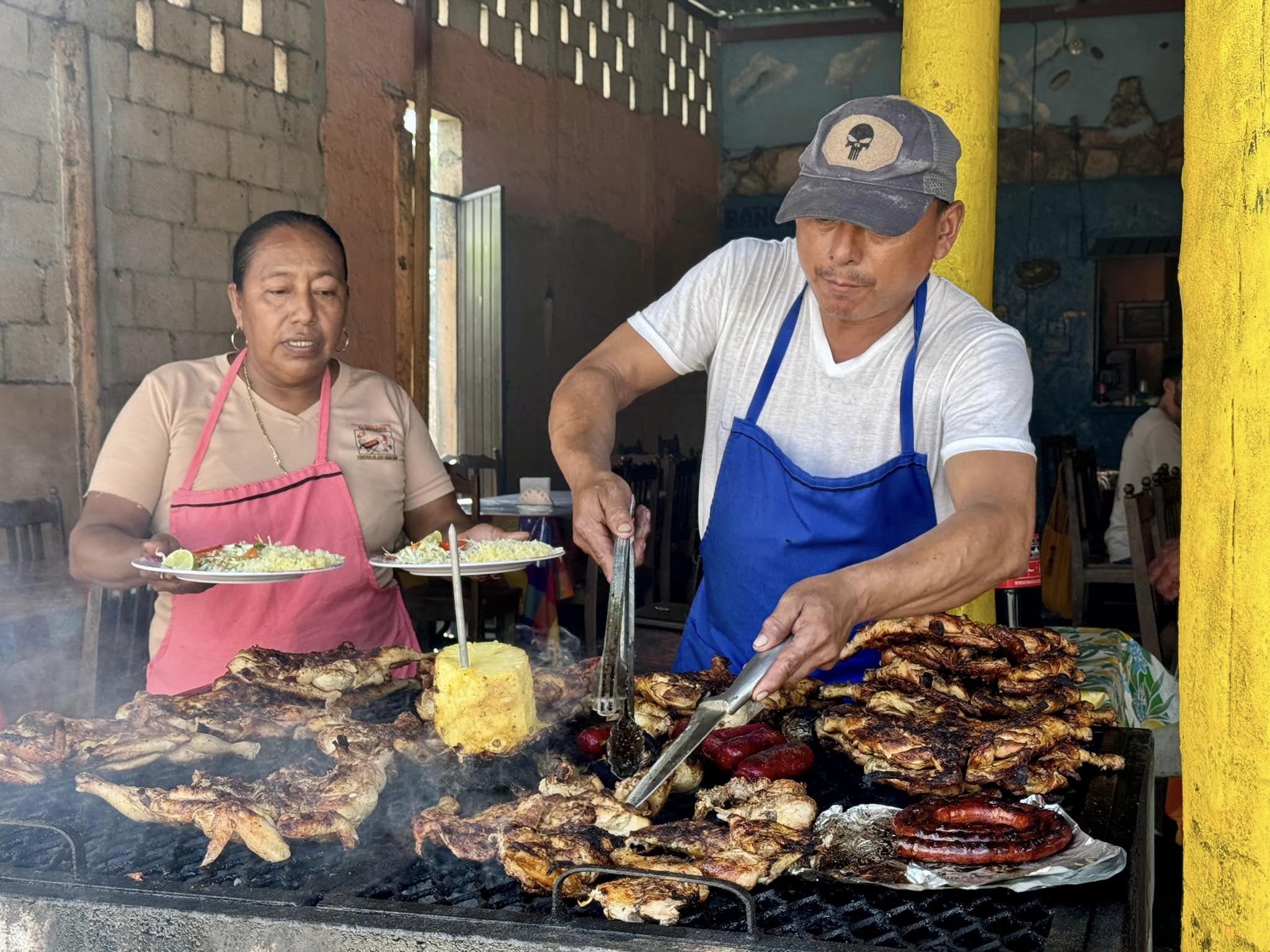
After a dusty morning at Chichen Itza, we came across this little hole in the wall filled with grill smoke (they neglected to install a chimney above the street side cooking area, I guess). These pollos asados were the best grilled chicken ever!
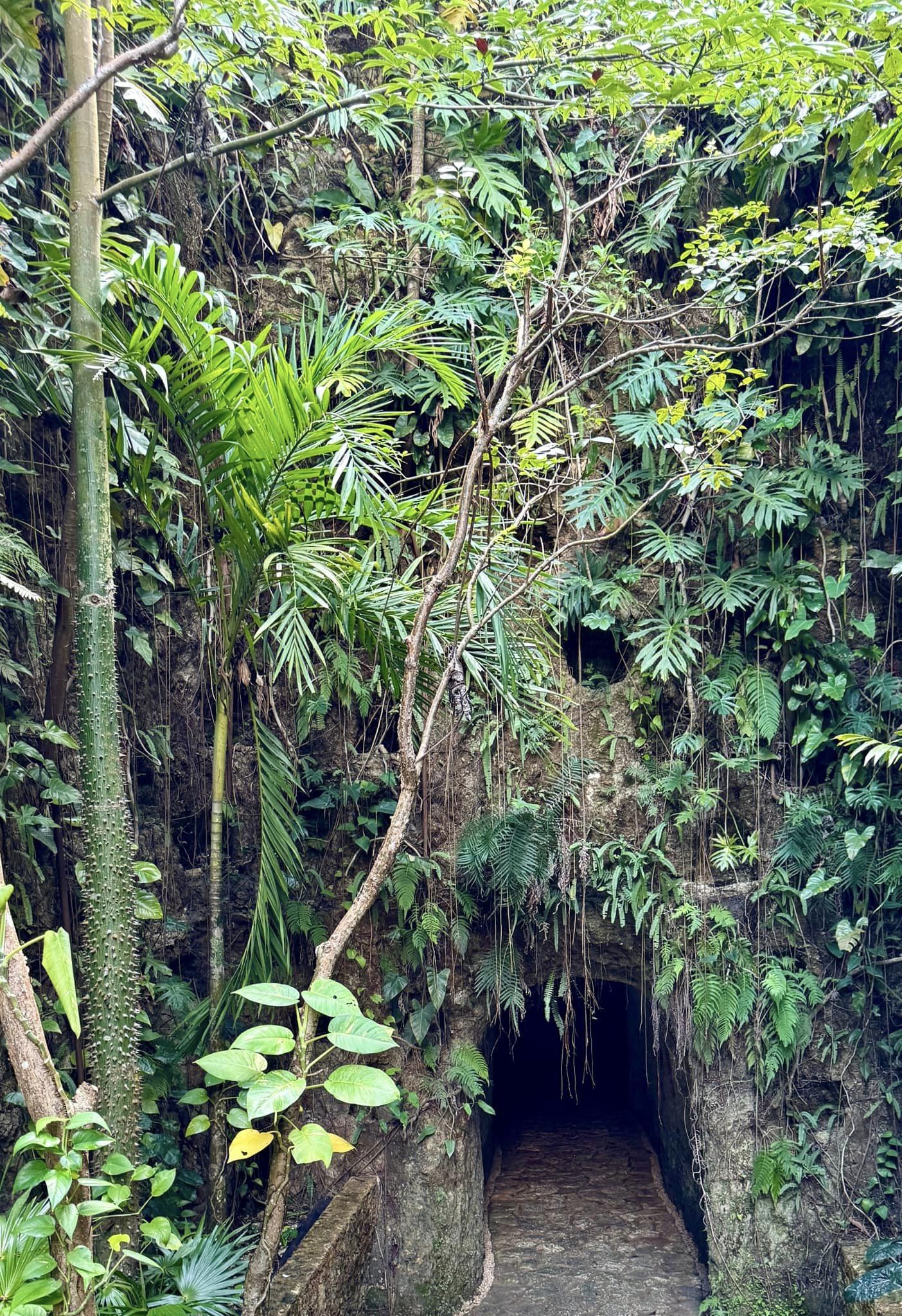
We finished the day at Cenote Tsukan. This is the entrance to this beautiful cave cenote had four small homes at the top letting in light to reveal beautiful blue water. It was actually a bit overcast so the light only broke through in fits and starts.
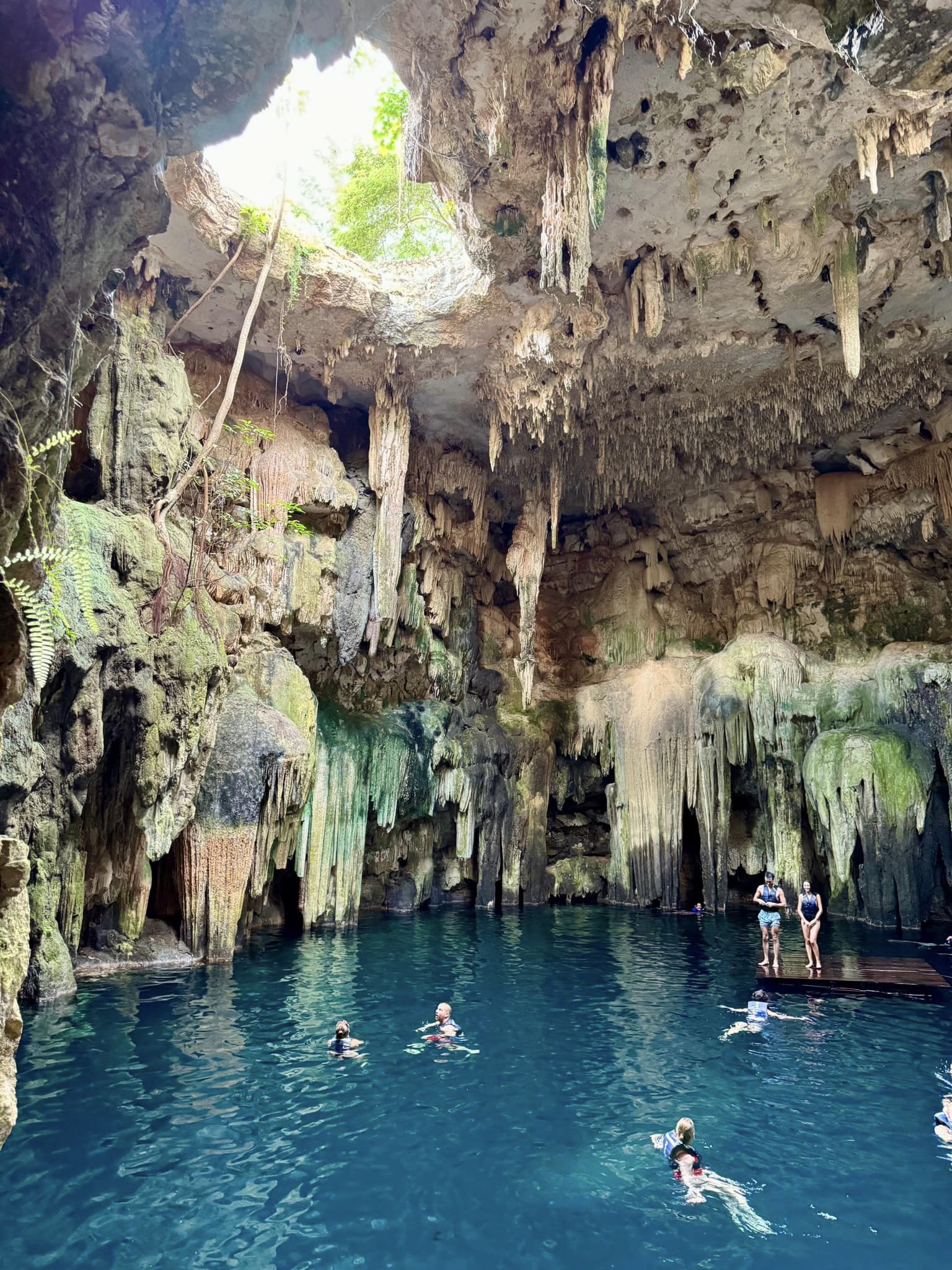
Stalactites drop from the ceiling, some attaching to the floor beneath the water. Lots of fish swimming around in here. Begs the question of where the fish come from. In the early stages of the lifecycle of cenotes, they are connected to underground rivers giving the fish free and easy access. This connection can create a surprising undertow if you dive down deep enough. A few years ago, a couple of university students got pulled down and died. The diver who went to recover the bodies also got trapped and died. Now, in these cave cenotes, swimmers are required to wear a life jacket.
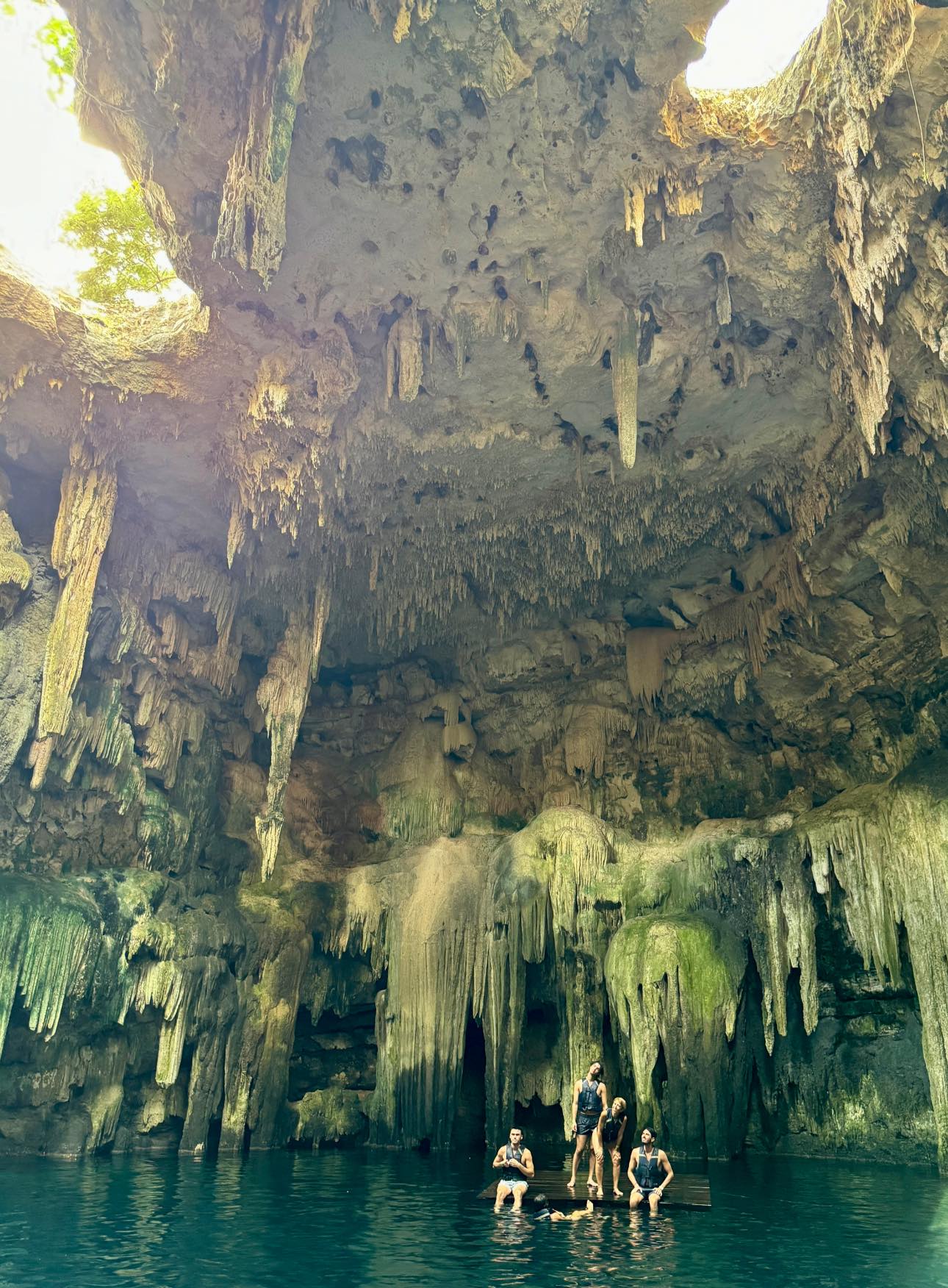
As the light from the holes in the ceiling shifts, the colours changed from blue to green.
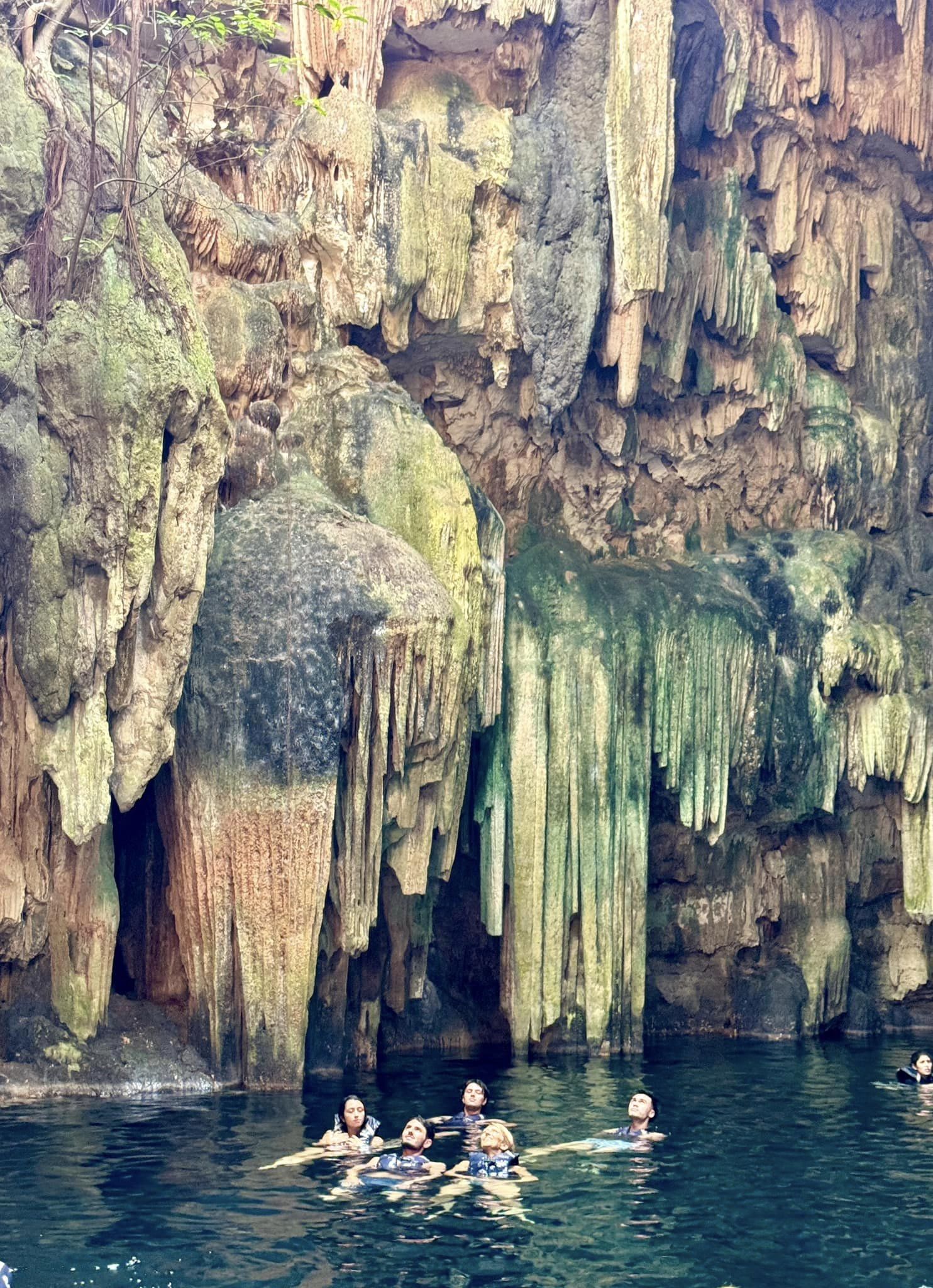
The moment we noticed the bats on the ceiling!