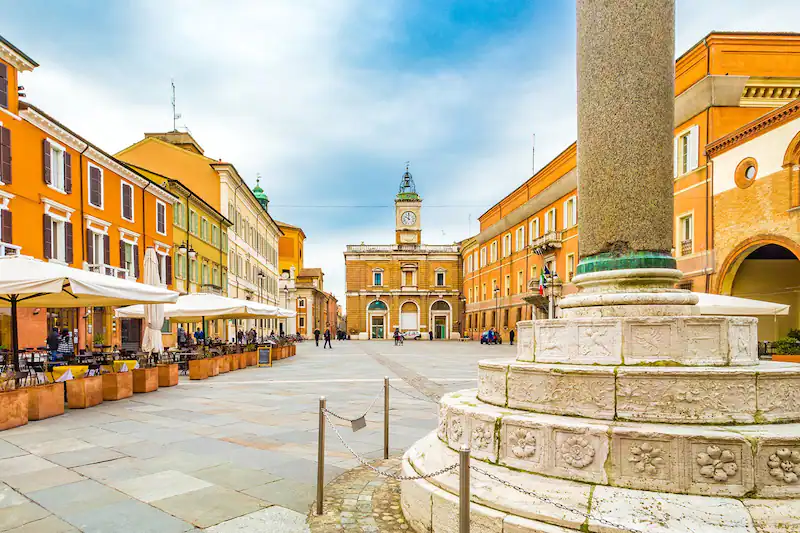
April, 2022
Ravishing Ravenna
This little gem has among the most remarkable Byzantine mosaics imaginable. Monreale in Sicily was incredible and Ravenna is equally amazing and dare I say maybe more so. Eight UNESCO World Heritage sites in a pretty small town is quite an accomplishment and these places are unbelievably well-preserved.
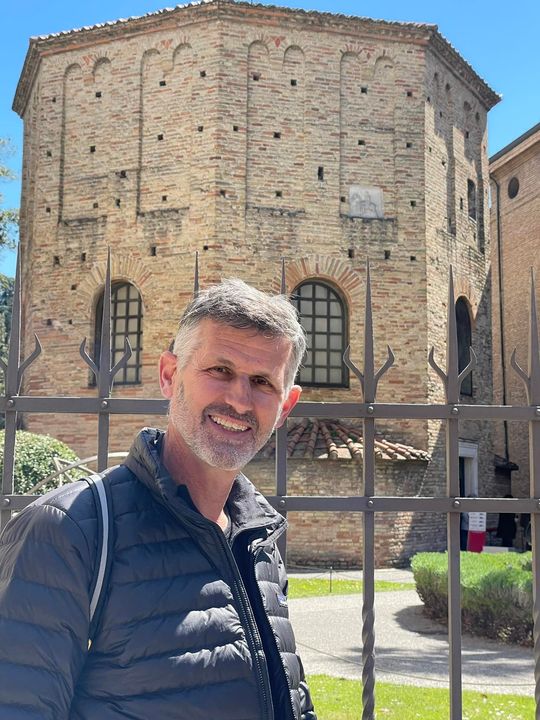
The Battistero Neomiano is the oldest monument in Ravenna dating back to the late 4th or early 5th century. It gets its name from Bishop Neon who completed it at the end of the 5th century and added the incredible mosaics. It is an eight-sided building symbolizing the seven days of the week and the day of resurrection and eternal life.
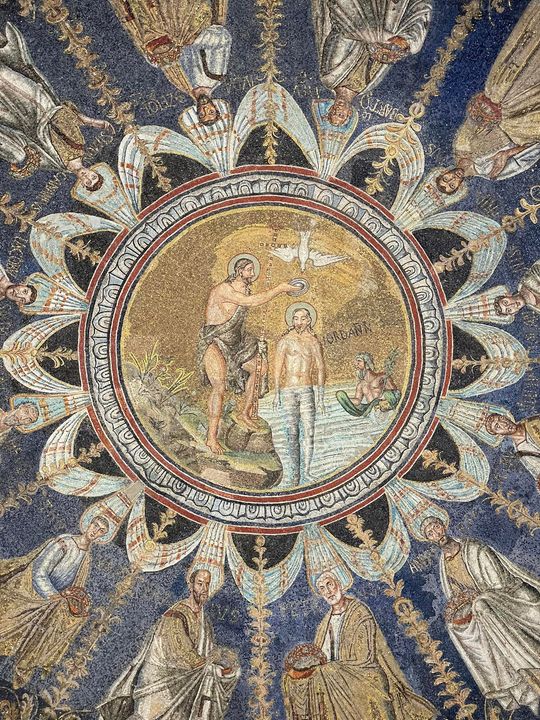
This ceiling mosaic shows John the Baptist baptizing Jesus in the Jordan River surrounded by the 12 apostles. Zeus gets a bit of billing here to personify the Jordan River. How often is the adult Jesus depicted naked?
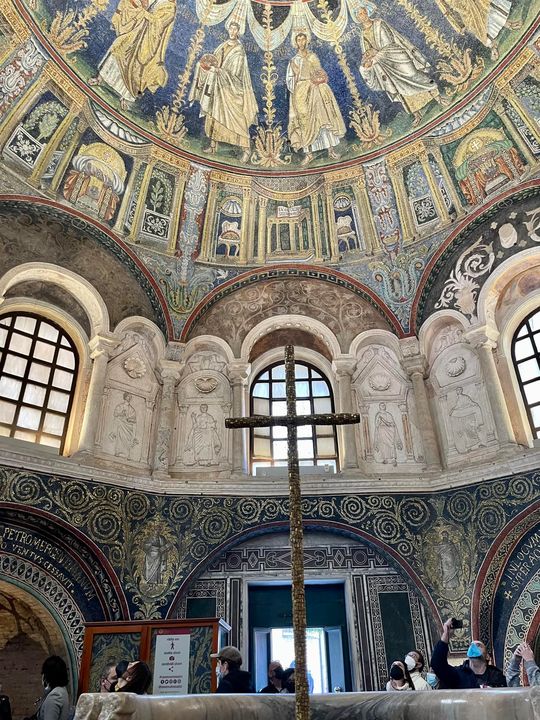
Finely detailed mosaics cover the inside of the building, even the simple cross is covered in tiny gold tiles. This baptistery is deemed to be the finest and most complete example of early Christian baptisteries.
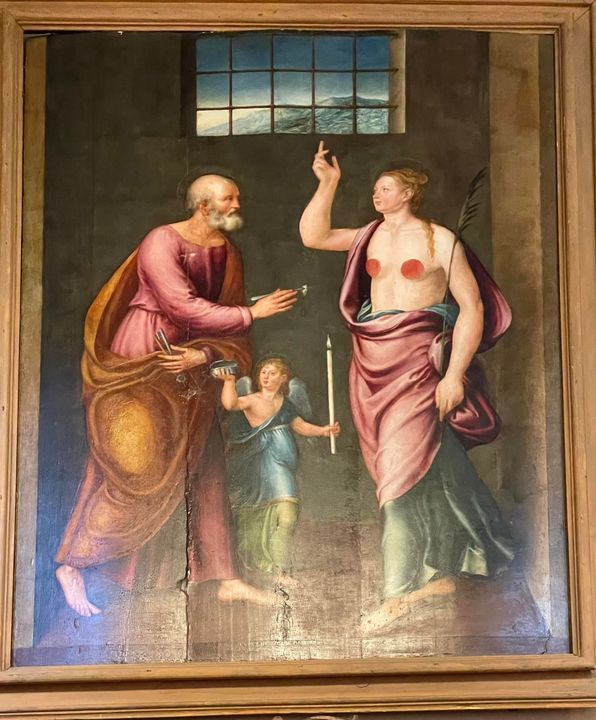
So, not being particularly knowledgeable about the intricacies of Christianity, I was quite intrigued by this painting we found in the Church of Santa Maria Maggiore. St. Peter sneaks in to visit St. Agatha in prison, disguised as an old man (those in the know would recognize him by his square beard and the keys in his left hand). He has come to heal her with ointments as her breasts had been cut off earlier in the day. How did she meet this unfortunate fate? Since she had consecrated herself to God, she rejected the advances of a Roman prefect. The prefect was so incensed that he had her imprisoned and tortured. St. Peter heals her and her breasts are restored. Nice idea but apparently, in reality, she died a few hours after this brutal torture.
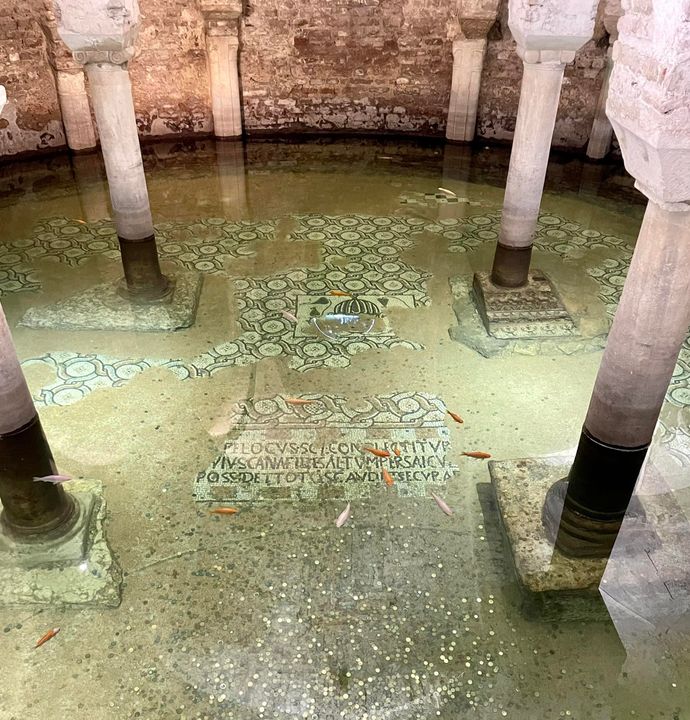
So here’s a cool thing in an unassuming Basilica di San Francesco. The crypt under the altar reveals an old tile floor, flooded by groundwater and populated by goldfish. I have to wonder how the little goldfish got in there!
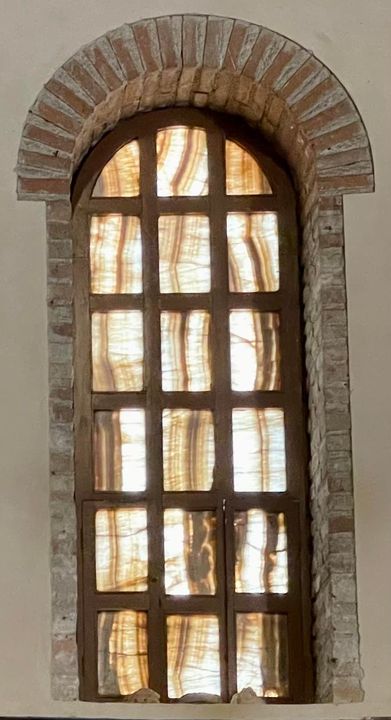
Alabaster windows in many of the churches here.
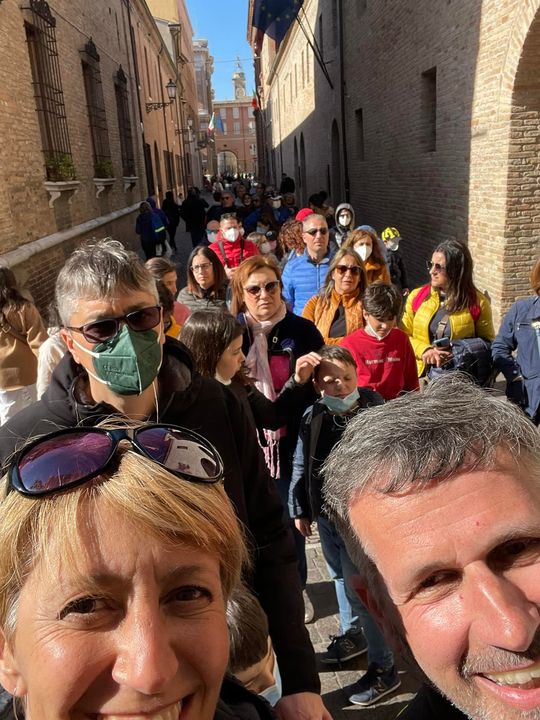
It turns out Dante spent the last few years of his life in Ravenna and after his death, he was honoured with a special tomb. Apparently fans flock to see his tomb. We joined the flock!
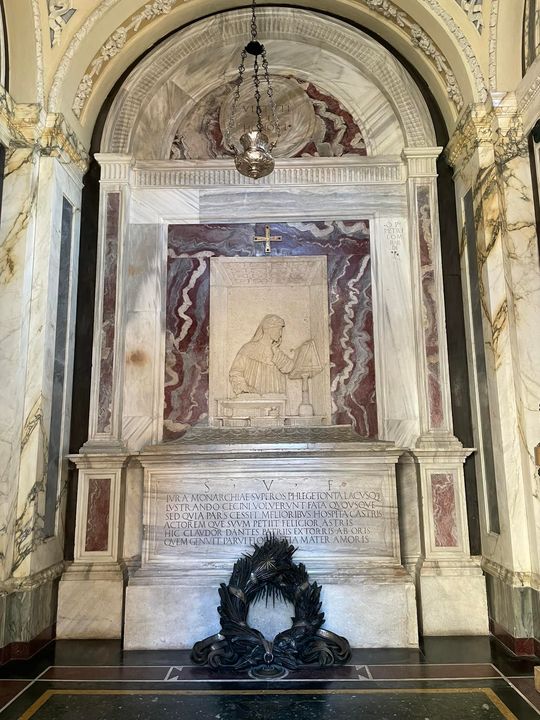
And here you go. Dante’s tomb! That’s it, that’s all folks. Now you don’t need to line up to peek in the door to see it.
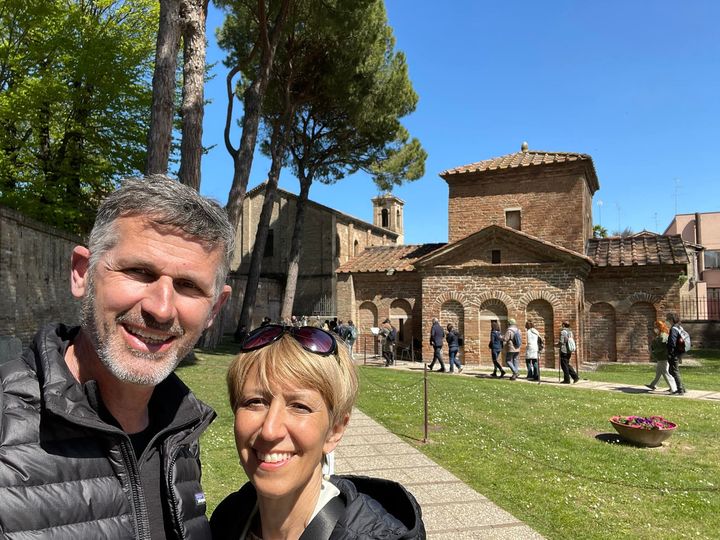
The Mausoleo di Galla Placida is quite the wonder to behold. It shares a site with the Basilica di San Vitale and there seems to be a competition as to which is more beautiful. You can decide… Galla’s mausoleum is on a smaller scale but packs a different kind of punch. It’s a timed entry ticket and you get five minutes. There is literally an electronic timer that goes off and a guy comes in to give you the evil eye if you don’t get out. Galla was the emperor Theodosius I’s daughter and she’s not actually buried in her own mausoleum (she’s in Rome).
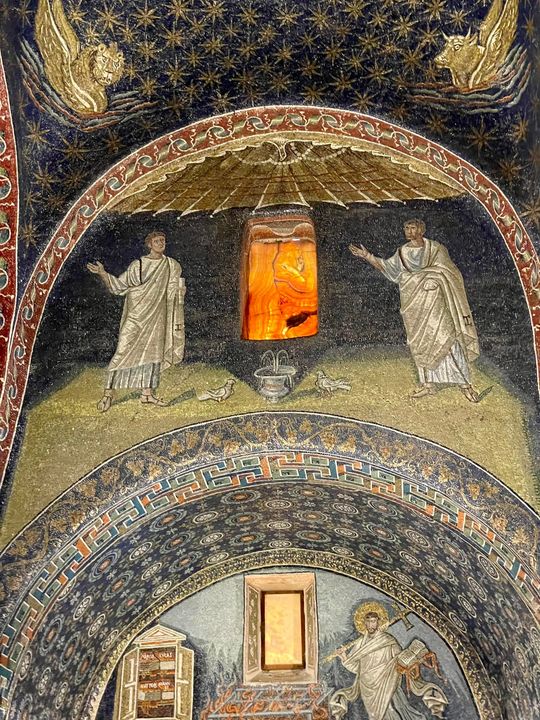
Surprise! Not what you’d expect from such an austere exterior. Alabaster windows and mind-blowing mosaics.
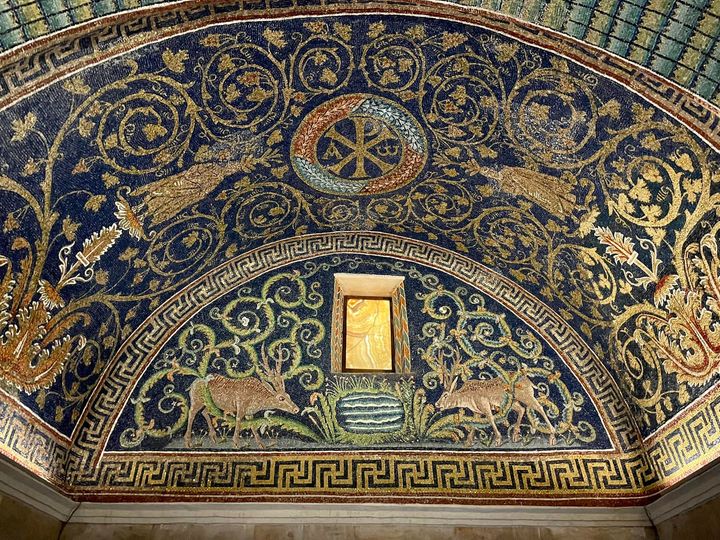
The entire room and ceiling were covered.
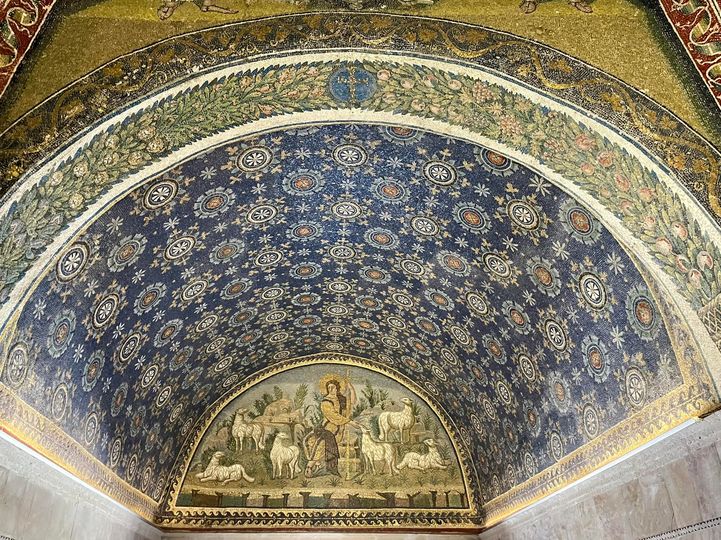
Last of Galla’s mosaics. I have to stop somewhere…
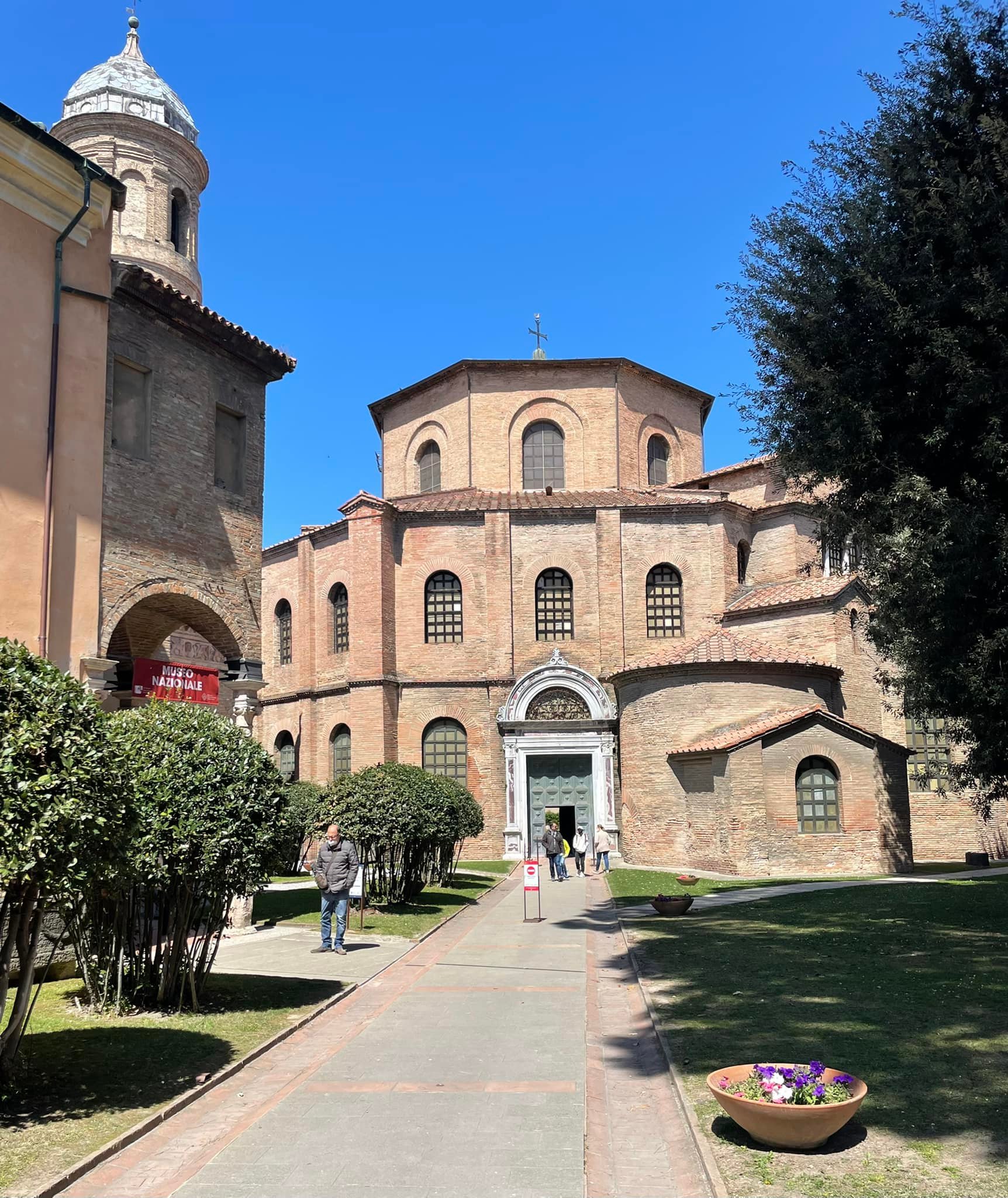
And finally the Basilica di San Vitale. Another austere building but don’t be fooled… it’s all about the interior! Considered to be the most celebrated Byzantine monument in the world. Like one of the churches I told you about in Palermo, here too we have a clash of the Byzantine mosaics from the 6th century and the 18th century frescoes.
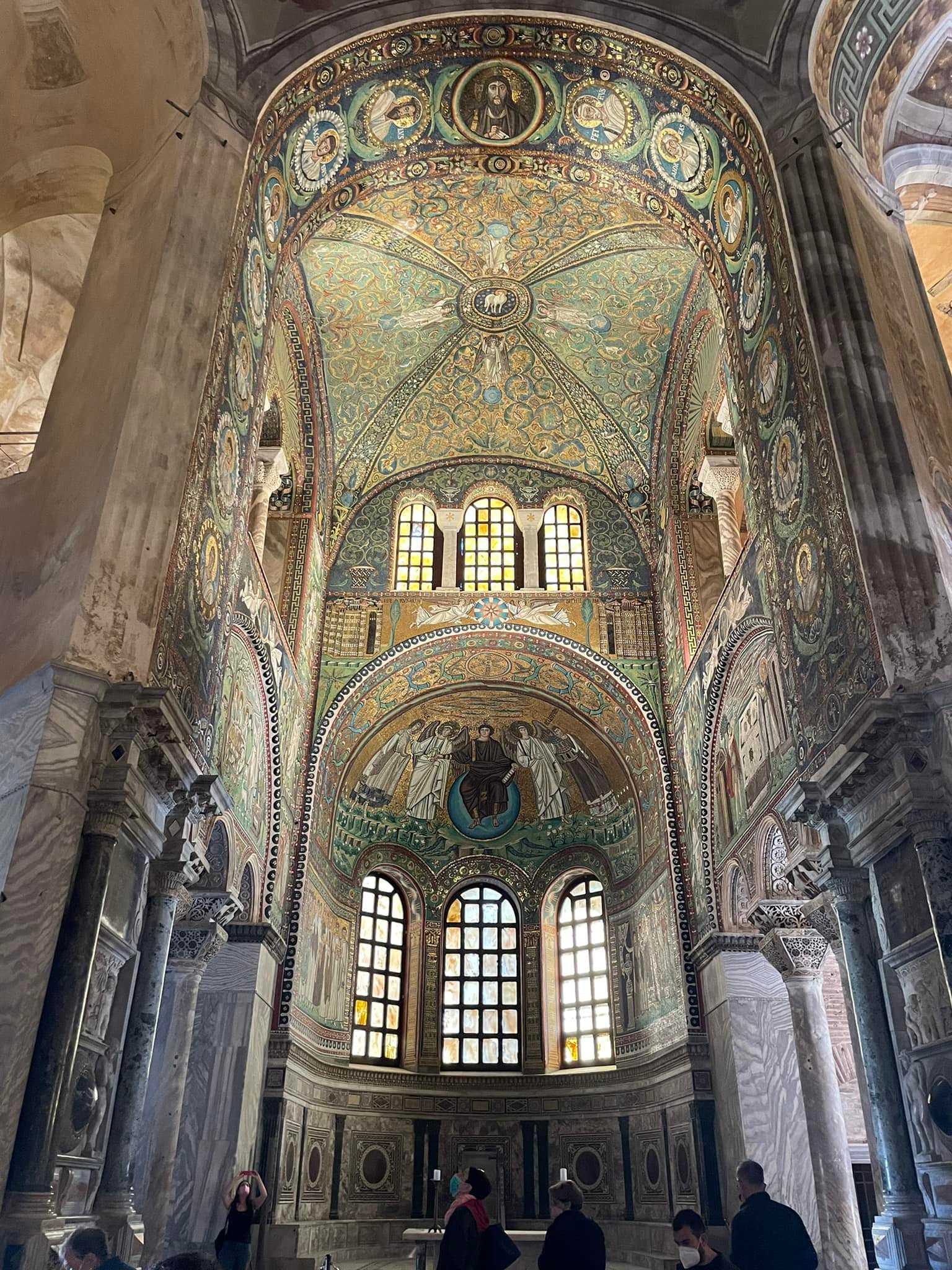
Pounds and pounds and pounds of gold adorn these mosaics. The Justinian mosaic (sorry, hard to see but it’s the panel to the left of the windows) used 36 pounds of gold. A mix of Old and New Testament stories are told in these mosaics.
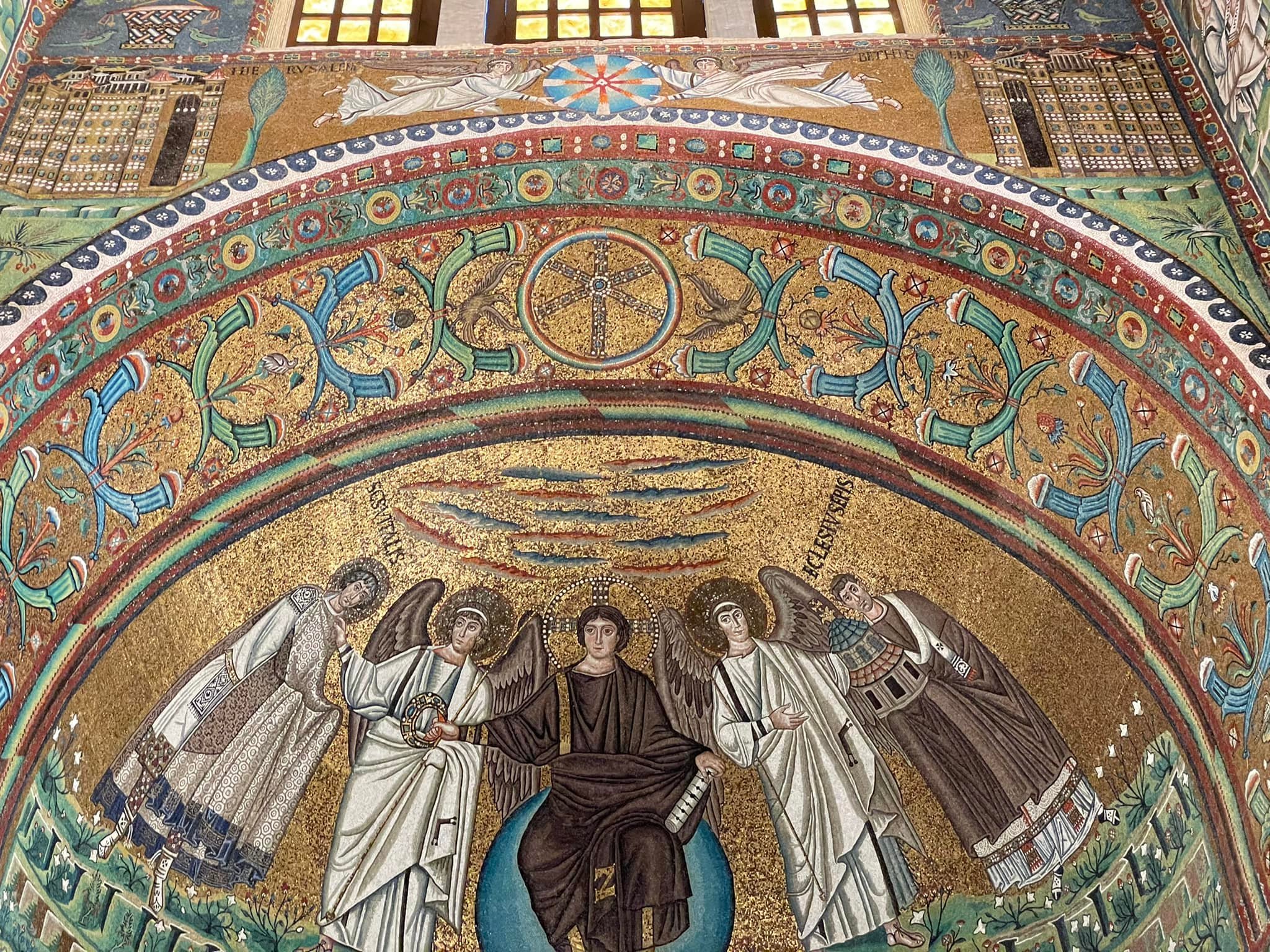
A bit more detail from the previous image. Jesus seated in the centre on a blue globe.
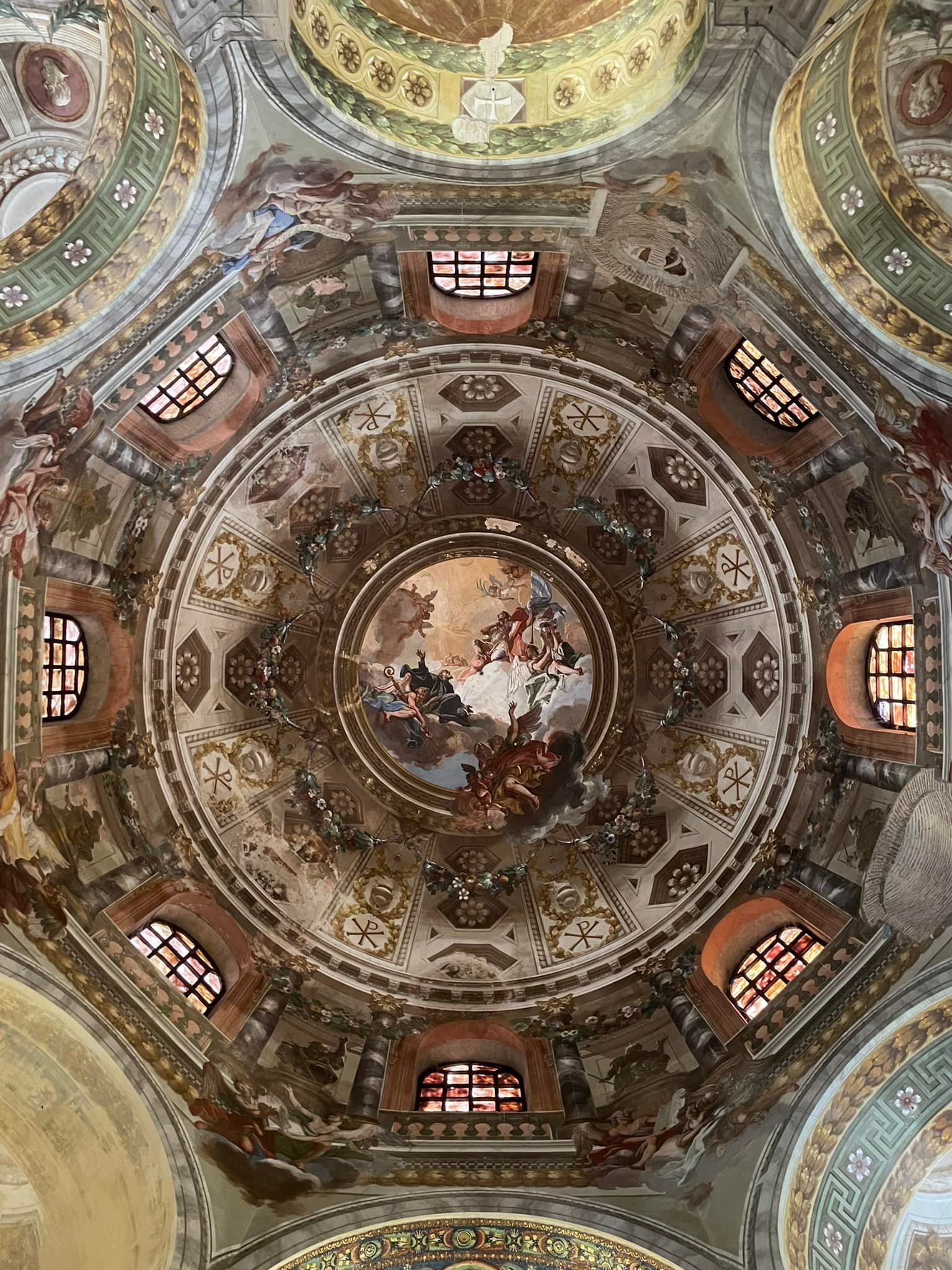
And now we zoom across the ceiling to 18th century frescoes. I honestly think attending a long service in here would feel like the time flies by; there is just so much to look at.
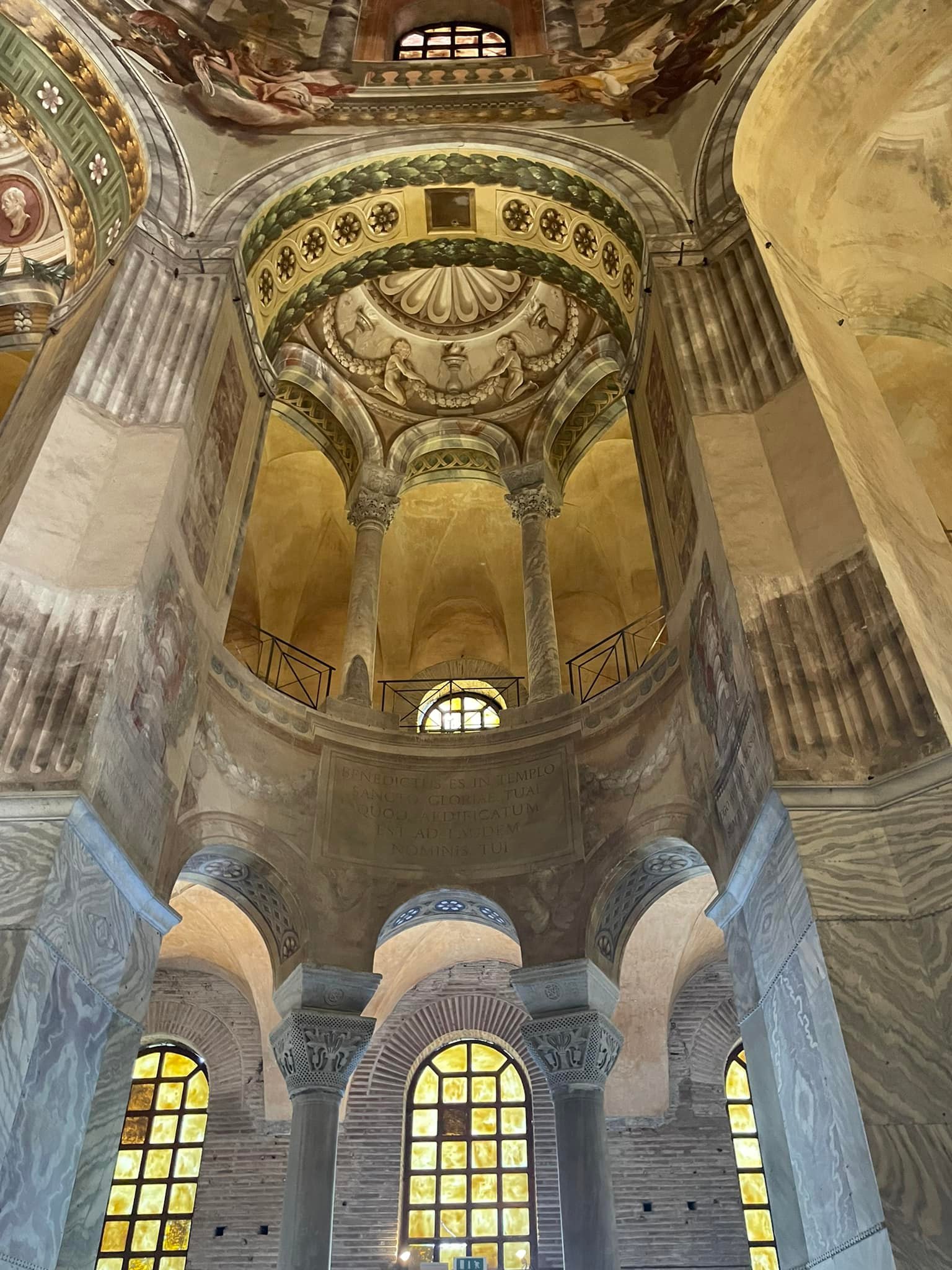
Circumnavigating the basilica is an upper ambulatory called the matroneum which was reserved for married women. And more alabaster windows!
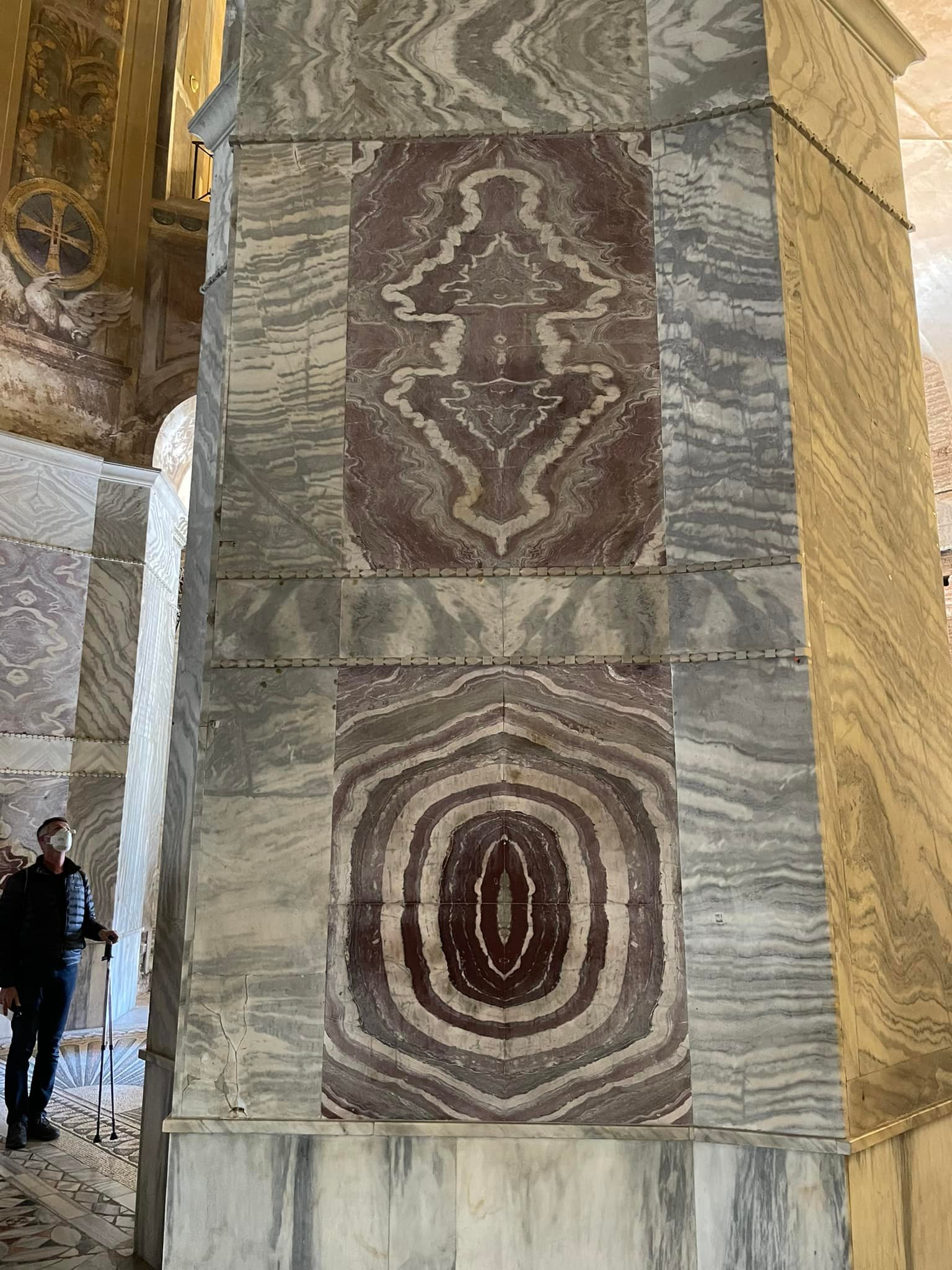
Mirror-image marble on all the columns.
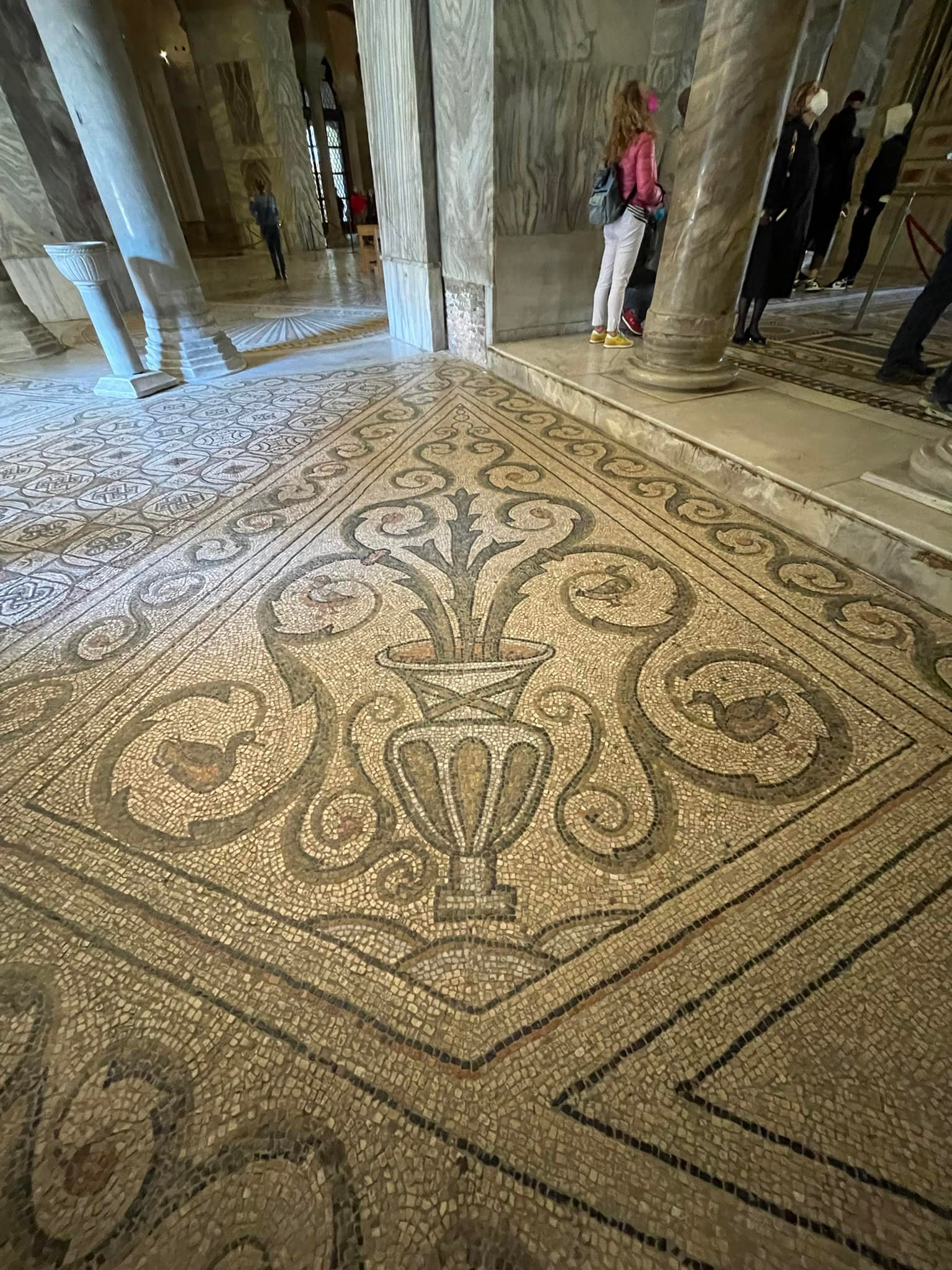
Oh, the floors!
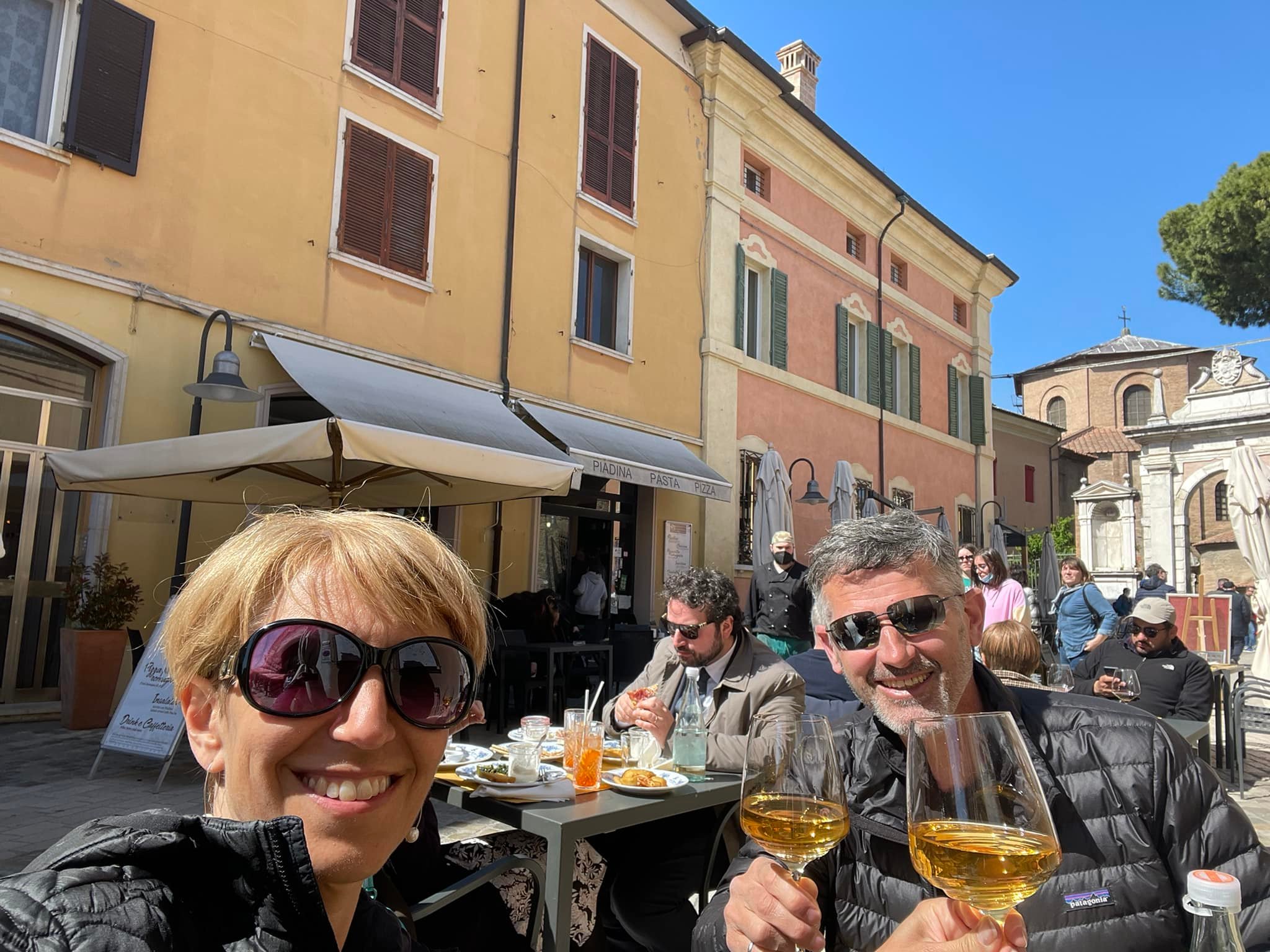
And that’s a wrap with a fantastic lunch just outside San Vitale. Two glasses of wine with lunch. Dangerous precedent…