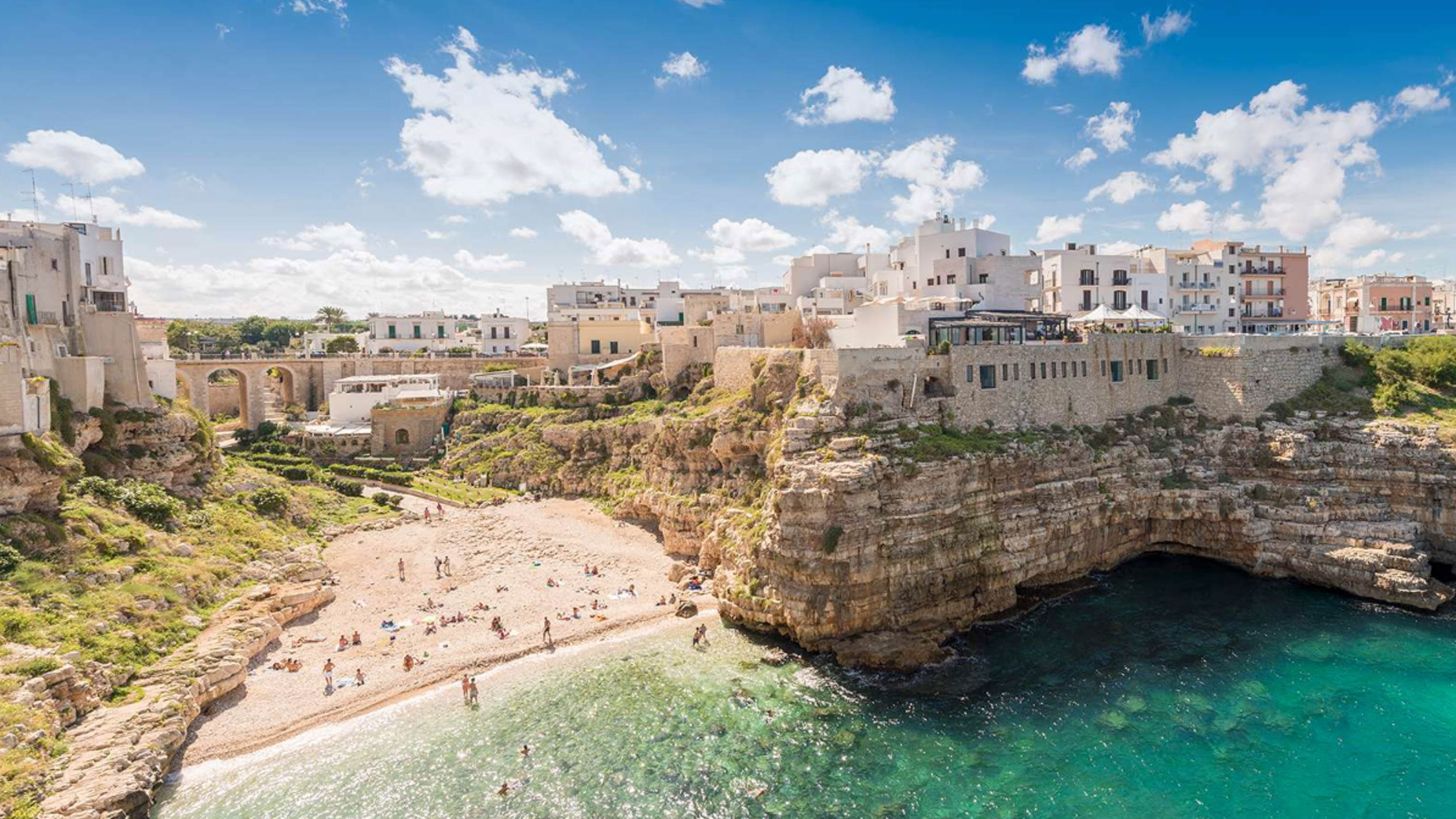
Picturesque Puglia
As we dance across Puglia between the Ionian and Adriatic seas, we are struck by the intense natural beauty and varied villages in the heel of the Italian boot. From tacky to terrific, some villages and landscapes are jaw-droppingly magical and others deserve varying degrees of a nod. We are thrilled to have our travel partners, Julie and Kevin!
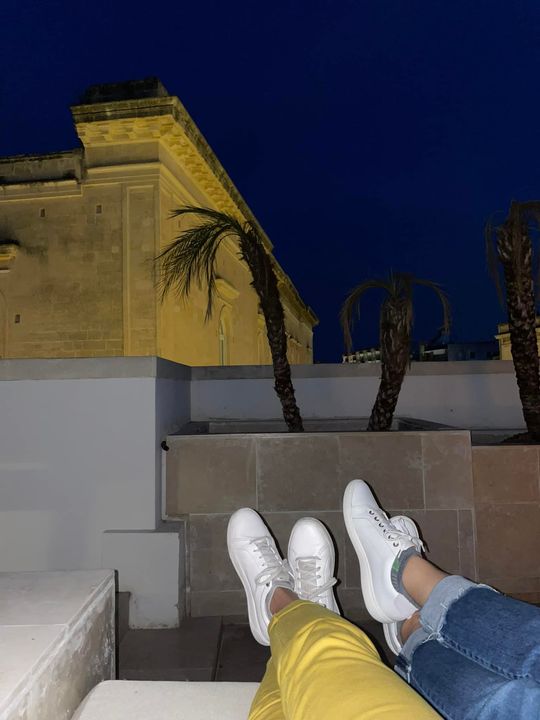
Our fabulous rooftop deck in Lecce. Amazing how our jeans match the night view!
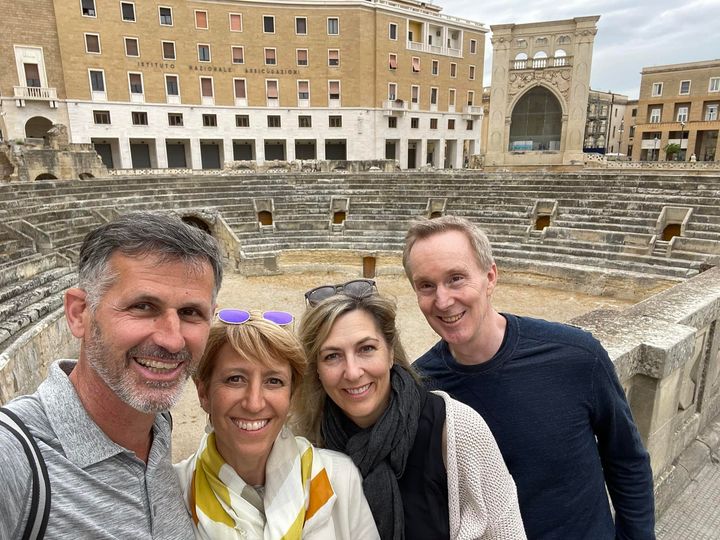
Lecce is a great city to just hang out in and makes a perfect base to explore the smaller cities in the area. In its 2000 year history, it has its share of churches and baroque architecture, twisting and curving streets, Roman theatres and fabulous food and wine. It’s even got it’s own stone! It seems the whole city is built out of the creamy, white Lecce stone. Looks suspiciously like Jerusalem limestone and funnily enough, it is a special kind of soft limestone that makes it a particularly good choice for sculpting. As with most places in Europe, soccer is very big in Lecce and our first night, the local team won and was promoted and the partying and singing in the streets went on till 4am! Needless to say, the Lecce stone reflects sound very well.
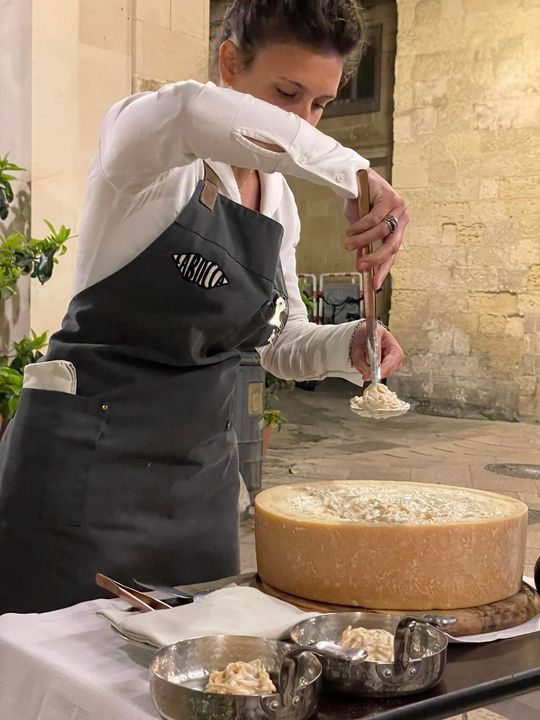
Our first dinner took us to a wonderful restaurant just inside one of the old city gates. A bit chilly outside, they dressed us in fleece capes (I need to reverse engineer those for home), The food was fantastic, the highlight being the tagliolino cacio e pepe prepared in a wheel of ages pecorino. We also learned from our esteemed host that one does not consume red wine with tiramisu!
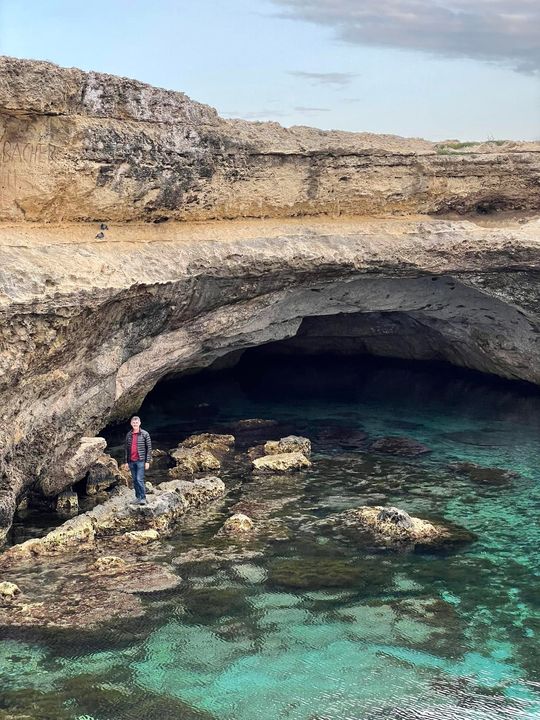
On the Adriatic coast near Lecce is Roca Vecchia where we found the Grotta della Poesia, considered to be one of the most beautiful natural pools in the world. The story goes that a beautiful princess (perhaps in this case a prince) liked to bathe in this pool and became the muse for countless poets. Well, poetry is not my thing so this bather will have to be acknowledged with photos rather than artful words!
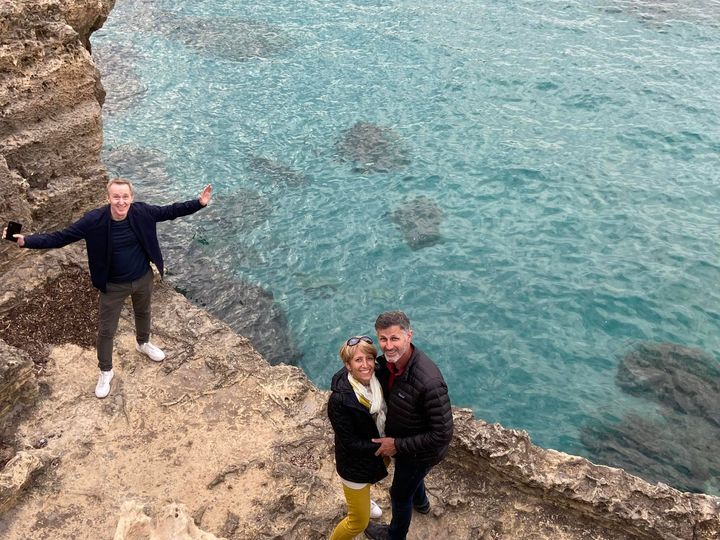
Beckoning our photographer to climb down the rocks!
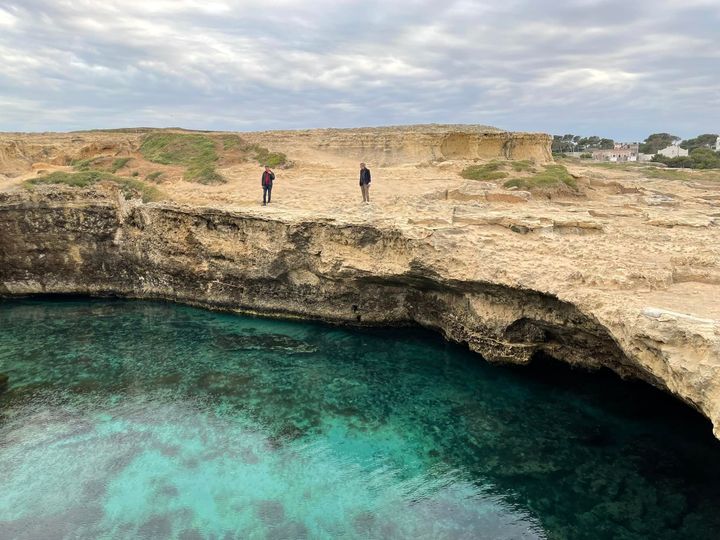
Colours of Grotta della Poesia.
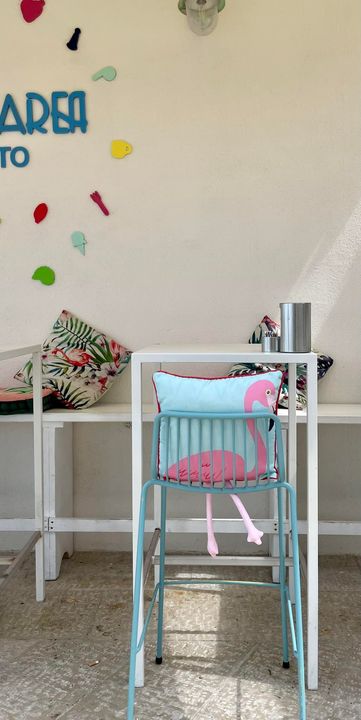
A clever way to keep the cushions from falling off the chairs.
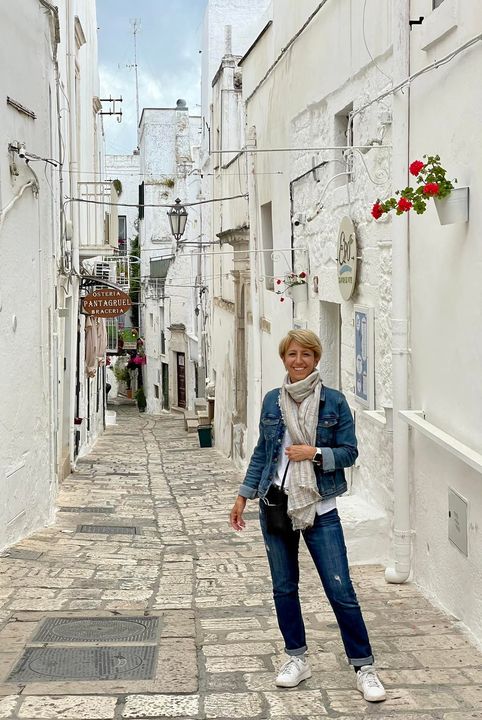
While lots of old cities have whitewashed buildings, Ostuni is THE white city. The white lime painted on the buildings was a disinfectant and clearly very liberally used around here. The white reflected the heat of the sun in summer and there was lots of it in the area so why not cover everything with it? The disinfectant nature of lime is believed to have saved Ostuni from being wiped out during the Plague of the 17th century.
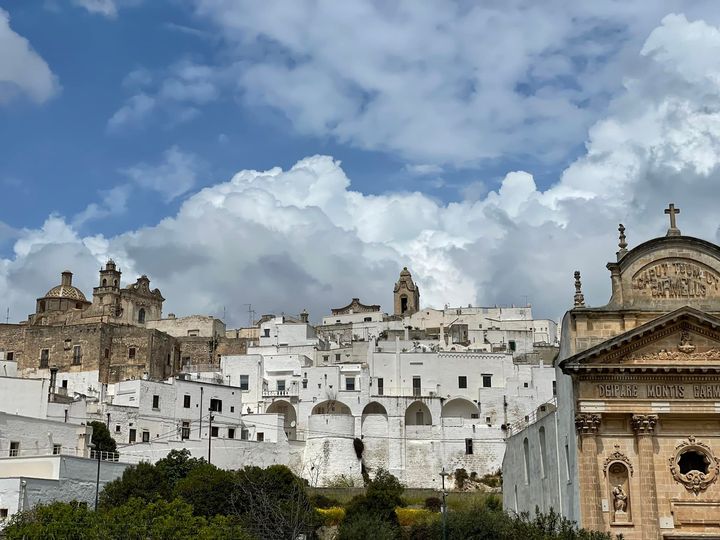
Sparkling clean
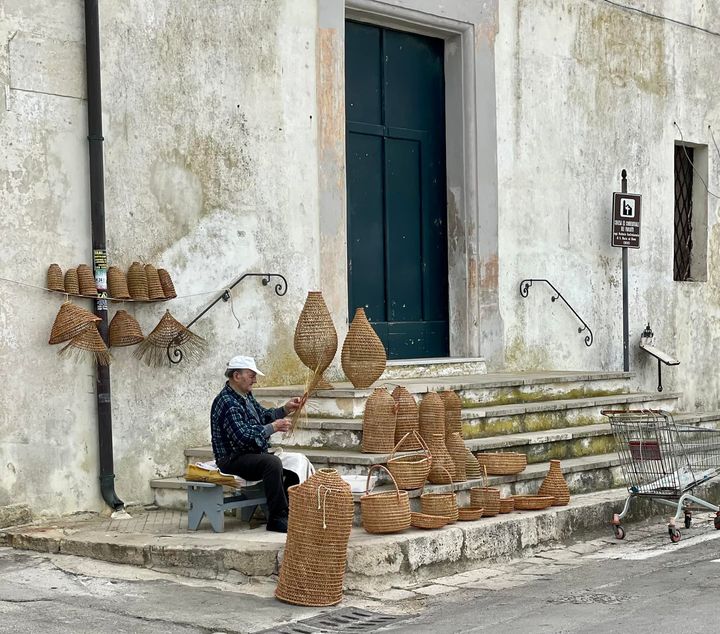
Honestly, not much to be said about Gallipoli, originally settled by the Greeks. Like most Italian regions is was invaded and sacked and rebuilt by the Romans, Vandals, Goths and Normans. Now, it is invaded by tourists. Fridge magnets left most powerful impression on us. However the elderly gent weaving baskets roadside tugged at my heart a little.
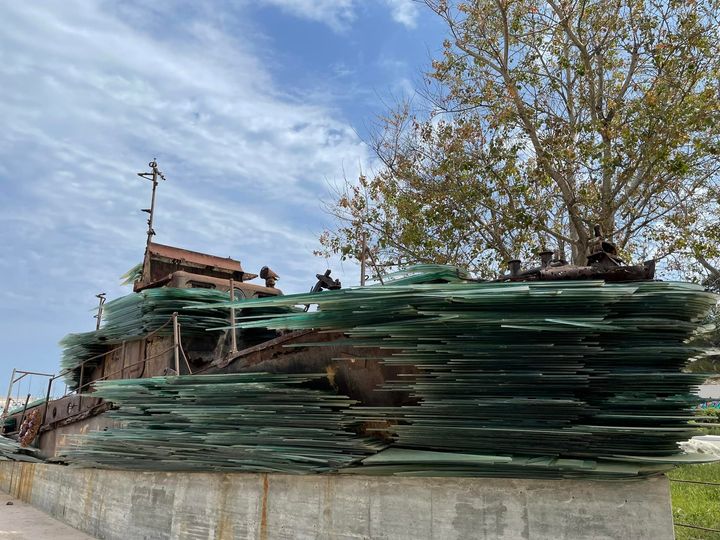
Otranto is almost at the tip of the heel of Italy’s boot with Albania just across the Adriatic Sea. It’s port does little trade but an impactful sculpture emphasizes its ties to the sea. In 1997, an Albanian ship full of immigrants fleeing civil war sank after a collision with an italian navy ship doing its best to keep them out. Eighty one people drowned. The City of Otranto recovered the sunken ship and the Greek sculptor, Costas Varotsos, transformed it into a beautiful memorial not only to those lost in this migration-preventing skirmish but as a symbol of migration across time. He felt that this was symbolic of the shipwreck of contemporary European society, hopefully ushering in a much needed restart.
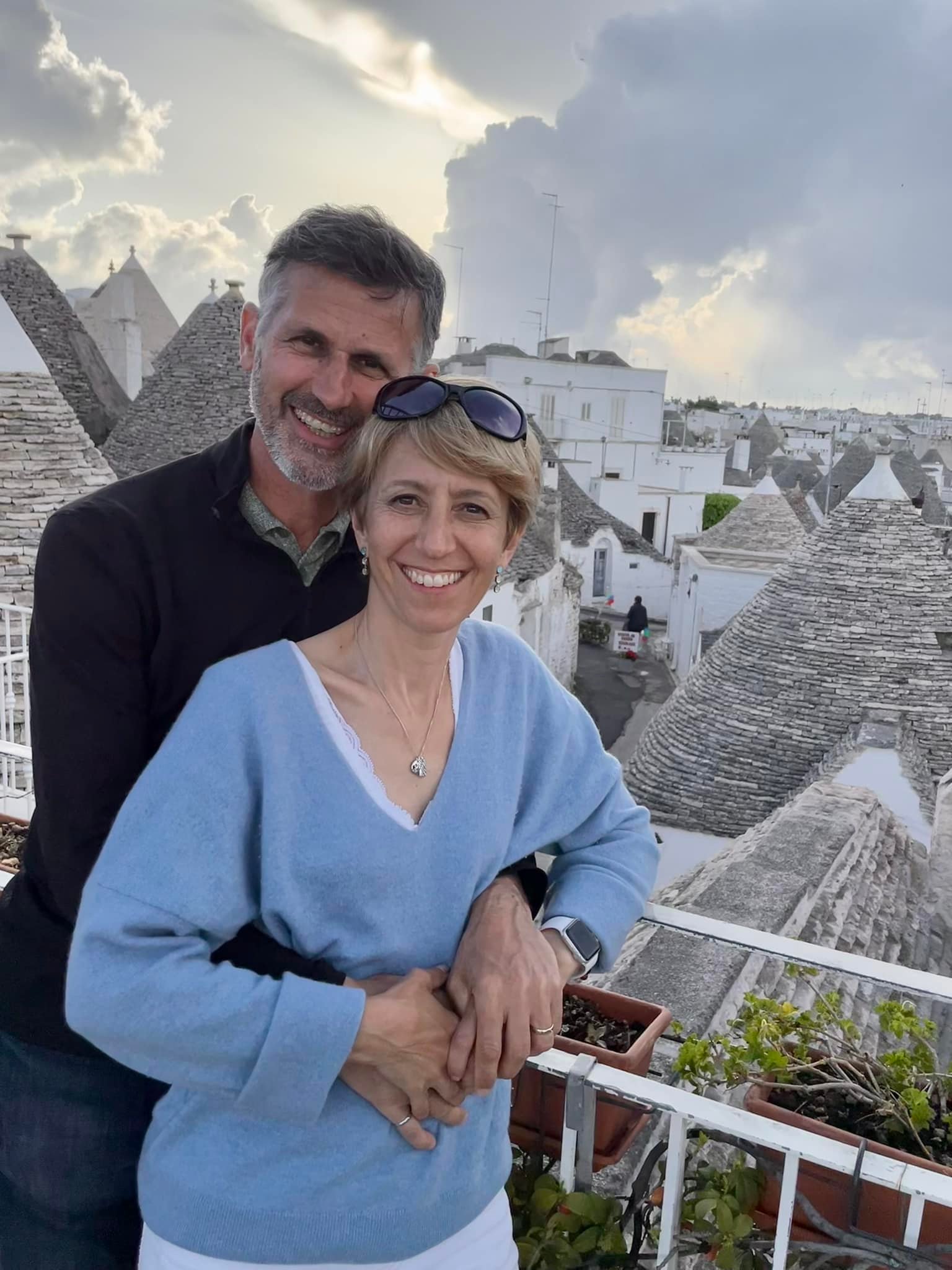
Alberobello is a relatively young town in Puglia, having only been settled in the 16th century by a Count with a mind for business. He allowed 40 peasant families to settle in the area and work the land in exchange for 10% of their crops. Over the years the city grew and more houses were built with the stipulation that they must use dry stones and no mortar in the construction. This made them easily demolished so they didn’t have to pay taxes. These little structures are the very cute Trulli, round stone houses with a cone-shaped roof. These little structures were used both as houses and for agricultural storage.
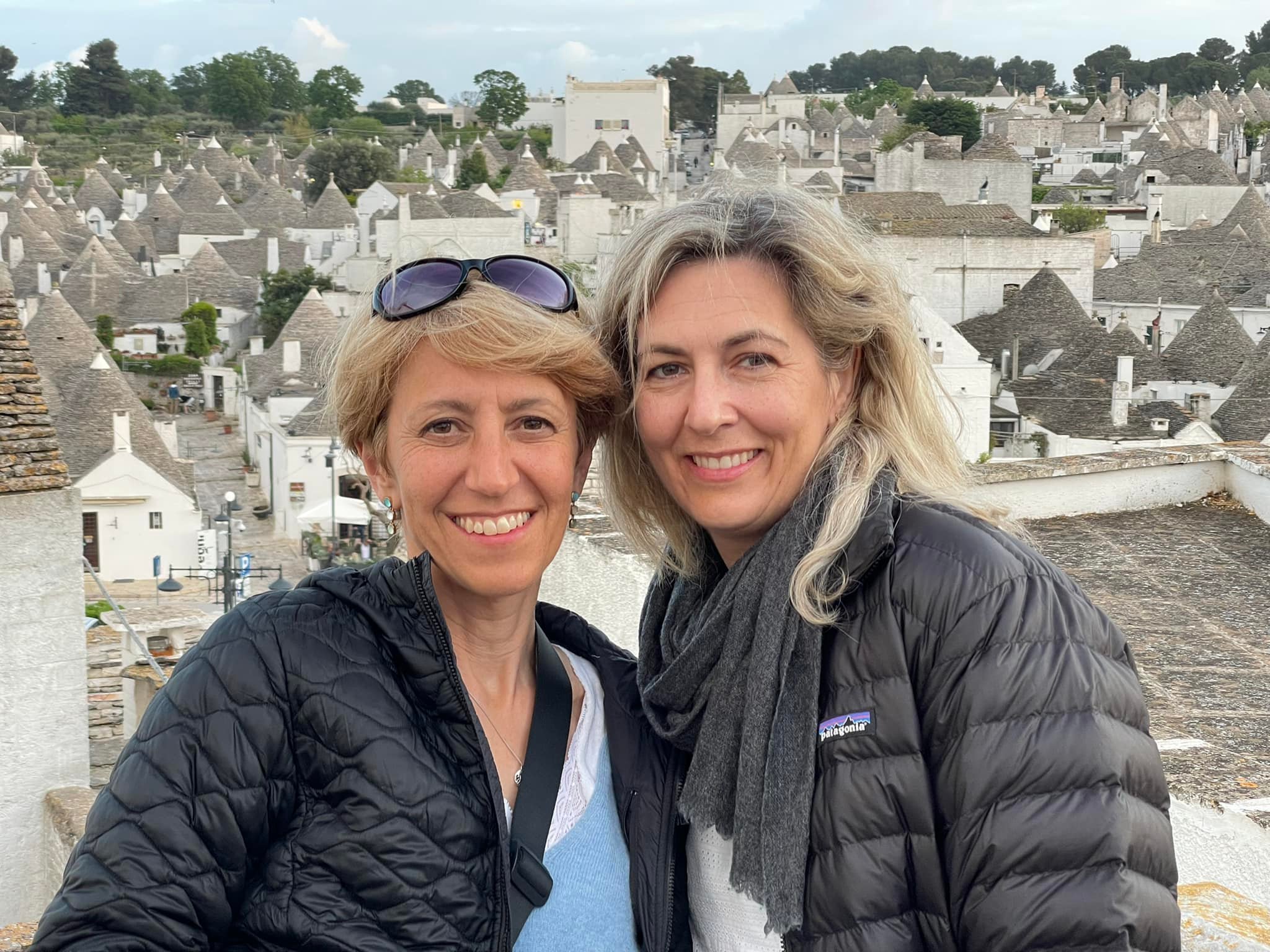
While Trulli are dotted around the region and visible from the highways. Alberobello is the only place with an entire neighbourhood of Trulli so it is designated as the Trulli cultural capital. It makes for a very unusual landscape but has fallen into the tourist trap. That being said, the quirkiness of the place certainly makes it worth a visit.
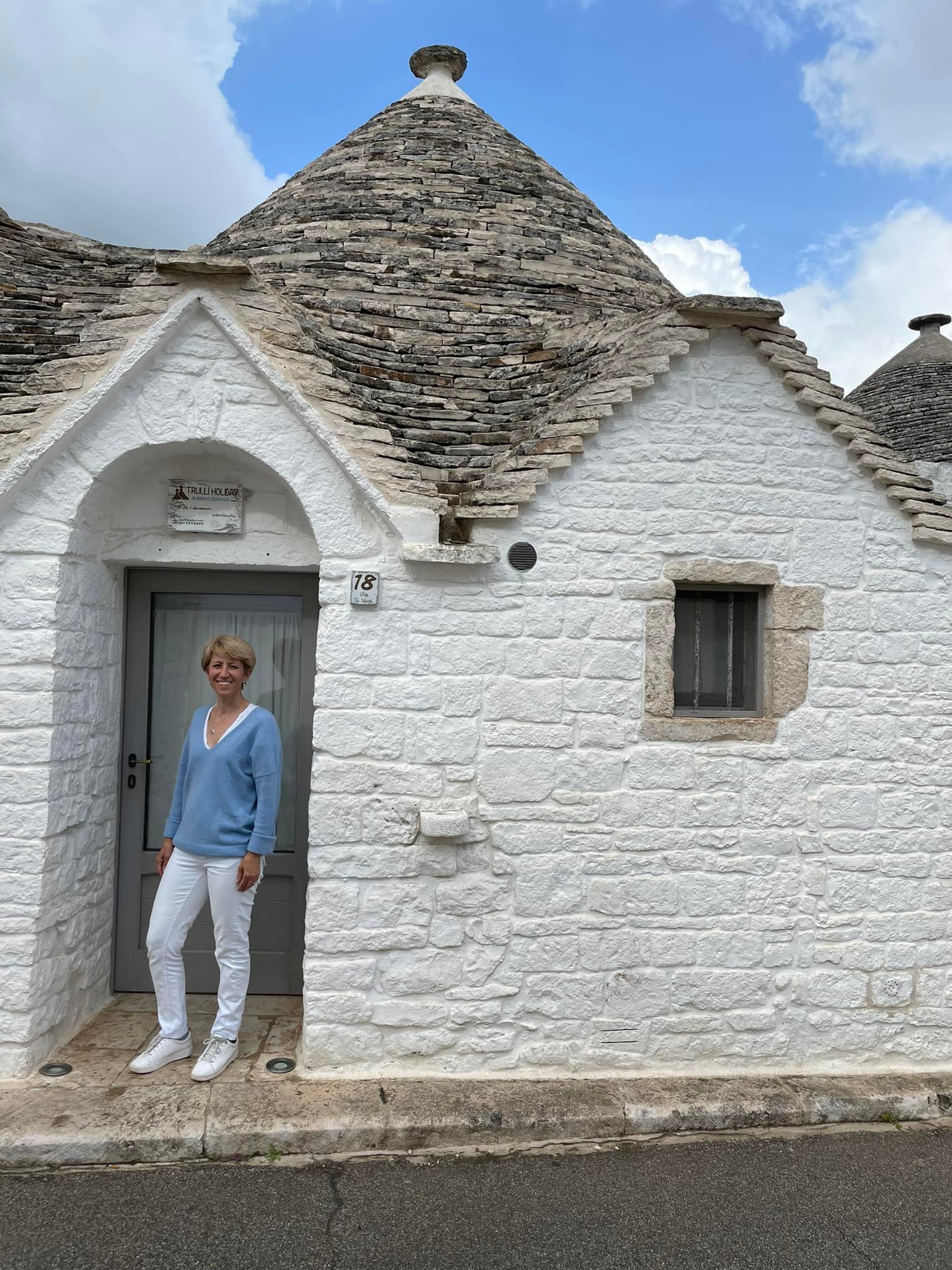
Mama Smurf in front of her lodgings for the night.
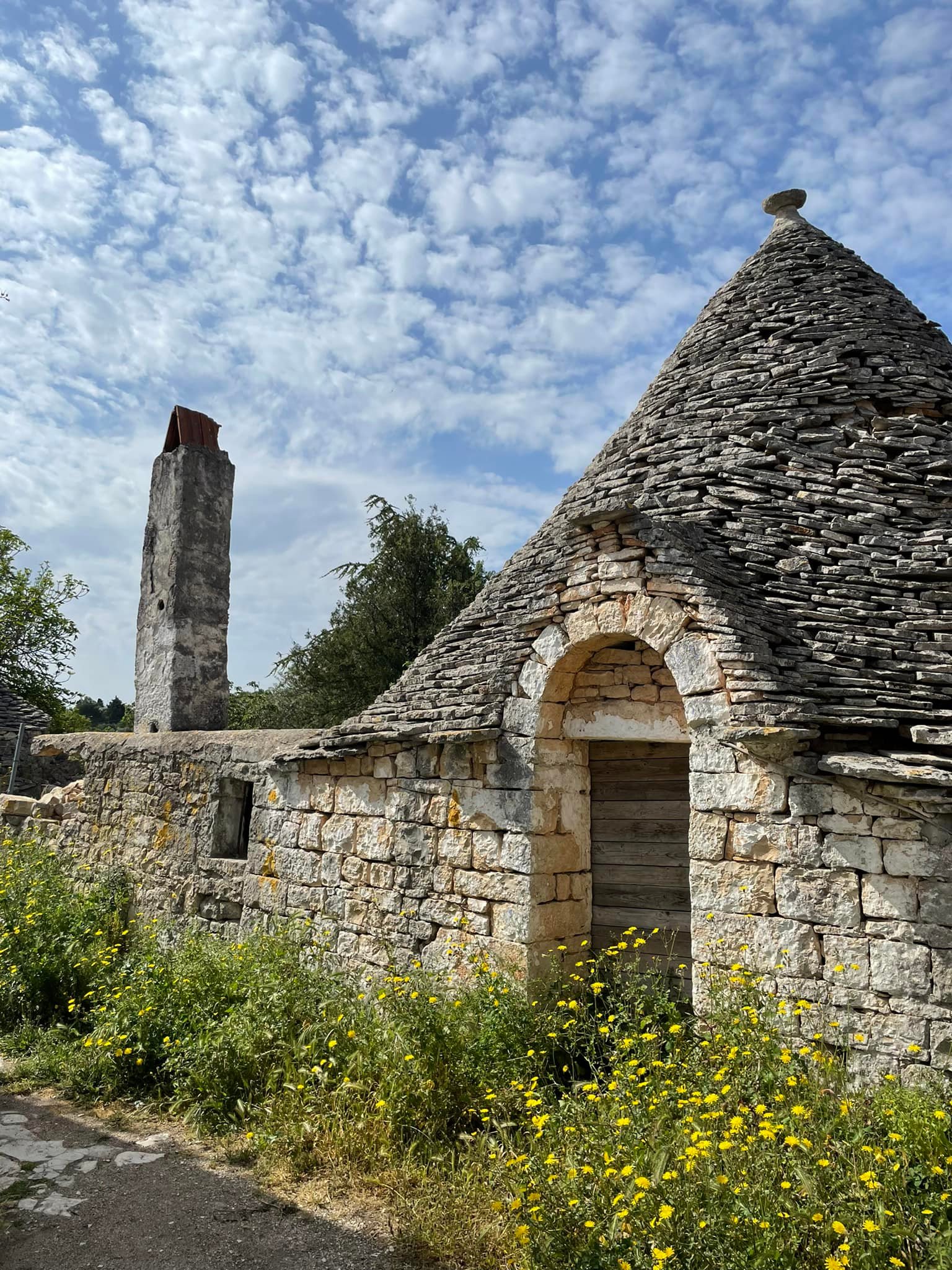
An old trullo house before getting fixed up as tourist accommodation.
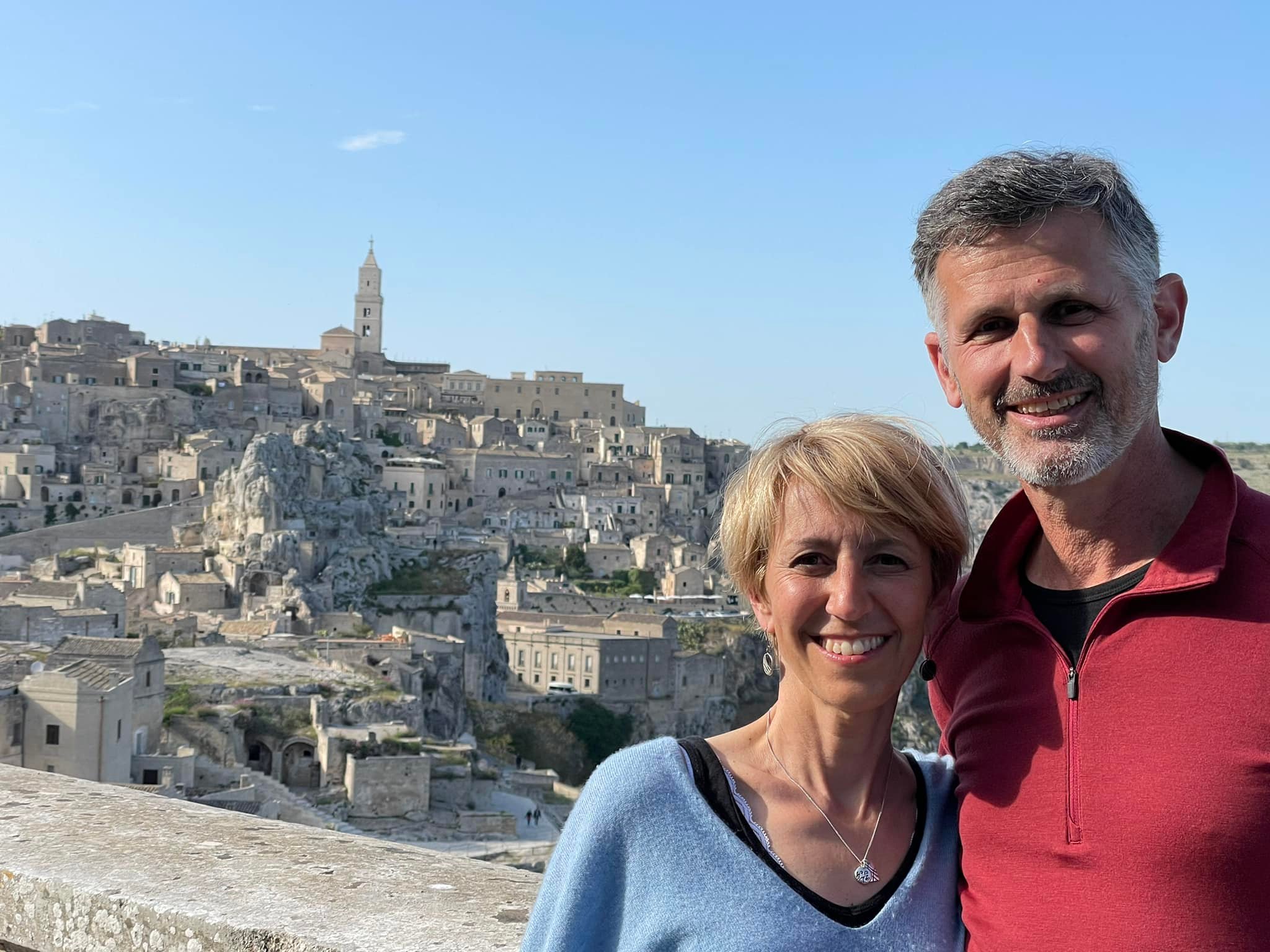
Welcome to Matera, possibly the oldest continuously inhabited settlement in the world. It is thought to have been settled in palaeolithic times, 10,000 BC. And we were fortunate enough to settle here in a fancy cave for a night 12,000 years later!
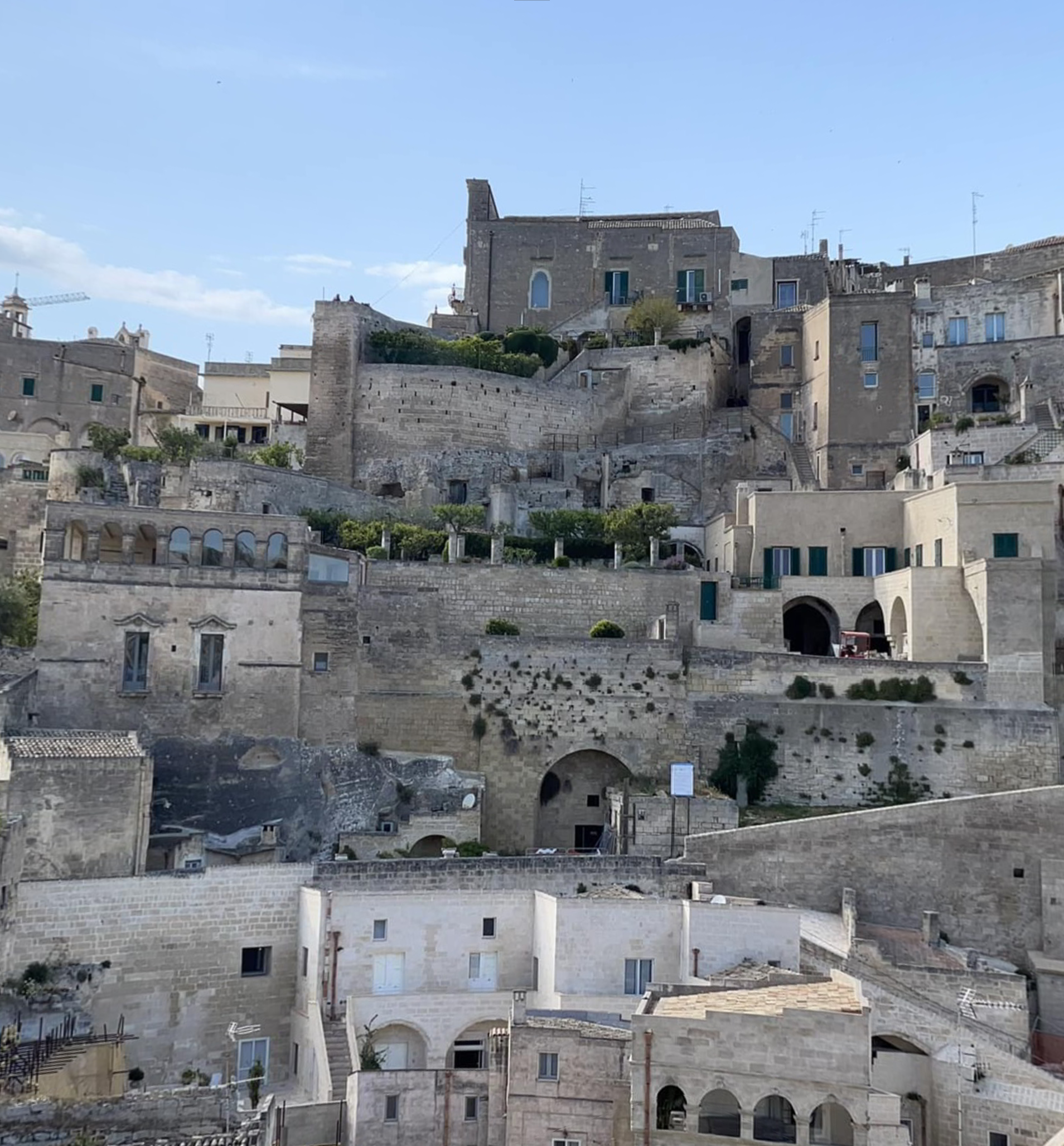
The so-called Stassi (stones) are ancient caves built into the canyon walls above the Gravina River. These caves had been occupied until the 1950s, while the more “modern” city grew up around them. This is the first eco-sustainable city in the world. The way the cave houses were dug out and built one on top of each other and sloping down the mountain helped maintain an even temperature throughout the year and kept the people socially connected. Unnoticed by the government until the late 1800s, these cave dwellings were a bastion of extreme poverty and disease. The government finally stepped up in 1952 to evacuate the area and move the residents to more modern and housing. It took another 30 years for some bright entrepreneurs to realize there was gold in them thar caves. Enter tourism and movie-making. Luxury hotels and fancy restaurants have moved into the caves and lots of movies have been filmed here, notably James Bond No Time to Die.
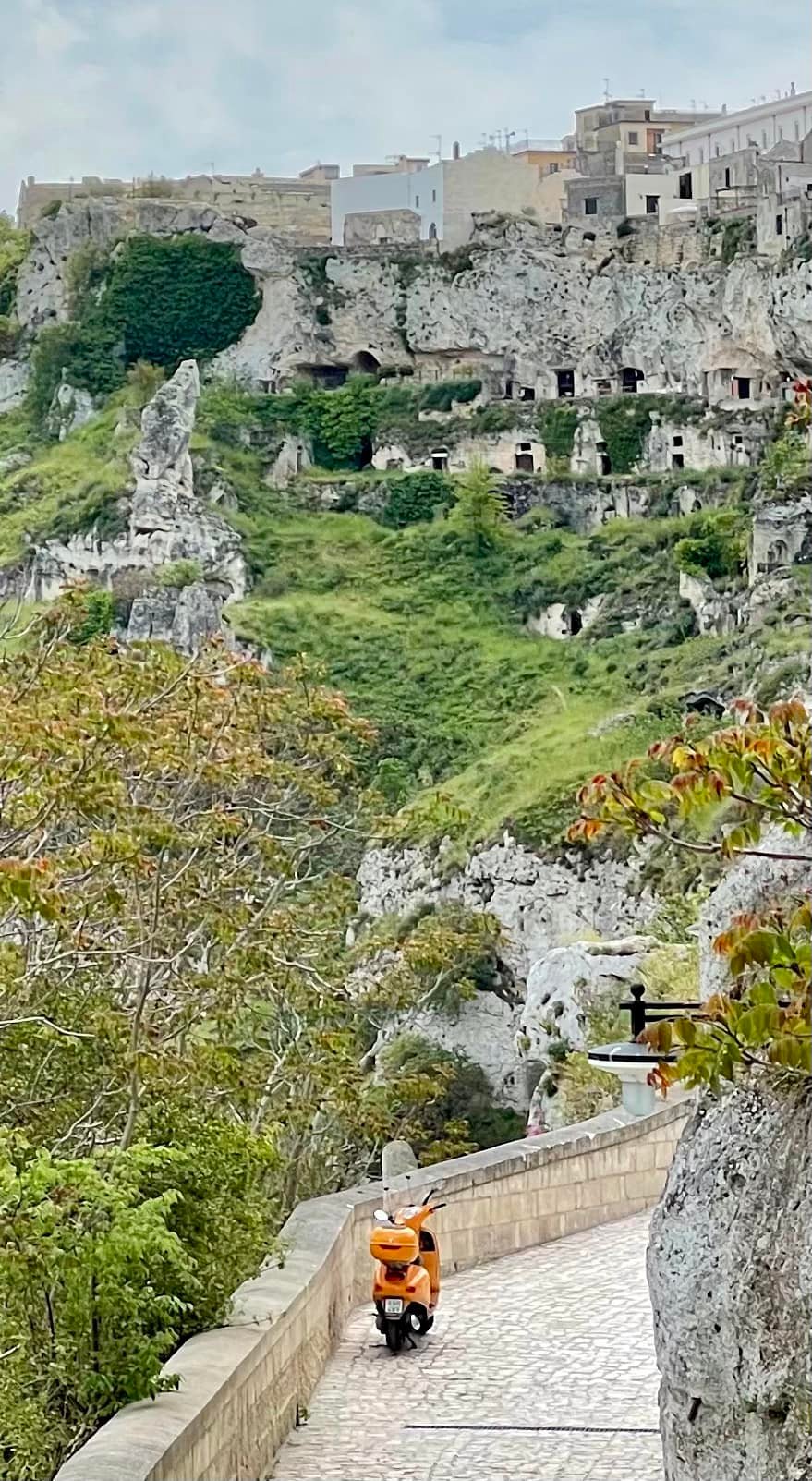
In their heyday, before squalor set in to cave life, these structures were marvels of ingenuity. The small residential homes were occupied not only by large families (we saw one where two parents and nine kids lived…one queen-sized bed) but also their chickens, donkey and necessary hay. There was some taking turns sleeping on the bed, in a dresser drawer for the littlest ones, on a shelf or in the dining table when not mealtime). Water was stored in cisterns and each house had a well…but not necessarily an orange Vespa.
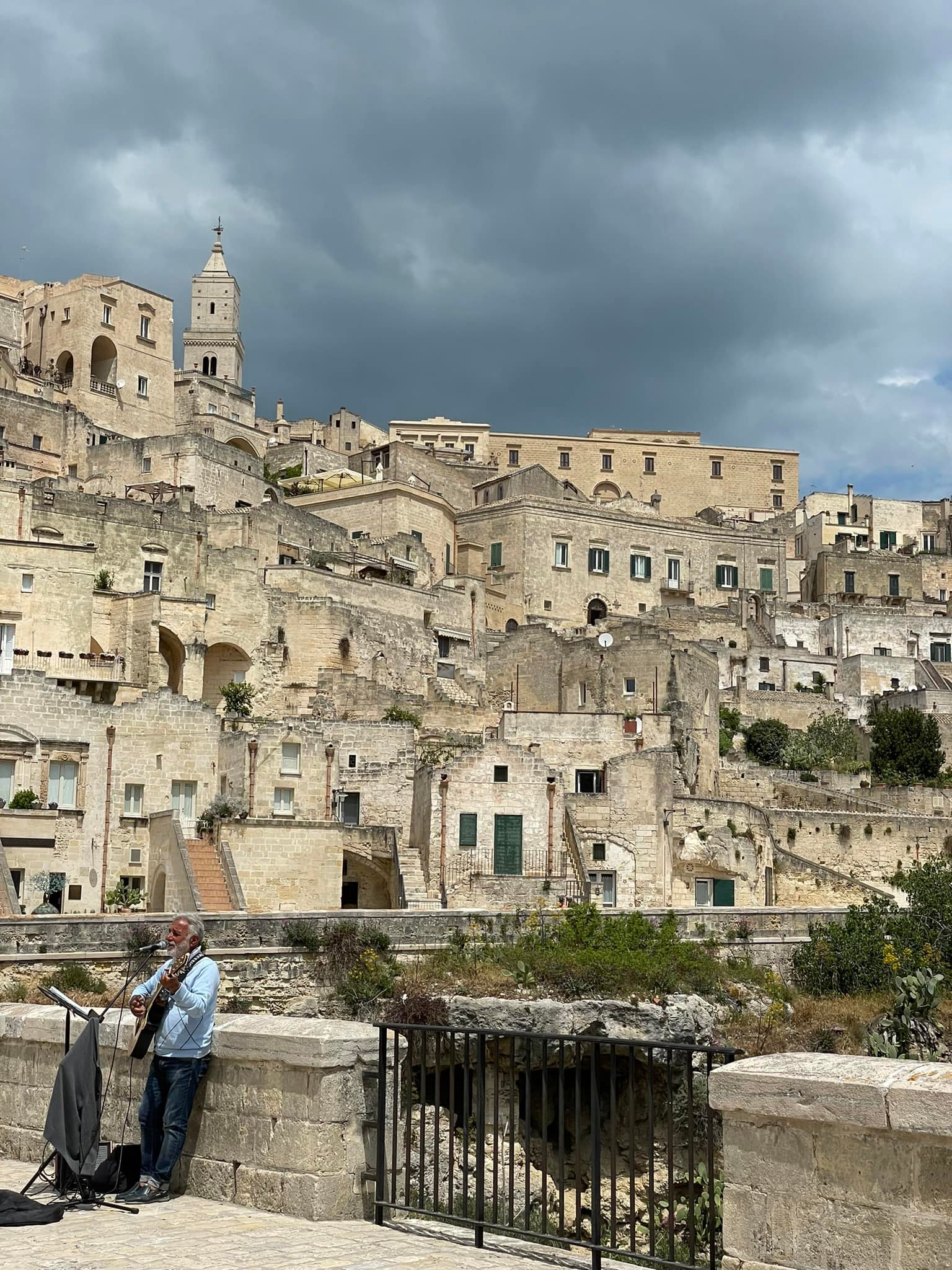
Moody music under a moody sky. One thing we so enjoy here, that is sorely lacking in Vancouver, is street music.
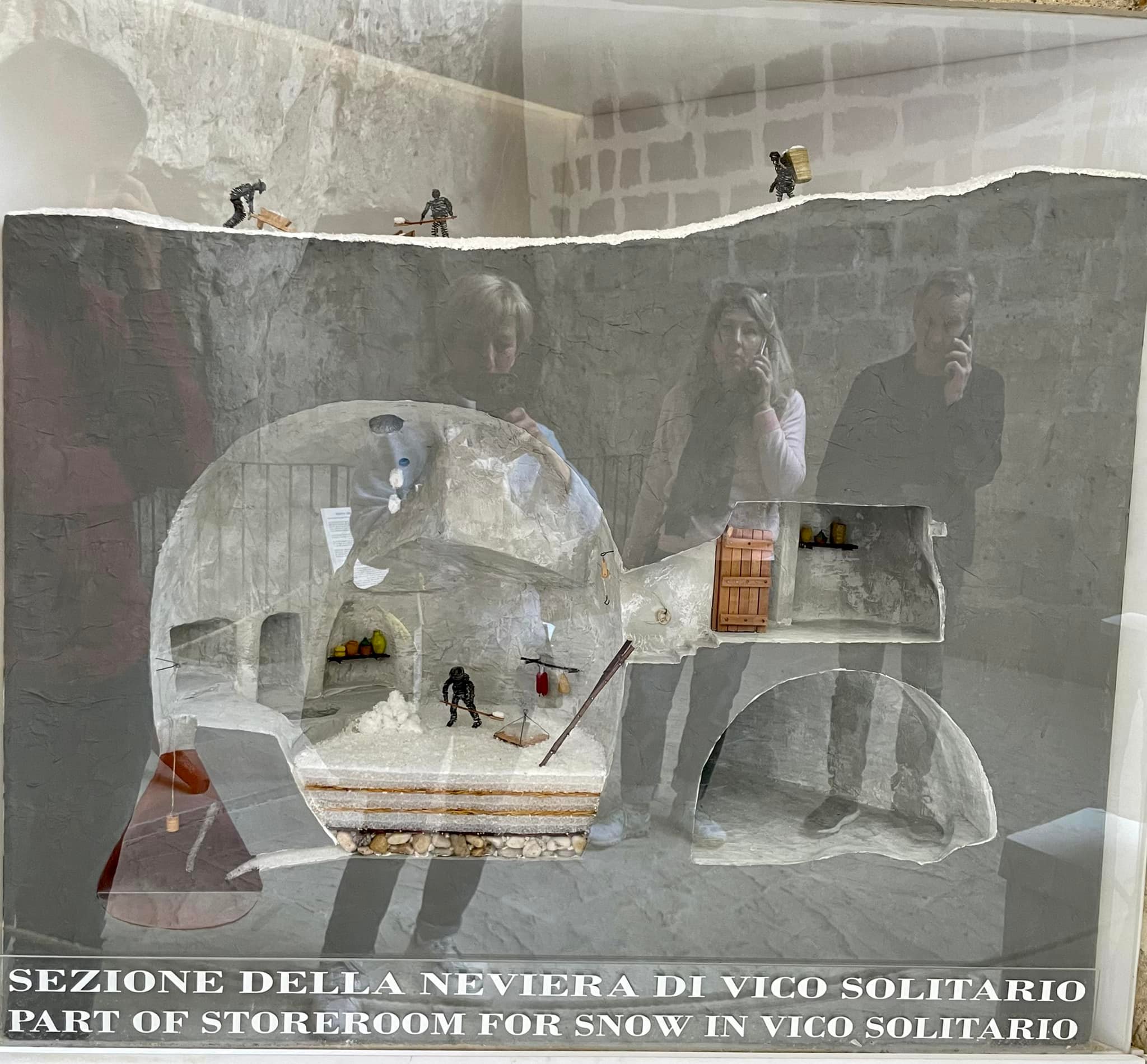
Hard to see the details but zoom in and try to ignore the reflections of Kevin, Julie and me. Mind-blowing was their system for creating and storing ice! In winter, people dumped the snow through a hole in the cave’s ceiling. Someone inside was responsible for spreading it out flat and making layers of snow between layers of leaves. The bottom layer would ultimately melt but there was a drain channeling the water to a cistern for storage, possibly the public cistern which held 5 million litres of water. As the upper layers of snow compressed and turned to ice, they cut it into blocks to be used either for healing, food preservation or sale to others.
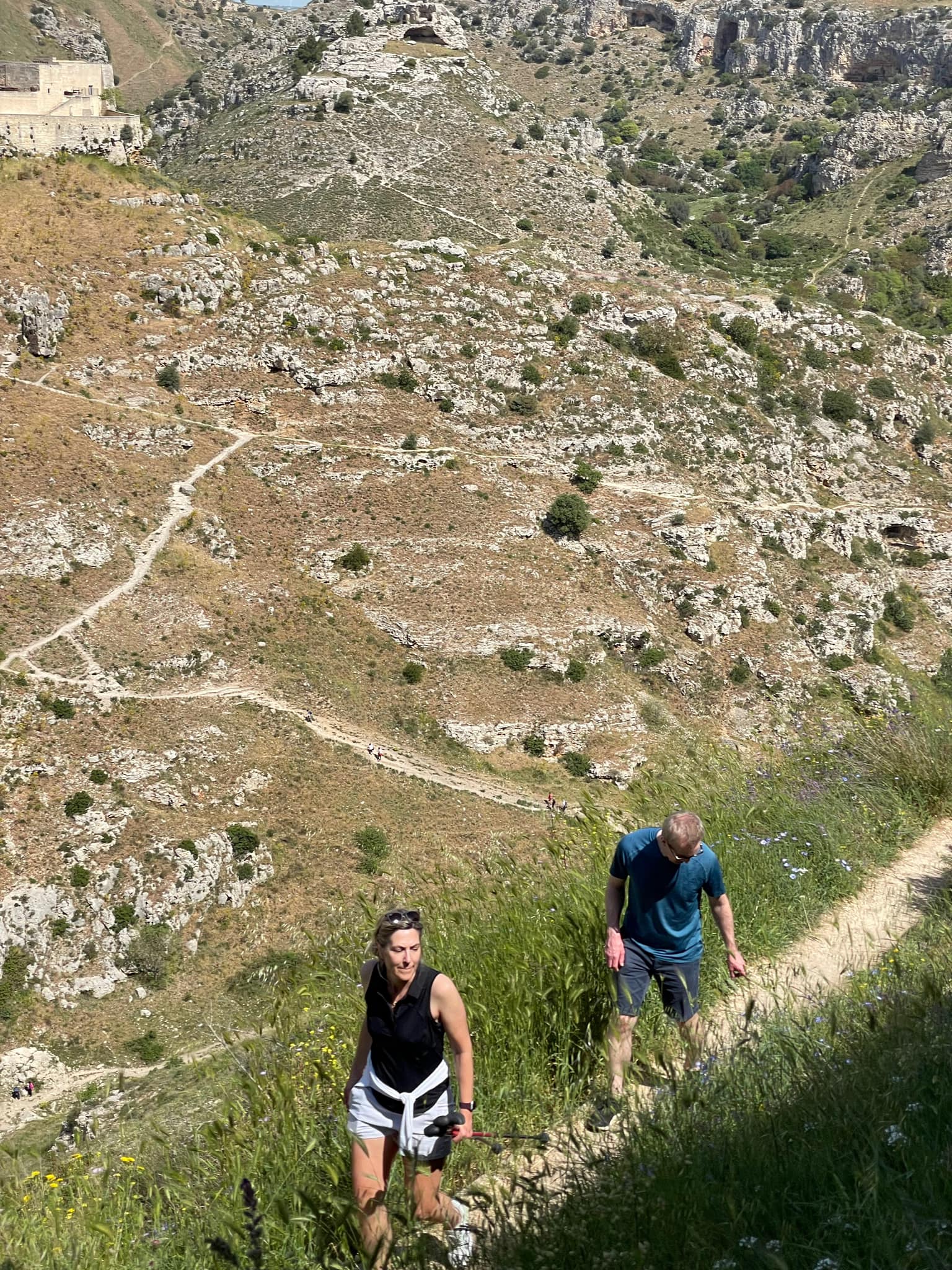
We hiked down one side of the ravine, across the trickle of the Gravina River and up the other side. Beautiful hike and stunning views.
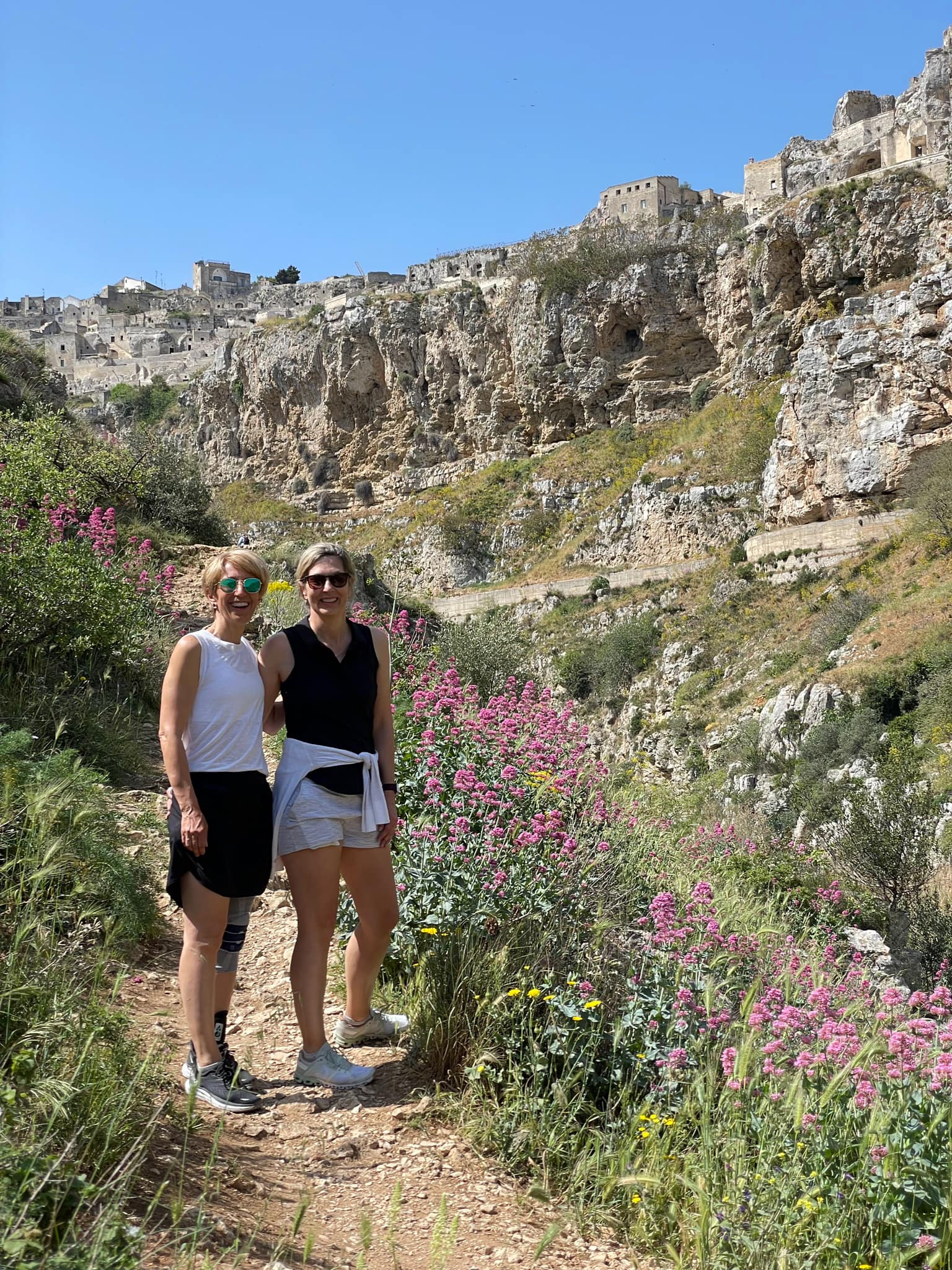
Early wildflowers in the Parco della Murgia Matanera
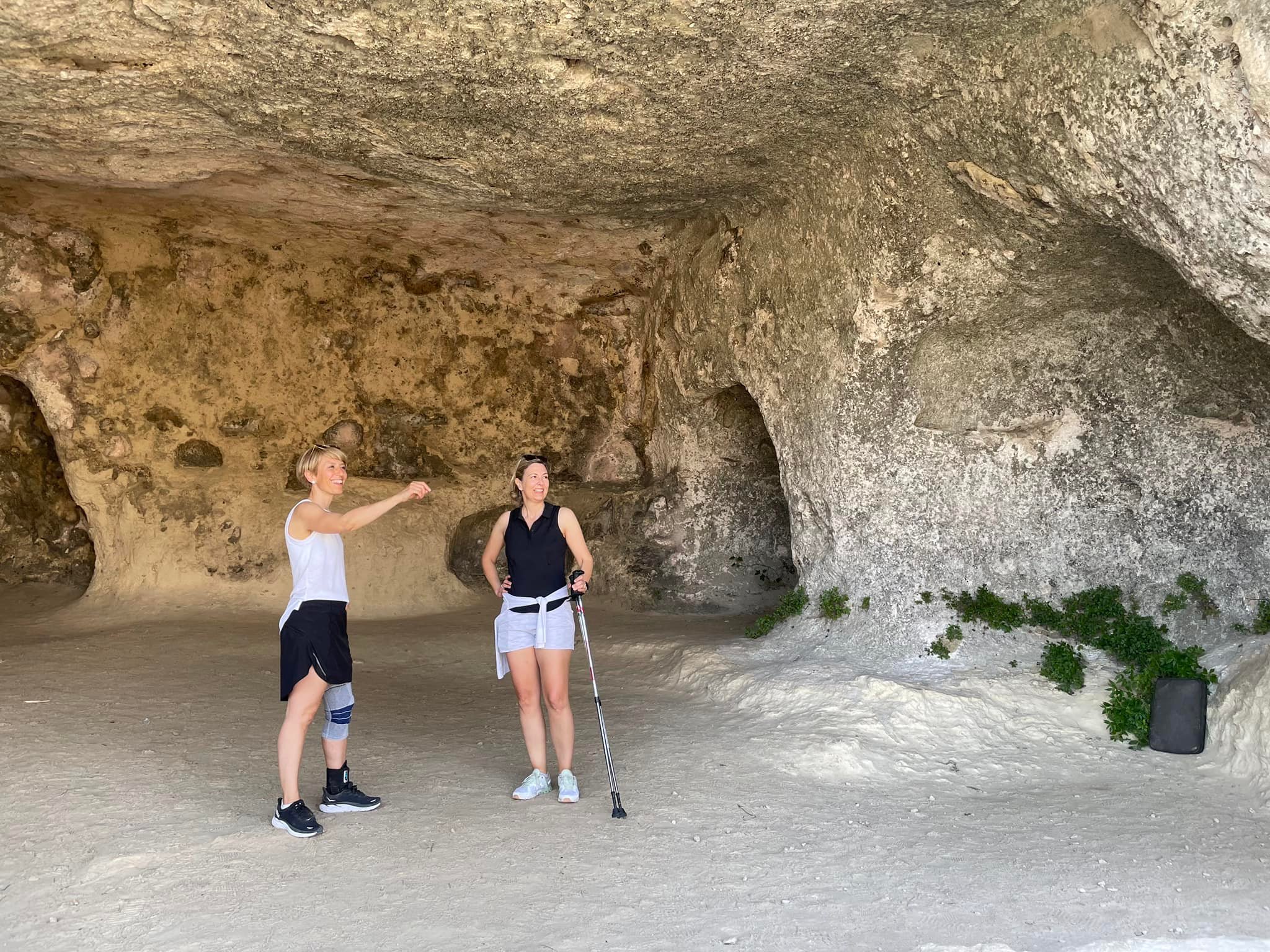
One of the caves in the Murgia Timone. Room for sleeping, cooking, donkeys and more!
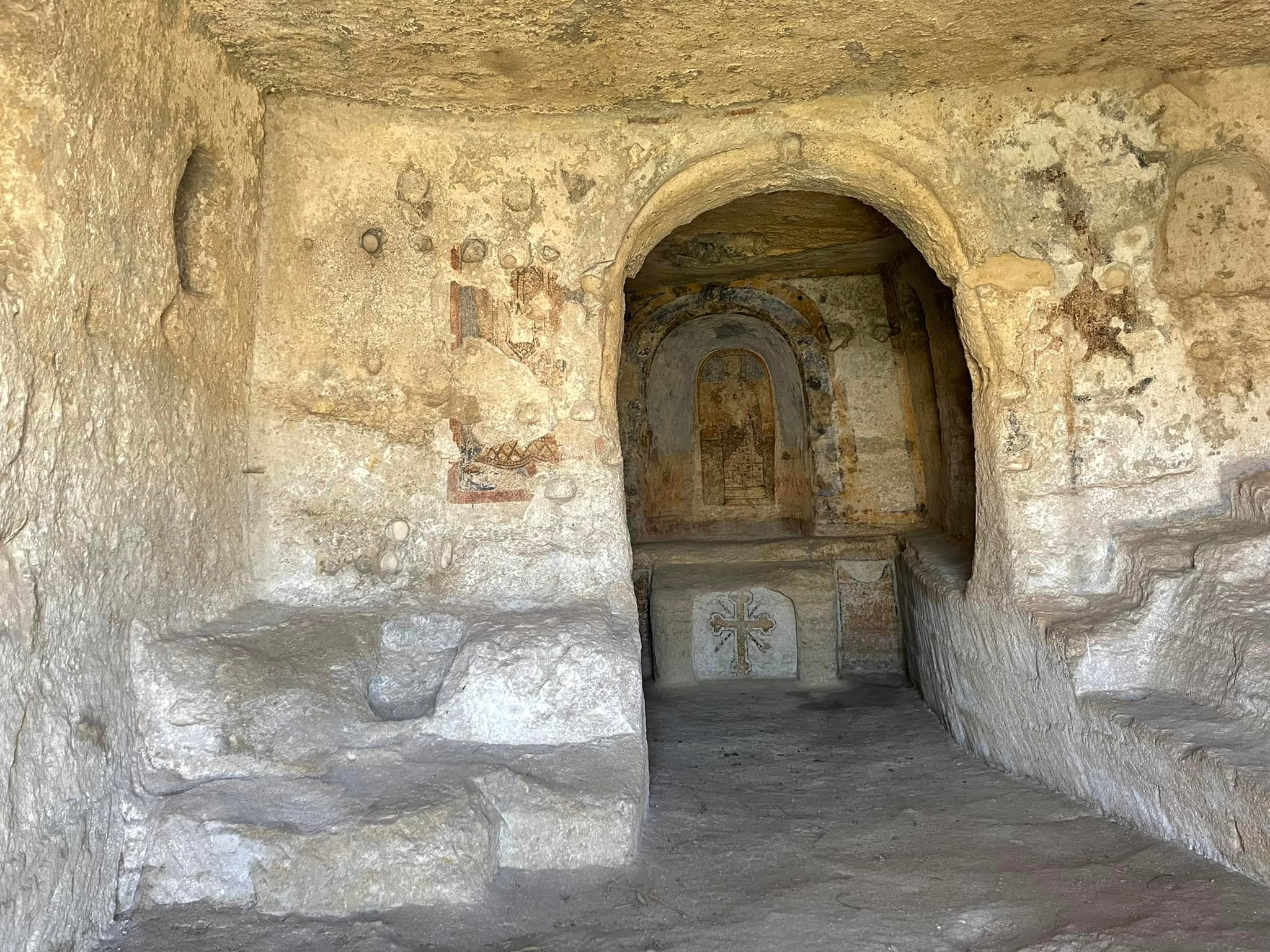
The Chiesa Sant’Agnese is carved into the slope on the Murgia Timone side of the ravine. The fresco at the back is dated to Byzantine times, perhaps as early as the 5th century. Having a place of worship is clearly a priority throughout the ages.
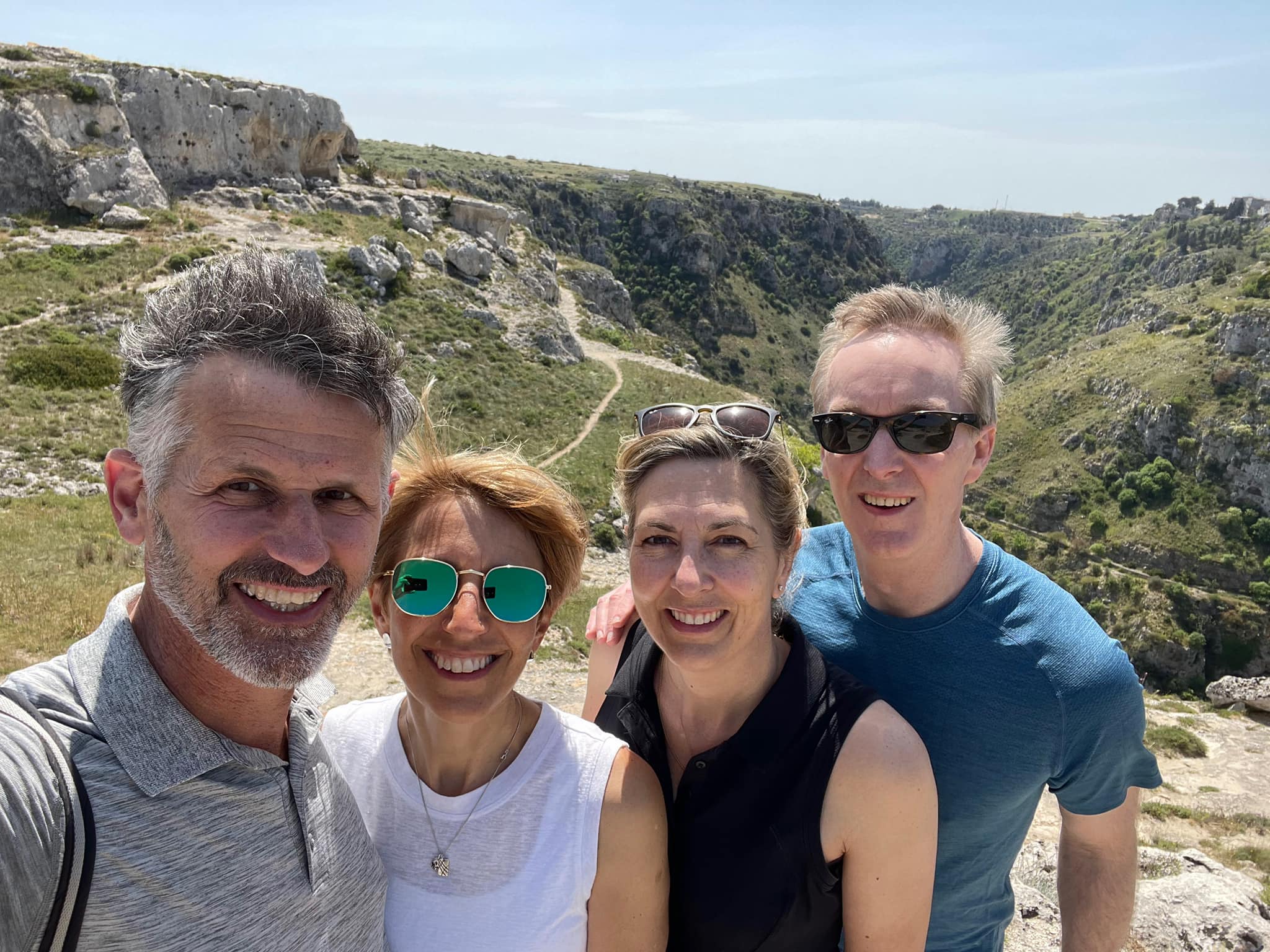
And that’s a wrap for Matera! Loved every second.