May, 2022
Phallic Pompeii
How to describe Pompeii…enormous, unbelievable, best snapshot of 2000 years ago possible…well, all that and phallic. I had no idea the ancient Romans had such an obsession with sex and penises. While things were fairly equal and women were also encouraged to enjoy sexual freedoms, it’s still all about the penis in Pompeii.
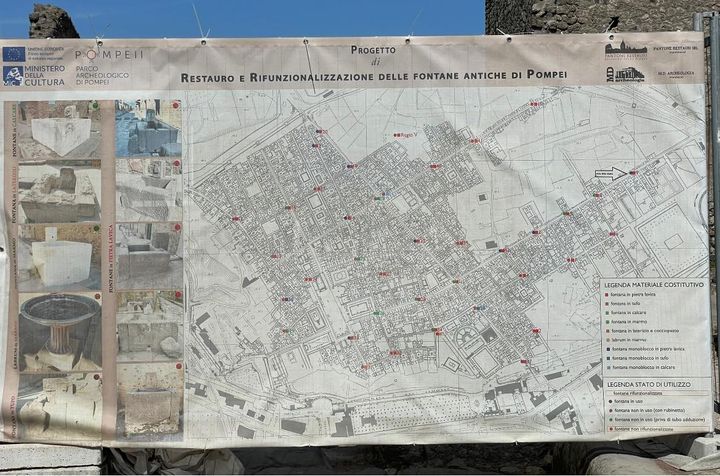
There are lots of ruins to visit around the world, individual structures dotted around the landscape but nothing like this. This was a bustling city with streets and intersections, and with shops and houses for the 20,000 people who lived there, and the countless more who visited to avail themselves not only of the performances in the enormous amphitheater (20,000 seats) but also, as we now know, in the bedroom. The six metres of ash that covered Pompeii after Vesuvius erupted in 79 AD and the speed with which it destroyed the city (25 hours) did wonders for preserving the entire city. This map shows the city we can still see today, the size of which is about 170 acres. For perspective, it is about the size of U of T’s campus, four times the size of Granville Island, or 125 football fields.
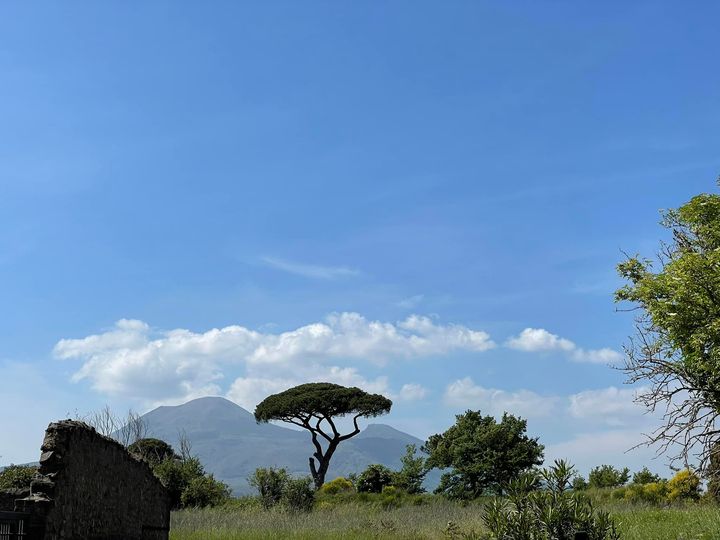
Thankfully, Vesuvius is not leaking…The eruption in 79 AD was so powerful that the volcano destroyed itself. Vesuvius is now 1,281 m but prior to the eruption it was over 4,000 m.
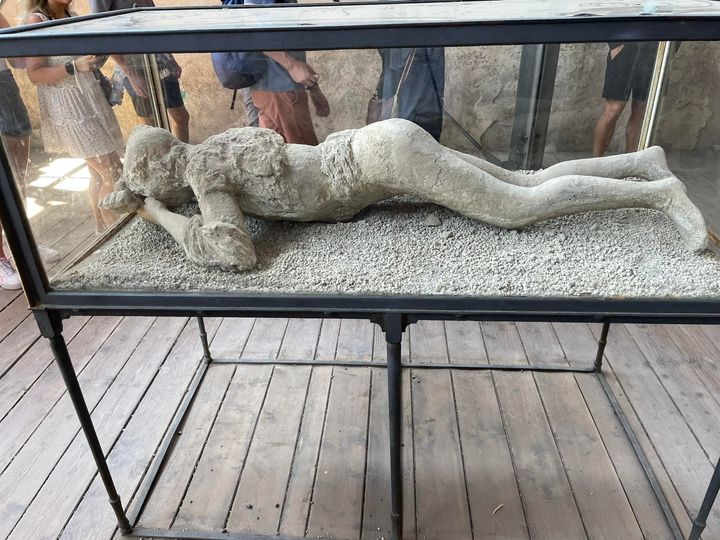
Volcanic ash and mud encased everything in the city. They realized they were finding bodies covered in solidified ash so they filled the cavities with plaster and this is what they got. When they first started excavating in 1748 by digging down vertically and then digging horizontally like you would dig a subway line, they weren’t very careful and lots of elements would have been damaged. By 1813 when archaeology was in vogue, some clever person said they should carefully dig and brush dirt from the top down to preserve the site.
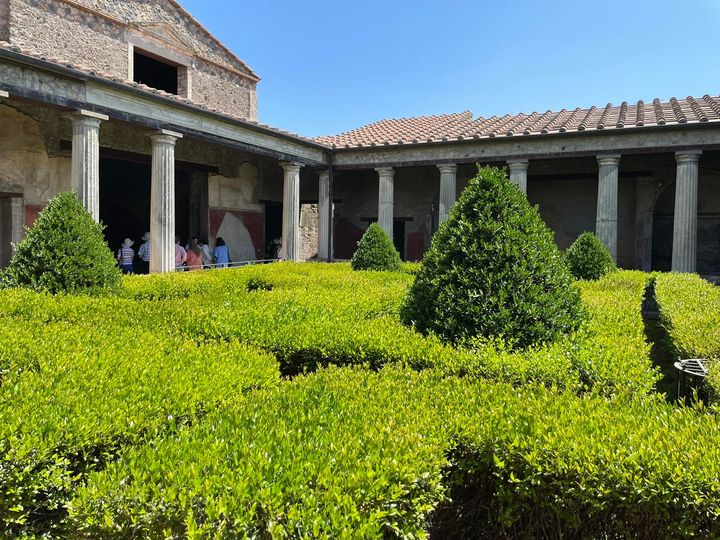
As with the bodies they found, they made plaster casts of the plant material and have replanted many areas exactly as they would have been planted in 79 AD.
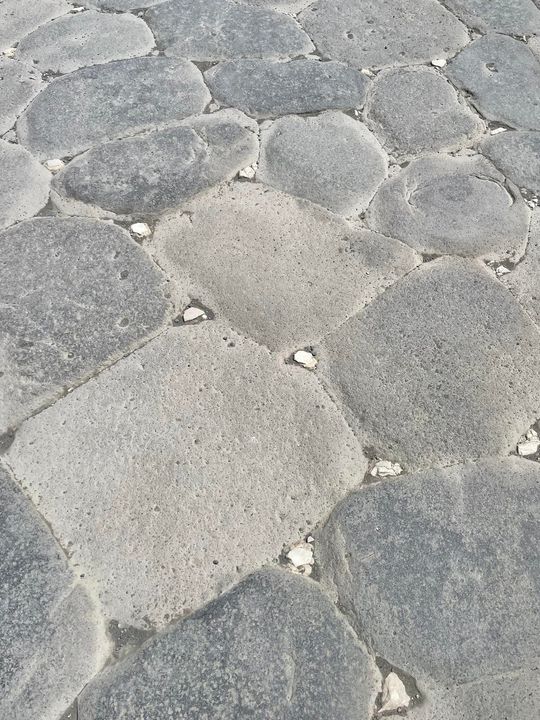
Little pieces of marble between the stones in the street served as streetlights by moonlight.
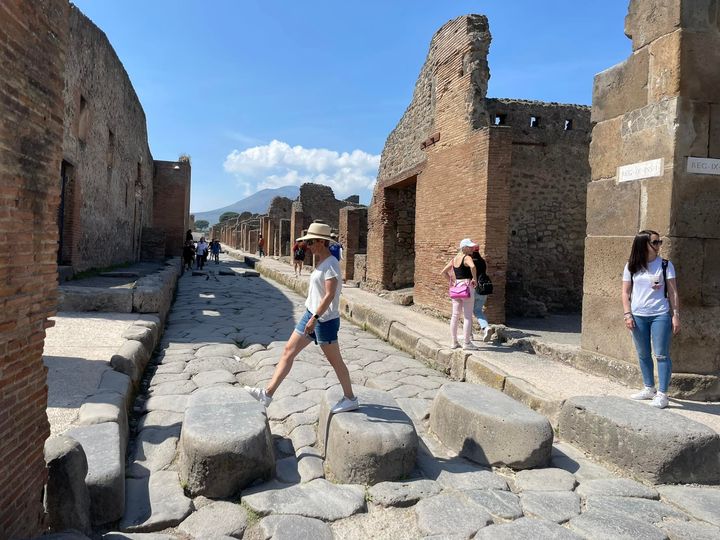
The streets filled up with garbage and waste, making it kind of disgusting to wade through when crossing the street. Hence, the raised stones.
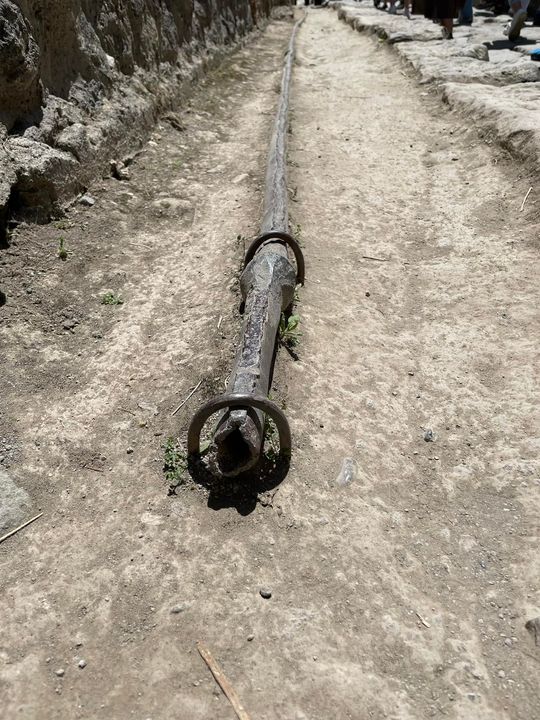
While the ancient Romans were clever beyond imagination, bringing water to towns and managing its flow, the one thing they didn’t know was that lead is poisonous. While lead pipes brought Pompeii close to having indoor plumbing, it resulted in cutting the average lifespan to 40 years.
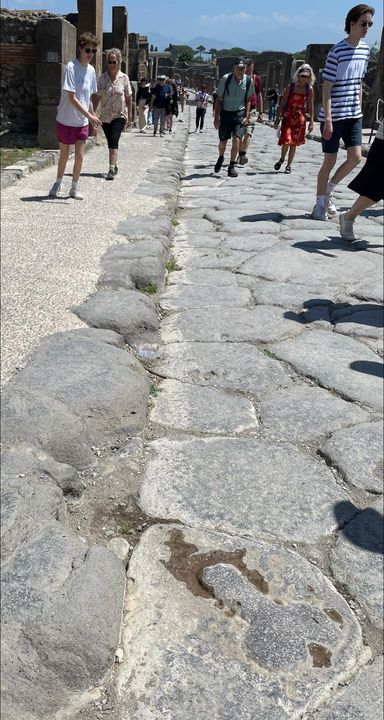
Note the carved street stone bottom right. Some say this is serving a directional purpose, pointing to the brothel.
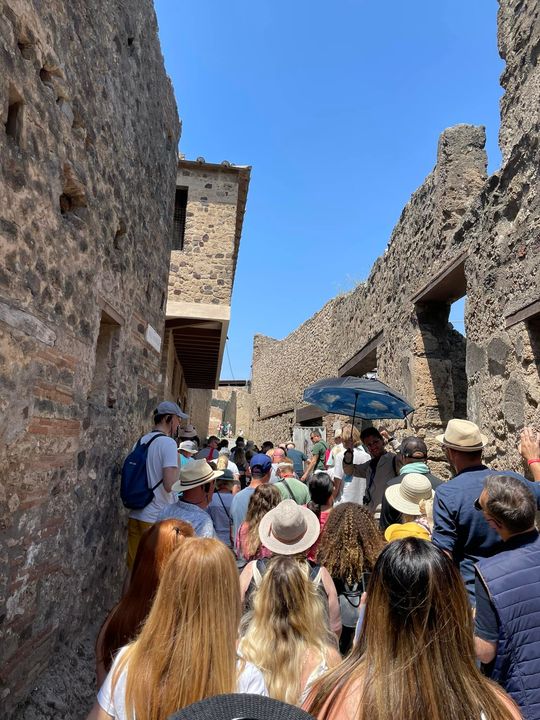
Just like in Pompeii’s heyday, a tourist lineup at the Lupanar, the local brothel (lupa is Latin for prostitute). Here there were five rooms at street level equipped with a built-in bed (i.e. a big piece of stone), the doorways closed by a curtain. On the second story, the owner lived with the slaves, typically Greek or Asian, who were the prostitutes. Prostitutes were both male and female as the times were free and easy and homosexuality was as normal as heterosexuality.
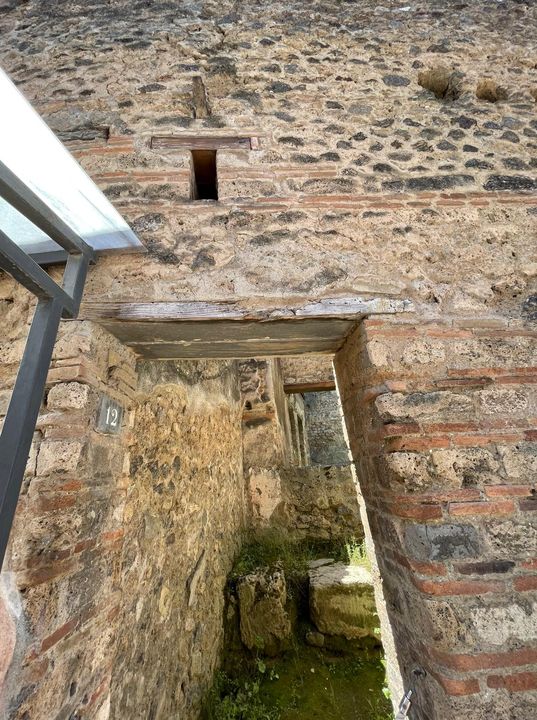
A view into one of the street-level brothel rooms with a rather firm bed. If you look above the door you can see a little window. Above the window is a protruding sculpture of a penis some say to identify the purpose of the room, others suggest it was to ward off the evil eye.
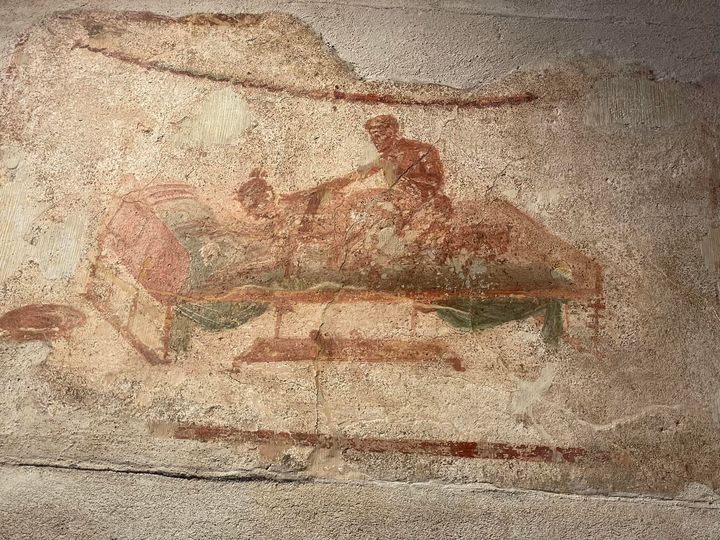
Inside the central corridor of the lupanar are a series of erotic paintings…inspiration perhaps?
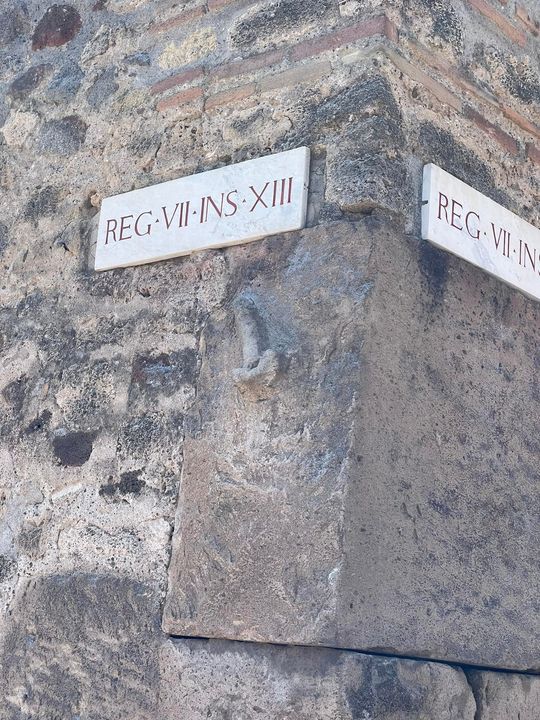
At this intersection, just below the street sign on the left, we see yet another example of Pompeii’s penile fascination. It was considered to be a symbol of good luck and fertility. Why? Because men could technically make a baby daily. Women needed nine months. So men and their penises were more powerful? Hmmmm.