March, 2023
Magical Mekong Delta
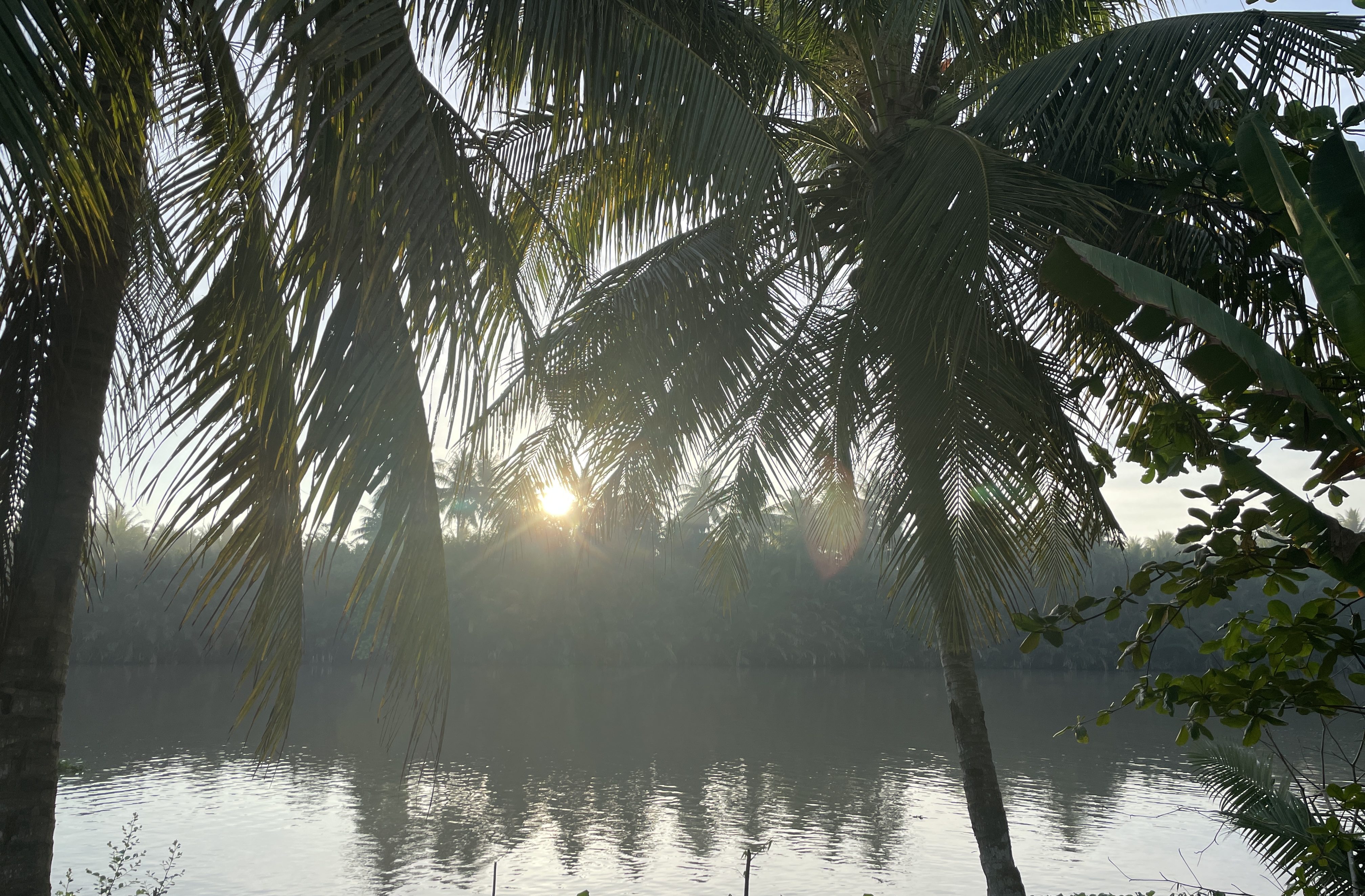
The Mekong River is 5,000 km long, starting in Tibet and running through China, Myanmar, Laos, Thailand, Cambodia, and finally ending in Vietnam. It is said to be the world’s largest inland fishery (25% of the global freshwater catch) but it is also one of the most polluted from excessive amounts of garbage being dumped into it. Pretty much all the fish we’ve been eating in southern Vietnam comes from the Mekong… it is a stunningly beautiful place with wonderful people who are willing to share the stories of their lives and livelihoods.
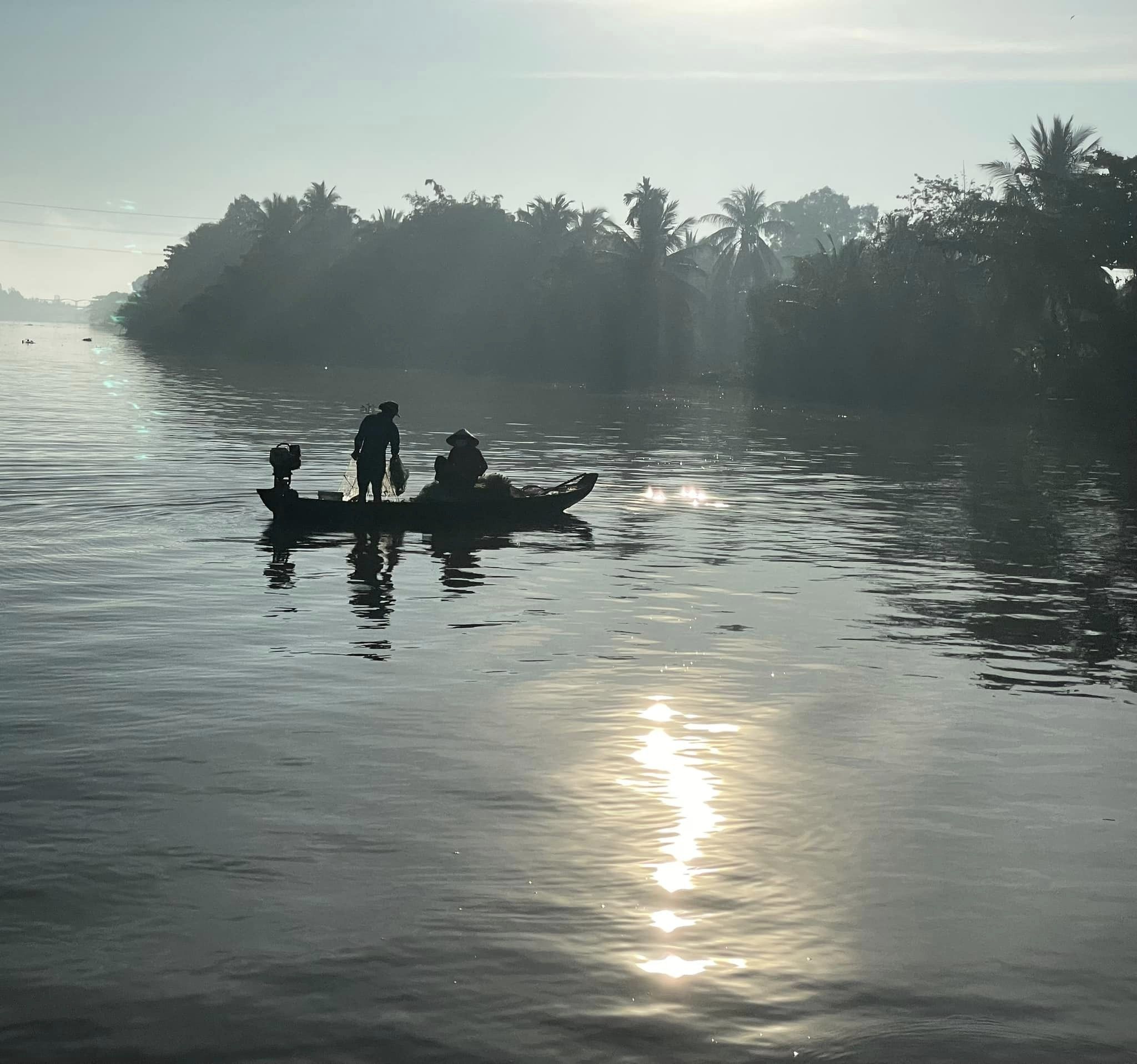
Sun rising over the Mekong River; the fishermen are already well into their day.
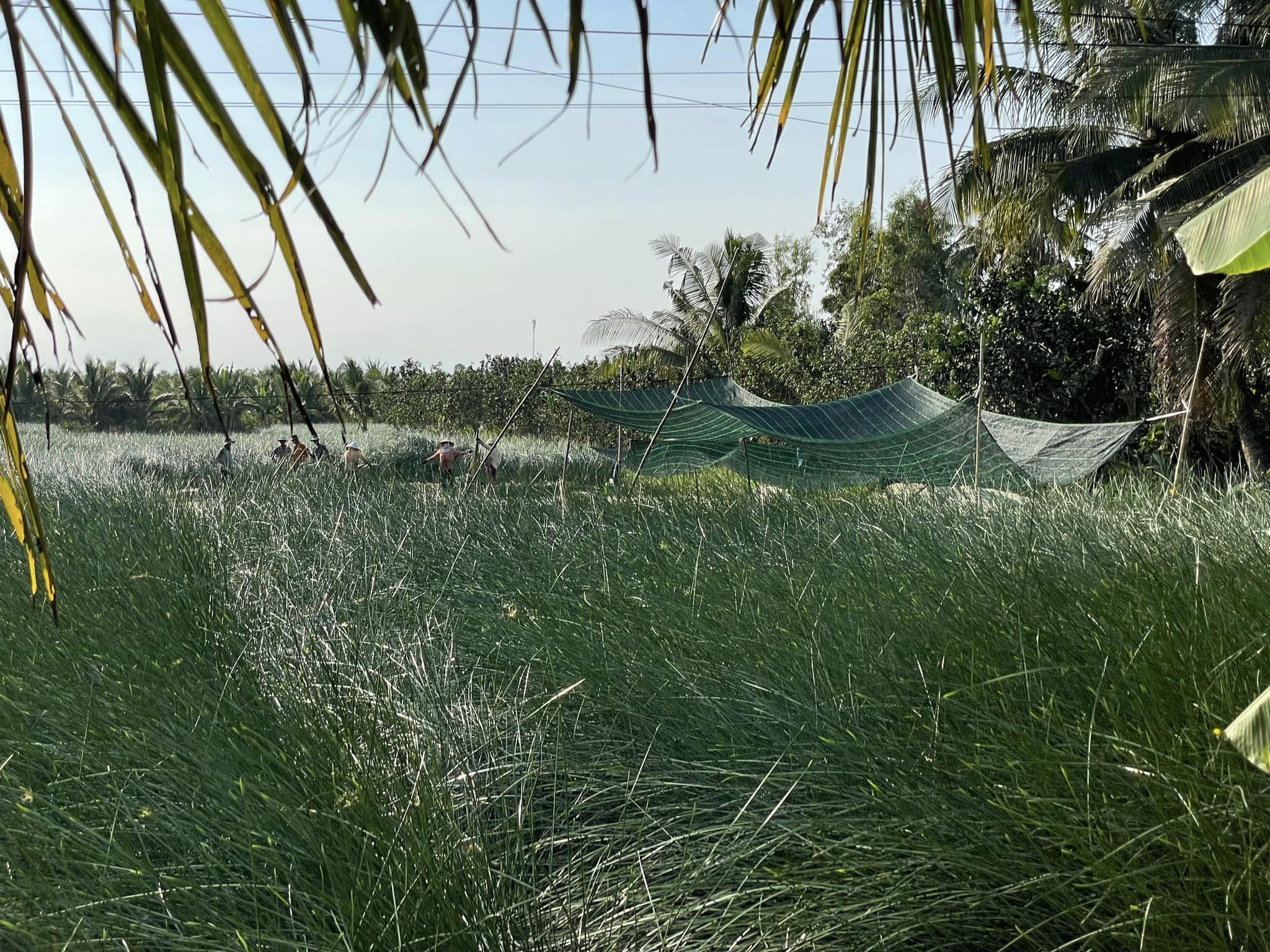
This is a very fertile area and absolutely nothing goes to waste. Here a bang grass field is being harvested. Grown in muddy water, this thinner bang grass is used to make rope and for weaving. There is also a thicker, hollow variety from a different region that they use to make eco-friendly straws. Added benefit is you can chew the straw after use to clean your teeth!
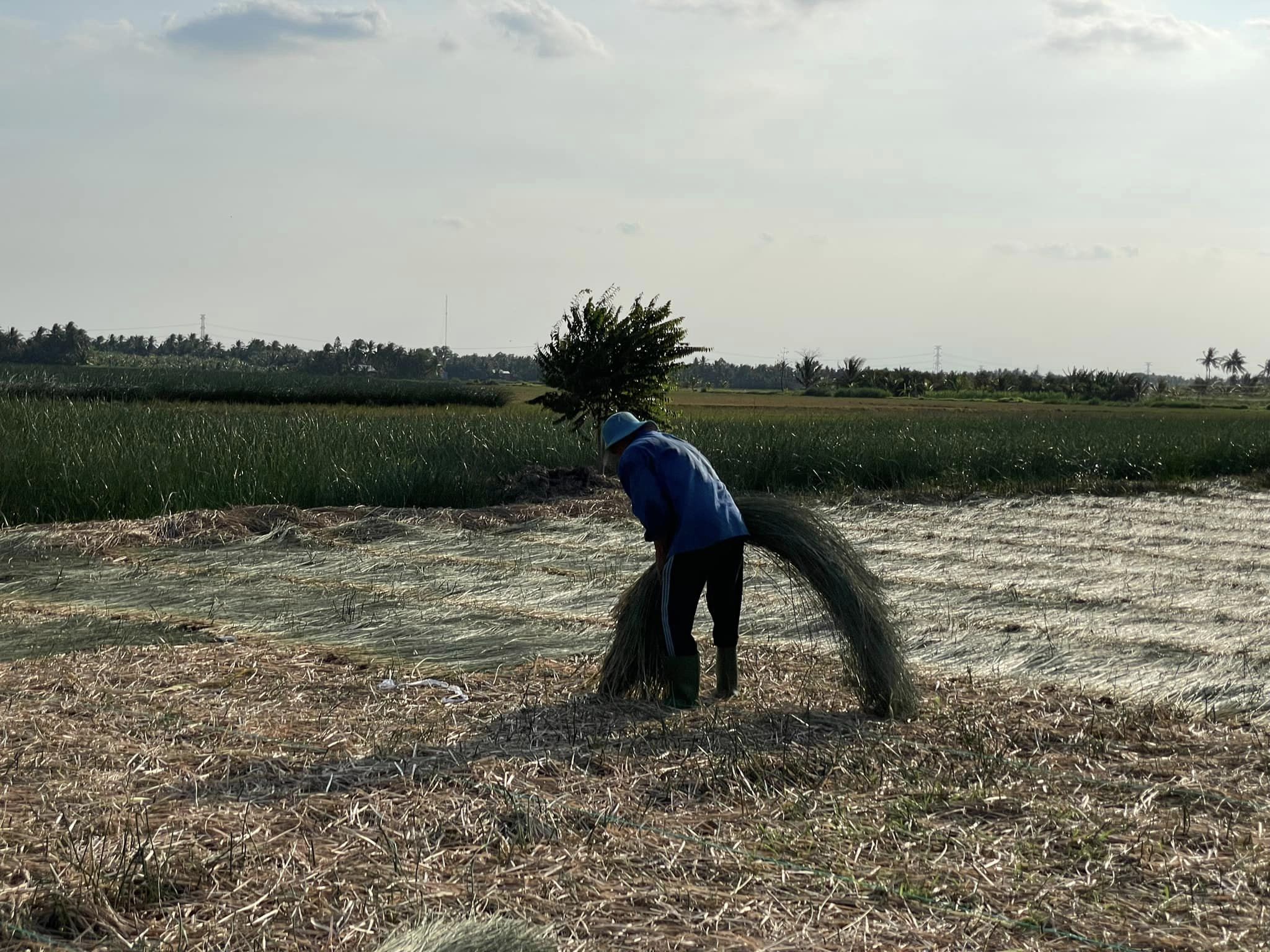
There is a multi-stage process for drying the grass. After it’s cut, it is laid out in the field for “two suns” before being bundled and fanned out for the final drying.
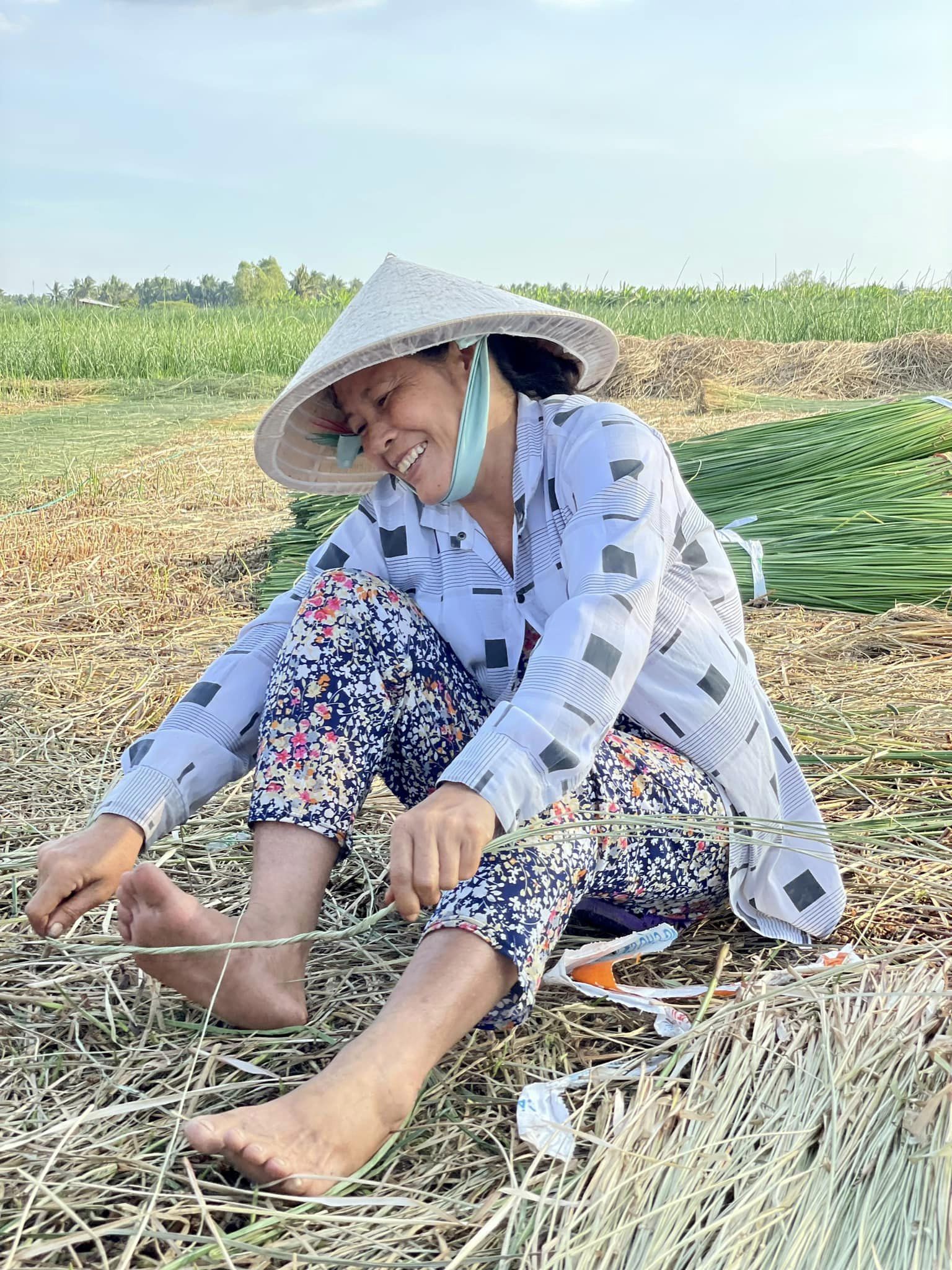
A most lovely field worker twisting the grass into ties to tie up the bundles. She couldn’t believe my age…I guess a relatively cushy life shows.
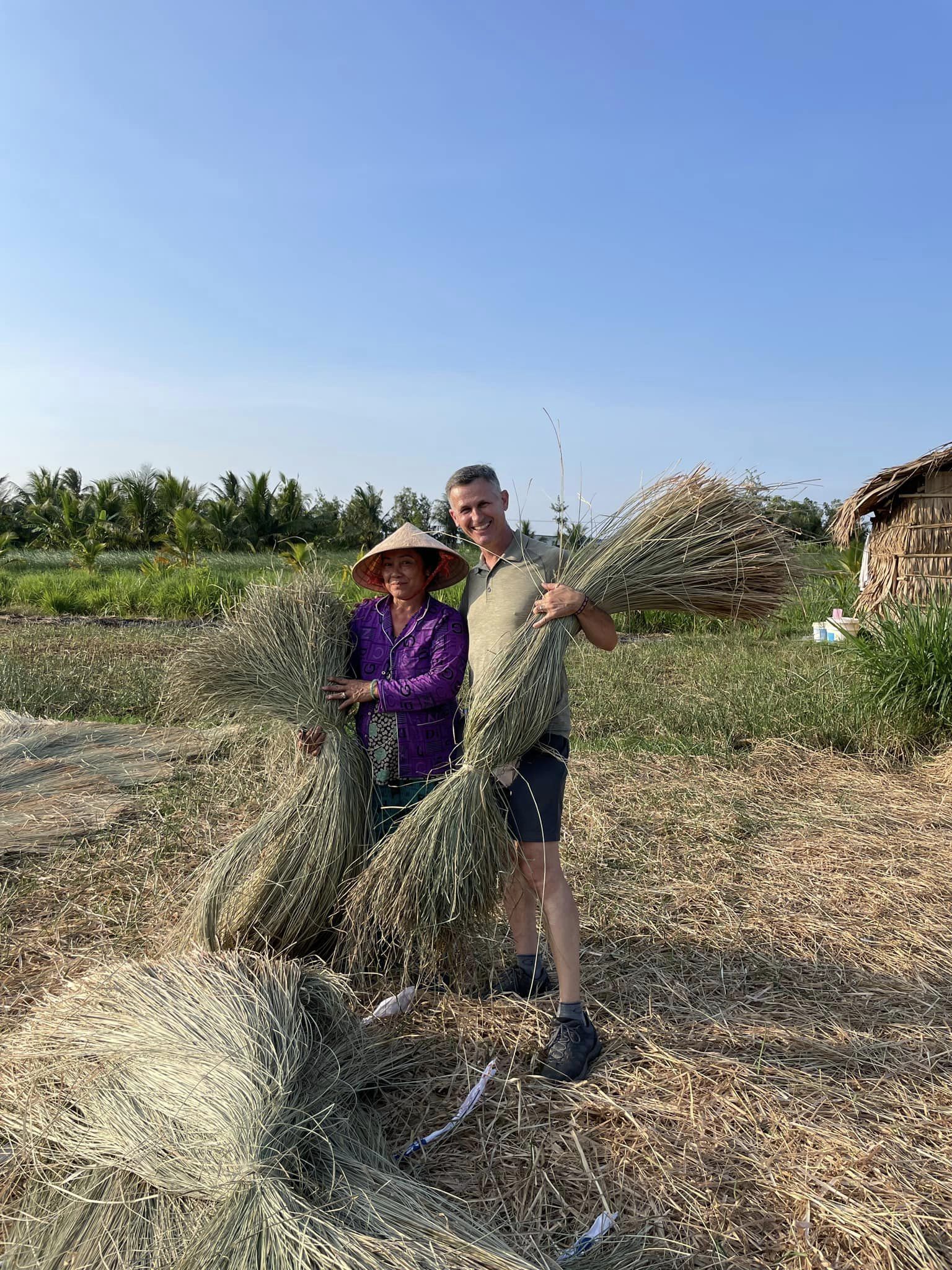
Adam interrupting a woman who was fanning out the grass bundles for the final drying.
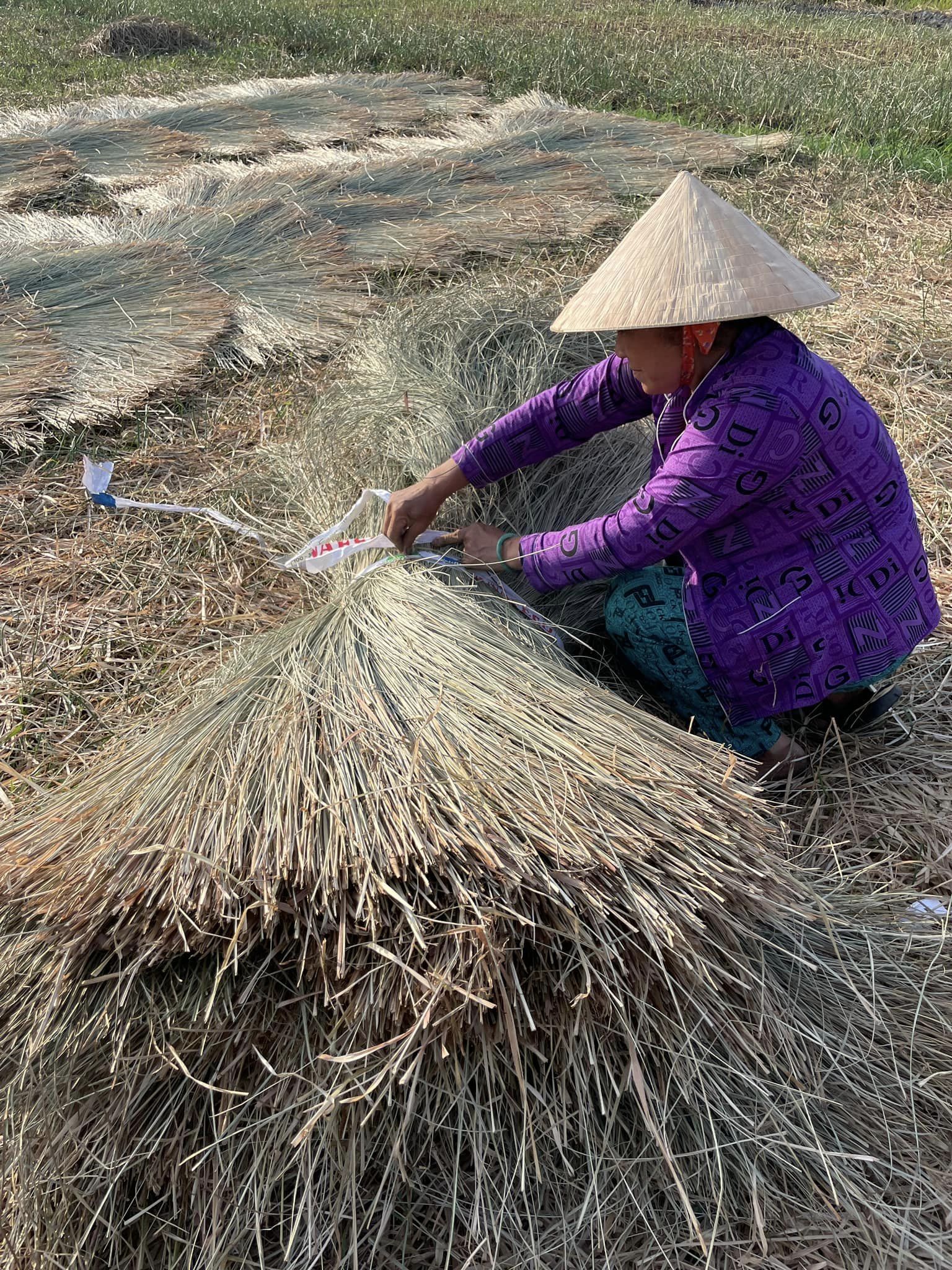
Back to work.
This gentleman is a Viet Cong veteran. He trained as a nurse and never intended to be a soldier. But as things intensified during a long and hard war, he was “asked” to fight. At the age of 24, he came home for a visit and accidentally touched a land mine which blew off most of the fingers of his right hand. He is 75 and still sings Viet Cong songs and wears his military uniform. Despite everything he’s been through, he remains a believer. He’s playing the mandolin here but he also plays a number of other guitar-like instruments in addition to the harmonica.
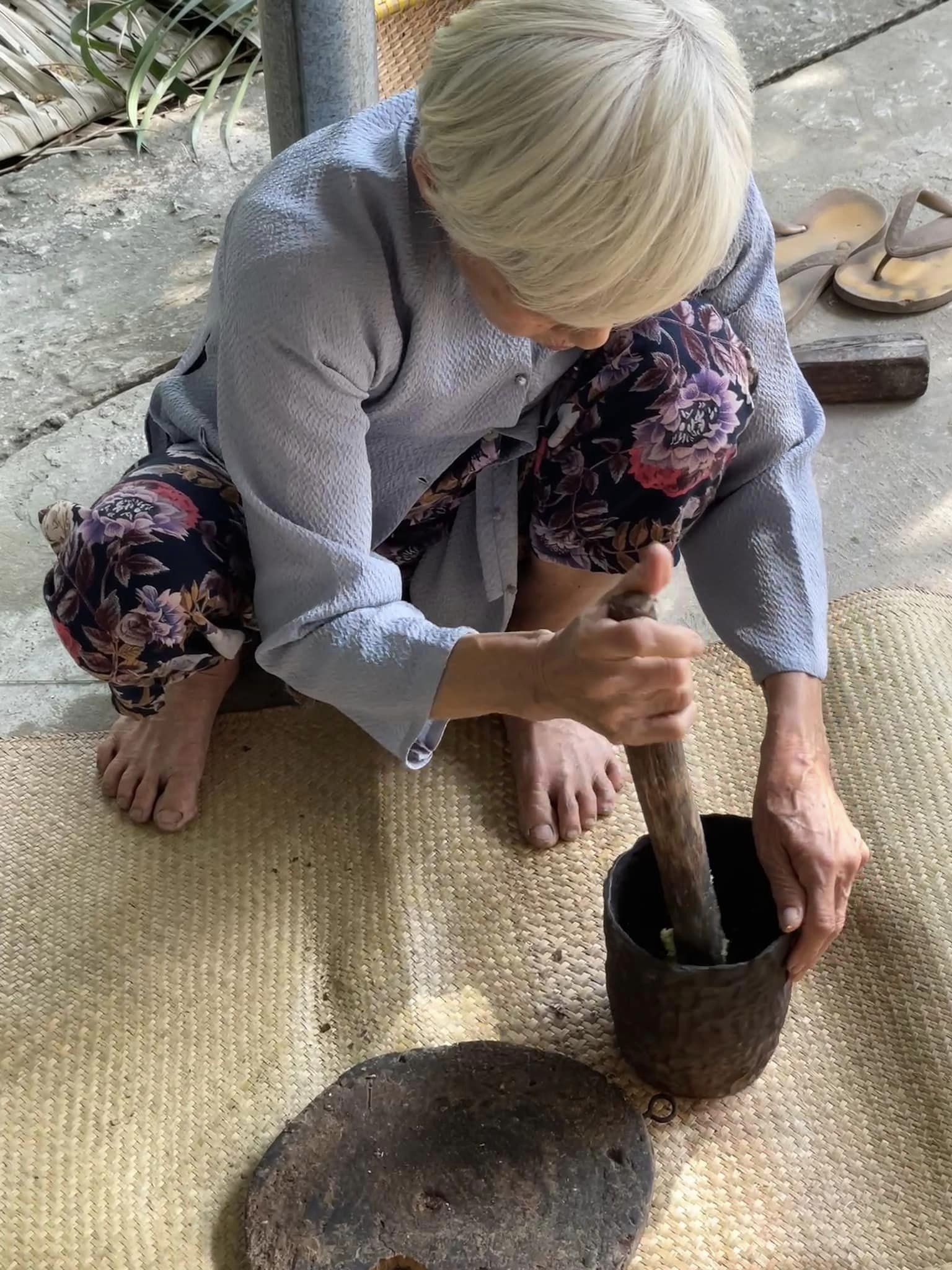
This lovely woman showed us how to make poon lights by mashing an oily nut with soft plant fibres that look like the inside of a bulrush. She uses part of a spent bomb casing from the war as her mortar. The finished poon light lasts about 15 minutes and would be used to light your way home after dark.
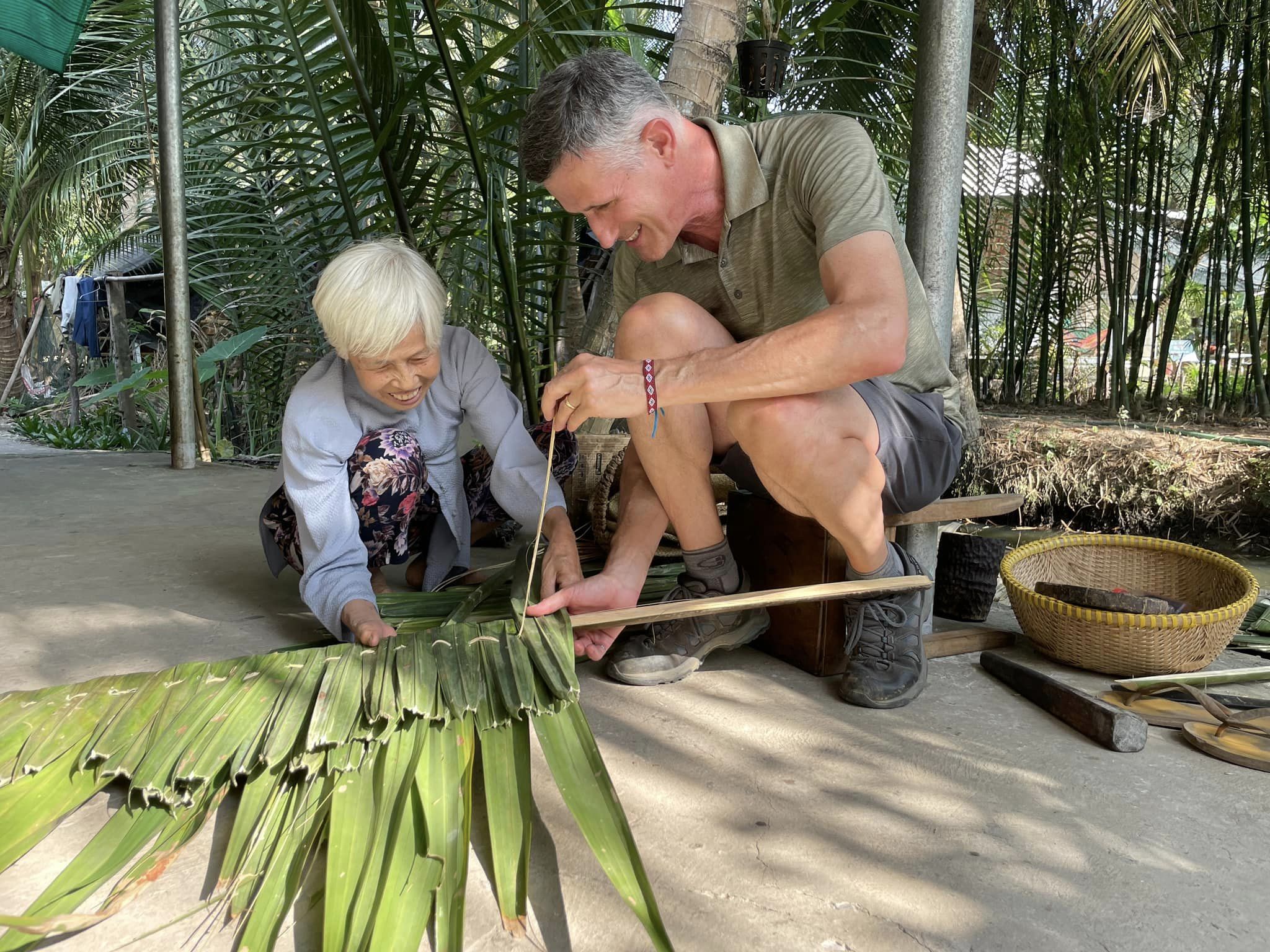
Next she showed us how to make roofing “shingles” from water coconut (growing in the mangrove behind her). She cut off a giant leaf and then used a giant knife to cut off the leaflets. After selecting the best leaflets, she used that really big knife to cut a bamboo stalk in half which became the frame of the shingle. We folded the leaflets over the bamboo and sewed them together using thin, dried strips of an immature leaf that had not yet split into leaflets, which are strong and sharp enough to act as its own needle.
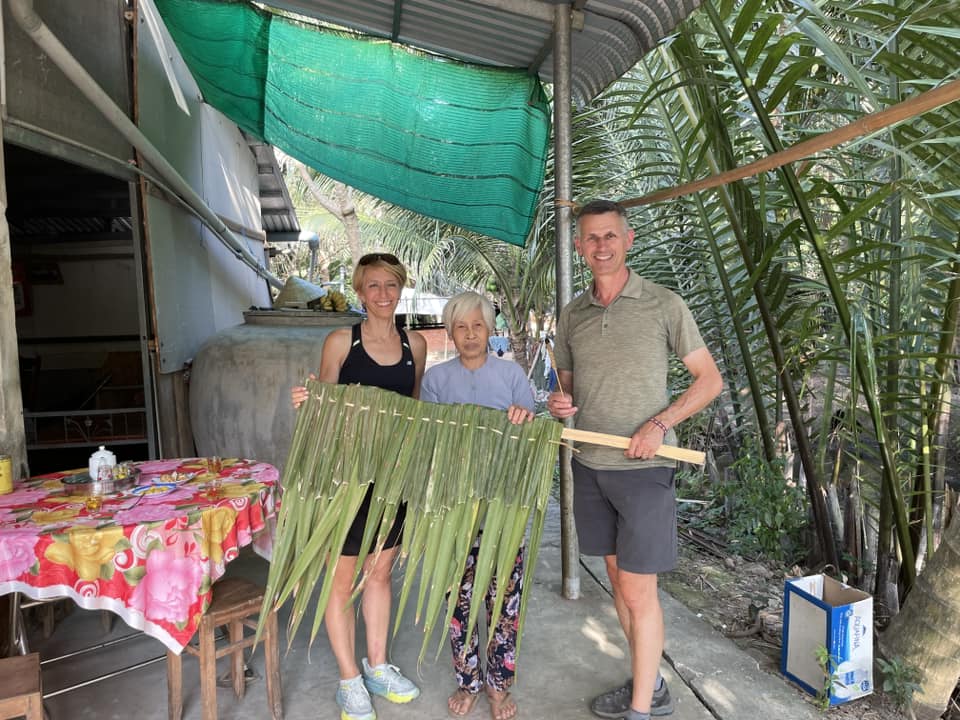
While the sleeping part of her house has a corrugated metal roof (with some solar panels mounted on it), she uses these shingles for the cooking area to enable the cooking smoke to escape. This roof will last 20 years! She also had a pair of gas burners powered by an at-home biofuel system. Nothing wasted: The cows and pigs out back provided the necessary ingredient (manure). She was quite an independent woman, standing in for her husband who was crashed, shirtless on the floor, after drinking too much all day at a local wedding.
This was fun! This family makes pop rice. The video (credit goes to Adam) shows the process from beginning to final product. He started with 1.5 or 2 kg of rice and the end result was fantastic!
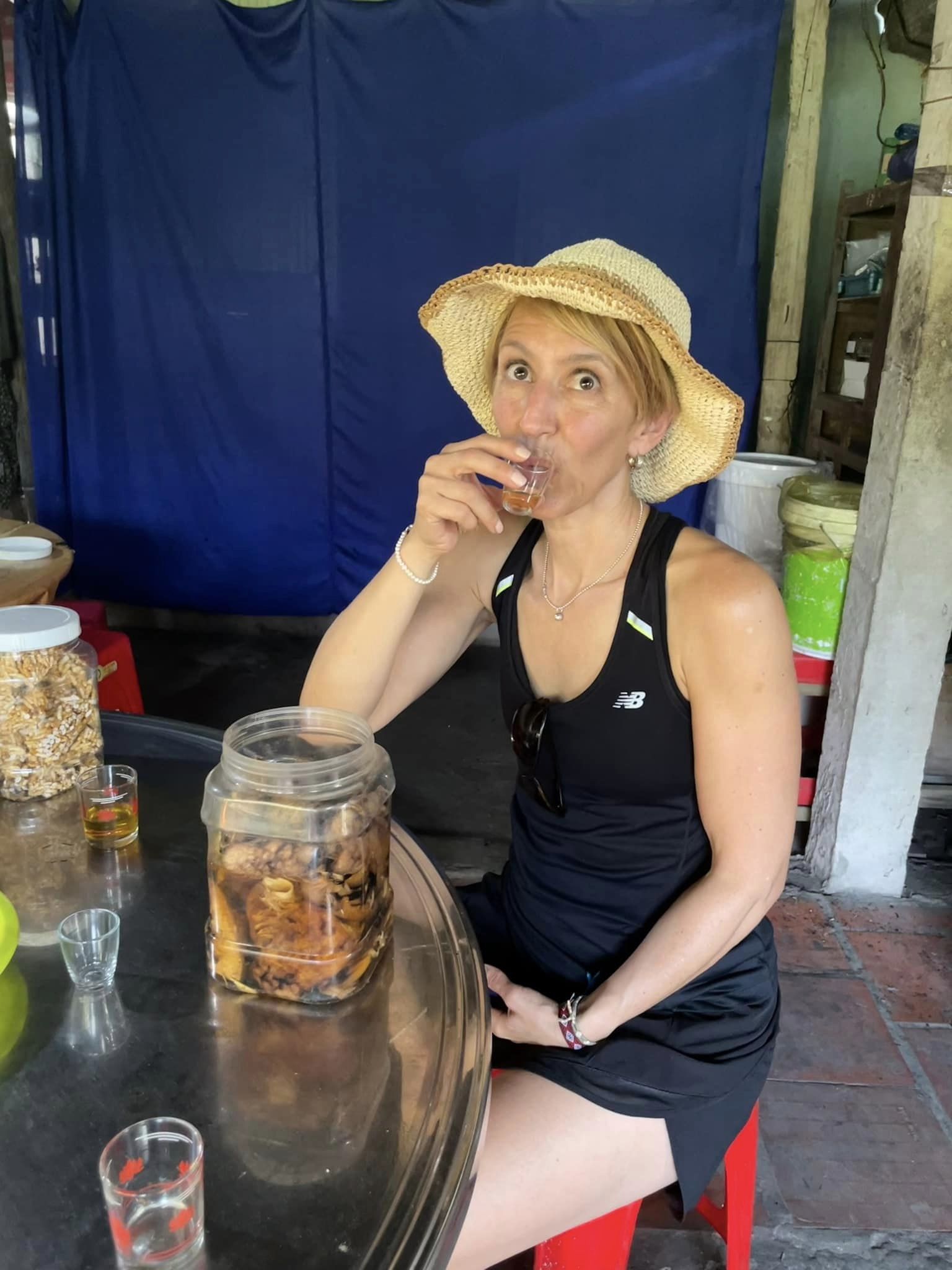
The rice takes about 20 minutes in the war era fire extinguisher “pressure cooker” so the wife took a break from the caramel she was making (her husband has to constantly turn the rice device) to offer us some homemade jackfruit moonshine. Did that ever pack a punch! And I lived to tell the tale!
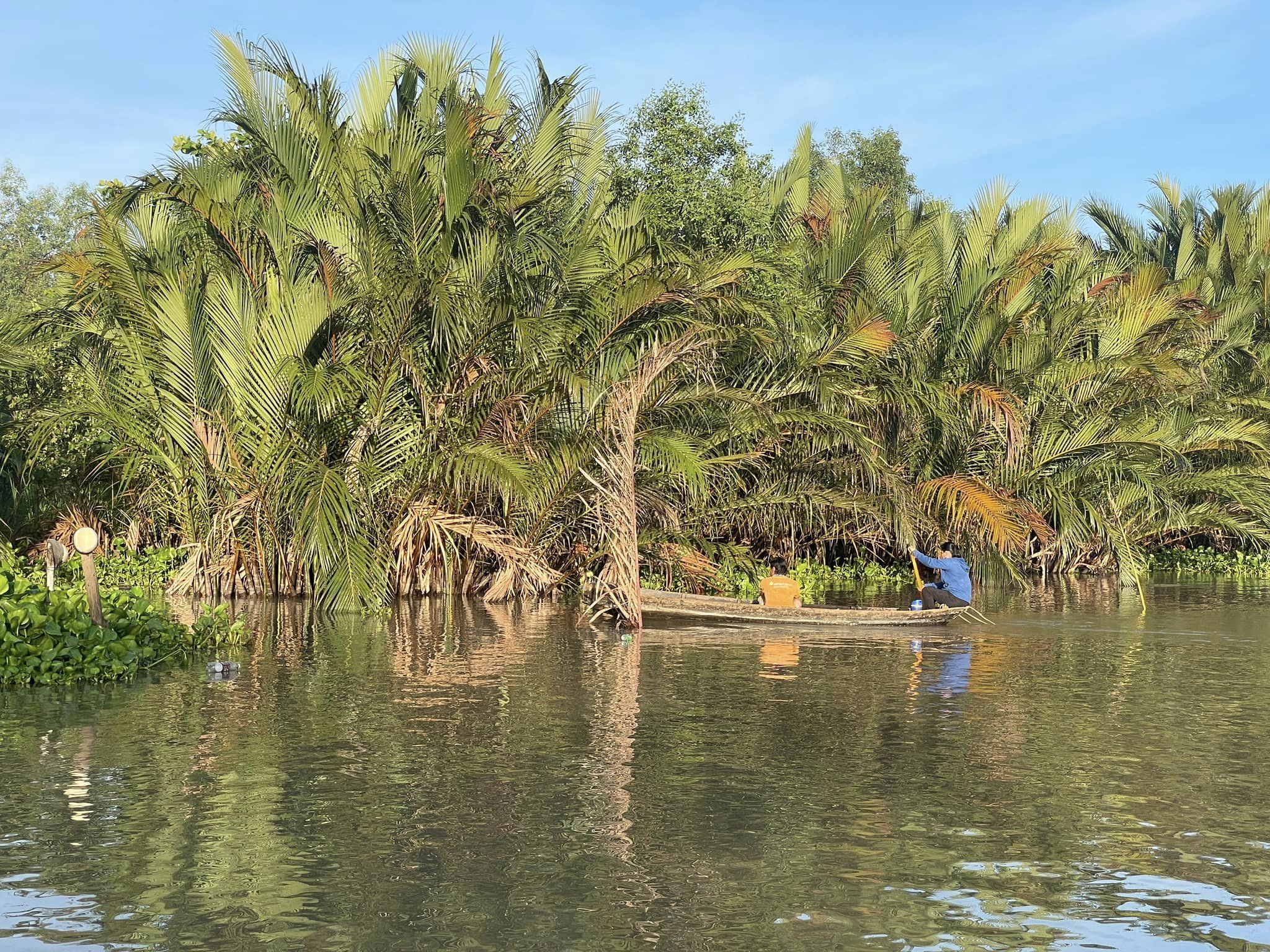
Collecting water coconut leaves. These small boats enjoy such serenity along the shore…until they are jockeying for position among the big boats in the middle of the river.
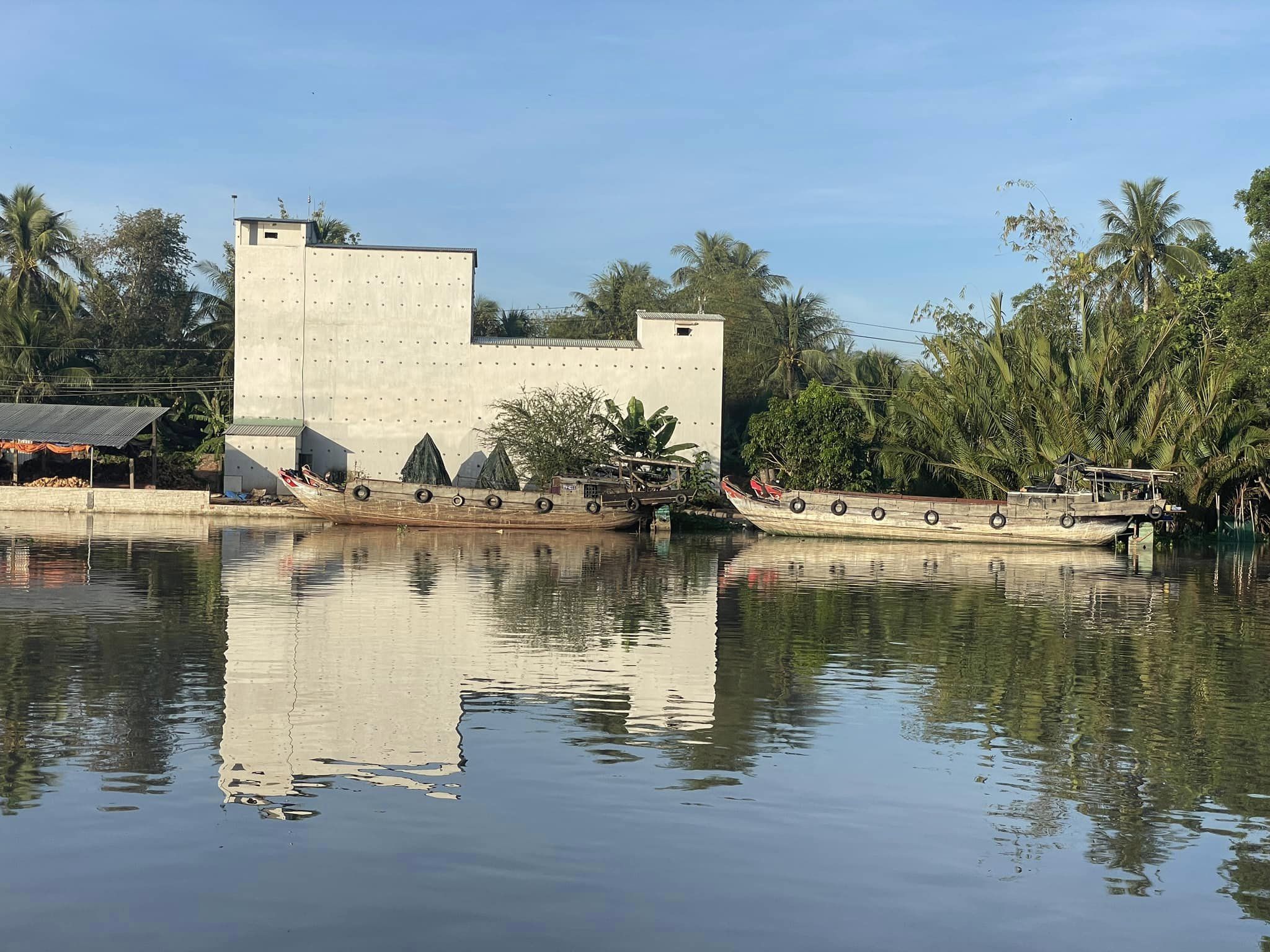
A bird nest factory…for bird’s nest soup. A speaker on top of the building plays the swallow song to attract the special birds inside where they build their nests along the walls. These birds don’t collect twigs to make their nests; rather the nests are made of the birds' own solidified saliva. Needless to say, they are cheaper to find and harvest from a building like this than in the wild but they still sell for a few thousand dollars per kilo for the highest quality ones. They are cooked in water to make a gelatinous soup full of health benefits in the traditional Chinese (and Vietnamese) medicine world. This will cure and improve anything and everything from libido, immune function, mental focus, respiratory ailments and digestive problems. Of course, some say it cures Covid…
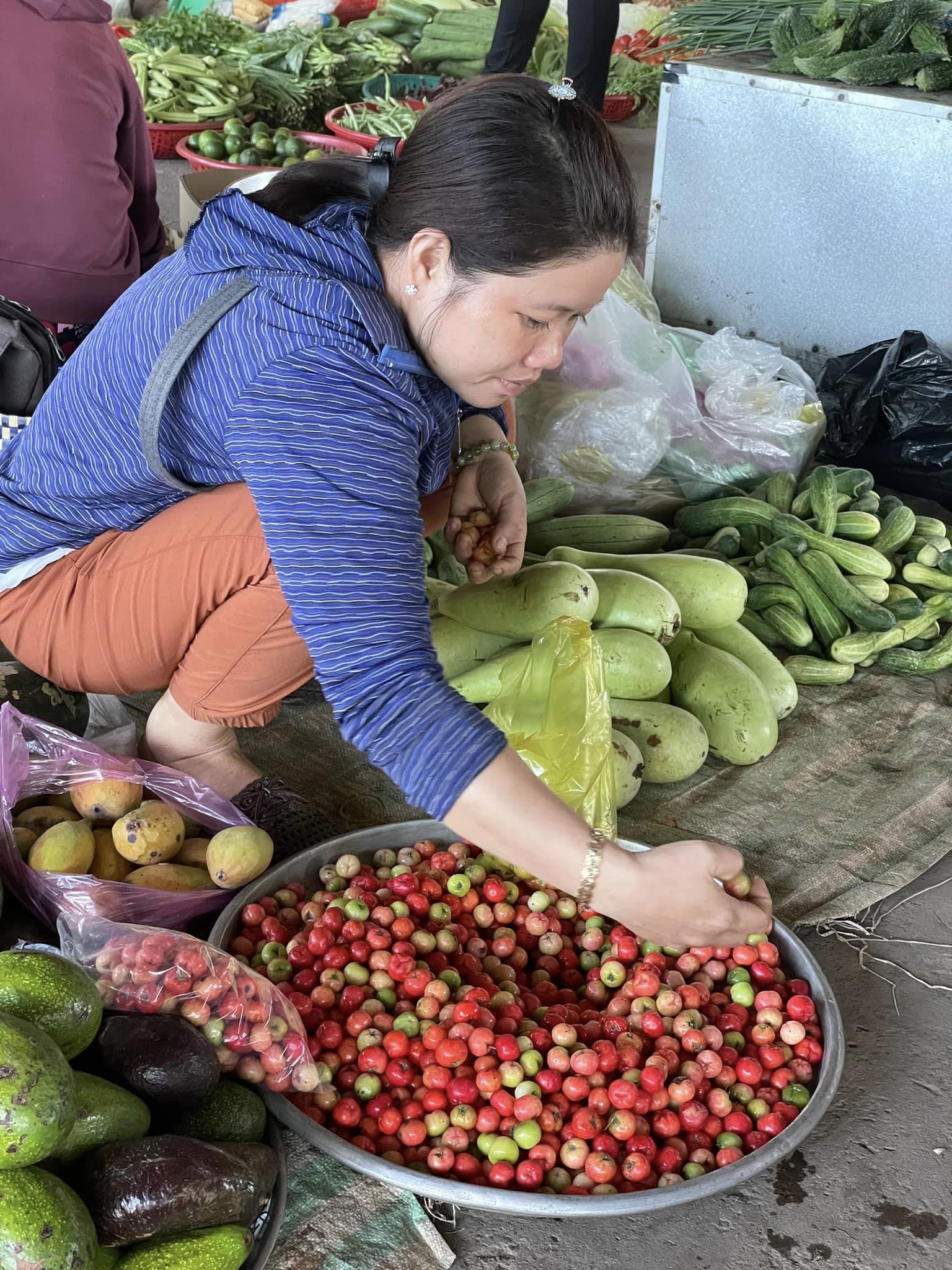
Another local market where we found Vietnamese cherries!
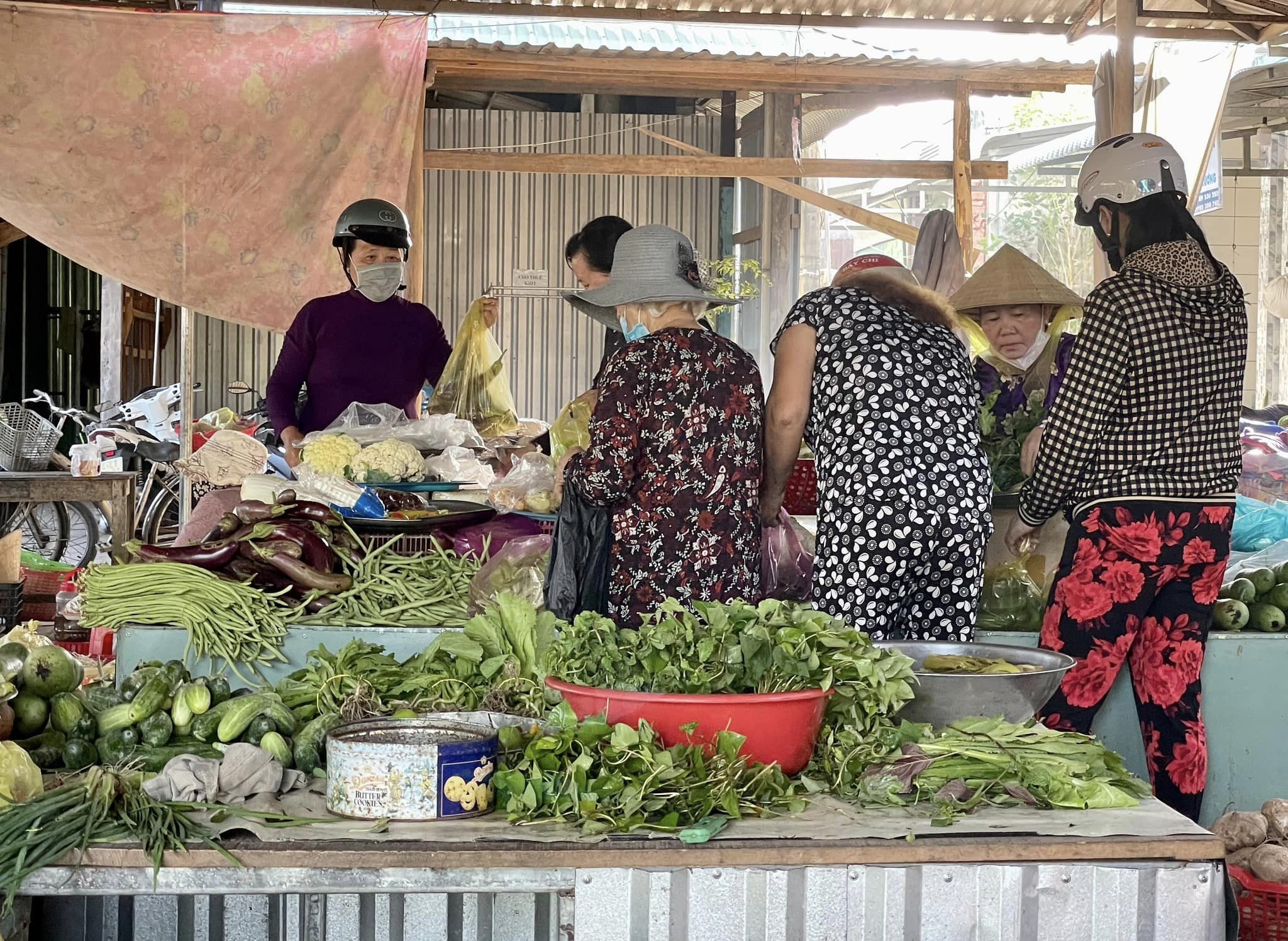
The many hats of the ladies at the local market. Being Sunday, some of the shoppers were quite dressed up!
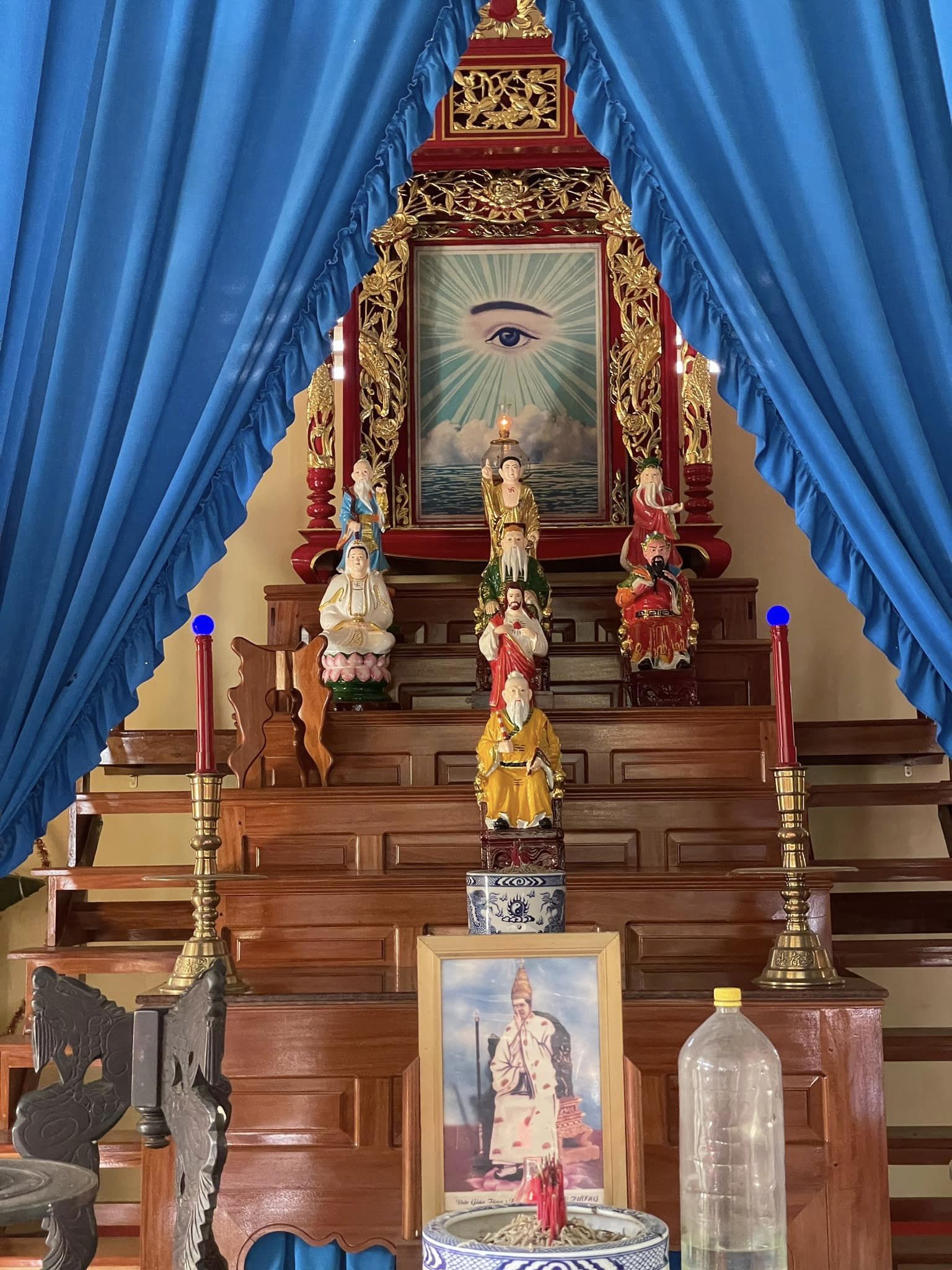
The Cao Dai (Left Eye) temple on the shore of the Mekong River. The left eye is special because it is closer to the heart and can see wherever you go. This peaceful religion is quite young, having been founded in 1926. It unifies Taoism, Confucianism, Buddhism and Christianity. One big, happy family!
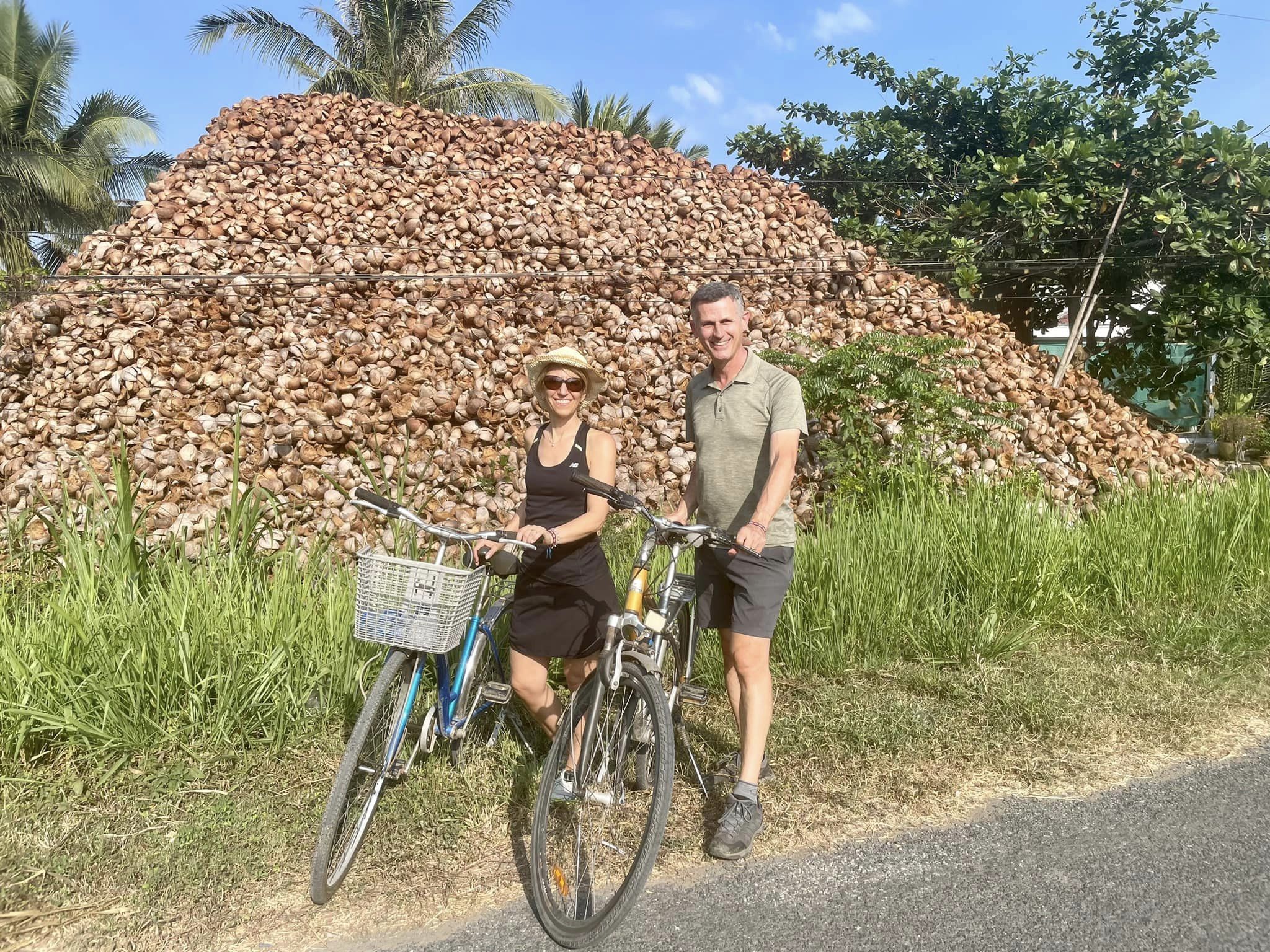
We saw lots of coconuts roadside and piled on barges heading up and down the river. Eighty percent of the land here is used to grow coconuts and remember, nothing is wasted! The huge coconut industry here processes everything from coconut water and meat for drinking and eating to the fibre for rope and mat making and the leftover shells for burning.
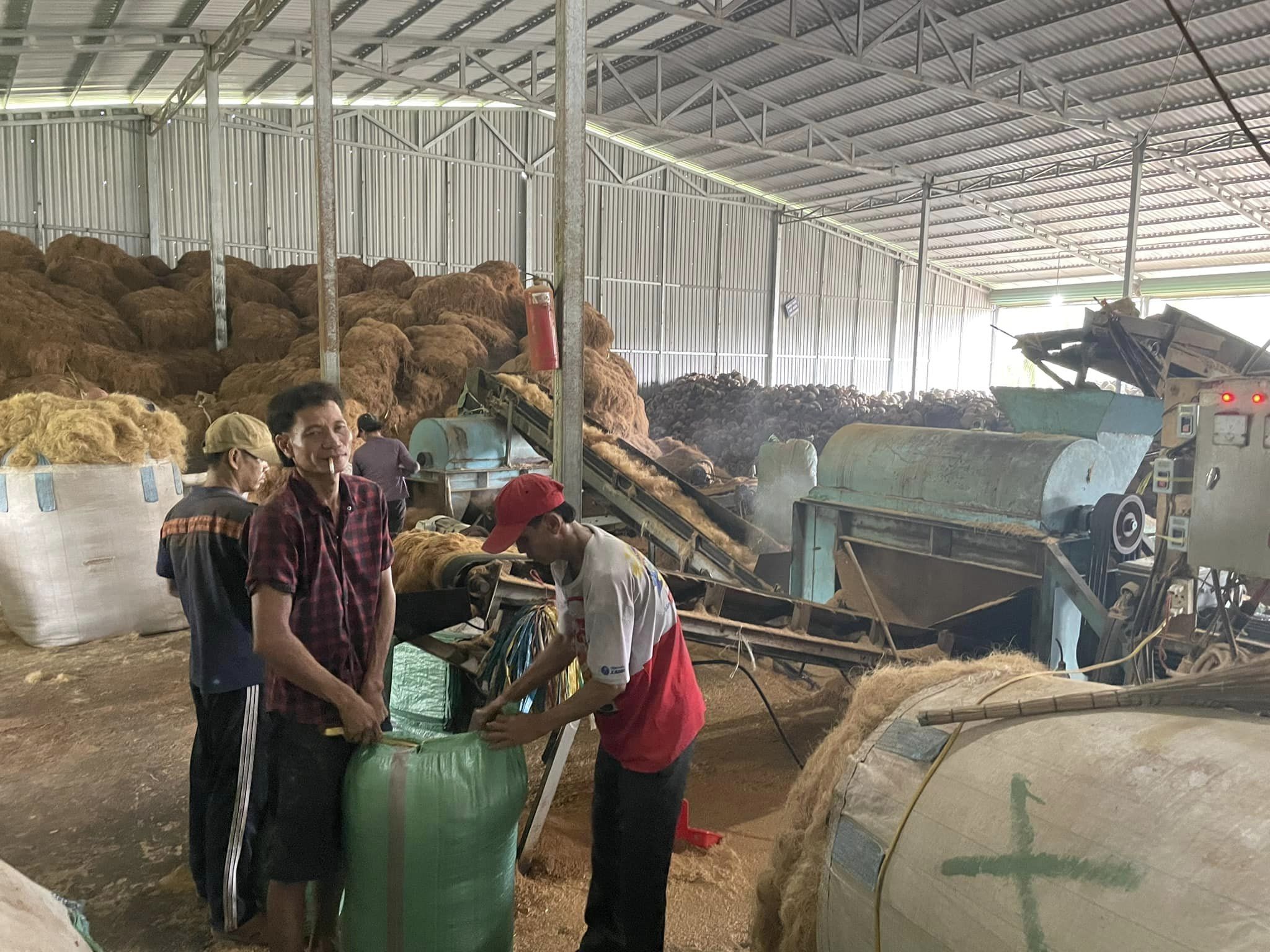
Lots of big machines in this huge coconut factory at the river’s edge. The first step in the process involves cracking open the shells (manually with a really scary looking knife) and removing the centre that has the meat and water. The shell with the fibre attached is thrown onto a conveyor belt which leads into a machine that separates the fibre from the shell. The fibre processing machine on the right side of this picture then separates the long fibres from the short, dusty bits. Here, the dusty bits are packed into these bags to be mixed with manure for fertilizer. It’s an incredibly flammable place and there seems to be no concerns about smoking on the job!
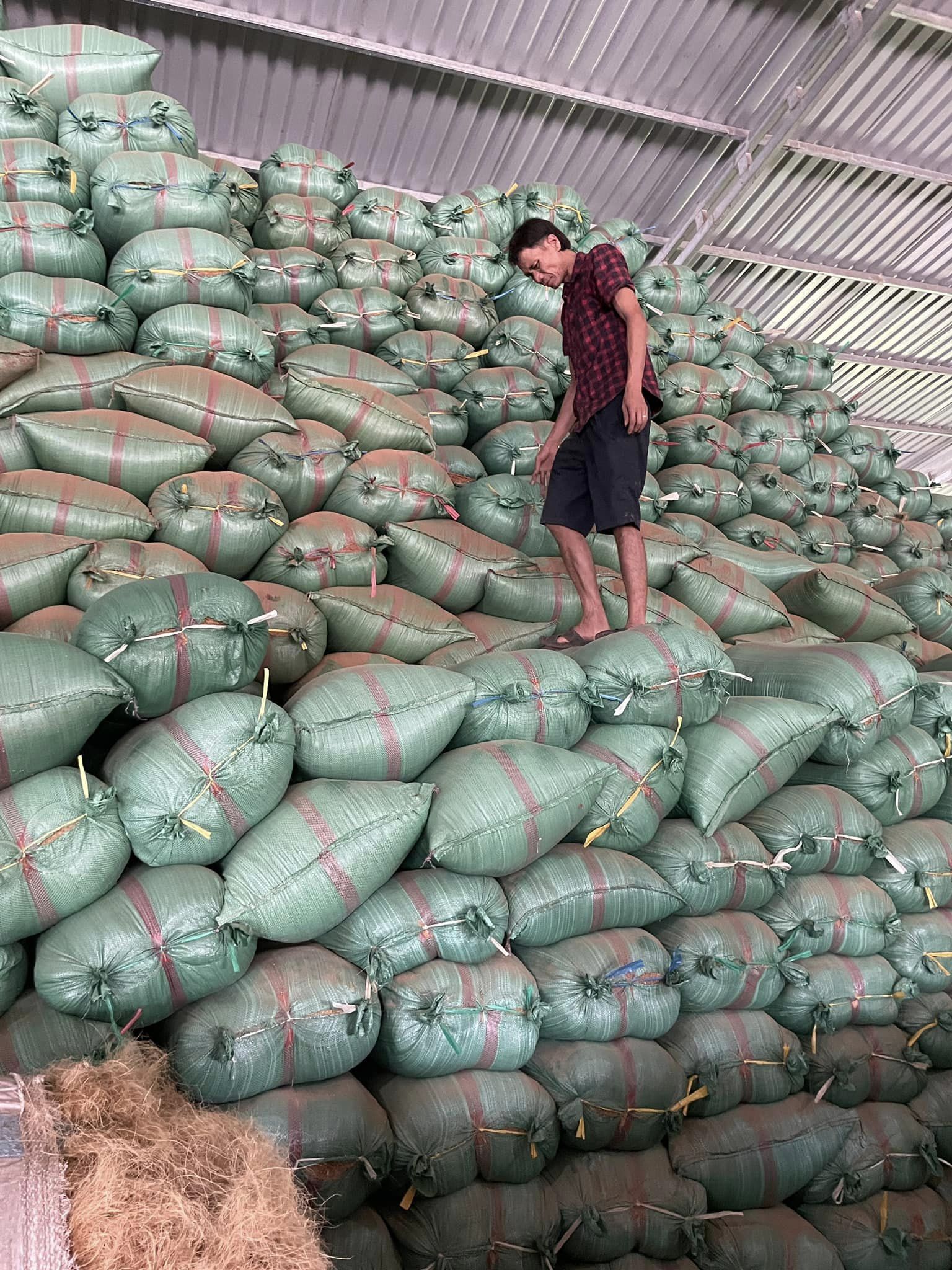
One of many stacks of bags of coconut dust destined for fertilizer, piled up to the ceiling.
The long fibres are then fed into this machine which turns them into ropes and then twists the small ropes into thicker ropes for the mats.
A husband and wife team typically works together to make the 30 metre long mats. It’s really hard work. This couple will make three of these 30m long mats in a day.
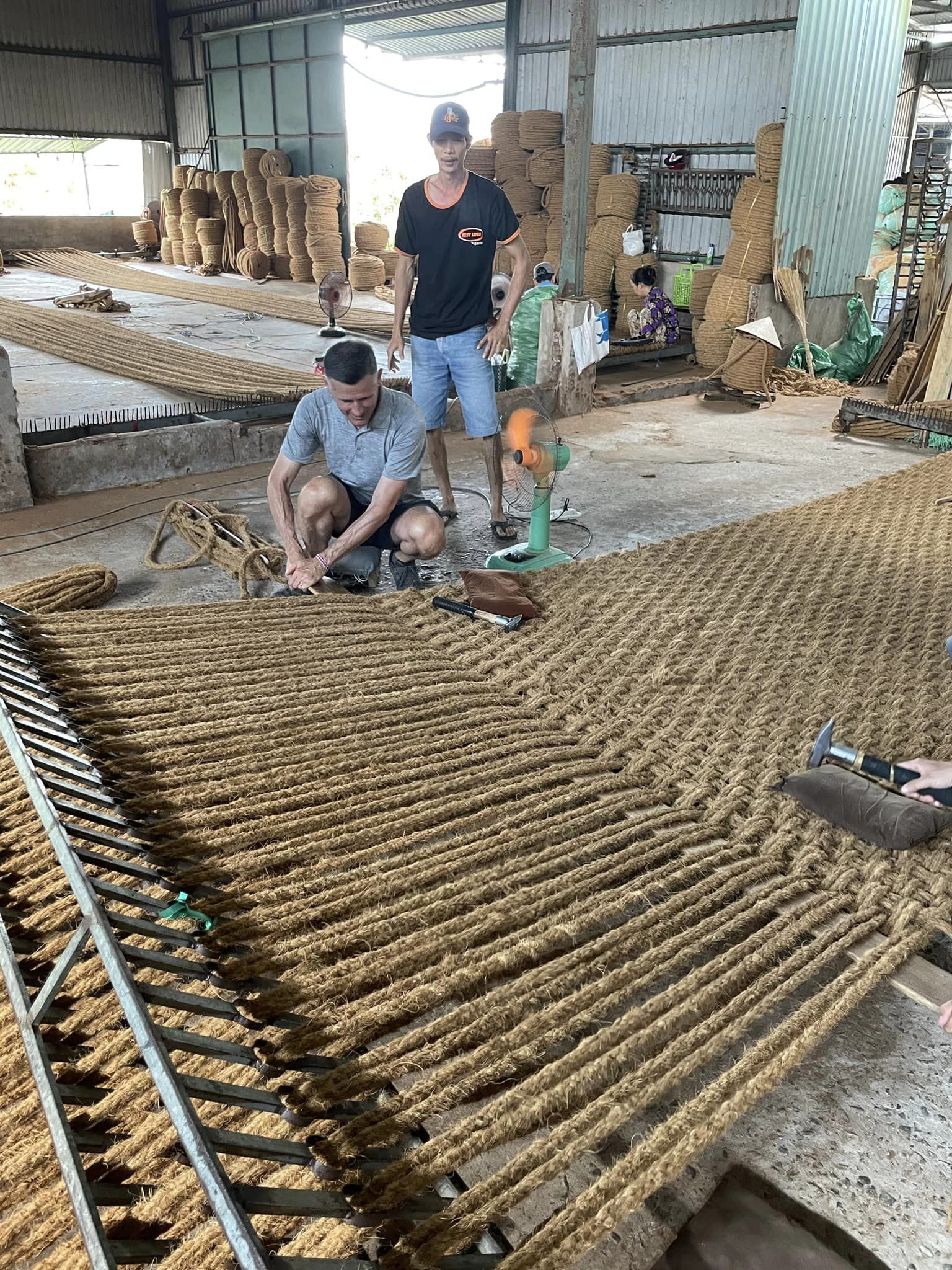
Adam being closely supervised. I don’t think his speed is quite up to snuff.